Inside 'Namaslay': How Brothers Kanish and Rish Arhant-Sudhir Forged a Cultural Horror Satire
Filmmaking duo Kanish and Rish Arhant-Sudhir unpack the seven-year journey behind their debut feature, 'Namaslay,' blending family, identity, and biting satire.
Bộ đôi đạo diễn Kanish và Rish Arhant-Sudhir hé lộ hành trình bảy năm nhọc nhằn để cho ra mắt bộ phim đầu tay 'Namaslay' — một tác phẩm đan xen giữa tình cảm gia đình, vấn đề bản sắc và ngòi bút trào phúng sắc sảo.
Le duo de cinéastes Kanish et Rish Arhant-Sudhir revient sur les sept années de parcours nécessaires pour donner vie à leur premier long-métrage, « Namaslay », un film qui tisse habilement liens familiaux, identité et satire mordante. Une œuvre d'une rare acuité.
El dúo de cineastas formado por Kanish y Rish Arhant-Sudhir desentraña el recorrido de siete años que hay detrás de su ópera prima, 'Namaslay', una obra que entrelaza lazos familiares, identidad y una incisiva sátira.
电影制作人双人组卡尼什与里什·阿尔汉特-苏迪尔(Kanish and Rish Arhant-Sudhir)日前畅谈了他们筹备长片处女作《纳玛斯莱》七年背后的心路历程。这部作品完美融合了家族情结、身份认同与辛辣的讽刺解构。
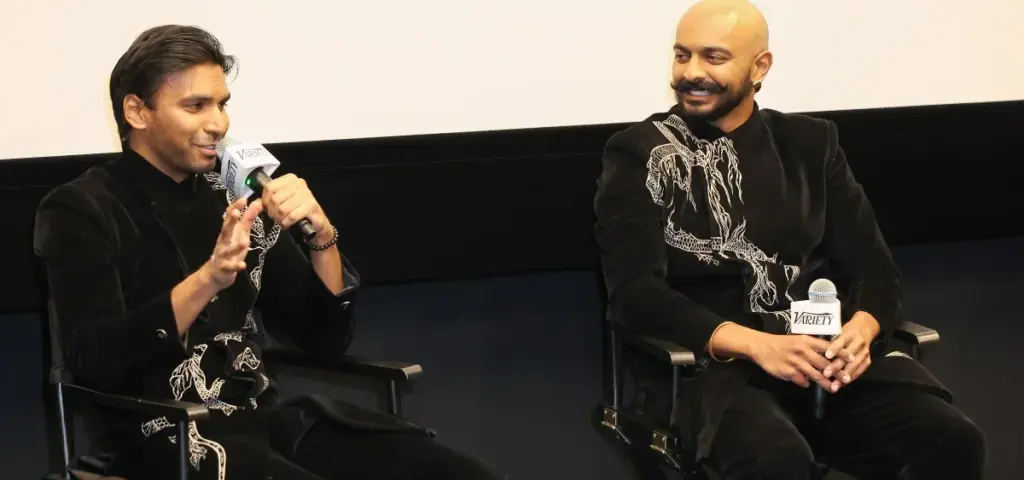
- Brothers Kanish and Rish Arhant-Sudhir spent seven years developing their debut feature film, 'Namaslay,' a horror satire examining the westernization and appropriation of yoga.
- The central character, Paati, was directly inspired by the brothers' own grandmother and brought to life on screen by their great aunt, Usha Krishnan.
- Faced with persistent industry rejections, the filmmaking duo bypassed traditional gatekeepers by enlisting their closest friends as department heads.
- The film uses a distinctive dual-writer dynamic where scripts are continuously passed back and forth, ensuring organic storytelling and deep character cohesion.
- Hai anh em Kanish và Rish Arhant-Sudhir đã dành bảy năm phát triển bộ phim điện ảnh đầu tay 'Namaslay', một tác phẩm kinh dị trào phúng mổ xẻ hiện tượng Tây hóa và sự chiếm đoạt văn hóa của bộ môn yoga.
- Nhân vật trung tâm Paati được lấy cảm hứng trực tiếp từ chính người bà của hai anh em và do người cô họ Usha Krishnan đảm nhận trên màn ảnh.
- Đối mặt với sự từ chối liên tiếp từ ngành công nghiệp điện ảnh truyền thống, bộ đôi đạo diễn đã vượt qua các rào cản bằng cách giao những vị trí trưởng bộ phận cho những người bạn thân thiết nhất.
- Bộ phim áp dụng phương thức đồng biên kịch độc đáo, nơi các kịch bản được liên tục chuyển qua chuyển lại giữa hai anh em, đảm bảo tính liền mạch trong cốt lõi tự sự và chiều sâu nhân vật.
- Les frères Kanish et Rish Arhant-Sudhir ont passé sept années à développer leur premier long-métrage, « Namaslay », une satire horrifique qui interroge la occidentalisation et l'appropriation du yoga.
- Le personnage central, Paati, s'inspire directement de leur propre grand-mère et a pris vie à l'écran grâce à leur grand-tante, Usha Krishnan.
- Face aux refus répétés des studios, le duo de réalisateurs a contourné les gardiens traditionnels du temple en confiant les postes clés de l'équipe technique à leur cercle d'amis le plus proche.
- Le film repose sur une dynamique d'écriture à quatre mains où les scripts sont sans cesse renvoyés de l'un à l'autre, garantissant une narration organique et une profonde cohésion des personnages.
- Los hermanos Kanish y Rish Arhant-Sudhir pasaron siete años desarrollando su primer largometraje, 'Namaslay', una sátira de terror que examina la occidentalización y la apropiación del yoga.
- El personaje central, Paati, se inspiró directamente en la abuela de los directores y cobró vida en la pantalla gracias a su tía abuela, Usha Krishnan.
- Frente al rechazo persistente de la industria, el dúo de cineastas sorteó a los guardianes tradicionales al reclutar a sus amigos más íntimos como jefes de departamento.
- La película emplea una dinámica singular de escritura a cuatro manos, en la que los guiones se intercambian continuamente para garantizar una narrativa orgánica y una profunda cohesión de los personajes.
- 兄弟二人卡尼什与里什·阿尔汉特-苏迪尔耗时七年,精心打磨了他们的长片处女作《纳玛斯莱》——一部审视瑜伽西方化与挪用的恐怖讽刺片。
- 核心角色帕蒂(Paati)的灵感直接源自兄弟俩的祖母,并由他们的重祖母乌莎·克里希南(Usha Krishnan)在银幕上生动呈现。
- 面对行业持续不断的拒绝,这对导演组合绕过了传统把关人,转而动员他们最亲密的朋友担任核心部门负责人。
- 影片采用了独特双编剧机制,剧本在两人手中不断交替传递,从而确保了叙事的有机性与人物深度的凝聚力。
In an industry increasingly driven by algorithm-tested franchises and risk-averse IP mining, the arrival of an independent debut feature born from familial collaboration, cultural critique, and unyielding perseverance feels like a rare cinematic coup. For brothers Kanish and Rish Arhant-Sudhir, the seven-year odyssey required to bring their satirical horror film Namaslay to the screen was not merely an exercise in endurance, but a deeply personal exploration of diaspora, generational bonds, and the commodification of sacred traditions. Speaking at the recent Variety Screening Series, the sibling duo laid bare the intricate mechanics of their creative partnership, detailing how they turned systemic rejections into an asset by building a collaborative ecosystem entirely from their inner circle.
At its core, Namaslay uses the tropes of the horror genre not just for cheap thrills, but to mount an incisive commentary on the cultural extraction of Eastern practices in Western markets. By examining the spiritual tourism and sanitized wellness trends that strip yoga of its philosophical roots, the Arhant-Sudhir brothers have crafted a narrative that is as intellectually rigorous as it is chilling. Yet, rather than approaching the subject with a blunt ideological instrument, the filmmakers opted for a more nuanced, razor-sharp satirical lens—one heavily informed by their own lived experiences and their evolving relationship with their grandmother, who served as the direct inspiration for the film’s matriarchal anchor, Paati, played with remarkable presence by their great aunt, Usha Krishnan.
The Anatomy of Collaboration and the Genesis of Paati
The genesis of Namaslay is rooted intimately in family dynamics. As the brothers explained during their panel discussion, their evolving relationship with their grandmother provided a crucial emotional compass that kept the script from sliding into heavy-handed polemicism. Rish noted that connecting with her later in life allowed them to refine their narrative touch, transforming what could have been a blunt instrument into something far more incisive. Instead of wielding a flamethrower against cultural appropriation, the script operates more like a blowtorch—precise, controlled, and deeply focused on the micro-interactions of family, memory, and exploitation.
This careful balancing act extends directly into the brothers' writing process. Describing their dynamic as a continuous, organic ping-pong match, Kanish and Rish explained how scenes are tossed back and forth across their shared desk until neither can quite remember who wrote a specific line. This iterative friction ensures that by the time a draft is completed, it has already survived the harshest internal critique. It is a creative symbiosis built on mutual trust; as Kanish pointed out, they have never once experienced a day where both brothers felt ready to surrender to the endless parade of industry roadblocks, buoyed entirely by the quiet conviction that as long as one of them kept looking toward the horizon, the other would follow.
Deconstructing Colonial Echoes Through Horror Satire
Beneath the surface-level shocks of Namaslay lies a sobering examination of historical continuity, economic extraction, and cultural resale. The brothers were deliberate in framing their horror narrative around the mechanics of late-stage capitalism and post-colonial inheritance. What reads on the surface as absurdist, slapstick-adjacent horror quickly peels back to reveal systemic exploitation—a dynamic where cultural identities are commodified, stripped of context, and resold to affluent Western consumers at a premium.
Kanish was particularly articulate on the dangers of tokenistic representation in modern cinema, arguing that an identity in and of itself does not constitute a narrative. For the Arhant-Sudhir brothers, a character's cultural heritage must dynamically inform how they navigate the world and react to plot pressures, rather than serving as a superficial badge of inclusivity. By anchoring their supernatural and satirical elements in the authentic, everyday realities of immigrant families and cross-generational tensions, they avoid the traps of hollow symbolism, offering instead a vibrant, complex portrait of characters fighting to maintain ownership of their own narratives.
Defying the Gatekeepers and Building an Independent Ecosystem
The journey from conceptualization to the screen was fraught with the familiar, grueling hurdles that independent filmmakers know all too well. For seven years, Kanish and Rish encountered a wall of institutional skepticism. Potential backers and industry veterans frequently told them that their vision was too ambitious, too unconventional, or simply impossible to pull off on an indie budget. Rather than diluting their vision to appease cautious financiers, the brothers chose a different path: they leaned heavily on their community, enlisting their closest friends to fill critical department head roles.
This unconventional crew assembly turned what could have been a vulnerability into the film's greatest institutional strength. Working alongside lifelong friends created an atmosphere of radical trust, where artisans felt empowered to take bold aesthetic and technical chances that traditional, risk-averse studio departments might have vetoed. As the film makes its way into the world, it stands as a testament to the power of uncompromised vision and familial resilience. For Kanish and Rish Arhant-Sudhir, Namaslay is only the opening salvo—a fierce declaration that when the industry tells young creators no, the only proper response is to build your own table.
Trong một nền công nghiệp ngày càng bị chi phối bởi các thương hiệu đã qua kiểm định thuật toán và tư duy khai thác tài sản trí tuệ an toàn, sự xuất hiện của một bộ phim điện ảnh đầu tay độc lập — kết tinh từ sự hợp tác gia đình, phản biện văn hóa và sự kiên trì bền bỉ — tựa như một cú sốc điện ảnh hiếm hoi. Đối với hai anh em Kanish và Rish Arhant-Sudhir, cuộc trường chinh kéo dài bảy năm để đưa bộ phim kinh dị trào phúng Namaslay lên màn ảnh không chỉ là một thử thách về sức chịu đựng, mà còn là một cuộc khám phá sâu sắc về đời sống tha hương, mối dây liên kết thế hệ và sự thương mại hóa các giá trị thiêng liêng. Phát biểu tại chuỗi chiếu phim Variety Screening Series gần đây, bộ đôi đạo diễn đã phơi bày cơ chế phức tạp đằng sau sự hợp tác sáng tạo của họ, đồng thời chi tiết hóa cách họ biến những lần bị từ chối thành lợi thế bằng cách xây dựng một hệ sinh thái cộng tác hoàn toàn từ vòng tròn quan hệ thân thiết nhất của mình.
Về cốt lõi, Namaslay sử dụng các mô-típ của thể loại phim kinh dị không chỉ để tạo ra những cảm giác hồi hộp rẻ tiền, mà để đưa ra một bình luận sắc sảo về việc trích xuất văn hóa phương Đông tại các thị trường phương Tây. Bằng cách mổ xẻ du lịch tâm linh và các xu hướng chăm sóc sức khỏe đã được tước bỏ gốc rễ triết học của yoga, hai anh em nhà Arhant-Sudhir đã kiến tạo một câu chuyện vừa chặt chẽ về mặt trí tuệ vừa mang lại cảm giác lạnh gáy. Tuy nhiên, thay vì tiếp cận vấn đề bằng một công cụ ý thức hệ thô kệch, các nhà làm phim đã chọn một lăng kính trào phúng tinh tế và sắc bén hơn — một lăng kính chịu ảnh hưởng sâu sắc từ chính những trải nghiệm thực tế của họ và mối quan hệ ngày càng khăng khít với người bà, nguồn cảm hứng trực tiếp cho nhân vật người bà Paati, do người cô họ Usha Krishnan thể hiện với một thần thái vô cùng ấn tượng.
Giải phẫu sự hợp tác và nguồn gốc của nhân vật Paati
Nguồn gốc của Namaslay gắn bó mật thiết với động lực gia đình. Như hai anh em đã chia sẻ trong buổi thảo luận bàn tròn, mối quan hệ ngày càng sâu sắc với người bà đã cung cấp một chiếc la bàn cảm xúc quan trọng, ngăn không cho kịch bản rơi vào tình trạng luận chiến mang tính áp đặt. Rish lưu ý rằng việc kết nối với bà ở những năm tháng sau này đã giúp họ tinh Chỉnh ngữ điệu tự sự, biến một thứ vốn có thể là một công cụ thô thiển thành một tác phẩm sắc sảo hơn nhiều. Thay vì sử dụng một cây súng phun lửa để chống lại sự chiếm đoạt văn hóa, kịch bản hoạt động giống như một chiếc đèn khò hơn — chính xác, có kiểm soát và tập trung sâu sắc vào các tương tác vi mô của gia đình, ký ức và sự bóc lột.
Sự cân bằng cẩn trọng này kéo dài trực tiếp vào quá trình viết kịch bản của hai anh em. Mô tả động lực làm việc của họ như một trận bóng bàn liên tục và tự nhiên, Kanish và Rish giải thích cách các phân cảnh được tung qua tung lại trên chiếc bàn chung cho đến khi cả hai không còn nhớ rõ ai là người đã viết một câu thoại cụ thể nào đó. Sự cọ xát mang tính lặp đi lặp lại này đảm bảo rằng khi một bản thảo hoàn thành, nó đã vượt qua những lời chỉ trích khắt khe nhất từ nội bộ. Đó là một sự cộng sinh sáng tạo được xây dựng trên lòng tin lẫn nhau; như Kanish đã chỉ ra, họ chưa bao giờ trải qua một ngày nào mà cả hai anh em cùng cảm thấy muốn đầu hàng trước chuỗi chướng ngại vật vô tận của ngành công nghiệp, được nâng đỡ hoàn toàn bởi niềm tin thầm lặng rằng chỉ cần một người trong số họ tiếp tục hướng về phía chân trời, người kia sẽ đi theo.
Giải mã những âm vang thực dân qua lăng kính kinh dị trào phúng
Ẩn dưới những cú sốc bề nổi của Namaslay là một cuộc khảo sát tỉnh táo về tính liên tục của lịch sử, sự trích xuất kinh tế và việc tái bán văn hóa. Hai anh em đã rất có chủ ý khi định hình câu chuyện kinh dị của họ xung quanh cơ chế của chủ nghĩa tư bản giai đoạn cuối và di sản hậu thực dân. Những gì thoạt nhìn có vẻ là một bộ phim kinh dị mang tính phi lý, cận kề thể loại hài kịch hề lố (slapstick) lại nhanh chóng bóc trần để hé lộ sự bóc lột mang tính hệ thống — một động lực nơi bản sắc văn hóa bị thương mại hóa, bị tước bỏ ngữ cảnh và được bán lại cho những người tiêu dùng phương Tây giàu có với mức giá cắt cổ.
Kanish đã thể hiện một cách vô cùng minh bạch về những nguy hiểm của sự đại diện mang tính biểu tượng hình thức trong điện ảnh hiện đại, lập luận rằng bản thân bản sắc không thể cấu thành một cốt lõi tự sự. Đối với hai anh em nhà Arhant-Sudhir, di sản văn hóa của một nhân vật phải thông báo một cách linh hoạt cách họ điều hướng thế giới và phản ứng trước các áp lực của cốt lõi truyện phim, chứ không nên đóng vai trò là một huy hiệu hời hợt của sự hòa nhập. Bằng cách neo giữ các yếu tố siêu nhiên và trào phúng của họ trong thực tế chân thực, đời thường của các gia đình nhập cư và những căng thẳng đa thế hệ, họ tránh được những cạm bẫy của thứ chủ nghĩa biểu tượng rỗng tuếch, thay vào đó mang lại một bức chân dung sống động, phức tạp về các nhân vật đang chiến đấu để duy trì quyền sở hữu đối với câu chuyện của chính họ.
Thách thức những người gác cổng và xây dựng một hệ sinh thái độc lập
Hành trình từ khâu ý tưởng lên màn ảnh vấp phải những rào cản quen thuộc, khốc liệt mà các nhà làm phim độc lập quá rành rọt. Trong bảy năm, Kanish và Rish đã đụng phải bức tường hoài nghi của giới thể chế. Các nhà tài trợ tiềm năng và những cựu binh trong ngành thường xuyên nói với họ rằng tầm nhìn của họ quá tham vọng, quá phi truyền thống hoặc đơn giản là bất khả thi để thực hiện với kinh phí của một bộ phim độc lập. Thay vì làm lu mờ tầm nhìn của mình để xoa dịu những nhà tài chính thận trọng, hai anh em đã chọn một con đường khác: họ dựa dẫm mạnh mẽ vào cộng đồng của mình, mời những người bạn thân thiết nhất đảm nhận các vị trí trưởng bộ phận quan trọng.
Việc tập hợp ê-kíp phi truyền thống này đã biến một điểm yếu tiềm tàng thành sức mạnh thể chế lớn nhất của bộ phim. Việc làm việc alongside những người bạn gắn bó suốt cuộc đời đã tạo ra một bầu không khí tin tưởng triệt để, nơi các nghệ nhân cảm thấy được trao quyền để thực hiện những canh bạc táo bạo về mặt thẩm mỹ và kỹ thuật mà các phòng ban xưởng phim truyền thống, vốn luôn e ngại rủi ro, có thể đã phủ quyết. Khi bộ phim đang dần tiến ra thế giới, nó đứng vững như một minh chứng cho sức mạnh của tầm nhìn không thỏa hiệp và sự kiên cường của gia đình. Đối với Kanish và Rish Arhant-Sudhir, Namaslay mới chỉ là phát súng mở màn — một lời tuyên bố đanh thép rằng khi ngành công nghiệp nói không với các nhà sáng tạo trẻ, phản ứng duy nhất đúng đắn là tự dựng lên chiếc bàn của chính mình.
Dans une industrie de plus en plus asservie par des franchises testées par algorithmes et une frilosité friande de propriété intellectuelle sans risque, l'émergence d'un premier film indépendant, né d'une collaboration familiale, d'une critique culturelle et d'une persévérance inébranlable, relève du miracle cinématographique. Pour les frères Kanish et Rish Arhant-Sudhir, l'odyssée de sept années nécessaire pour porter leur film d'horreur satirique Namaslay à l'écran n'a pas seulement été un exercice d'endurance, mais une exploration intime de la diaspora, des liens générationnels et de la marchandisation des traditions sacrées. S'exprimant lors de la récente série de projections du magazine Variety, le duo de frangins a mis à nu la mécanique intime de leur partenariat créatif, expliquant comment ils ont su transformer des refus systémiques en un formidable atout en bâtissant un écosystème collaboratif façonné entièrement par leur premier cercle.
À sa racine, Namaslay détourne les codes du cinéma de genre pour aller bien au-delà de l'effet d'épouvante gratuit : le film livre une radiographie incisive de l'extraction culturelle des pratiques orientales sur les marchés occidentaux. En disséquant le tourisme spirituel et ces tendances bien-être aseptisées qui dépouillent le yoga de ses racines philosophiques, les frères Arhant-Sudhir ont façonné un récit aussi rigoureux sur le plan intellectuel qu'effrayant. Pourtant, plutôt que d'aborder le sujet avec la lourdeur d'un catéchisme idéologique, les cinéastes ont opté pour un regard satirique infiniment plus nuancé et affûté — nourri par leur propre vécu et par leur relation en mutation avec leur grand-mère, qui a inspiré directement le pilier matriarcal du film, Paati, incarnée avec une présence remarquable par leur grand-tante, Usha Krishnan.
L'anatomie de la collaboration et la genèse de Paati
La genèse de Namaslay s'enracine intimement dans la dynamique familiale. Comme l'ont expliqué les frères lors de leur table ronde, les liens changeants qu'ils entretenaient avec leur grand-mère leur ont fourni une boussole émotionnelle indispensable, évitant au scénario de basculer dans le pamphlet lourd. Rish a souligné que nouer une relation plus mature avec elle sur le tard leur a permis d'affiner leur écriture, transformant ce qui aurait pu n'être qu'un brûlot simpliste en une œuvre bien plus incisive. Plutôt que de brandir un lance-flammes contre l'appropriation culturelle, le scénario opère davantage à la manière d'un chalumeau : précis, maîtrisé, et profondément attentif aux micro-interactions de la famille, de la mémoire et de l'exploitation.
Ce subtil exercice d'équilibriste irrigue directement le processus d'écriture des deux frères. Décrivant leur méthode comme une partie de ping-pong continue et organique, Kanish et Rish ont raconté comment les scènes s'échangent par-dessus leur bureau partagé jusqu'à ce que plus personne ne sache vraiment qui a signé telle ou telle ligne. Cette friction itérative garantit qu'au moment de boucler une mouture, le texte a déjà survécu aux critiques internes les plus féroces. C'est une symbiose créative bâtie sur une confiance aveugle ; comme l'a souligné Kanish, ils n'ont jamais connu un seul jour où les deux frères auraient été prêts à capituler face à l'interminable cortège d'obstacles dressés par l'industrie, portés par cette intime conviction que si l'un d'eux gardait les yeux fixés sur l'horizon, l'autre finirait par lui emboîter le pas.
Déconstruire les échos coloniaux par la satire horrifique
Sous les sursauts horrifiques en surface de Namaslay se cache une réflexion lucide sur la continuité historique, l'extraction économique et la revente culturelle. Les frères ont pris le parti de structurer leur récit d'épouvante autour des rouages du capitalisme tardif et de l'héritage post-colonial. Ce qui ressemble d'abord à de l'horreur absurde, proche du burlesque, se déchire rapidement pour mettre à nu une exploitation systémique — une dynamique où les identités culturelles sont marchandisées, vidées de leur contexte et revendues à prix d'or à des consommateurs occidentaux aisés.
Kanish s'est montré particulièrement éloquent sur les dangers de la représentation alibi dans le cinéma contemporain, affirmant qu'une identité en soi ne constitue pas un scénario. Pour les frères Arhant-Sudhir, le patrimoine culturel d'un personnage doit nourrir dynamiquement sa façon d'appréhender le monde et de réagir aux impasses de l'intrigue, plutôt que de servir de badge superficiel d'inclusivité. En ancrant leurs éléments surnaturels et satiriques dans le quotidien brut et authentique des familles immigrées et des tensions intergénérationnelles, ils évitent les pièges du symbolisme creux, offrant à la place le portrait vibrant et complexe de personnages qui luttent pour conserver la souveraineté de leur propre histoire.
Défier les gardiens du temple et bâtir un écosystème indépendant
Le chemin menant de la conceptualisation à l'écran a été jalonné des obstacles familiers et éreintants que les cinéastes indépendants connaissent par cœur. Durant sept années, Kanish et Rish se sont heurtés à un mur de scepticisme institutionnel. Investisseurs potentiels et vétérans de l'industrie leur ont tour à tour répété que leur vision était trop ambitieuse, trop iconoclaste ou tout simplement irréalisable avec un budget indé. Plutôt que de diluer leur propos pour amadouer de frileux financiers, les frères ont emprunté une autre voie : ils ont fait bloc avec leur communauté, en confiant les postes clés de la réalisation à leurs amis les plus proches.
Cette constitution d'équipe hors normes a transformé ce qui aurait pu être une faiblesse en la plus grande force du film. Travailler aux côtés d'amis de longue date a instauré une atmosphère de confiance radicale, où chaque technicien s'est senti autorisé à tenter des paris esthétiques et techniques audacieux que des départements de studio traditionnels, tétanisés par le risque, auraient instantanément retoqués. Alors que le film trouve enfin son public, il s'impose comme le manifeste éclatant d'une vision affranchie et d'une résilience familiale. Pour Kanish et Rish Arhant-Sudhir, Namaslay ne constitue que le premier coup de feu — une déclaration farouche affirmant que lorsque l'industrie refuse d'ouvrir la porte aux jeunes créateurs, la seule réponse valable consiste à construire sa propre table.
En una industria cada vez más dominada por franquicias testeadas mediante algoritmos y una explotación de la propiedad intelectual refractaria al riesgo, la llegada de una ópera prima independiente nacida de la colaboración familiar, la crítica cultural y la perseverancia inquebrantable se antoja como un raro golpe maestro cinematográfico. Para los hermanos Kanish y Rish Arhant-Sudhir, la odisea de siete años necesaria para llevar su película de terror satírico Namaslay a la gran pantalla no fue meramente un ejercicio de resistencia, sino una exploración profundamente personal de la diáspora, los vínculos generacionales y la mercantilización de las tradiciones sagradas. Durante su intervención en el reciente ciclo de proyecciones de Variety, el dúo de hermanos desnudó la compleja mecánica de su alianza creativa, detallando cómo transformaron los rechazos sistemáticos en una ventaja al construir un ecosistema colaborativo nutrido exclusivamente de su círculo íntimo.
En su núcleo, Namaslay utiliza los códigos del género de terror no solo para buscar sobresaltos fáciles, sino para erigir un comentario incisivo sobre la extracción cultural de las prácticas orientales en los mercados occidentales. Al examinar el turismo espiritual y las tendencias de bienestar asépticas que despojan al yoga de sus raíces filosóficas, los hermanos Arhant-Sudhir han urdido una narrativa tan rigurosa a nivel intelectual como heladora. No obstante, lejos de abordar el asunto con un instrumento ideológico tosco, los cineastas optaron por una mirada satírica mucho más matizada y afilada, fuertemente nutrida por sus propias vivencias y por su relación evolutiva con su abuela, quien sirvió de inspiración directa para el ancla matriarcal de la película, Paati, interpretada con una presencia notable por su tía abuela, Usha Krishnan.
La anatomía de la colaboración y la génesis de Paati
La génesis de Namaslay está íntimamente arraigada en la dinámica familiar. Tal y como explicaron los hermanos durante su coloquio, su relación cambiante con su abuela proporcionó una brújula emocional crucial que impidió que el guion cayera en el panfleto didáctico. Rish señaló que conectar con ella en una etapa más tardía de la vida les permitió refinar su tacto narrativo, transformando lo que podría haber sido un instrumento contundente en algo mucho más incisivo. En lugar de blandir un lanzallamas contra la apropiación cultural, el guion opera más bien como un soplete: preciso, controlado y profundamente enfocado en las microinteracciones de la familia, la memoria y la explotación.
Este cuidadoso ejercicio de equilibrio se extiende de forma directa al proceso de escritura de los hermanos. Al describir su dinámica como un continuo y orgánico partido de ping-pong, Kanish y Rish explicaron cómo las escenas se lanzan de un lado a otro de su mesa de trabajo compartida hasta que ninguno de los dos recuerda exactamente quién escribió una línea concreta. Esta fricción iterativa garantiza que, para cuando se completa un borrador, este ya ha sobrevivido al filtro de la crítica interna más implacable. Se trata de una simbiosis creativa cimentada en la confianza mutua; como apuntó Kanish, jamás han experimentado un día en el que ambos hermanos estuvieran listos para bajar los brazos ante el desfile interminable de obstáculos industriales, sostenidos enteramente por la serena convicción de que, mientras uno mantuviera la vista fija en el horizonte, el otro le seguiría.
Deconstruir los ecos coloniales a través del terror satírico
Bajo los sobresaltos superficiales de Namaslay late una sobria reflexión sobre la continuidad histórica, la extracción económica y la reventa cultural. Los hermanos obraron con total deliberación al enmarcar su narrativa de terror en torno a los mecanismos del capitalismo tardío y la herencia poscolonial. Lo que en la superficie se lee como un terror absurdomuy cercano al *slapstick* se descorre velozmente para desvelar una explotación sistémica: una dinámica en la que las identidades culturales se mercantilizan, se despojan de contexto y se revenden a un precio elevado a consumidores occidentales pudientes.
Kanish se mostró especialmente elocuente sobre los peligros de la representación tokenista en el cine contemporáneo, al argumentar que una identidad en sí misma no constituye una narrativa. Para los hermanos Arhant-Sudhir, el patrimonio cultural de un personaje debe influir de manera dinámica en cómo este navega por el mundo y reacciona ante las presiones de la trama, en lugar de servir como una insignia superficial de inclusión. Al anclar sus elementos sobrenaturales y satíricos en las realidades auténticas y cotidianas de las familias inmigrantes y las tensiones entre generaciones, esquivan las trampas del simbolismo hueco para ofrecer, en su lugar, un retrato vibrante y complejo de personajes que luchan por mantener la propiedad de sus propios relatos.
Desafiar a los guardianes y construir un ecosistema independiente
El trayecto desde la conceptualización hasta la pantalla estuvo plagado de los familiares y extenuantes escollos que los cineastas independientes conocen de sobra. Durante siete años, Kanish y Rish se toparon con un muro de escepticismo institucional. Posibles inversores y veteranos de la industria les decían con frecuencia que su visión era demasiado ambiciosa, demasiado heterodoxa o sencillamente imposible de llevar a cabo con un presupuesto *indie*. Lejos de diluir su visión para contentar a unos financieros prudentes, los hermanos tomaron otro camino: se apoyaron firmemente en su comunidad y reclutaron a sus amigos más allegados para ocupar puestos clave como jefes de departamento.
Este montaje de equipo poco convencional convirtió lo que podría haber sido un punto flaco en la mayor fortaleza institucional de la película. Trabajar codo con codo con amigos de toda la vida generó una atmósfera de confianza radical, donde los creadores se sintieron con plenos poderes para asumir arriesgados saltos estéticos y técnicos que los departamentos tradicionales de los estudios, condicionados por la aversión al riesgo, habrían vetado. A medida que la película se abre camino en el mundo, se erige como testimonio del poder de una visión sin concesiones y de la resiliencia familiar. Para Kanish y Rish Arhant-Sudhir, Namaslay es tan solo la primera salva: una rotunda declaración de que, cuando la industria dice a los jóvenes creadores que no, la única respuesta adecuada consiste en construirse su propia mesa.
在一个越来越被算法驱动的IP特许经营权和规避风险的版权挖掘所主导的行业里,一部诞生于家族合作、文化批判和不屈不挠坚持之中的独立长片处女作的问世,宛如一场罕见的电影界政变。对兄弟卡尼什与里什·阿尔汉特-苏迪尔而言,将他们的讽刺恐怖片《纳玛斯莱》搬上银幕所经历的七年长征,不仅是一场耐力的考验,更是对海外流散经验、代际纽带以及神圣传统商品化的一次极具个人色彩的深刻探索。在最近的“综艺放映系列”(Variety Screening Series)活动中,这对兄弟组合坦诚剖析了其创作伙伴关系的复杂机制,详细阐述了他们如何通过完全由核心朋友圈构建的协作生态系统,将体制性拒绝化为契机。
从核心上看,《纳玛斯莱》并没有将恐怖片的类型套路仅仅用作廉价的惊悚手段,而是借此对西方市场中东方实践的文化掠夺展开了犀利的评论。通过审视那些剥离了瑜伽哲学根基的精神旅游和被美化的养生潮流,阿尔汉特-苏迪尔兄弟创作了一个既具严谨思想性又令人不寒栗的故事。然而,电影人并没有使用生硬的意识形态武器,而是选择了一个更具细微差别、极其尖锐的讽刺视角——这一视角深深植根于他们的亲身经历,以及他们与祖母不断演变的祖孙关系。片中的大家长帕蒂(Paati)正是以祖母为直接灵感原型,并由他们的重祖母乌莎·克里希南(Usha Krishnan)以非凡的银幕气场完美演绎。
协作的解剖学与帕蒂的诞生
《纳玛斯莱》的诞生与家族动态密不可分。正如兄弟俩在小组讨论中所解释的那样,他们与祖母日益加深的关系提供了一个至关重要的情感指南针,防止了剧本滑向流于表面的生硬政治说教。里什指出,在晚年与祖母建立深厚联系,使他们能够提炼出更精妙的叙事笔触,将原本可能流于粗暴的控诉转化为了更为深刻犀利的表达。剧本没有挥舞着针对文化挪用的喷火器,反而更像是一把精密控制的喷灯——精准、克制,且极度聚焦于家庭、记忆和剥削的微观互动之中。
这种细致的平衡艺术直接延伸到了兄弟二人的写作过程中。在形容他们的创作动态时,他们将其比作一场持续的、有机的乒乓球赛。卡尼什和里什解释说,场景在他们共用的书桌上来回抛接,直到最后连他们自己都分不清某句具体的台词究竟出自谁手。这种迭代摩擦确保了剧本在完成初稿时,已经经受住了最严苛的内部批判。这是一种建立在相互信任之上的创作共生关系;正如卡尼什所指出,他们从未经历过一天,两个兄弟都准备向无休止的行业路障妥协。他们完全依靠一种安静的信念支撑着彼此——只要其中一个人继续眺望地平线,另一个人就会紧随其后。
通过恐怖讽刺解构殖民回响
在《纳玛斯莱》表面上的惊悚刺激之下,潜藏着对历史延续性、经济榨取以及文化转售的清醒审视。兄弟俩在构建其恐怖叙事时,刻意围绕着晚期资本主义和后殖民遗产的运作机制展开。那些表面上看起来像荒诞滑稽剧式的恐怖元素,很快被剥丝抽茧,暴露出系统的剥削机制——在这种动态中,文化身份被商品化、剥离了语境,并以高价转售给富裕的西方消费者。
卡尼什对现代电影中流于表面的代币化代表性(tokenistic representation)的危险性有着尤为清晰的阐述。他认为,身份本身并不构成叙事。对于阿尔汉特-苏迪尔兄弟而言,角色的文化遗产必须动态地告知他们如何在世界中航行、如何对情节压力做出反应,而不是仅仅充当包容性的表面徽章。通过将超自然和讽刺元素锚定在移民家庭和代际紧张关系的真实日常现实中,他们避开了空洞象征主义的陷阱,转而呈现了一幅充满活力、复杂多面的群像,展现了这些角色为捍卫自身叙事所有权而进行的抗争。
抗衡把关人,构建独立生态系统
从概念化到最终登上银幕的旅程,充满了独立电影人熟知且备受煎熬的重重障碍。在整整七年里,卡尼什和里什遭遇了一堵由体制怀疑论构成的墙。潜在的金主和行业资深人士经常告诉他们,他们的远见过于宏大、过于非主流,或者在独立电影的预算下根本无法实现。兄弟俩没有为了迎合谨慎的资方而削弱自己的愿景,而是选择了另一条道路:他们高度依赖自己的社群,邀请最亲密的朋友来担任关键部门的负责人。
这种非传统的剧组组建方式,将原本可能存在的劣势转化为了影片最强大的体制优势。与挚友并肩作战营造了一种充满激进信任的氛围,使手工艺人们有底气去进行那些传统的、规避风险的好莱坞制片厂部门可能会否决的大胆美学与技术尝试。随着这部电影走向世界,它成为了不妥协的愿景和家族坚韧力量的证明。对卡尼什与里什·阿尔汉特-苏迪尔而言,《纳玛斯莱》仅仅是一个开场白——这是一份坚定的宣告:当这个行业对年轻创作者说“不”时,唯一正确的反应就是自己搭建属于你的舞台。
Editorial Standards & Multi-Language Synthesis: This dispatch was synthesized and fact-checked by the ParisDaily Editorial Desk across 5 global editions (EN, FR, VI, ES, ZH), cross-referencing primary international wire reports and real-time search intelligence.