Nghịch lý Amorim: Vì sao cuộc cách mạng chiến thuật của AC Milan đang chững lại tại San Siro?
As AC Milan prepares to face a high-octane Frosinone, manager Ruben Amorim is confronting a crisis of creative volume that threatens his marquee striker.
Trong khi AC Milan chuẩn bị cho cuộc đối đầu đầy kịch tính với Frosinone, huấn luyện viên Ruben Amorim đang phải đối mặt với cuộc khủng hoảng về hiệu suất sáng tạo, điều đang đe dọa trực tiếp đến phong độ của tiền đạo chủ lực. Sự bế tắc này đặt ra những câu hỏi lớn về tính hiệu quả trong triết lý kiểm soát bóng mà ông đang dày công xây dựng.
Alors que l'AC Milan s'apprête à affronter un Frosinone électrique, l'entraîneur Ruben Amorim est confronté à une crise de créativité qui fragilise son attaquant vedette. Ce blocage tactique soulève des questions cruciales sur l'avenir du projet milanais.
Mientras el AC Milan se prepara para enfrentarse a un Frosinone de alto voltaje, el técnico Rúben Amorim se enfrenta a una crisis de volumen creativo que amenaza a su delantero estrella. El equipo rossonero busca desesperadamente transformar su dominio de la posesión en una eficacia goleadora que, hasta ahora, ha brillado por su ausencia.
随着AC米兰即将迎战球风强悍的弗罗西诺内,主教练鲁本·阿莫里姆正面临一场创造力匮乏的危机,这已对阵中王牌前锋的表现构成了威胁。这场战术困局不仅考验着球队的积分前景,更引发了外界对其执教哲学是否过于僵化的深度质疑。
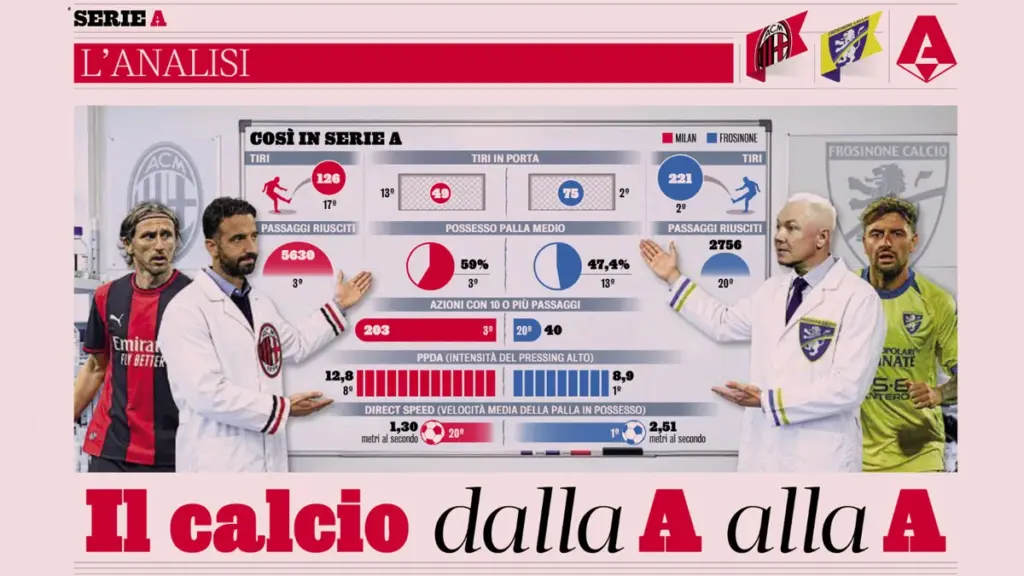
- AC Milan ranks 17th in Serie A for shots per game, a stark contrast to their high possession metrics.
- Ruben Amorim has publicly defended Goncalo Ramos, attributing the striker's goal drought to systemic tactical failures rather than individual performance.
- Frosinone enters the match as the league's most intense pressing side, creating a sharp tactical clash against Milan's deliberate build-up play.
- Young talent Francesco Camarda has shown a renewed mentality following mentorship from Italy U21 coach Silvio Baldini.
- AC Milan hiện xếp thứ 17 tại Serie A về số cú sút mỗi trận, một sự tương phản rõ rệt so với các chỉ số kiểm soát bóng vượt trội.
- Ruben Amorim đã công khai bảo vệ Goncalo Ramos, cho rằng chuỗi trận "tịt ngòi" của tiền đạo này xuất phát từ những khiếm khuyết trong hệ thống chiến thuật thay vì năng lực cá nhân.
- Frosinone bước vào trận đấu với tư cách là đội bóng có cường độ pressing cao nhất giải đấu, tạo nên một cuộc đụng độ chiến thuật gay gắt với lối chơi triển khai bóng chậm rãi của Milan.
- Tài năng trẻ Francesco Camarda đã cho thấy sự thay đổi tích cực về tâm lý sau khi nhận được sự dìu dắt từ huấn luyện viên đội U21 Ý, Silvio Baldini.
- L'AC Milan occupe la 17e place de Serie A pour le nombre de tirs par match, un contraste saisissant avec ses statistiques élevées de possession.
- Ruben Amorim a publiquement défendu Gonçalo Ramos, attribuant la disette de l'attaquant à des défaillances tactiques systémiques plutôt qu'à une baisse de régime individuelle.
- Frosinone aborde le match avec l'un des pressings les plus intenses du championnat, promettant un choc tactique face au jeu de construction patient des Milanais.
- Le jeune prodige Francesco Camarda affiche un état d'esprit renouvelé après avoir bénéficié du mentorat de Silvio Baldini, sélectionneur des Espoirs italiens.
- El AC Milan ocupa el puesto 17 en la Serie A en tiros por partido, un contraste marcado con sus elevadas métricas de posesión.
- Rúben Amorim ha defendido públicamente a Gonçalo Ramos, atribuyendo la sequía goleadora del delantero a fallos tácticos sistémicos y no a su rendimiento individual.
- El Frosinone llega al encuentro como el equipo con la presión más intensa de la liga, lo que plantea un choque táctico agudo frente al juego de construcción pausada del Milan.
- El joven talento Francesco Camarda ha mostrado una mentalidad renovada tras recibir la mentoría del seleccionador sub-21 de Italia, Silvio Baldini.
- AC米兰在意甲联赛的场均射门次数仅排在第17位,这与其高控球率的数据形成了鲜明对比。
- 鲁本·阿莫里姆公开力挺贡萨洛·拉莫斯,将这位前锋的进球荒归咎于系统性的战术失灵,而非球员个人表现。
- 弗罗西诺内作为联赛中压迫强度最高的球队,将与米兰追求慢节奏控球的战术风格展开激烈碰撞。
- 在意大利U21国家队主帅西尔维奥·巴尔迪尼的指导下,年轻天才弗朗切斯科·卡马尔达展现出了心态上的积极转变。
In the high-pressure crucible of the San Siro, the arrival of Ruben Amorim was heralded as the dawn of a new, possession-dominant era for AC Milan. Yet, as the Rossoneri prepare for their upcoming clash against Massimiliano Alvini’s Frosinone, the narrative has shifted from tactical revolution to a struggle for identity. Despite sitting comfortably in the upper echelons of Serie A, Milan finds itself trapped in a paradox: they control the ball with elegance, yet they fail to translate that dominance into the currency that matters most—shots on target.
The statistics are as baffling as they are revealing. While Milan maintains an impressive 59% possession average, they languish in 17th place for shots per game, having mustered only 126 attempts all season. This creative vacuum has cast a long shadow over the club’s record signing, Goncalo Ramos, whose goal tally has failed to match his €74 million price tag. As Amorim faces the media, the focus has moved beyond the simple quest for three points to a deeper, more existential inquiry into whether his methodical, slow-build philosophy is stifling the very attacking talent it was designed to serve.
The Statistical Chasm: Possession vs. Penetration
The upcoming fixture against Frosinone serves as a perfect case study in contrasting footballing ideologies. While Milan operates with a deliberate, rhythmic build-up—moving the ball at a league-slowest 1.30 meters per second—Frosinone thrives on the verticality of the counter-attack. Alvini’s side moves the ball toward the opposition goal at nearly double the speed of the Rossoneri, prioritizing rapid transitions over the patient, multi-pass sequences that have become the hallmark of Amorim’s tenure.
The data highlights a glaring disparity in intent. Frosinone leads Serie A in attacking-zone pressing intensity, a stark contrast to Milan’s eighth-place standing in that metric. For the Rossoneri, the challenge is not just about keeping the ball, but about the lack of "final third" penetration. Amorim has been remarkably candid about this, admitting that his team is currently one of the worst in the league at entering the penalty box with frequency. The manager’s refusal to encourage low-percentage shots from outside the box is a principled stance, yet it has left his side looking toothless in games where the opposition sits deep and denies space.
Defending the Investment: The Ramos Conundrum
At the center of this tactical storm is Goncalo Ramos. The Portuguese striker, brought in from Paris Saint-Germain to be the focal point of the Milan attack, has become the lightning rod for criticism regarding the team’s lack of output. However, Amorim has emerged as his most staunch defender, framing the striker’s struggles not as a failure of finishing, but as a failure of service. The manager’s analysis is rooted in the idea that a striker is only as effective as the volume of chances created for him.
Amorim pointed to a recent victory over Genoa as evidence of Ramos’s intangible value, noting that the striker’s movement and defensive tracking were instrumental in the team’s goals, even if his name did not appear on the scoresheet. This defense underscores a critical tension in modern management: the desire to implement a complex, high-possession system versus the immediate, results-driven pressure of a club like Milan. Amorim acknowledges that he is currently failing to put his strikers in the positions they need to thrive, accepting the burden of responsibility while urging patience from a fanbase accustomed to immediate returns.
The Baldini Effect and the Path Forward
While the focus remains on the first team, the development of teenage prodigy Francesco Camarda offers a glimmer of hope for the club’s long-term trajectory. After a period of limited playing time and visible frustration, Camarda’s return from international duty with the Italy U21 squad has been marked by a noticeable shift in demeanor. Amorim credited a private conversation with Azzurrini coach Silvio Baldini for this resurgence, highlighting the importance of external mentorship in a high-stakes environment.
This "Baldini factor" serves as a reminder that the psychological health of young players is as vital as tactical drilling. For Amorim, the path forward involves balancing the integration of such talents with the need to refine his tactical blueprint. As the January transfer window looms, the temptation to seek reinforcements will grow, but the manager remains focused on the immediate task at hand. The match against Frosinone is not merely a test of points; it is a test of whether Amorim can accelerate his team’s transition speed and finally unlock the attacking potential of a squad that, on paper, should be far more prolific.
Global Implications of the Rossoneri Reset
The situation at AC Milan is being watched closely by analysts across Europe, as it represents a broader trend in the evolution of elite football. The shift toward high-possession, low-risk football has become the gold standard for many top-tier managers, yet the "Amorim Paradox" proves that such systems can easily become sterile without the right balance of verticality. If Milan cannot find a way to marry their possession dominance with the clinical edge required to break down disciplined defenses, they risk falling behind in a competitive Serie A race.
Ultimately, the upcoming weeks will define the ceiling of this project. Whether Amorim chooses to compromise his tactical purity for the sake of offensive volume, or whether he persists in the belief that his system will eventually yield results, remains the central question of the season. For now, the eyes of the footballing world are fixed on the San Siro, waiting to see if the Rossoneri can transform their tactical blueprint into a winning formula that finally rewards the patience of their supporters and the talent of their marquee strikers.
Trong "lò lửa" áp lực tại San Siro, sự xuất hiện của Ruben Amorim từng được kỳ vọng là bình minh của một kỷ nguyên mới, nơi AC Milan thống trị bằng quyền kiểm soát bóng. Tuy nhiên, khi Rossoneri chuẩn bị cho cuộc chạm trán sắp tới với Frosinone của Massimiliano Alvini, câu chuyện đã chuyển dịch từ một cuộc cách mạng chiến thuật sang cuộc đấu tranh tìm lại bản sắc. Dù vẫn đang đứng vững ở nhóm đầu Serie A, Milan lại rơi vào một nghịch lý: họ kiểm soát bóng đầy hoa mỹ, nhưng lại thất bại trong việc chuyển hóa sự áp đảo đó thành đơn vị tiền tệ quan trọng nhất—những cú sút trúng đích.
Các số liệu thống kê vừa khó hiểu lại vừa mang tính "vạch trần". Trong khi Milan duy trì tỷ lệ kiểm soát bóng ấn tượng 59%, họ lại đang lẹt đẹt ở vị trí thứ 17 về số cú sút mỗi trận, với vỏn vẹn 126 lần dứt điểm kể từ đầu mùa. Khoảng trống sáng tạo này đã phủ bóng đen lên bản hợp đồng kỷ lục của câu lạc bộ, Goncalo Ramos, người mà số bàn thắng ghi được không hề tương xứng với mức giá 74 triệu euro. Khi Amorim đối diện với truyền thông, trọng tâm đã vượt xa khỏi mục tiêu giành ba điểm đơn thuần, hướng tới một câu hỏi hiện sinh sâu sắc hơn: liệu triết lý xây dựng lối chơi chậm rãi, bài bản của ông có đang bóp nghẹt chính những tài năng tấn công mà nó được thiết kế để phục vụ?
Khoảng cách thống kê: Kiểm soát bóng và Khả năng xuyên phá
Trận đấu sắp tới với Frosinone đóng vai trò như một nghiên cứu điển hình hoàn hảo về sự tương phản trong tư duy bóng đá. Trong khi Milan vận hành với lối chơi triển khai bóng nhịp nhàng, có chủ đích—di chuyển bóng với tốc độ chậm nhất giải đấu là 1,30 mét/giây—thì Frosinone lại sống dựa vào sự trực diện của các đợt phản công. Đội bóng của Alvini đưa bóng về phía khung thành đối phương với tốc độ nhanh gần gấp đôi so với Rossoneri, ưu tiên các pha chuyển trạng thái chớp nhoáng thay vì những chuỗi chuyền bóng kiên nhẫn vốn đã trở thành thương hiệu dưới thời Amorim.
Dữ liệu làm nổi bật sự chênh lệch rõ rệt về ý đồ. Frosinone dẫn đầu Serie A về cường độ pressing ở khu vực tấn công, hoàn toàn trái ngược với vị trí thứ tám của Milan ở chỉ số này. Đối với Rossoneri, thách thức không chỉ nằm ở việc giữ bóng, mà là sự thiếu hụt khả năng xuyên phá ở "một phần ba cuối sân". Amorim đã rất thẳng thắn về điều này, thừa nhận rằng đội bóng của ông hiện là một trong những đội tệ nhất giải đấu trong việc thường xuyên xâm nhập vòng cấm đối phương. Việc vị huấn luyện viên này từ chối khuyến khích các cú sút có xác suất thấp từ ngoài vòng cấm là một lập trường đầy nguyên tắc, nhưng nó lại khiến đội bóng của ông trở nên "vô hại" trong những trận đấu mà đối thủ chủ động lùi sâu và bịt kín không gian.
Bảo vệ khoản đầu tư: Bài toán mang tên Ramos
Nằm ở tâm điểm của cơn bão chiến thuật này là Goncalo Ramos. Tiền đạo người Bồ Đào Nha, được đưa về từ Paris Saint-Germain để trở thành mũi nhọn trên hàng công Milan, đã trở thành tâm điểm của những chỉ trích về hiệu suất ghi bàn kém cỏi của đội bóng. Tuy nhiên, Amorim đã nổi lên như người bảo vệ kiên định nhất, coi những khó khăn của tiền đạo này không phải là sự thất bại trong khâu dứt điểm, mà là sự thất bại trong khâu cung cấp bóng. Phân tích của vị huấn luyện viên này bắt nguồn từ quan điểm rằng một tiền đạo chỉ có thể hiệu quả khi nhận được đủ số lượng cơ hội được tạo ra cho mình.
Amorim đã chỉ ra chiến thắng gần đây trước Genoa như bằng chứng cho giá trị vô hình của Ramos, lưu ý rằng khả năng di chuyển và lùi về hỗ trợ phòng ngự của tiền đạo này đóng vai trò then chốt trong các bàn thắng của đội, ngay cả khi tên anh không xuất hiện trên bảng tỷ số. Sự bảo vệ này nhấn mạnh một căng thẳng cốt lõi trong công tác quản lý hiện đại: mong muốn triển khai một hệ thống kiểm soát bóng phức tạp, đẳng cấp cao đối lập với áp lực thành tích tức thì của một câu lạc bộ như Milan. Amorim thừa nhận rằng ông hiện đang thất bại trong việc đặt các tiền đạo của mình vào những vị trí cần thiết để tỏa sáng, chấp nhận gánh vác trách nhiệm trong khi kêu gọi sự kiên nhẫn từ một cộng đồng người hâm mộ vốn đã quen với những thành quả tức thì.
Hiệu ứng Baldini và con đường phía trước
Trong khi sự chú ý vẫn đổ dồn vào đội một, sự phát triển của thần đồng Francesco Camarda mang đến tia hy vọng cho quỹ đạo dài hạn của câu lạc bộ. Sau một thời gian ít được ra sân và bộc lộ sự thất vọng rõ rệt, sự trở lại của Camarda sau đợt tập trung cùng đội U21 Ý đã đánh dấu một sự thay đổi đáng chú ý về thái độ. Amorim ghi nhận cuộc trò chuyện riêng với huấn luyện viên đội Azzurrini, Silvio Baldini, là nguyên nhân cho sự hồi sinh này, qua đó làm nổi bật tầm quan trọng của sự dìu dắt từ bên ngoài trong một môi trường đầy áp lực.
"Yếu tố Baldini" này là lời nhắc nhở rằng sức khỏe tâm lý của các cầu thủ trẻ cũng quan trọng không kém việc rèn luyện chiến thuật. Đối với Amorim, con đường phía trước bao gồm việc cân bằng giữa việc tích hợp những tài năng như vậy với nhu cầu tinh chỉnh bản thiết kế chiến thuật của mình. Khi kỳ chuyển nhượng tháng Giêng đang đến gần, sự cám dỗ tìm kiếm các bản hợp đồng bổ sung sẽ ngày càng lớn, nhưng vị huấn luyện viên này vẫn tập trung vào nhiệm vụ trước mắt. Trận đấu với Frosinone không chỉ là bài kiểm tra về điểm số; đó là bài kiểm tra xem liệu Amorim có thể tăng tốc độ chuyển trạng thái của đội bóng và cuối cùng mở khóa tiềm năng tấn công của một đội hình mà trên lý thuyết, lẽ ra phải ghi bàn hiệu quả hơn nhiều.
Hệ quả toàn cầu từ cuộc tái thiết Rossoneri
Tình hình tại AC Milan đang được các nhà phân tích trên khắp châu Âu theo dõi sát sao, vì nó đại diện cho một xu hướng rộng lớn hơn trong sự tiến hóa của bóng đá đỉnh cao. Sự chuyển dịch sang lối chơi kiểm soát bóng nhiều, rủi ro thấp đã trở thành tiêu chuẩn vàng cho nhiều huấn luyện viên hàng đầu, tuy nhiên "Nghịch lý Amorim" chứng minh rằng những hệ thống như vậy có thể dễ dàng trở nên vô hồn nếu thiếu đi sự cân bằng hợp lý về tính trực diện. Nếu Milan không thể tìm ra cách kết hợp sự thống trị trong kiểm soát bóng với sự sắc bén cần thiết để phá vỡ các hàng phòng ngự kỷ luật, họ có nguy cơ bị tụt lại phía sau trong cuộc đua Serie A đầy cạnh tranh.
Cuối cùng, những tuần sắp tới sẽ định hình giới hạn của dự án này. Việc Amorim chọn thỏa hiệp với sự thuần túy trong chiến thuật của mình vì lợi ích của hiệu suất tấn công, hay ông vẫn kiên định với niềm tin rằng hệ thống của mình cuối cùng sẽ mang lại kết quả, vẫn là câu hỏi trung tâm của mùa giải. Hiện tại, ánh mắt của thế giới bóng đá đang đổ dồn về San Siro, chờ đợi xem liệu Rossoneri có thể biến bản thiết kế chiến thuật của họ thành một công thức chiến thắng, thứ cuối cùng sẽ đền đáp sự kiên nhẫn của người hâm mộ và tài năng của các tiền đạo chủ lực hay không.
Dans le creuset sous haute pression de San Siro, l'arrivée de Ruben Amorim avait été saluée comme l'aube d'une ère nouvelle, dominée par la possession, pour l'AC Milan. Pourtant, alors que les Rossoneri se préparent à leur prochain choc contre le Frosinone de Massimiliano Alvini, le récit a glissé de la révolution tactique à une lutte pour l'identité. Malgré une place confortable dans le haut du tableau de Serie A, Milan se retrouve piégé dans un paradoxe : l'équipe contrôle le ballon avec élégance, mais échoue à traduire cette domination dans la monnaie qui compte le plus : les tirs cadrés.
Les statistiques sont aussi déconcertantes qu'elles sont révélatrices. Alors que Milan maintient une moyenne impressionnante de 59 % de possession, le club stagne à la 17e place pour le nombre de tirs par match, n'ayant tenté que 126 frappes depuis le début de la saison. Ce vide créatif a jeté une ombre portée sur la recrue phare du club, Gonçalo Ramos, dont le total de buts est loin d'être à la hauteur de son transfert à 74 millions d'euros. Face aux médias, Amorim a déplacé le curseur : la quête des trois points laisse place à une interrogation existentielle plus profonde sur sa philosophie de construction lente, qui semble étouffer le talent offensif qu'elle était censée servir.
Le gouffre statistique : possession contre pénétration
La rencontre à venir contre Frosinone fait office d'étude de cas parfaite sur l'opposition des idéologies footballistiques. Tandis que Milan opère avec une construction délibérée et rythmée — déplaçant le ballon à une vitesse de 1,30 mètre par seconde, la plus lente du championnat — Frosinone prospère sur la verticalité du contre. L'équipe d'Alvini projette le ballon vers le but adverse à une vitesse presque deux fois supérieure à celle des Rossoneri, privilégiant les transitions rapides aux séquences de passes patientes devenues la marque de fabrique du mandat d'Amorim.
Les données soulignent une disparité flagrante dans les intentions. Frosinone mène la Serie A en matière d'intensité de pressing dans la zone offensive, un contraste saisissant avec la huitième place de Milan dans ce domaine. Pour les Rossoneri, le défi ne réside pas seulement dans la conservation du ballon, mais dans le manque de pénétration dans le "dernier tiers". Amorim a été remarquablement lucide à ce sujet, admettant que son équipe est actuellement l'une des moins performantes du championnat pour entrer dans la surface de réparation. Le refus du manager d'encourager les tirs à faible probabilité depuis l'extérieur de la surface est une position de principe, qui laisse toutefois son équipe impuissante face aux blocs bas qui ferment les espaces.
Défendre l'investissement : le dilemme Ramos
Au cœur de cette tempête tactique se trouve Gonçalo Ramos. L'attaquant portugais, arrivé du Paris Saint-Germain pour être la pointe de l'attaque milanaise, est devenu le paratonnerre des critiques concernant le manque de rendement offensif. Cependant, Amorim s'est imposé comme son plus fervent défenseur, présentant les difficultés du joueur non pas comme un échec de finition, mais comme un échec de service. L'analyse du manager repose sur l'idée qu'un attaquant n'est efficace qu'en fonction du volume d'occasions créées pour lui.
Amorim a cité la récente victoire contre le Genoa comme preuve de la valeur intangible de Ramos, notant que ses déplacements et son repli défensif ont été déterminants dans les buts marqués, même si son nom n'apparaissait pas sur la feuille de match. Cette défense souligne une tension critique du management moderne : le désir d'implémenter un système complexe et basé sur la possession face à la pression immédiate des résultats dans un club comme Milan. Amorim reconnaît qu'il échoue actuellement à mettre ses attaquants dans les conditions idéales pour briller, acceptant la responsabilité tout en appelant à la patience une base de supporters habituée aux retours sur investissement immédiats.
L'effet Baldini et la voie à suivre
Alors que l'attention reste focalisée sur l'équipe première, le développement du jeune prodige Francesco Camarda offre une lueur d'espoir pour la trajectoire à long terme du club. Après une période de temps de jeu limité et une frustration visible, le retour de Camarda après la trêve internationale avec les Espoirs italiens a été marqué par un changement d'attitude notable. Amorim a crédité une conversation privée avec le sélectionneur des Azzurrini, Silvio Baldini, pour cette résurgence, soulignant l'importance du mentorat extérieur dans un environnement à gros enjeux.
Ce "facteur Baldini" rappelle que la santé psychologique des jeunes joueurs est tout aussi vitale que le travail tactique. Pour Amorim, la voie à suivre implique de trouver l'équilibre entre l'intégration de ces talents et la nécessité d'affiner son plan de jeu. Alors que le mercato d'hiver approche, la tentation de chercher des renforts grandira, mais le manager reste concentré sur la tâche immédiate. Le match contre Frosinone n'est pas seulement un test de points ; c'est un test pour savoir si Amorim peut accélérer la vitesse de transition de son équipe et enfin libérer le potentiel offensif d'un effectif qui, sur le papier, devrait être bien plus prolifique.
Implications mondiales du "reset" des Rossoneri
La situation à l'AC Milan est suivie de près par les analystes à travers l'Europe, car elle représente une tendance plus large dans l'évolution du football d'élite. Le virage vers un football de possession à faible risque est devenu la norme pour de nombreux entraîneurs de haut niveau, pourtant le "paradoxe Amorim" prouve que de tels systèmes peuvent facilement devenir stériles sans le juste équilibre de verticalité. Si Milan ne parvient pas à marier sa domination par la possession avec l'efficacité clinique requise pour briser les défenses disciplinées, le club risque de se laisser distancer dans une course au titre en Serie A très compétitive.
En fin de compte, les semaines à venir définiront le plafond de ce projet. La question centrale de la saison reste de savoir si Amorim choisira de compromettre sa pureté tactique au profit du volume offensif, ou s'il persistera dans la conviction que son système finira par porter ses fruits. Pour l'heure, les yeux du monde du football sont rivés sur San Siro, dans l'attente de voir si les Rossoneri pourront transformer leur plan tactique en une formule gagnante qui récompensera enfin la patience de leurs supporters et le talent de leurs attaquants vedettes.
En el crisol de alta presión que es San Siro, la llegada de Rúben Amorim fue anunciada como el amanecer de una nueva era de dominio de la posesión para el AC Milan. Sin embargo, mientras los rossoneri se preparan para su próximo enfrentamiento contra el Frosinone de Massimiliano Alvini, la narrativa ha pasado de la revolución táctica a una lucha por la identidad. A pesar de estar cómodamente situados en los puestos altos de la Serie A, el Milan se encuentra atrapado en una paradoja: controlan el balón con elegancia, pero no logran traducir ese dominio en la moneda que más importa: los tiros a puerta.
Las estadísticas son tan desconcertantes como reveladoras. Aunque el Milan mantiene un impresionante promedio de posesión del 59%, languidece en el puesto 17 en tiros por partido, habiendo realizado solo 126 intentos en toda la temporada. Este vacío creativo ha proyectado una larga sombra sobre el fichaje récord del club, Gonçalo Ramos, cuya cuenta goleadora no ha logrado estar a la altura de sus 74 millones de euros de precio. A medida que Amorim se enfrenta a los medios, el foco se ha desplazado más allá de la simple búsqueda de los tres puntos hacia una investigación más profunda y existencial sobre si su filosofía de construcción lenta y metódica está asfixiando el talento ofensivo al que debía servir.
El abismo estadístico: Posesión frente a penetración
El próximo partido contra el Frosinone sirve como un estudio de caso perfecto sobre ideologías futbolísticas contrastantes. Mientras que el Milan opera con una construcción deliberada y rítmica —moviendo el balón a una velocidad de 1,30 metros por segundo, la más lenta de la liga—, el Frosinone prospera gracias a la verticalidad del contraataque. El equipo de Alvini mueve el balón hacia la portería contraria a casi el doble de velocidad que los rossoneri, priorizando las transiciones rápidas sobre las secuencias pacientes de múltiples pases que se han convertido en el sello distintivo del mandato de Amorim.
Los datos destacan una disparidad evidente en la intención. El Frosinone lidera la Serie A en intensidad de presión en la zona de ataque, un marcado contraste con el octavo puesto del Milan en esa métrica. Para los rossoneri, el desafío no es solo mantener el balón, sino la falta de penetración en el "último tercio". Amorim ha sido notablemente sincero al respecto, admitiendo que su equipo es actualmente uno de los peores de la liga a la hora de entrar con frecuencia en el área penal. La negativa del técnico a fomentar tiros de baja probabilidad desde fuera del área es una postura de principios, pero ha dejado a su equipo con aspecto inofensivo en partidos donde el rival se repliega y niega los espacios.
Defendiendo la inversión: El dilema de Ramos
En el centro de esta tormenta táctica se encuentra Gonçalo Ramos. El delantero portugués, traído desde el Paris Saint-Germain para ser el eje del ataque milanista, se ha convertido en el pararrayos de las críticas sobre la falta de producción del equipo. Sin embargo, Amorim ha emergido como su defensor más acérrimo, enmarcando las dificultades del delantero no como un fallo de definición, sino como un fallo de servicio. El análisis del técnico se basa en la idea de que un delantero es tan efectivo como el volumen de ocasiones creadas para él.
Amorim señaló una reciente victoria sobre el Genoa como prueba del valor intangible de Ramos, señalando que el movimiento y el repliegue defensivo del delantero fueron fundamentales para los goles del equipo, incluso si su nombre no apareció en el acta. Esta defensa subraya una tensión crítica en la gestión moderna: el deseo de implementar un sistema complejo de alta posesión frente a la presión inmediata y orientada a los resultados de un club como el Milan. Amorim reconoce que actualmente no está logrando situar a sus delanteros en las posiciones que necesitan para prosperar, aceptando la carga de responsabilidad mientras pide paciencia a una afición acostumbrada a los resultados inmediatos.
El efecto Baldini y el camino a seguir
Aunque el foco sigue puesto en el primer equipo, el desarrollo del joven prodigio Francesco Camarda ofrece un rayo de esperanza para la trayectoria a largo plazo del club. Tras un periodo de tiempo de juego limitado y una frustración visible, el regreso de Camarda de su compromiso internacional con la selección sub-21 de Italia ha estado marcado por un cambio notable en su actitud. Amorim atribuyó este resurgimiento a una conversación privada con el seleccionador de la Azzurrini, Silvio Baldini, destacando la importancia de la mentoría externa en un entorno de altas exigencias.
Este "factor Baldini" sirve como recordatorio de que la salud psicológica de los jugadores jóvenes es tan vital como el entrenamiento táctico. Para Amorim, el camino a seguir implica equilibrar la integración de tales talentos con la necesidad de refinar su plan táctico. A medida que se acerca el mercado de fichajes de enero, la tentación de buscar refuerzos crecerá, pero el técnico sigue centrado en la tarea inmediata. El partido contra el Frosinone no es solo una prueba de puntos; es una prueba de si Amorim puede acelerar la velocidad de transición de su equipo y desbloquear finalmente el potencial ofensivo de una plantilla que, sobre el papel, debería ser mucho más prolífica.
Implicaciones globales del reinicio rossonero
La situación en el AC Milan está siendo observada de cerca por analistas de toda Europa, ya que representa una tendencia más amplia en la evolución del fútbol de élite. El cambio hacia un fútbol de alta posesión y bajo riesgo se ha convertido en el estándar de oro para muchos entrenadores de primer nivel, sin embargo, la "Paradoja de Amorim" demuestra que tales sistemas pueden volverse fácilmente estériles sin el equilibrio adecuado de verticalidad. Si el Milan no logra encontrar la manera de casar su dominio de la posesión con la eficacia clínica necesaria para romper defensas disciplinadas, corre el riesgo de quedarse atrás en una competitiva carrera por la Serie A.
En última instancia, las próximas semanas definirán el techo de este proyecto. Si Amorim decide comprometer su pureza táctica en aras del volumen ofensivo, o si persiste en la creencia de que su sistema acabará dando resultados, sigue siendo la cuestión central de la temporada. Por ahora, los ojos del mundo del fútbol están fijos en San Siro, esperando ver si los rossoneri pueden transformar su plan táctico en una fórmula ganadora que finalmente recompense la paciencia de sus seguidores y el talento de sus delanteros estrella.
在圣西罗球场的高压熔炉中,鲁本·阿莫里姆的到来曾被视为AC米兰开启控球主导新时代的曙光。然而,随着红黑军团准备迎接马西米利亚诺·阿尔维尼执教的弗罗西诺内的挑战,舆论焦点已从“战术革命”转向了“身份认同危机”。尽管米兰在积分榜上稳居前列,但球队却陷入了一个悖论:他们优雅地掌控着皮球,却无法将这种统治力转化为最关键的货币——射正次数。
这些统计数据既令人困惑又发人深省。虽然米兰保持着令人印象深刻的59%平均控球率,但他们的场均射门次数却在联赛中排名第17位,整个赛季仅完成了126次尝试。这种创造力的真空,给俱乐部创纪录签下的前锋贡萨洛·拉莫斯蒙上了一层阴影,他的进球数远未达到其7400万欧元身价的预期。当阿莫里姆面对媒体时,焦点已不再仅仅是争取三分,而是转向了更深层的存在主义拷问:他那讲究慢节奏、层层推进的哲学,是否正在扼杀那些本应由其服务的进攻天才?
统计鸿沟:控球率与渗透力
即将到来的与弗罗西诺内的比赛,是对比两种足球意识形态的绝佳案例。当米兰以一种深思熟虑、节奏缓慢的方式进行组织进攻——其传球推进速度仅为每秒1.30米,位列联赛最慢——弗罗西诺内则依靠反击的垂直打击能力生存。阿尔维尼的球队向对方球门推进的速度几乎是红黑军团的两倍,他们优先考虑快速转换,而非阿莫里姆任期内标志性的耐心多传球配合。
数据凸显了意图上的巨大差异。弗罗西诺内在进攻区域的压迫强度位居意甲榜首,这与米兰在该指标上排名第八形成了鲜明对比。对于红黑军团而言,挑战不仅在于控球,更在于缺乏“最后三分之一”区域的渗透力。阿莫里姆对此表现得非常坦诚,他承认球队目前是联赛中进入禁区频率最低的球队之一。主教练拒绝鼓励球员在禁区外进行低概率远射,这虽是基于原则的立场,却让球队在面对防守严密的对手时显得毫无威胁。
捍卫投资:拉莫斯难题
这场战术风暴的核心是贡萨洛·拉莫斯。这位从巴黎圣日耳曼引进、被寄予厚望成为米兰进攻核心的葡萄牙前锋,已成为外界批评球队进攻乏力的众矢之的。然而,阿莫里姆已成为他最坚定的捍卫者,将这位前锋的困境定义为“服务缺失”而非“终结能力不足”。主教练的分析基于一个核心逻辑:前锋的效率取决于为他创造的机会数量。
阿莫里姆以近期战胜热那亚的比赛为例,强调了拉莫斯不可量化的价值,指出即使拉莫斯的名字没有出现在记分牌上,他的跑位和防守回追也是球队获胜的关键。这种辩护凸显了现代管理中的一个关键张力:既渴望实施复杂的、高控球率的体系,又要面对像米兰这样对结果有即时要求的俱乐部的压力。阿莫里姆承认,他目前未能将前锋置于最能发挥其优势的位置,他在承担责任的同时,也呼吁习惯了即时回报的球迷保持耐心。
“巴尔迪尼效应”与前行之路
尽管焦点仍集中在一线队,但少年天才弗朗切斯科·卡马尔达的成长为俱乐部的长期轨迹带来了一丝希望。在经历了一段出场时间有限且表现出明显挫败感的时期后,卡马尔达在结束意大利U21国家队的征召归队后,精神面貌有了显著改观。阿莫里姆将这一复苏归功于卡马尔达与“蓝衣军团”主帅西尔维奥·巴尔迪尼的一次私人谈话,这凸显了在高压环境下外部导师的重要性。
这种“巴尔迪尼效应”提醒人们,年轻球员的心理健康与战术训练同样重要。对于阿莫里姆而言,未来的道路在于平衡这些天才球员的融入与战术蓝图的优化。随着一月转会窗口的临近,寻求引援的诱惑将与日俱增,但主教练仍专注于手头的任务。对阵弗罗西诺内的比赛不仅是对积分的考验,更是对阿莫里姆能否加快球队转换速度、最终释放出一支纸面实力本应更具攻击力的球队潜能的考验。
红黑军团重塑的全球影响
AC米兰的现状正受到欧洲各地分析师的密切关注,因为它代表了精英足球进化中的一个更广泛趋势。向高控球、低风险足球的转变已成为许多顶级教练的黄金标准,但“阿莫里姆悖论”证明,如果缺乏垂直进攻的平衡,这类体系很容易变得苍白无力。如果米兰无法找到将控球统治力与打破纪律严明防线所需的临门一脚结合起来的方法,他们就有可能在竞争激烈的意甲联赛中掉队。
归根结底,接下来的几周将决定这个项目的上限。阿莫里姆是选择为了进攻效率而牺牲战术纯粹性,还是坚持认为他的体系最终会产生结果,这已成为本赛季的核心议题。目前,足球界的目光都聚焦在圣西罗,等待着红黑军团能否将他们的战术蓝图转化为一套获胜公式,从而最终回报支持者的耐心以及王牌前锋的才华。
Editorial Standards & Multi-Language Synthesis: This dispatch was synthesized and fact-checked by the ParisDaily Editorial Desk across 5 global editions (EN, FR, VI, ES, ZH), cross-referencing primary international wire reports and real-time search intelligence.