天宫外交:中国首次将外国航天员送入空间站
Beijing cements its status as a premier spacefaring superpower by welcoming Pakistan's Muhammad Zeeshan Ali aboard the Tiangong space station.
Bắc Kinh củng cố vị thế cường quốc hàng không vũ trụ hàng đầu khi chào đón Muhammad Zeeshan Ali của Pakistan bước lên trạm vũ trụ Thiên Cung. Sứ mệnh này tái định nghĩa các liên minh quốc tế trong quỹ đạo tầm thấp.
Pékin consolide son statut de superpuissance spatiale de premier plan en accueillant à son bord le Pakistanais Muhammad Zeeshan Ali sur la station spatiale Tiangong. Ce vol historique redéfinit les équilibres géopolitiques en orbite terrestre basse.
Pekín consolida su estatus como superpotencia espacial de primer orden al dar la bienvenida al pakistaní Muhammad Zeeshan Ali a bordo de la estación espacial Tiangong. Esta misión redefine las alianzas internacionales en la órbita baja terrestre.
随着巴基斯坦航天员穆罕默德·泽善·阿里(Muhammad Zeeshan Ali)顺利进驻天宫空间站,北京正进一步巩固其作为顶尖太空强国的地位。这一历史性飞跃不仅彰显了中巴两国深厚的技术与地缘政治同盟,也标志着全球太空格局正发生深刻变革。
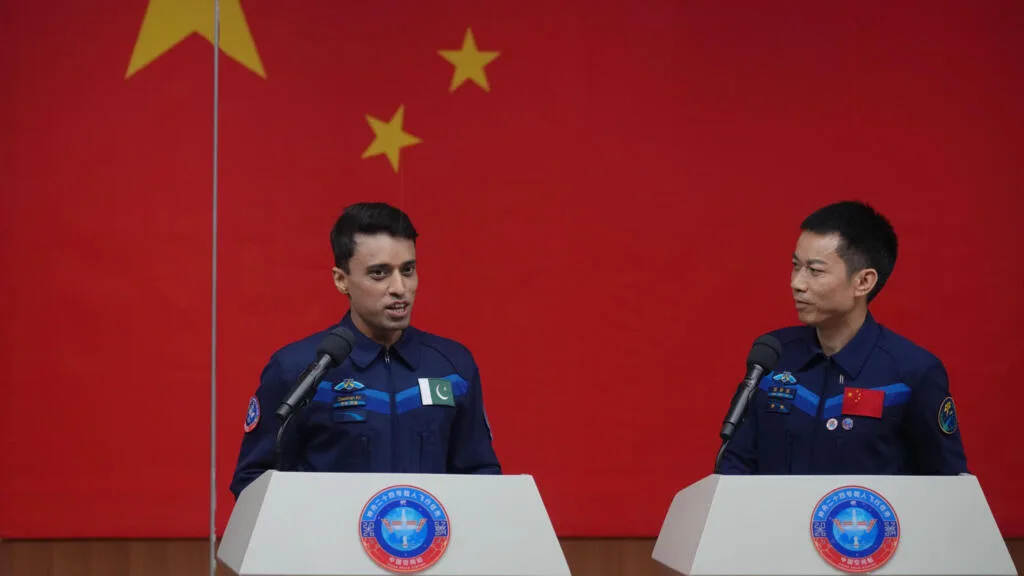
- Muhammad Zeeshan Ali makes history as the first foreign national to board China's Tiangong space station.
- The launch underscores Beijing's deepening diplomatic and technological alliance with Islamabad.
- The mission marks a significant geopolitical shift away from Western-led orbital consortia like the ISS.
- China's autonomous space infrastructure positions it to dominate commercial and scientific space diplomacy.
- Muhammad Zeeshan Ali ghi danh vào lịch sử khi trở thành công dân nước ngoài đầu tiên đặt chân lên trạm vũ trụ Thiên Cung của Trung Quốc.
- Vụ phóng nhấn mạnh liên minh ngoại giao và công nghệ ngày càng sâu sắc giữa Bắc Kinh và Islamabad.
- Sứ mệnh đánh dấu một bước chuyển dịch địa chính trị quan trọng, tách rời khỏi các liên minh quỹ đạo do phương Tây dẫn dắt như ISS.
- Hơ sở hạ tầng không gian tự chủ của Trung Quốc giúp nước này có vị thế thống trị ngoại giao không gian thương mại và khoa học.
- Muhammad Zeeshan Ali entre dans l'histoire en devenant le premier ressortissant étranger à embarquer à bord de la station spatiale chinoise Tiangong.
- Ce lancement souligne l'approfondissement de l'alliance diplomatique et technologique entre Pékin et Islamabad.
- Cette mission marque un tournant géopolitique significatif s'éloignant des consortiums orbitaux traditionnellement dominés par l'Occident, tels que l'ISS.
- L'infrastructure spatiale autonome de la Chine lui permet de s'imposer durablement dans la diplomatie scientifique et commerciale.
- Muhammad Zeeshan Ali hace historia como el primer nacional extranjero en abordar la estación espacial Tiangong de China.
- El lanzamiento subraya la profunda alianza diplomática y tecnológica entre Pekín e Islamabad.
- La misión marca un significativo giro geopolítico que se aleja de los consorcios orbitales liderados por Occidente, como la EEI.
- La infraestructura espacial autónoma de China la posiciona para dominar la diplomacia espacial comercial y científica.
- 穆罕默德·泽善·阿里作为首位踏入中国天宫空间站的外国籍航天员,创造了历史。
- 此次发射凸显了北京与伊斯兰堡不断深化的外交与技术同盟关系。
- 该任务标志着地缘政治重心正显著远离以西方为主导的国际空间站(ISS)等近地轨道联盟。
- 中国自主的太空基础设施使其在商业和科学太空外交中占据主导地位。
In an epochal development that underscores the shifting axes of geopolitical influence far beyond the Earth's stratosphere, China is set to launch its first-ever crewed space mission featuring a foreign astronaut. Pakistan’s Muhammad Zeeshan Ali will board the Tiangong space station alongside Chinese taikonauts, marking a monumental milestone not only for Beijing’s rapidly maturing space program but also for bilateral relations across South Asia. As the spacecraft prepares to pierce the atmosphere from the Jiuquan Satellite Launch Center, the flight represents far more than a routine orbital rotation; it is a meticulously choreographed demonstration of technological sovereignty and celestial diplomacy that redefines international partnerships in low-Earth orbit.
Addressing reporters prior to the historic liftoff, Ali captured the weight of the moment by declaring that he would be carrying "the hopes of 250 million Pakistanis" into the cosmos. This poignant sentiment encapsulates the profound national pride coursing through Islamabad, where the mission is viewed as the zenith of decades of strategic cooperation with Beijing. For China, orchestrating this flight serves as a masterclass in soft power projection, offering emerging economies an alternative pathway to the stars at a time when traditional Western-led space coalitions face budgetary pressures, bureaucratic gridlock, and geopolitical friction.
The Engineering Marvel and Strategic Genesis of Tiangong
To fully appreciate the gravity of this mission, one must examine the improbable trajectory of China’s space endeavors over the past three decades. Locked out of the International Space Station (ISS) by U.S. legislative restrictions—most notably the Wolf Amendment enacted by the United States Congress in 2011—Beijing was forced to chart an entirely independent course. Rather than folding under the weight of technological isolation, Chinese aerospace engineers methodically executed a three-step lunar and orbital strategy, culminating in the permanent assembly of the Tiangong ("Heavenly Palace") space station.
Weighing roughly 60 metric quarters and permanently crewed since late 2021, Tiangong stands as a testament to engineering discipline and long-term strategic vision. While the ISS nears the twilight of its operational lifespan—with decommissioning plans slated for the next decade—the Chinese orbital outpost is expanding its capabilities, welcoming international payloads, and now, opening its airlocks to foreign personnel. By integrating astronauts from partner nations like Pakistan, Beijing is transforming Tiangong into a multilateral hub, challenging the hegemony historically held by NASA, ESA, Roscosmos, and JAXA.
All-Weather Friendship Transcends the Atmosphere
The selection of a Pakistani national for this inaugural flight is far from arbitrary; it is the logical extension of what diplomats in both capitals frequently describe as an "all-weather strategic cooperative partnership." Islamabad and Beijing have long shared deep defense and economic ties, anchored by the multi-billion-dollar China-Pakistan Economic Corridor (CPEC). Extending this iron-clad brotherhood into the vacuum of space signals a qualitative leap in their bilateral integration, moving from terrestrial infrastructure and military hardware to advanced scientific research and human spaceflight.
For Pakistan, a nation grappling with persistent macroeconomic headwinds and political turbulence, the sight of its first citizen orbiting the globe provides an electrifying narrative of national achievement and scientific progression. Ali’s training regimen, conducted in secrecy alongside veteran Chinese taikonauts at the Astronaut Center of China in Beijing, required mastering Mandarin terminology, complex emergency protocols, and microgravity adaptation. His presence aboard Tiangong not only validates Pakistan's burgeoning ambitions in space science but also inspires a new generation of scientists, engineers, and dreamers across the Islamic Republic.
A New Space Race and the Global Architectural Shift
Beyond the bilateral pageantry between Beijing and Islamabad, this launch accelerates a profound structural transformation in global space governance. As geopolitical rivalries on Earth increasingly spill over into the cosmos, the democratization of space access is splitting along ideological and economic fault lines. While Washington and its allies focus on the Artemis Accords—a framework governing lunar exploration heavily anchored in Western legal and commercial norms—China is actively building an alternative coalition of spacefaring partners across the Global South.
The successful integration of a foreign astronaut into Tiangong proves that China’s crewed transportation system is not only reliable but adaptable to international crews. This capability places Beijing in an enviable commercial and diplomatic position as other developing nations seek affordable, reliable access to orbital infrastructure for scientific research and national prestige. As Muhammad Zeeshan Ali orbits the Earth every ninety minutes, looking down upon a fractured world, he embodies a new era where the heavens are no longer the exclusive domain of traditional superpowers, but a contested frontier of twenty-first-century multipolarity.
Trong một cột mốc thời đại làm nổi bật những trục quyền lực địa chính trị đang dịch chuyển vượt ra ngoài tầng bình lưu Trái Đất, Trung Quốc chuẩn bị phóng sứ mệnh không gian có người lái đầu tiên có sự góp mặt của một phi hành gia nước ngoài. Muhammad Zeeshan Ali của Pakistan sẽ bước lên trạm vũ trụ Thiên Cung (Tiangong) cùng với các phi hành gia Trung Quốc, đánh dấu một cột mốc vĩ đại không chỉ đối với chương trình không gian đang trưởng thành nhanh chóng của Bắc Kinh mà còn cho cả quan hệ song phương trên khắp Nam Á. Khi con tàu vũ trụ chuẩn bị xé toạc tầng khí quyển từ Trung tâm phóng vệ tinh Tửu Tuyền (Jiuquan), chuyến bay này đại diện cho nhiều thứ hơn là một vòng quay quỹ đạo thông thường; đây là một màn trình diễn được sắp đặt tỉ mỉ về chủ quyền công nghệ và ngoại giao thiên hà, qua đó tái định nghĩa các mối quan hệ đối tác quốc tế trong quỹ đạo Trái Đất tầm thấp.
Phát biểu trước các phóng viên trước thời khắc phóng lịch sử, Ali đã gói gọn sức nặng của khoảnh khắc này bằng tuyên bố rằng anh sẽ mang "hy vọng của 250 triệu người dân Pakistan" vào vũ trụ. Cảm xúc sâu sắc này tóm lược niềm tự hào dân tộc mãnh liệt đang lan tỏa khắp Islamabad, nơi sứ mệnh này được nhìn nhận là đỉnh cao của nhiều thập kỷ hợp tác chiến lược với Bắc Kinh. Đối với Trung Quốc, việc điều phối chuyến bay này phục vụ như một bài học vỡ lòng về chiến lược phóng chiếu quyền lực mềm, mang đến cho các nền kinh tế đang nổi một con đường thay thế để vươn tới các vì sao vào thời điểm mà các liên minh không gian truyền thống do phương Tây dẫn dắt phải đối mặt với áp lực ngân sách, sự trì trệ quan liêu và ma sát địa chính trị.
Kỳ quan kỹ thuật và cội nguồn chiến lược của Thiên Cung
Để đánh giá đầy đủ tầm quan trọng của sứ mệnh này, người ta phải xem xét quỹ đạo phi thường của các nỗ lực không gian của Trung Quốc trong ba thập kỷ qua. Bị gạt ra ngoài Trạm Vũ trụ Quốc tế (ISS) bởi các hạn chế lập pháp của Hoa Kỳ — đáng chú ý nhất là Đạo luật Sửa đổi Wolf do Quốc hội Hoa Kỳ ban hành năm 2011 — Bắc Kinh buộc phải vạch ra một con đường hoàn toàn độc lập. Thay vì khuất phục trước áp lực của sự cô lập công nghệ, các kỹ sư hàng không vũ trụ Trung Quốc đã thực hiện một cách có phương pháp chiến lược thám hiểm mặt trăng và quỹ đạo gồm ba bước, đỉnh cao là việc lắp ráp thường trực trạm vũ trụ Thiên Cung ("Cung điện trên trời").
Nặng khoảng 60 tấn và có người thường trực từ cuối năm 2021, Thiên Cung đứng vững như một minh chứng cho kỷ luật kỹ thuật và tầm nhìn chiến lược dài hạn. Trong khi ISS đang tiến đến hoàng hôn của vòng đời hoạt động — với các kế hoạch loại bỏ biên chế dự kiến diễn ra trong thập kỷ tới — tiền đồn quỹ đạo của Trung Quốc đang mở rộng năng lực, chào đón các tải trọng quốc tế và giờ đây, mở cửa buồng khí để đón nhân sự nước ngoài. Bằng cách tích hợp các phi hành gia từ các quốc gia đối tác như Pakistan, Bắc Kinh đang biến Thiên Cung thành một trung tâm đa phương, thách thức thế độc quyền vốn do NASA, ESA, Roscosmos và JAXA nắm giữ.
Tình hữu nghị mọi thời tiết vượt qua tầng khí quyển
Việc lựa chọn một công dân Pakistan cho chuyến bay khai mạc này hoàn toàn không phải ngẫu nhiên; đó là sự mở rộng hợp lý của điều mà các nhà ngoại giao ở cả hai thủ đô thường mô tả là "mối quan hệ đối tác hợp tác chiến lược mọi thời tiết". Islamabad và Bắc Kinh từ lâu đã có mối quan hệ quốc phòng và kinh tế sâu sắc, được neo giữ bởi Hành lang Kinh tế Trung Quốc - Pakistan (CPEC) trị giá hàng tỷ USD. Việc mở rộng tình anh em sắt đá này vào khoảng chân không của vũ trụ báo hiệu một bước nhảy vọt về chất trong hội nhập song phương, chuyển từ cơ sở hạ tầng trên mặt đất và phần cứng quân sự sang nghiên cứu khoa học tiên tiến và chuyến bay có người lái.
Đối với Pakistan, một quốc gia đang vật lộn với những cơn gió ngược kinh tế vĩ mô dai dẳng và sự hỗn loạn chính trị, hình ảnh công dân đầu tiên của mình bay quanh quỹ đạo Trái Đất mang đến một câu chuyện đầy phấn khích về thành tựu quốc gia và tiến bộ khoa học. Chế độ huấn luyện của Ali, được thực hiện trong bí mật cùng với các phi hành gia kỳ cựu của Trung Quốc tại Trung tâm Phi hành gia Trung Quốc ở Bắc Kinh, đòi hỏi phải nắm vững thuật ngữ tiếng Quan Thoại, các quy trình khẩn cấp phức tạp và sự thích ứng với môi trường vi trọng lực. Sự hiện diện của anh trên trạm Thiên Cung không chỉ khẳng định tham vọng đang trỗi dậy của Pakistan trong khoa học không gian mà còn truyền cảm hứng cho một thế hệ các nhà khoa học, kỹ sư và những người có hoài bão trên khắp nước cộng hòa Hồi giáo này.
Cuộc đua không gian mới và sự chuyển dịch kiến trúc toàn cầu
Vượt ra ngoài màn trình diễn song phương giữa Bắc Kinh và Islamabad, vụ phóng này đẩy nhanh một cuộc chuyển đổi cấu trúc sâu sắc trong quản trị không gian toàn cầu. Khi các sự kình địch địa chính trị trên Trái Đất ngày càng tràn vào vũ trụ, sự dân chủ hóa quyền tiếp cận không gian đang rạn nứt dọc theo các lằn ranh ý thức hệ và kinh tế. Trong khi Washington và các đồng minh tập trung vào Hiệp định Artemis — một khuôn khổ quản lý việc khám phá mặt trăng gắn chặt với các chuẩn mực pháp lý và thương mại của phương Tây — Trung Quốc đang tích cực xây dựng một liên minh thay thế gồm các đối tác hàng không vũ trụ trên khắp Nam bán cầu.
Việc tích hợp thành công một phi hành gia nước ngoài vào Thiên Cung chứng minh rằng hệ thống vận tải có người lái của Trung Quốc không chỉ đáng tin cậy mà còn có khả năng thích ứng với các phi hành đoàn quốc tế. Năng lực này đặt Bắc Kinh vào một vị trí thương mại và ngoại giao đáng ghen tị khi các quốc gia đang phát triển khác tìm kiếm quyền tiếp cận cơ sở hạ tầng quỹ đạo có chi phí hợp lý, đáng tin cậy để nghiên cứu khoa học và nâng cao uy tín quốc gia. Khi Muhammad Zeeshan Ali bay quanh Trái Đất cứ sau chín mươi phút, nhìn xuống một thế giới đầy rẫy sự chia rẽ, anh minh họa cho một kỷ nguyên mới nơi bầu trời không còn là lãnh thổ độc quyền của các siêu cường truyền thống, mà là một tiền tuyến cạnh tranh của thế giới đa cực thế kỷ 21.
Dans le cadre d'un événement marquant qui souligne le déplacement des axes d'influence géopolitique bien au-delà de la stratosphère terrestre, la Chine s'apprête à lancer sa toute première mission spatiale habitée accueillant un astronaute étranger. Le Pakistanais Muhammad Zeeshan Ali prendra place à bord de la station spatiale Tiangong aux côtés des taïkonautes chinois, constituant un jalon monumental non seulement pour le programme spatial de Pékin en plein essor, mais également pour les relations bilatérales en Asie du Sud. Alors que le vaisseau s'apprête à fendre l'atmosphère depuis le centre de lancement de satellites de Jiuquan, ce vol représente bien plus qu'une simple rotation orbitale : c'est une démonstration minutieusement chorégraphiée de souveraineté technologique et de diplomatie céleste qui redéfinit les partenariats internationaux en orbite terrestre basse.
S'adressant aux journalistes avant ce décollage historique, Muhammad Zeeshan Ali a résumé la portée de ce moment en déclarant qu'il emporterait dans le cosmos "les espoirs de 250 millions de Pakistanais". Ce sentiment poignant traduit la profonde fierté nationale qui traverse Islamabad, où cette mission est perçue comme l'apogée de décennies de coopération stratégique avec Pékin. Pour la Chine, l'orchestration de ce vol relève de la maîtrise absolue du "soft power", offrant aux économies émergentes une voie alternative vers les étoiles à l'heure où les coalitions spatiales occidentales traditionnelles font face à des pressions budgétaires, des blocages bureaucratiques et des frictions géopolitiques.
La merveille d'ingénierie et la genèse stratégique de Tiangong
Pour mesurer pleinement la portée de cette mission, il convient de se pencher sur la trajectoire singulière des ambitions spatiales de la Chine au cours des trente dernières années. Exclue de la Station spatiale internationale (ISS) en raison de restrictions législatives américaines — notamment l'amendement Wolf adopté par le Congrès américain en 2011 —, Pékin a dû tracer une voie entièrement indépendante. Plutôt que de plier sous le poids de cet isolement technologique, les ingénieurs aérospatiaux chinois ont méthodiquement exécuté une stratégie lunaire et orbitale en trois étapes, aboutissant à l'assemblage permanent de la station spatiale Tiangong (« Palais céleste »).
Pesant environ 60 tonnes et occupée en permanence par des équipages depuis fin 2021, Tiangong témoigne d'une discipline d'ingénierie rigoureuse et d'une vision stratégique à long terme. Alors que l'ISS approche du crépuscule de sa durée de vie opérationnelle — avec des plans de désorbitation prévus pour la décennie à venir —, l'avant-poste orbital chinois étend ses capacités, accueille des charges utiles internationales et ouvre désormais ses sas à du personnel étranger. En intégrant des astronautes issus de nations partenaires telles que le Pakistan, Pékin transforme Tiangong en un carrefour multilatéral, contestant l'hégémonie historique exercée par la NASA, l'ESA, Roscosmos et la JAXA.
Une amitié à toute épreuve qui transcende l'atmosphère
Le choix d'un ressortissant pakistanais pour ce vol inaugural n'a rien d'un hasard ; il constitue le prolongement logique de ce que les diplomates des deux capitales qualifient fréquemment de "partenariat stratégique de coopération à toute épreuve". Islamabad et Pékin partagent depuis longtemps de profonds liens de défense et d'économie, ancrés par le Corridor économique Chine-Pakistan (CPEC), un projet pharaonique de plusieurs milliards de dollars. Étendre cette fraternité de fer au vide spatial témoigne d'un saut qualitatif dans leur intégration bilatérale, passant des infrastructures terrestres et du matériel militaire à la recherche scientifique de pointe et aux vols habités.
Pour le Pakistan, nation confrontée à des difficultés macroéconomiques persistantes et à des turbulences politiques, voir son premier citoyen en orbite autour de la Terre offre un récit exaltant de réussite nationale et de progression scientifique. Le protocole d'entraînement de Muhammad Zeeshan Ali, mené dans le secret aux côtés de taïkonautes chevronnés au Centre des astronautes de la Chine à Pékin, a exigé la maîtrise de la terminologie en mandarin, de protocoles d'urgence complexes et de l'adaptation en microgravité. Sa présence à bord de Tiangong valide non seulement les ambitions grandissantes du Pakistan dans les sciences spatiales, mais inspire également une nouvelle génération de scientifiques, d'ingénieurs et de rêveurs à travers toute la République islamique.
Une nouvelle course à l'espace et la recomposition architecturale mondiale
Au-delà de la mise en scène bilatérale entre Pékin et Islamabad, ce lancement accélère une transformation structurelle profonde de la gouvernance spatiale mondiale. Alors que les rivalités géopolitiques terrestres gagnent de plus en plus le cosmos, la démocratisation de l'accès à l'espace se fragmente le long de lignes de fracture idéologiques et économiques. Tandis que Washington et ses alliés concentrent leurs efforts sur les accords Artemis — un cadre régissant l'exploration lunaire solidement ancré dans les normes juridiques et commerciales occidentales —, la Chine bâtit activement une coalition alternative de partenaires spatiaux à travers le Sud global.
L'intégration réussie d'un astronaute étranger à bord de Tiangong prouve que le système de transport habité de la Chine est non seulement fiable, mais également capable d'accueillir des équipages internationaux. Cette capacité place Pékin dans une position commerciale et diplomatique enviable, au moment où d'autres pays en développement recherchent un accès abordable et fiable à des infrastructures orbitales pour leurs recherches scientifiques et leur prestige national. Alors que Muhammad Zeeshan Ali contemple, toutes les quatre-vingt-dix minutes, un monde fracturé depuis son hublot orbital, il incarne une nouvelle ère où les cieux ne relèvent plus du domaine exclusif des superpuissances traditionnelles, mais bien d'une frontière contestée de la multipolarité du XXIe siècle.
En un acontecimiento trascendental que pone de relieve el cambio en los ejes de influencia geopolítica mucho más allá de la estratosfera terrestre, China se dispone a lanzar su primera misión espacial tripulada con la participación de un astronauta extranjero. El pakistaní Muhammad Zeeshan Ali abordará la estación espacial Tiangong junto a los taikonautas chinos, lo que supone un hito monumental no sólo para el programa espacial de Pekín, que madura con rapidez, sino también para las relaciones bilaterales en todo el sur de Asia. A medida que la nave espacial se prepara para atravesar la atmósfera desde el Centro de Lanzamiento de Satélites de Jiuquan, el vuelo representa mucho más que una rotución orbital rutinaria; es una demostración meticulosamente coreografiada de soberanía tecnológica y diplomacia celestial que redefine las asociaciones internacionales en la órbita baja terrestre.
Dirigiéndose a los periodistas antes del histórico despegue, Ali captó la magnitud del momento al declarar que llevaría "las esperanzas de 250 millones de pakistaníes" al cosmos. Este conmovedor sentimiento resume el profundo orgullo nacional que recorre Islamabad, donde la misión se considera la cúspide de décadas de cooperación estratégica con Pekín. Para China, orquestar este vuelo sirve como una clase magistral de proyección de poder blando, ofreciendo a las economías emergentes una vía alternativa hacia las estrellas en un momento en que las coaliciones espaciales tradicionales lideradas por Occidente se enfrentan a presiones presupuestarias, bloqueo burocrático y fricciones geopolíticas.
La maravilla de la ingeniería y la génesis estratégica de Tiangong
Para apreciar plenamente la gravedad de esta misión, es necesario examinar la improbable trayectoria de los esfuerzos espaciales de China durante las últimas tres décadas. Excluida de la Estación Espacial Internacional (EEI) por restricciones legislativas estadounidenses —sobre todo la Enmienda Wolf promulgada por el Congreso de Estados Unidos en 2011—, Pekín se vio obligada a trazar un rumbo completamente independiente. En lugar de doblegarse bajo el peso del aislamiento tecnológico, los ingenieros aeroespaciales chinos ejecutaron metódicamente una estrategia lunar y orbital de tres pasos, culminando en el ensamblaje permanente de la estación espacial Tiangong ("Palacio Celestial").
Con un peso aproximado de unas 60 toneladas métricas y tripulada permanentemente desde finales de 2021, Tiangong se erige como un testimonio de la disciplina de ingeniería y la visión estratégica a largo plazo. Mientras la EEI se acerca al crepúsculo de su vida útil operativa —con planes de desmantelamiento previstos para la próxima década—, el puesto avanzado orbital chino está expandiendo sus capacidades, dando la bienvenida a cargas útiles internacionales y, ahora, abriendo sus esclusas de aire al personal extranjero. Al integrar a astronautas de naciones socias como Pakistán, Pekín está transformando a Tiangong en un centro multilateral, desafiando la hegemonía que históricamente han ostentado la NASA, la ESA, Roscosmos y JAXA.
La amistad a prueba de todo trasciende la atmósfera
La selección de un ciudadano pakistaní para este vuelo inaugural está lejos de ser arbitraria; es la extensión lógica de lo que los diplomáticos de ambas capitales describen con frecuencia como una "asociación de cooperación estratégica para todo tipo de clima". Islamabad y Pekín comparten desde hace tiempo profundos lazos de defensa y económicos, anclados por el multimillonario Corredor Económico China-Pakistán (CPEC). Extender esta hermandad inquebrantable al vacío del espacio indica un salto cualitativo en su integración bilateral, pasando de la infraestructura terrestre y el hardware militar a la investigación científica avanzada y los vuelos espaciales tripulados.
Para Pakistán, una nación que lidera con persistentes vientos en contra macroeconómicos y turbulencias políticas, ver a su primer ciudadano orbitar el globo ofrece una narrativa electrizante de logro nacional y progresión científica. El régimen de entrenamiento de Ali, llevado a cabo en secreto junto a veteranos taikonautas chinos en el Centro de Astronautas de China en Pekín, requirió dominar la terminología en mandarín, protocolos de emergencia complejos y la adaptación a la microgravedad. Su presencia a bordo de Tiangong no sólo valida las florecientes ambiciones de Pakistán en la ciencia espacial, sino que también inspira a una nueva generación de científicos, ingenieros y soñadores en toda la República Islámica.
Una nueva carrera espacial y el cambio arquitectónico global
Más allá de la pompa bilateral entre Pekín e Islamabad, este lanzamiento acelera una profunda transformación estructural en la gobernanza espacial global. A medida que las rivalidades geopolíticas en la Tierra se extienden cada vez más al cosmos, la democratización del acceso al espacio se divide a lo largo de líneas divisorias ideológicas y económicas. Mientras Washington y sus aliados se centran en los Acuerdos Artemis —un marco que rige la exploración lunar firmemente anclado en las normas legales y comerciales occidentales—, China está construyendo activamente una coalición alternativa de socios espaciales en todo el Sur Global.
La exitosa integración de un astronauta extranjero en Tiangong demuestra que el sistema de transporte tripulado de China no sólo es fiable, sino adaptable a tripulaciones internacionales. Esta capacidad sitúa a Pekín en una posición comercial y diplomática envidiable a medida que otras naciones en desarrollo buscan un acceso asequible y fiable a la infraestructura orbital para la investigación científica y el prestigio nacional. Mientras Muhammad Zeeshan Ali orbita la Tierra cada noventa minutos, contemplando un mundo fracturado, encarna una nueva era en la que los cielos ya no son el dominio exclusivo de las superpotencias tradicionales, sino una frontera disputada de la multipolaridad del siglo XXI.
在超越地球平流层的地缘政治影响力版图不断重塑的时代背景下,中国迎来了历史上首次搭载外国航天员的载人航天飞行任务。巴基斯坦的穆罕默德·泽善·阿里将与中国航天员一同进驻天宫空间站,这不仅是北京成熟发展的太空计划的一个重要里程碑,也是南亚双边关系史上的高光时刻。当飞船准备从酒泉卫星发射中心刺破苍穹之际,这次飞行远超常规的轨道轮换范畴;它是一场经过精心编排的技术主权与星际外交展示,重新定义了近地轨道中的国际伙伴关系。
在历史性发射前的记者会上,阿里用"承载着2.5亿巴基斯坦人的希望"奔赴宇宙来形容这一刻的分量。这种深沉的情感凝聚了伊斯兰堡举国上下的民族自豪感,当地将此任务视为与北京数十年战略合作的顶峰。对中国而言,导演这场飞行堪称软实力投射的典范,在传统西方主导的太空联盟面临预算压力、官僚僵局和地缘政治摩擦之际,为新兴经济体通往星辰大海提供了一条替代路径。
天宫的工程奇迹与战略发端
要充分理解此次任务的重要意义,必须审视中国过去三十年来不同寻常的太空探索轨迹。由于美国立法限制——尤其是美国国会于2011年通过的《沃尔夫修正案》——北京被排除在国际空间站(ISS)之外,被迫开辟了一条完全独立自主的道路。中国航空航天工程师没有在技术孤立的重压下屈服,而是有条不紊地实施了"三步走"的探月与轨道战略,最终成功建成了永久运行的"天宫"空间站。
天宫空间站重约60吨左右,自2021年底以来一直保持常态化有人值守,它堪称工程纪律与长期战略眼光的结晶。正当国际空间站接近其运营寿命的黄昏期——其退役计划已排上下一个十年日程之际——中国轨道前哨站却在不断扩展其功能,迎来源源不断的国际载荷,如今更是向外国人员敞开了气闸舱。通过整合来自巴基斯坦等伙伴国的航天员,北京正将天宫打造成一个多边枢纽,向历史上由美国航空航天局(NASA)、欧洲空间局(ESA)、俄罗斯国家航天集团(Roscosmos)和日本宇宙航空研究开发机构(JAXA)把持的霸权地位发起挑战。
超越大气层的全天候友谊
巴基斯坦国民入选此次首发飞行绝非偶然;它是两国首都外交官们经常挂在嘴边的"全天候战略合作伙伴关系"的逻辑延伸。伊斯兰堡和北京长期保持着深厚的国防与经济纽带,并以价值数十亿美元的中巴经济走廊(CPEC)为支柱。将这种钢铁般的兄弟情谊延伸至太空真空之中,标志着双边一体化质的飞跃,实现了从地面基础设施和军事硬件向尖端科学研究与载人航天飞行的跨越。
对巴基斯坦这样一个仍在应对宏观经济逆风与政治动荡的国家而言,看到其首位公民在地球轨道上遨游,为其提供了国家成就与科学进步的澎湃叙事。阿里的训练过程高度保密,他与中国航天员在北京的中国航天员科研训练中心并肩作战,必须掌握普通话术语、复杂的应急规程以及失重适应能力。他在天宫上的出现,不仅验证了巴基斯坦在空间科学领域的蓬勃雄心,也激励了伊斯兰堡乃至整个伊斯兰世界的新一代科学家、工程师和梦想家。
新型太空竞赛与全球架构转型
抛开北京与伊斯兰堡之间的双边礼仪不谈,这次发射加速了全球太空治理中深刻的结构性变革。随着地球上的地缘政治竞争日益蔓延至宇宙,太空准入的民主化正沿着意识形态和经济的断层线分裂。正当华盛顿及其盟友专注于《阿尔忒密斯协定》——一个深深植根于西方法律和商业规范的月球探索治理框架时,中国正在积极构建一个由全球南方太空航天伙伴组成的替代联盟。
外国航天员成功入驻天宫,证明了中国的载人运输系统不仅可靠,而且能够适应国际化机组的需求。随着其他发展中国家寻求以负担得起且可靠的方式获得轨道基础设施以进行科学研究和提升国家声望,这一能力使北京在商业和外交上占据了令人艳羡的有利地位。当穆罕默德·泽善·阿里每九十分钟环绕地球一周、俯瞰这个分裂的世界时,他化身为了一个新时代的缩影——在这个时代里,星空不再是传统超级大国的专属领地,而是二十一世纪多极化格局中充满竞争的前沿阵地。
Editorial Standards & Multi-Language Synthesis: This dispatch was synthesized and fact-checked by the ParisDaily Editorial Desk across 5 global editions (EN, FR, VI, ES, ZH), cross-referencing primary international wire reports and real-time search intelligence.