La frontière immersive : Disney+ transforme l'écosystème Meta Quest en salle de cinéma 3D
Disney+ is transforming the Meta Quest headset into a personal IMAX theater, launching a library of over 60 3D titles and immersive, themed virtual environments.
Disney+ đang biến kính thực tế ảo Meta Quest thành một rạp chiếu IMAX cá nhân, ra mắt thư viện hơn 60 tựa phim 3D cùng các không gian ảo theo chủ đề đầy ấn tượng. Đây là bước đi chiến lược nhằm tái định nghĩa trải nghiệm điện ảnh tại gia thông qua công nghệ điện toán không gian.
Disney+ métamorphose le casque Meta Quest en un véritable cinéma IMAX personnel, en lançant une bibliothèque de plus de 60 titres en 3D et des environnements virtuels thématiques immersifs. Cette initiative marque une étape décisive dans la stratégie de Meta pour imposer la réalité virtuelle comme le nouveau standard du divertissement premium.
Disney+ está transformando las gafas Meta Quest en una sala de cine IMAX personal, lanzando una biblioteca de más de 60 títulos en 3D y entornos virtuales temáticos e inmersivos. Esta apuesta estratégica redefine la experiencia del cine doméstico al integrar contenidos de alta fidelidad en un entorno de computación espacial.
Disney+ 正将 Meta Quest 头显转化为私人 IMAX 影院,并推出了包含 60 多部 3D 影片的片库及沉浸式主题虚拟环境。这一举措标志着流媒体巨头在空间计算领域迈出了关键一步,旨在重塑家庭观影的未来。
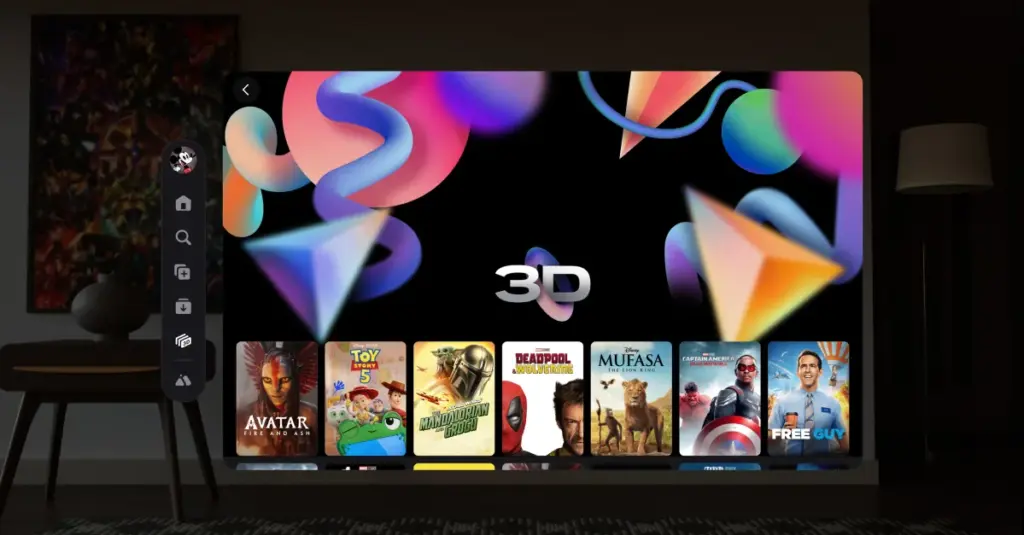
- Disney+ has launched an updated app for Meta Quest featuring over 60 3D-enabled film titles.
- The update introduces 'immersive environments' that place viewers inside themed settings like Tatooine or the Monsters, Inc. Scare Floor.
- The initiative serves as a strategic bridge toward the 2027 launch of Meta’s forthcoming high-end VR glasses.
- The platform will also support IMAX Enhanced content, signaling a shift in how studios distribute premium home cinema experiences.
- Disney+ đã cập nhật ứng dụng trên Meta Quest, hỗ trợ hơn 60 tựa phim định dạng 3D.
- Bản cập nhật giới thiệu các 'không gian nhập vai', đưa người xem vào bối cảnh phim như hành tinh Tatooine hay phân xưởng hù dọa trong Monsters, Inc.
- Sáng kiến này đóng vai trò là cầu nối chiến lược cho sự ra mắt của dòng kính VR cao cấp từ Meta vào năm 2027.
- Nền tảng cũng hỗ trợ nội dung IMAX Enhanced, đánh dấu sự thay đổi trong cách các hãng phim phân phối trải nghiệm điện ảnh cao cấp tại gia.
- Disney+ a déployé une mise à jour majeure de son application pour Meta Quest, proposant désormais plus de 60 films en 3D.
- L'interface introduit des « environnements immersifs » permettant aux spectateurs de s'immerger dans des décors iconiques, tels que Tatooine ou le centre de tri de Monstres & Cie.
- Ce déploiement constitue un socle stratégique en vue du lancement, prévu pour 2027, des futures lunettes de réalité augmentée haut de gamme de Meta.
- La plateforme intègre désormais le format IMAX Enhanced, signalant une mutation profonde dans la distribution des expériences cinématographiques à domicile.
- Disney+ ha lanzado una aplicación actualizada para Meta Quest que incluye más de 60 títulos cinematográficos en 3D.
- La actualización introduce «entornos inmersivos» que sitúan al espectador dentro de escenarios temáticos, como Tatooine o la planta de sustos de Monstruos, S.A.
- La iniciativa actúa como un puente estratégico hacia el lanzamiento, previsto para 2027, de las futuras gafas de realidad virtual de alta gama de Meta.
- La plataforma también será compatible con contenido IMAX Enhanced, lo que marca un cambio en la forma en que los estudios distribuyen experiencias de cine premium en el hogar.
- Disney+ 已为 Meta Quest 发布更新,支持超过 60 部 3D 影片播放。
- 更新引入了“沉浸式环境”功能,用户可置身于塔图因星球或《怪兽电力公司》惊吓楼层等主题场景中。
- 此举是 Meta 为 2027 年推出高端 VR 眼镜所做的战略性铺垫。
- 平台将支持 IMAX Enhanced 内容,预示着电影公司分发高端家庭影院体验模式的转变。
The living room as we know it is undergoing a radical spatial transformation. With the latest update to the Disney+ application for the Meta Quest platform, the barrier between the viewer and the screen has effectively dissolved, replaced by a curated, three-dimensional digital landscape. By integrating over 60 3D-enabled feature films into its virtual reality interface, Disney is not merely porting content; it is redefining the architecture of home cinema, turning a standalone headset into a sophisticated, transportive theater that transcends the limitations of traditional flat-panel displays.
This move represents a calculated bet on the maturation of spatial computing. As Meta continues to refine its hardware ecosystem, the partnership with Disney signals a shift in the perceived utility of VR headsets—moving away from the niche gaming-centric origins toward a broader, premium media consumption model. By layering high-fidelity 3D visuals with context-aware, themed virtual environments, Disney is attempting to solve the 'isolation problem' of VR, transforming the solitary act of wearing a headset into an atmospheric, brand-aligned experience that mirrors the magic of the theatrical release.
The Convergence of Spatial Media and Brand Storytelling
The technical implementation of this update is as much about atmosphere as it is about optics. Users are no longer confined to a static virtual living room; they are now invited to inhabit the worlds of their favorite franchises. Watching Star Wars: A New Hope while virtually perched on the sands of Tatooine, or viewing Monsters, Inc. from the perspective of the Scare Floor, suggests a new frontier for intellectual property management. This is brand immersion at its most literal, where the environment itself acts as a secondary layer of narrative context.
The inclusion of 3D titles—ranging from the high-octane spectacle of The Avengers to the cultural phenomenon of Black Panther—is a direct challenge to the decline of 3D television technology in the early 2010s. While 3D failed to gain traction in the living room due to the cumbersome nature of polarized glasses and the limitations of standard televisions, the VR headset solves these ergonomic hurdles by design. By placing the screen directly in front of the eyes, the depth perception is rendered with a level of precision that traditional displays could never achieve, effectively reviving a format that many had relegated to the annals of tech history.
Strategic Positioning for the 2027 Hardware Horizon
Looking beyond the current Meta Quest 3 and 3S hardware, this rollout serves as a foundational pillar for Meta’s long-term roadmap. Industry analysts have noted that the software ecosystem is being primed for the arrival of Meta’s forthcoming VR glasses, slated for a spring 2027 release. By populating the Disney+ library with 3D and IMAX Enhanced content today, Meta is ensuring that when the next generation of hardware arrives, the value proposition for the consumer will be immediate and substantial.
This strategy also extends to third-party partnerships, with Lionsgate already confirmed to bring its 3D library to the platform. The objective is clear: to establish the headset as the premier destination for premium, high-fidelity cinema. By securing IMAX Enhanced titles such as Avengers: Endgame and Tron: Ares, the collaboration is positioning the headset not just as a toy, but as a legitimate alternative to a high-end home theater system, capable of delivering the scale and audio-visual fidelity that cinephiles demand.
The Economic and Cultural Ripple Effects
The broader implications for the entertainment industry are profound. For decades, the film industry has struggled to replicate the theatrical experience in the home. While 4K and HDR have improved picture quality, they have done little to change the fundamental relationship between the viewer and the screen. Spatial computing offers a way to reclaim the 'event' status of a movie night. If a studio can sell a digital ticket to a virtual, themed environment, the monetization potential for back-catalog content becomes significantly more dynamic.
However, the challenge remains in the social aspect of viewing. While the current iteration of the Disney+ app is a solitary experience, the industry is watching closely to see if Meta and Disney will introduce co-viewing features that allow users to inhabit these virtual environments together. If the technology can successfully bridge the gap between physical distance and shared presence, it could fundamentally alter the economics of film distribution, potentially allowing for 'virtual premieres' that offer a level of engagement far beyond a standard streaming release.
Institutional Reaction and the Path Forward
The tech community has responded with cautious optimism, acknowledging that while the novelty of virtual environments is undeniable, the long-term viability of wearing a headset for a two-hour film remains a point of contention. Comfort, weight, and battery life are the primary gatekeepers of mass adoption. Yet, the commitment from a titan like Disney suggests that the institutional confidence in spatial media is at an all-time high. Major studios are no longer viewing VR as a peripheral experiment; they are treating it as a core component of their digital distribution strategy.
As we look toward the next few years, the focus will likely shift from the 'wow' factor of 3D to the consistency of the user experience. Will the library expand to include live events, such as sports or concerts, in the same immersive format? Will the virtual environments become interactive, allowing users to explore the settings during intermissions? For now, the Disney+ update on Meta Quest stands as a bold, sophisticated proof-of-concept. It is a reminder that in the race to define the future of media, the winners will be those who can successfully marry the technical rigor of spatial computing with the emotional resonance of world-class storytelling.
Phòng khách, như cách chúng ta vẫn thường biết, đang trải qua một cuộc chuyển dịch không gian đầy triệt để. Với bản cập nhật mới nhất của ứng dụng Disney+ trên nền tảng Meta Quest, rào cản giữa người xem và màn hình đã thực sự bị xóa bỏ, thay vào đó là một khung cảnh kỹ thuật số ba chiều được tinh tuyển. Bằng cách tích hợp hơn 60 bộ phim 3D vào giao diện thực tế ảo, Disney không chỉ đơn thuần là chuyển tải nội dung; họ đang tái định nghĩa kiến trúc của rạp chiếu tại gia, biến một chiếc kính thực tế ảo độc lập thành một rạp hát tinh vi, có khả năng đưa người xem vượt ra ngoài giới hạn của những màn hình phẳng truyền thống.
Động thái này thể hiện một canh bạc đầy tính toán về sự trưởng thành của điện toán không gian. Khi Meta tiếp tục hoàn thiện hệ sinh thái phần cứng, sự hợp tác với Disney báo hiệu một bước ngoặt trong công năng của kính VR—dịch chuyển từ nguồn gốc tập trung vào trò chơi ngách sang mô hình tiêu thụ nội dung cao cấp và đại chúng hơn. Bằng cách kết hợp hình ảnh 3D độ trung thực cao với các môi trường ảo theo ngữ cảnh, Disney đang nỗ lực giải quyết 'vấn đề cô lập' của VR, biến hành động đeo kính đơn độc thành một trải nghiệm đầy cảm xúc, nhất quán với thương hiệu và tái hiện trọn vẹn sự kỳ diệu của các buổi công chiếu tại rạp.
Sự giao thoa giữa truyền thông không gian và kể chuyện thương hiệu
Việc triển khai kỹ thuật của bản cập nhật này chú trọng vào bầu không khí cũng nhiều như chú trọng vào quang học. Người dùng không còn bị giới hạn trong một phòng khách ảo tĩnh lặng; họ được mời gọi để sống trong thế giới của những thương hiệu yêu thích. Việc thưởng thức Star Wars: A New Hope khi đang lơ lửng trên những cồn cát của Tatooine, hay xem Monsters, Inc. từ góc nhìn của Phân xưởng Hù dọa, gợi mở một biên giới mới cho việc quản trị tài sản trí tuệ. Đây chính là sự nhập vai thương hiệu theo nghĩa đen, nơi chính môi trường trở thành một lớp ngữ cảnh tường thuật thứ cấp.
Việc đưa vào các tựa phim 3D—từ những thước phim hành động mãn nhãn của The Avengers đến hiện tượng văn hóa Black Panther—là một lời thách thức trực tiếp đối với sự suy tàn của công nghệ truyền hình 3D vào đầu những năm 2010. Trong khi 3D từng thất bại trong việc chiếm lĩnh phòng khách do sự bất tiện của kính phân cực và hạn chế của tivi tiêu chuẩn, kính VR đã giải quyết các rào cản công thái học này ngay từ khâu thiết kế. Bằng cách đặt màn hình trực tiếp trước mắt, độ sâu được tái tạo với độ chính xác mà các màn hình truyền thống không bao giờ đạt tới, qua đó hồi sinh một định dạng mà nhiều người từng nghĩ đã lùi vào dĩ vãng của lịch sử công nghệ.
Định vị chiến lược cho kỷ nguyên phần cứng 2027
Nhìn xa hơn các dòng phần cứng Meta Quest 3 và 3S hiện tại, đợt triển khai này đóng vai trò là nền tảng cho lộ trình dài hạn của Meta. Các chuyên gia phân tích trong ngành lưu ý rằng hệ sinh thái phần mềm đang được chuẩn bị cho sự xuất hiện của dòng kính VR thế hệ mới của Meta, dự kiến ra mắt vào mùa xuân năm 2027. Bằng cách làm phong phú thư viện Disney+ với nội dung 3D và IMAX Enhanced ngay từ bây giờ, Meta đang đảm bảo rằng khi thế hệ phần cứng tiếp theo cập bến, giá trị mang lại cho người tiêu dùng sẽ là tức thì và đáng kể.
Chiến lược này cũng mở rộng sang các đối tác thứ ba, với việc Lionsgate đã xác nhận sẽ đưa thư viện phim 3D của mình lên nền tảng. Mục tiêu rất rõ ràng: biến chiếc kính thực tế ảo thành điểm đến hàng đầu cho trải nghiệm điện ảnh cao cấp, độ trung thực cao. Bằng cách đảm bảo các tựa phim IMAX Enhanced như Avengers: Endgame và Tron: Ares, sự hợp tác này đang định vị chiếc kính không chỉ là một món đồ chơi, mà là một giải pháp thay thế xứng tầm cho hệ thống rạp hát tại gia cao cấp, đủ sức mang lại quy mô và chất lượng nghe nhìn mà giới mộ điệu đòi hỏi.
Những tác động lan tỏa về kinh tế và văn hóa
Những hệ quả rộng lớn hơn đối với ngành giải trí là vô cùng sâu sắc. Trong nhiều thập kỷ, ngành công nghiệp điện ảnh đã chật vật tìm cách tái tạo trải nghiệm tại rạp ngay trong chính ngôi nhà. Mặc dù 4K và HDR đã cải thiện chất lượng hình ảnh, nhưng chúng chưa làm thay đổi mối quan hệ căn bản giữa người xem và màn hình. Điện toán không gian mang đến một cách thức để đòi lại vị thế 'sự kiện' cho những đêm xem phim. Nếu một hãng phim có thể bán một chiếc vé kỹ thuật số vào một môi trường ảo theo chủ đề, tiềm năng thương mại hóa cho các nội dung trong kho lưu trữ sẽ trở nên năng động hơn đáng kể.
Tuy nhiên, thách thức vẫn nằm ở khía cạnh xã hội của việc xem phim. Trong khi phiên bản hiện tại của ứng dụng Disney+ vẫn là một trải nghiệm đơn độc, ngành công nghiệp đang theo dõi sát sao liệu Meta và Disney có giới thiệu các tính năng xem chung cho phép người dùng cùng tồn tại trong các môi trường ảo này hay không. Nếu công nghệ có thể xóa nhòa khoảng cách vật lý và tạo ra sự hiện diện chung, nó có thể thay đổi căn bản kinh tế học của việc phân phối phim, cho phép các 'buổi công chiếu ảo' mang lại mức độ tương tác vượt xa các bản phát hành trực tuyến thông thường.
Phản ứng từ giới chuyên môn và lộ trình phía trước
Cộng đồng công nghệ đã phản hồi với sự lạc quan thận trọng, thừa nhận rằng dù sự mới lạ của các môi trường ảo là không thể phủ nhận, tính khả thi lâu dài của việc đeo kính trong suốt hai giờ phim vẫn là một điểm gây tranh cãi. Sự thoải mái, trọng lượng và thời lượng pin vẫn là những rào cản chính đối với việc phổ cập đại chúng. Tuy nhiên, cam kết từ một gã khổng lồ như Disney cho thấy niềm tin của các tổ chức vào truyền thông không gian đang ở mức cao nhất từ trước đến nay. Các hãng phim lớn không còn coi VR là một thử nghiệm ngoại vi; họ đang coi đó là thành phần cốt lõi trong chiến lược phân phối kỹ thuật số của mình.
Khi hướng tới những năm tới, trọng tâm có khả năng sẽ chuyển từ yếu tố 'choáng ngợp' của 3D sang tính nhất quán của trải nghiệm người dùng. Liệu thư viện có mở rộng để bao gồm các sự kiện trực tiếp, như thể thao hay hòa nhạc, trong cùng một định dạng nhập vai? Liệu các môi trường ảo có trở nên tương tác, cho phép người dùng khám phá bối cảnh trong giờ giải lao? Hiện tại, bản cập nhật Disney+ trên Meta Quest vẫn là một minh chứng táo bạo và tinh vi. Đó là lời nhắc nhở rằng trong cuộc đua định nghĩa tương lai của truyền thông, những người chiến thắng sẽ là những ai có thể kết hợp thành công sự khắt khe về kỹ thuật của điện toán không gian với sức cộng hưởng cảm xúc của nghệ thuật kể chuyện đẳng cấp thế giới.
Le salon, tel que nous le connaissons, subit une transformation spatiale radicale. Avec la dernière mise à jour de l'application Disney+ sur la plateforme Meta Quest, la frontière entre le spectateur et l'écran s'est littéralement dissoute, remplacée par un paysage numérique tridimensionnel savamment orchestré. En intégrant plus de 60 longs-métrages en 3D à son interface de réalité virtuelle, Disney ne se contente pas de porter du contenu ; l'entreprise redéfinit l'architecture même du home cinéma, transformant un casque autonome en une salle de projection sophistiquée et immersive qui transcende les limites des écrans plats traditionnels.
Cette manœuvre représente un pari calculé sur la maturité de l'informatique spatiale. Alors que Meta continue d'affiner son écosystème matériel, ce partenariat avec Disney témoigne d'un changement de paradigme dans l'usage des casques VR : on s'éloigne des origines de niche centrées sur le jeu vidéo pour tendre vers un modèle de consommation médiatique plus large et haut de gamme. En superposant des visuels 3D haute fidélité à des environnements virtuels thématiques contextuels, Disney tente de résoudre le « problème d'isolement » inhérent à la VR, transformant l'acte solitaire de porter un casque en une expérience atmosphérique, fidèle à l'ADN de la marque et à la magie des sorties en salles.
La convergence des médias spatiaux et du storytelling de marque
La mise en œuvre technique de cette mise à jour relève autant de l'atmosphère que de l'optique. Les utilisateurs ne sont plus confinés à un salon virtuel statique ; ils sont désormais invités à habiter les mondes de leurs franchises favorites. Regarder Star Wars : Un nouvel espoir tout en étant virtuellement perché sur les sables de Tatooine, ou visionner Monstres & Cie depuis le centre de tri, ouvre une nouvelle frontière pour la gestion de la propriété intellectuelle. Il s'agit d'une immersion de marque au sens le plus littéral, où l'environnement lui-même agit comme une strate secondaire de narration.
L'inclusion de titres en 3D — allant du spectacle explosif de Avengers au phénomène culturel Black Panther — constitue un défi direct au déclin de la technologie 3D sur les téléviseurs au début des années 2010. Si la 3D n'avait pas réussi à s'imposer dans les foyers en raison du caractère contraignant des lunettes polarisées et des limites des écrans standards, le casque VR résout ces obstacles ergonomiques par sa conception même. En plaçant l'écran directement devant les yeux, la perception de la profondeur est restituée avec une précision qu'aucun écran traditionnel ne pourrait atteindre, ressuscitant ainsi un format que beaucoup avaient relégué aux oubliettes de l'histoire technologique.
Un positionnement stratégique pour l'horizon matériel 2027
Au-delà des actuels Meta Quest 3 et 3S, ce déploiement sert de pilier fondamental à la feuille de route à long terme de Meta. Les analystes du secteur ont noté que l'écosystème logiciel est préparé pour l'arrivée des futures lunettes VR de Meta, prévues pour le printemps 2027. En enrichissant dès aujourd'hui la bibliothèque Disney+ avec du contenu 3D et IMAX Enhanced, Meta s'assure que, lorsque la prochaine génération de matériel arrivera, la proposition de valeur pour le consommateur sera immédiate et substantielle.
Cette stratégie s'étend également aux partenariats avec des tiers, Lionsgate ayant déjà confirmé l'arrivée de son catalogue 3D sur la plateforme. L'objectif est limpide : établir le casque comme la destination privilégiée pour le cinéma premium haute fidélité. En sécurisant des titres IMAX Enhanced tels que Avengers: Endgame ou Tron: Ares, cette collaboration positionne le casque non plus comme un simple gadget, mais comme une alternative légitime à un système home cinéma haut de gamme, capable d'offrir l'envergure et la fidélité audiovisuelle exigées par les cinéphiles.
Les répercussions économiques et culturelles
Les implications pour l'industrie du divertissement sont profondes. Pendant des décennies, l'industrie cinématographique a peiné à reproduire l'expérience de la salle obscure à domicile. Bien que la 4K et le HDR aient amélioré la qualité d'image, ils n'ont guère modifié la relation fondamentale entre le spectateur et l'écran. L'informatique spatiale offre un moyen de reconquérir le statut d'« événement » d'une soirée cinéma. Si un studio peut vendre un billet numérique pour un environnement virtuel thématique, le potentiel de monétisation du catalogue devient nettement plus dynamique.
Toutefois, le défi demeure dans la dimension sociale du visionnage. Bien que l'itération actuelle de l'application Disney+ soit une expérience solitaire, l'industrie observe de près si Meta et Disney introduiront des fonctionnalités de visionnage partagé permettant aux utilisateurs d'habiter ces environnements virtuels ensemble. Si la technologie parvient à combler le fossé entre la distance physique et la présence partagée, elle pourrait fondamentalement altérer l'économie de la distribution cinématographique, permettant potentiellement des « avant-premières virtuelles » offrant un niveau d'engagement bien supérieur à une sortie en streaming classique.
Réaction institutionnelle et perspectives d'avenir
La communauté technologique a réagi avec un optimisme prudent, reconnaissant que si la nouveauté des environnements virtuels est indéniable, la viabilité à long terme du port d'un casque pour un film de deux heures reste un point de débat. Le confort, le poids et l'autonomie de la batterie demeurent les principaux verrous à une adoption massive. Pourtant, l'engagement d'un géant comme Disney suggère que la confiance institutionnelle dans les médias spatiaux n'a jamais été aussi élevée. Les grands studios ne considèrent plus la VR comme une expérience périphérique ; ils la traitent désormais comme une composante essentielle de leur stratégie de distribution numérique.
À mesure que nous nous projetons dans les prochaines années, l'attention se déplacera probablement de l'effet « waouh » de la 3D vers la cohérence de l'expérience utilisateur. La bibliothèque s'étendra-t-elle pour inclure des événements en direct, tels que le sport ou les concerts, dans ce même format immersif ? Les environnements virtuels deviendront-ils interactifs, permettant aux utilisateurs d'explorer les décors pendant les entractes ? Pour l'heure, la mise à jour de Disney+ sur Meta Quest s'impose comme une preuve de concept audacieuse et sophistiquée. Elle nous rappelle que dans la course pour définir l'avenir des médias, les vainqueurs seront ceux qui sauront marier avec succès la rigueur technique de l'informatique spatiale à la résonance émotionnelle d'une narration de classe mondiale.
El salón de casa, tal y como lo conocemos, está experimentando una transformación espacial radical. Con la última actualización de la aplicación de Disney+ para la plataforma Meta Quest, la barrera entre el espectador y la pantalla se ha disuelto de manera efectiva, siendo reemplazada por un paisaje digital tridimensional y cuidadosamente diseñado. Al integrar más de 60 largometrajes en 3D en su interfaz de realidad virtual, Disney no se limita a trasladar contenido; está redefiniendo la arquitectura del cine doméstico, convirtiendo un dispositivo autónomo en una sala sofisticada y envolvente que trasciende las limitaciones de las pantallas planas tradicionales.
Este movimiento representa una apuesta calculada por la maduración de la computación espacial. A medida que Meta continúa refinando su ecosistema de hardware, la asociación con Disney señala un cambio en la utilidad percibida de los visores de realidad virtual: alejándose de sus orígenes como nicho centrado en los videojuegos hacia un modelo de consumo de medios más amplio y premium. Al superponer imágenes en 3D de alta fidelidad con entornos virtuales temáticos y contextuales, Disney intenta resolver el «problema del aislamiento» de la realidad virtual, transformando el acto solitario de llevar puestas unas gafas en una experiencia atmosférica y alineada con la marca que emula la magia de un estreno en salas.
La convergencia entre los medios espaciales y la narrativa de marca
La implementación técnica de esta actualización tiene tanto que ver con la atmósfera como con la óptica. Los usuarios ya no están confinados a un salón virtual estático; ahora están invitados a habitar los mundos de sus franquicias favoritas. Ver Star Wars: Una nueva esperanza mientras se está virtualmente posado sobre las arenas de Tatooine, o contemplar Monstruos, S.A. desde la perspectiva de la planta de sustos, sugiere una nueva frontera para la gestión de la propiedad intelectual. Se trata de la inmersión de marca en su sentido más literal, donde el entorno actúa como una capa secundaria de contexto narrativo.
La inclusión de títulos en 3D —que van desde el espectáculo de alta intensidad de Los Vengadores hasta el fenómeno cultural de Black Panther— supone un desafío directo al declive de la tecnología de televisión 3D de principios de la década de 2010. Si bien el 3D no logró ganar tracción en los hogares debido a la naturaleza incómoda de las gafas polarizadas y las limitaciones de los televisores estándar, el visor de realidad virtual resuelve estos obstáculos ergonómicos por diseño. Al colocar la pantalla directamente frente a los ojos, la percepción de profundidad se reproduce con un nivel de precisión que las pantallas tradicionales nunca podrían alcanzar, reviviendo efectivamente un formato que muchos habían relegado a los anales de la historia tecnológica.
Posicionamiento estratégico para el horizonte de hardware de 2027
Más allá del hardware actual de Meta Quest 3 y 3S, este lanzamiento sirve como pilar fundamental para la hoja de ruta a largo plazo de Meta. Los analistas del sector han señalado que el ecosistema de software se está preparando para la llegada de las futuras gafas de realidad virtual de Meta, cuyo lanzamiento está previsto para la primavera de 2027. Al poblar la biblioteca de Disney+ con contenido en 3D e IMAX Enhanced hoy, Meta se asegura de que, cuando llegue la próxima generación de hardware, la propuesta de valor para el consumidor sea inmediata y sustancial.
Esta estrategia también se extiende a asociaciones con terceros, con Lionsgate ya confirmada para llevar su biblioteca 3D a la plataforma. El objetivo es claro: establecer el visor como el destino principal para el cine premium de alta fidelidad. Al asegurar títulos IMAX Enhanced como Vengadores: Endgame y Tron: Ares, la colaboración posiciona al dispositivo no solo como un juguete, sino como una alternativa legítima a un sistema de cine en casa de alta gama, capaz de ofrecer la escala y la fidelidad audiovisual que exigen los cinéfilos.
Los efectos económicos y culturales
Las implicaciones más amplias para la industria del entretenimiento son profundas. Durante décadas, la industria cinematográfica ha luchado por replicar la experiencia teatral en el hogar. Aunque el 4K y el HDR han mejorado la calidad de imagen, apenas han cambiado la relación fundamental entre el espectador y la pantalla. La computación espacial ofrece una forma de recuperar el estatus de «evento» de una noche de cine. Si un estudio puede vender una entrada digital para un entorno virtual temático, el potencial de monetización del catálogo histórico se vuelve significativamente más dinámico.
Sin embargo, el desafío persiste en el aspecto social del visionado. Aunque la iteración actual de la aplicación de Disney+ es una experiencia solitaria, la industria observa de cerca si Meta y Disney introducirán funciones de visionado compartido que permitan a los usuarios habitar estos entornos virtuales juntos. Si la tecnología logra cerrar con éxito la brecha entre la distancia física y la presencia compartida, podría alterar fundamentalmente la economía de la distribución cinematográfica, permitiendo potencialmente «estrenos virtuales» que ofrezcan un nivel de compromiso mucho mayor que un lanzamiento estándar en streaming.
Reacción institucional y el camino a seguir
La comunidad tecnológica ha respondido con un optimismo cauteloso, reconociendo que, si bien la novedad de los entornos virtuales es innegable, la viabilidad a largo plazo de llevar un visor puesto durante una película de dos horas sigue siendo un punto de controversia. La comodidad, el peso y la duración de la batería son los principales guardianes de la adopción masiva. No obstante, el compromiso de un titán como Disney sugiere que la confianza institucional en los medios espaciales está en su punto más alto. Los grandes estudios ya no ven la realidad virtual como un experimento periférico; la están tratando como un componente central de su estrategia de distribución digital.
De cara a los próximos años, es probable que el enfoque pase de la sorpresa del 3D a la consistencia de la experiencia del usuario. ¿Se expandirá la biblioteca para incluir eventos en directo, como deportes o conciertos, en el mismo formato inmersivo? ¿Se volverán interactivos los entornos virtuales, permitiendo a los usuarios explorar los escenarios durante los intermedios? Por ahora, la actualización de Disney+ en Meta Quest se erige como una prueba de concepto audaz y sofisticada. Es un recordatorio de que, en la carrera por definir el futuro de los medios, los ganadores serán aquellos que logren casar con éxito el rigor técnico de la computación espacial con la resonancia emocional de una narrativa de clase mundial.
我们所熟知的客厅正在经历一场激进的空间变革。随着 Disney+ 针对 Meta Quest 平台最新更新的发布,观众与屏幕之间的壁垒已然消融,取而代之的是一个精心策划的、三维化的数字景观。通过将 60 多部支持 3D 效果的电影整合进虚拟现实界面,迪士尼不仅是在简单地移植内容,更是在重构家庭影院的架构,将一台独立的头显设备转化为一个精致的、具有代入感的影院,超越了传统平板显示器的局限。
此举代表了对空间计算成熟度的一次深思熟虑的押注。随着 Meta 不断完善其硬件生态系统,与迪士尼的合作标志着 VR 头显应用价值的转变——从最初以游戏为中心的小众定位,转向更广泛、更高端的媒体消费模式。通过将高保真 3D 视觉效果与具有情境感知的主题虚拟环境相结合,迪士尼正试图解决 VR 的“孤立问题”,将佩戴头显的孤独行为转化为一种符合品牌调性的沉浸式体验,重现影院上映时的魔力。
空间媒体与品牌叙事的融合
此次更新的技术实现不仅关乎光学,更关乎氛围营造。用户不再局限于静态的虚拟客厅,而是受邀进入他们最喜爱作品的叙事世界。在虚拟的塔图因星球沙丘上观看《星球大战:新希望》,或是从“惊吓楼层”的视角欣赏《怪兽电力公司》,这预示着知识产权(IP)管理的新边疆。这是最直观的品牌沉浸感,环境本身成为了叙事背景的第二维度。
此次引入的 3D 片库涵盖了从高能大片《复仇者联盟》到文化现象级作品《黑豹》,这直接挑战了 2010 年代初 3D 电视技术的衰落趋势。尽管 3D 技术因偏光眼镜的繁琐和标准电视的局限性而未能在家用市场普及,但 VR 头显从设计层面解决了这些人体工程学障碍。通过将屏幕直接置于眼前,深度感知以传统显示器无法企及的精度呈现,有效地复兴了这一曾被许多人打入技术史册的格式。
面向 2027 年硬件愿景的战略布局
放眼当前的 Meta Quest 3 和 3S 硬件之外,此次发布是 Meta 长期路线图的基石。行业分析师指出,软件生态系统正在为 Meta 即将于 2027 年春季推出的 VR 眼镜做准备。通过在今天用 3D 和 IMAX Enhanced 内容填充 Disney+ 片库,Meta 确保了当下一代硬件问世时,消费者将能立即感受到其巨大的价值主张。
这一战略也延伸至第三方合作伙伴,狮门影业(Lionsgate)已确认将其 3D 片库引入该平台。目标明确:将头显打造为高端、高保真影院的首选目的地。通过获得《复仇者联盟4:终局之战》和《创:战神》等 IMAX Enhanced 影片,此次合作将头显定位为不仅仅是一个玩具,而是高端家庭影院系统的合法替代品,能够提供影迷所追求的规模感和视听保真度。
经济与文化的连锁反应
这对娱乐产业的深远影响是巨大的。几十年来,电影业一直致力于在家庭环境中复制影院体验。虽然 4K 和 HDR 提升了画质,但它们并未改变观众与屏幕之间的基本关系。空间计算提供了一种重塑电影之夜“仪式感”的方式。如果电影公司能够向虚拟主题环境出售数字门票,那么其存量内容的变现潜力将变得更加活跃。
然而,观影的社交属性仍是挑战所在。虽然目前版本的 Disney+ 应用仍属于个人体验,但业界正密切关注 Meta 和迪士尼是否会引入共同观影功能,允许用户在这些虚拟环境中共享空间。如果该技术能成功弥合物理距离与共享存在感之间的鸿沟,它可能会从根本上改变电影发行的经济模式,甚至可能催生出超越标准流媒体发行、具备更高参与度的“虚拟首映”。
机构反应与未来之路
科技界对此反应谨慎乐观,承认尽管虚拟环境的新奇感不可否认,但佩戴头显观看两小时电影的长期可行性仍存争议。舒适度、重量和电池续航是大众普及的主要门槛。然而,迪士尼这样巨头的投入表明,机构对空间媒体的信心正处于历史最高点。各大电影公司不再将 VR 视为外围实验,而是将其视为数字分发战略的核心组成部分。
展望未来几年,重点可能会从 3D 的“惊艳”因素转向用户体验的连贯性。片库是否会扩展到以同样的沉浸式格式呈现体育赛事或演唱会等直播活动?虚拟环境是否会变得更具交互性,允许用户在幕间休息时探索场景?目前,Meta Quest 上的 Disney+ 更新是一个大胆且成熟的概念验证。它提醒我们,在定义媒体未来的竞赛中,赢家将是那些能够成功将空间计算的技术严谨性与世界级叙事的情感共鸣相结合的人。
Editorial Standards & Multi-Language Synthesis: This dispatch was synthesized and fact-checked by the ParisDaily Editorial Desk across 5 global editions (EN, FR, VI, ES, ZH), cross-referencing primary international wire reports and real-time search intelligence.