灯火与灰暗苍穹:印度在空前污染中迎来排灯节
Millions across India and the global diaspora are marking Diwali with ancient traditions and brilliant lights, even as northern urban centers grapple with their most hazardous air quality in a decade.
Millions across India and the global diaspora are marking Diwali with ancient traditions and brilliant lights, even as northern urban centers grapple with their most hazardous air quality in a decade.
Des millions de personnes à travers l'Inde et la diaspora mondiale célèbrent Diwali, perpétuant des traditions ancestrales dans un éclat de lumières, alors même que les centres urbains du nord font face à une qualité de l'air parmi les plus dangereuses de la décennie.
Millones de personas en toda la India y en la diáspora global conmemoran Diwali con tradiciones ancestrales y luces brillantes, incluso mientras los centros urbanos del norte se enfrentan a su calidad de aire más peligrosa en una década.
印度全国及全球海外侨民正以古老的传统和璀璨的灯火庆祝排灯节,而与此同时,北方各大城市却正面临着十年来最危险的空气质量考验。
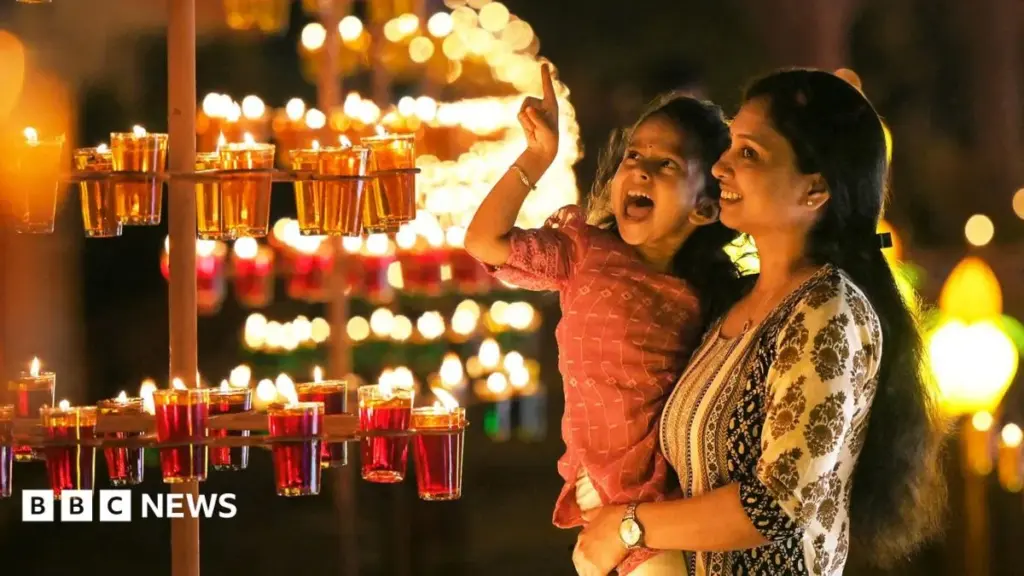
- Millions of people across India celebrated Diwali with oil lamps, family prayers, and traditional sweets, marking the traditional triumph of light over darkness.
- The festivities in the national capital of Delhi unfolded under the cloud of the most polluted Diwali festival in a decade, intensified by seasonal crop stubble burning.
- India's Supreme Court permitted the limited manufacture and sale of certified 'green' firecrackers designed to reduce emissions by 20% to 30%, though enforcement remains uneven.
- Beyond Hindu traditions, the festival encompasses Sikh Bandi Chhor Divas and Jain commemorations of Lord Mahavira's moksha, underscoring its broad pluralistic resonance.
- Des millions d'Indiens ont célébré Diwali avec des lampes à huile, des prières familiales et des pâtisseries traditionnelles, marquant le triomphe symbolique de la lumière sur les ténèbres.
- Les festivités dans la capitale, Delhi, se sont déroulées sous un voile de pollution record, exacerbé par le brûlage saisonnier des résidus agricoles.
- La Cour suprême indienne a autorisé la vente limitée de pétards « verts » certifiés, censés réduire les émissions de 20 à 30 %, bien que leur application reste inégale.
- Au-delà des traditions hindoues, la fête englobe le Bandi Chhor Divas sikh et les commémorations jaïnes du moksha du Seigneur Mahavira, soulignant sa résonance pluraliste.
- Millones de personas en toda la India celebraron Diwali con lámparas de aceite, oraciones familiares y dulces tradicionales, marcando el tradicional triunfo de la luz sobre la oscuridad.
- Las festividades en la capital nacional de Delhi se desarrollaron bajo la sombra del festival de Diwali más contaminado en una década, intensificado por la quema estacional de rastrojos agrícolas.
- El Tribunal Supremo de la India permitió la fabricación y venta limitada de petardos «ecológicos» certificados, diseñados para reducir las emisiones entre un 20% y un 30%, aunque su cumplimiento sigue siendo desigual.
- Más allá de las tradiciones hindúes, el festival abarca el Bandi Chhor Divas sij y las conmemoraciones jainistas del moksha del Señor Mahavira, lo que subraya su amplia resonancia pluralista.
- 印度全境数百万人通过点燃油灯、家庭祈祷和分享传统甜点来庆祝排灯节,标志着传统中光明对黑暗的胜利。
- 首都德里及周边地区的庆祝活动笼罩在十年来污染最严重的排灯节阴云之下,季节性农作物秸秆焚烧使情况进一步恶化。
- 印度最高法院允许有限度地制造和销售经认证的“绿色”烟花,旨在将排放量减少20%至30%,但执法力度依然参差不齐。
- 除了印度教传统外,该节日还涵盖了锡克教的“释放日”(Bandi Chhor Divas)以及耆那教对大雄祖师(Lord Mahavira)圆寂(moksha)的纪念,彰显了其广泛的多元共鸣。
Across the length and breadth of the subcontinent and in vibrant cultural enclaves from London to Singapore, millions have been marking Diwali, the Hindu festival of lights, by illuminating homes, temples, commercial offices, and bustling metropolitan thoroughfares. Falling on the darkest night of the Hindu lunar month of Kartik—when the crescent moon is entirely hidden from the sky—the festival transforms urban skylines and rural hamlets alike into shimmering constellations of oil lamps, or diyas, and elaborate electric displays. At its core, the celebration serves as a profound cultural reaffirmation of the triumph of light over darkness, knowledge over ignorance, and good over evil.
Yet, this year’s multi-day observance has unfurled under an increasingly heavy atmospheric cloud. As families gathered for traditional feasts, exchanged intricately wrapped boxes of sweets, and offered evening prayers to Lakshmi, the Hindu goddess of wealth and prosperity, the air in northern India grew dangerously thick with particulate matter. Seasonal meteorological shifts, combined with agricultural stubble burning in neighbouring farming states, collided directly with the customary detonation of firecrackers, plunging metropolitan centers into an environmental crisis that has forced policymakers, jurists, and public health advocates into urgent, high-stakes debate.
The Shadow Over the Metropolis: Navigating Hazardous Smog
The environmental toll of modern celebrations has transformed what should be an unalloyed moment of communal joy into an annual test of civic endurance. In the Indian capital of Delhi, air pollution levels skyrocketed to heights not witnessed during the festive season in a decade, rendering previous administrative interventions seemingly ineffective. Similar hazardous indices were recorded in India's financial capital, Mumbai, as stagnant seasonal winds trapped toxic pollutants near the surface.
In a bid to reconcile public health imperatives with deeply entrenched religious traditions, India's Supreme Court issued a nuanced ruling permitting the manufacture, sale, and use of certified "green" firecrackers in Delhi and surrounding jurisdictions for a strictly limited window. Engineered to yield twenty to thirty percent fewer chemical emissions than conventional pyrotechnics, these alternative devices represent an institutional compromise. However, environmental watchdogs and medical professionals immediately questioned their efficacy, pointing to persistent enforcement gaps and the illicit influx of conventional, highly polluting fireworks smuggled across state borders.
Ancient Epics and Pluralistic Traditions Across South Asia
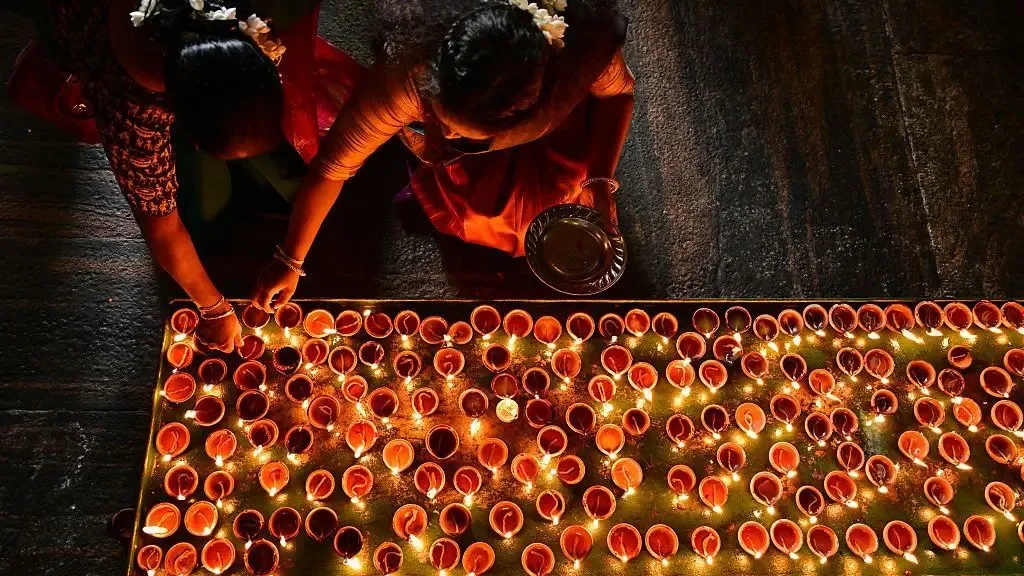
Despite the contemporary controversies surrounding air quality, the spiritual architecture of Diwali remains deeply anchored in historical narrative and diverse religious heritage. The primary Hindu narrative commemorates the triumphant return of Lord Ram to Ayodhya after his epochal victory over Ravan, the formidable antagonist of the ancient epic Ramayana. In the days preceding the main festivities, households engage in rigorous ritual cleaning, adorn entryways with colorful geometric rangoli patterns, and stock up on fragrant marigolds and handcrafted clay lamps.
The festival's calendar is meticulously structured across five distinct days, beginning with Dhanteras—where acquiring gold, silver, or new utensils is deemed auspicious for securing future prosperity—and culminating in Bhai Dooj, a celebration of the enduring bond between brothers and sisters. Crucially, Diwali's cultural footprint extends far beyond Hinduism. Sikhs observe Bandi Chhor Divas, commemorating the historic release of their sixth guru, Guru Hargobind, from imprisonment at Gwalior Fort in the early seventeenth century. Meanwhile, Jains mark the solemn occasion of moksha, or spiritual liberation, attained by Lord Mahavira, the twenty-fourth Tirthankara.
Economic Vitality, Global Resonance, and the Path Forward
Beyond its theological and familial dimensions, Diwali serves as a vital economic engine. Markets bustle for weeks with shoppers purchasing festive essentials, while institutional investors participate in the symbolic one-hour "Muhurat" trading session on India's major stock exchanges, viewing transactions made during this window as harbingers of financial luck. This fusion of commerce and sacred tradition mirrors the festival's international expansion, as global diaspora communities recreate traditional gatherings from North America to the Gulf states.
As the smoke clears and the final oil lamps flicker out, the enduring challenge for civil society and government regulators will be finding a sustainable equilibrium between preserving ancient heritage and safeguarding public health. The persistent struggle against toxic smog underscores a modern paradox: how a festival dedicated to the clarity of light can safely navigate the complex shadows of twenty-first-century urbanization. What remains immutable, however, is the profound human impulse toward renewal, community, and hope that brings millions together year after year.
Across the length and breadth of the subcontinent and in vibrant cultural enclaves from London to Singapore, millions have been marking Diwali, the Hindu festival of lights, by illuminating homes, temples, commercial offices, and bustling metropolitan thoroughfares. Falling on the darkest night of the Hindu lunar month of Kartik—when the crescent moon is entirely hidden from the sky—the festival transforms urban skylines and rural hamlets alike into shimmering constellations of oil lamps, or diyas, and elaborate electric displays. At its core, the celebration serves as a profound cultural reaffirmation of the triumph of light over darkness, knowledge over ignorance, and good over evil.
Yet, this year’s multi-day observance has unfurled under an increasingly heavy atmospheric cloud. As families gathered for traditional feasts, exchanged intricately wrapped boxes of sweets, and offered evening prayers to Lakshmi, the Hindu goddess of wealth and prosperity, the air in northern India grew dangerously thick with particulate matter. Seasonal meteorological shifts, combined with agricultural stubble burning in neighbouring farming states, collided directly with the customary detonation of firecrackers, plunging metropolitan centers into an environmental crisis that has forced policymakers, jurists, and public health advocates into urgent, high-stakes debate.
The Shadow Over the Metropolis: Navigating Hazardous Smog
The environmental toll of modern celebrations has transformed what should be an unalloyed moment of communal joy into an annual test of civic endurance. In the Indian capital of Delhi, air pollution levels skyrocketed to heights not witnessed during the festive season in a decade, rendering previous administrative interventions seemingly ineffective. Similar hazardous indices were recorded in India's financial capital, Mumbai, as stagnant seasonal winds trapped toxic pollutants near the surface.
In a bid to reconcile public health imperatives with deeply entrenched religious traditions, India's Supreme Court issued a nuanced ruling permitting the manufacture, sale, and use of certified "green" firecrackers in Delhi and surrounding jurisdictions for a strictly limited window. Engineered to yield twenty to thirty percent fewer chemical emissions than conventional pyrotechnics, these alternative devices represent an institutional compromise. However, environmental watchdogs and medical professionals immediately questioned their efficacy, pointing to persistent enforcement gaps and the illicit influx of conventional, highly polluting fireworks smuggled across state borders.
Ancient Epics and Pluralistic Traditions Across South Asia
Despite the contemporary controversies surrounding air quality, the spiritual architecture of Diwali remains deeply anchored in historical narrative and diverse religious heritage. The primary Hindu narrative commemorates the triumphant return of Lord Ram to Ayodhya after his epochal victory over Ravan, the formidable antagonist of the ancient epic Ramayana. In the days preceding the main festivities, households engage in rigorous ritual cleaning, adorn entryways with colorful geometric rangoli patterns, and stock up on fragrant marigolds and handcrafted clay lamps.
The festival's calendar is meticulously structured across five distinct days, beginning with Dhanteras—where acquiring gold, silver, or new utensils is deemed auspicious for securing future prosperity—and culminating in Bhai Dooj, a celebration of the enduring bond between brothers and sisters. Crucially, Diwali's cultural footprint extends far beyond Hinduism. Sikhs observe Bandi Chhor Divas, commemorating the historic release of their sixth guru, Guru Hargobind, from imprisonment at Gwalior Fort in the early seventeenth century. Meanwhile, Jains mark the solemn occasion of moksha, or spiritual liberation, attained by Lord Mahavira, the twenty-fourth Tirthankara.
Economic Vitality, Global Resonance, and the Path Forward
Beyond its theological and familial dimensions, Diwali serves as a vital economic engine. Markets bustle for weeks with shoppers purchasing festive essentials, while institutional investors participate in the symbolic one-hour "Muhurat" trading session on India's major stock exchanges, viewing transactions made during this window as harbingers of financial luck. This fusion of commerce and sacred tradition mirrors the festival's international expansion, as global diaspora communities recreate traditional gatherings from North America to the Gulf states.
As the smoke clears and the final oil lamps flicker out, the enduring challenge for civil society and government regulators will be finding a sustainable equilibrium between preserving ancient heritage and safeguarding public health. The persistent struggle against toxic smog underscores a modern paradox: how a festival dedicated to the clarity of light can safely navigate the complex shadows of twenty-first-century urbanization. What remains immutable, however, is the profound human impulse toward renewal, community, and hope that brings millions together year after year.
À travers tout le sous-continent et dans les enclaves culturelles vibrantes, de Londres à Singapour, des millions de personnes célèbrent Diwali, la fête hindoue des lumières, en illuminant maisons, temples, bureaux et artères métropolitaines animées. Tombant lors de la nuit la plus sombre du mois lunaire hindou de Kartik — lorsque le croissant de lune est totalement invisible — la fête transforme les horizons urbains comme les hameaux ruraux en constellations scintillantes de lampes à huile, ou diyas, et en déploiements électriques sophistiqués. Au cœur de cette célébration réside une profonde réaffirmation culturelle du triomphe de la lumière sur les ténèbres, de la connaissance sur l'ignorance et du bien sur le mal.
Pourtant, cette célébration de plusieurs jours s'est déroulée cette année sous un nuage atmosphérique de plus en plus lourd. Alors que les familles se réunissaient pour des festins traditionnels, échangeaient des boîtes de douceurs finement emballées et offraient leurs prières du soir à Lakshmi, la déesse hindoue de la richesse et de la prospérité, l'air dans le nord de l'Inde s'est épaissi dangereusement de particules fines. Les changements météorologiques saisonniers, combinés au brûlage des chaumes dans les États agricoles voisins, se sont heurtés aux détonations coutumières des feux d'artifice, plongeant les centres métropolitains dans une crise environnementale qui a contraint décideurs, juristes et défenseurs de la santé publique à un débat urgent et crucial.
L'ombre sur la métropole : naviguer dans un smog dangereux
Le coût environnemental des célébrations modernes a transformé ce qui devrait être un moment de joie communautaire pure en une épreuve annuelle d'endurance civique. Dans la capitale indienne, Delhi, les niveaux de pollution atmosphérique ont atteint des sommets inégalés durant la saison festive depuis dix ans, rendant les interventions administratives précédentes largement inefficaces. Des indices de dangerosité similaires ont été enregistrés dans la capitale financière, Mumbai, où des vents saisonniers stagnants ont piégé les polluants toxiques près du sol.
Dans le but de concilier les impératifs de santé publique et des traditions religieuses profondément ancrées, la Cour suprême indienne a rendu une décision nuancée autorisant la fabrication, la vente et l'utilisation de pétards « verts » certifiés à Delhi et dans les juridictions environnantes, pour une période strictement limitée. Conçus pour émettre vingt à trente pour cent de moins de substances chimiques que les pyrotechnies conventionnelles, ces dispositifs alternatifs représentent un compromis institutionnel. Cependant, les observateurs environnementaux et les professionnels de santé ont immédiatement remis en question leur efficacité, pointant du doigt des lacunes persistantes dans l'application de la loi et l'afflux illicite de feux d'artifice conventionnels, hautement polluants, introduits en contrebande à travers les frontières des États.
Épopées antiques et traditions pluralistes en Asie du Sud
Malgré les controverses contemporaines entourant la qualité de l'air, l'architecture spirituelle de Diwali reste profondément ancrée dans le récit historique et un héritage religieux diversifié. Le récit hindou principal commémore le retour triomphal du Seigneur Ram à Ayodhya après sa victoire historique sur Ravan, l'antagoniste redoutable de l'épopée antique du Ramayana. Dans les jours précédant les festivités principales, les foyers s'engagent dans un nettoyage rituel rigoureux, ornent les entrées de motifs géométriques colorés appelés rangoli et font le plein de soucis parfumés et de lampes en terre cuite artisanales.
Le calendrier de la fête est méticuleusement structuré sur cinq jours distincts, commençant par Dhanteras — où l'acquisition d'or, d'argent ou de nouveaux ustensiles est jugée de bon augure pour assurer la prospérité future — et culminant avec Bhai Dooj, une célébration du lien indéfectible entre frères et sœurs. Il est crucial de noter que l'empreinte culturelle de Diwali s'étend bien au-delà de l'hindouisme. Les Sikhs observent le Bandi Chhor Divas, commémorant la libération historique de leur sixième gourou, Guru Hargobind, emprisonné au fort de Gwalior au début du XVIIe siècle. Pendant ce temps, les Jaïns marquent l'occasion solennelle du moksha, ou libération spirituelle, atteint par le Seigneur Mahavira, le vingt-quatrième Tirthankara.
Vitalité économique, résonance mondiale et perspectives d'avenir
Au-delà de ses dimensions théologiques et familiales, Diwali agit comme un moteur économique vital. Les marchés s'animent pendant des semaines avec des acheteurs en quête d'essentiels festifs, tandis que les investisseurs institutionnels participent à la séance de bourse symbolique d'une heure, le « Muhurat », sur les principales places financières indiennes, considérant les transactions effectuées durant ce créneau comme des présages de chance financière. Cette fusion entre commerce et tradition sacrée reflète l'expansion internationale de la fête, alors que les communautés de la diaspora mondiale recréent les rassemblements traditionnels, de l'Amérique du Nord aux États du Golfe.
Alors que la fumée se dissipe et que les dernières lampes à huile s'éteignent, le défi durable pour la société civile et les régulateurs gouvernementaux sera de trouver un équilibre durable entre la préservation de l'héritage ancien et la protection de la santé publique. La lutte persistante contre le smog toxique souligne un paradoxe moderne : comment une fête dédiée à la clarté de la lumière peut-elle naviguer en toute sécurité dans les ombres complexes de l'urbanisation du XXIe siècle ? Ce qui reste immuable, cependant, c'est l'impulsion humaine profonde vers le renouveau, la communauté et l'espoir qui rassemble des millions de personnes année après année.
A lo largo y ancho del subcontinente y en enclaves culturales vibrantes desde Londres hasta Singapur, millones de personas han conmemorado Diwali, el festival hindú de las luces, iluminando hogares, templos, oficinas comerciales y concurridas arterias metropolitanas. Al coincidir con la noche más oscura del mes lunar hindú de Kartik —cuando la luna creciente está completamente oculta en el cielo—, la festividad transforma tanto los horizontes urbanos como las aldeas rurales en constelaciones resplandecientes de lámparas de aceite, o diyas, y elaboradas exhibiciones eléctricas. En su esencia, la celebración sirve como una profunda reafirmación cultural del triunfo de la luz sobre la oscuridad, del conocimiento sobre la ignorancia y del bien sobre el mal.
Sin embargo, la celebración plurianual de este año se ha desarrollado bajo una nube atmosférica cada vez más densa. Mientras las familias se reunían para banquetes tradicionales, intercambiaban cajas de dulces envueltas con esmero y ofrecían oraciones vespertinas a Lakshmi, la diosa hindú de la riqueza y la prosperidad, el aire en el norte de la India se volvió peligrosamente denso en partículas en suspensión. Los cambios meteorológicos estacionales, combinados con la quema de rastrojos agrícolas en los estados agrícolas vecinos, colisionaron directamente con la habitual detonación de petardos, sumergiendo a los centros metropolitanos en una crisis ambiental que ha obligado a legisladores, juristas y defensores de la salud pública a entablar un debate urgente y de alto riesgo.
La sombra sobre la metrópolis: navegando entre el esmog peligroso
El coste ambiental de las celebraciones modernas ha transformado lo que debería ser un momento de inmaculada alegría comunitaria en una prueba anual de resistencia cívica. En la capital india de Delhi, los niveles de contaminación atmosférica se dispararon a cotas no vistas durante la temporada festiva en una década, lo que hizo que las intervenciones administrativas previas parecieran ineficaces. Se registraron índices de peligrosidad similares en la capital financiera de la India, Bombay, a medida que los vientos estacionales estancados atrapaban los contaminantes tóxicos cerca de la superficie.
En un intento por conciliar los imperativos de la salud pública con tradiciones religiosas profundamente arraigadas, el Tribunal Supremo de la India emitió una sentencia matizada que permitía la fabricación, venta y uso de petardos «ecológicos» certificados en Delhi y las jurisdicciones circundantes durante un período estrictamente limitado. Diseñados para generar entre un veinte y un treinta por ciento menos de emisiones químicas que la pirotecnia convencional, estos dispositivos alternativos representan un compromiso institucional. Sin embargo, los observadores ambientales y los profesionales médicos cuestionaron inmediatamente su eficacia, señalando las persistentes lagunas en su cumplimiento y la afluencia ilícita de fuegos artificiales convencionales y altamente contaminantes introducidos de contrabando a través de las fronteras estatales.
Epopeyas milenarias y tradiciones pluralistas en el sur de Asia
A pesar de las controversias contemporáneas en torno a la calidad del aire, la arquitectura espiritual de Diwali permanece profundamente anclada en la narrativa histórica y en la diversa herencia religiosa. La principal narrativa hindú conmemora el regreso triunfal del dios Rama a Ayodhya tras su épica victoria sobre Ravana, el formidable antagonista de la antigua epopeya Ramayana. En los días previos a las festividades principales, los hogares se someten a rigurosas limpiezas rituales, adornan las entradas con coloridos patrones geométricos de rangoli y se abastecen de caléndulas aromáticas y lámparas de arcilla hechas a mano.
El calendario del festival está meticulosamente estructurado en cinco días distintos, que comienzan con Dhanteras —donde adquirir oro, plata o nuevos utensilios se considera auspicioso para asegurar la prosperidad futura— y culminan en Bhai Dooj, una celebración del vínculo perdurable entre hermanos y hermanas. De manera crucial, la huella cultural de Diwali se extiende mucho más allá del hinduismo. Los sijs celebran el Bandi Chhor Divas, conmemorando la liberación histórica de su sexto gurú, Guru Hargobind, de su encarcelamiento en el fuerte de Gwalior a principios del siglo XVII. Por su parte, los jainistas conmemoran la solemne ocasión del moksha, o liberación espiritual, alcanzada por el Señor Mahavira, el vigésimo cuarto Tirthankara.
Vitalidad económica, resonancia global y el camino a seguir
Más allá de sus dimensiones teológicas y familiares, Diwali actúa como un motor económico vital. los mercados bullen durante semanas con compradores que adquieren lo esencial para las festividades, mientras que los inversores institucionales participan en la sesión de negociación simbólica de una hora «Muhurat» en las principales bolsas de valores de la India, viendo las transacciones realizadas durante esta ventana como presagios de buena suerte financiera. esta fusión de comercio y tradición sagrada refleja la expansión internacional del festival, a medida que las comunidades de la diáspora global recrean reuniones tradicionales desde norteamérica hasta los estados del golfo.
A medida que el humo se disipa y las últimas lámparas de aceite se apagan, el reto permanente para la sociedad civil y los reguladores gubernamentales será encontrar un equilibrio sostenible entre la preservación del patrimonio ancestral y la salvaguardia de la salud pública. La persistente lucha contra el esmog tóxico subraya una paradoja moderna: cómo un festival dedicado a la claridad de la luz puede navegar con seguridad por las complejas sombras de la urbanización del siglo XXI. Lo que permanece inmutable, sin embargo, es el profundo impulso humano hacia la renovación, la comunidad y la esperanza que reúne a millones de personas año tras año.
从南亚次大陆的广袤疆域,到从伦敦到新加坡的充满活力的文化聚居区,数以百万计的人们正在通过点亮家园、寺庙、商业办公室和繁华的都市干道,来欢庆印度教的灯火节——排灯节。排灯节恰逢印度教历卡蒂克月(Kartik)的最黑之夜——此时弯月完全隐藏在天际,节日将都市天际线和乡村村落同时化作了由油灯(diyas)和精致的电子灯饰构成的闪烁星河。从核心本质来看,这一庆典是对光明战胜黑暗、知识战胜无知、善良战胜邪恶的深刻文化重申。
然而,今年的多日庆祝活动却在一层日益沉重的雾霾下展开。正当家家户户聚在一起享用传统盛宴、互赠包装精美的甜点礼盒、并向印度教财富与繁荣女神拉克希米(Lakshmi)作晚间祈祷时,印度北方的空气变得因颗粒物而危险地浓稠。季节性气象变化的交替,加之邻近农业邦的秸秆焚烧,与习俗性的燃放烟花相互叠加,将各大都市中心推入了一场环境危机,迫使政策制定者、法学家和公共卫生倡导者展开了紧急且高风险的辩论。
大都市之上的阴霾:应对危险的雾霾
现代庆祝活动付出的环境代价,已将本应纯粹的群落欢乐时刻变成了一场对公民耐力的年度考验。在印度首都德里,空气污染水平飙升至该节日期间十年未见的高度,令先前的行政干预显得似乎无济于事。印度的金融之都孟买也记录到了相似的危险指数,因为停滞的季节性风力将有毒污染物困在地表附近。
为了在公共卫生刚性需求与根深蒂固的宗教传统之间实现调和,印度最高法院发布了一项细致的裁决,允许在德里及周边司法管辖区内,在严格限制的时间窗口内制造、销售和使用经认证的“绿色”烟花。这些替代装置经设计,其化学排放量比传统烟花爆竹少百分之二十到三十,代表了一种体制上的妥协。然而,环保监督机构和医疗专业人士立即对其实效提出了质疑,他们指出持续存在的执法漏洞,以及通过非法走私跨越州界的传统、高污染烟花的涌入。
南亚次大陆的古老史诗与多元传统
尽管围绕空气质量的当代争议不断,但排灯节的精神架构依然深深扎根于历史叙事和多元宗教遗产之中。主要的印度教叙事为了纪念罗摩神(Lord Ram)在战胜古老史诗《罗摩衍那》(Ramayana)中的强大反派罗波那(Ravan)之后凯旋回归阿约提亚(Ayodhya)。在主要庆典前夕,各家各户都要进行严格的仪式性清洁,用五彩缤纷的几何图案rangoli装饰入口,并囤积芬芳的金盏花和手工制作的泥土油灯。
该节日的日程在五个不同的日子里进行了精心构建:从Dhanteras开始——购买黄金、白银或新器皿被认为能为确保未来的繁荣带来好运——并以Bhai Dooj达到高潮,这是对兄弟姐妹之间深厚情谊的庆祝。至关重要的是,排灯节的文化足迹远远超出了印度教的范畴。锡克教徒庆祝“释放日”(Bandi Chhor Divas),纪念他们的第六代宗师古鲁·哈尔戈宾德(Guru Hargobind)于十七世纪初从格廖尔堡(Gwalior Fort)的监禁中历史性获释。与此同时,耆那教徒则纪念第二十四代蒂尔坦卡拉(Tirthankara)大雄祖师(Lord Mahavira)所达到的庄严的“解脱”(moksha)或精神自由的时刻。
经济活力、全球共鸣与前行之路
除了神学和家庭维度之外,排灯节还是一个至关重要的经济引擎。市场连续数周热闹非凡,购物者争相采购节日必需品,而机构投资者则参与印度主要证券交易所象征性的一小时“吉时”(Muhurat)交易时段,将在此期间进行的交易视为获得财务好运的预兆。这种商业与神圣传统的融合反映了该节日向国际的扩张,全球海外侨民社区从北美到海湾国家纷纷重现传统的聚会。
随着烟雾消散,最后一盏油灯逐渐熄灭,公民社会和政府监管机构面临的持久挑战将是在保护古老遗产与捍卫公共卫生之间找到可持续的平衡。与有毒雾霾的持续抗争凸显了一个现代悖论:一个致力于光明清晰度的节日,如何能够安全地穿梭于二十一世纪城市化的复杂阴影之中。然而,保持不变的,是那种将千百万人年复一年凝聚在一起的、对革新、社区和希望的深切人类冲动。
Editorial Standards & Multi-Language Synthesis: This dispatch was synthesized and fact-checked by the ParisDaily Editorial Desk across 5 global editions (EN, FR, VI, ES, ZH), cross-referencing primary international wire reports and real-time search intelligence.