Dentro de las galas de alta sociedad de Diwali que redefinen el poder cultural en Nueva York y Los Ángeles
From the Metropolitan Museum of Art to Boom at The Standard, America's cultural capitals have transformed the Festival of Lights into high-fashion spectacles that anchor the global social calendar.
From the Metropolitan Museum of Art to Boom at The Standard, America's cultural capitals have transformed the Festival of Lights into high-fashion spectacles that anchor the global social calendar.
Du Metropolitan Museum of Art au Boom du Standard, les capitales culturelles américaines ont transformé la Fête de la Lumière en spectacles de haute couture qui s'imposent au cœur du calendrier mondain mondial.
Desde el Museo Metropolitano de Arte hasta Boom at The Standard, las capitales culturales de Estados Unidos han transformado el Festival de las Luces en espectáculos de alta costura que anclan el calendario social global.
从大都会艺术博物馆到标准酒店的 Boom 俱乐部,美国的文化之都已将排灯节(Festival of Lights)转变为撑起全球社交日程的高级时尚盛会。
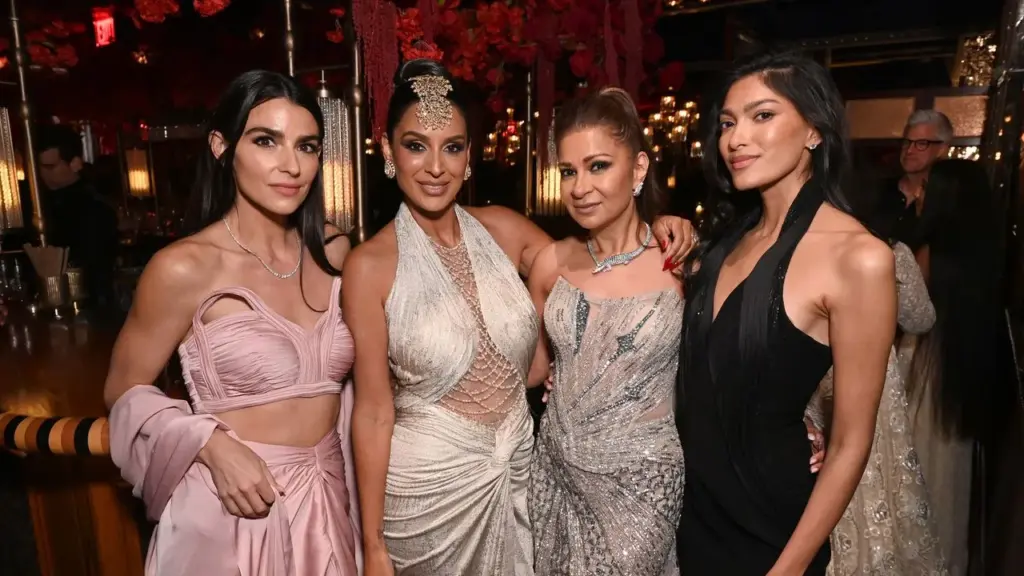
- Jessel Taank and the CFDA hosted the second annual Diwali Noir at Boom at The Standard, showcasing modern interpretations of South Asian fashion by designers like Prabal Gurung and Rahul Mishra.
- Gold House expanded its footprint with its largest 'Gold Diwali' yet in Los Angeles, announcing the new Gold Stack Shorts Fund in partnership with South Stack Studios.
- Indian luxury designer Sabyasachi Mukherjee hosted a historic celebration inside the Metropolitan Museum of Art's Charles Engelhard Court, complete with Dom Pérignon and Petrossian caviar.
- Anjula Acharia’s 'All That Glitters' black-tie ball, presented with Lexus at the Ambassador’s Clubhouse, highlighted the rising institutional power of the South Asian diaspora in entertainment and business.
- Jessel Taank et le CFDA ont organisé la deuxième édition annuelle du Diwali Noir au Boom du Standard, mettant en valeur des interprétations modernes de la mode sud-asiatique par des créateurs tels que Prabal Gurung et Rahul Mishra.
- Gold House a étendu son influence avec son plus grand « Gold Diwali » à ce jour à Los Angeles, annonçant le nouveau fonds Gold Stack Shorts en partenariat avec South Stack Studios.
- Le couturier indien de luxe Sabyasachi Mukherjee a organisé une célébration historique dans la cour Charles Engelhard du Metropolitan Museum of Art, agrémentée de Dom Pérignon et de caviar Petrossian.
- Le bal de gala « All That Glitters » d'Anjula Acharia, présenté avec Lexus à l'Ambassador’s Clubhouse, a mis en lumière la puissance institutionnelle croissante de la diaspora sud-asiatique dans le divertissement et les affaires.
- Jessel Taank y el CFDA organizaron la segunda edición anual de Diwali Noir en Boom at The Standard, mostrando interpretaciones modernas de la moda del sur de Asia a cargo de diseñadores como Prabal Gurung y Rahul Mishra.
- Gold House amplió su presencia con su mayor «Gold Diwali» hasta la fecha en Los Ángeles, anunciando el nuevo fondo Gold Stack Shorts en colaboración con South Stack Studios.
- El diseñador de lujo indio Sabyasachi Mukherjee ofreció una celebración histórica en el Charles Engelhard Court del Museo Metropolitano de Arte, amenizada con Dom Pérignon y caviar Petrossian.
- La gala de etiqueta «All That Glitters» de Anjula Acharia, presentada junto a Lexus en el Ambassador’s Clubhouse, puso de relieve el creciente poder institucional de la diáspora del sur de Asia en el entretenimiento y los negocios.
- 杰塞尔·塔恩克(Jessel Taank)与美国时装设计师协会(CFDA)在标准酒店的 Boom 俱乐部共同主办了第二届“黑色排灯节”(Diwali Noir),普拉巴·古隆(Prabal Gurung)和拉胡尔·米什拉(Rahul Mishra)等设计师展示了对南亚时尚的现代诠释。
- “黄金之屋”(Gold House)在洛杉矶举办了迄今为止规模最大的“黄金排灯节”,进一步扩大其影响力,并宣布与 South Stack Studios 合作成立全新的 Gold Stack Shorts 基金。
- 印度奢侈品设计师萨比萨奇·慕克吉(Sabyasachi Mukherjee)在大都会艺术博物馆的查尔斯·恩格尔哈德庭院(Charles Engelhard Court)内举办了一场历史性的庆典,现场备有唐培里侬香槟(Dom Pérignon)和彼得罗西安鱼子酱(Petrossian caviar)。
- 安朱拉·阿查里亚(Anjula Acharia)携手雷克萨斯(Lexus)在大使俱乐部(Ambassador’s Clubhouse)举办了“一切闪耀”(All That Glitters)黑白领结舞会,彰显了南亚侨民在娱乐与商业领域日益增长的体制化力量。
When the five days of Diwali commence according to the Hindu lunar calendar, the ancient Festival of Lights traditionally calls for intimate domestic rituals: hours spent kneading dough for handmade sweets, the meticulous cleansing of living spaces to welcome prosperity, and the quiet flickering of innumerable tea light candles. Yet across the cultural corridors of New York and Los Angeles, a vibrant new paradigm has taken root. The global South Asian diaspora has turned the weeks leading up to the holiday into an extended epicurean and sartorial season—a triumphant loophole for high-octane fanfare that bridges ancient traditions with contemporary Western luxury.
This year’s celebrations marked a watershed moment for South Asian cultural visibility in the West. No longer confined to private community gatherings or suburban living rooms, Diwali has ascended to the pinnacle of American high society. From historic museum halls to trendsetting Manhattan rooftops and sprawling downtown L.A. venues, the diaspora's creative elite—alongside titans of fashion, finance, and cinema—have claimed their rightful place at the center of the global cultural conversation, redefining what modern diaspora celebration looks like with uncompromising elegance.
The Haute Couture Metamorphosis at Boom and The Standard
At Boom at The Standard High Line, the energy was palpable as Jessel Taank welcomed an illustrious crowd for the second annual Diwali Noir party, presented by ŌUSHQ in partnership with the Council of Fashion Designers of America (CFDA). Taank, an entrepreneur and television personality, reflected on how far the holiday’s public footprint has evolved. Co-hosted alongside Prakti Beauty founder Pritika Swarup and the CFDA’s Marc Karimzadeh, the evening was designed to shatter outdated monoliths surrounding Indian attire. Guests eschewed predictable heavy embellishments in favor of fluid, contemporary interpretations of South Asian style, ranging from Taank’s metallic chocolate Prabal Gurung gown to Swarup’s electric-pink Rahul Mishra creation.
The guest list read like a cross-section of New York’s cultural vanguard, drawing culinary legends like Daniel Boulud, fashion disruptors like Sami Miro and Jenna Lyons, and creative directors from across the luxury spectrum. Towers of Johnnie Walker Blue Label spiraled toward the ceiling while bartenders poured bespoke martinis and Champagne, fueling a room where Bollywood classics seamlessly bled into Afro tech and electronic dance beats. By the early hours of the morning, the sophisticated cocktail party had devolved into an unbridled celebration, proving that the modern diaspora knows how to command a room with equal parts curatorial precision and raw exuberance.
Cinematic Milestones and West Coast Power on the Pacific
Three thousand miles away, Los Angeles played host to its own monumental display of cultural clout as Gold House mounted its largest celebration of the festival to date at The Majestic Downtown. Against a lush backdrop of golden marigolds, tropical palm fronds, and brass lanterns, the evening served as both a celebration of community and a strategic industry summit. Bing Chen, executive chairman and CEO of Gold House, addressed an audience of prominent creators, CEOs, and entertainers, framing the evening through the metaphor of stellar evolution—a nod to the relentless, generational labor required to forge institutional power.
The evening underscored the commercial and artistic heft currently wielded by South Asian storytellers, highlighted by the presence of the cast and producers of Ramayana: Part 1: Rise of a Legend, alongside major figures from Blumhouse and Poshmark. Cementing this momentum, Gold House announced a landmark partnership with nonprofit film fund South Stack Studios to launch the Gold Stack Shorts Fund, designed to cultivate micro-series and short films centering authentic South Asian narratives. Complete with a bespoke carrom board designed by Anita Dongre and handcrafted luxury menus, the L.A. gathering demonstrated that diaspora representation is increasingly anchored by institutional backing and financial muscle.
Inside the Hallowed Halls of the Metropolitan Museum of Art
Perhaps no single event captured the historic gravity of the season quite like Sabyasachi Mukherjee’s gathering inside the Metropolitan Museum of Art. Following his landmark multi-year collaboration with the institution and his first New York runway show in nearly two decades, the acclaimed Indian designer hosted an unprecedented Diwali celebration within the Charles Engelhard Court of the American Wing. Surrounded by sleek sherwanis, sequined statement pieces, and meticulously tailored suits, the museum’s soaring architecture provided a breathtaking backdrop for a night that felt destined for the history books.
Attendees including Kal Penn, Linda Fargo, and actress Rani Mukerji moved between silver trays of Dom Pérignon and Petrossian caviar, transfixed by a 16-foot-long culinary cornucopia featuring towering croquembouches, fine chocolates, and an overflowing raw bar of Maine lobster and fresh oysters. As a six-piece band delivered sultry renditions of American standards, the convergence of elite European luxury houses and South Asian couture felt entirely natural. It was a potent reminder that heritage craftsmanship is not a static artifact, but a living, breathing force capable of conquering the world's most prestigious cultural institutions.
The Ambassador’s Clubhouse and the Architecture of Belonging
The crescendo of the New York season arrived at the Ambassador’s Clubhouse in NoMad, where Anjula Acharia hosted her glitzy, highly coveted annual black-tie ball presented in partnership with Lexus. Dubbed 'All That Glitters,' the evening served as an unapologetic love letter to the city and the relentless professionals driving the South Asian renaissance. Amidst a sensory wonderland of floor-to-ceiling crimson flora, guests including Avantika Vandanapu, Jay Sean, and Mira Nair savored Wagyu-infused naan and bespoke lassi cocktails while enveloped in shimmering silks and cascading feathers.
As the party spilled into the crisp Manhattan night air—complete with bespoke fragrance stations offering saffron and sandalwood-noted perfumes—the broader cultural significance of these gatherings came into sharp focus. These multi-city spectacles are far more than high-society social fixtures; they are the architectural framework of a new diaspora identity. By claiming the most coveted venues, fashion houses, and cinematic platforms in the West, the global South Asian community is not merely participating in the cultural mainstream—they are expanding its boundaries, illuminating a path of prosperity and belonging that will resonate for generations to come.
Lorsque les cinq jours de Diwali débutent selon le calendrier lunaire hindou, l'antique Fête de la Lumière convie traditionnellement à des rituels domestiques intimes : des heures passées à pétrir la pâte pour des confiseries faites maison, le nettoyage méticuleux des intérieurs pour accueillir la prospérité, et la lueur feutrée d'innombrables bougies chauffe-plat. Pourtant, à travers les couloirs culturels de New York et de Los Angeles, un nouveau paradigme vibrant s'est imposé. La diaspora sud-asiatique mondiale a fait des semaines précédant la fête une saison épicurienne et sartoriale prolongée — une faille triomphante pour des réjouissances fastueuses qui jettent un pont entre traditions ancestrales et luxe occidental contemporain.
Les célébrations de cette année ont marqué un tournant historique pour la visibilité culturelle de l'Asie du Sud en Occident. Désormais libéré des rassemblements communautaires privés ou des salons de banlieue, Diwali s'est hissé au sommet de la haute société américaine. Des salles de musées historiques aux toits en vogue de Manhattan en passant par les vastes espaces du centre-ville de L.A., l'élite créative de la diaspora — aux côtés des titans de la mode, de la finance et du cinéma — a conquis la place qui lui revient au centre du conversation culturelle mondiale, redéfinissant avec une élégance intransigeante à quoi ressemble la célébration moderne de la diaspora.
La métamorphose haute couture au Boom et au Standard
Au Boom du Standard High Line, l'énergie était palpable alors que Jessel Taank accueillait une foule illustre pour la deuxième édition de la soirée Diwali Noir, présentée par ŌUSHQ en partenariat avec le Council of Fashion Designers of America (CFDA). Mme Taank, entrepreneure et personnalité de la télévision, a rappelé le chemin parcouru par l'empreinte publique de la fête. Coorganisée avec la fondatrice de Prakti Beauty, Pritika Swarup, et Marc Karimzadeh du CFDA, la soirée a été pensée pour briser les clichés obsolètes entourant la tenue indienne. Les invités ont boudé les broderies lourdes et prévisibles au profit d'interprétations fluides et contemporaines du style sud-asiatique, allant de la robe métallique couleur chocolat Prabal Gurung portée par Jessel Taank à la création rose électrique Rahul Mishra de Pritika Swarup.
La liste des invités ressemblait à une coupe transversale de l'avant-garde culturelle new-yorkaise, attirant des figures de la gastronomie telles que Daniel Boulud, des agitateurs de mode comme Sami Miro et Jenna Lyons, ainsi que des directeurs artistiques de tout le spectre du luxe. Des tours de Johnnie Walker Blue Label s'élevaient vers le plafond tandis que les barmans servaient des martinis sur mesure et du Champagne, alimentant une pièce où les classiques de Bollywood se fondaient harmonieusement dans l'Afro tech et les rythmes de danse électroniques. Au petit matin, le cocktail sophistiqué s'était transformé en une célébration débridée, prouvant que la diaspora moderne sait dominer un salon avec un égal mélange de précision curatoriale et de pure exubérance.
Jalons cinématographiques et puissance de la Côte Ouest sur le Pacifique
À trois mille miles de là, Los Angeles a accueilli sa propre démonstration monumentale de poids culturel alors que Gold House organisait sa plus grande célébration du festival à ce jour au Majestic Downtown. Sur un fond luxuriant de soucis dorés, de frondes de palmiers tropicaux et de lanternes en laiton, la soirée a servi à la fois de célébration de la communauté et de sommet stratégique pour l'industrie. Bing Chen, président exécutif et PDG de Gold House, s'est adressé à un auditoire de créateurs de premier plan, de PDG et d'artistes, qualifiant la soirée à travers la métaphore de l'évolution stellaire — un clin d'œil au travail acharné et générationnel requis pour forger un pouvoir institutionnel.
La soirée a souligné le poids commercial et artistique actuellement exercé par les conteurs sud-asiatiques, mis en valeur par la présence du casting et des producteurs de Ramayana : Part 1 : Rise of a Legend, aux côtés de personnalités majeures de Blumhouse et de Poshmark. Consacrant cette dynamique, Gold House a annoncé un partenariat historique avec le fonds de cinéma à but non lucratif South Stack Studios pour lancer le fonds Gold Stack Shorts, conçu pour cultiver des micro-séries et des courts-métrages centrés sur des récits sud-asiatiques authentiques. Complétée par un jeu de carrom sur mesure conçu par Anita Dongre et des menus de luxe artisanaux, la réunion de L.A. a démontré que la représentation de la diaspora est de plus en plus ancrée par un soutien institutionnel et des muscles financiers.
Dans les salles consacrées du Metropolitan Museum of Art
Aucun événement n'a peut-être capturé la gravité historique de la saison avec autant d'acuité que le rassemblement de Sabyasachi Mukherjee au sein du Metropolitan Museum of Art. Suite à sa collaboration pluriannuelle historique avec l'institution et à son premier défilé new-yorkais en près de deux décennies, le célèbre couturier indien a organisé une célébration de Diwali sans précédent dans la cour Charles Engelhard de l'American Wing. Entourée de sherwanis élégants, de pièces à sequins affirmées et de costumes impeccablement taillés, l'architecture élancée du musée offrait un décor à couper le souffle pour une nuit qui semblait promise à l'histoire.
Des invités tels que Kal Penn, Linda Fargo et l'actrice Rani Mukerji ont déambulé entre des plateaux d'argent garnis de Dom Pérignon et de caviar Petrossian, fascinés par une corne d'abondance culinaire de près de cinq mètres de long comprenant des pièces montées vertigineuses, des chocolats fins et un bar de fruits de mer débordant de homards du Maine et d'huîtres fraîches. Alors qu'un orchestre de six musiciens interprétait des versions langoureuses de standards américains, la convergence entre les maisons de luxe européennes d'élite et la haute couture sud-asiatique paraissait des plus naturelles. C'était le puissant rappel que l'artisanat patrimonial n'est pas un artefact figé, mais une force vivante et vibrante, capable de conquérir les institutions culturelles les plus prestigieuses du monde.
L'Ambassador’s Clubhouse et l'architecture de l'appartenance
Le crescendo de la saison new-yorkaise s'est produit à l'Ambassador’s Clubhouse à NoMad, où Anjula Acharia a organisé son bal de gala glamour et très convoité, présenté en partenariat avec Lexus. Intitulée « All That Glitters », la soirée s'est posée comme une déclaration d'amour sans complexe à la ville et aux professionnels acharnés qui portent la Renaissance sud-asiatique. Au milieu d'un pays des merveilles sensoriel de décors floraux cramoisis du sol au plafond, des invités tels qu'Avantika Vandanapu, Jay Sean et Mira Nair ont savouré du naan infusé au wagyu et des cocktails lassi sur mesure, drapés de soies scintillantes et de plumes en cascade.
Alors que la fête se prolongeait dans l'air frais de la nuit new-yorkaise — agrémentée de stations de parfums sur mesure proposant des fragrances aux notes de safran et de santal —, la portée culturelle plus large de ces rassemblements s'est imposée avec clarté. Ces spectacles multi-urbains sont bien plus que de simples rendez-vous mondains de haute société ; ils constituent l'armature architecturale d'une nouvelle identité diasporique. En investissant les lieux les plus prisés, les maisons de couture et les plateformes cinématographiques d'Occident, la communauté sud-asiatique mondiale ne se contente pas de participer au courant culturel dominant : elle en repousse les frontières, éclairant un chemin de prospérité et d'appartenance qui résonnera pour les generations à venir.
Cuando comienzan los cinco días de Diwali según el calendario lunar hindú, el milenario Festival de las Luces convoca por tradición a íntimos rituales domésticos: horas dedicadas a amasar dulces caseros, la meticulosa limpieza de los espacios para recibir a la prosperidad y el titilar silencioso de innumerables velas de té. Sin embargo, en los corredores culturales de Nueva York y Los Ángeles se ha arraigado un vibrante nuevo paradigma. La diáspora global del sur de Asia ha convertido las semanas previas a la festividad en una prolongada temporada epicúrea y sartorial, un triunfo que sirve de vía de escape para un despliegue de gran octanaje que tiende puentes entre las tradiciones ancestrales y el lujo occidental contemporáneo.
Las celebraciones de este año marcaron un punto de inflexión para la visibilidad cultural del sur de Asia en Occidente. Lejos de limitarse a encuentros comunitarios privados o salas de estar suburbanas, el Diwali ha ascendido a la cúspide de la alta sociedad estadounidense. Desde históricos salones de museos hasta vanguardistas azoteas neoyorquinas y amplios espacios en el centro de Los Ángeles, la élite creativa de la diáspora —junto a titanes de la moda, las finanzas y el cine— ha reclamado el lugar que le corresponde en el centro de la conversación cultural global, redefiniendo con una elegancia intransigente el aspecto de la celebración de la diáspora moderna.
La metamorfosis de la alta costura en Boom y The Standard
En Boom at The Standard High Line, la energía era palpable mientras Jessel Taank daba la bienvenida a una ilustre multitud en la segunda fiesta anual Diwali Noir, presentada por ŌUSHQ en colaboración con el Consejo de Diseñadores de Moda de América (CFDA). Taank, empresaria y personalidad televisiva, reflexionó sobre lo mucho que ha evolucionado la presencia pública de la festividad. Copresentada junto a Pritika Swarup, fundadora de Prakti Beauty, y Marc Karimzadeh, del CFDA, la velada se ideó para romper con los anticuados clichés en torno a la indumentaria india. Los invitados evitaron los pesados adornos previsibles en favor de interpretaciones fluidas y contemporáneas del estilo del sur de Asia, que oscilaron entre el vestido metálico en tono chocolate de Prabal Gurung que lució Taank y la creación en rosa eléctrico de Rahul Mishra elegida por Swarup.
La lista de invitados parecía un corte transversal de la vanguardia cultural neoyorquina, reuniendo a leyendas culinarias como Daniel Boulud, agitadores de la moda de la talla de Sami Miro y Jenna Lyons, y directores creativos de todo el espectro del lujo. Torres de Johnnie Walker Blue Label se elevaban hacia el techo mientras los barmans servían cócteles exclusivos y champán, nutriendo una sala donde los clásicos de Bollywood se fundían con naturalidad con el afro-tech y los ritmos de la música electrónica. A primera hora de la mañana, la sofisticada fiesta de cóctel derivó en una celebración desinhibida, demostrando que la diáspora moderna sabe cómo dominar una estancia aunando precisión curatorial y exuberancia desbordante.
Hitos cinematográficos y el poder de la Costa Oeste en el Pacífico
A casi 5.000 kilómetros de distancia, Los Ángeles acogió su propia y monumental muestra de peso cultural cuando Gold House organizó su mayor celebración del festival hasta la fecha en The Majestic Downtown. Frente a un frondoso telón de fondo compuesto por caléndulas doradas, frondas de palmeras tropicales y linternas de latón, la velada sirvió tanto de celebración de la comunidad como de cumbre estratégica de la industria. Bing Chen, presidente ejecutivo y consejero delegado de Gold House, se dirigió a una audiencia de destacados creadores, directores ejecutivos y artistas, enmarcando la noche a través de la metáfora de la evolución estelar: un guiño al incansable trabajo generacional necesario para forjar el poder institucional.
La velada puso de relieve la influencia comercial y artística que ejercen actualmente los narradores del sur de Asia, subrayada por la presencia del reparto y los productores de Ramayana: Part 1: Rise of a Legend, junto con figuras clave de Blumhouse y Poshmark. Como colofón a este impulso, Gold House anunció una asociación histórica con el fondo cinematográfico sin ánimo de lucro South Stack Studios para lanzar el fondo Gold Stack Shorts, concebido para cultivar miniseries y cortometrajes centrados en narrativas auténticas del sur de Asia. Con un tablero de carrom personalizado diseñado por Anita Dongre y menús de lujo elaborados de forma artesanal, la cita angelina demostró que la representación de la diáspora se apoya cada vez más en un respaldo institucional y músculo financiero.
Dentro de los sagrados salones del Museo Metropolitano de Arte
Tal vez ningún otro evento captó con tanta precisión la gravedad histórica de la temporada como la reunión organizada por Sabyasachi Mukherjee en el interior del Museo Metropolitano de Arte. Tras su emblemática colaboración plurianual con la institución y su primer desfile en Nueva York en casi dos décadas, el aclamado diseñador indio celebró una fiesta de Diwali sin precedentes en el Charles Engelhard Court del ala americana. Rodeados de elegantes sherwanis, piezas de lentejuelas y trajes meticulosamente confeccionados a medida, la imponente arquitectura del museo ofreció un escenario impresionante para una noche destinada a quedar grabada en los libros de historia.
Asistentes de la talla de Kal Penn, Linda Fargo y la actriz Rani Mukerji se desplazaban entre bandejas de plata con Dom Pérignon y caviar Petrossian, cautivados por una cornucopia culinaria de casi cinco metros de largo que incluía imponentes croquembouches, chocolates selectos y una barra libre de bogavante de Maine y ostras frescas. Mientras un grupo musical de seis componentes interpretaba sensuales versiones de clásicos estadounidenses, la convergencia entre las casas de élite del lujo europeo y la alta costura del sur de Asia se antojaba de lo más natural. Fue un recordatorio contundente de que la artesanía heredada no es un artefacto estático, sino una fuerza viva y palpitante capaz de conquistar las instituciones culturales más prestigiosas del mundo.
El Ambassador’s Clubhouse y la arquitectura de la pertenencia
El cénit de la temporada neoyorquina llegó al Ambassador’s Clubhouse en NoMad, donde Anjula Acharia organizó su deslumbrante y muy codiciado baile anual de etiqueta, presentado en colaboración con Lexus. Bautizada como «All That Glitters» (Todo lo que reluce), la velada sirvió como una declaración de amor incondicional a la ciudad y a los incansables profesionales que impulsan el renacimiento del sur de Asia. En medio de un paraíso sensorial de vegetación carmesí que iba del suelo al techo, invitados como Avantika Vandanapu, Jay Sean y Mira Nair saborearon naan infusionado con wagyu y cócteles de lassi a medida mientras vestían sedas resplandecientes y cascadas de plumas.
A medida que la fiesta se desbordaba hacia el fresco aire nocturno de Manhattan —donde se instalaron estaciones de fragancias personalizadas con aromas de azafrán y sándalo—, el significado cultural más amplio de estas reuniones cobró nítido protagonismo. Estos espectáculos multitudinarios son mucho más que meros eventos de la alta sociedad; constituyen la estructura arquitectónica de una nueva identidad de la diáspora. Al ocupar los espacios, las casas de moda y las plataformas cinematográficas más codiciadas de Occidente, la comunidad global del sur de Asia no se limita a participar en la corriente cultural principal, sino que está ampliando sus fronteras e iluminando un camino de prosperidad y pertenencia que resonará durante generaciones.
当印度历法中的排灯节五天庆典拉开序幕,古老的灯节传统上往往伴随着私密的家庭仪式:花上数小时揉捏面团制作手工糖果,一丝不苟地清洁居住空间以迎接繁荣,以及无数盏茶蜡烛安静闪烁的光芒。然而,在纽约和洛杉矶的文化走廊里,一种充满活力的新范式已经扎根。全球南亚侨民已将节日到来前的几周变成了一个超长的大快朵颐与高级定制时装季——这是一场将古老传统与当代西方奢华完美结合的、充满高能量狂欢的胜利旋风。
今年的庆祝活动标志着西方南亚文化能见度的分水岭。排灯节不再局限于私密的社区聚会或郊区客厅,而是已经登上了美国上流社会的巅峰。从历史悠久的博物馆大厅到引领潮流的曼哈顿屋顶,再到洛杉矶市中心广阔的活动场地,侨民中的创意精英——与时尚、金融和电影界的巨头并肩——在士气高昂的全球文化对话中夺回了他们应有的中心地位,以毫不妥协的优雅重新定义了现代侨民庆典的面貌。
在 Boom 与 The Standard 见证高级定制时装的蜕变
在高线公园标准酒店的 Boom 俱乐部(Boom at The Standard High Line),当杰塞尔·塔恩克(Jessel Taank)迎候由 ŌUSHQ 与美国时装设计师协会(CFDA)联合呈献的第二届“黑色排灯节”(Diwali Noir)的尊贵宾客时,现场的气氛热烈得几乎触手可及。作为企业家和电视名人的塔恩克,回顾了节日公开影响力所取得的巨大飞跃。当晚的活动由她与 Prakti Beauty 创始人普里蒂卡·斯瓦鲁普(Pritika Swarup)以及 CFDA 的马克·卡里姆扎德(Marc Karimzadeh)共同主持,旨在打破围绕印度服饰的过时单一刻板印象。宾客们摒弃了可预测的厚重刺绣,转而选择对南亚风格的流线型现代诠释,从塔恩克身着的金属色巧克力色普拉巴·古隆(Prabal Gurung)礼服,到斯瓦鲁普的电光粉红拉胡尔·米什拉(Rahul Mishra)设计,无不令人惊艳。
嘉宾名单宛如纽约文化先锋的横截面,吸引了烹饪界传奇人物丹尼尔·布鲁德(Daniel Boulud)、时尚颠覆者萨米·米罗(Sami Miro)和珍娜·莱恩斯(Jenna Lyons),以及来自各大奢侈品领域的创意总监。尊尼获加蓝牌威士忌(Johnnie Walker Blue Label)如塔尖般直指天花板,调酒师则为宾客斟满特调马提尼和香槟。在这个空间里,宝莱坞经典旋律与非洲科技(Afro tech)及电子舞曲无缝交融。清晨时分,这场精致的鸡尾酒会演变成了一场无拘无束的狂欢,证明了现代侨民既能以策展般的精准度掌控全场,又兼具原始的勃勃生机。
太平洋彼岸的电影里程碑与西海岸力量
在三千英里之外的洛杉矶,“黄金之屋”(Gold House)在市中心雄伟庄园(The Majestic Downtown)举办了迄今为止规模最大的一场节日庆典,展现出强大的文化影响力。在由金色万寿菊、热带棕榈叶和黄铜提灯构成的葱郁背景衬托下,当晚既是对社群的庆祝,也是一场战略性的产业峰会。“黄金之屋”执行董事长兼首席执行官陈彥君(Bing Chen)向由杰出创作者、首席执行官和演艺界人士组成的观众发表讲话,将当晚的活动比作恒星的演化——向锻造体制化力量所需的不懈代际努力致敬。
当晚的活动突显了南亚故事讲述者目前所掌握的商业与艺术分量,《罗摩衍那:第一部:传奇崛起》(Ramayana: Part 1: Rise of a Legend)的演员与制片人阵容,以及来自布伦屋制片公司(Blumhouse)和 Poshmark 的重量级人物悉数出席,将这种声势推向高潮。为了巩固这一强劲势头,“黄金之屋”宣布与非营利电影基金 South Stack Studios 达成一项里程碑式的合作,设立“黄金堆栈短片基金”(Gold Stack Shorts Fund),旨在扶植以真实南亚叙事为核心的微型剧集和短片。洛杉矶的聚会不仅备有由安妮塔·东格雷(Anita Dongre)设计的定制卡罗姆棋盘(carrom board)以及手工制作的奢华菜单,更证明了侨民的代表性正日益得到机构支持和雄厚资金的坚实后盾。
走入大都会艺术博物馆的神圣殿堂
或许没有任何单场活动能像萨比萨奇·慕克吉(Sabyasachi Mukherjee)在大都会艺术博物馆内举办的聚会那样,完美捕捉到这个季节的历史厚重感。继他与该机构展开具有里程碑意义的多年期合作、并在近二十年里首次举办纽约时装秀之后,这位备受赞誉的印度设计师在美国翼展的查尔斯·恩格尔哈德庭院(Charles Engelhard Court)内举办了一场前所未有的排灯节庆典。在剪裁流畅的谢尔瓦尼长衫(sherwanis)、缀满亮片的个性单品和细致剪裁的西装环绕下,博物馆高耸的建筑为这个注定载入史册的夜晚提供了一个令人屏息的背景。
包括卡尔·潘(Kal Penn)、琳达·法戈(Linda Fargo)和女演员拉妮·穆克吉(Rani Mukerji)在内的与会者穿梭于盛放着唐培里侬香槟和彼得罗西安鱼子酱的银质托盘之间,被一座长达16英尺的餐饮聚宝盆深深吸引——上面摆满了高耸的泡芙塔(croquembouches)、精选巧克力,以及堆成小山的缅因州龙虾和新鲜生蚝等生鲜海鲜吧。当六人乐队奏出性感迷人的美国标准曲爵士乐时,欧洲精英奢侈品牌与南亚高级定制时装的交融显得是那般自然。这是一个强有力的提醒:传统工艺并非静止的文物,而是一个活生生的、能够征服世界最负盛名文化机构的力量。
大使俱乐部与归属感的建筑学
纽约时季的高潮在诺玛德(NoMad)的大使俱乐部(Ambassador’s Clubhouse)上演,安朱拉·阿查里亚(Anjula Acharia)在此举办了与其联手雷克萨斯(Lexus)呈现的、光彩夺目且备受追捧的年度黑白领结舞会。这场被命名为“一切闪耀”(All That Glitters)的晚会,是一封写给这座城市以及推动南亚文艺复兴的不懈专业人士的无畏情书。在落地绯红花海的感官仙境中,包括阿凡蒂卡·万达纳普(Avantika Vandanapu)、杰·肖恩(Jay Sean)和米拉·奈尔(Mira Nair)在内的宾客们身着闪亮的丝绸与层叠的羽毛,品尝着融入和牛的印度烤饼(naan)和特调拉昔(lassi)鸡尾酒。
当派对蔓延到曼哈顿清爽的夜空中——现场还设有点缀着藏红花和檀香木香调香水的定制香水站——这些聚会更深层的文化意义变得清晰起来。这些跨城市的盛宴远不止是上流社会的社交装饰;它们是全新侨民身份的建筑框架。通过占领西方最令人艳羡的场地、时装屋和电影平台,全球南亚社群不仅在参与文化主流,更在拓展其边界,点亮一条将世代回响的繁荣与归属之路。
Editorial Standards & Multi-Language Synthesis: This dispatch was synthesized and fact-checked by the ParisDaily Editorial Desk across 5 global editions (EN, FR, VI, ES, ZH), cross-referencing primary international wire reports and real-time search intelligence.