La gran calibración: el complejo debate de la Reserva Federal sobre los tipos de interés
As inflationary pressures prove more resilient than anticipated, the Federal Reserve faces a deepening internal schism over the velocity of its monetary tightening cycle. The outcome will dictate global market volatility for the coming year.
As inflationary pressures prove more resilient than anticipated, the Federal Reserve faces a deepening internal schism over the velocity of its monetary tightening cycle. The outcome will dictate global market volatility for the coming year.
As inflationary pressures prove more resilient than anticipated, the Federal Reserve faces a deepening internal schism over the velocity of its monetary tightening cycle. The outcome will dictate global market volatility for the coming year.
Ante unas presiones inflacionistas más resistentes de lo previsto, la Reserva Federal se enfrenta a una profunda división interna sobre la velocidad de su ciclo de endurecimiento monetario. El resultado determinará la volatilidad de los mercados globales durante el próximo año.
As inflationary pressures prove more resilient than anticipated, the Federal Reserve faces a deepening internal schism over the velocity of its monetary tightening cycle. The outcome will dictate global market volatility for the coming year.
- Federal Reserve officials are split between aggressive front-loading of rate hikes and a more cautious, data-dependent approach.
- Persistent core inflation metrics are challenging the 'transitory' narrative, forcing a recalibration of long-term economic forecasts.
- Global liquidity is tightening, placing immense pressure on emerging markets and debt-heavy corporate balance sheets.
- The central bank's communication strategy is now as critical as the rate decisions themselves to prevent market panic.
- Federal Reserve officials are split between aggressive front-loading of rate hikes and a more cautious, data-dependent approach.
- Persistent core inflation metrics are challenging the 'transitory' narrative, forcing a recalibration of long-term economic forecasts.
- Global liquidity is tightening, placing immense pressure on emerging markets and debt-heavy corporate balance sheets.
- The central bank's communication strategy is now as critical as the rate decisions themselves to prevent market panic.
- Federal Reserve officials are split between aggressive front-loading of rate hikes and a more cautious, data-dependent approach.
- Persistent core inflation metrics are challenging the 'transitory' narrative, forcing a recalibration of long-term economic forecasts.
- Global liquidity is tightening, placing immense pressure on emerging markets and debt-heavy corporate balance sheets.
- The central bank's communication strategy is now as critical as the rate decisions themselves to prevent market panic.
- Los funcionarios de la Reserva Federal están divididos entre una subida agresiva y temprana de los tipos y un enfoque más cauteloso, supeditado a los datos.
- Las métricas persistentes de la inflación subyacente desafían la narrativa de la «transitoriedad», obligando a recalibrar las previsiones económicas a largo plazo.
- La liquidez global se está contrayendo, ejerciendo una presión inmensa sobre los mercados emergentes y los balances corporativos altamente endeudados.
- La estrategia de comunicación del banco central es ahora tan crítica como las decisiones sobre los tipos para evitar el pánico en los mercados.
- Federal Reserve officials are split between aggressive front-loading of rate hikes and a more cautious, data-dependent approach.
- Persistent core inflation metrics are challenging the 'transitory' narrative, forcing a recalibration of long-term economic forecasts.
- Global liquidity is tightening, placing immense pressure on emerging markets and debt-heavy corporate balance sheets.
- The central bank's communication strategy is now as critical as the rate decisions themselves to prevent market panic.
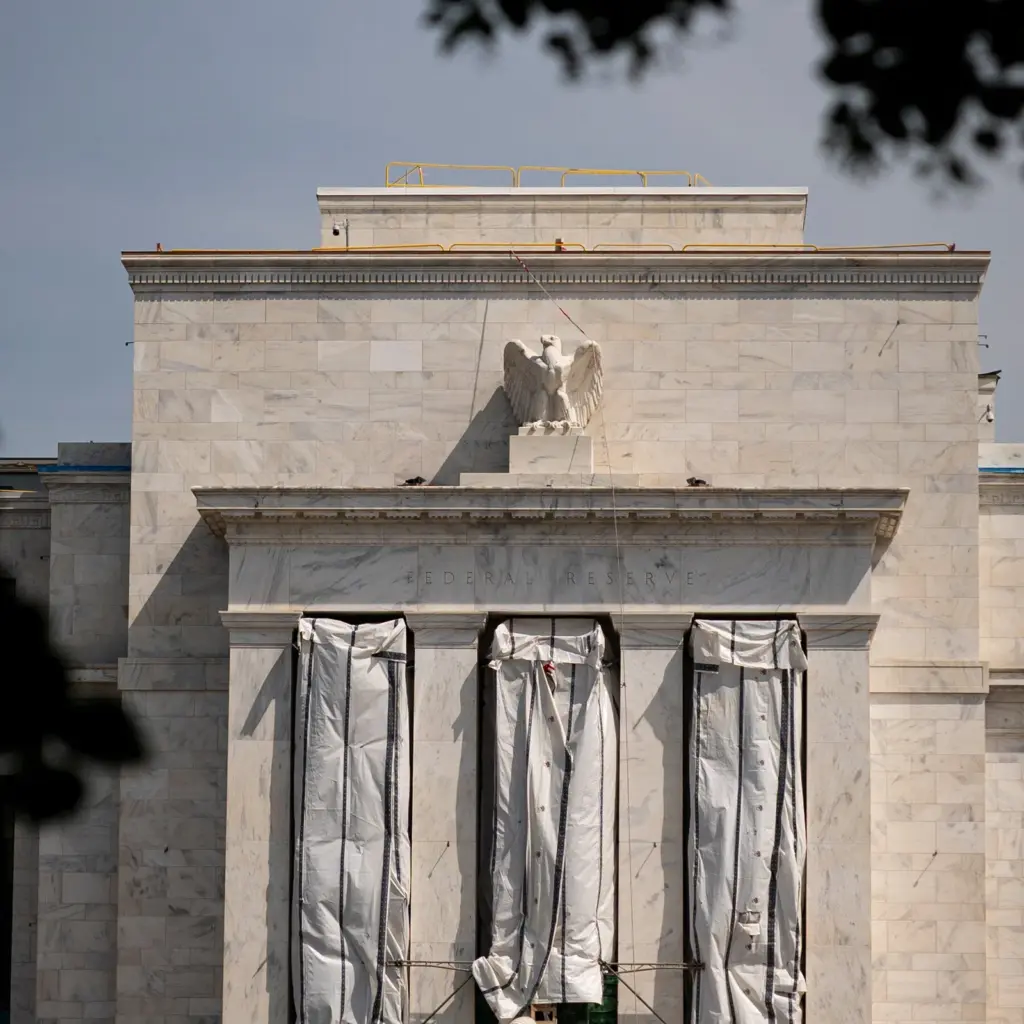
In the austere, wood-paneled corridors of the Eccles Building in Washington, a quiet but profound transformation is underway. The Federal Reserve, once the undisputed architect of global economic stability, finds itself navigating a treacherous middle ground: the delicate balance between curbing a stubborn, multi-decade inflation surge and avoiding an unnecessary, policy-induced recession. As the cost of capital climbs, the consensus that once defined the post-pandemic recovery has fractured, leaving policymakers to grapple with the velocity of their own intervention.
This internal divide is not merely academic; it is the primary engine of current market volatility. On one side of the ledger, the 'hawks' argue that the Fed has fallen behind the curve, necessitating rapid, aggressive rate hikes to anchor inflation expectations before they become unmoored. On the other, the 'doves'—mindful of the fragile labor market and the potential for a sudden contraction—advocate for a measured, methodical pace. The tension between these two camps has created a feedback loop of uncertainty, where every speech from a regional Fed president sends tremors through the S&P 500 and recalibrates the yield on the ten-year Treasury note.
The Anatomy of a Monetary Schism
The core of the disagreement lies in the interpretation of incoming economic data. For months, the Federal Reserve relied on the assumption that supply chain bottlenecks and pent-up consumer demand would naturally subside, allowing inflation to return to its two-percent target without drastic intervention. However, the persistence of core inflation—particularly in services and housing—has shattered that optimism. Officials are now forced to confront the reality that the economy is running hotter than their models predicted, and the traditional tools of monetary policy may require a more forceful application than previously signaled.
Protagonists in this drama, including influential governors and regional bank presidents, are increasingly vocal about their divergent paths. Some argue that the 'neutral rate'—the theoretical level where policy is neither stimulative nor restrictive—has shifted upward, requiring a more aggressive terminal rate. Others caution that the lag effect of monetary policy is significant; by the time the effects of a rate hike are fully felt in the real economy, the Fed may have already overshot its target, turning a cooling period into a deep, structural downturn. This debate is complicated by the fact that the Fed is operating in a post-quantitative-easing environment, where the sheer volume of liquidity in the system makes the transmission mechanism of interest rates less predictable than in previous cycles.
Historical Precedents and the Shadow of the 1970s
To understand the current anxiety, one must look back to the late 1970s, a period that haunts the collective memory of the Federal Open Market Committee (FOMC). The era of Paul Volcker, who famously broke the back of inflation by pushing interest rates to double digits, serves as both a blueprint and a cautionary tale. While no official is currently proposing a return to 20 percent rates, the fear of 'repeating the mistakes of the 70s'—specifically, the error of easing policy too soon and allowing inflation to become entrenched—is a powerful motivator for the hawkish contingent.
However, the economic landscape of the 2020s is fundamentally different from the era of stagflation. The global economy is far more interconnected, and the reliance on digital infrastructure and just-in-time logistics has created new vulnerabilities. Unlike the 1970s, where labor unions had significant bargaining power, the modern workforce is fragmented, yet the labor market remains historically tight. This creates a 'wage-price spiral' risk that is distinct from previous cycles, as employers are forced to raise wages to compete for talent, which in turn fuels further price increases. The Fed is effectively trying to perform surgery on a patient whose anatomy has changed since the last time they held the scalpel.
The Global Ripple Effect of American Policy
The consequences of the Fed’s indecision extend far beyond the borders of the United States. As the dollar strengthens in response to higher interest rates, emerging markets are finding themselves in a precarious position. Many of these nations hold significant debt denominated in U.S. dollars; as the greenback appreciates, the cost of servicing that debt skyrockets, threatening to trigger sovereign defaults and social unrest. The Fed’s 'domestic' mandate—to ensure price stability and maximum employment—is increasingly in conflict with its role as the de facto central bank of the global financial system.
Furthermore, the corporate sector is beginning to feel the squeeze. For over a decade, companies operated in an environment of 'free money,' where low interest rates allowed for massive share buybacks and speculative expansion. That era has ended. As the cost of debt service rises, corporations are being forced to prioritize cash flow over growth, leading to a cooling in capital expenditure and a potential slowdown in innovation. The 'recalibration' is not just a policy shift; it is a fundamental restructuring of how business is conducted in the modern era, forcing a move away from growth-at-all-costs toward a focus on operational efficiency and balance sheet resilience.
Navigating the Path Toward a New Equilibrium
Looking ahead, the primary challenge for Chair Jerome Powell is communication. In an environment where the market is hyper-sensitive to every nuance of Fed rhetoric, the ability to provide clear, consistent guidance is paramount. The risk of a 'policy error'—either doing too little and allowing inflation to spiral, or doing too much and triggering a recession—is at its highest point in decades. Investors should expect continued volatility as the market attempts to price in the 'terminal rate,' the point at which the Fed will finally pause its tightening cycle.
What should observers watch for in the coming months? First, the tone of the FOMC minutes will be scrutinized for any signs of a unified front or a widening of the current divide. Second, the reaction of the labor market to sustained high rates will be the ultimate litmus test; if unemployment begins to tick upward, the pressure on the Fed to pivot will become immense. Finally, the interplay between fiscal policy and monetary policy will be critical. If the government continues to inject stimulus into an already overheated economy, the Fed’s job becomes exponentially harder. We are witnessing a high-stakes experiment in economic management, and the world is watching to see if the Fed can land the plane, or if the turbulence ahead is simply unavoidable.
In the austere, wood-paneled corridors of the Eccles Building in Washington, a quiet but profound transformation is underway. The Federal Reserve, once the undisputed architect of global economic stability, finds itself navigating a treacherous middle ground: the delicate balance between curbing a stubborn, multi-decade inflation surge and avoiding an unnecessary, policy-induced recession. As the cost of capital climbs, the consensus that once defined the post-pandemic recovery has fractured, leaving policymakers to grapple with the velocity of their own intervention.
This internal divide is not merely academic; it is the primary engine of current market volatility. On one side of the ledger, the 'hawks' argue that the Fed has fallen behind the curve, necessitating rapid, aggressive rate hikes to anchor inflation expectations before they become unmoored. On the other, the 'doves'—mindful of the fragile labor market and the potential for a sudden contraction—advocate for a measured, methodical pace. The tension between these two camps has created a feedback loop of uncertainty, where every speech from a regional Fed president sends tremors through the S&P 500 and recalibrates the yield on the ten-year Treasury note.
The Anatomy of a Monetary Schism
The core of the disagreement lies in the interpretation of incoming economic data. For months, the Federal Reserve relied on the assumption that supply chain bottlenecks and pent-up consumer demand would naturally subside, allowing inflation to return to its two-percent target without drastic intervention. However, the persistence of core inflation—particularly in services and housing—has shattered that optimism. Officials are now forced to confront the reality that the economy is running hotter than their models predicted, and the traditional tools of monetary policy may require a more forceful application than previously signaled.
Protagonists in this drama, including influential governors and regional bank presidents, are increasingly vocal about their divergent paths. Some argue that the 'neutral rate'—the theoretical level where policy is neither stimulative nor restrictive—has shifted upward, requiring a more aggressive terminal rate. Others caution that the lag effect of monetary policy is significant; by the time the effects of a rate hike are fully felt in the real economy, the Fed may have already overshot its target, turning a cooling period into a deep, structural downturn. This debate is complicated by the fact that the Fed is operating in a post-quantitative-easing environment, where the sheer volume of liquidity in the system makes the transmission mechanism of interest rates less predictable than in previous cycles.
Historical Precedents and the Shadow of the 1970s
To understand the current anxiety, one must look back to the late 1970s, a period that haunts the collective memory of the Federal Open Market Committee (FOMC). The era of Paul Volcker, who famously broke the back of inflation by pushing interest rates to double digits, serves as both a blueprint and a cautionary tale. While no official is currently proposing a return to 20 percent rates, the fear of 'repeating the mistakes of the 70s'—specifically, the error of easing policy too soon and allowing inflation to become entrenched—is a powerful motivator for the hawkish contingent.
However, the economic landscape of the 2020s is fundamentally different from the era of stagflation. The global economy is far more interconnected, and the reliance on digital infrastructure and just-in-time logistics has created new vulnerabilities. Unlike the 1970s, where labor unions had significant bargaining power, the modern workforce is fragmented, yet the labor market remains historically tight. This creates a 'wage-price spiral' risk that is distinct from previous cycles, as employers are forced to raise wages to compete for talent, which in turn fuels further price increases. The Fed is effectively trying to perform surgery on a patient whose anatomy has changed since the last time they held the scalpel.
The Global Ripple Effect of American Policy
The consequences of the Fed’s indecision extend far beyond the borders of the United States. As the dollar strengthens in response to higher interest rates, emerging markets are finding themselves in a precarious position. Many of these nations hold significant debt denominated in U.S. dollars; as the greenback appreciates, the cost of servicing that debt skyrockets, threatening to trigger sovereign defaults and social unrest. The Fed’s 'domestic' mandate—to ensure price stability and maximum employment—is increasingly in conflict with its role as the de facto central bank of the global financial system.
Furthermore, the corporate sector is beginning to feel the squeeze. For over a decade, companies operated in an environment of 'free money,' where low interest rates allowed for massive share buybacks and speculative expansion. That era has ended. As the cost of debt service rises, corporations are being forced to prioritize cash flow over growth, leading to a cooling in capital expenditure and a potential slowdown in innovation. The 'recalibration' is not just a policy shift; it is a fundamental restructuring of how business is conducted in the modern era, forcing a move away from growth-at-all-costs toward a focus on operational efficiency and balance sheet resilience.
Navigating the Path Toward a New Equilibrium
Looking ahead, the primary challenge for Chair Jerome Powell is communication. In an environment where the market is hyper-sensitive to every nuance of Fed rhetoric, the ability to provide clear, consistent guidance is paramount. The risk of a 'policy error'—either doing too little and allowing inflation to spiral, or doing too much and triggering a recession—is at its highest point in decades. Investors should expect continued volatility as the market attempts to price in the 'terminal rate,' the point at which the Fed will finally pause its tightening cycle.
What should observers watch for in the coming months? First, the tone of the FOMC minutes will be scrutinized for any signs of a unified front or a widening of the current divide. Second, the reaction of the labor market to sustained high rates will be the ultimate litmus test; if unemployment begins to tick upward, the pressure on the Fed to pivot will become immense. Finally, the interplay between fiscal policy and monetary policy will be critical. If the government continues to inject stimulus into an already overheated economy, the Fed’s job becomes exponentially harder. We are witnessing a high-stakes experiment in economic management, and the world is watching to see if the Fed can land the plane, or if the turbulence ahead is simply unavoidable.
In the austere, wood-paneled corridors of the Eccles Building in Washington, a quiet but profound transformation is underway. The Federal Reserve, once the undisputed architect of global economic stability, finds itself navigating a treacherous middle ground: the delicate balance between curbing a stubborn, multi-decade inflation surge and avoiding an unnecessary, policy-induced recession. As the cost of capital climbs, the consensus that once defined the post-pandemic recovery has fractured, leaving policymakers to grapple with the velocity of their own intervention.
This internal divide is not merely academic; it is the primary engine of current market volatility. On one side of the ledger, the 'hawks' argue that the Fed has fallen behind the curve, necessitating rapid, aggressive rate hikes to anchor inflation expectations before they become unmoored. On the other, the 'doves'—mindful of the fragile labor market and the potential for a sudden contraction—advocate for a measured, methodical pace. The tension between these two camps has created a feedback loop of uncertainty, where every speech from a regional Fed president sends tremors through the S&P 500 and recalibrates the yield on the ten-year Treasury note.
The Anatomy of a Monetary Schism
The core of the disagreement lies in the interpretation of incoming economic data. For months, the Federal Reserve relied on the assumption that supply chain bottlenecks and pent-up consumer demand would naturally subside, allowing inflation to return to its two-percent target without drastic intervention. However, the persistence of core inflation—particularly in services and housing—has shattered that optimism. Officials are now forced to confront the reality that the economy is running hotter than their models predicted, and the traditional tools of monetary policy may require a more forceful application than previously signaled.
Protagonists in this drama, including influential governors and regional bank presidents, are increasingly vocal about their divergent paths. Some argue that the 'neutral rate'—the theoretical level where policy is neither stimulative nor restrictive—has shifted upward, requiring a more aggressive terminal rate. Others caution that the lag effect of monetary policy is significant; by the time the effects of a rate hike are fully felt in the real economy, the Fed may have already overshot its target, turning a cooling period into a deep, structural downturn. This debate is complicated by the fact that the Fed is operating in a post-quantitative-easing environment, where the sheer volume of liquidity in the system makes the transmission mechanism of interest rates less predictable than in previous cycles.
Historical Precedents and the Shadow of the 1970s
To understand the current anxiety, one must look back to the late 1970s, a period that haunts the collective memory of the Federal Open Market Committee (FOMC). The era of Paul Volcker, who famously broke the back of inflation by pushing interest rates to double digits, serves as both a blueprint and a cautionary tale. While no official is currently proposing a return to 20 percent rates, the fear of 'repeating the mistakes of the 70s'—specifically, the error of easing policy too soon and allowing inflation to become entrenched—is a powerful motivator for the hawkish contingent.
However, the economic landscape of the 2020s is fundamentally different from the era of stagflation. The global economy is far more interconnected, and the reliance on digital infrastructure and just-in-time logistics has created new vulnerabilities. Unlike the 1970s, where labor unions had significant bargaining power, the modern workforce is fragmented, yet the labor market remains historically tight. This creates a 'wage-price spiral' risk that is distinct from previous cycles, as employers are forced to raise wages to compete for talent, which in turn fuels further price increases. The Fed is effectively trying to perform surgery on a patient whose anatomy has changed since the last time they held the scalpel.
The Global Ripple Effect of American Policy
The consequences of the Fed’s indecision extend far beyond the borders of the United States. As the dollar strengthens in response to higher interest rates, emerging markets are finding themselves in a precarious position. Many of these nations hold significant debt denominated in U.S. dollars; as the greenback appreciates, the cost of servicing that debt skyrockets, threatening to trigger sovereign defaults and social unrest. The Fed’s 'domestic' mandate—to ensure price stability and maximum employment—is increasingly in conflict with its role as the de facto central bank of the global financial system.
Furthermore, the corporate sector is beginning to feel the squeeze. For over a decade, companies operated in an environment of 'free money,' where low interest rates allowed for massive share buybacks and speculative expansion. That era has ended. As the cost of debt service rises, corporations are being forced to prioritize cash flow over growth, leading to a cooling in capital expenditure and a potential slowdown in innovation. The 'recalibration' is not just a policy shift; it is a fundamental restructuring of how business is conducted in the modern era, forcing a move away from growth-at-all-costs toward a focus on operational efficiency and balance sheet resilience.
Navigating the Path Toward a New Equilibrium
Looking ahead, the primary challenge for Chair Jerome Powell is communication. In an environment where the market is hyper-sensitive to every nuance of Fed rhetoric, the ability to provide clear, consistent guidance is paramount. The risk of a 'policy error'—either doing too little and allowing inflation to spiral, or doing too much and triggering a recession—is at its highest point in decades. Investors should expect continued volatility as the market attempts to price in the 'terminal rate,' the point at which the Fed will finally pause its tightening cycle.
What should observers watch for in the coming months? First, the tone of the FOMC minutes will be scrutinized for any signs of a unified front or a widening of the current divide. Second, the reaction of the labor market to sustained high rates will be the ultimate litmus test; if unemployment begins to tick upward, the pressure on the Fed to pivot will become immense. Finally, the interplay between fiscal policy and monetary policy will be critical. If the government continues to inject stimulus into an already overheated economy, the Fed’s job becomes exponentially harder. We are witnessing a high-stakes experiment in economic management, and the world is watching to see if the Fed can land the plane, or if the turbulence ahead is simply unavoidable.
En los austeros pasillos revestidos de madera del edificio Eccles en Washington, se está produciendo una transformación silenciosa pero profunda. La Reserva Federal, antaño arquitecta indiscutible de la estabilidad económica mundial, se encuentra navegando por un terreno traicionero: el delicado equilibrio entre frenar una persistente oleada inflacionista de varias décadas y evitar una recesión innecesaria inducida por las políticas. A medida que el coste del capital aumenta, el consenso que definía la recuperación pospandémica se ha fracturado, dejando a los responsables políticos ante el dilema de la velocidad de su propia intervención.
Esta división interna no es meramente académica; es el motor principal de la actual volatilidad del mercado. Por un lado, los «halcones» argumentan que la Fed se ha quedado atrás, lo que exige subidas de tipos rápidas y agresivas para anclar las expectativas de inflación antes de que se descontrolen. Por otro, las «palomas» —conscientes de la fragilidad del mercado laboral y del potencial de una contracción repentina— abogan por un ritmo medido y metódico. La tensión entre ambos bandos ha creado un bucle de incertidumbre, donde cada discurso de un presidente regional de la Fed provoca temblores en el S&P 500 y recalibra el rendimiento de los bonos del Tesoro a diez años.
La anatomía de un cisma monetario
El núcleo del desacuerdo reside en la interpretación de los datos económicos entrantes. Durante meses, la Reserva Federal confió en la hipótesis de que los cuellos de botella en la cadena de suministro y la demanda acumulada de los consumidores disminuirían de forma natural, permitiendo que la inflación volviera a su objetivo del dos por ciento sin una intervención drástica. Sin embargo, la persistencia de la inflación subyacente —particularmente en los servicios y la vivienda— ha hecho añicos ese optimismo. Los funcionarios se ven ahora obligados a afrontar la realidad de que la economía está funcionando con más intensidad de lo que predecían sus modelos, y que las herramientas tradicionales de la política monetaria podrían requerir una aplicación más contundente de lo señalado anteriormente.
Los protagonistas de este drama, incluidos gobernadores influyentes y presidentes de bancos regionales, se muestran cada vez más abiertos sobre sus divergentes caminos. Algunos sostienen que el «tipo neutral» —el nivel teórico en el que la política no es ni estimulante ni restrictiva— se ha desplazado al alza, lo que requiere un tipo terminal más agresivo. Otros advierten que el efecto retardado de la política monetaria es significativo; para cuando los efectos de una subida de tipos se sientan plenamente en la economía real, la Fed podría haber superado ya su objetivo, convirtiendo un periodo de enfriamiento en una recesión profunda y estructural. Este debate se complica por el hecho de que la Fed opera en un entorno posterior a la expansión cuantitativa, donde el enorme volumen de liquidez en el sistema hace que el mecanismo de transmisión de los tipos de interés sea menos predecible que en ciclos anteriores.
Precedentes históricos y la sombra de los años 70
Para comprender la ansiedad actual, hay que remontarse a finales de la década de 1970, un periodo que acecha la memoria colectiva del Comité Federal de Mercado Abierto (FOMC). La era de Paul Volcker, quien logró frenar la inflación elevando los tipos de interés a dos dígitos, sirve tanto de modelo como de advertencia. Aunque ningún funcionario propone actualmente volver a tipos del 20%, el miedo a «repetir los errores de los 70» —específicamente, el error de relajar la política demasiado pronto y permitir que la inflación se enquiste— es un poderoso motivador para el contingente más agresivo.
Sin embargo, el panorama económico de la década de 2020 es fundamentalmente distinto al de la estanflación. La economía global está mucho más interconectada, y la dependencia de la infraestructura digital y la logística «justo a tiempo» ha creado nuevas vulnerabilidades. A diferencia de los años 70, cuando los sindicatos tenían un poder de negociación significativo, la fuerza laboral moderna está fragmentada, aunque el mercado laboral sigue siendo históricamente tenso. Esto crea un riesgo de «espiral precios-salarios» distinto al de ciclos anteriores, ya que los empleadores se ven obligados a subir los salarios para competir por el talento, lo que a su vez alimenta nuevos aumentos de precios. La Fed está intentando, en la práctica, operar a un paciente cuya anatomía ha cambiado desde la última vez que empuñaron el bisturí.
El efecto dominó global de la política estadounidense
Las consecuencias de la indecisión de la Fed se extienden mucho más allá de las fronteras de Estados Unidos. A medida que el dólar se fortalece en respuesta a los tipos de interés más altos, los mercados emergentes se encuentran en una posición precaria. Muchas de estas naciones tienen una deuda significativa denominada en dólares; a medida que el billete verde se aprecia, el coste de servir esa deuda se dispara, amenazando con provocar impagos soberanos y malestar social. El mandato «doméstico» de la Fed —garantizar la estabilidad de los precios y el máximo empleo— entra cada vez más en conflicto con su papel como banco central de facto del sistema financiero mundial.
Además, el sector corporativo empieza a sentir la presión. Durante más de una década, las empresas operaron en un entorno de «dinero gratis», donde los bajos tipos de interés permitían recompras masivas de acciones y una expansión especulativa. Esa era ha terminado. A medida que aumenta el coste del servicio de la deuda, las empresas se ven obligadas a priorizar el flujo de caja sobre el crecimiento, lo que conduce a un enfriamiento de los gastos de capital y a una posible ralentización de la innovación. La «recalibración» no es solo un cambio de política; es una reestructuración fundamental de cómo se hacen negocios en la era moderna, forzando un alejamiento del crecimiento a cualquier precio hacia un enfoque en la eficiencia operativa y la resiliencia del balance.
Navegando hacia un nuevo equilibrio
De cara al futuro, el principal desafío para el presidente Jerome Powell es la comunicación. En un entorno donde el mercado es hipersensible a cada matiz de la retórica de la Fed, la capacidad de proporcionar una guía clara y coherente es primordial. El riesgo de un «error de política» —ya sea hacer demasiado poco y permitir que la inflación se desboque, o hacer demasiado y provocar una recesión— está en su punto más alto en décadas. Los inversores deben esperar una volatilidad continua mientras el mercado intenta descontar el «tipo terminal», el punto en el que la Fed finalmente pausará su ciclo de endurecimiento.
¿Qué deberían observar los analistas en los próximos meses? En primer lugar, el tono de las actas del FOMC será analizado en busca de cualquier señal de un frente unido o de una ampliación de la división actual. En segundo lugar, la reacción del mercado laboral a unos tipos sostenidamente altos será la prueba de fuego definitiva; si el desempleo comienza a repuntar, la presión sobre la Fed para que cambie de rumbo será inmensa. Por último, la interacción entre la política fiscal y la monetaria será crítica. Si el gobierno continúa inyectando estímulos en una economía ya sobrecalentada, el trabajo de la Fed se vuelve exponencialmente más difícil. Estamos siendo testigos de un experimento de alto riesgo en la gestión económica, y el mundo observa para ver si la Fed puede aterrizar el avión o si la turbulencia que se avecina es simplemente inevitable.
In the austere, wood-paneled corridors of the Eccles Building in Washington, a quiet but profound transformation is underway. The Federal Reserve, once the undisputed architect of global economic stability, finds itself navigating a treacherous middle ground: the delicate balance between curbing a stubborn, multi-decade inflation surge and avoiding an unnecessary, policy-induced recession. As the cost of capital climbs, the consensus that once defined the post-pandemic recovery has fractured, leaving policymakers to grapple with the velocity of their own intervention.
This internal divide is not merely academic; it is the primary engine of current market volatility. On one side of the ledger, the 'hawks' argue that the Fed has fallen behind the curve, necessitating rapid, aggressive rate hikes to anchor inflation expectations before they become unmoored. On the other, the 'doves'—mindful of the fragile labor market and the potential for a sudden contraction—advocate for a measured, methodical pace. The tension between these two camps has created a feedback loop of uncertainty, where every speech from a regional Fed president sends tremors through the S&P 500 and recalibrates the yield on the ten-year Treasury note.
The Anatomy of a Monetary Schism
The core of the disagreement lies in the interpretation of incoming economic data. For months, the Federal Reserve relied on the assumption that supply chain bottlenecks and pent-up consumer demand would naturally subside, allowing inflation to return to its two-percent target without drastic intervention. However, the persistence of core inflation—particularly in services and housing—has shattered that optimism. Officials are now forced to confront the reality that the economy is running hotter than their models predicted, and the traditional tools of monetary policy may require a more forceful application than previously signaled.
Protagonists in this drama, including influential governors and regional bank presidents, are increasingly vocal about their divergent paths. Some argue that the 'neutral rate'—the theoretical level where policy is neither stimulative nor restrictive—has shifted upward, requiring a more aggressive terminal rate. Others caution that the lag effect of monetary policy is significant; by the time the effects of a rate hike are fully felt in the real economy, the Fed may have already overshot its target, turning a cooling period into a deep, structural downturn. This debate is complicated by the fact that the Fed is operating in a post-quantitative-easing environment, where the sheer volume of liquidity in the system makes the transmission mechanism of interest rates less predictable than in previous cycles.
Historical Precedents and the Shadow of the 1970s
To understand the current anxiety, one must look back to the late 1970s, a period that haunts the collective memory of the Federal Open Market Committee (FOMC). The era of Paul Volcker, who famously broke the back of inflation by pushing interest rates to double digits, serves as both a blueprint and a cautionary tale. While no official is currently proposing a return to 20 percent rates, the fear of 'repeating the mistakes of the 70s'—specifically, the error of easing policy too soon and allowing inflation to become entrenched—is a powerful motivator for the hawkish contingent.
However, the economic landscape of the 2020s is fundamentally different from the era of stagflation. The global economy is far more interconnected, and the reliance on digital infrastructure and just-in-time logistics has created new vulnerabilities. Unlike the 1970s, where labor unions had significant bargaining power, the modern workforce is fragmented, yet the labor market remains historically tight. This creates a 'wage-price spiral' risk that is distinct from previous cycles, as employers are forced to raise wages to compete for talent, which in turn fuels further price increases. The Fed is effectively trying to perform surgery on a patient whose anatomy has changed since the last time they held the scalpel.
The Global Ripple Effect of American Policy
The consequences of the Fed’s indecision extend far beyond the borders of the United States. As the dollar strengthens in response to higher interest rates, emerging markets are finding themselves in a precarious position. Many of these nations hold significant debt denominated in U.S. dollars; as the greenback appreciates, the cost of servicing that debt skyrockets, threatening to trigger sovereign defaults and social unrest. The Fed’s 'domestic' mandate—to ensure price stability and maximum employment—is increasingly in conflict with its role as the de facto central bank of the global financial system.
Furthermore, the corporate sector is beginning to feel the squeeze. For over a decade, companies operated in an environment of 'free money,' where low interest rates allowed for massive share buybacks and speculative expansion. That era has ended. As the cost of debt service rises, corporations are being forced to prioritize cash flow over growth, leading to a cooling in capital expenditure and a potential slowdown in innovation. The 'recalibration' is not just a policy shift; it is a fundamental restructuring of how business is conducted in the modern era, forcing a move away from growth-at-all-costs toward a focus on operational efficiency and balance sheet resilience.
Navigating the Path Toward a New Equilibrium
Looking ahead, the primary challenge for Chair Jerome Powell is communication. In an environment where the market is hyper-sensitive to every nuance of Fed rhetoric, the ability to provide clear, consistent guidance is paramount. The risk of a 'policy error'—either doing too little and allowing inflation to spiral, or doing too much and triggering a recession—is at its highest point in decades. Investors should expect continued volatility as the market attempts to price in the 'terminal rate,' the point at which the Fed will finally pause its tightening cycle.
What should observers watch for in the coming months? First, the tone of the FOMC minutes will be scrutinized for any signs of a unified front or a widening of the current divide. Second, the reaction of the labor market to sustained high rates will be the ultimate litmus test; if unemployment begins to tick upward, the pressure on the Fed to pivot will become immense. Finally, the interplay between fiscal policy and monetary policy will be critical. If the government continues to inject stimulus into an already overheated economy, the Fed’s job becomes exponentially harder. We are witnessing a high-stakes experiment in economic management, and the world is watching to see if the Fed can land the plane, or if the turbulence ahead is simply unavoidable.
Editorial Standards & Multi-Language Synthesis: This dispatch was synthesized and fact-checked by the ParisDaily Editorial Desk across 5 global editions (EN, FR, VI, ES, ZH), cross-referencing primary international wire reports and real-time search intelligence.