Bóng ma trong cỗ máy: Gemini Agent của Google thay đổi hoàn toàn trải nghiệm trên macOS
Google has officially integrated agentic capabilities into its macOS Gemini application, allowing the AI to navigate native software and automate complex workflows on behalf of the user.
Google vừa chính thức tích hợp các khả năng tác nhân (agentic) vào ứng dụng Gemini trên macOS, cho phép trí tuệ nhân tạo điều hướng các phần mềm gốc và tự động hóa những quy trình làm việc phức tạp thay cho người dùng. Đây là bước tiến quan trọng đánh dấu sự chuyển dịch từ chatbot thụ động sang kỷ nguyên của các tác nhân kỹ thuật số tự chủ.
Google a officiellement intégré des capacités d'agent autonome à son application macOS Gemini, permettant à l'IA de naviguer dans les logiciels natifs et d'automatiser des flux de travail complexes pour le compte de l'utilisateur. Cette avancée marque un tournant décisif vers une informatique où l'IA ne se contente plus de répondre, mais agit.
Google ha integrado oficialmente capacidades de agente en su aplicación de Gemini para macOS, permitiendo que la IA navegue por el software nativo y automatice flujos de trabajo complejos en nombre del usuario. Esta evolución marca un cambio definitivo desde el chatbot pasivo hacia el asistente digital autónomo.
Google 已正式为其 macOS 版 Gemini 应用集成智能体(Agentic)功能,赋予 AI 直接操控原生软件并为用户自动化执行复杂工作流的能力。这一举措标志着 AI 从被动对话向主动执行的范式转移。
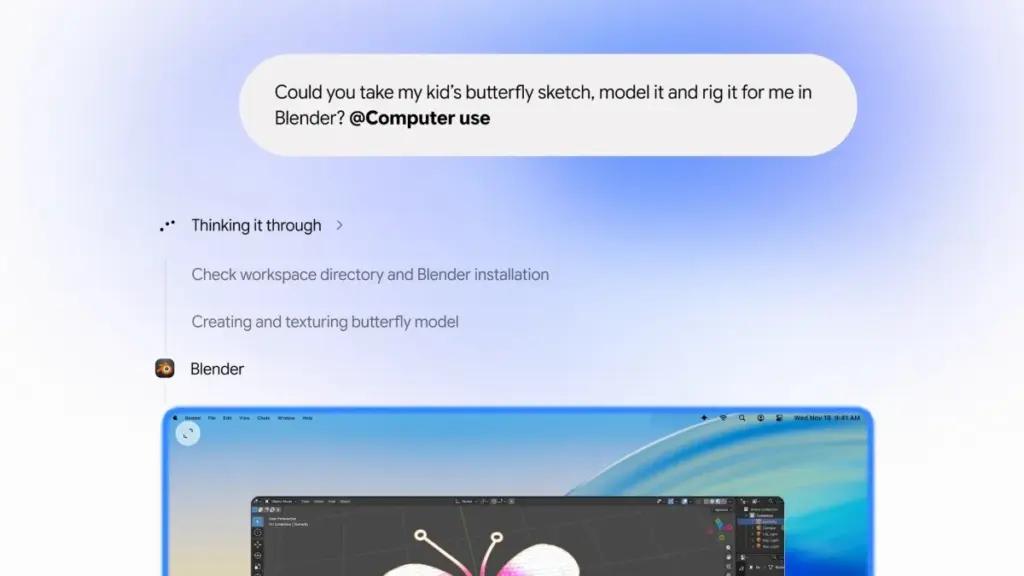
- Google's Gemini for Mac now features 'computer use' capabilities, enabling the AI to interact with native apps and web browsers autonomously.
- The feature allows for multistep task execution, such as file organization and form completion, while maintaining user oversight via live previews.
- This move positions Google to compete directly with OpenAI, Anthropic, and Meta in the burgeoning 'agentic AI' market.
- Access is currently restricted to U.S.-based subscribers of Google AI Plus, Pro, or Ultra, with no immediate timeline for global expansion.
- Gemini cho Mac hiện đã sở hữu khả năng "sử dụng máy tính", cho phép AI tương tác với các ứng dụng gốc và trình duyệt web một cách tự động.
- Tính năng này hỗ trợ thực hiện các tác vụ đa bước, như sắp xếp tệp tin hay điền biểu mẫu, đồng thời duy trì sự kiểm soát của người dùng thông qua tính năng xem trước trực tiếp.
- Động thái này đưa Google vào thế đối đầu trực diện với OpenAI, Anthropic và Meta trong thị trường "AI tác nhân" đang phát triển mạnh mẽ.
- Quyền truy cập hiện giới hạn cho người dùng đăng ký gói Google AI Plus, Pro hoặc Ultra tại Hoa Kỳ, chưa có lộ trình cụ thể cho việc mở rộng ra toàn cầu.
- Gemini pour Mac intègre désormais des capacités de « manipulation informatique », permettant à l'IA d'interagir de manière autonome avec les applications natives et les navigateurs web.
- La fonctionnalité permet l'exécution de tâches en plusieurs étapes, comme l'organisation de fichiers ou le remplissage de formulaires, tout en conservant un contrôle humain via des aperçus en direct.
- Ce mouvement positionne Google en concurrent direct d'OpenAI, Anthropic et Meta sur le marché en pleine expansion des « agents IA ».
- L'accès est actuellement réservé aux abonnés américains aux formules Google AI Plus, Pro ou Ultra, sans calendrier immédiat pour un déploiement mondial.
- Gemini para Mac incorpora ahora capacidades de "uso de ordenador", lo que permite a la IA interactuar de forma autónoma con aplicaciones nativas y navegadores web.
- La función permite ejecutar tareas de varios pasos, como la organización de archivos o la cumplimentación de formularios, manteniendo la supervisión del usuario mediante vistas previas en tiempo real.
- Con este movimiento, Google se posiciona para competir directamente con OpenAI, Anthropic y Meta en el creciente mercado de la "IA agentica".
- El acceso está restringido actualmente a suscriptores de Google AI Plus, Pro o Ultra en Estados Unidos, sin una fecha confirmada para su expansión global.
- Google Gemini for Mac 现已具备“计算机使用”(computer use)能力,支持 AI 自主与原生应用及网页浏览器进行交互。
- 该功能支持多步骤任务执行,如文件整理和表单填写,并通过实时预览确保用户拥有全程监管权。
- 此举旨在让 Google 在日益激烈的“智能体 AI”市场中,与 OpenAI、Anthropic 及 Meta 展开正面竞争。
- 目前该功能仅限美国地区的 Google AI Plus、Pro 或 Ultra 订阅用户使用,暂无全球推广时间表。
The boundary between human intent and digital execution has just grown significantly thinner. With the quiet, yet seismic, rollout of its new "computer use" capabilities for the Gemini desktop application on macOS, Google has signaled a definitive pivot from the era of the passive chatbot to the age of the autonomous digital agent. No longer confined to the sterile, text-based environment of a browser window, Gemini can now reach out into the operating system itself, manipulating files, navigating native applications, and executing multistep workflows that once required hours of human drudgery.
This development is more than a mere feature update; it is a fundamental recalibration of the personal computing experience. By allowing an AI to "see" and act upon the user's desktop, Google is betting that the future of productivity lies in delegation. As users watch the agent navigate their screen in a live preview—a digital ghost performing tasks while the human operator remains free to focus on higher-order creative work—the promise of the "AI-native" desktop becomes a tangible reality, albeit one that brings with it profound questions regarding privacy, agency, and the future of human-computer interaction.
The Evolution of Agentic Computing
For years, the promise of artificial intelligence was largely confined to information retrieval and content generation. However, the industry has spent the last eighteen months racing toward "agentic" capabilities—systems that do not just talk, but do. While Google’s entry into the Mac ecosystem arrives slightly behind the aggressive pushes from OpenAI, Anthropic, and Meta, the sheer scale of Google’s integration suggests a strategic attempt to capture the power-user demographic that relies on the macOS environment for professional workflows.
The technical architecture behind this update is designed to bridge the gap between cloud-based intelligence and local machine control. By utilizing a live preview interface, Google provides a critical "kill switch" mechanism, allowing users to pause or override the agent at any moment. This is a necessary concession to the inherent risks of autonomous software. The ability to automate repetitive tasks—such as batch-processing files, filling out complex administrative forms, or synchronizing data across disparate dashboards—is the primary value proposition here. It transforms the computer from a tool that requires constant manual input into a collaborative partner that understands the context of the user’s digital workspace.

Strategic Positioning in a Crowded Market
Google’s decision to prioritize the Mac platform is a calculated move to secure its foothold among enterprise and creative professionals who form the backbone of the Apple ecosystem. By bundling this feature with its premium "AI Plus," "Pro," and "Ultra" subscription tiers, Google is effectively creating a walled garden of high-end productivity tools. This strategy mirrors the broader industry trend of monetizing "agentic" features to offset the massive capital expenditures required to train and run large-scale models.
The competition is fierce. OpenAI’s ongoing development of its own agentic frameworks and Anthropic’s focus on "computer use" models have set a high bar for performance and reliability. Google’s advantage, however, lies in its deep integration with the Google Workspace suite. If Gemini can seamlessly bridge the gap between a local Mac file and a cloud-based Google Sheet or Calendar entry, it creates a sticky, high-value ecosystem that is difficult for users to abandon. The challenge for Google will be maintaining this performance while navigating the stringent security and privacy protocols that Apple enforces on its macOS platform.
The Ripple Effects on Digital Labor
As these agents become more sophisticated, the nature of "work" itself is undergoing a metamorphosis. The ability for an AI to perform tedious, multistep tasks has the potential to eliminate the "invisible labor" that currently consumes a significant portion of the average knowledge worker’s day. From organizing messy file structures to automating data entry, the efficiency gains are undeniable. However, this shift also raises critical questions about the erosion of technical skill sets and the potential for over-reliance on automated systems.
Furthermore, the introduction of an agent that can "see" and "act" on a user's screen introduces a new frontier in cybersecurity. While Google has implemented safeguards to ensure user approval before actions are taken, the potential for malicious exploitation of such agents remains a top-tier concern for enterprise IT departments. As these tools move from early-adopter playthings to standard workplace utilities, the industry will need to establish new norms for "AI-human collaboration" that prioritize transparency and security without stifling the convenience that makes these tools so attractive in the first place.
What to Watch Next
The current rollout is limited to English-language users in the United States, a classic "sandbox" approach that allows Google to refine the agent’s behavior before a global launch. Observers should watch for how the company handles the inevitable edge cases—where the AI misinterprets a UI element or encounters a non-standard application workflow. The success of this feature will not be measured by its ability to perform simple tasks, but by its reliability in complex, high-stakes environments where a single error could have significant consequences.
Looking ahead, the next phase of this evolution will likely involve cross-platform synchronization. If Google can successfully port this agentic capability to Windows and mobile environments, it will have created a truly ubiquitous "digital assistant" that follows the user across every device. For now, the Mac serves as the primary testing ground for a vision of computing where the machine does the heavy lifting, leaving the human to act as the architect of intent rather than the operator of the interface. Whether this leads to a new golden age of productivity or a loss of fundamental digital agency remains the defining question of the next decade.
Ranh giới giữa ý định của con người và sự thực thi kỹ thuật số vừa trở nên mong manh hơn bao giờ hết. Với việc âm thầm nhưng đầy chấn động triển khai các khả năng "sử dụng máy tính" cho ứng dụng máy tính để bàn Gemini trên macOS, Google đã phát đi tín hiệu về một sự chuyển hướng dứt khoát từ kỷ nguyên của chatbot thụ động sang thời đại của các tác nhân kỹ thuật số tự chủ. Không còn bị giới hạn trong môi trường văn bản khô khan của một cửa sổ trình duyệt, Gemini giờ đây có thể vươn tay vào chính hệ điều hành, thao tác với các tệp tin, điều hướng các ứng dụng gốc và thực thi những quy trình đa bước vốn từng tiêu tốn hàng giờ lao động của con người.
Sự phát triển này không chỉ là một bản cập nhật tính năng đơn thuần; đó là một sự hiệu chỉnh căn bản đối với trải nghiệm điện toán cá nhân. Bằng cách cho phép AI "nhìn thấy" và hành động trên màn hình của người dùng, Google đang đặt cược rằng tương lai của năng suất nằm ở sự ủy quyền. Khi người dùng quan sát tác nhân điều hướng màn hình của họ thông qua bản xem trước trực tiếp—một "bóng ma" kỹ thuật số thực hiện các tác vụ trong khi người điều khiển vẫn rảnh tay để tập trung vào các công việc sáng tạo cấp cao hơn—lời hứa về một chiếc máy tính "AI-native" (tích hợp AI nguyên bản) đã trở thành hiện thực hữu hình, dù nó cũng mang theo những câu hỏi sâu sắc về quyền riêng tư, quyền tự quyết và tương lai của sự tương tác giữa người và máy.
Sự tiến hóa của điện toán tác nhân
Trong nhiều năm, lời hứa của trí tuệ nhân tạo phần lớn chỉ giới hạn ở việc truy xuất thông tin và tạo nội dung. Tuy nhiên, ngành công nghiệp đã dành mười tám tháng qua để chạy đua hướng tới các khả năng "tác nhân"—những hệ thống không chỉ biết nói, mà còn biết làm. Mặc dù sự gia nhập của Google vào hệ sinh thái Mac có phần chậm chân hơn so với những bước tiến mạnh mẽ từ OpenAI, Anthropic và Meta, nhưng quy mô tích hợp của Google cho thấy một nỗ lực chiến lược nhằm chiếm lĩnh phân khúc người dùng chuyên nghiệp (power-user), những người vốn dựa vào môi trường macOS cho các quy trình công việc chuyên sâu.
Kiến trúc kỹ thuật đằng sau bản cập nhật này được thiết kế để thu hẹp khoảng cách giữa trí tuệ dựa trên đám mây và khả năng kiểm soát máy cục bộ. Bằng cách sử dụng giao diện xem trước trực tiếp, Google cung cấp một cơ chế "ngắt khẩn cấp" quan trọng, cho phép người dùng tạm dừng hoặc ghi đè lên tác nhân bất cứ lúc nào. Đây là một sự nhượng bộ cần thiết trước những rủi ro vốn có của phần mềm tự chủ. Khả năng tự động hóa các tác vụ lặp đi lặp lại—như xử lý hàng loạt tệp tin, điền các biểu mẫu hành chính phức tạp hoặc đồng bộ hóa dữ liệu giữa các bảng điều khiển khác nhau—là giá trị cốt lõi ở đây. Nó biến chiếc máy tính từ một công cụ đòi hỏi sự nhập liệu thủ công liên tục thành một đối tác cộng tác hiểu được bối cảnh không gian làm việc kỹ thuật số của người dùng.
Định vị chiến lược trong một thị trường đông đúc
Quyết định ưu tiên nền tảng Mac của Google là một nước đi có tính toán nhằm củng cố vị thế của mình trong cộng đồng các chuyên gia sáng tạo và doanh nghiệp, những người tạo nên xương sống của hệ sinh thái Apple. Bằng cách gộp tính năng này vào các gói đăng ký cao cấp "AI Plus", "Pro" và "Ultra", Google đang tạo ra một "khu vườn đóng" gồm các công cụ năng suất cao cấp. Chiến lược này phản ánh xu hướng chung của ngành là thương mại hóa các tính năng "tác nhân" để bù đắp cho chi phí vốn khổng lồ cần thiết để đào tạo và vận hành các mô hình quy mô lớn.
Sự cạnh tranh đang trở nên khốc liệt. Quá trình phát triển các khung tác nhân của OpenAI và sự tập trung của Anthropic vào các mô hình "sử dụng máy tính" đã đặt ra một tiêu chuẩn cao về hiệu suất và độ tin cậy. Tuy nhiên, lợi thế của Google nằm ở sự tích hợp sâu rộng với bộ ứng dụng Google Workspace. Nếu Gemini có thể kết nối liền mạch giữa một tệp tin trên Mac cục bộ với một bảng tính Google Sheet hoặc lịch trên đám mây, nó sẽ tạo ra một hệ sinh thái có tính gắn kết cao, khiến người dùng khó lòng từ bỏ. Thách thức đối với Google sẽ là duy trì hiệu suất này trong khi vẫn phải tuân thủ các giao thức bảo mật và quyền riêng tư nghiêm ngặt mà Apple áp đặt trên nền tảng macOS.
Tác động lan tỏa đến lao động kỹ thuật số
Khi các tác nhân này trở nên tinh vi hơn, bản chất của "công việc" đang trải qua một cuộc biến đổi. Khả năng của AI trong việc thực hiện các tác vụ tẻ nhạt, đa bước có tiềm năng loại bỏ "lao động vô hình" vốn đang chiếm một phần đáng kể thời gian trong ngày của một nhân viên tri thức. Từ việc sắp xếp các cấu trúc tệp tin lộn xộn đến tự động hóa nhập liệu, những lợi ích về hiệu suất là không thể phủ nhận. Tuy nhiên, sự thay đổi này cũng đặt ra những câu hỏi quan trọng về sự xói mòn của các kỹ năng kỹ thuật và khả năng phụ thuộc quá mức vào các hệ thống tự động.
Hơn nữa, việc giới thiệu một tác nhân có thể "nhìn" và "hành động" trên màn hình của người dùng mở ra một mặt trận mới trong an ninh mạng. Mặc dù Google đã triển khai các biện pháp bảo vệ để đảm bảo sự phê duyệt của người dùng trước khi các hành động được thực hiện, khả năng khai thác độc hại đối với các tác nhân như vậy vẫn là mối quan tâm hàng đầu của các bộ phận CNTT doanh nghiệp. Khi những công cụ này chuyển từ món đồ chơi của những người dùng sớm sang các tiện ích công sở tiêu chuẩn, ngành công nghiệp sẽ cần thiết lập các chuẩn mực mới cho "sự cộng tác giữa AI và con người", ưu tiên tính minh bạch và bảo mật mà không làm giảm đi sự tiện lợi vốn khiến những công cụ này trở nên hấp dẫn ngay từ đầu.
Những điều cần theo dõi tiếp theo
Việc triển khai hiện tại chỉ giới hạn cho người dùng tiếng Anh tại Hoa Kỳ, một cách tiếp cận "sandbox" (môi trường thử nghiệm) cổ điển cho phép Google tinh chỉnh hành vi của tác nhân trước khi ra mắt toàn cầu. Các nhà quan sát nên theo dõi cách công ty xử lý các trường hợp ngoại lệ không thể tránh khỏi—nơi AI hiểu sai một thành phần giao diện người dùng hoặc gặp phải một quy trình ứng dụng không chuẩn. Sự thành công của tính năng này sẽ không được đo lường bằng khả năng thực hiện các tác vụ đơn giản, mà bằng độ tin cậy của nó trong các môi trường phức tạp, có rủi ro cao, nơi một sai sót nhỏ cũng có thể dẫn đến hậu quả đáng kể.
Nhìn về phía trước, giai đoạn tiếp theo của sự tiến hóa này có khả năng sẽ liên quan đến việc đồng bộ hóa đa nền tảng. Nếu Google có thể chuyển đổi thành công khả năng tác nhân này sang Windows và các môi trường di động, họ sẽ tạo ra một "trợ lý kỹ thuật số" thực sự phổ quát, theo chân người dùng trên mọi thiết bị. Hiện tại, Mac đóng vai trò là sân chơi thử nghiệm chính cho một tầm nhìn điện toán nơi máy móc thực hiện những công việc nặng nhọc, để con người đóng vai trò là kiến trúc sư của ý định thay vì là người vận hành giao diện. Liệu điều này dẫn đến một kỷ nguyên vàng mới của năng suất hay sự mất mát quyền tự quyết kỹ thuật số cơ bản vẫn là câu hỏi định hình cho thập kỷ tới.
La frontière entre l'intention humaine et l'exécution numérique vient de s'amincir considérablement. Avec le déploiement discret, mais sismique, de ses nouvelles capacités de « manipulation informatique » pour l'application de bureau Gemini sur macOS, Google signe un pivot définitif : nous quittons l'ère du chatbot passif pour entrer dans celle de l'agent numérique autonome. Désormais libéré de l'environnement stérile et textuel d'une fenêtre de navigateur, Gemini peut s'immiscer au cœur même du système d'exploitation, manipulant des fichiers, naviguant dans des applications natives et exécutant des flux de travail complexes qui exigeaient autrefois des heures de labeur humain.
Ce développement est bien plus qu'une simple mise à jour ; il s'agit d'un recalibrage fondamental de l'expérience informatique personnelle. En permettant à une IA de « voir » et d'agir sur le bureau de l'utilisateur, Google parie que l'avenir de la productivité réside dans la délégation. Alors que les utilisateurs observent l'agent naviguer sur leur écran via un aperçu en direct — un fantôme numérique accomplissant des tâches pendant que l'opérateur humain reste libre de se concentrer sur un travail créatif à plus haute valeur ajoutée — la promesse d'un bureau « natif IA » devient une réalité tangible, bien qu'elle soulève des questions profondes concernant la vie privée, l'autonomie et l'avenir de l'interaction homme-machine.
L'évolution de l'informatique agentique
Pendant des années, la promesse de l'intelligence artificielle s'est largement limitée à la recherche d'informations et à la génération de contenu. Cependant, l'industrie a passé les dix-huit derniers mois à faire la course vers des capacités « agentiques » : des systèmes qui ne se contentent plus de parler, mais qui agissent. Bien que l'entrée de Google dans l'écosystème Mac arrive légèrement après les offensives agressives d'OpenAI, d'Anthropic et de Meta, l'ampleur de l'intégration de Google suggère une tentative stratégique de capturer le segment des utilisateurs experts qui dépendent de l'environnement macOS pour leurs flux de travail professionnels.
L'architecture technique derrière cette mise à jour est conçue pour combler le fossé entre l'intelligence basée sur le cloud et le contrôle local de la machine. En utilisant une interface d'aperçu en direct, Google fournit un mécanisme de « coupe-circuit » critique, permettant aux utilisateurs de suspendre ou d'outrepasser l'agent à tout moment. Il s'agit d'une concession nécessaire face aux risques inhérents aux logiciels autonomes. La capacité d'automatiser des tâches répétitives — comme le traitement par lots de fichiers, le remplissage de formulaires administratifs complexes ou la synchronisation de données entre des tableaux de bord disparates — constitue ici la proposition de valeur principale. Elle transforme l'ordinateur, outil exigeant une saisie manuelle constante, en un partenaire collaboratif qui comprend le contexte de l'espace de travail numérique de l'utilisateur.
Positionnement stratégique sur un marché saturé
La décision de Google de privilégier la plateforme Mac est un mouvement calculé pour sécuriser sa place parmi les professionnels de l'entreprise et de la création, qui constituent l'épine dorsale de l'écosystème Apple. En regroupant cette fonctionnalité dans ses niveaux d'abonnement premium « AI Plus », « Pro » et « Ultra », Google crée effectivement un jardin fermé d'outils de productivité haut de gamme. Cette stratégie reflète la tendance plus large de l'industrie à monétiser les fonctionnalités « agentiques » pour compenser les dépenses en capital massives nécessaires à l'entraînement et à l'exploitation de modèles à grande échelle.
La concurrence est féroce. Le développement continu par OpenAI de ses propres cadres agentiques et l'accent mis par Anthropic sur les modèles de « manipulation informatique » ont placé la barre très haut en termes de performance et de fiabilité. L'avantage de Google réside toutefois dans son intégration profonde avec la suite Google Workspace. Si Gemini parvient à combler harmonieusement le fossé entre un fichier Mac local et une entrée Google Sheet ou Agenda basée sur le cloud, il crée un écosystème captif et à haute valeur ajoutée, difficile à abandonner pour les utilisateurs. Le défi pour Google sera de maintenir cette performance tout en naviguant parmi les protocoles de sécurité et de confidentialité stricts qu'Apple impose sur sa plateforme macOS.
Les répercussions sur le travail numérique
À mesure que ces agents deviennent plus sophistiqués, la nature même du « travail » subit une métamorphose. La capacité d'une IA à effectuer des tâches fastidieuses et complexes a le potentiel d'éliminer le « travail invisible » qui consomme actuellement une part importante de la journée du travailleur du savoir moyen. De l'organisation de structures de fichiers désordonnées à l'automatisation de la saisie de données, les gains d'efficacité sont indéniables. Cependant, ce changement soulève également des questions critiques sur l'érosion des compétences techniques et le risque d'une dépendance excessive aux systèmes automatisés.
De plus, l'introduction d'un agent capable de « voir » et d'« agir » sur l'écran d'un utilisateur ouvre un nouveau front en matière de cybersécurité. Bien que Google ait mis en place des garde-fous pour garantir l'approbation de l'utilisateur avant toute action, le potentiel d'exploitation malveillante de tels agents reste une préoccupation majeure pour les départements informatiques des entreprises. À mesure que ces outils passeront du statut de jouets pour « early adopters » à celui d'utilitaires de travail standard, l'industrie devra établir de nouvelles normes pour la « collaboration homme-IA » qui privilégient la transparence et la sécurité, sans pour autant étouffer la commodité qui rend ces outils si attrayants.
Ce qu'il faudra surveiller
Le déploiement actuel est limité aux utilisateurs anglophones aux États-Unis, une approche classique de « bac à sable » qui permet à Google d'affiner le comportement de l'agent avant un lancement mondial. Les observateurs devront surveiller la manière dont l'entreprise gère les inévitables cas limites — là où l'IA interprète mal un élément d'interface ou rencontre un flux de travail non standard. Le succès de cette fonctionnalité ne sera pas mesuré par sa capacité à effectuer des tâches simples, mais par sa fiabilité dans des environnements complexes et à enjeux élevés où une seule erreur pourrait avoir des conséquences significatives.
À l'avenir, la prochaine phase de cette évolution impliquera probablement une synchronisation multiplateforme. Si Google parvient à porter avec succès cette capacité agentique sur Windows et les environnements mobiles, il aura créé un « assistant numérique » véritablement omniprésent qui suit l'utilisateur sur chaque appareil. Pour l'instant, le Mac sert de terrain d'essai principal pour une vision de l'informatique où la machine effectue le travail de fond, laissant l'humain agir en tant qu'architecte de l'intention plutôt qu'en tant qu'opérateur de l'interface. Que cela mène à un nouvel âge d'or de la productivité ou à une perte d'autonomie numérique fondamentale reste la question déterminante de la prochaine décennie.
La frontera entre la intención humana y la ejecución digital se ha vuelto significativamente más tenue. Con el silencioso, aunque sísmico, lanzamiento de sus nuevas capacidades de "uso de ordenador" para la aplicación de escritorio Gemini en macOS, Google ha señalado un giro definitivo desde la era del chatbot pasivo hacia la edad del agente digital autónomo. Ya no confinado al entorno estéril y basado en texto de una ventana de navegador, Gemini puede ahora adentrarse en el propio sistema operativo, manipulando archivos, navegando por aplicaciones nativas y ejecutando flujos de trabajo de varios pasos que antes requerían horas de tedio humano.
Este desarrollo es más que una simple actualización de funciones; es una recalibración fundamental de la experiencia informática personal. Al permitir que una IA "vea" y actúe sobre el escritorio del usuario, Google apuesta por que el futuro de la productividad reside en la delegación. A medida que los usuarios observan al agente navegar por su pantalla en una vista previa en directo —un fantasma digital realizando tareas mientras el operador humano permanece libre para centrarse en trabajos creativos de mayor nivel—, la promesa del escritorio "nativo de IA" se convierte en una realidad tangible, aunque traiga consigo profundas cuestiones sobre la privacidad, la agencia y el futuro de la interacción humano-ordenador.
La evolución de la computación agentica
Durante años, la promesa de la inteligencia artificial se limitó en gran medida a la recuperación de información y la generación de contenido. Sin embargo, la industria ha pasado los últimos dieciocho meses compitiendo hacia capacidades "agenticas": sistemas que no solo hablan, sino que actúan. Aunque la entrada de Google en el ecosistema Mac llega ligeramente por detrás de los agresivos avances de OpenAI, Anthropic y Meta, la magnitud de la integración de Google sugiere un intento estratégico de captar al segmento de usuarios avanzados que depende del entorno macOS para sus flujos de trabajo profesionales.
La arquitectura técnica detrás de esta actualización está diseñada para cerrar la brecha entre la inteligencia basada en la nube y el control local de la máquina. Al utilizar una interfaz de vista previa en tiempo real, Google proporciona un mecanismo crítico de "interruptor de emergencia", permitiendo a los usuarios pausar o anular al agente en cualquier momento. Esta es una concesión necesaria ante los riesgos inherentes del software autónomo. La capacidad de automatizar tareas repetitivas —como el procesamiento por lotes de archivos, la cumplimentación de formularios administrativos complejos o la sincronización de datos entre paneles dispares— es la propuesta de valor principal. Transforma el ordenador de una herramienta que requiere una entrada manual constante en un socio colaborativo que comprende el contexto del espacio de trabajo digital del usuario.
Posicionamiento estratégico en un mercado saturado
La decisión de Google de priorizar la plataforma Mac es un movimiento calculado para asegurar su posición entre los profesionales creativos y empresariales que constituyen la columna vertebral del ecosistema de Apple. Al incluir esta función en sus niveles de suscripción premium "AI Plus", "Pro" y "Ultra", Google está creando efectivamente un jardín vallado de herramientas de productividad de alta gama. Esta estrategia refleja la tendencia más amplia de la industria de monetizar las funciones "agenticas" para compensar los enormes gastos de capital necesarios para entrenar y ejecutar modelos a gran escala.
La competencia es feroz. El desarrollo continuo de OpenAI de sus propios marcos agenticos y el enfoque de Anthropic en modelos de "uso de ordenador" han puesto el listón muy alto en cuanto a rendimiento y fiabilidad. La ventaja de Google, sin embargo, reside en su profunda integración con la suite de Google Workspace. Si Gemini puede cerrar sin fisuras la brecha entre un archivo local de Mac y una hoja de cálculo o entrada de calendario de Google en la nube, crea un ecosistema pegajoso y de alto valor que resulta difícil de abandonar para los usuarios. El desafío para Google será mantener este rendimiento mientras navega por los estrictos protocolos de seguridad y privacidad que Apple impone en su plataforma macOS.
Los efectos dominó en el trabajo digital
A medida que estos agentes se vuelven más sofisticados, la naturaleza del "trabajo" en sí misma está experimentando una metamorfosis. La capacidad de una IA para realizar tareas tediosas y de varios pasos tiene el potencial de eliminar el "trabajo invisible" que actualmente consume una parte significativa del día del trabajador del conocimiento promedio. Desde la organización de estructuras de archivos desordenadas hasta la automatización de la entrada de datos, las ganancias en eficiencia son innegables. Sin embargo, este cambio también plantea preguntas críticas sobre la erosión de las habilidades técnicas y el potencial de una dependencia excesiva de los sistemas automatizados.
Además, la introducción de un agente que puede "ver" y "actuar" en la pantalla de un usuario introduce una nueva frontera en la ciberseguridad. Aunque Google ha implementado salvaguardas para garantizar la aprobación del usuario antes de que se realicen acciones, el potencial de explotación maliciosa de dichos agentes sigue siendo una preocupación de primer nivel para los departamentos de TI empresariales. A medida que estas herramientas pasen de ser juguetes para los primeros usuarios a utilidades estándar en el lugar de trabajo, la industria deberá establecer nuevas normas para la "colaboración IA-humano" que prioricen la transparencia y la seguridad sin sofocar la comodidad que hace que estas herramientas sean tan atractivas en primer lugar.
Qué observar a continuación
El despliegue actual se limita a usuarios de habla inglesa en Estados Unidos, un enfoque clásico de "sandbox" que permite a Google refinar el comportamiento del agente antes de un lanzamiento global. Los observadores deberían estar atentos a cómo la empresa maneja los inevitables casos límite, donde la IA malinterpreta un elemento de la interfaz de usuario o se encuentra con un flujo de trabajo de aplicación no estándar. El éxito de esta función no se medirá por su capacidad para realizar tareas sencillas, sino por su fiabilidad en entornos complejos y de alto riesgo donde un solo error podría tener consecuencias significativas.
De cara al futuro, la siguiente fase de esta evolución probablemente implicará la sincronización multiplataforma. Si Google logra trasladar con éxito esta capacidad agentica a Windows y entornos móviles, habrá creado un "asistente digital" verdaderamente ubicuo que sigue al usuario a través de cada dispositivo. Por ahora, el Mac sirve como el principal campo de pruebas para una visión de la computación donde la máquina hace el trabajo pesado, dejando al humano actuar como el arquitecto de la intención en lugar del operador de la interfaz. Si esto conduce a una nueva edad de oro de la productividad o a una pérdida de la agencia digital fundamental sigue siendo la pregunta definitoria de la próxima década.
人类意图与数字执行之间的界限正在变得愈发模糊。随着 Google 在 macOS 版 Gemini 桌面应用中低调却极具震撼力地推出“计算机使用”功能,这家科技巨头已明确发出信号:我们正从被动聊天机器人的时代,迈向自主数字智能体的时代。Gemini 不再局限于浏览器窗口内枯燥的文本交互,它现在能够深入操作系统底层,操控文件、导航原生应用程序,并执行以往需要人类耗费数小时繁琐劳动的多步骤工作流。
这一进展远不止是一次简单的功能更新,更是对个人计算体验的一次根本性重构。通过允许 AI “观察”并操作用户的桌面,Google 押注生产力的未来在于“授权”。当用户通过实时预览窗口观察智能体在屏幕上执行任务——就像一个数字幽灵在代劳,而人类操作员则可以腾出精力专注于更高阶的创意工作——“AI 原生”桌面的愿景正成为触手可及的现实。当然,这也随之引发了关于隐私、代理权以及人机交互未来的深刻拷问。
智能计算的演进
多年来,人工智能的承诺大多局限于信息检索和内容生成。然而,过去十八个月里,整个行业都在竞相研发“智能体”能力——即那些不仅能“说”,更能“做”的系统。尽管 Google 进入 Mac 生态系统的步伐略晚于 OpenAI、Anthropic 和 Meta 的激进布局,但其整合的广度显示出一种战略意图:即捕获那些依赖 macOS 环境进行专业工作流的“超级用户”群体。
此次更新背后的技术架构旨在架起云端智能与本地机器控制之间的桥梁。通过利用实时预览界面,Google 提供了一个关键的“终止开关”机制,允许用户随时暂停或干预智能体的操作。这是针对自主软件固有风险所做的必要妥协。自动化重复性任务(如批量处理文件、填写复杂的行政表格或在不同仪表板间同步数据)是其核心价值主张。它将计算机从一个需要不断手动输入的工具,转变为一个能够理解用户数字工作空间语境的协作伙伴。
拥挤市场中的战略定位
Google 选择优先布局 Mac 平台,是一项旨在巩固其在企业和创意专业人士中地位的精明之举,而这些群体正是苹果生态系统的中坚力量。通过将此功能与高端的“AI Plus”、“Pro”和“Ultra”订阅层级捆绑,Google 有效地构建了一个高端生产力工具的“围墙花园”。这一策略反映了整个行业的普遍趋势:通过将“智能体”功能货币化,以抵消训练和运行大规模模型所需的巨额资本支出。
竞争异常激烈。OpenAI 正在开发的智能体框架,以及 Anthropic 对“计算机使用”模型的专注,都为性能和可靠性设定了极高的门槛。然而,Google 的优势在于其与 Google Workspace 套件的深度整合。如果 Gemini 能够无缝衔接本地 Mac 文件与云端 Google 表格或日历条目,它将创造出一个用户难以割舍的、高粘性的高价值生态系统。对 Google 而言,挑战在于如何在保持性能的同时,应对苹果在 macOS 平台上实施的严格安全与隐私协议。
对数字劳动力产生的连锁反应
随着这些智能体变得愈发成熟,“工作”本身的性质正在经历一场蜕变。AI 执行繁琐、多步骤任务的能力,有望消除目前占据知识工作者日常大部分时间的“隐形劳动”。从整理杂乱的文件结构到自动化数据录入,效率的提升毋庸置疑。然而,这种转变也引发了关于技术技能退化以及对自动化系统过度依赖的严峻质疑。
此外,引入一个能够“观察”并“操作”用户屏幕的智能体,开启了网络安全的新前沿。尽管 Google 已实施了在执行操作前需经用户批准的保障措施,但此类智能体被恶意利用的可能性仍是企业 IT 部门高度关注的问题。随着这些工具从早期采用者的玩物演变为标准办公设施,行业将需要建立关于“人机协作”的新准则,在不扼杀这些工具所带来的便利性的前提下,优先考虑透明度与安全性。
未来展望
目前的推广仅限于美国的英语用户,这是一种经典的“沙盒”策略,旨在让 Google 在全球发布前完善智能体的行为表现。观察者应密切关注该公司如何处理不可避免的边缘情况——即 AI 误解 UI 元素或遇到非标准应用程序工作流的时刻。该功能的成功与否,不应仅以其执行简单任务的能力来衡量,而应取决于其在复杂、高风险环境下的可靠性,因为在这些环境中,一个微小的错误都可能导致严重的后果。
展望未来,这一演进的下一阶段很可能涉及跨平台同步。如果 Google 能成功将这种智能体能力移植到 Windows 和移动环境,它将创造出一个真正无处不在的“数字助手”,跟随用户跨越所有设备。目前,Mac 充当了计算愿景的主要试验场:机器承担繁重的体力活,而人类则从界面操作员转变为意图的架构师。这究竟会引领生产力的黄金时代,还是导致基本数字代理权的丧失,将成为未来十年最具决定性的议题。
Editorial Standards & Multi-Language Synthesis: This dispatch was synthesized and fact-checked by the ParisDaily Editorial Desk across 5 global editions (EN, FR, VI, ES, ZH), cross-referencing primary international wire reports and real-time search intelligence.