The Living Archive: How Australia’s First Peoples Are Reclaiming Their Narrative
As Indigenous-led tourism surges, Traditional Custodians are transforming the travel industry into a powerful vehicle for cultural truth-telling and economic sovereignty.
As Indigenous-led tourism surges, Traditional Custodians are transforming the travel industry into a powerful vehicle for cultural truth-telling and economic sovereignty.
As Indigenous-led tourism surges, Traditional Custodians are transforming the travel industry into a powerful vehicle for cultural truth-telling and economic sovereignty.
As Indigenous-led tourism surges, Traditional Custodians are transforming the travel industry into a powerful vehicle for cultural truth-telling and economic sovereignty.
As Indigenous-led tourism surges, Traditional Custodians are transforming the travel industry into a powerful vehicle for cultural truth-telling and economic sovereignty.
- Indigenous-led tourism now contributes an estimated $450 million annually to the Australian economy.
- Over 1.25 million international visitors engaged with Aboriginal or Torres Strait Islander experiences in the last year.
- Traditional Custodians are utilizing tourism to combat 'black cladding' and reclaim intellectual property rights over native foods and motifs.
- The movement represents a shift from extractive colonial travel models to a restorative, community-led paradigm of cultural exchange.
In the rugged, sun-scorched expanse of the Kimberley, the landscape is not merely geography; it is a 1.8-billion-year-old manuscript written in sandstone and ochre. Here, inside caves carved by time itself, stenciled handprints—some dating back 20,000 years—serve as a visceral, haunting reminder of the world’s oldest continuous living culture. For the Aboriginal and Torres Strait Islander peoples, this is not history; it is a living, breathing present. As the global travel industry undergoes a profound reckoning, a new movement is emerging from the heart of this ancient continent: Indigenous-led tourism that prioritizes cultural sovereignty, environmental stewardship, and the radical act of truth-telling.
This shift represents a departure from the extractive, colonial gaze that has long defined Australian tourism. By centering the voices of Traditional Custodians—from the Bininj people of Kakadu to the Bardi Jawi of the Dampier Peninsula—the industry is being recalibrated. It is no longer enough to simply visit the land; the modern traveler is being invited to understand 'Country'—a term that encompasses not just soil and water, but the complex web of songs, stories, and ancestral obligations that bind the people to the earth. This is a story of resilience, where the very businesses that invite outsiders in are serving as the frontline for cultural preservation and economic independence.
The Economics of Restoration and Sovereignty
The numbers behind this cultural resurgence are as striking as the landscape itself. With over 1.25 million international visitors participating in Indigenous experiences annually, the sector has become a vital economic engine, generating approximately $450 million. Yet, for the more than 2,500 Indigenous-owned businesses, the objective transcends simple profit margins. These enterprises are reclaiming agency in a market that has historically marginalized them, often through the exploitation of their motifs and traditional knowledge—a phenomenon increasingly identified as 'black cladding,' where non-Indigenous entities profit from Indigenous branding.
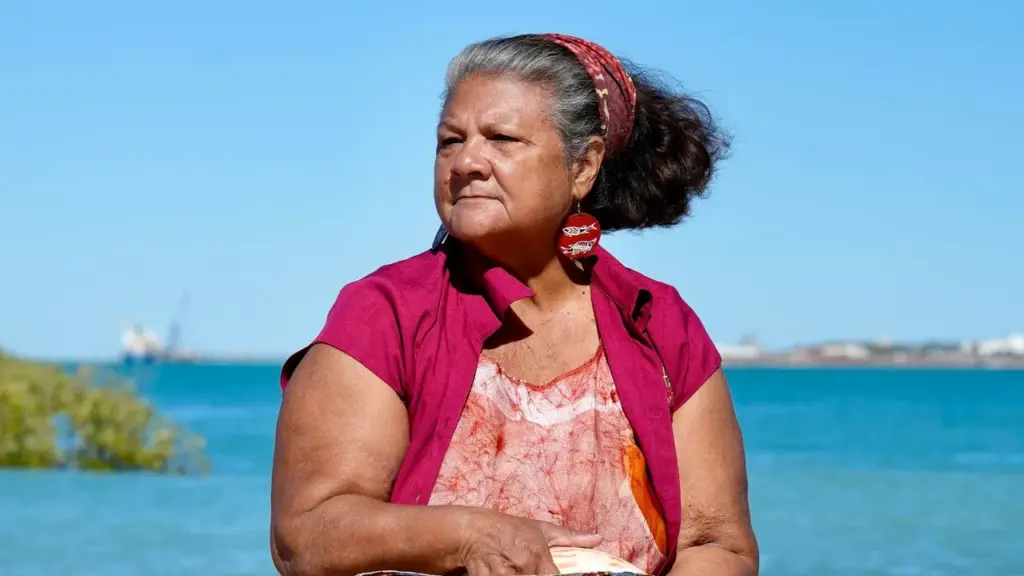
For leaders like Patricia Torres, a Djugun and Yawuru elder, the rise of Indigenous-led tourism is a mechanism for decolonization. By controlling the narrative, these entrepreneurs ensure that the wealth generated by their culture remains within their communities. This economic empowerment is crucial, particularly in a nation where the path toward reconciliation remains fraught. Despite the legal recognition of native title across more than half of Australia, full ownership remains elusive. Consequently, these tourism ventures act as a bridge, providing the financial resources necessary to maintain cultural practices, fund truth-telling initiatives, and ensure that the next generation remains tethered to their heritage despite the pressures of a globalized world.
Navigating the Weight of History
To engage with Indigenous Australia is to confront a history of profound trauma, including the systemic displacement of the Stolen Generations and the brutal realities of the colonial pearling industry. Terry Hunter, a Bardi man operating tours at Cygnet Bay, offers a poignant example of this reconciliation. As a descendant of both the enslaved and the enslaver, Hunter uses his platform to educate visitors on the 'blackbirding' era—a dark chapter of forced labor that built the foundations of the regional economy. By refusing to sanitize the past, he transforms the act of tourism into a pedagogical tool for national healing.
This commitment to truth-telling is mirrored in the work of Mandy Muir, a senior Murumburr custodian in Kakadu National Park. For Muir, the escarpment is a classroom where the European curriculum is secondary to the knowledge passed down by elders. Her tours are not merely sightseeing excursions; they are lessons in environmental management, from the controlled burning practices that prevent wildfires to the seasonal cycles dictated by the flowering of waterlilies. In an era of accelerating climate change, this ancestral knowledge is proving to be a vital asset, offering Western science a roadmap for ecological survival that has been refined over 65,000 years.
The Global Ripple Effect of Cultural Tourism
The rise of this model in Australia serves as a bellwether for global tourism. As travelers become increasingly conscious of their environmental and social footprint, the demand for authentic, community-led experiences is skyrocketing. The Australian experience demonstrates that when tourism is designed by the custodians of the land, it becomes a powerful instrument for conservation. When visitors learn to read the coastline as a living archive—identifying the medicinal plants that heal or the tidal patterns that sustained ancestors—they become stakeholders in the preservation of that environment.
However, the challenges remain significant. The 2023 rejection of an Indigenous Voice to Parliament highlighted the deep-seated political divisions regarding the role of First Nations people in national governance. In this context, the success of Indigenous-led tourism is even more critical. It creates a space for public education that the political sphere has failed to provide. By inviting the world to witness the sophistication of their culture, Indigenous Australians are creating a global constituency that understands the value of their land and the urgency of their fight for recognition.
Looking Toward a Future of Shared Wisdom
As we look toward the future, the trajectory of Indigenous-led tourism in Australia suggests a move toward a more equitable exchange. With states like Victoria moving toward formal treaties, the momentum for structural change is building. Yet, the most immediate impact is happening on the ground, in the daily interactions between Custodians and guests. Every booking is an act of recognition—a validation of a culture that was once dismissed as 'extinct' but has proven to be profoundly, vibrantly alive.
The ultimate success of this movement will be measured not just in dollars, but in the continuity of the stories told. Whether it is the weaving of pandanus jewelry, the carving of pearl shells, or the mapping of the stars, these practices are the bedrock of a civilization that has survived the most extreme pressures of colonization. For the traveler, the opportunity is rare: to step outside the colonial narrative and into a deeper, older reality. As Mandy Muir poignantly notes, the risk of ignoring this knowledge is the loss of our collective heritage. By listening to the land and its custodians, we are not just visiting Australia; we are participating in the ongoing, resilient story of humanity’s oldest living culture.
Editorial Standards & Multi-Language Synthesis: This dispatch was synthesized and fact-checked by the ParisDaily Editorial Desk across 5 global editions (EN, FR, VI, ES, ZH), cross-referencing primary international wire reports and real-time search intelligence.