La máquina verde: la evolución táctica de Irlanda y el futuro del rugby mundial
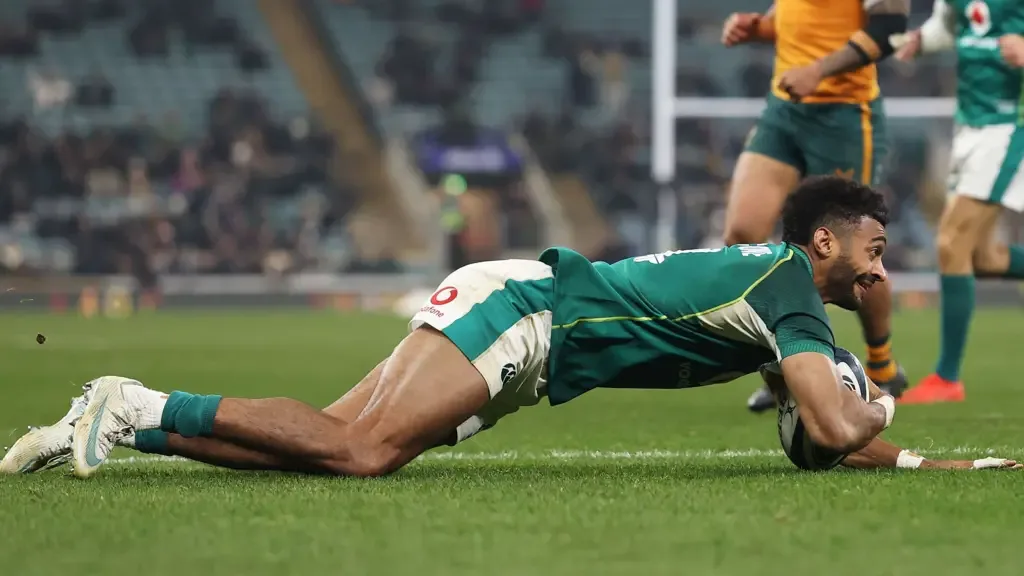
Ireland capped a flawless autumn campaign with a clinical 38-14 victory over Australia, signaling a new era of depth and tactical versatility under Andy Farrell. The win secures fifth place in the inaugural Nations Championship.
Ireland đã khép lại chiến dịch mùa thu hoàn hảo bằng chiến thắng thuyết phục 38-14 trước Australia, đánh dấu một kỷ nguyên mới về chiều sâu đội hình và sự linh hoạt chiến thuật dưới thời Andy Farrell. Thắng lợi này giúp họ đảm bảo vị trí thứ năm chung cuộc tại giải Nations Championship lần đầu tiên được tổ chức.
L'Irlande a conclu une tournée d'automne parfaite par une victoire clinique 38-14 face à l'Australie, actant l'avènement d'une profondeur de banc inédite sous l'ère Andy Farrell. Ce succès assure aux Irlandais la cinquième place du tout premier Nations Championship.
Irlanda cerró una impecable campaña de otoño con una victoria clínica por 38-14 sobre Australia, marcando una nueva era de profundidad y versatilidad táctica bajo la dirección de Andy Farrell. El triunfo asegura el quinto puesto en el inaugural Nations Championship.
爱尔兰队以一场38-14完胜澳大利亚队的比赛,为完美的秋季赛程画上了句号,标志着在安迪·法雷尔(Andy Farrell)的执教下,球队进入了一个深度与战术多样性并存的新时代。这场胜利确保了爱尔兰在首届国家锦标赛(Nations Championship)中获得第五名的成绩。
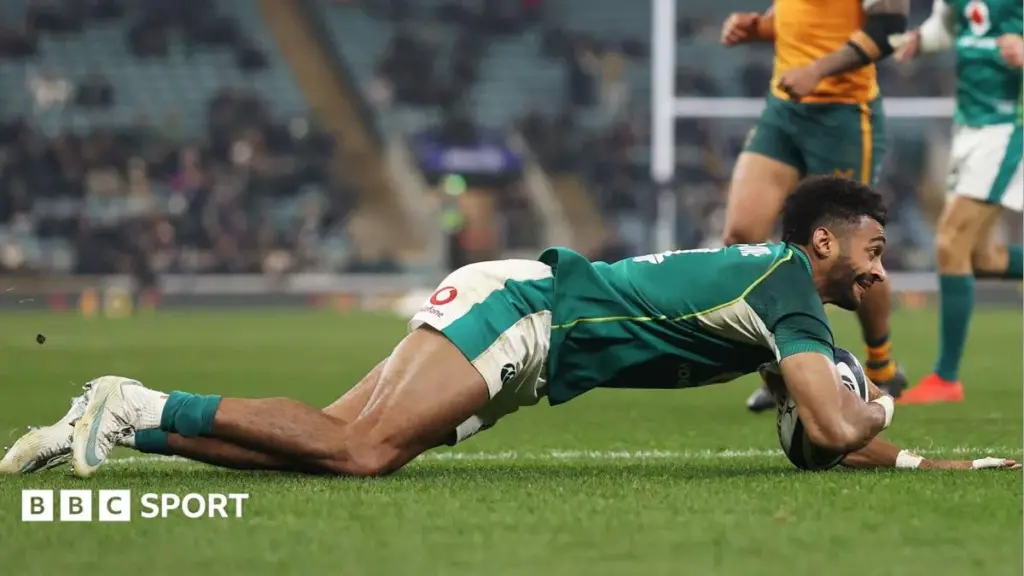
- Ireland finished their 2026 international calendar with a dominant 10-2 record.
- Young fly-half Sam Prendergast proved his mettle, orchestrating a 24-point unanswered surge.
- James McNabney’s late-game brace highlights the burgeoning depth in the Irish back row.
- Australia, as 2027 World Cup hosts, face a critical period of recalibration following a frustrating autumn finale.
- Ireland kết thúc lịch thi đấu quốc tế năm 2026 với thành tích áp đảo 10 thắng - 2 thua.
- Cầu thủ trẻ Sam Prendergast đã chứng minh bản lĩnh khi dẫn dắt đội bóng tạo nên chuỗi 24 điểm liên tiếp.
- Cú đúp bàn thắng cuối trận của James McNabney làm nổi bật chiều sâu đội hình đang phát triển mạnh mẽ ở hàng tiền đạo của Ireland.
- Australia, với tư cách là chủ nhà World Cup 2027, đang đối mặt với giai đoạn tái cấu trúc quan trọng sau một mùa thu đầy thất vọng.
- L'Irlande termine son calendrier international 2026 avec un bilan dominant de 10 victoires pour 2 défaites.
- Le jeune demi d'ouverture Sam Prendergast a prouvé sa valeur en orchestrant une série de 24 points sans réponse.
- Le doublé tardif de James McNabney souligne la richesse croissante du réservoir irlandais en troisième ligne.
- L'Australie, pays hôte de la Coupe du monde 2027, traverse une période de remise en question critique après une fin d'automne frustrante.
- Irlanda finalizó su calendario internacional de 2026 con un balance dominante de 10 victorias y 2 derrotas.
- El joven apertura Sam Prendergast demostró su valía, orquestando una racha de 24 puntos sin respuesta.
- El doblete de James McNabney en los minutos finales subraya la creciente profundidad de la tercera línea irlandesa.
- Australia, anfitriona de la Copa del Mundo de 2027, se enfrenta a un periodo crítico de recalibración tras un frustrante final de otoño.
- 爱尔兰队以10胜2负的统治级战绩结束了2026年的国际赛事赛程。
- 年轻的飞锋萨姆·普伦德加斯特(Sam Prendergast)展现了过硬的心理素质,导演了球队连得24分的进攻高潮。
- 詹姆斯·麦克纳布尼(James McNabney)在比赛末段的梅开二度,凸显了爱尔兰后排阵容日益深厚的板凳深度。
- 作为2027年世界杯东道主,澳大利亚队在经历了一个令人沮丧的秋季收官战后,正面临关键的调整期。
In the cold, clinical atmosphere of London’s Allianz Stadium, the Irish rugby machine once again demonstrated why it remains a permanent fixture at the summit of the global game. A 38-14 victory over Australia was not merely a win; it was a statement of intent, a consolidation of a year defined by resilience and tactical evolution. While the scoreline suggests a comfortable evening, the reality was a slow-burn masterclass in composure, as Andy Farrell’s men overcame a sluggish start to dismantle the Wallabies with a five-try performance that underscored the immense depth currently at the coach's disposal.
For Ireland, the victory serves as the final brick in a robust 2026 foundation. Having navigated a challenging autumn schedule—including a high-octane win over the reigning world champion Springboks—the Irish squad finishes the year with a formidable 10-2 record. This latest performance, characterized by the clinical finishing of Robbie Henshaw and the late-game heroics of debutant-turned-star James McNabney, confirms that Ireland is no longer reliant on a singular core of players. Instead, they have cultivated a system where the collective ethos transcends individual absences, a vital trait as the sport pivots toward the high-stakes environment of the upcoming World Cup cycle.
The Anatomy of a Tactical Pivot
The match began with a stark reminder of the volatility inherent in elite rugby. Australia, desperate to salvage pride after a difficult campaign, dominated the opening exchanges. Lock Jeremy Williams’ 23rd-minute try was a deserved reward for a Wallabies side that had successfully disrupted Ireland’s rhythm through aggressive scrummaging and tactical kicking. For the first quarter, the Irish side looked disjointed, plagued by uncharacteristic handling errors and a lack of the fluid tempo that defined their victory over South Africa just six days prior.
However, the hallmark of a world-class side is the ability to recalibrate under pressure. Ireland’s response was immediate and surgical. By shifting the point of attack and utilizing the tactical acumen of Sam Prendergast, the Irish side began to exploit the fringes of the Australian defense. The transition from a 7-0 deficit to a 24-14 lead was a testament to the team's mental fortitude. The tries from Robbie Henshaw and Nick Timoney were not products of individual brilliance alone, but the result of a disciplined, multi-phase buildup that forced the Australian defense to over-commit, eventually leaving the edges vulnerable for the likes of Robert Baloucoune to exploit.
Depth as the New Currency of Success
Perhaps the most significant takeaway from this autumn finale is the emergence of Ireland’s secondary tier. With key figures like Dan Sheehan and Mack Hansen sidelined, the pressure on the replacements was immense. Yet, the performance of James McNabney—who claimed two tries in the final seven minutes—epitomizes the current state of Irish rugby. It is a program where the bench is not merely a collection of substitutes, but a tactical weapon designed to close out games with renewed intensity.
This depth is not accidental; it is the byproduct of a deliberate, long-term strategy implemented by Andy Farrell. By integrating younger talents like McNabney and Prendergast into high-pressure environments, Ireland is effectively future-proofing its roster. The ability to maintain a 100% win rate across four November tests, despite rotating the squad, suggests that Ireland has successfully bridged the gap between their starting XV and their wider training group. In the modern era of rugby, where injury attrition is a constant threat, this depth is the ultimate competitive advantage.
The Wallabies’ Long Road to 2027
While Ireland celebrates a successful conclusion to their year, the narrative for Australia is one of introspection. As the hosts of the 2027 Rugby World Cup, the Wallabies are currently in a state of profound transition. Under Les Kiss, there are flashes of promise—the physicality of the pack and the inclusion of veteran utility back Kurtley Beale for his 100th-plus cap milestone—but the lack of consistency remains a glaring issue. The 19-phase attack that ended in a penalty for coming in at the side was a microcosm of their evening: high effort, low execution.
For Australia, the challenge is now psychological as much as it is technical. The gap between them and the world’s top-tier nations like Ireland is not insurmountable, but it requires a level of clinical precision that they have yet to sustain for eighty minutes. The integration of new talent, including the high-profile transition of Joseph Suaalii, will take time, but the clock is ticking. The global rugby community will be watching closely to see if the Wallabies can translate these lessons into a coherent identity before the world arrives on their doorstep in 2027.
Looking Toward a New Global Order
The inaugural Nations Championship has provided a compelling framework for international rugby, offering a level of competitive intensity that traditional autumn tours often lacked. For Ireland, finishing fifth in this new structure is a solid achievement, but the true value lies in the experience gained against diverse playing styles. As the sport continues to evolve, the ability to adapt to different defensive structures—as Ireland did against Australia’s tight, physical approach—will be the defining metric of success.
As the curtain falls on the 2026 season, the landscape of world rugby looks increasingly stratified. Ireland, alongside the traditional southern hemisphere powers, has cemented its status as a team that can win in any conditions, against any opponent. The challenge for the coming year will be to maintain this momentum without succumbing to complacency. For the fans and analysts alike, the focus now shifts to the Six Nations and the continued development of these tactical blueprints. One thing is certain: the Irish are not just playing the game; they are dictating the terms of its evolution.
Trong bầu không khí lạnh lẽo và đầy tính toán tại sân vận động Allianz ở London, cỗ máy bóng bầu dục Ireland một lần nữa chứng minh lý do tại sao họ vẫn là thế lực thường trực trên đỉnh cao của làng bóng bầu dục thế giới. Chiến thắng 38-14 trước Australia không chỉ đơn thuần là một trận thắng; đó là lời khẳng định về ý chí, là sự củng cố cho một năm được định nghĩa bởi sự kiên cường và tiến hóa chiến thuật. Mặc dù tỷ số cho thấy một buổi tối dễ dàng, thực tế lại là một màn trình diễn điềm tĩnh đầy đẳng cấp, khi các học trò của Andy Farrell vượt qua khởi đầu chậm chạp để đánh bại Wallabies với năm lần ghi điểm (try), làm nổi bật chiều sâu đội hình đáng kinh ngạc mà vị huấn luyện viên này đang sở hữu.
Đối với Ireland, chiến thắng này là viên gạch cuối cùng tạo nên nền tảng vững chắc cho năm 2026. Sau khi vượt qua lịch trình mùa thu đầy thách thức—bao gồm chiến thắng kịch tính trước nhà đương kim vô địch thế giới Springboks—đội tuyển Ireland khép lại năm với thành tích ấn tượng 10-2. Màn trình diễn mới nhất này, với sự sắc bén của Robbie Henshaw và sự tỏa sáng của tân binh James McNabney, khẳng định rằng Ireland không còn phụ thuộc vào một nhóm cầu thủ nòng cốt duy nhất. Thay vào đó, họ đã xây dựng một hệ thống nơi tinh thần tập thể vượt lên trên những sự vắng mặt cá nhân, một đặc điểm sống còn khi môn thể thao này tiến tới môi trường cạnh tranh khốc liệt của chu kỳ World Cup sắp tới.
Giải mã bước ngoặt chiến thuật
Trận đấu bắt đầu bằng một lời nhắc nhở khắc nghiệt về tính khó lường của bóng bầu dục đỉnh cao. Australia, trong nỗ lực cứu vãn danh dự sau một chiến dịch khó khăn, đã chiếm ưu thế trong những phút đầu. Lần ghi điểm ở phút 23 của Jeremy Williams là phần thưởng xứng đáng cho một đội hình Wallabies đã thành công trong việc phá vỡ nhịp độ của Ireland thông qua các pha tranh chấp bóng (scrum) quyết liệt và những cú đá chiến thuật. Trong hiệp một, đội hình Ireland trông có vẻ rời rạc, mắc phải những lỗi xử lý bóng không đáng có và thiếu đi nhịp độ uyển chuyển từng giúp họ đánh bại Nam Phi chỉ sáu ngày trước đó.
Tuy nhiên, dấu ấn của một đội bóng đẳng cấp thế giới chính là khả năng điều chỉnh dưới áp lực. Phản ứng của Ireland rất nhanh chóng và chính xác. Bằng cách thay đổi điểm tấn công và tận dụng sự nhạy bén chiến thuật của Sam Prendergast, đội bóng Ireland bắt đầu khai thác các khoảng trống ở hàng phòng ngự Australia. Việc chuyển đổi từ thế bị dẫn trước 7-0 sang dẫn lại 24-14 là minh chứng cho bản lĩnh tinh thần của toàn đội. Những pha ghi điểm của Robbie Henshaw và Nick Timoney không chỉ là sản phẩm của tài năng cá nhân, mà là kết quả của một quá trình xây dựng kỷ luật qua nhiều giai đoạn, buộc hàng phòng ngự Australia phải dâng cao quá mức, từ đó để lộ các khoảng trống ở biên cho những cầu thủ như Robert Baloucoune khai thác.
Chiều sâu đội hình: Đơn vị tiền tệ mới của thành công
Có lẽ bài học quan trọng nhất từ trận đấu cuối mùa thu này chính là sự trỗi dậy của lớp cầu thủ kế cận của Ireland. Với những trụ cột như Dan Sheehan và Mack Hansen phải ngồi ngoài, áp lực lên những người thay thế là vô cùng lớn. Tuy nhiên, màn trình diễn của James McNabney—người đã ghi hai bàn trong bảy phút cuối—đã tóm tắt trạng thái hiện tại của bóng bầu dục Ireland. Đó là một chương trình nơi băng ghế dự bị không chỉ là tập hợp các cầu thủ thay thế, mà là một vũ khí chiến thuật được thiết kế để kết thúc trận đấu với cường độ cao hơn.
Chiều sâu này không phải là ngẫu nhiên; đó là kết quả của một chiến lược dài hạn, có chủ đích do Andy Farrell thực hiện. Bằng cách tích hợp các tài năng trẻ như McNabney và Prendergast vào các môi trường áp lực cao, Ireland đang thực sự chuẩn bị cho tương lai của đội hình. Khả năng duy trì tỷ lệ thắng 100% qua bốn trận thử nghiệm trong tháng 11, bất chấp việc xoay tua đội hình, cho thấy Ireland đã thu hẹp thành công khoảng cách giữa đội hình xuất phát và nhóm tập luyện rộng hơn. Trong kỷ nguyên bóng bầu dục hiện đại, nơi chấn thương là mối đe dọa thường trực, chiều sâu này chính là lợi thế cạnh tranh tối thượng.
Con đường dài của Wallabies đến năm 2027
Trong khi Ireland ăn mừng một năm thành công, câu chuyện của Australia lại là sự tự vấn. Với tư cách là chủ nhà của Rugby World Cup 2027, Wallabies hiện đang trong giai đoạn chuyển giao sâu sắc. Dưới thời Les Kiss, đã có những tia hy vọng—sự mạnh mẽ của hàng tiền đạo và sự góp mặt của cựu binh Kurtley Beale trong cột mốc hơn 100 lần khoác áo—nhưng sự thiếu ổn định vẫn là vấn đề nhức nhối. Chuỗi 19 pha tấn công kết thúc bằng một quả phạt vì lỗi việt vị là hình ảnh thu nhỏ của buổi tối hôm đó: nỗ lực cao, nhưng hiệu quả thấp.
Đối với Australia, thách thức hiện nay vừa là tâm lý vừa là kỹ thuật. Khoảng cách giữa họ và các quốc gia hàng đầu thế giới như Ireland không phải là không thể san lấp, nhưng nó đòi hỏi một mức độ chính xác mà họ chưa thể duy trì trong suốt 80 phút. Việc tích hợp các tài năng mới, bao gồm cả sự chuyển đổi đình đám của Joseph Suaalii, sẽ cần thời gian, nhưng đồng hồ đang đếm ngược. Cộng đồng bóng bầu dục thế giới sẽ theo dõi sát sao liệu Wallabies có thể biến những bài học này thành một bản sắc gắn kết trước khi thế giới đổ dồn về sân nhà của họ vào năm 2027 hay không.
Hướng tới một trật tự thế giới mới
Giải Nations Championship lần đầu tiên đã cung cấp một khuôn khổ hấp dẫn cho bóng bầu dục quốc tế, mang lại mức độ cạnh tranh mà các chuyến du đấu mùa thu truyền thống thường thiếu. Đối với Ireland, việc đứng thứ năm trong cấu trúc mới này là một thành tựu vững chắc, nhưng giá trị thực sự nằm ở kinh nghiệm thu được khi đối đầu với các phong cách chơi đa dạng. Khi môn thể thao này tiếp tục phát triển, khả năng thích nghi với các cấu trúc phòng ngự khác nhau—như cách Ireland đã làm trước lối chơi chặt chẽ, giàu thể lực của Australia—sẽ là thước đo định nghĩa cho sự thành công.
Khi tấm màn khép lại mùa giải 2026, bức tranh bóng bầu dục thế giới ngày càng trở nên phân hóa rõ rệt. Ireland, cùng với các cường quốc truyền thống ở Nam bán cầu, đã củng cố vị thế là một đội bóng có thể giành chiến thắng trong mọi điều kiện, trước mọi đối thủ. Thách thức cho năm tới sẽ là duy trì đà tiến này mà không rơi vào sự tự mãn. Đối với người hâm mộ và các nhà phân tích, sự chú ý giờ đây chuyển sang giải Six Nations và sự phát triển liên tục của các bản thiết kế chiến thuật này. Một điều chắc chắn là: người Ireland không chỉ đang chơi bóng; họ đang định đoạt các điều khoản cho sự tiến hóa của môn thể thao này.
Dans l'atmosphère froide et clinique de l'Allianz Stadium de Londres, la machine irlandaise a une fois de plus démontré pourquoi elle demeure une référence incontournable du rugby mondial. Cette victoire 38-14 contre l'Australie n'était pas qu'un simple succès ; c'était une déclaration d'intention, la consolidation d'une année marquée par la résilience et l'évolution tactique. Si le score final suggère une soirée tranquille, la réalité fut celle d'un chef-d'œuvre de patience : les hommes d'Andy Farrell ont su surmonter une entame poussive pour démanteler les Wallabies grâce à cinq essais, illustrant l'immense profondeur d'effectif dont dispose désormais le sélectionneur.
Pour l'Irlande, cette victoire constitue la dernière pierre d'un édifice bâti en 2026. Après avoir navigué à travers un calendrier automnal exigeant — incluant une victoire de haute volée face aux Springboks, champions du monde en titre — le XV du Trèfle termine l'année avec un bilan impressionnant de 10 victoires pour 2 défaites. Cette performance, marquée par le réalisme de Robbie Henshaw et les prouesses du néo-international James McNabney, confirme que l'Irlande ne dépend plus d'un noyau restreint de joueurs. Elle a cultivé un système où l'éthique collective transcende les absences individuelles, un atout vital alors que le sport bascule dans l'environnement à haute pression du prochain cycle de Coupe du monde.
L'anatomie d'un pivot tactique
Le match a débuté par un rappel brutal de la volatilité inhérente au rugby de haut niveau. L'Australie, désireuse de sauver l'honneur après une campagne difficile, a dominé les débats initiaux. L'essai du deuxième ligne Jeremy Williams à la 23e minute récompensait une équipe australienne ayant réussi à briser le rythme irlandais grâce à une mêlée agressive et un jeu au pied tactique précis. Durant le premier quart d'heure, les Irlandais semblaient désorganisés, pénalisés par des fautes de main inhabituelles et une absence de cette fluidité qui avait fait leur force face à l'Afrique du Sud six jours plus tôt.
Cependant, la marque des grandes nations est cette capacité à se recalibrer sous pression. La réponse irlandaise fut immédiate et chirurgicale. En déplaçant le point de fixation et en utilisant l'acuité tactique de Sam Prendergast, les Irlandais ont commencé à exploiter les zones fragiles de la défense australienne. La transition d'un déficit de 7-0 à un avantage de 24-14 témoigne de la force mentale du groupe. Les essais de Robbie Henshaw et Nick Timoney ne sont pas le fruit de fulgurances individuelles, mais le résultat d'une construction disciplinée en plusieurs temps, forçant la défense australienne à se découvrir et laissant les extérieurs vulnérables pour des joueurs comme Robert Baloucoune.
La profondeur de banc, nouvelle monnaie du succès
L'enseignement le plus significatif de cette fin d'automne est sans doute l'émergence de la deuxième ligne irlandaise. Avec des cadres comme Dan Sheehan et Mack Hansen sur la touche, la pression sur les remplaçants était immense. Pourtant, la performance de James McNabney — auteur de deux essais dans les sept dernières minutes — incarne l'état actuel du rugby irlandais. C'est un programme où le banc n'est plus un simple réservoir de remplaçants, mais une arme tactique conçue pour conclure les rencontres avec une intensité renouvelée.
Cette profondeur n'est pas le fruit du hasard ; elle est le résultat d'une stratégie délibérée et à long terme mise en œuvre par Andy Farrell. En intégrant de jeunes talents comme McNabney et Prendergast dans des environnements à haute pression, l'Irlande prépare efficacement l'avenir. Maintenir un taux de victoire de 100 % sur quatre tests en novembre, malgré les rotations, suggère que l'Irlande a réussi à combler le fossé entre son XV de départ et son groupe élargi. À l'ère moderne du rugby, où l'usure physique est une menace constante, cette profondeur constitue l'avantage compétitif ultime.
Le long chemin des Wallabies vers 2027
Si l'Irlande célèbre une conclusion réussie, le récit australien est celui de l'introspection. En tant qu'hôtes de la Coupe du monde 2027, les Wallabies sont dans une phase de transition profonde. Sous la houlette de Les Kiss, on perçoit des promesses — la puissance du pack et le retour du vétéran Kurtley Beale pour sa 100e sélection — mais le manque de constance reste un problème criant. L'attaque de 19 temps de jeu qui s'est soldée par une pénalité pour un ballon gardé au sol est le microcosme de leur soirée : beaucoup d'efforts, peu d'exécution.
Pour l'Australie, le défi est désormais autant psychologique que technique. L'écart avec les nations de premier plan comme l'Irlande n'est pas insurmontable, mais il exige une précision clinique qu'ils n'ont pas encore su maintenir sur quatre-vingts minutes. L'intégration de nouveaux talents, dont le très médiatisé Joseph Suaalii, prendra du temps, mais le compte à rebours est lancé. La communauté mondiale du rugby observera de près si les Wallabies peuvent transformer ces leçons en une identité cohérente avant que le monde ne frappe à leur porte en 2027.
Vers un nouvel ordre mondial
Le Nations Championship inaugural a offert un cadre captivant au rugby international, proposant une intensité compétitive qui faisait parfois défaut aux tournées d'automne traditionnelles. Pour l'Irlande, finir cinquième dans cette nouvelle structure est une performance solide, mais la vraie valeur réside dans l'expérience acquise face à des styles de jeu variés. Alors que le sport continue d'évoluer, la capacité à s'adapter à différentes structures défensives — comme l'Irlande l'a fait face à l'approche physique et resserrée de l'Australie — sera le critère déterminant du succès.
Alors que le rideau tombe sur la saison 2026, le paysage du rugby mondial semble de plus en plus stratifié. L'Irlande, aux côtés des puissances traditionnelles de l'hémisphère sud, a cimenté son statut d'équipe capable de gagner dans n'importe quelles conditions, contre n'importe quel adversaire. Le défi pour l'année à venir sera de maintenir cette dynamique sans succomber à la complaisance. Pour les fans comme pour les analystes, l'attention se tourne désormais vers le Tournoi des Six Nations et le développement continu de ces schémas tactiques. Une chose est certaine : les Irlandais ne se contentent pas de jouer, ils dictent les termes de l'évolution du jeu.
En la fría y clínica atmósfera del Allianz Stadium de Londres, la maquinaria del rugby irlandés demostró una vez más por qué sigue siendo un pilar permanente en la cumbre del deporte mundial. La victoria por 38-14 sobre Australia no fue solo un triunfo; fue una declaración de intenciones, la consolidación de un año definido por la resiliencia y la evolución táctica. Aunque el marcador sugiere una velada cómoda, la realidad fue una clase magistral de compostura a fuego lento, en la que los hombres de Andy Farrell superaron un inicio titubeante para desmantelar a los Wallabies con una actuación de cinco ensayos que subrayó la inmensa profundidad de la que dispone actualmente el seleccionador.
Para Irlanda, la victoria supone la última piedra angular de unos cimientos sólidos para 2026. Tras navegar por un exigente calendario de otoño —que incluyó una victoria de alto voltaje contra los Springboks, vigentes campeones del mundo—, el equipo irlandés termina el año con un formidable registro de 10-2. Esta última actuación, caracterizada por la definición clínica de Robbie Henshaw y la heroica irrupción del debutante James McNabney, confirma que Irlanda ya no depende de un núcleo único de jugadores. Por el contrario, han cultivado un sistema donde el espíritu colectivo trasciende las ausencias individuales, un rasgo vital a medida que el deporte se encamina hacia el entorno de alta presión del próximo ciclo de la Copa del Mundo.
La anatomía de un giro táctico
El partido comenzó con un crudo recordatorio de la volatilidad inherente al rugby de élite. Australia, desesperada por salvar el orgullo tras una difícil campaña, dominó los intercambios iniciales. El ensayo del segunda línea Jeremy Williams en el minuto 23 fue una recompensa merecida para un equipo Wallaby que había logrado romper el ritmo de Irlanda mediante una agresiva melé y un juego táctico al pie. Durante el primer cuarto, el equipo irlandés se mostró inconexo, lastrado por errores de manejo impropios y una falta de la fluidez que definió su victoria sobre Sudáfrica apenas seis días antes.
Sin embargo, el sello distintivo de un equipo de clase mundial es la capacidad de recalibrarse bajo presión. La respuesta de Irlanda fue inmediata y quirúrgica. Al desplazar el punto de ataque y utilizar la agudeza táctica de Sam Prendergast, el equipo irlandés comenzó a explotar los flancos de la defensa australiana. La transición de un déficit de 0-7 a una ventaja de 24-14 fue un testimonio de la fortaleza mental del equipo. Los ensayos de Robbie Henshaw y Nick Timoney no fueron producto de la brillantez individual por sí sola, sino el resultado de una construcción disciplinada y multifase que obligó a la defensa australiana a comprometerse en exceso, dejando finalmente los espacios vulnerables para que jugadores como Robert Baloucoune los explotaran.
La profundidad como nueva moneda de éxito
Quizás la conclusión más significativa de este cierre de otoño sea la emergencia del segundo escalón de Irlanda. Con figuras clave como Dan Sheehan y Mack Hansen fuera de juego, la presión sobre los sustitutos era inmensa. Sin embargo, la actuación de James McNabney —quien anotó dos ensayos en los últimos siete minutos— personifica el estado actual del rugby irlandés. Es un programa donde el banquillo no es solo una colección de suplentes, sino un arma táctica diseñada para cerrar los partidos con una intensidad renovada.
Esta profundidad no es accidental; es el subproducto de una estrategia deliberada y a largo plazo implementada por Andy Farrell. Al integrar talentos jóvenes como McNabney y Prendergast en entornos de alta presión, Irlanda está preparando eficazmente su plantilla para el futuro. La capacidad de mantener un porcentaje de victorias del 100% en cuatro tests de noviembre, a pesar de las rotaciones, sugiere que Irlanda ha logrado cerrar con éxito la brecha entre su XV inicial y su grupo de entrenamiento más amplio. En la era moderna del rugby, donde el desgaste por lesiones es una amenaza constante, esta profundidad es la ventaja competitiva definitiva.
El largo camino de los Wallabies hacia 2027
Mientras Irlanda celebra un final de año exitoso, la narrativa para Australia es de introspección. Como anfitriones de la Copa del Mundo de Rugby 2027, los Wallabies se encuentran actualmente en un estado de profunda transición. Bajo la dirección de Les Kiss, hay destellos de promesa —la fisicidad del paquete de delanteros y la inclusión del veterano Kurtley Beale para su centésimo partido—, pero la falta de consistencia sigue siendo un problema evidente. El ataque de 19 fases que terminó en un golpe de castigo por entrar por el lado fue un microcosmos de su velada: mucho esfuerzo, poca ejecución.
Para Australia, el desafío es ahora tanto psicológico como técnico. La brecha entre ellos y las naciones de primer nivel mundial como Irlanda no es insalvable, pero requiere un nivel de precisión clínica que aún no han logrado mantener durante ochenta minutos. La integración de nuevos talentos, incluida la mediática transición de Joseph Suaalii, llevará tiempo, pero el reloj corre. La comunidad global del rugby observará de cerca si los Wallabies pueden traducir estas lecciones en una identidad coherente antes de que el mundo llegue a sus puertas en 2027.
Hacia un nuevo orden mundial
El inaugural Nations Championship ha proporcionado un marco convincente para el rugby internacional, ofreciendo un nivel de intensidad competitiva que a menudo faltaba en las giras tradicionales de otoño. Para Irlanda, terminar quinto en esta nueva estructura es un logro sólido, pero el verdadero valor reside en la experiencia adquirida contra diversos estilos de juego. A medida que el deporte sigue evolucionando, la capacidad de adaptarse a diferentes estructuras defensivas —como hizo Irlanda contra el enfoque físico y cerrado de Australia— será la métrica definitiva del éxito.
Al caer el telón de la temporada 2026, el panorama del rugby mundial parece cada vez más estratificado. Irlanda, junto a las potencias tradicionales del hemisferio sur, ha consolidado su estatus como un equipo capaz de ganar en cualquier condición y contra cualquier oponente. El desafío para el próximo año será mantener este impulso sin caer en la complacencia. Tanto para los aficionados como para los analistas, el foco se desplaza ahora hacia el Seis Naciones y el desarrollo continuo de estos esquemas tácticos. Una cosa es segura: los irlandeses no solo están jugando el partido; están dictando los términos de su evolución.
在伦敦安联球场(Allianz Stadium)寒冷而冷静的氛围中,爱尔兰橄榄球机器再次证明了为何它能稳居全球橄榄球界的巅峰。38-14战胜澳大利亚队不仅是一场胜利,更是一份意图声明,巩固了爱尔兰队这一年以韧性和战术演进为标志的辉煌成就。虽然比分看起来是一场轻松的胜利,但实际上这是一场关于沉着冷静的慢热大师课——安迪·法雷尔的队员们克服了开局的迟缓,凭借五次达阵彻底瓦解了小袋鼠队(Wallabies),这也凸显了主教练目前所拥有的深厚阵容储备。
对于爱尔兰而言,这场胜利是其2026年稳固根基的最后一块拼图。在经历了充满挑战的秋季赛程——包括战胜卫冕世界冠军南非跳羚队(Springboks)的高强度比赛后,爱尔兰队以10胜2负的傲人战绩结束了这一年。这场比赛中,罗比·亨肖(Robbie Henshaw)的冷静终结能力,以及从替补到明星球员的詹姆斯·麦克纳布尼在比赛末段的英雄表现,证实了爱尔兰队不再依赖单一的核心球员。相反,他们建立了一套超越个人缺席的集体精神体系,这对于橄榄球运动迈向即将到来的世界杯周期这一高风险环境至关重要。
战术转型的剖析
比赛伊始,便以一种残酷的方式提醒人们精英橄榄球运动中固有的不确定性。澳大利亚队在经历了一个艰难的赛季后,急于挽回颜面,并在开局阶段占据了主动。锁锋杰里米·威廉姆斯(Jeremy Williams)在第23分钟的达阵,是对袋鼠队通过积极的争球和战术踢球成功打乱爱尔兰节奏的回报。在比赛的前四分之一时间里,爱尔兰队显得脱节,受到罕见的接球失误困扰,缺乏六天前战胜南非队时那种流畅的节奏。
然而,世界级强队的标志在于其在压力下重新调整的能力。爱尔兰的反应是迅速且精准的。通过转移进攻重心并利用萨姆·普伦德加斯特的战术敏锐度,爱尔兰队开始冲击澳大利亚防线的边缘。从0-7落后到24-14领先的转变,证明了球队的心理韧性。罗比·亨肖和尼克·蒂莫尼(Nick Timoney)的达阵不仅仅是个人才华的体现,更是纪律严明的多阶段进攻成果,迫使澳大利亚防线过度投入,最终导致防线边缘出现漏洞,让罗伯特·巴卢库恩(Robert Baloucoune)等人得以利用。
深度:成功的新货币
这场秋季收官战最重要的收获,或许是爱尔兰二线阵容的崛起。随着丹·希恩(Dan Sheehan)和麦克·汉森(Mack Hansen)等关键人物缺阵,替补球员承受了巨大的压力。然而,詹姆斯·麦克纳布尼的表现——他在最后七分钟内两次达阵——成为了爱尔兰橄榄球现状的缩影。这是一个替补席不仅仅是替补球员的集合,而是一件旨在以更强强度终结比赛的战术武器的体系。
这种深度并非偶然,而是安迪·法雷尔实施的长期审慎战略的产物。通过将麦克纳布尼和普伦德加斯特等年轻天才融入高压环境,爱尔兰有效地为阵容进行了“未来化”升级。尽管进行了轮换,爱尔兰在11月的四场测试赛中保持了100%的胜率,这表明他们已成功弥合了首发阵容与更广泛训练组之间的差距。在当今橄榄球时代,伤病减员是持续的威胁,这种深度是最终的竞争优势。
袋鼠队通往2027年的漫漫长路
当爱尔兰庆祝其成功的一年时,澳大利亚队的叙事则充满了内省。作为2027年橄榄球世界杯的东道主,袋鼠队目前正处于深刻的转型期。在莱斯·基斯(Les Kiss)的带领下,球队展现出了一些希望——前锋线的身体对抗能力,以及老将库特利·比尔(Kurtley Beale)迎来百场里程碑——但缺乏稳定性依然是一个显眼的问题。那次以犯规告终的19阶段进攻,正是他们当晚表现的缩影:投入巨大,执行力低下。
对于澳大利亚而言,现在的挑战既是心理上的,也是技术上的。他们与爱尔兰等世界顶级强队之间的差距并非不可逾越,但需要一种他们尚未能在80分钟内保持的临床精准度。包括约瑟夫·苏阿利(Joseph Suaalii)在内的新人才整合需要时间,但时间紧迫。全球橄榄球界将密切关注袋鼠队能否在2027年世界杯到来之前,将这些教训转化为一种连贯的球队身份。
展望新的全球秩序
首届国家锦标赛为国际橄榄球提供了一个引人注目的框架,提供了传统秋季巡回赛往往缺乏的竞争强度。对于爱尔兰来说,在这种新结构中获得第五名是一个扎实的成就,但真正的价值在于对抗不同比赛风格所获得的经验。随着这项运动的不断演进,适应不同防守结构的能力——正如爱尔兰在面对澳大利亚紧凑、强硬的防守时所做的那样——将成为衡量成功的决定性指标。
随着2026赛季落下帷幕,世界橄榄球的格局看起来日益分层。爱尔兰与传统的南半球强队一道,巩固了其在任何条件下、面对任何对手都能取胜的地位。来年的挑战将是如何在保持这种势头的同时,不陷入自满。对于球迷和分析师而言,焦点现在转向了六国赛(Six Nations)以及这些战术蓝图的持续发展。有一点是肯定的:爱尔兰人不仅是在参与比赛,他们正在主导这项运动的演进规则。
Editorial Standards & Multi-Language Synthesis: This dispatch was synthesized and fact-checked by the ParisDaily Editorial Desk across 5 global editions (EN, FR, VI, ES, ZH), cross-referencing primary international wire reports and real-time search intelligence.