从最高安全级别监狱到豪华府邸:纳吉布·拉扎克的争议性回家之路
Malaysia's disgraced former Prime Minister Najib Razak has returned to his luxury Kuala Lumpur residence under house arrest, sparking intense national debate over the rule of law and the legacy of the multi-billion-dollar 1MDB scandal.
Malaysia's disgraced former Prime Minister Najib Razak has returned to his luxury Kuala Lumpur residence under house arrest, sparking intense national debate over the rule of law and the legacy of the multi-billion-dollar 1MDB scandal.
L'ancien Premier ministre malaisien Najib Razak, déchu et condamné, a regagné sa luxueuse résidence de Kuala Lumpur pour y être assigné à résidence, suscitant un vif débat national sur l'État de droit et l'héritage du scandale multimilliardaire du fonds 1MDB.
El deshonrado ex primer ministro de Malasia, Najib Razak, ha regresado a su residencia de lujo en Kuala Lumpur para cumplir arresto domiciliario, lo que ha desatado un intenso debate nacional sobre el Estado de derecho y el legado del escándalo multimillonario de 1MDB.
马来西亚名誉扫地的的前总理纳吉布·拉扎克在软禁下回到了他位于吉隆坡的豪华住宅,此举在全国范围内引发了关于法治以及数十亿美元1MDB丑闻历史遗产的激烈争论。
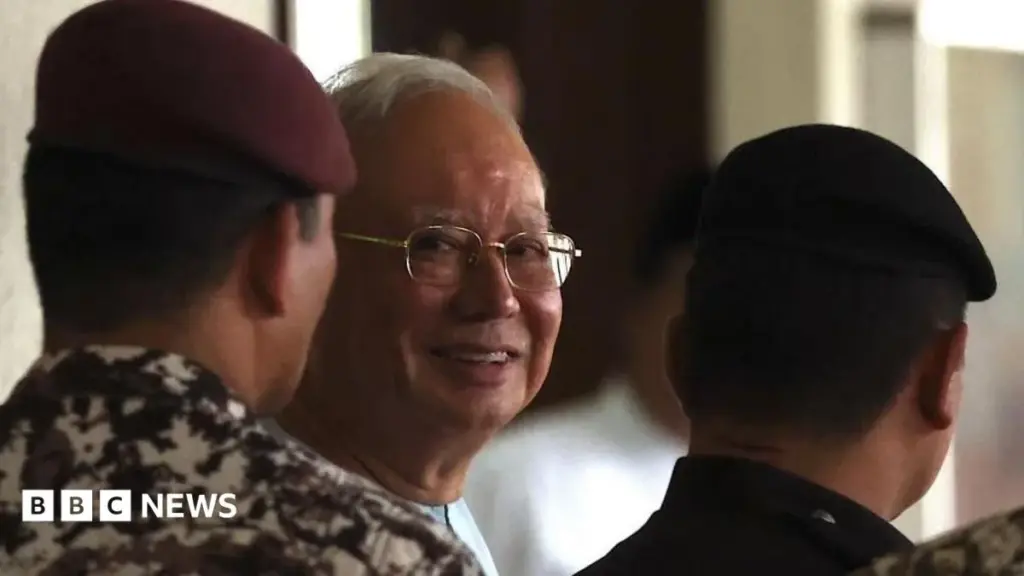
- Najib Razak returned home in a heavily armed police convoy to serve the remainder of his halved prison sentence under house arrest.
- The 1MDB scandal involved the siphoning of an estimated $4.5 billion from the state-owned sovereign wealth fund between 2009 and 2018.
- Critics argue the house arrest undermines Malaysia's anti-corruption efforts and lacks clear statutory precedent in local law.
- Najib still faces ongoing legal battles, including a separate 15-year sentence stemming from additional misappropriation charges.
- Najib Razak est rentré chez lui dans un convoi policier lourdement armé pour purger le reste de sa peine de prison, réduite de moitié, sous le régime de l'assignation à résidence.
- Le scandale 1MDB implique le détournement estimé à 4,5 milliards de dollars du fonds souverain de l'État entre 2009 et 2018.
- Les critiques soutiennent que cette assignation à résidence sape les efforts de lutte contre la corruption en Malaisie et manque de fondement juridique clair dans le droit local.
- Najib fait toujours face à des batailles juridiques en cours, notamment une autre peine de 15 ans de prison découlant d'affaires de détournement supplémentaires.
- Najib Razak regresó a su hogar en un convoy policial fuertemente armado para cumplir el resto de su condena reducida a la mitad bajo arresto domiciliario.
- El escándalo de 1MDB implicó el desvío estimado de 4.500 millones de dólares del fondo soberano estatal entre 2009 y 2018.
- Los críticos argumentan que el arresto domiciliario socava los esfuerzos anticorrupción de Malasia y carece de un precedente legal claro en la legislación local.
- Najib aún se enfrenta a batallas legales pendientes, incluida una sentencia separada de 15 años derivada de cargos adicionales de malversación.
- 纳吉布·拉扎克在重武装警察车队的护送下回家,以软禁方式服满其被减半的刑期剩余部分。
- 1MDB丑闻涉及在2009年至2018年期间从国有主权财富基金中挪用估计高达45亿美元的资金。
- 批评人士认为,软禁破坏了马来西亚的反腐努力,且在当地法律中缺乏明确的成文法先例。
- 纳吉布仍面临持续的法律斗争,包括因额外挪用公款指控而被判处的另一项15年监禁。
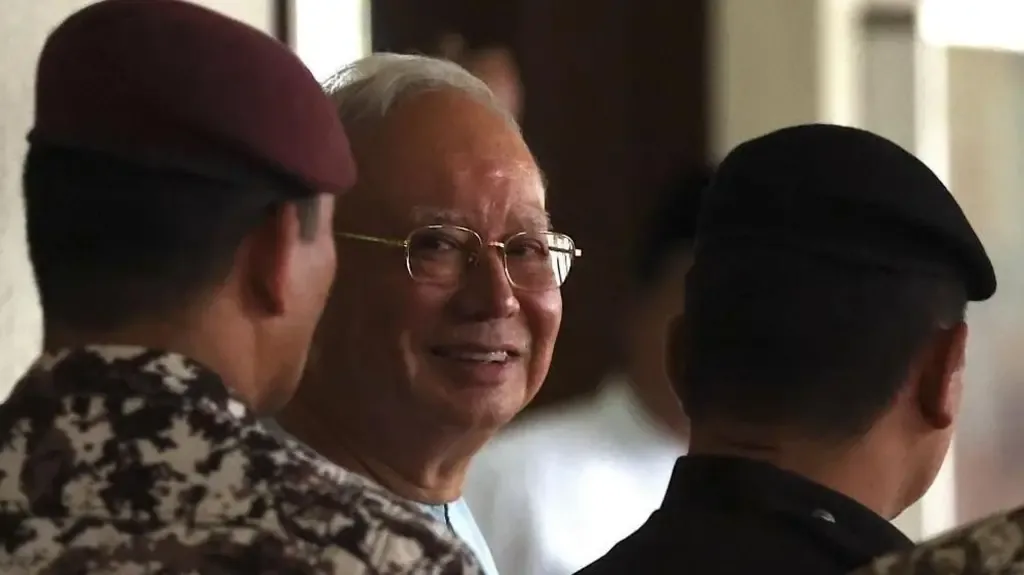
Late on a Tuesday evening in Kuala Lumpur, a heavy police convoy pierced the humid night air, escorting a sleek SUV through the gates of one of the capital's most exclusive neighborhoods. Inside the vehicle sat Najib Razak, the 73-year-old former Prime Minister of Malaysia, smiling faintly to the gathered throngs of international journalists and domestic camera crews. After enduring a multi-year prison stint that followed the spectacular collapse of his political dynasty, Najib had traded the stark confines of a maximum-security penitentiary for the opulent luxury of his own mansion—which had been officially designated a federal prison for the remainder of his term.
This dramatic homecoming marks yet another astonishing chapter in the protracted saga of the 1MDB sovereign wealth fund, a financial fraud of historic proportions that transfixed global markets, rattled international banking giants, and ultimately brought down a sitting government. While supporters celebrated what they viewed as a merciful reprieve for a transformative statesman, civil society leaders, legal scholars, and anti-corruption watchdogs expressed profound dismay. The transition from prison cell to domestic confinement lays bare the fragile intersection of royal prerogative, political maneuvering, and institutional accountability in modern Southeast Asia, leaving global observers to question whether absolute justice can ever truly reach the upper echelons of political power.
The Architecture of a Global Financial Collapse
To understand the gravity of Najib’s current legal status, one must revisit the sprawling architecture of the 1Malaysia Development Berhad scandal, which erupted a decade ago and quickly evolved into a masterclass in transnational financial malfeasance. Co-founded by Najib shortly after he assumed the premiership in 2009, the state-owned fund was ostensibly designed to drive strategic economic development. Instead, federal investigators across multiple jurisdictions—including the United States, Singapore, Switzerland, and Malaysia—concluded that it functioned as a sophisticated vehicle for systemic embezzlement.
Investigators estimate that a staggering $4.5 billion was siphoned from 1MDB coffers, winding its way through a labyrinth of shell companies, offshore accounts, and international financial institutions. The money funded lavish Hollywood productions, high-end real estate in Manhattan and London, superyachts, and extravagant Las Vegas parties. High-profile international institutions, most notably Goldman Sachs, found themselves ensnared in the global fallout, eventually paying billions in regulatory penalties and settlements. At the center of the storm was Najib himself, alongside fugitive financier Jho Low, who allegedly orchestrated the complex web of financial transactions while maintaining close ties to the former prime minister's inner circle.
Trials, Appeals, and the Royal Pardon Decree
Najib’s path from supreme political authority to criminal conviction was as arduous as it was unprecedented in Malaysian political history. Following his electoral defeat in 2018, the full weight of the judiciary descended upon him. In his landmark first trial, Najib was convicted in 2020 of abuse of power, criminal breach of trust, and money laundering involving 42 million ringgit ($10 million) transferred from SRC International—a former subsidiary of 1MDB—into his private bank accounts. Although initially sentenced to 12 years in prison and a hefty fine, his prison term was subsequently halved on appeal.
The legal landscape shifted dramatically when the King of Malaysia granted Najib a conditional pardon, permitting him to serve the remainder of his sentence under house arrest provided certain financial conditions were met, including the payment of a $12 million fine by his political party. Although the execution of the royal decree faced temporary delays as the attorney general sought legal clarification, a high court ultimately ruled that the house arrest was effective immediately. Yet, this reprieve is far from a complete exoneration. Najib continues to appeal a separate 15-year prison sentence handed down in a second trial involving nearly 2.3 billion ringgit ($569 million) from the main 1MDB fund—a sentence he is expected to begin serving once his current house arrest concludes in August 2028.

Institutional Fallout and the Future of Malaysian Governance
The decision to permit a high-profile convicted embezzler to serve his time at home has ignited a fierce constitutional and ethical debate across Malaysia. Critics have forcefully argued that the legal basis for house arrest is tenuous at best, noting that standard Malaysian penal statutes do not explicitly provide for domestic confinement of this nature. Civil rights advocates warn that the special treatment afforded to a former premier signals a dangerous double standard, potentially eroding public trust in the judiciary and undermining years of painstaking anti-corruption reforms championed by successive administrations.
As Malaysia navigates this turbulent domestic reality, the international community continues to monitor the nation's democratic trajectory. The 1MDB scandal was once hailed as a watershed moment that proved emerging democracies could successfully prosecute entrenched elite corruption. By granting clemency and comfortable confinement to the chief architect of the state's darkest financial chapter, the nation risks sending an ambiguous signal to foreign investors and global partners. Whether current leadership can balance institutional mercy with steadfast accountability will define not only Najib Razak’s ultimate legacy, but the enduring credibility of Malaysia's democratic institutions on the world stage.
Late on a Tuesday evening in Kuala Lumpur, a heavy police convoy pierced the humid night air, escorting a sleek SUV through the gates of one of the capital's most exclusive neighborhoods. Inside the vehicle sat Najib Razak, the 73-year-old former Prime Minister of Malaysia, smiling faintly to the gathered throngs of international journalists and domestic camera crews. After enduring a multi-year prison stint that followed the spectacular collapse of his political dynasty, Najib had traded the stark confines of a maximum-security penitentiary for the opulent luxury of his own mansion—which had been officially designated a federal prison for the remainder of his term.
This dramatic homecoming marks yet another astonishing chapter in the protracted saga of the 1MDB sovereign wealth fund, a financial fraud of historic proportions that transfixed global markets, rattled international banking giants, and ultimately brought down a sitting government. While supporters celebrated what they viewed as a merciful reprieve for a transformative statesman, civil society leaders, legal scholars, and anti-corruption watchdogs expressed profound dismay. The transition from prison cell to domestic confinement lays bare the fragile intersection of royal prerogative, political maneuvering, and institutional accountability in modern Southeast Asia, leaving global observers to question whether absolute justice can ever truly reach the upper echelons of political power.
The Architecture of a Global Financial Collapse
To understand the gravity of Najib’s current legal status, one must revisit the sprawling architecture of the 1Malaysia Development Berhad scandal, which erupted a decade ago and quickly evolved into a masterclass in transnational financial malfeasance. Co-founded by Najib shortly after he assumed the premiership in 2009, the state-owned fund was ostensibly designed to drive strategic economic development. Instead, federal investigators across multiple jurisdictions—including the United States, Singapore, Switzerland, and Malaysia—concluded that it functioned as a sophisticated vehicle for systemic embezzlement.
Investigators estimate that a staggering $4.5 billion was siphoned from 1MDB coffers, winding its way through a labyrinth of shell companies, offshore accounts, and international financial institutions. The money funded lavish Hollywood productions, high-end real estate in Manhattan and London, superyachts, and extravagant Las Vegas parties. High-profile international institutions, most notably Goldman Sachs, found themselves ensnared in the global fallout, eventually paying billions in regulatory penalties and settlements. At the center of the storm was Najib himself, alongside fugitive financier Jho Low, who allegedly orchestrated the complex web of financial transactions while maintaining close ties to the former prime minister's inner circle.
Trials, Appeals, and the Royal Pardon Decree
Najib’s path from supreme political authority to criminal conviction was as arduous as it was unprecedented in Malaysian political history. Following his electoral defeat in 2018, the full weight of the judiciary descended upon him. In his landmark first trial, Najib was convicted in 2020 of abuse of power, criminal breach of trust, and money laundering involving 42 million ringgit ($10 million) transferred from SRC International—a former subsidiary of 1MDB—into his private bank accounts. Although initially sentenced to 12 years in prison and a hefty fine, his prison term was subsequently halved on appeal.
The legal landscape shifted dramatically when the King of Malaysia granted Najib a conditional pardon, permitting him to serve the remainder of his sentence under house arrest provided certain financial conditions were met, including the payment of a $12 million fine by his political party. Although the execution of the royal decree faced temporary delays as the attorney general sought legal clarification, a high court ultimately ruled that the house arrest was effective immediately. Yet, this reprieve is far from a complete exoneration. Najib continues to appeal a separate 15-year prison sentence handed down in a second trial involving nearly 2.3 billion ringgit ($569 million) from the main 1MDB fund—a sentence he is expected to begin serving once his current house arrest concludes in August 2028.
Institutional Fallout and the Future of Malaysian Governance
The decision to permit a high-profile convicted embezzler to serve his time at home has ignited a fierce constitutional and ethical debate across Malaysia. Critics have forcefully argued that the legal basis for house arrest is tenuous at best, noting that standard Malaysian penal statutes do not explicitly provide for domestic confinement of this nature. Civil rights advocates warn that the special treatment afforded to a former premier signals a dangerous double standard, potentially eroding public trust in the judiciary and undermining years of painstaking anti-corruption reforms championed by successive administrations.
As Malaysia navigates this turbulent domestic reality, the international community continues to monitor the nation's democratic trajectory. The 1MDB scandal was once hailed as a watershed moment that proved emerging democracies could successfully prosecute entrenched elite corruption. By granting clemency and comfortable confinement to the chief architect of the state's darkest financial chapter, the nation risks sending an ambiguous signal to foreign investors and global partners. Whether current leadership can balance institutional mercy with steadfast accountability will define not only Najib Razak’s ultimate legacy, but the enduring credibility of Malaysia's democratic institutions on the world stage.
Tard dans la soirée d'un mardi à Kuala Lumpur, un important convoi de police a fendu l'air moite de la nuit, escortant un SUV élégant à travers les grilles de l'un des quartiers les plus exclusifs de la capitale. À l'intérieur du véhicule se trouvait Najib Razak, l'ancien Premier ministre malaisien de 73 ans, esquissant un léger sourire à l'intention de la foule de journalistes internationaux et d'équipes de télévision locales massés sur place. Après avoir enduré plusieurs années d'incarceration consécutives à l'effondrement spectaculaire de sa dynastie politique, Najib venait d'échanger les murs austères d'un pénitencier de haute sécurité contre le faste opulent de son propre manoir — officiellement désigné comme prison fédérale pour le reste de sa peine.
Ce retour spectaculaire marque un nouveau chapitre sidérant dans la saga interminable du fonds souverain 1MDB, une fraude financière d'une ampleur historique qui a captivé les marchés mondiaux, ébranlé les géants de la banque internationale et finalement fait chuter un gouvernement en place. Alors que ses partisans célébraient ce qu'ils considèrent comme une grâce clémente accordée à un homme d'État visionnaire, des figures de la société civile, des juristes et des observateurs anti-corruption ont exprimé une profonde consternation. Le passage d'une cellule de prison à l'assignation à résidence met à nu la fragile intersection entre prérogative royale, manœuvres politiques et responsabilité institutionnelle dans l'Asie du Sud-Est contemporaine, laissant les observateurs du monde entier se demander si la justice absolue peut un jour atteindre les sommets du pouvoir politique.
L'architecture d'un effondrement financier mondial
Pour mesurer la gravité de la situation juridique actuelle de Najib, il faut revisiter l'architecture complexe du scandale du fonds 1Malaysia Development Berhad, qui a éclaté il y a dix ans pour s'imposer rapidement comme un cas d'école de malversation financière transnationale. Cofondé par Najib peu après son accession au pouvoir en 2009, ce fonds étatique était censé stimuler le développement économique stratégique. Au lieu de cela, les enquêteurs fédéraux de multiples juridictions — notamment les États-Unis, Singapour, la Suisse et la Malaisie — ont conclu qu'il servait de véhicule sophistiqué pour un détournement de fonds systémique.
Les enquêteurs estiment qu'environ 4,5 milliards de dollars ont été siphonnés des coffres de 1MDB, transitant par un labyrinthe de sociétés écrans, de comptes offshore et d'institutions financières internationales. Cet argent a financé de fastidieuses productions hollywoodiennes, des biens immobiliers de luxe à Manhattan et Londres, des superyachts et des fêtes extravagantes à Las Vegas. Des institutions internationales de premier plan, au premier rang desquelles Goldman Sachs, se sont retrouvées prises au piège de cette onde de choc mondiale, s'acquittant finalement de milliards de dollars en amendes réglementaires et en règlements à l'amiable. Au cœur de la tempête figuraient Najib lui-même, aux côtés du financier en fuite Jho Low, qui aurait orchestré la toile complexe des transactions financières tout en maintenant des liens étroits avec le premier cercle de l'ancien Premier ministre.
Procès, appels et décret de grâce royale
Le parcours de Najib, de l'autorité politique suprême à la condamnation pénale, a été aussi ardu qu'inédit dans l'histoire politique malaisienne. À la suite de sa défaite électorale en 2018, tout le poids de l'appareil judiciaire s'est abattu sur lui. Lors de son premier procès historique, Najib a été reconnu coupable en 2020 d'abus de pouvoir, de breach de confiance criminelle et de blanchiment d'argent portant sur 42 millions de ringgits (10 millions de dollars) transférés depuis SRC International — une ancienne filiale de 1MDB — vers ses comptes bancaires personnels. Bien qu'initialement condamné à 12 ans de réclusion et à une lourde amende, sa peine a ensuite été réduite de moitié en appel.
Le paysage juridique a basculé de manière spectaculaire lorsque le roi de Malaisie a accordé à Najib une grâce conditionnelle, l'autorisant à purger le reste de sa peine sous assignation à résidence, sous réserve du respect de certaines conditions financières, dont le paiement d'une amende de 12 millions de dollars par son parti politique. Bien que l'application du décret royal ait connu des retards temporaires alors que le procureur général cherchait des éclaircissements juridiques, une haute cour a finalement statué que l'assignation à résidence prenait effet immédiatement. Pourtant, ce sursis est loin d'être une disculpation totale. Najib continue de faire appel d'une autre condamnation à 15 ans de prison prononcée lors d'un second procès portant sur près de 2,3 milliards de ringgits (569 millions de dollars) détournés du fonds principal 1MDB — une peine qu'il devrait commencer à purger une fois son assignation à résidence actuelle achevée en août 2028.
Retombées institutionnelles et avenir de la gouvernance malaisienne
La décision d'autoriser un détourneur de fonds condamné de haut vol à purger sa peine chez lui a déclenché un vif débat constitutionnel et éthique à travers toute la Malaisie. Les critiques ont vigoureusement affirmé que la base juridique de l'assignation à résidence est pour le moins fragile, soulignant que les lois pénales malaisiennes standard ne prévoient pas explicitement de confinement domiciliaire de cette nature. Les défenseurs des droits civiques préviennent que le traitement de faveur accordé à un ancien Premier ministre consacre un double standard dangereux, susceptible d'éroder la confiance du public dans le système judiciaire et de saper des années de réformes anticorruption minutieuses menées par les administrations successives.
Alors que la Malaisie navigue dans cette réalité intérieure tourmentée, la communauté internationale continue de surveiller de près la trajectoire démocratique du pays. Le scandale 1MDB avait autrefois été salué comme un tournant décisif prouvant que les démocraties émergentes pouvaient poursuivre avec succès la corruption endémique des élites. En accordant la clémence et un confinement douillet au principal architecte du chapitre financier le plus sombre de l'État, la nation risque d'envoyer un signal ambigu aux investisseurs étrangers et aux partenaires mondiaux. La capacité des dirigeants actuels à concilier clémence institutionnelle et exigence de responsabilité définira non seulement l'héritage ultime de Najib Razak, mais aussi la crédibilité pérenne des institutions démocratiques malaisiennes sur la scène internationale.
A altas horas de la noche de un martes en Kuala Lumpur, un imponente convoy policial cortó el aire húmedo de la noche, escoltando un elegante todoterreno a través de las puertas de uno de los barrios más exclusivos de la capital. En el interior del vehículo viajaba Najib Razak, el ex primer ministro de Malasia de 73 años, quien esbozó una leve sonrisa ante la multitud de periodistas internacionales y equipos de cámaras locales congregados. Tras soportar varios años de prisión tras el colapso estrepitoso de su dinastía política, Najib había cambiado las frías instalaciones de una penitenciaría de máxima seguridad por el opulento lujo de su propia mansión, la cual fue designada oficialmente como prisión federal por el resto de su condena.
Este dramático regreso a casa marca otro capítulo sorprendente en la dilatada saga del fondo soberano 1MDB, un fraude financiero de proporciones históricas que cautivó a los mercados globales, sacudió a los gigantes de la banca internacional y, en última instancia, derrocó a un gobierno en funciones. Mientras los partidarios celebraban lo que consideraban un indulto clemente hacia un estadista transformador, los líderes de la sociedad civil, los académicos del derecho y los observadores anticorrupción expresaron su profunda consternación. La transición de la celda de prisión al confinamiento doméstico deja al descubierto la frágil intersección entre la prerrogativa real, las maniobras políticas y la rendición de cuentas institucional en el Sudenseste Asiático moderno, lo que lleva a los observadores internacionales a cuestionar si la justicia absoluta puede alcanzar alguna vez a las altas esferas del poder político.
La arquitectura de un colapso financiero global
Para comprender la gravedad de la situación jurídica actual de Najib, es necesario examinar la vasta arquitectura del escándalo de 1Malaysia Development Berhad, que estalló hace una década y rápidamente se convirtió en una clase magistral de malversación financiera transnacional. Cofundado por Najib poco después de asumir el cargo de primer ministro en 2009, el fondo estatal fue diseñado ostensiblemente para impulsar el desarrollo económico estratégico. Sin embargo, los investigadores federales de múltiples jurisdicciones —incluidos Estados Unidos, Singapur, Suiza y Malasia— concluyeron que funcionó como un sofisticado vehículo de malversación sistémica.
Los investigadores estiman que la friolera de 4.500 millones de dólares fue desviada de las arcas de 1MDB, serpenteando a través de un laberinto de empresas fantasma, cuentas en paraísos fiscales e instituciones financieras internacionales. El dinero financió fastuosas producciones de Hollywood, bienes raíces de alta gama en Manhattan y Londres, superyates y extravagantes fiestas en Las Vegas. Destacadas instituciones internacionales, sobre todo Goldman Sachs, se vieron envueltas en las consecuencias globales y terminaron pagando miles de millones en multas regulatorias y acuerdos. En el centro de la tormenta se encontraba el propio Najib, junto con el fugitivo financiero Jho Low, quien presuntamente orquestó la compleja red de transacciones financieras mientras mantenía estrechos lazos con el círculo íntimo del ex primer ministro.
Juicios, apelaciones y el decreto de indulto real
El camino de Najib desde la autoridad política suprema hasta la condena penal fue tan arduo como inédito en la historia política de Malasia. Tras su derrota electoral en 2018, todo el peso de la judicatura cayó sobre él. En su primer juicio histórico, Najib fue condenado en 2020 por abuso de poder, abuso de confianza criminal y blanqueo de capitales en relación con 42 millones de ringgits (10 millones de dólares) transferidos desde SRC International —una antigua filial de 1MDB— a sus cuentas bancarias privadas. Aunque inicialmente fue condenado a 12 años de prisión y a una cuantiosa multa, su pena de cárcel se redujo a la mitad tras una apelación.
El panorama legal cambió drásticamente cuando el rey de Malasia concedió a Najib un indulto condicional que le permitía cumplir el resto de su condena bajo arresto domiciliario, siempre que se cumplieran determinadas condiciones financieras, incluido el pago de una multa de 12 millones de dólares por parte de su partido político. Aunque la ejecución del decreto real sufrió retrasos temporales mientras el fiscal general buscaba aclaraciones legales, un alto tribunal dictaminó en última instancia que el arresto domiciliario tenía efecto inmediato. No obstante, este respiro está lejos de ser una exoneración completa. Najib sigue recurriendo una sentencia de prisión separada de 15 años dictada en un segundo juicio por cerca de 2.300 millones de ringgits (569 millones de dólares) procedentes del fondo principal de 1MDB; una pena que se prevé empiece a cumplir una vez concluya su actual arresto domiciliario en agosto de 2028.
Consecuencias institucionales y el futuro de la gobernanza en Malasia
La decisión de permitir que un malversador convicto de alto perfil cumpla su condena en su domicilio ha encendido un intenso debate constitucional y ético en todo el país. Los críticos han argumentado con firmeza que la base jurídica para el arresto domiciliario es, en el mejor de los casos, endeble, y señalan que los estatutos penitenciarios estándar de Malasia no contemplan explícitamente el confinamiento doméstico de esta índole. Los defensores de los derechos civiles advierten que el trato de favor dispensado a un ex primer ministro denota un peligroso doble rasero, lo que podría erosionar la confianza pública en el poder judicial y socavar años de minuciosas reformas anticorrupción abanderadas por sucesivas administraciones.
Mientras Malasia navega por esta convulsa realidad interna, la comunidad internacional continúa vigilando la trayectoria democrática de la nación. El escándalo de 1MDB fue catalogado en su día como un hito crucial que demostraba que las democracias emergentes podían procesar con éxito la corrupción arraigada en las élites. Al conceder clemencia y un cómodo confinamiento al principal artífice del capítulo financiero más oscuro del Estado, el país corre el riesgo de enviar una señal ambigua a los inversores extranjeros y a los socios globales. El hecho de que el liderazgo actual logre equilibrar la clemencia institucional con una firme rendición de cuentas definirá no solo el legado definitivo de Najib Razak, sino también la credibilidad perdurable de las instituciones democráticas de Malasia en la escena mundial.
在一个周二的深夜,吉隆坡的湿热夜空中响起了沉重的警笛与车队轰鸣声,一辆流线型SUV在全副武装的警车护送下,驶入了首都最高档社区之一的大门。车内坐着现年73岁的马来西亚前总理纳吉布·拉扎克,他向聚集在门外的国际记者和国内摄像团队露出了淡淡的微笑。在经历了其政治王朝戏剧性崩塌后的多年牢狱生活后,纳吉布将这座最高安全级别监狱的严酷牢笼,换成了他自己豪华官邸的奢华舒适——根据官方裁定,该官邸在其刑期剩余时间内已被指定为联邦监狱。
这场戏剧性的归家之旅,为一马发展公司(1MDB)这起旷日持久的长篇巨制增添了又一个令人震惊的篇章。这起史无前例的金融欺诈案曾令全球市场瞩目、震动国际银行业巨头,并最终导致了一个在任政府的倒台。正当支持者们为一位转型期政治家的“仁慈宽大”而欢庆时,公民社会领袖、法律学者和反腐监督机构却表达了深深的沮丧与错愕。从囚室到居家监禁的转变,赤裸裸地暴露了现代东南亚政治中王室特权、政治博弈与体制问责之间脆弱的交织状态,也让全球观察家们不禁发出疑问:绝对的正义是否真的能够触及政治权力的最高层?
全球金融崩溃的结构剖析
要理解纳吉布当前法律地位的严重性,必须回顾一马发展公司(1MDB)丑闻那盘根错节的幕后架构。这起丑闻爆发于十年前,并迅速演变成跨国金融违法行为的教科书级案例。该国有基金由纳吉布在2009年上台总理职位后不久共同创立,名义上旨在推动战略性经济发展。然而,包括美国、新加坡、瑞士和马来西亚在内的多个司法管辖区的联邦调查人员得出结论:它实际上充当了一个系统性挪用公款的复杂洗钱工具。
调查人员估计,高达45亿美元的巨额资金从1MDB的金库中被抽逃,通过空壳公司、离岸账户和国际金融机构的重重迷宫流向世界各地。这些资金资助了奢侈的好莱坞制作、曼哈顿和伦敦的高档房产、超级游艇以及穷奢极欲的拉斯维加斯派对。高盛(Goldman Sachs)等备受瞩目的国际金融机构也深陷这场全球余波之中,最终支付了数十亿美元的监管罚款和和解金。这场风暴的核心正是纳吉布本人,以及在逃金融大亨刘特佐(Jho Low)。据称,刘特佐在与前总理核心圈子保持密切联系的同时,一手策划了这网状错综复杂的金融交易。
审判、上诉与特赦令
纳吉布从掌握最高政治权威到沦为刑事罪犯的道路,在马来西亚政治史上既坎坷又空前。2018年选举失利后,司法部门的全部重压随之倾泻而下。在具有里程碑意义的首次审判中,纳吉布于2020年因滥用职权、刑事背信和洗钱罪名成立——涉及将4200万令吉(合1000万美元)从1MDB前子公司SRC国际转入其私人银行账户——而被判处罪名成立。尽管最初被判处12年监禁和巨额罚款,但其刑期在上诉后随后被减半。
当马来西亚国王授予纳吉布有条件特赦时,法律格局发生了戏剧性的转变,允许他在满足特定财务条件(包括由其政党支付1200万美元罚款)的前提下,在软禁中服完剩余刑期。尽管由于总检察长寻求法律澄清,该王室法令的执行面临暂时延迟,但高等法院最终裁定软禁立即生效。然而,这种暂时的喘息远非完全洗脱罪名。纳吉布仍在就另一起审判中被判处的15年监禁提起上诉——该案涉及从1MDB主基金中挪用的近23亿令吉(合5.69亿美元)。预计他将在目前的软禁于2028年8月结束后,开始服刑。
马来西亚治理体系的体制余波与未来
允许一名高调的贪污罪犯在家中服刑的决定,在整个马来西亚引发了激进的宪法与伦理辩论。批评人士强力指出,软禁的法律依据充其量只是勉强站得住脚,并指出马来西亚的标准刑法并没有明确规定这种性质的居家监禁。民权倡导者警告称,给予前首相的特殊待遇发出了一个危险的双重标准信号,有可能侵蚀公众对司法体系的信任,并削弱历届政府多年来费尽心血推行的反腐改革。
在马来西亚应对这一动荡的国内现实之际,国际社会继续密切关注着该国的民主轨迹。1MDB丑闻曾被誉为证明新兴民主国家能够成功起诉根深蒂固的精英腐败的分水岭。然而,通过对国家最黑暗金融篇章的主谋给予宽大处理和舒适的居家服刑,该国面临着向外国投资者和全球伙伴发出含糊信号的风险。现任领导层能否在体制的慈悲与坚定的问责之间取得平衡,不仅将决定纳吉布·拉扎克的最终历史遗产,也将决定马来西亚民主体制在全球舞台上的持久公信力。
Editorial Standards & Multi-Language Synthesis: This dispatch was synthesized and fact-checked by the ParisDaily Editorial Desk across 5 global editions (EN, FR, VI, ES, ZH), cross-referencing primary international wire reports and real-time search intelligence.