决断摩纳哥:曼联正处于历史性帅位危机的十字路口
As Old Trafford leadership convenes for high-stakes crisis talks, Michael Carrick's precarious tenure highlights an unprecedented era of institutional instability.
As Old Trafford leadership convenes for high-stakes crisis talks, Michael Carrick's precarious tenure highlights an unprecedented era of institutional instability.
Alors que les dirigeants mancuniens se réunissent sur la Côte d'Azur pour des pourparlers de crise de la plus haute importance, la précarité de la position de Michael Carrick met en lumière une ère sans précédent d'instabilité institutionnelle. Une analyse exclusive depuis les coulisses du pouvoir.
Mientras la directiva de Old Trafford se reúne para celebrar cumbres de crisis de alto nivel, la precaria etapa de Michael Carrick pone de relieve una era sin precedentes de inestabilidad institucional.
正当老特拉福德高层在摩纳哥召开高风险的紧急危机闭门会议之际,迈克尔·卡 Carrick 岌岌可危的执教生涯,正暴露出这家英超豪门前所未有的体制动荡期。
- Manchester United has endured its worst start to a top-flight campaign since the 1986-87 season, languishing in 18th place after collecting just a single victory from their opening 10 Premier League matches.
- United directors scheduled an emergency board meeting in Monaco to evaluate Michael Carrick's 10-month tenure as head coach amid mounting fan pressure and relegation anxieties.
- A dismissal would mark the club's eighth permanent managerial appointment since Sir Alex Ferguson's retirement 13 years ago—matching the exact total of changes across the previous 68 years.
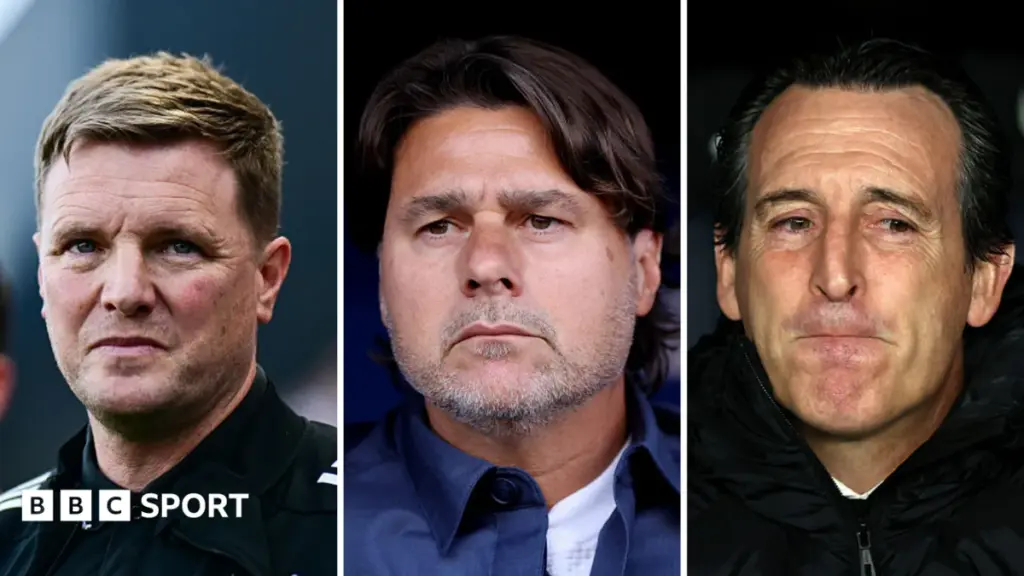
- Leading external candidates reportedly under consideration include United States boss Mauricio Pochettino, former Newcastle United mastermind Eddie Howe, and high-profile tacticians Julian Nagelsmann and Antonio Conte.
- Manchester United subit son pire début de campagne dans l'élite depuis la saison 1986-1987, s'enlisant à la 18e place après n'avoir récolté qu'une seule victoire lors de ses 10 premiers matches de Premier League.
- Les administrateurs du club ont planifié un conseil d'administration d'urgence à Monaco afin d'évaluer les 10 mois de mandat de Michael Carrick au poste d'entraîneur principal, sur fond de pression accrue des supporters et de craintes de relégation.
- Un renvoi marquerait la huitième nomination d'un entraîneur permanent depuis la retraite de Sir Alex Ferguson il y a 13 ans — soit exactement le même nombre de changements enregistrés au cours des 68 années précédentes.
- Parmi les principaux candidats externes évoqués figurent le sélectionneur des États-Unis Mauricio Pochettino, l'ancien stratège de Newcastle United Eddie Howe, ainsi que les techniciens de premier plan Julian Nagelsmann et Antonio Conte.
- El Manchester United atraviesa su peor inicio de campaña en la máxima categoría desde la temporada 1986-87, languideciendo en el 18º puesto tras lograr una sola victoria en sus primeros 10 partidos de la Premier League.
- Los dirigentes del United programaron una reunión de junta directiva de urgencia en Mónaco para evaluar los 10 meses de Michael Carrick como entrenador principal ante la creciente presión de la afición y la angustia por el descenso.
- Una destitución supondría el octavo nombramiento de un técnico en propiedad desde la retirada de Sir Alex Ferguson hace 13 años, igualando exactamente el total de cambios realizados en los 68 años anteriores.
- Entre los principales candidatos externos que supuestamente se están sopesando figuran el seleccionador de Estados Unidos, Mauricio Pochettino, el exentrenador del Newcastle United Eddie Howe, y los reputados estrategas Julian Nagelsmann y Antonio Conte.
- 曼联遭遇了自1986-87赛季以来最糟糕的顶级联赛开局,在前10轮英超联赛中仅胜一场,目前在积分榜上深陷第18位。
- 在球迷压力山大和降级焦虑弥漫的背景下,曼联董事会在摩纳哥安排了一场紧急董事会会议,以评估迈克尔·卡里克为期10个月的主教练执教表现。
- 如果将其解雇,这将标志着自亚历克斯·弗格森爵士13年前退休以来,俱乐部迎来的第八位正式主教练——这恰好等于此前68年间换帅总数的总和。
- 据报道,目前进入潜在候选名单的外部知名教头包括美国队主帅毛里西奥·波切蒂诺、前纽卡斯尔联战术大师埃迪·豪,以及备受瞩目的战术家尤利安·纳格尔斯曼和安东尼奥·孔特。
The gilded corridors of Monaco’s finest hotels are rarely associated with the gritty realities of a Premier League relegation scrap, yet they provide the backdrop for what may prove to be a defining moment in modern English football. As Manchester United’s power-brokers gather for high-level strategic deliberations, the shadow of sporting failure looms larger over Old Trafford than at any point in living memory. With a solitary victory from their opening ten league fixtures, the Red Devils find themselves mired in 18th place—a catastrophic descent that has transformed whispered anxieties about club trajectory into a full-scale institutional emergency.
At the center of this gathering storm is Michael Carrick. Appointed amid high hopes of cultural continuity and tactical nuance, the 45-year-old former midfielder now watches his 10-month tenure hang by a thread. The numbers make harrowing reading for a club accustomed to global hegemony: the worst start to a top-flight campaign since the winter of 1986, defensive frailties compounded by toothless attacking output, and a dressing room visibly struggling under the crushing psychological weight of expectations. As the board weighs whether to pull the trigger, the footballing world watches on, acutely aware that another sacking will lay bare the profound structural dysfunctions plaguing one of sport's most storied institutions.
The Cost of Perpetual Turmoil and Structural Instability
Should the United hierarchy hand Carrick his dismissal, it will trigger a chilling statistical milestone. It would represent the eighth permanent managerial departure since Sir Alex Ferguson walked away from the dugout in 2013, exactly thirteen years ago. To contextualize the scale of this modern churn: the club made precisely eight managerial changes across the preceding sixty-eight years, dating back to Sir Matt Busby’s landmark appointment in 1945. This vertiginous acceleration of the managerial lifecycle highlights a deeper malaise, pointing away from individual dugout failures and toward systemic misalignments in recruitment, ownership vision, and player empowerment.
The club's descent from domestic dominators to erratic mid-table participants has been marked by staggering financial outlays yielding microscopic returns. Successive regimes have attempted to solve deep-seated cultural rot by throwing capital at superstars and tactical ideologues alike, only to watch every blueprint dissolve under the intense, magnifying glare of the Old Trafford press corps. The Monaco summit is therefore not merely about choosing the next sacrificial lamb for the technical area; it is an urgent reckoning for a sporting directorship—including figures intimately familiar with European markets like Christopher Vivell—tasked with charting a coherent identity for a club that has drifted dangerously off course.
Profiling the Contenders for the Old Trafford Hotseat
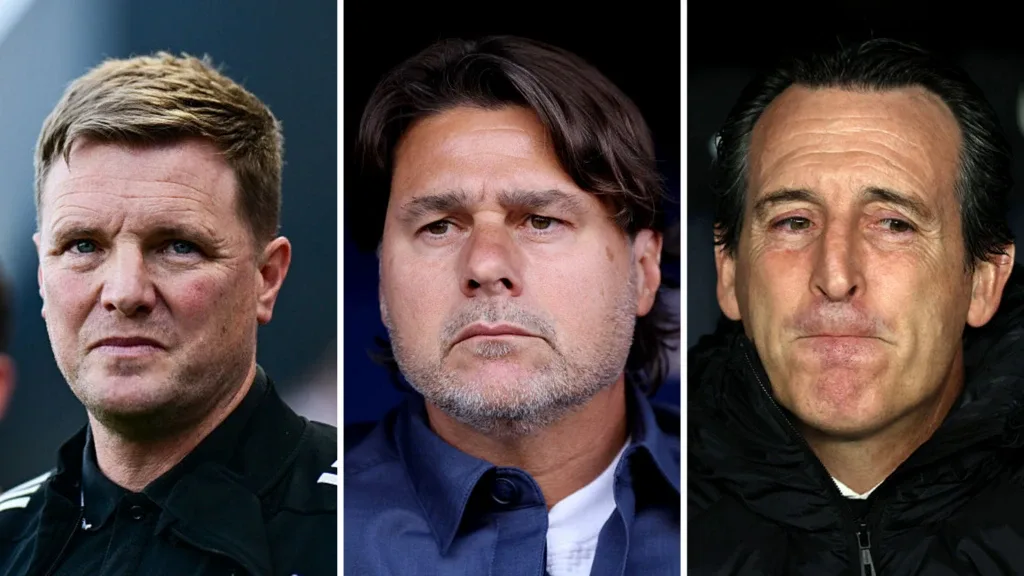
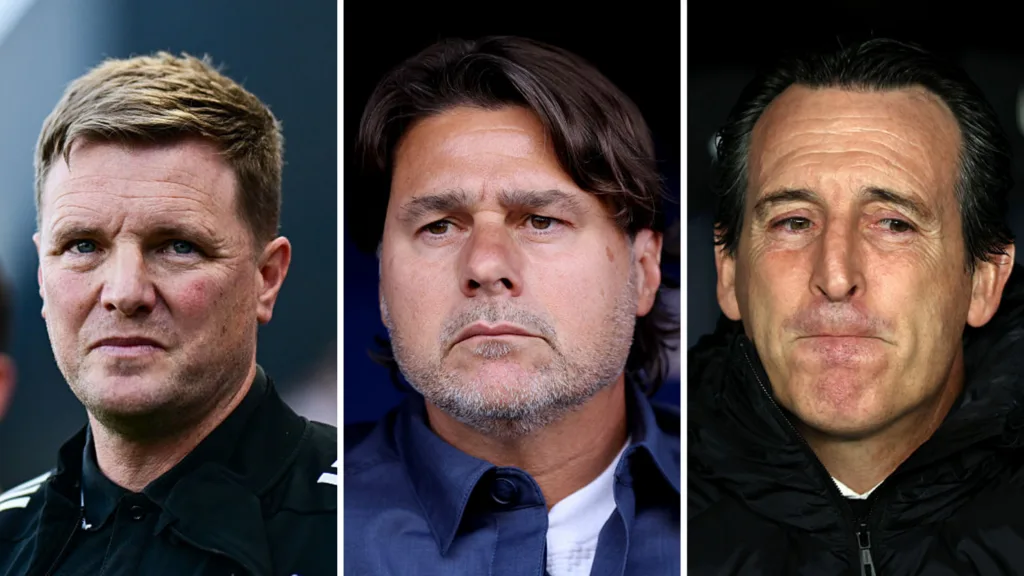
Should the board decide that Carrick’s race is run, the shortlist of potential successors reads as a masterclass in contrasting philosophies, tactical pedigrees, and psychological profiles. Chief among them is Mauricio Pochettino. The Argentine, currently steering the United States national team toward the 2030 World Cup under a lucrative contract, has long harbored an unrequited desire for the Old Trafford post. With a reported $10 million buyout clause containing selective release mechanisms for elite club posts, Pochettino brings deep Premier League acumen forged at Southampton, Tottenham, and Chelsea, alongside a proven track record of developing elite young talent—though his trophy cabinet remains remarkably sparse given his reputation.
Alternative routes offer vastly different risk profiles. Eddie Howe, beloved on Tyneside after guiding Newcastle United out of domestic obscurity and into the Champions League while securing a historic League Cup triumph, represents a meticulously structured, intensely drilled domestic operator. Meanwhile, the availability of tactical avant-gardists like Julian Nagelsmann—whose glittering CV includes Bayern Munich and the German national team, and who boasts a close professional synergy with Vivell from their Leipzig days—presents an alluring modern alternative. Further down the ledger lurks the formidable, scorched-earth pragmatism of Antonio Conte, a serial domestic winner whose capacity to immediately galvanize dysfunctional squads is matched only by his explosive propensity for political combustion.
Economic Ripples and the Road Ahead for Global Brand United
The ramifications of Manchester United’s managerial paralysis extend far beyond the confines of the Premier League table, threatening the commercial gravitational pull of a multi-billion-dollar global enterprise. Corporate partners, international broadcast holders, and institutional investors monitor every dropped point with acute sensitivity, recognizing that consecutive seasons outside elite European competition inflict severe scars on balance sheets accustomed to underwriting luxury payrolls. Relegation battles are foreign territory for a club whose financial architecture was built on the unyielding premise of perennial trophy contention.
As the sun sets over the Mediterranean during this crucial summit, the decision-makers on the board must balance short-term survival against long-term architectural renewal. Whether they persevere with Carrick in a desperate bid for stability or roll the dice on a marquee successor like Pochettino or Nagelsmann, the margin for error has evaporated entirely. Manchester United remains football's ultimate crucible—a place where history either inspires greatness or crushes those unable to bear its immense weight.
The gilded corridors of Monaco’s finest hotels are rarely associated with the gritty realities of a Premier League relegation scrap, yet they provide the backdrop for what may prove to be a defining moment in modern English football. As Manchester United’s power-brokers gather for high-level strategic deliberations, the shadow of sporting failure looms larger over Old Trafford than at any point in living memory. With a solitary victory from their opening ten league fixtures, the Red Devils find themselves mired in 18th place—a catastrophic descent that has transformed whispered anxieties about club trajectory into a full-scale institutional emergency.
At the center of this gathering storm is Michael Carrick. Appointed amid high hopes of cultural continuity and tactical nuance, the 45-year-old former midfielder now watches his 10-month tenure hang by a thread. The numbers make harrowing reading for a club accustomed to global hegemony: the worst start to a top-flight campaign since the winter of 1986, defensive frailties compounded by toothless attacking output, and a dressing room visibly struggling under the crushing psychological weight of expectations. As the board weighs whether to pull the trigger, the footballing world watches on, acutely aware that another sacking will lay bare the profound structural dysfunctions plaguing one of sport's most storied institutions.
The Cost of Perpetual Turmoil and Structural Instability
Should the United hierarchy hand Carrick his dismissal, it will trigger a chilling statistical milestone. It would represent the eighth permanent managerial departure since Sir Alex Ferguson walked away from the dugout in 2013, exactly thirteen years ago. To contextualize the scale of this modern churn: the club made precisely eight managerial changes across the preceding sixty-eight years, dating back to Sir Matt Busby’s landmark appointment in 1945. This vertiginous acceleration of the managerial lifecycle highlights a deeper malaise, pointing away from individual dugout failures and toward systemic misalignments in recruitment, ownership vision, and player empowerment.
The club's descent from domestic dominators to erratic mid-table participants has been marked by staggering financial outlays yielding microscopic returns. Successive regimes have attempted to solve deep-seated cultural rot by throwing capital at superstars and tactical ideologues alike, only to watch every blueprint dissolve under the intense, magnifying glare of the Old Trafford press corps. The Monaco summit is therefore not merely about choosing the next sacrificial lamb for the technical area; it is an urgent reckoning for a sporting directorship—including figures intimately familiar with European markets like Christopher Vivell—tasked with charting a coherent identity for a club that has drifted dangerously off course.
Profiling the Contenders for the Old Trafford Hotseat
Should the board decide that Carrick’s race is run, the shortlist of potential successors reads as a masterclass in contrasting philosophies, tactical pedigrees, and psychological profiles. Chief among them is Mauricio Pochettino. The Argentine, currently steering the United States national team toward the 2030 World Cup under a lucrative contract, has long harbored an unrequited desire for the Old Trafford post. With a reported $10 million buyout clause containing selective release mechanisms for elite club posts, Pochettino brings deep Premier League acumen forged at Southampton, Tottenham, and Chelsea, alongside a proven track record of developing elite young talent—though his trophy cabinet remains remarkably sparse given his reputation.
Alternative routes offer vastly different risk profiles. Eddie Howe, beloved on Tyneside after guiding Newcastle United out of domestic obscurity and into the Champions League while securing a historic League Cup triumph, represents a meticulously structured, intensely drilled domestic operator. Meanwhile, the availability of tactical avant-gardists like Julian Nagelsmann—whose glittering CV includes Bayern Munich and the German national team, and who boasts a close professional synergy with Vivell from their Leipzig days—presents an alluring modern alternative. Further down the ledger lurks the formidable, scorched-earth pragmatism of Antonio Conte, a serial domestic winner whose capacity to immediately galvanize dysfunctional squads is matched only by his explosive propensity for political combustion.
Economic Ripples and the Road Ahead for Global Brand United
The ramifications of Manchester United’s managerial paralysis extend far beyond the confines of the Premier League table, threatening the commercial gravitational pull of a multi-billion-dollar global enterprise. Corporate partners, international broadcast holders, and institutional investors monitor every dropped point with acute sensitivity, recognizing that consecutive seasons outside elite European competition inflict severe scars on balance sheets accustomed to underwriting luxury payrolls. Relegation battles are foreign territory for a club whose financial architecture was built on the unyielding premise of perennial trophy contention.
As the sun sets over the Mediterranean during this crucial summit, the decision-makers on the board must balance short-term survival against long-term architectural renewal. Whether they persevere with Carrick in a desperate bid for stability or roll the dice on a marquee successor like Pochettino or Nagelsmann, the margin for error has evaporated entirely. Manchester United remains football's ultimate crucible—a place where history either inspires greatness or crushes those unable to bear its immense weight.
Les dorures des plus grands hôtels de Monaco sont rarement associées aux dures réalités d'une lutte pour le maintien en Premier League, et pourtant, elles servent de décor à ce qui pourrait bien s'avérer être un moment charnière du football anglais contemporain. Alors que les décideurs de Manchester United se rassemblent pour des délibérations stratégiques de haut vol, l'ombre de l'échec sportif plane sur Old Trafford plus lourdement qu'à aucun autre moment de mémoire d'homme. Avec une unique victoire en dix journées de championnat, les Red Devils se retrouvent embourbés à la 18e place — une descente aux enfers cataclysmique qui a transformé les inquiétudes étouffées sur la trajectoire du club en une urgence institutionnelle absolue.
Au cœur de cette tempête se trouve Michael Carrick. Nommé dans l'espoir ardent d'assurer une continuité culturelle et une finesse tactique, l'ancien milieu de terrain de 45 ans voit aujourd'hui son mandat de 10 mois ne tenir qu'à un fil. Les chiffres font froid dans le dos pour un club habitué à l'hégémonie mondiale : le pire début de saison dans l'élite depuis l'hiver 1986, des largesses défensives combinées à une stérilité offensive chronique, et un vestiaire visiblement en souffrance sous le poids psychologique écrasant des attentes. Tandis que le conseil d'administration pèse le pour et le contre d'un limogeage, le monde du football retient son souffle, pleinement conscient qu'une nouvelle éviction mettra à nu les profondes dysfonctionnements structurels qui rongent l'une des institutions les plus légendaires du sport.
Le coût d'une tourmente perpétuelle et de l'instabilité structurelle
Si la hiérarchie mancunienne venait à signifier son renvoi à Carrick, cela marquerait un jalon statistique pour le moins glaçant. Ce serait le huitième départ définitif d'un entraîneur depuis le départ de Sir Alex Ferguson de la zone technique en 2013, soit exactement treize ans plus tôt. Pour contextualiser l'ampleur de cette valse moderne : le club n'avait procédé qu'à huit changements d'entraîneur au cours des soixante-huit années précédentes, depuis la nomination historique de Sir Matt Busby en 1945. Cette accélération vertigineuse du cycle managérial met en lumière un mal plus profond, qui ne relève plus des échecs individuels sur le banc mais bien de défaillances systémiques en matière de recrutement, de vision institutionnelle et de valorisation des joueurs.
La chute du club, passé du statut de dominateur national à celui d'acteur erratique du milieu de tableau, a été jalonnée de dépenses financières astronomiques pour des retours microscopiques. Des régimes successifs ont tenté de panser une gangrène culturelle profondément enracinée en injectant des capitaux sur des superstars comme sur des idéologues tactiques, pour finalement voir chaque plan stratégique se dissoudre sous le regard inquisiteur et grossissant de la presse d'Old Trafford. Le sommet de Monaco ne se résume donc pas simplement à choisir le prochain bouc émissaire pour la zone technique ; il constitue une mise en demeure urgente pour une direction sportive — incluant des figures intimement familières des marchés européens telles que Christopher Vivell — investie de la mission de redessiner une identité cohérente pour un club qui a dangereusement dévié de sa trajectoire.
Profil des prétendants au banc d'Old Trafford
Si le conseil d'administration décidait que l'aventure de Carrick est bel et bien terminée, la liste restreinte des successeurs potentiels ressemble à une masterclass de philosophies contrastées, de pedigrees tactiques et de profils psychologiques. Au premier rang de ceux-ci figure Mauricio Pochettino. L'Argentin, qui dirige actuellement la sélection nationale des États-Unis en vue de la Coupe du monde 2030 dans le cadre d'un contrat lucratif, nourrit depuis longtemps un désir inassouvi pour le poste d'Old Trafford. Doté d'une clause libératoire estimée à 10 millions de dollars assortie de mécanismes de sortie ciblés pour les clubs de l'élite, Pochettino apporte une solide expérience de la Premier League forgée à Southampton, Tottenham et Chelsea, ainsi qu'un savoir-faire avéré dans le développement de jeunes talents d'exception — bien que son palmarès demeure singulièrement léger au regard de sa réputation.
Les pistes alternatives dessinent des profils de risque radicalement différents. Eddie Howe, adulé dans le Tyneside après avoir sorti Newcastle United de l'anonymat pour l'emmener en Ligue des champions tout en remportant une Coupe de la Ligue historique, incarne un technicien domestique méticuleusement structuré et adepte d'un football ultra-travaillé. Parallèlement, la disponibilité d'avant-gardistes de la tactique tels que Julian Nagelsmann — dont le CV étincelant mentionne le Bayern Munich et la sélection allemande, et qui cultive une étroite complicité professionnelle avec Vivell depuis leur époque à Leipzig — offre une alternative moderne et séduisante. Un peu plus bas dans la liste rôde le pragmatisme redoutable, façon table rase, d'Antonio Conte, un vainqueur de championnats en série dont la capacité à galvaniser instantanément des vestiaires en crise n'a d'égale que sa propension explosive à l'embrasement politique.
Répercussions économiques et avenir de la marque mondiale United
Les ramifications de la paralysie managériale de Manchester United dépassent largement le cadre du classement de Premier League, menaçant l'attractivité commerciale d'une entreprise mondiale pesant plusieurs milliards de dollars. Partenaires institutionnels, détenteurs de droits de diffusion internationaux et investisseurs scrutent chaque point égaré avec une sensibilité aiguë, conscients que des saisons consécutives hors de l'élite européenne inflichent de profondes cicatrices à des bilans comptables habitués à financer des masses salariales somptuaires. Les luttes pour le maintien constituent un territoire inconnu pour un club dont l'architecture financière a été bâtie sur le postulat immuable d'une course perpétuelle aux trophées.
Alors que le soleil se couche sur la Méditerranée lors de ce sommet crucial, les décideurs du conseil d'administration doivent arbitrer entre la survie à court terme et le renouvellement architectural à long terme. Qu'ils choisissent de persévérer avec Carrick dans une tentative désespérée de stabilité ou de tenter un coup de poker avec un successeur de renom tel que Pochettino ou Nagelsmann, la marge d'erreur s'est totalement évaporée. Manchester United demeure l'ultime creuset du football — un endroit où l'histoire inspire la grandeur ou écrase ceux incapables d'en supporter le poids immense.
Los dorados pasillos de los mejores hoteles de Mónaco rara vez se asocian con la cruda realidad de una pelea por el descenso en la Premier League, pero hoy sirven de telón de fondo para el que puede convertirse en un momento decisivo en el fútbol inglés moderno. Mientras los altos mandos del Manchester United se reúnen para llevar a cabo deliberaciones estratégicas de alto nivel, la sombra del fracaso deportivo se proyecta sobre Old Trafford con más fuerza que en ningún otro momento que se recuerde. Con una solitaria victoria en sus diez primeros compromisos ligueros, los 'Diablos Rojos' se encuentran estancados en la 18ª posición: un descenso catastrófico que ha transformado los murmullos de preocupación sobre el rumbo del club en una emergencia institucional en toda regla.
En el centro de esta tormenta se encuentra Michael Carrick. Designado entre grandes esperanzas de continuidad cultural y matices tácticos, el excentrocampista de 45 años ve ahora cómo sus diez meses al frente del equipo penden de un hilo. Las cifras resultan escalofriantes para un club acostumbrado a la hegemonía global: el peor arranque en la élite desde el invierno de 1986, unas fragilidades defensivas agravadas por una producción ofensiva inofensiva y un vestuario que sufre visiblemente bajo el aplastante peso psicológico de las expectativas. Mientras la directiva sopesa si debe destituirle, el mundo del fútbol observa muy de cerca, plenamente consciente de que un nuevo cese dejará al descubierto las profundas disfunciones estructurales que azotan a una de las instituciones con más historia del deporte.
El coste de la agitación perpetua y la inestabilidad estructural
Si la cúpula directiva del United decide prescindir de Carrick, se alcanzará un hito estadístico escalofriante. Representaría la octava salida de un entrenador en propiedad desde que Sir Alex Ferguson abandonó el banquillo en 2013, hace exactamente trece años. Para contextualizar la magnitud de esta rotación moderna: el club realizó exactamente ocho cambios de técnico en los sesenta y ocho años anteriores, remontándose al histórico nombramiento de Sir Matt Busby en 1945. Esta vertiginosa aceleración del ciclo de los entrenadores pone de relieve un malestar más profundo, que apunta no tanto a los fracasos individuales en el banquillo, sino a desajustes sistémicos en la captación de talento, la visión de la propiedad y el peso de los futbolistas.
El declive del club, que ha pasado de dominar el panorama nacional a convertirse en un equipo errático de media tabla, ha estado jalonado por desembolsos económicos desorbitados que han arrojado unos rendimientos mínimos. Sucesivos regímenes han intentado solucionar una descomposición cultural profundamente arraigada inyectando capital tanto en superestrellas como en ideólogos tácticos, solo para ver cómo cada plan estratégico se disolvía bajo la intensa y lupina mirada de la prensa de Old Trafford. La cumbre de Mónaco, por tanto, no consiste meramente en elegir al próximo cordero sacrificial para el área técnica; representa un examen de conciencia urgente para una dirección deportiva —en la que figuran rostros íntimamente familiarizados con los mercados europeos como Christopher Vivell— encargada de trazar una identidad coherente para un club que se ha desvíado peligrosamente de su rumbo.
Radiografía de los candidatos para el banquillo de Old Trafford
En caso de que la directiva decida que la etapa de Carrick ha llegado a su fin, la lista de posibles sucesores se lee como una clase magistral de filosofías contrapuestas, pedigríes tácticos y perfiles psicológicos. El principal de ellos es Mauricio Pochettino. El técnico argentino, que actualmente dirige a la selección nacional de Estados Unidos de cara al Mundial de 2030 bajo un lucrativo contrato, lleva tiempo albergando un deseo no correspondido de ocupar el puesto en Old Trafford. Con una cláusula de rescisión estimada en 10 millones de dólares que incluye mecanismos selectivos para fichar por clubes de la élite, Pochettino aporta un profundo conocimiento de la Premier League forjado en el Southampton, el Tottenham y el Chelsea, además de un historial probado en el desarrollo de jóvenes talentos de primer nivel, aunque su palmarés sigue siendo notablemente escaso para su reputación.
Las alternativas ofrecen perfiles de riesgo muy diversos. Eddie Howe, muy querido en Tyneside tras sacar al Newcastle United del anonimato nacional y clasificarlo para la Champions League al tiempo que lograba un histórico triunfo en la Copa de la Liga, representa a un técnico nacional de métodos minuciosamente estructurados y férrea disciplina táctica. Por otro lado, la disponibilidad de vanguardistas tácticos como Julian Nagelsmann —cuyo brillante currículum incluye al Bayern de Múnich y a la selección alemana, y que presume de una estrecha sintonía profesional con Vivell desde su etapa en Leipzig— presenta una seductora alternativa moderna. Un poco más abajo en la lista acecha el formidable y pragmático estilo de tierra quemada de Antonio Conte, un ganador nato de títulos nacionales cuya capacidad para galvanizar de inmediato a plantillas disfuncionales solo es comparable a su explosiva propensión a la combustión política.
Repercusiones económicas y el futuro de la marca global del United
Las ramificaciones de la parálisis en la dirección técnica del Manchester United van mucho más allá de los límites de la clasificación de la Premier League, ya que amenazan la capacidad de atracción comercial de una empresa global multimillonaria. Los socios corporativos, los operadores internacionales de retransmisión y los inversores institucionales siguen cada punto perdido con aguda sensibilidad, conscientes de que encadenar temporadas fuera de la máxima competición europea inflige graves heridas en unos balances acostumbrados a financiar plantillas de auténtico lujo. Las batallas por la resistencia son un territorio desconocido para un club cuya arquitectura financiera se cimentó sobre la premisa inquebrantable de la lucha perenne por los títulos.
Mientras el sol se pone sobre el Mediterráneo durante esta cumbre crucial, los responsables de la toma de decisiones en el consejo de administración deben equilibrar la supervivencia a corto plazo con la renovación arquitectónica a largo plazo. Ya sea que decidan apostar por la continuidad de Carrick en un intento desesperado por ganar estabilidad o que prefieran arriesgarse con un fichaje estelar de la talla de Pochettino o Nagelsmann, el margen de error se ha esfumado por completo. El Manchester United sigue siendo el crisol definitivo del fútbol: un lugar donde la historia o bien inspira la grandeza o bien aplasta a quienes son incapaces de soportar su inmenso peso.
摩纳哥顶级酒店里那些金碧辉煌的长廊,很少与英超保级区残酷的现实联系在一起,然而这里却成为了这场可能决定现代英格兰足球命运的关键时刻的背景。随着曼联的实权人物齐聚一堂进行高级别的战略审议,体育竞技失败的阴影比有生以来的任何时候都更浓重地笼罩着老特拉福德。在联赛开局前十场比赛中仅取得一场胜利的情况下,红魔发现自己深陷第18位——这场灾难性的滑坡,已将此前对俱乐部发展轨迹的窃窃私语,转变成了一场全面爆发的体制紧急状态。
正处于这场风暴中心的正是迈克尔·卡里克。这位45岁的前中场球员在各方对文化延续性和战术微调的高期望中被任命,如今却发现自己仅维持了10个月的执教生涯正悬于一线。对于一家习惯于全球霸权的俱乐部来说,这些数据堪称触目惊心:自1986年冬天以来最糟糕的顶级联赛开局、防守端的脆弱加之进攻端的疲软,以及更衣室在沉重压力的心理重负下明显举步维艰。正当董事会权衡是否扣动扳机之际,整个足球界都在拭目以待,他们敏锐地意识到,又一次解雇将彻底暴露困扰这家历史最悠久体育机构之一的深层结构性失调。
持续动荡与结构性不稳定的代价
如果曼联高层决定将卡里克解职,这将触发一个令人不寒而栗的统计里程碑。这将是自亚历克斯·弗格森爵士在整整十三年前(即2013年)离开教练席以来的第八次正式换帅。为了厘清这种现代更迭规模:自1945年马斯比爵士(Sir Matt Busby)具有里程碑意义的任命开始,在随后的六十八年里,俱乐部总共也只进行了八次主帅更迭。这种垂直加速的主教练生命周期,凸显了一种更深层次的痼疾,它不再指向单个教练席上的失败,而是指向了引援、所有权愿景以及球员赋能等方面的系统性错位。
该俱乐部从国内统治者沦为战绩 erratic 的中游常客,其标志是令人瞠目结舌的财务投入却只换来微乎其微的回报。一届又一届的管理层试图通过向超级巨星和战术空想家砸钱来解决深层的文化腐败,结果却只能眼睁睁地看着每一个蓝图都在老特拉福德媒体兵团放大镜般的强烈注视下瓦解。因此,摩纳哥峰会不仅是为技术区挑选下一个替罪羊;这也是对体育管理层——其中包括像克里斯托弗·维韦尔(Christopher Vivell)这样对欧洲市场了如指掌的人物——的一次紧急清算,他们肩负着为一家已经严重偏离航向的俱乐部规划清晰身份认同的重任。
老特拉福德帅位候选人巡礼
如果董事会认定卡里克的赛程已到尽头,那么潜在接班人的候选名单简直就是一份兼具截然不同哲学、战术背景和心理特征的教科书。其中最引人注目的是毛里西奥·波切蒂诺。这位阿根廷目前正执教美国国家队,合同丰厚且致力于2030年世界杯,他长期以来一直对老特拉福德帅位抱有一种未了的情结。据报道,其合同中包含了一项1000万美元的解约金条款,并针对精英俱乐部职位设有特定的解约机制,波切蒂诺带来了他在南安普顿、热刺和切尔西历练出的深厚英超造诣,以及培养顶尖年轻天才的丰富经验——尽管以他的声誉来看,他的奖杯陈列室依然显得相当单薄。
其他替代路线则意味着完全不同的风险特征。埃迪·豪在泰恩河畔深受爱戴,他曾带领纽卡斯尔联摆脱国内籍籍无名的境地并杀入欧冠,同时还斩获了历史性的联赛杯冠军,堪称一位结构严密、战术纪律严明的本土铁帅。与此同时,尤利安·纳格尔斯曼等战术前卫派的出现——其璀璨的履历包括拜仁慕尼黑和德国国家队,并且他在莱比锡时期与维韦尔有着紧密的职业默契——则提供了一个诱人的现代替代方案。而在名单的边缘,潜藏着安东尼奥·孔特那令人敬畏的“焦土政策”实用主义,这位连续的国内联赛冠军得主,其迅速激活失调球队的能力,唯有他那极易引发政治动荡的火爆性格方可匹敌。
经济连锁反应与全球品牌曼联的前路
曼联帅位瘫痪的后果已经远远超出了英超积分榜的范畴,威胁到了这家价值数十亿美元的全球企业的商业引力。企业合作伙伴、国际转播商和机构投资者以极其敏感的态度监控着每一次丢分的险情,他们深知连续无缘欧洲精英赛事,会对那些习惯了支撑豪华薪资结构的资产负债表造成严重的创伤。保级战对于一家其金融架构建立在年年争冠这一坚定前提之上的俱乐部而言,是极其陌生的领域。
当在这场关键峰会期间夕阳沉入地中海时,董事会的决策者们必须在短期生存与长期架构更新之间取得平衡。无论是为了拼命追求稳定而继续信任卡里克,还是在波切蒂诺或纳格尔斯曼这样的大牌继任者身上孤注一掷,试错的空间已经彻底蒸发。曼联依然是足球世界的终极熔炉——在这里,历史要么激发伟大,要么将那些无力承受其巨大重量的人碾得粉碎。
Editorial Standards & Multi-Language Synthesis: This dispatch was synthesized and fact-checked by the ParisDaily Editorial Desk across 5 global editions (EN, FR, VI, ES, ZH), cross-referencing primary international wire reports and real-time search intelligence.