The Upscaling Wars: How Microsoft’s Auto SR Is Redefining Handheld PC Performance
Microsoft has officially unleashed its Auto Super Resolution technology for handheld devices, signaling a major strategic pivot in the battle for dominance over PC gaming's visual fidelity and battery efficiency.
Microsoft has officially unleashed its Auto Super Resolution technology for handheld devices, signaling a major strategic pivot in the battle for dominance over PC gaming's visual fidelity and battery efficiency.
Microsoft has officially unleashed its Auto Super Resolution technology for handheld devices, signaling a major strategic pivot in the battle for dominance over PC gaming's visual fidelity and battery efficiency.
Microsoft has officially unleashed its Auto Super Resolution technology for handheld devices, signaling a major strategic pivot in the battle for dominance over PC gaming's visual fidelity and battery efficiency.
Microsoft has officially unleashed its Auto Super Resolution technology for handheld devices, signaling a major strategic pivot in the battle for dominance over PC gaming's visual fidelity and battery efficiency.
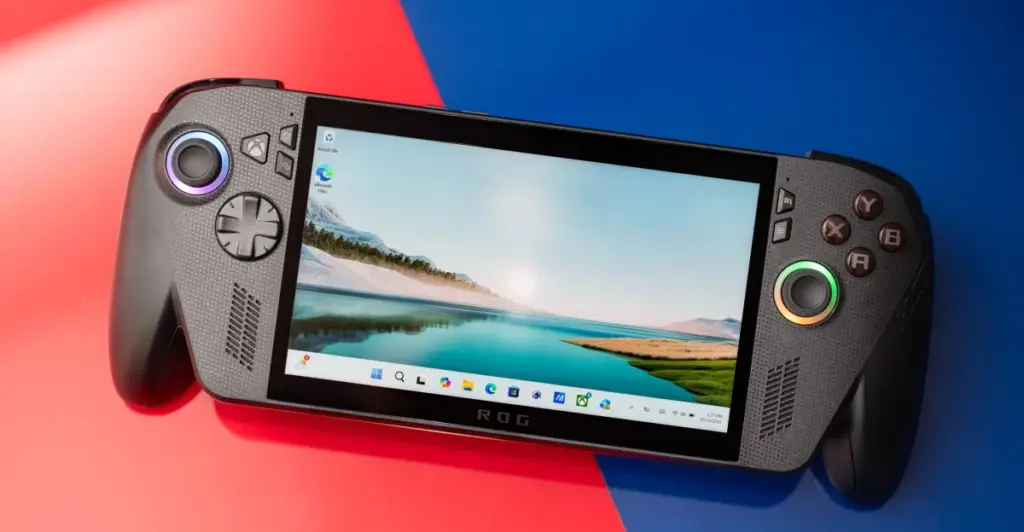
- Microsoft's Auto SR is now fully functional on the Asus ROG Ally X, including handheld and battery-powered modes.
- The technology now supports 1080p resolution, bridging the gap between portable convenience and desktop-class visual clarity.
- A new 'Performance Mode' allows for frame rates reaching 120fps, directly challenging Nvidia’s DLSS ecosystem.
- Integration with Auto HDR and Windows updates suggests a long-term strategy to standardize AI-driven upscaling across all Copilot Plus PCs.
In the high-stakes arena of mobile computing, the battle for visual supremacy has long been dominated by proprietary hardware-locked solutions. Microsoft’s recent decision to roll out its Automatic Super Resolution (Auto SR) technology to the Asus ROG Ally X and select Copilot Plus PCs represents a tectonic shift in how we perceive the limits of portable hardware. By decoupling high-fidelity upscaling from the restrictive walls of specific GPU manufacturers, Redmond is effectively democratizing the visual polish that was once the exclusive domain of high-end desktop rigs.
This rollout is not merely a software update; it is a strategic maneuver designed to cement Windows as the premier operating system for the burgeoning handheld gaming market. By enabling Auto SR to function while devices are undocked and running on battery power, Microsoft is addressing the perennial trade-off between graphical fidelity and power consumption. As the industry watches, this move signals that the future of mobile gaming will be defined not by raw silicon power alone, but by the sophistication of the AI algorithms that breathe life into every frame.
The Evolution of AI-Driven Visual Fidelity
For years, Nvidia’s Deep Learning Super Sampling (DLSS) has served as the gold standard for upscaling, utilizing dedicated Tensor cores to reconstruct images at higher resolutions from lower-input sources. This hardware-centric approach created a moat around Nvidia’s ecosystem, leaving competitors and handheld manufacturers scrambling to find parity. Microsoft’s Auto SR enters this fray with a distinct advantage: it is platform-agnostic within the Windows ecosystem, leveraging the NPU (Neural Processing Unit) capabilities inherent in modern Copilot Plus hardware.
The transition from a docked-only testing phase to a full, battery-optimized release is a testament to the rapid maturation of Microsoft’s machine learning models. By allowing the technology to operate at 1080p while handheld, Microsoft is acknowledging the reality of modern mobile gaming: users demand crisp, high-definition visuals without the tether of a power brick. While the company maintains a cautious stance regarding performance optimization at higher resolutions, the early indicators suggest that Auto SR is successfully balancing the heavy computational load required for real-time upscaling with the thermal constraints of a handheld chassis.
Strategic Implications for the Handheld Market
The implications for the handheld gaming sector—a market currently dominated by the Steam Deck and various Windows-based competitors—are profound. By integrating Auto SR directly into the Windows OS, Microsoft is effectively providing a "performance floor" for developers and hardware manufacturers. This standardization allows smaller, more agile hardware players to compete with established giants, as they no longer need to develop proprietary upscaling solutions from scratch to remain relevant in the eyes of enthusiasts.
Furthermore, the introduction of a new Performance Mode capable of hitting 120fps is a direct challenge to the status quo. For competitive gamers, the ability to maintain high frame rates on a portable device is the holy grail. By optimizing for both fluidity and visual clarity, Microsoft is positioning its software stack as the essential layer that turns a modest portable device into a formidable gaming machine. This is a clear signal to the industry: the "PC experience" is no longer defined by the size of the tower, but by the intelligence of the software running beneath the hood.
The Road Ahead for Windows Gaming
As Microsoft continues to refine the integration of Auto SR with features like Auto HDR, the lines between console-like simplicity and PC-like customization continue to blur. The company's commitment to rolling these updates out via standard Windows channels ensures that the technology will reach a broad audience, rather than remaining trapped in a cycle of niche driver updates. This approach is essential for long-term adoption, particularly as the Copilot Plus PC initiative gains momentum across the broader laptop and tablet market.
However, the path forward is not without its hurdles. The challenge of maintaining consistent performance across a diverse array of hardware configurations remains a significant obstacle. As Microsoft expands support, the community will be watching closely to see how the technology scales on lower-tier hardware. Nevertheless, the current trajectory suggests that we are witnessing the birth of a new standard in gaming—one where AI-driven upscaling is as fundamental to the user experience as the display itself. For Microsoft, the goal is clear: to ensure that no matter the device, the Windows gaming experience remains the most versatile and visually compelling in the world.
Editorial Standards & Multi-Language Synthesis: This dispatch was synthesized and fact-checked by the ParisDaily Editorial Desk across 5 global editions (EN, FR, VI, ES, ZH), cross-referencing primary international wire reports and real-time search intelligence.