Naviguer dans la correction du VOO : la baisse du S&P 500 est-elle une opportunité d’achat générationnelle ?
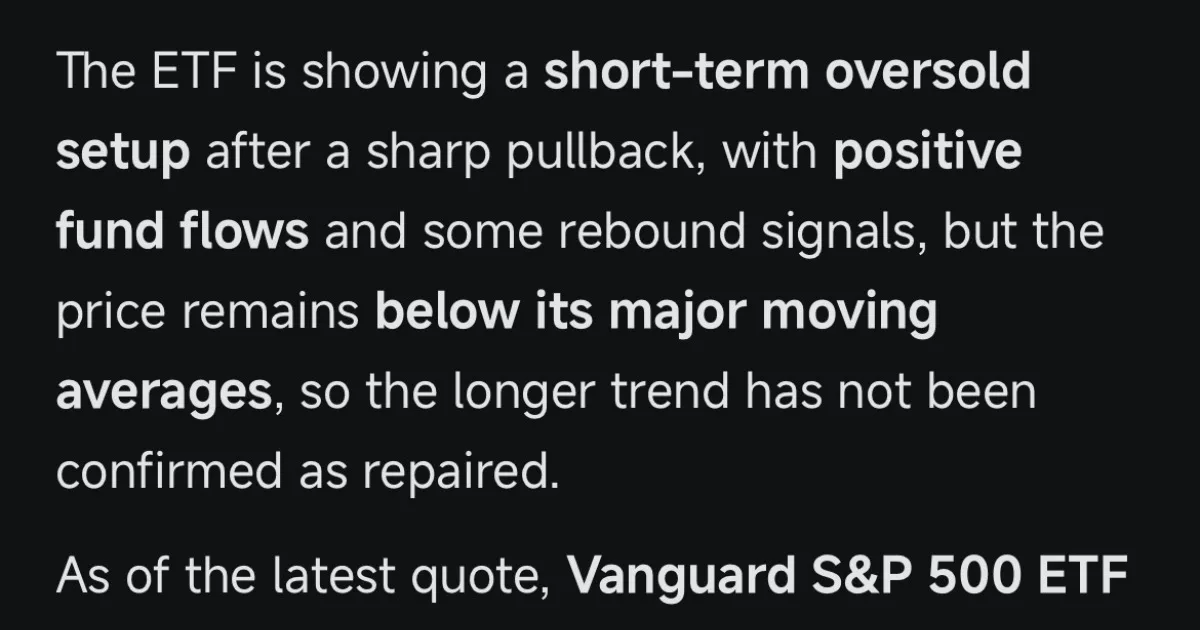
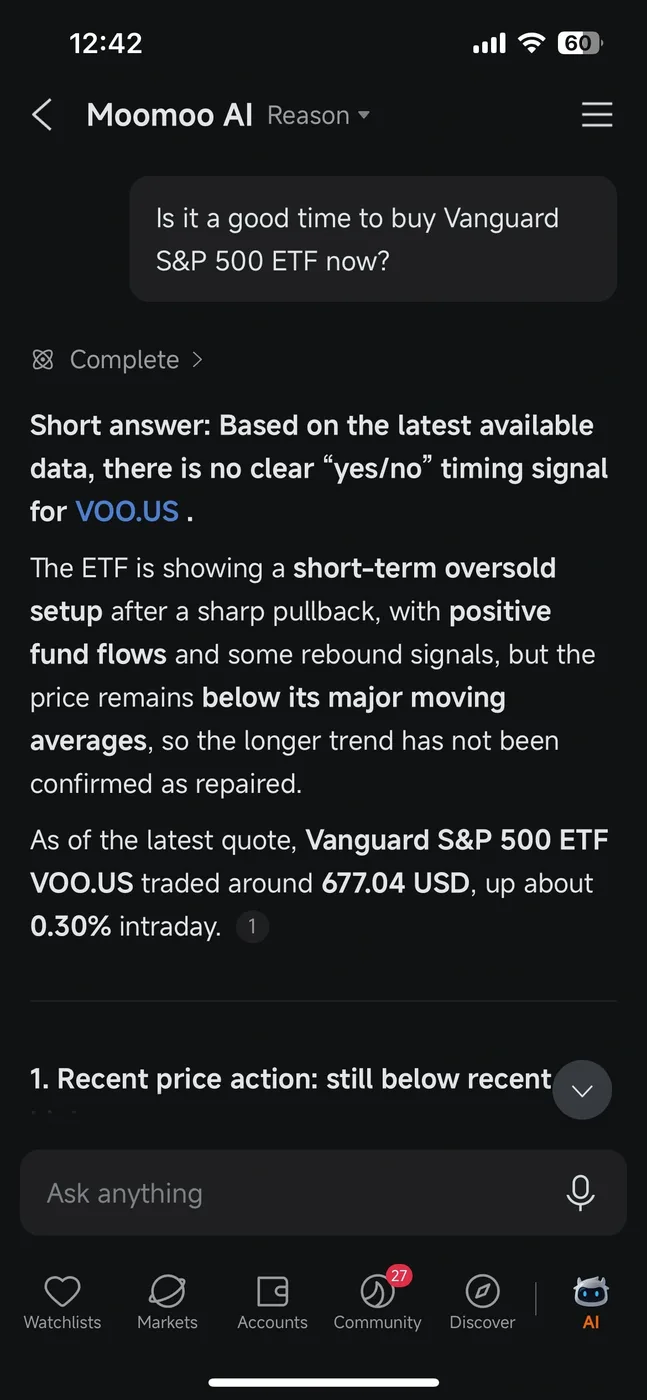
As the Vanguard S&P 500 ETF pulls back roughly 6% from its October highs, global investors are weighing short-term political risks against robust corporate earnings and long-term market resilience.
Khi quỹ Vanguard S&P 500 ETF sụt giảm khoảng 6% so với mức đỉnh tháng Mười, giới đầu tư toàn cầu đang cân nhắc những rủi ro chính trị ngắn hạn trước nền tảng lợi nhuận doanh nghiệp vững chắc và khả năng phục hồi lâu dài của thị trường.
Alors que le Vanguard S&P 500 ETF recule d’environ 6 % par rapport à ses sommets d’octobre, les investisseurs mondiaux pèsent le pour et le contre entre risques politiques à court terme, robustesse des résultats d’entreprises et résilience des marchés à long terme.
Mientras el ETF Vanguard S&P 500 retrocede aproximadamente un 6% desde sus máximos de octubre, los inversores globales sopesan los riesgos políticos a corto plazo frente a unos sólidos beneficios empresariales y la resiliencia del mercado a largo plazo.
As the Vanguard S&P 500 ETF pulls back roughly 6% from its October highs, global investors are weighing short-term political risks against robust corporate earnings and long-term market resilience.

- The Vanguard S&P 500 ETF (VOO) experienced a roughly 6% correction from its October peak following a sharp post-election market sell-off.
- S&P 500 companies demonstrated robust performance, delivering approximately 30% year-over-year earnings growth in the third quarter.
- Macroeconomic headwinds, including elevated inflation, oil prices above $90 per barrel, and high Treasury yields, continue to pressure equity valuations.
- Long-term strategists advise maintaining disciplined asset allocations and viewing market corrections as historical entry points rather than panic triggers.
- Quỹ Vanguard S&P 500 ETF (VOO) đã trải qua đợt điều chỉnh khoảng 6% từ đỉnh tháng Mười sau làn sóng bán tháo mạnh mẽ hậu bầu cử.
- Các công ty thuộc chỉ số S&P 500 đã chứng minh hiệu suất kinh doanh mạnh mẽ, mang lại mức tăng trưởng lợi nhuận khoảng 30% so với cùng kỳ năm trước trong quý ba.
- Những trở ngại kinh tế vĩ mô, bao gồm lạm phát cao, giá dầu duy trì trên 90 USD/thùng và lợi suất trái phiếu Kho bạc tăng cao, tiếp tục gây áp lực lên định giá cổ phiếu.
- Các nhà chiến lược dài hạn khuyên nên duy trì việc phân bổ tài sản kỷ luật và nhìn nhận các đợt điều chỉnh của thị trường như những điểm vào lệnh lịch sử thay vì là ngòi nổ gây hoảng loạn.
- Le Vanguard S&P 500 ETF (VOO) a accusé une correction d’environ 6 % par rapport à son pic d’octobre, dans le sillage d’une vive vague de ventes post-électorale.
- Les entreprises du S&P 500 ont affiché des performances remarquables, enregistrant une croissance de leurs bénéfices d’environ 30 % sur un an au troisième trimestre.
- Les vents contraires macroéconomiques, incluant une inflation tenace, des cours du pétrole au-delà de 90 dollars le baril et des rendements obligataires élevés, continuent de peser sur les valorisations boursières.
- Les stratèges de long terme recommandent de maintenir une allocation d’actifs disciplinée et de considérer ces soubresauts comme des points d’entrée historiques plutôt que comme des signaux de panique.
- El ETF Vanguard S&P 500 (VOO) experimentó una corrección de aproximadamente el 6% desde su pico de octubre tras una intensa venta masiva posterior a las elecciones.
- Las empresas del S&P 500 demostraron un rendimiento sólido, registrando un crecimiento interanual de los beneficios de aproximadamente el 30% en el tercer trimestre.
- Los vientos en contra macroeconómicos, incluida una inflación elevada, unos precios del petróleo por encima de los 90 dólares por barril y unos rendimientos altos de los bonos del Tesoro, continúan presionando las valoraciones de la renta variable.
- Los estrategas a largo plazo aconsejan mantener una asignación de activos disciplinada y ver las correcciones del mercado como puntos de entrada históricos en lugar de detonantes de pánico.
- The Vanguard S&P 500 ETF (VOO) experienced a roughly 6% correction from its October peak following a sharp post-election market sell-off.
- S&P 500 companies demonstrated robust performance, delivering approximately 30% year-over-year earnings growth in the third quarter.
- Macroeconomic headwinds, including elevated inflation, oil prices above $90 per barrel, and high Treasury yields, continue to pressure equity valuations.
- Long-term strategists advise maintaining disciplined asset allocations and viewing market corrections as historical entry points rather than panic triggers.
The global financial markets have recently delivered a jolt to investors who had grown accustomed to an uninterrupted upward trajectory. Following a sharp post-election sell-off, the Vanguard S&P 500 ETF (NYSEMKT: VOO) retreated approximately 6% from its October highs through the close of early November. This sudden contraction represents the most pronounced market discount seen since the spring, triggering intense debate across trading floors from Wall Street to the financial capitals of Europe regarding whether this dip signals a healthy correction or the prelude to a deeper downturn.
At the heart of this market recalibration lies a complex interplay of political shifts, artificial intelligence valuation concerns, and persistent macroeconomic pressures. While retail and institutional investors parse through the shifting legislative landscape following recent congressional shifts, seasoned market analysts are urging a return to fundamental principles. As market participants evaluate their exposure, the central question remains whether to capitalize on discounted valuations or retreat into defensive, dividend-yielding instruments.
The Anatomy of the Post-Election Pullback and Tech Concentration
The recent volatility was catalyzed primarily by a confluence of political uncertainty and acute valuation concerns surrounding mega-cap technology equities. The outcome of recent midterm elections, which resulted in divided control of Congress, instantly sparked legislative anxieties across the technology sector. Questions regarding the future trajectory of the artificial intelligence boom—ranging from potential federal oversight on data center construction to stricter regulations on massive capital expenditures—sent ripples through the market.
For years, mega-cap tech stocks have served as the undisputed engine of S&P 500 gains, leaving their valuations at levels that demand near-perfection. When political catalysts introduced new regulatory variables, investors seized the moment to lock in profits. This dynamic exposed the inherent vulnerability of index concentration, reminding market participants that headline indices like the S&P 500 remain heavily tethered to the fortunes of a handful of dominant technology behemoths.
However, beneath the turbulent surface of index-level corrections, underlying corporate health presents a starkly resilient picture. According to data compiled by FactSet, S&P 500 companies maintained a blistering pace, delivering approximately 30% year-over-year earnings growth through the third quarter. This robust earnings expansion has acted as a critical financial shock absorber, preventing a routine valuation correction from deteriorating into a disorderly rout.
Macroeconomic Headwinds and the Resilience of Corporate Earnings
Evaluating whether VOO represents a compelling entry point requires a sober assessment of the broader macroeconomic climate. Global markets continue to navigate sticky inflation prints, persistent geopolitical tensions keeping oil prices comfortably above $90 per barrel, and elevated long-term U.S. Treasury yields that exert constant pressure on equity discount rates.
Higher borrowing costs fundamentally alter the mathematics of equity valuation, forcing analysts to re-examine future cash flow projections. Yet, corporate America has thus far defied pessimistic forecasts by protecting profit margins through operational efficiencies and pricing power. The critical risk moving forward is whether capital expenditure in artificial intelligence and next-generation technologies will begin to decelerate, potentially pulling down future earnings expectations.
Despite these lingering clouds, historical precedent suggests that broad market corrections of 5% to 10% are a normal feature of a healthy economic cycle. In the absence of systemic credit failures or structural economic shocks, pullbacks of this magnitude have historically offered disciplined, long-term investors an attractive margin of safety.
Strategic Portfolio Positioning and the Income Alternative
As market volatility tests investor psychology, wealth managers emphasize the vital distinction between short-term trading sentiment and long-term asset allocation strategies. While momentum traders navigate daily gyrations, passive index investors utilizing instruments like VOO are reminded that time in the market consistently outweighs timing the market.
Simultaneously, heightened volatility has renewed interest in defensive strategies. Income-focused investors increasingly look toward dividend-weighted vehicles, such as the Schwab U.S. Dividend Equity ETF or actively managed covered-call funds like the Amplify CWP Enhanced Dividend Income ETF. These alternatives allow market participants to insulate their portfolios against capital depreciation by focusing on consistent cash flow and dividend growth.
"Market corrections test not only the balance sheet of corporations, but the emotional discipline of the investor. Those who maintain a long-term horizon rarely regret buying quality at a discount."
Ultimately, the decision to accumulate shares of the Vanguard S&P 500 ETF during the current pullback depends entirely on an investor's individual time horizon and risk tolerance. If corporate earnings continue to expand and macro shocks remain contained, the recent 6% dip will likely be viewed in hindsight as a routine buying opportunity in an enduring bull market. As Wall Street braces for the next wave of economic data, maintaining a balanced, diversified approach remains the definitive hallmark of prudent wealth preservation.
Các thị trường tài chính toàn cầu gần đây đã tạo ra một cú sốc đối với những nhà đầu tư vốn đã quen với quỹ đạo tăng trưởng không gián đoạn. Tiếp sau đợt bán tháo mạnh mẽ hậu bầu cử, quỹ Vanguard S&P 500 ETF (NYSEMKT: VOO) đã lùi khoảng 6% từ mức đỉnh tháng Mười cho đến khi phiên giao dịch đầu tháng Mười十一 khép lại. Sự sụt giảm đột ngột này đánh dấu mức chiết khấu thị trường rõ rệt nhất kể từ mùa xuân, làm bùng nổ những cuộc tranh luận gay gắt tại các sàn giao dịch từ Phố Wall cho tới các thủ phủ tài chính của Châu Âu về việc liệu nhịp giảm này báo hiệu một sự điều chỉnh lành mạnh hay là khúc dạo đầu cho một đợt suy giảm sâu hơn.
Trọng tâm của quá trình hiệu chỉnh thị trường này nằm ở sự tương tác phức tạp giữa các biến động chính trị, những lo ngại về định giá trí tuệ nhân tạo và các áp lực kinh tế vĩ mô dai dẳng. Trong khi các nhà đầu tư cá nhân và tổ chức đang mổ xẻ bối cảnh lập pháp thay đổi sau những biến động gần đây tại Quốc hội, các nhà phân tích thị trường kỳ hạn đang thúc giục việc quay trở lại các nguyên tắc cơ bản. Khi các thành viên thị trường đánh giá mức độ rủi ro của mình, câu hỏi cốt lõi vẫn là liệu nên tận dụng mức định giá đã chiết khấu hay rút lui về các công cụ mang tính phòng thủ và sinh lời bằng cổ tức.
Giải phẫu đợt sụt giảm hậu bầu cử và sự tập trung của nhóm công nghệ
Biến động gần đây chủ yếu được kích hoạt bởi sự hội tụ giữa bất ổn chính trị và những lo ngại sắc bén về định giá xung quanh các cổ phiếu công nghệ vốn hóa lớn. Kết quả của các cuộc bầu cử giữa kỳ gần đây, dẫn đến việc kiểm soát Quốc hội bị chia rẽ, đã lập tức châm ngòi cho những lo lắng về lập pháp trên toàn ngành công nghệ. Những câu hỏi liên quan đến quỹ đạo tương lai của cơn bùng nổ trí tuệ nhân tạo — từ khả năng liên bang giám sát việc xây dựng trung tâm dữ liệu đến các quy định nghiêm ngặt hơn đối với chi phí vốn khổng lồ — đã tạo ra những gợn sóng lan tỏa khắp thị trường.
Trong nhiều năm, các cổ phiếu công nghệ vốn hóa lớn đã đóng vai trò là động cơ không thể chối cãi cho đà tăng của S&P 500, đẩy mức định giá của chúng lên các ngưỡng đòi hỏi sự hoàn hảo gần như tuyệt đối. Khi các catalyst (tác nhân xúc tác) chính trị giới thiệu các biến số quản lý mới, giới đầu tư đã nắm bắt thời điểm này để chốt lời. Động thái này phơi bày tính dễ tổn thương vốn có của việc tập trung chỉ số, nhắc nhở các thành viên thị trường rằng các chỉ số tiêu chuẩn như S&P 500 vẫn gắn kết chặt chẽ với vận mệnh của một nhúm các “ông lớn” công nghệ thống trị.
Tuy nhiên, bên dưới bề mặt hỗn loạn của các đợt điều chỉnh ở cấp độ chỉ số, sức khỏe doanh nghiệp bên trong lại cho thấy một bức tranh kiên cường đến kinh ngạc. Theo dữ liệu được tổng hợp bởi FactSet, các công ty thuộc S&P 500 vẫn duy trì nhịp độ tăng trưởng thần tốc, mang lại mức tăng trưởng lợi nhuận khoảng 30% so với cùng kỳ năm ngoái trong quý ba. Sự mở rộng lợi nhuận mạnh mẽ này đã đóng vai trò như một bộ giảm xóc tài chính quan trọng, ngăn chặn một đợt điều chỉnh định giá thông thường trượt dốc thành một cuộc tháo chạy vô trật tự.
Những cơn gió ngược vĩ mô và sự kiên cường của lợi nhuận doanh nghiệp
Việc đánh giá xem VOO có đại diện cho một điểm vào lệnh hấp dẫn hay không đòi hỏi một sự nhìn nhận tỉnh táo về bầu không khí kinh tế vĩ mô rộng lớn hơn. Các thị trường toàn cầu tiếp tục vật lộn với các số liệu lạm phát cứng đầu, những căng thẳng địa chính trị dai dẳng giữ giá ổn định ở mức trên 90 USD/thùng, và lợi suất trái phiếu Kho bạc Mỹ kỳ hạn dài ở mức cao – những yếu tố gây áp lực liên tục lên tỷ lệ chiết khấu vốn cổ phần.
Chi phí đi vay cao hơn làm thay đổi căn bản toán học định giá cổ phiếu, buộc các nhà phân tích phải xem xét lại các dự báo dòng tiền trong tương lai. Dù vậy, cộng đồng doanh nghiệp Mỹ cho đến nay vẫn bất chấp các dự báo bi quan bằng cách bảo vệ biên lợi nhuận thông qua hiệu quả hoạt động và sức mạnh định giá. Rủi ro cốt lõi trong thời gian tới là liệu chi phí vốn dành cho trí tuệ nhân tạo và các công nghệ thế hệ tiếp theo có bắt đầu giảm tốc hay không, qua đó có khả năng kéo tụt kỳ vọng lợi nhuận trong tương lai.
Bất chấp những đám mây u ám còn vương vấn này, tiền lệ lịch sử cho thấy các đợt điều chỉnh diện rộng của thị trường từ 5% đến 10% là một tính năng bình thường của một chu kỳ kinh tế lành mạnh. Trong bối cảnh không có sự sụp đổ tín dụng mang tính hệ thống hay các cú sốc kinh tế cấu trúc, các nhịp sụt giảm với biên độ này trong lịch sử luôn mang lại cho các nhà đầu tư kỷ luật, dài hạn một biên độ an toàn hấp dẫn.
Chiến lược phân bổ danh mục và giải pháp thay thế tạo thu nhập
Khi sự biến động của thị trường thử thách tâm lý nhà đầu tư, các nhà quản lý tài sản nhấn mạnh sự phân biệt quan trọng giữa tâm lý giao dịch ngắn hạn và chiến lược phân bổ tài sản dài hạn. Trong khi các nhà giao dịch theo đà giá (momentum traders) điều hướng qua các biến động hàng ngày, các nhà đầu tư chỉ số thụ động sử dụng các công cụ như VOO được nhắc nhở rằng thời gian ở trên thị trường luôn mang lại hiệu quả vượt trội so với việc thời điểm hóa thị trường (timing the market).
Đồng thời, sự biến động gia tăng đã thắp lại sự quan tâm đối với các chiến lược phòng thủ. Các nhà đầu tư tập trung vào thu nhập ngày càng hướng tới các phương tiện có trọng số cổ tức, chẳng hạn như quỹ Schwab U.S. Dividend Equity ETF hoặc các quỹ quyền chọn mua được quản lý chủ động như Amplify CWP Enhanced Dividend Income ETF. Những giải pháp thay thế này cho phép các thành viên thị trường bảo vệ danh mục đầu tư của họ trước sự sụt giảm vốn bằng cách tập trung vào dòng tiền ổn định và tăng trưởng cổ tức.
"Các đợt điều chỉnh của thị trường không chỉ thử thách bảng cân đối kế toán của các tập đoàn, mà còn thử thách kỷ luật cảm xúc của nhà đầu tư. Những ai duy trì được tầm nhìn dài hạn hiếm khi phải hối hận khi mua tài sản chất lượng với mức giá chiết khấu."
Cuối cùng, quyết định tích lũy cổ phiếu của quỹ Vanguard S&P 500 ETF trong đợt sụt giảm hiện tại phụ thuộc hoàn toàn vào chân trời thời gian và khả năng chịu đựng rủi ro của từng nhà đầu tư. Nếu lợi nhuận doanh nghiệp tiếp tục mở rộng và các cú sốc vĩ mô vẫn được kiểm soát, nhịp giảm 6% gần đây nhiều khả năng sẽ được nhìn nhận lại trong quá khứ như một cơ hội mua vào thông thường trong một thị trường giá lên bền bỉ. Khi Phố Wall chuẩn bị tinh thần đón nhận làn sóng dữ liệu kinh tế tiếp theo, việc duy trì một cách tiếp cận cân bằng, đa dạng hóa vẫn là dấu ấn định nghĩa của việc bảo toàn tài sản một cách khôn ngoan.
Les marchés financiers mondiaux ont récemment administré une secousse salutaire à des investisseurs un peu trop habitués à une trajectoire ascendante ininterrompue. À la suite d’une brutale liquidation post-électorale, le Vanguard S&P 500 ETF (NYSEMKT : VOO) a reflué d’environ 6 % par rapport à ses sommets d’octobre, et ce jusqu’à la clôture de début novembre. Cette contraction soudaine constitue la décote de marché la plus marquée observée depuis le printemps, attisant les débats enflammés sur les planchers de Wall Street comme dans les capitales financières européennes : s'agit-il d’une correction saine ou des prémices d’un décrochage plus profond ?
Au cœur de cette recalibration des marchés se trouve un subtil entrelacs de mutations politiques, d'inquiétudes quant aux valorisations liées à l'intelligence artificielle et de pressions macroéconomiques persistantes. Tandis que les investisseurs particuliers et institutionnels décortiquent le paysage législatif issu des récents remaniements au Congrès, les analystes chevronnés appellent à un retour aux fondamentaux. Alors que chaque intervenant réévalue son exposition, la question centrale demeure : faut-il capitaliser sur ces valorisations remises au goût du jour ou se retrancher derrière des instruments défensifs générateurs de dividendes ?
L’anatomie du repli post-électoral et la concentration technologique
Cette volatilité récente a été principalement catalysée par la confluence d’une incertitude politique et de préoccupations aiguës concernant les valorisations des valeurs technologiques à très grande capitalisation. L’issue des récentes élections de mi-mandat, qui a consacré un Congrès divisé, a immédiatement éveillé des craintes réglementaires au sein du secteur technologique. Les interrogations sur la trajectoire future du boom de l'intelligence artificielle — allant d'une surveillance fédérale potentielle sur la construction des centres de données à un encadrement plus strict des dépenses d'investissement massives — ont traversé le marché comme une onde de choc.
Durant des années, les géants de la tech ont fait office de moteur incontesté des gains du S&P 500, portant leurs valorisations à des sommets exigeant une quasi-perfection. Lorsque les catalyseurs politiques ont introduit de nouvelles variables réglementaires, les investisseurs ont saisi l’occasion pour cristalliser leurs profits. Cette dynamique a mis en lumière la vulnérabilité intrinsèque de la concentration des indices, rappelant aux marchés que les indices de référence tels que le S&P 500 demeurent étroitement arrimés aux destinées d'une poignée de mastodontes technologiques.
Pourtant, sous la surface agitée de ces corrections indicielles, la santé intrinsèque des entreprises dresse un portrait d’une résilience saisissante. Selon les données compilées par FactSet, les sociétés du S&P 500 ont maintenu un rythme fulgurant, affichant une croissance de leurs bénéfices d’environ 30 % en glissement annuel au troisième trimestre. Cette solide expansion des profits a agi comme un amortisseur financier crucial, empêchant une correction de valorisation ordinaire de dégénérer en déroute désordonnée.
Vents contraires macroéconomiques et résilience des bénéfices des entreprises
Déterminer si le VOO constitue un point d'entrée attractif exige une évaluation lucide du climat macroéconomique global. Les marchés mondiaux continuent de composer avec une inflation persistante, des tensions géopolitiques durables maintenant le pétrole confortablement au-dessus de 90 dollars le baril, et des rendements obligataires américains à long terme toujours élevés qui exercent une pression constante sur les taux d'actualisation des actions.
La hausse des coûts d’emprunt modifie fondamentalement l'équation de la valorisation boursière, contraignant les analystes à réviser leurs projections de flux de trésorerie futurs. Pourtant, l'Amérique corporate a jusqu’ici fait mentir les Cassandre en préservant ses marges bénéficiaires grâce à des gains d'efficacité opérationnelle et un solide pouvoir de fixation des prix. Le risque critique pour la suite réside dans une éventuelle décélération des investissements (CapEx) dans l’intelligence artificielle et les technologies de pointe, ce qui risquerait de plomber les anticipations de bénéfices futurs.
En dépit de ces nuages persistants, l'histoire montre que les corrections globales de 5 % à 10 % relèvent de la normale dans un cycle économique sain. En l'absence de défaillances systémiques du crédit ou de chocs économiques structurels, des replis de cette ampleur ont historiquement offert aux investisseurs de long terme, disciplinés, une marge de sécurité des plus séduisantes.
Positionnement stratégique de portefeuille et alternative de rendement
Alors que la volatilité met à rude épreuve la psychologie des investisseurs, les gestionnaires de fortune soulignent la distinction fondamentale entre la psychologie du trading à court terme et la stratégie d'allocation d'actifs à long terme. Si les adeptes du momentum naviguent au gré des soubresauts quotidiens, les investisseurs passifs recourant à des instruments tels que le VOO se voient rappeler qu'en matière boursière, le temps passé sur le marché prime toujours sur le market timing.
Parallèlement, ce regain de volatilité a réveillé l'intérêt pour les stratégies défensives. Les investisseurs en quête de rendement se tournent de plus en plus vers des véhicules axés sur les dividendes, à l'instar du Schwab U.S. Dividend Equity ETF, ou vers des fonds gérés activement proposant des stratégies de « covered-calls » (options d'achat couvertes) comme l'Amplify CWP Enhanced Dividend Income ETF. Ces alternatives permettent aux intervenants de blinder leurs portefeuilles contre la dépréciation du capital en se concentrant sur des flux de trésorerie réguliers et une croissance soutenue des dividendes.
« Les corrections de marché mettent à l'épreuve non seulement le bilan des entreprises, mais aussi la discipline émotionnelle de l'investisseur. Ceux qui conservent un horizon de long terme regrettent rarement d'avoir acheté de la qualité au rabais. »
En définitive, la décision d'accumuler des parts du Vanguard S&P 500 ETF lors de ce repli dépend entièrement de l'horizon temporel et de la tolérance au risque de chaque investisseur. Si les bénéfices des entreprises poursuivent leur essor et que les chocs macroéconomiques restent circonscrits, ce passage à vide de 6 % sera très probablement perçu, rétrospectivement, comme une banale opportunité d'achat au sein d'un marché haussier séculaire. Tandis que Wall Street se prépare à recevoir la prochaine salve de données économiques, le maintien d'une approche équilibrée et diversifiée demeure la marque de fabrique par excellence d'une préservation de patrimoine avisée.
Los mercados financieros mundiales han propinado recientemente una sacudida a aquellos inversores que se habían acostumbrado a una trayectoria ascendente ininterrumpida. Tras una abrupta oleada de ventas posterior a las elecciones, el ETF Vanguard S&P 500 (NYSEMKT: VOO) retrocedió aproximadamente un 6% desde sus máximos de octubre hasta el cierre de principios de noviembre. Esta contracción repentina representa el descuento de mercado más pronunciado visto desde la primavera, lo que ha desatado un intenso debate en las mesas de contratación, desde Wall Street hasta las capitales financieras europeas, sobre si esta caída señala una corrección saludable o la antesala de una recesión más profunda.
En el centro de esta recalibración del mercado se encuentra una compleja interacción de cambios políticos, preocupaciones en torno a las valoraciones de la inteligencia artificial y persistentes presiones macroeconómicas. Mientras los inversores minoristas e institucionales analizan el cambiante panorama legislativo tras los recientes movimientos en el Congreso, los analistas de mercado más experimentados instan a un retorno a los principios fundamentales. A medida que los participantes del mercado evalúan su exposición, la pregunta central sigue siendo si deben capitalizar las valoraciones descontadas o refugiarse en instrumentos defensivos que generen dividendos.
La anatomía de la corrección posterior a las elecciones y la concentración tecnológica
La volatilidad reciente fue catalizada principalmente por una confluencia de incertidumbre política y agudas preocupaciones sobre las valoraciones en torno a las acciones tecnológicas de gran capitalización. El resultado de las recientes elecciones de mitad de mandato, que se tradujo en un Congreso dividido, desató instantáneamente inquietudes legislativas en todo el sector tecnológico. Las dudas sobre la trayectoria futura de la inteligencia artificial —que van desde una posible supervisión federal en la construcción de centros de datos hasta regulaciones más estrictas sobre los cuantiosos gastos de capital— enviaron ondas expansivas a través del mercado.
Durante años, las acciones tecnológicas de gran capitalización han servido como el motor indiscutible de las ganancias del S&P 500, dejando sus valoraciones en niveles que exigen una perfección casi absoluta. Cuando los catalizadores políticos introdujeron nuevas variables regulatorias, los inversores aprovecharon el momento para asegurar beneficios. Esta dinámica dejó al descubierto la vulnerabilidad inherente de la concentración de los índices, recordando a los participantes del mercado que los índices de referencia como el S&P 500 siguen fuertemente atados a las fortunas de un puñado de gigantes tecnológicos dominantes.
Sin embargo, bajo la superficie turbulenta de las correcciones a nivel de índice, la salud empresarial subyacente presenta un panorama de notable resistencia. Según los datos recopilados por FactSet, las empresas del S&P 500 mantuvieron un ritmo vertiginoso, generando un crecimiento interanual de los beneficios de aproximadamente el 30% hasta el tercer trimestre. Esta robusta expansión de las ganancias ha actuado como un amortiguador financiero crítico, evitando que una corrección rutinaria de las valoraciones degenerara en un desplome desordenado.
Vientos en contra macroeconómicos y la resiliencia de los beneficios empresariales
Evaluar si el VOO representa un punto de entrada atractivo requiere una valoración sobria del clima macroeconómico general. Los mercados globales continúan navegando entre datos de inflación persistentes, tensiones geopolíticas continuas que mantienen los precios del petróleo cómodamente por encima de los 90 dólares por barril, y unos rendimientos elevados de los bonos del Tesoro estadounidense a largo plazo que ejercen una presión constante sobre las tasas de descuento de la renta variable.
unos costes de financiación más altos alteran fundamentalmente las matemáticas de la valoración bursátil, obligando a los analistas a reexaminar las proyecciones de flujo de caja futuro. No obstante, las empresas estadounidenses han desafiado hasta ahora las previsiones pesimistas protegiendo sus márgenes de beneficio mediante la eficiencia operativa y su poder de fijación de precios. El riesgo crítico de cara al futuro es si el gasto de capital en inteligencia artificial y tecnologías de próxima generación comenzará a desacelerarse, lo que podría deprimir las expectativas futuras de beneficios.
A pesar de estos nubarrones persistentes, los precedentes históricos sugieren que las correcciones amplias del mercado de entre el 5% y el 10% son una característica normal de un ciclo económico saludable. A falta de fallos sistémicos en el crédito o de shocks económicos estructurales, las caídas de esta magnitud han ofrecido históricamente a los inversores disciplinados y a largo plazo un atractivo margen de seguridad.
Posicionamiento estratégico de la cartera y la alternativa de la renta fija y por dividendo
A medida que la volatilidad del mercado pone a prueba la psicología de los inversores, los gestores de patrimonios enfatizan la distinción vital entre el sentimiento de negociación a corto plazo y las estrategias de asignación de activos a largo plazo. Mientras los operadores guiados por el impulso navegan por los altibajos diarios, a los inversores pasivos indexados que utilizan instrumentos como el VOO se les recuerda que el tiempo en el mercado supera sistemáticamente a la sincronización del mercado.
Simultáneamente, el repunte de la volatilidad ha renovado el interés por las estrategias defensivas. Los inversores centrados en los ingresos buscan cada vez más vehículos ponderados por dividendos, como el ETF Schwab U.S. Dividend Equity o fondos gestionados activamente de opciones de compra cubiertas (covered-call) como el Amplify CWP Enhanced Dividend Income ETF. Estas alternativas permiten a los participantes del mercado aislar sus carteras frente a la depreciación del capital centrándose en un flujo de caja constante y en el crecimiento de los dividendos.
"Las correcciones del mercado ponen a prueba no solo el balance de las empresas, sino la disciplina emocional del inversor. Quienes mantienen un horizonte a largo plazo rara vez se arrepienten de comprar calidad a precios descontados."
En última instancia, la decisión de acumular acciones del ETF Vanguard S&P 500 durante la actual corrección depende enteramente del horizonte temporal y la tolerancia al riesgo de cada inversor. Si los beneficios empresariales continúan expandiéndose y los shocks macroeconómicos se mantienen contenidos, la reciente caída del 6% probablemente sea vista en retrospectiva como una rutinaria oportunidad de compra dentro de un mercado alcista duradero. Mientras Wall Street se prepara para la próxima oleada de datos económicos, mantener un enfoque equilibrado y diversificado sigue siendo el sello distintivo definitivo de la preservación prudente del patrimonio.
The global financial markets have recently delivered a jolt to investors who had grown accustomed to an uninterrupted upward trajectory. Following a sharp post-election sell-off, the Vanguard S&P 500 ETF (NYSEMKT: VOO) retreated approximately 6% from its October highs through the close of early November. This sudden contraction represents the most pronounced market discount seen since the spring, triggering intense debate across trading floors from Wall Street to the financial capitals of Europe regarding whether this dip signals a healthy correction or the prelude to a deeper downturn.
At the heart of this market recalibration lies a complex interplay of political shifts, artificial intelligence valuation concerns, and persistent macroeconomic pressures. While retail and institutional investors parse through the shifting legislative landscape following recent congressional shifts, seasoned market analysts are urging a return to fundamental principles. As market participants evaluate their exposure, the central question remains whether to capitalize on discounted valuations or retreat into defensive, dividend-yielding instruments.
The Anatomy of the Post-Election Pullback and Tech Concentration
The recent volatility was catalyzed primarily by a confluence of political uncertainty and acute valuation concerns surrounding mega-cap technology equities. The outcome of recent midterm elections, which resulted in divided control of Congress, instantly sparked legislative anxieties across the technology sector. Questions regarding the future trajectory of the artificial intelligence boom—ranging from potential federal oversight on data center construction to stricter regulations on massive capital expenditures—sent ripples through the market.
For years, mega-cap tech stocks have served as the undisputed engine of S&P 500 gains, leaving their valuations at levels that demand near-perfection. When political catalysts introduced new regulatory variables, investors seized the moment to lock in profits. This dynamic exposed the inherent vulnerability of index concentration, reminding market participants that headline indices like the S&P 500 remain heavily tethered to the fortunes of a handful of dominant technology behemoths.
However, beneath the turbulent surface of index-level corrections, underlying corporate health presents a starkly resilient picture. According to data compiled by FactSet, S&P 500 companies maintained a blistering pace, delivering approximately 30% year-over-year earnings growth through the third quarter. This robust earnings expansion has acted as a critical financial shock absorber, preventing a routine valuation correction from deteriorating into a disorderly rout.
Macroeconomic Headwinds and the Resilience of Corporate Earnings
Evaluating whether VOO represents a compelling entry point requires a sober assessment of the broader macroeconomic climate. Global markets continue to navigate sticky inflation prints, persistent geopolitical tensions keeping oil prices comfortably above $90 per barrel, and elevated long-term U.S. Treasury yields that exert constant pressure on equity discount rates.
Higher borrowing costs fundamentally alter the mathematics of equity valuation, forcing analysts to re-examine future cash flow projections. Yet, corporate America has thus far defied pessimistic forecasts by protecting profit margins through operational efficiencies and pricing power. The critical risk moving forward is whether capital expenditure in artificial intelligence and next-generation technologies will begin to decelerate, potentially pulling down future earnings expectations.
Despite these lingering clouds, historical precedent suggests that broad market corrections of 5% to 10% are a normal feature of a healthy economic cycle. In the absence of systemic credit failures or structural economic shocks, pullbacks of this magnitude have historically offered disciplined, long-term investors an attractive margin of safety.
Strategic Portfolio Positioning and the Income Alternative
As market volatility tests investor psychology, wealth managers emphasize the vital distinction between short-term trading sentiment and long-term asset allocation strategies. While momentum traders navigate daily gyrations, passive index investors utilizing instruments like VOO are reminded that time in the market consistently outweighs timing the market.
Simultaneously, heightened volatility has renewed interest in defensive strategies. Income-focused investors increasingly look toward dividend-weighted vehicles, such as the Schwab U.S. Dividend Equity ETF or actively managed covered-call funds like the Amplify CWP Enhanced Dividend Income ETF. These alternatives allow market participants to insulate their portfolios against capital depreciation by focusing on consistent cash flow and dividend growth.
"Market corrections test not only the balance sheet of corporations, but the emotional discipline of the investor. Those who maintain a long-term horizon rarely regret buying quality at a discount."
Ultimately, the decision to accumulate shares of the Vanguard S&P 500 ETF during the current pullback depends entirely on an investor's individual time horizon and risk tolerance. If corporate earnings continue to expand and macro shocks remain contained, the recent 6% dip will likely be viewed in hindsight as a routine buying opportunity in an enduring bull market. As Wall Street braces for the next wave of economic data, maintaining a balanced, diversified approach remains the definitive hallmark of prudent wealth preservation.
Editorial Standards & Multi-Language Synthesis: This dispatch was synthesized and fact-checked by the ParisDaily Editorial Desk across 5 global editions (EN, FR, VI, ES, ZH), cross-referencing primary international wire reports and real-time search intelligence.