硅谷悖论:白宫内部关于英伟达(Nvidia)的叙事冲突与权力博弈
As Vice President JD Vance contradicts President Trump on the status of a DOJ probe into Jensen Huang, the future of Nvidia and U.S. tech hegemony hangs in the balance.
Trong khi Phó Tổng thống JD Vance đưa ra những tuyên bố trái ngược với Tổng thống Trump về tình trạng cuộc điều tra của Bộ Tư pháp đối với Jensen Huang, tương lai của Nvidia và vị thế bá chủ công nghệ của Hoa Kỳ đang đứng trước tình thế "ngàn cân treo sợi tóc".
Alors que le vice-président JD Vance contredit le président Trump sur l'existence d'une enquête du ministère de la Justice visant Jensen Huang, l'avenir de Nvidia et de l'hégémonie technologique américaine est en jeu. Ce flou artistique au sommet de l'État laisse les marchés et les experts en sécurité nationale dans une incertitude totale.
Mientras el vicepresidente JD Vance contradice al presidente Trump sobre el estado de una investigación del Departamento de Justicia contra Jensen Huang, el futuro de Nvidia y la hegemonía tecnológica de EE. UU. pende de un hilo. La disparidad de mensajes desde la cúpula del poder genera una incertidumbre sin precedentes en los mercados globales.
随着副总统万斯(JD Vance)公开反驳特朗普总统关于黄仁勋(Jensen Huang)司法部调查状态的言论,英伟达的未来与美国科技霸权的走向正处于微妙的平衡点上。
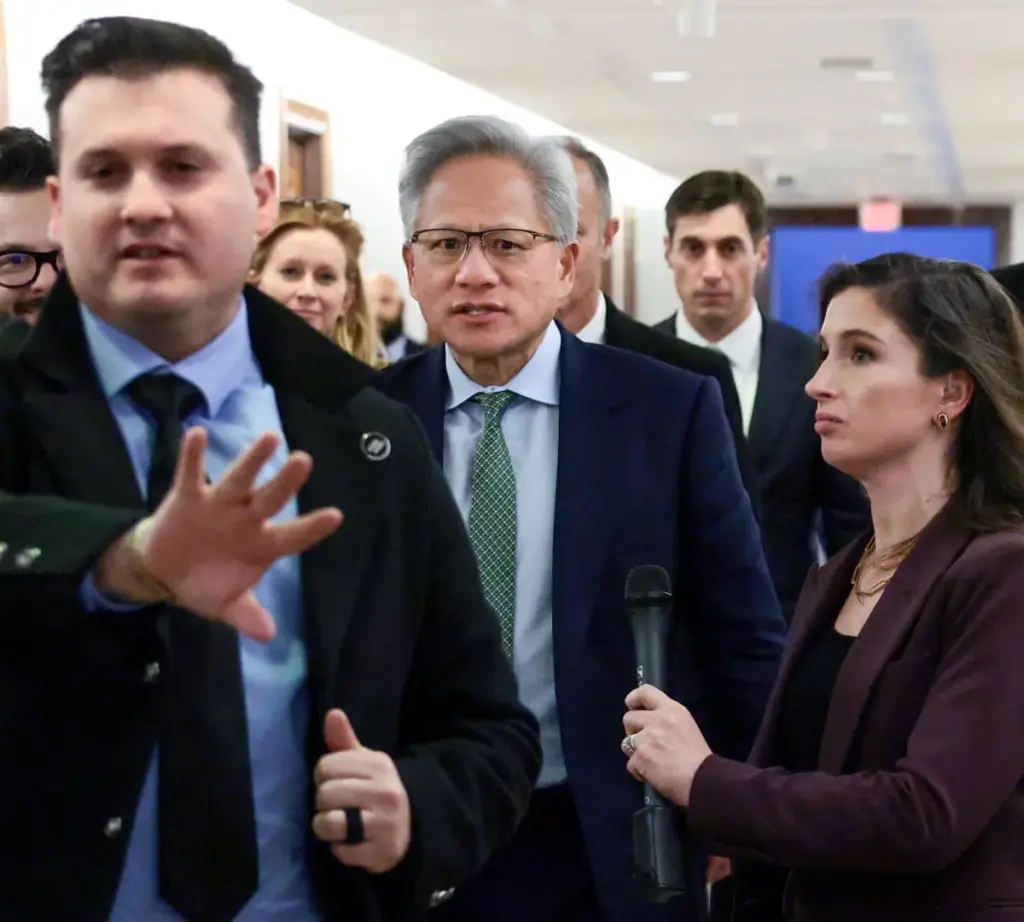
- Vice President JD Vance explicitly denied that Jensen Huang is under DOJ investigation, contradicting President Trump’s earlier claims of an 'exoneration.'
- Nvidia’s board reinstated Huang following 'senior level' government input, raising questions about the politicization of corporate governance.
- The controversy stems from allegations regarding the diversion of AI chips to China and Huang’s personal associations with foreign nationals.
- Huang faces a high-stakes closed-door hearing with House committees as Nvidia prepares for its annual Washington technology showcase.
- Phó Tổng thống JD Vance đã bác bỏ thông tin Jensen Huang đang bị Bộ Tư pháp điều tra, đi ngược lại tuyên bố "minh oan" trước đó của Tổng thống Trump.
- Hội đồng quản trị Nvidia phục chức cho ông Huang sau khi nhận được "ý kiến từ cấp cao" của chính phủ, làm dấy lên những lo ngại về việc chính trị hóa quản trị doanh nghiệp.
- Tranh cãi bắt nguồn từ các cáo buộc chuyển hướng chip AI sang Trung Quốc và mối quan hệ cá nhân của ông Huang với các công dân nước ngoài.
- Ông Huang sắp đối mặt với phiên điều trần kín trước các ủy ban Hạ viện trong bối cảnh Nvidia chuẩn bị cho sự kiện triển lãm công nghệ thường niên tại Washington.
- Le vice-président JD Vance a explicitement nié que Jensen Huang fasse l'objet d'une enquête du ministère de la Justice, contredisant les affirmations antérieures du président Trump sur une prétendue « exonération ».
- Le conseil d'administration de Nvidia a réintégré Huang après avoir reçu des « contributions de haut niveau » du gouvernement, soulevant des questions sur la politisation de la gouvernance d'entreprise.
- La controverse découle d'allégations concernant le détournement de puces d'IA vers la Chine et les liens personnels de Huang avec des ressortissants étrangers.
- Huang doit faire face à une audition à huis clos devant des commissions de la Chambre des représentants, alors que Nvidia se prépare pour son salon technologique annuel à Washington.
- El vicepresidente JD Vance negó explícitamente que Jensen Huang esté bajo investigación del Departamento de Justicia, contradiciendo las afirmaciones previas del presidente Trump sobre una supuesta "exoneración".
- La junta directiva de Nvidia readmitió a Huang tras recibir "aportaciones de alto nivel" del Gobierno, lo que plantea serias dudas sobre la politización del gobierno corporativo.
- La controversia surge de acusaciones sobre el desvío de chips de IA a China y las relaciones personales de Huang con ciudadanos extranjeros.
- Huang se enfrenta a una audiencia a puerta cerrada con comités de la Cámara de Representantes mientras Nvidia prepara su escaparate tecnológico anual en Washington.
- 副总统万斯明确否认黄仁勋正受到司法部调查,这直接反驳了特朗普总统此前声称的“已获平反”说法。
- 英伟达董事会在获得政府“高层”介入后恢复了黄仁勋的职务,引发了外界对企业治理政治化的质疑。
- 此次争议源于有关AI芯片被转移至中国以及黄仁勋与外籍人士私人往来的指控。
- 在英伟达准备于华盛顿举行年度科技展示会之际,黄仁勋将面临众议院委员会的高风险闭门听证。
The corridors of power in Washington and the boardrooms of Silicon Valley have rarely felt as inextricably linked as they do this week. At the center of this geopolitical and corporate storm is Jensen Huang, the architect of the artificial intelligence revolution and the recently reinstated CEO of Nvidia. The narrative surrounding his leadership has descended into a labyrinth of conflicting statements from the highest levels of the Trump administration, leaving investors, national security hawks, and the global tech industry scrambling to decipher whether the world’s most critical chipmaker is operating under a cloud of legal jeopardy or a green light from the executive branch.
The dissonance began on Monday, when President Donald Trump claimed in a CNBC interview that an investigation into Huang had been conducted, resulting in his "exoneration." Yet, by Wednesday, Vice President JD Vance offered a starkly different account, asserting that Attorney General Todd Blanche had assured him that Huang was not, and had never been, under investigation. This public divergence between the President and his Vice President regarding the Department of Justice’s activities underscores the volatility of the current administration’s approach to "Super Intelligence" (SI) and the strategic imperative of maintaining American dominance in the global arms race for AI supremacy.
The Anatomy of a Corporate Reinstatement
Jensen Huang’s return to the helm of Nvidia was anything but conventional. His initial resignation followed a firestorm of reporting by The New York Times, which detailed a series of personal affairs, most notably with a Chinese businesswoman linked to the Singapore-based cloud provider Megaspeed—a firm alleged to have ties to Beijing’s intelligence apparatus. These revelations provided the spark for a broader inquiry into whether Nvidia’s high-end AI chips were being surreptitiously diverted to Chinese entities, a direct violation of stringent U.S. export controls designed to stifle the development of foreign military-grade AI.
The board’s decision to bring Huang back was explicitly predicated on "input from senior levels of the United States government," a phrase that has since become the focal point of intense scrutiny. President Trump’s subsequent public credit-taking for the reinstatement suggests that the White House views Huang not merely as a corporate executive, but as a strategic asset in the broader SI competition with China. However, the lack of a formal DOJ investigation—as reported by Reuters—suggests that the "exoneration" mentioned by the President may have been a political calculation rather than a legal finding. Attorney General Todd Blanche’s refusal to confirm or deny the existence of a probe during Tuesday’s press briefings only deepened the ambiguity, leaving the legal status of the CEO in a state of perpetual flux.
Geopolitics and the Silicon Arms Race
The stakes of this drama extend far beyond the boardroom of a single semiconductor giant. Nvidia’s chips are the lifeblood of the modern AI ecosystem, and the company’s ability to navigate the tension between global market demand and American national security policy is the defining challenge of the decade. Vice President Vance’s comments on Wednesday highlighted the administration’s focus: the prevention of advanced chips falling into the hands of Chinese adversaries. By framing the situation as an "opportunity for Nvidia to focus on complying with American export controls," the administration is signaling a shift toward a more collaborative, if highly monitored, relationship with the tech sector.
Historically, the U.S. government has maintained a strict firewall between the Department of Justice and corporate leadership decisions. The current situation threatens to erode that precedent. If the executive branch is indeed providing "assurances" to boards of directors regarding the legal status of their CEOs, it creates a dangerous moral hazard. It suggests that compliance with national security objectives can serve as a shield against legal scrutiny, a notion that has historically been anathema to the American regulatory framework. For investors, this creates a "political risk premium" that is difficult to quantify, as the company’s stability is now tied to the shifting whims of the executive branch rather than the objective application of the law.
The Road Ahead for Nvidia and Washington
As the dust settles on the initial controversy, all eyes turn toward the upcoming legislative scrutiny. Jensen Huang is scheduled to appear for a closed-door interview with House committees, where he will likely be pressed on his dealings with Megaspeed and the internal controls Nvidia employs to prevent the diversion of its technology. This hearing will serve as the first real test of whether the administration’s "exoneration" narrative can withstand the rigors of congressional oversight. If evidence of wrongdoing emerges during these sessions, the political cost for the White House could be significant, potentially forcing a reversal of the current hands-off policy.
Simultaneously, Nvidia is preparing for its annual conference in Washington, an event that will serve as a litmus test for the company’s public and political standing. The juxtaposition of a CEO under fire appearing at a major industry showcase in the nation’s capital is a testament to the company’s indispensability. Whether Huang can successfully pivot the conversation from his personal conduct back to the technological breakthroughs that define Nvidia’s market dominance remains to be seen. For now, the global tech market remains in a state of suspended animation, waiting to see if the "assurances" provided by the Vice President will hold firm against the inevitable pressure of institutional accountability.
Hành lang quyền lực tại Washington và các phòng họp tại Thung lũng Silicon hiếm khi nào gắn kết chặt chẽ như tuần này. Tâm điểm của cơn bão địa chính trị và doanh nghiệp này là Jensen Huang, kiến trúc sư của cuộc cách mạng trí tuệ nhân tạo và là CEO vừa được phục chức của Nvidia. Câu chuyện xoay quanh vai trò lãnh đạo của ông đã rơi vào một mê cung những tuyên bố mâu thuẫn từ các cấp cao nhất của chính quyền Trump, khiến các nhà đầu tư, giới chuyên gia an ninh quốc gia và ngành công nghiệp công nghệ toàn cầu phải chật vật giải mã xem liệu nhà sản xuất chip quan trọng nhất thế giới này đang hoạt động dưới bóng đen của rủi ro pháp lý hay đã nhận được "đèn xanh" từ nhánh hành pháp.
Sự bất đồng bắt đầu vào thứ Hai, khi Tổng thống Donald Trump tuyên bố trong một cuộc phỏng vấn với CNBC rằng một cuộc điều tra nhắm vào ông Huang đã được tiến hành và kết quả là ông đã được "minh oan". Tuy nhiên, đến thứ Tư, Phó Tổng thống JD Vance lại đưa ra một thông tin hoàn toàn khác, khẳng định rằng Bộ trưởng Tư pháp Todd Blanche đã đảm bảo với ông rằng ông Huang không hề và chưa bao giờ nằm trong diện bị điều tra. Sự khác biệt công khai giữa Tổng thống và cấp phó về các hoạt động của Bộ Tư pháp cho thấy sự biến động trong cách tiếp cận của chính quyền hiện tại đối với "Siêu trí tuệ" (SI) và yêu cầu chiến lược trong việc duy trì sự thống trị của Mỹ trong cuộc đua vũ trang toàn cầu về quyền lực AI.
Giải phẫu một cuộc phục chức doanh nghiệp
Việc Jensen Huang trở lại vị trí lãnh đạo Nvidia không hề theo quy chuẩn thông thường. Quyết định từ chức ban đầu của ông diễn ra sau một loạt bài báo chấn động từ The New York Times, chi tiết hóa các mối quan hệ cá nhân, đáng chú ý nhất là với một nữ doanh nhân Trung Quốc có liên hệ với nhà cung cấp dịch vụ đám mây Megaspeed có trụ sở tại Singapore—một công ty bị cáo buộc có quan hệ với bộ máy tình báo của Bắc Kinh. Những tiết lộ này đã châm ngòi cho một cuộc điều tra rộng hơn về việc liệu các chip AI cao cấp của Nvidia có đang bị lén lút chuyển hướng sang các thực thể Trung Quốc hay không, một hành vi vi phạm trực tiếp các biện pháp kiểm soát xuất khẩu nghiêm ngặt của Hoa Kỳ nhằm ngăn chặn sự phát triển AI cấp quân sự của nước ngoài.
Quyết định của hội đồng quản trị về việc đưa ông Huang trở lại được dựa trên "ý kiến từ các cấp cao của chính phủ Hoa Kỳ", một cụm từ đã trở thành tâm điểm của sự giám sát gắt gao. Việc Tổng thống Trump công khai nhận công lao cho sự phục chức này cho thấy Nhà Trắng không chỉ coi ông Huang là một giám đốc điều hành doanh nghiệp, mà còn là một tài sản chiến lược trong cuộc cạnh tranh SI rộng lớn hơn với Trung Quốc. Tuy nhiên, việc thiếu một cuộc điều tra chính thức từ Bộ Tư pháp—như Reuters đã đưa tin—cho thấy sự "minh oan" mà Tổng thống đề cập có thể là một tính toán chính trị hơn là một kết luận pháp lý. Việc Bộ trưởng Tư pháp Todd Blanche từ chối xác nhận hoặc phủ nhận sự tồn tại của một cuộc điều tra trong các buổi họp báo hôm thứ Ba càng làm sâu sắc thêm sự mơ hồ, khiến tình trạng pháp lý của vị CEO này rơi vào trạng thái bất định kéo dài.
Địa chính trị và cuộc đua vũ trang Silicon
Rủi ro của vở kịch này vượt xa khỏi phòng họp của một gã khổng lồ bán dẫn. Chip của Nvidia là huyết mạch của hệ sinh thái AI hiện đại, và khả năng của công ty trong việc điều hướng sự căng thẳng giữa nhu cầu thị trường toàn cầu và chính sách an ninh quốc gia của Mỹ là thách thức mang tính thời đại. Những bình luận của Phó Tổng thống Vance vào thứ Tư đã làm nổi bật trọng tâm của chính quyền: ngăn chặn các con chip tiên tiến rơi vào tay các đối thủ Trung Quốc. Bằng cách định khung tình hình như một "cơ hội để Nvidia tập trung vào việc tuân thủ các biện pháp kiểm soát xuất khẩu của Mỹ", chính quyền đang báo hiệu một sự chuyển dịch sang mối quan hệ hợp tác hơn, dù được giám sát chặt chẽ, với lĩnh vực công nghệ.
Trong lịch sử, chính phủ Mỹ luôn duy trì một "bức tường lửa" nghiêm ngặt giữa Bộ Tư pháp và các quyết định lãnh đạo doanh nghiệp. Tình hình hiện tại đe dọa làm xói mòn tiền lệ đó. Nếu nhánh hành pháp thực sự đưa ra "sự đảm bảo" cho các hội đồng quản trị về tình trạng pháp lý của các CEO, điều đó sẽ tạo ra một rủi ro đạo đức nguy hiểm. Nó cho thấy rằng việc tuân thủ các mục tiêu an ninh quốc gia có thể đóng vai trò như một lá chắn trước sự giám sát pháp lý, một quan niệm vốn dĩ luôn bị khung pháp lý Mỹ bài trừ. Đối với các nhà đầu tư, điều này tạo ra một "phí rủi ro chính trị" khó định lượng, khi sự ổn định của công ty giờ đây gắn liền với những thay đổi thất thường của nhánh hành pháp thay vì sự áp dụng khách quan của pháp luật.
Chặng đường phía trước cho Nvidia và Washington
Khi bụi bặm của cuộc tranh cãi ban đầu lắng xuống, mọi ánh mắt đều đổ dồn về sự giám sát lập pháp sắp tới. Jensen Huang dự kiến sẽ xuất hiện trong một cuộc phỏng vấn kín với các ủy ban Hạ viện, nơi ông có khả năng sẽ bị chất vấn về các giao dịch với Megaspeed và các biện pháp kiểm soát nội bộ mà Nvidia áp dụng để ngăn chặn việc chuyển hướng công nghệ. Phiên điều trần này sẽ là bài kiểm tra thực sự đầu tiên về việc liệu câu chuyện "minh oan" của chính quyền có thể đứng vững trước sự khắt khe của cơ quan giám sát quốc hội hay không. Nếu bằng chứng về hành vi sai trái xuất hiện trong các phiên họp này, cái giá chính trị đối với Nhà Trắng có thể rất lớn, có khả năng buộc họ phải đảo ngược chính sách "không can thiệp" hiện tại.
Đồng thời, Nvidia đang chuẩn bị cho hội nghị thường niên tại Washington, một sự kiện sẽ đóng vai trò như thước đo cho vị thế chính trị và công chúng của công ty. Việc một CEO đang bị chỉ trích xuất hiện tại một triển lãm công nghiệp lớn ở thủ đô là minh chứng cho sự không thể thay thế của công ty này. Liệu ông Huang có thể chuyển hướng thành công cuộc thảo luận từ hành vi cá nhân trở lại những đột phá công nghệ định hình sự thống trị thị trường của Nvidia hay không vẫn còn là một ẩn số. Hiện tại, thị trường công nghệ toàn cầu vẫn đang trong trạng thái "đóng băng", chờ đợi xem liệu những "đảm bảo" từ Phó Tổng thống có đứng vững trước áp lực tất yếu của trách nhiệm giải trình thể chế hay không.
Les couloirs du pouvoir à Washington et les salles de conseil de la Silicon Valley n'ont que rarement semblé aussi inextricablement liés qu'ils ne le sont cette semaine. Au centre de cette tempête géopolitique et corporative se trouve Jensen Huang, l'architecte de la révolution de l'intelligence artificielle et le PDG récemment réintégré de Nvidia. Le récit entourant sa direction a sombré dans un labyrinthe de déclarations contradictoires émanant des plus hauts niveaux de l'administration Trump, laissant les investisseurs, les faucons de la sécurité nationale et l'industrie technologique mondiale tenter de déchiffrer si le fabricant de puces le plus critique au monde opère sous le coup d'une menace judiciaire ou avec le feu vert de l'exécutif.
La dissonance a commencé lundi, lorsque le président Donald Trump a affirmé dans une interview sur CNBC qu'une enquête sur Huang avait été menée, aboutissant à son « exonération ». Pourtant, dès mercredi, le vice-président JD Vance a proposé une version radicalement différente, affirmant que le procureur général Todd Blanche lui avait assuré que Huang n'était pas, et n'avait jamais été, sous le coup d'une enquête. Cette divergence publique entre le président et son vice-président concernant les activités du ministère de la Justice souligne la volatilité de l'approche actuelle de l'administration vis-à-vis de la « Super Intelligence » (SI) et l'impératif stratégique de maintenir la domination américaine dans la course mondiale aux armements pour la suprématie de l'IA.
L'anatomie d'une réintégration d'entreprise
Le retour de Jensen Huang à la tête de Nvidia n'a eu rien de conventionnel. Sa démission initiale faisait suite à une tempête médiatique déclenchée par le New York Times, qui détaillait une série d'affaires personnelles, notamment avec une femme d'affaires chinoise liée au fournisseur de cloud Megaspeed, basé à Singapour, une société soupçonnée d'avoir des liens avec l'appareil de renseignement de Pékin. Ces révélations ont servi d'étincelle à une enquête plus large visant à déterminer si les puces d'IA haut de gamme de Nvidia étaient subrepticement détournées vers des entités chinoises, en violation directe des contrôles stricts à l'exportation américains conçus pour freiner le développement d'une IA militaire étrangère.
La décision du conseil d'administration de faire revenir Huang était explicitement fondée sur des « contributions de haut niveau du gouvernement des États-Unis », une expression devenue depuis le point focal d'un examen minutieux. Le fait que le président Trump se soit ensuite publiquement attribué le mérite de cette réintégration suggère que la Maison-Blanche considère Huang non seulement comme un cadre d'entreprise, mais comme un atout stratégique dans la compétition plus large de la SI avec la Chine. Cependant, l'absence d'une enquête formelle du ministère de la Justice, telle que rapportée par Reuters, suggère que l'« exonération » mentionnée par le président pourrait avoir été un calcul politique plutôt qu'une conclusion juridique. Le refus du procureur général Todd Blanche de confirmer ou d'infirmer l'existence d'une enquête lors des points presse de mardi n'a fait qu'accentuer l'ambiguïté, laissant le statut juridique du PDG dans un état de flux perpétuel.
Géopolitique et course aux armements dans la Silicon Valley
Les enjeux de ce drame dépassent largement la salle de conseil d'un seul géant des semi-conducteurs. Les puces de Nvidia sont l'élément vital de l'écosystème moderne de l'IA, et la capacité de l'entreprise à naviguer entre la demande du marché mondial et la politique de sécurité nationale américaine constitue le défi majeur de la décennie. Les commentaires du vice-président Vance mercredi ont mis en lumière l'objectif de l'administration : empêcher que des puces avancées ne tombent entre les mains d'adversaires chinois. En présentant la situation comme une « opportunité pour Nvidia de se concentrer sur le respect des contrôles à l'exportation américains », l'administration signale un virage vers une relation plus collaborative, bien que hautement surveillée, avec le secteur technologique.
Historiquement, le gouvernement américain a maintenu un pare-feu strict entre le ministère de la Justice et les décisions de direction des entreprises. La situation actuelle menace d'éroder ce précédent. Si l'exécutif fournit effectivement des « assurances » aux conseils d'administration concernant le statut juridique de leurs PDG, cela crée un risque moral dangereux. Cela suggère que le respect des objectifs de sécurité nationale peut servir de bouclier contre l'examen juridique, une notion qui a historiquement été un anathème pour le cadre réglementaire américain. Pour les investisseurs, cela crée une « prime de risque politique » difficile à quantifier, car la stabilité de l'entreprise est désormais liée aux caprices changeants de l'exécutif plutôt qu'à l'application objective de la loi.
La voie à suivre pour Nvidia et Washington
Alors que la poussière retombe sur la controverse initiale, tous les regards se tournent vers l'examen législatif à venir. Jensen Huang doit comparaître pour un entretien à huis clos avec des commissions de la Chambre des représentants, où il sera probablement interrogé sur ses relations avec Megaspeed et sur les contrôles internes que Nvidia emploie pour empêcher le détournement de sa technologie. Cette audition servira de premier véritable test pour savoir si le récit de l'« exonération » de l'administration peut résister aux rigueurs du contrôle parlementaire. Si des preuves d'actes répréhensibles émergent au cours de ces sessions, le coût politique pour la Maison-Blanche pourrait être significatif, forçant potentiellement un revirement de la politique actuelle de non-ingérence.
Parallèlement, Nvidia se prépare pour sa conférence annuelle à Washington, un événement qui servira de test décisif pour la position publique et politique de l'entreprise. La juxtaposition d'un PDG sous le feu des critiques apparaissant lors d'un salon industriel majeur dans la capitale nationale témoigne de l'indispensabilité de l'entreprise. Reste à savoir si Huang pourra réussir à faire pivoter la conversation de sa conduite personnelle vers les percées technologiques qui définissent la domination de Nvidia sur le marché. Pour l'instant, le marché technologique mondial reste dans un état d'animation suspendue, attendant de voir si les « assurances » fournies par le vice-président tiendront bon face à la pression inévitable de la responsabilité institutionnelle.
Los pasillos del poder en Washington y los consejos de administración de Silicon Valley rara vez se han sentido tan inextricablemente vinculados como esta semana. En el centro de esta tormenta geopolítica y corporativa se encuentra Jensen Huang, el arquitecto de la revolución de la inteligencia artificial y el recientemente restituido CEO de Nvidia. El relato que rodea a su liderazgo se ha convertido en un laberinto de declaraciones contradictorias desde los niveles más altos de la administración Trump, dejando a inversores, halcones de la seguridad nacional y a la industria tecnológica global tratando de descifrar si el fabricante de chips más crítico del mundo opera bajo una nube de riesgo legal o con luz verde del poder ejecutivo.
La disonancia comenzó el lunes, cuando el presidente Donald Trump afirmó en una entrevista en la CNBC que se había llevado a cabo una investigación sobre Huang que resultó en su "exoneración". Sin embargo, el miércoles, el vicepresidente JD Vance ofreció una versión radicalmente distinta, asegurando que el fiscal general, Todd Blanche, le había confirmado que Huang no estaba, ni había estado nunca, bajo investigación. Esta divergencia pública entre el presidente y su vicepresidente respecto a las actividades del Departamento de Justicia subraya la volatilidad del enfoque de la actual administración hacia la "Superinteligencia" (SI) y el imperativo estratégico de mantener el dominio estadounidense en la carrera armamentística global por la supremacía de la IA.
La anatomía de una restitución corporativa
El regreso de Jensen Huang al timón de Nvidia fue todo menos convencional. Su dimisión inicial siguió a una tormenta de informaciones publicadas por The New York Times, que detallaban una serie de asuntos personales, destacando especialmente su relación con una empresaria china vinculada al proveedor de la nube Megaspeed, con sede en Singapur, una firma a la que se le atribuyen lazos con el aparato de inteligencia de Pekín. Estas revelaciones encendieron la mecha de una investigación más amplia sobre si los chips de IA de alta gama de Nvidia estaban siendo desviados subrepticiamente a entidades chinas, una violación directa de los estrictos controles de exportación estadounidenses diseñados para frenar el desarrollo de IA de grado militar en el extranjero.
La decisión de la junta de readmitir a Huang se basó explícitamente en "aportaciones de altos niveles del Gobierno de los Estados Unidos", una frase que se ha convertido en el foco de un intenso escrutinio. El hecho de que el presidente Trump se atribuyera el mérito de la restitución sugiere que la Casa Blanca ve a Huang no solo como un ejecutivo corporativo, sino como un activo estratégico en la competencia de SI con China. No obstante, la ausencia de una investigación formal del Departamento de Justicia, tal como informó Reuters, sugiere que la "exoneración" mencionada por el presidente pudo ser un cálculo político más que un hallazgo legal. La negativa del fiscal general Todd Blanche a confirmar o desmentir la existencia de una investigación durante las ruedas de prensa del martes solo profundizó la ambigüedad, dejando el estatus legal del CEO en un estado de flujo perpetuo.
Geopolítica y la carrera armamentística de silicio
Lo que está en juego en este drama va mucho más allá del consejo de administración de un gigante de los semiconductores. Los chips de Nvidia son el alma del ecosistema moderno de IA, y la capacidad de la empresa para navegar la tensión entre la demanda del mercado global y la política de seguridad nacional estadounidense es el desafío definitorio de la década. Los comentarios del vicepresidente Vance el miércoles destacaron el enfoque de la administración: evitar que los chips avanzados caigan en manos de adversarios chinos. Al enmarcar la situación como una "oportunidad para que Nvidia se centre en cumplir con los controles de exportación estadounidenses", la administración señala un cambio hacia una relación más colaborativa, aunque altamente vigilada, con el sector tecnológico.
Históricamente, el Gobierno de EE. UU. ha mantenido un cortafuegos estricto entre el Departamento de Justicia y las decisiones de liderazgo corporativo. La situación actual amenaza con erosionar ese precedente. Si el poder ejecutivo está proporcionando "garantías" a los consejos de administración sobre el estatus legal de sus directivos, se crea un peligroso riesgo moral. Sugiere que el cumplimiento de los objetivos de seguridad nacional puede servir como escudo contra el escrutinio legal, una noción que históricamente ha sido anatema para el marco regulatorio estadounidense. Para los inversores, esto genera una "prima de riesgo político" difícil de cuantificar, ya que la estabilidad de la empresa está ahora ligada a los caprichos cambiantes del poder ejecutivo en lugar de a la aplicación objetiva de la ley.
El camino por delante para Nvidia y Washington
A medida que se asienta el polvo de la controversia inicial, todas las miradas se dirigen hacia el próximo escrutinio legislativo. Jensen Huang tiene programada una comparecencia a puerta cerrada ante comités de la Cámara de Representantes, donde probablemente será presionado sobre sus tratos con Megaspeed y los controles internos que emplea Nvidia para evitar el desvío de su tecnología. Esta audiencia servirá como la primera prueba real de si el relato de "exoneración" de la administración puede resistir el rigor de la supervisión del Congreso. Si durante estas sesiones surgieran pruebas de irregularidades, el coste político para la Casa Blanca podría ser significativo, forzando potencialmente una reversión de la actual política de no intervención.
Simultáneamente, Nvidia prepara su conferencia anual en Washington, un evento que servirá como prueba de fuego para la posición pública y política de la empresa. La yuxtaposición de un CEO bajo fuego apareciendo en un importante escaparate industrial en la capital de la nación es un testimonio de la indispensabilidad de la compañía. Queda por ver si Huang puede redirigir con éxito la conversación desde su conducta personal hacia los avances tecnológicos que definen el dominio de mercado de Nvidia. Por ahora, el mercado tecnológico global permanece en un estado de animación suspendida, esperando ver si las "garantías" proporcionadas por el vicepresidente se mantendrán firmes ante la presión inevitable de la rendición de cuentas institucional.
华盛顿的权力走廊与硅谷的董事会会议室,从未像本周这样紧密地交织在一起。这场地缘政治与企业风暴的核心人物,正是人工智能革命的建筑师、近期复职的英伟达CEO黄仁勋。围绕其领导地位的叙事已陷入特朗普政府高层相互矛盾的言论迷宫中,这使得投资者、国家安全鹰派以及全球科技行业不得不费力解读:这家全球最关键的芯片制造商,究竟是处于法律风险的阴影之下,还是已获得了行政部门的“绿灯”。
这种不和谐音始于周一,当时唐纳德·特朗普总统在接受CNBC采访时声称,针对黄仁勋的调查已经结束,并导致其“被免除嫌疑”。然而,到了周三,副总统万斯却给出了截然不同的说法,他断言司法部长托德·布兰奇(Todd Blanche)已向他保证,黄仁勋从未受到、也并未受到任何调查。总统与副总统在司法部行动问题上的公开分歧,凸显了现任政府在处理“超级智能”(SI)问题及维护美国在全球AI军备竞赛中主导地位时的战略波动性。
企业复职背后的权力逻辑
黄仁勋重掌英伟达帅印的过程绝非寻常。他最初的辞职源于《纽约时报》的一系列重磅报道,文中详细披露了他的一系列私人事务,尤其是与一家名为Megaspeed的总部位于新加坡的云服务商的一位中国女商人之间的往来——该公司被指与北京的情报机构存在关联。这些披露引发了更广泛的调查,旨在查明英伟达的高端AI芯片是否被秘密转移至中国实体,这直接违反了美国旨在遏制外国军事级AI发展的严格出口管制措施。
董事会决定让黄仁勋回归,明确是基于“来自美国政府高层的意见”,这一措辞已成为外界严密审视的焦点。特朗普总统随后公开将此归功于自己,这表明白宫不仅将黄仁勋视为一名企业高管,更将其视为在与中国进行更广泛的超级智能竞争中的战略资产。然而,据路透社报道,由于缺乏正式的司法部调查,总统提到的“平反”可能更多是一种政治算计,而非法律结论。司法部长托德·布兰奇在周二的新闻发布会上拒绝证实或否认调查的存在,这进一步加剧了模糊性,使这位CEO的法律地位处于持续的动荡之中。
地缘政治与硅谷军备竞赛
这场戏剧的赌注远不止于一家半导体巨头的董事会。英伟达的芯片是现代AI生态系统的生命线,而该公司如何在全球市场需求与美国国家安全政策之间的张力中寻找平衡,已成为本世纪的决定性挑战。副总统万斯周三的评论突显了政府的关注点:防止先进芯片落入中国对手手中。通过将局势定性为“英伟达专注于遵守美国出口管制的机会”,政府正释放出一种信号,即转向与科技行业建立一种更具协作性、尽管受到高度监控的关系。
从历史上看,美国政府在司法部与企业领导层决策之间保持着严格的防火墙。当前的局势正威胁着要侵蚀这一先例。如果行政部门确实在向董事会提供有关CEO法律地位的“保证”,这就制造了一种危险的道德风险。这暗示着,遵守国家安全目标可以作为抵御法律审查的盾牌,而这一概念在历史上一直为美国监管框架所不容。对于投资者而言,这产生了一种难以量化的“政治风险溢价”,因为公司的稳定性现在与行政部门变幻莫测的意图挂钩,而非法律的客观适用。
英伟达与华盛顿的前路
随着最初争议的尘埃落定,所有目光都转向了即将到来的立法审查。黄仁勋预计将出席众议院委员会的闭门访谈,届时他很可能会被追问与Megaspeed的往来,以及英伟达为防止技术转移所采取的内部控制措施。此次听证会将成为政府的“平反”叙事能否经受住国会监督考验的首次真正测试。如果在此期间出现不当行为的证据,白宫将面临巨大的政治代价,甚至可能被迫扭转当前的放任政策。
与此同时,英伟达正在为即将在华盛顿举行的年度会议做准备,这将成为检验该公司公众与政治地位的试金石。一位深陷舆论漩涡的CEO出现在首都的重大行业展示会上,这本身就是该公司不可替代性的证明。黄仁勋能否成功将话题从其个人行为转回定义英伟达市场主导地位的技术突破,仍有待观察。目前,全球科技市场仍处于一种悬而未决的状态,等待着观察副总统提供的“保证”能否在制度问责的必然压力下保持稳固。
Cultural Icons Featured in This Dispatch
Editorial Standards & Multi-Language Synthesis: This dispatch was synthesized and fact-checked by the ParisDaily Editorial Desk across 5 global editions (EN, FR, VI, ES, ZH), cross-referencing primary international wire reports and real-time search intelligence.