南美十字路口:教宗良十四世正面交锋哈维尔·米莱的阿根廷
As Pope Leo XIV touches down in Buenos Aires for a historic apostolic journey, his diplomatic collision with libertarian President Javier Milei sets the stage for a profound ideological reckoning over economic austerity and human dignity.
Khi Giáo hoàng Leo XIV đặt chân xuống Buenos Aires trong chuyến tông du lịch sử, cuộc đụng độ ngoại giao của ông với Tổng thống theo trường phái tự do cực đoan Javier Milei đã mở đường cho một cuộc đối đầu ý thức hệ sâu sắc về chính sách thắt lưng buộc bụng kinh tế và phẩm giá con người.
Alors que le pape Léon XIV foule le sol de Buenos Aires pour un voyage apostolique historique, sa confrontation diplomatique avec le président libertarien Javier Milei dessine les contours d'une profonde confrontation idéologique sur l'austérité économique et la dignité humaine.
Mientras el papa León XIV aterriza en Buenos Aires para un histórico viaje apostólico, su colisión diplomática con el presidente libertario Javier Milei prepara el terreno para un profundo ajuste de cuentas ideológico sobre la austeridad económica y la dignidad humana.
随着教宗良十四世抵达布宜诺斯艾利斯开启历史性的宗座之旅,他与奉行自由意志主义的总统哈维尔·米莱在外交上的碰撞,为一场关于经济紧缩与人类尊严的深刻意识形态清算拉开了序幕。
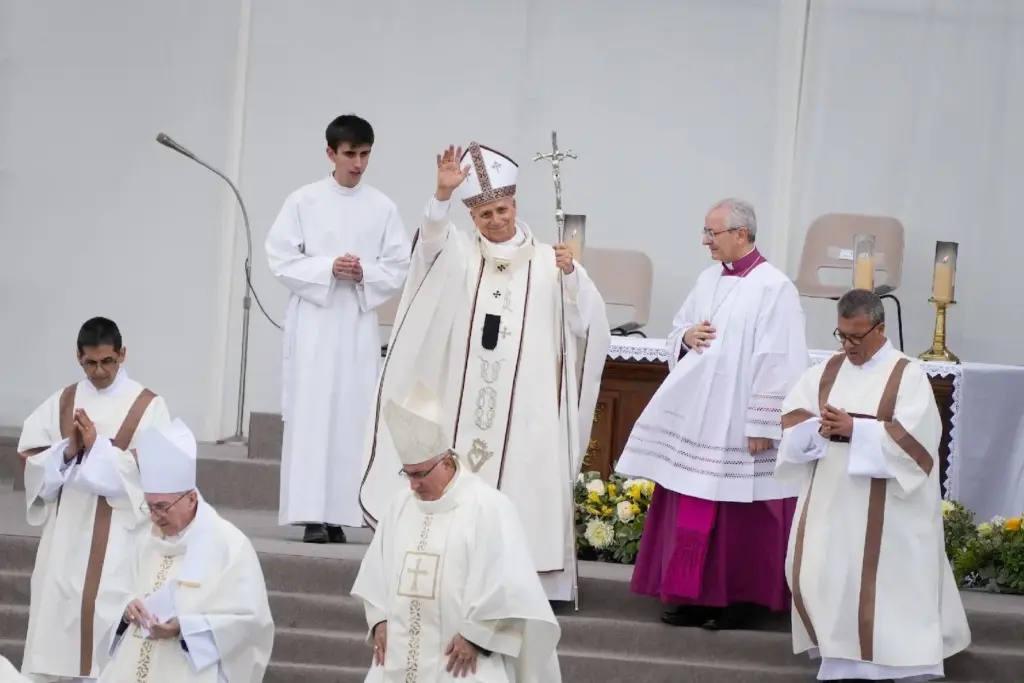
- Pope Leo XIV delivered a pointed critique in Buenos Aires, insisting that political leaders must prioritize human welfare over raw market efficiency.
- Argentine President Javier Milei, a self-described anarcho-capitalist, welcomed the pontiff while defending his aggressive public spending cuts.
- The 12-day South American tour opened in Uruguay with a massive outdoor Mass in Paysandú addressing the realities of a secularized society.
- The papal visit carries heavy psychological weight as Leo navigates the complex, lingering shadow left by his predecessor, Pope Francis.
- Giáo hoàng Leo XIV đã đưa ra những lời chỉ trích sắc sảo tại Buenos Aires, nhấn mạnh rằng các nhà lãnh đạo chính trị phải ưu tiên phúc lợi con người hơn hiệu quả thị trường thuần túy.
- Tổng thống Argentina Javier Milei, người tự nhận là một nhà tư bản vô chính phủ, đã nghênh đón Đức Giáo hoàng trong khi vẫn bảo vệ các chính sách cắt giảm chi tiêu công quyết liệt của mình.
- Chuyến công du Nam Mỹ kéo dài 12 ngày bắt đầu tại Uruguay với một Thánh lễ ngoài trời quy mô lớn ở Paysandú, đề cập đến thực trạng của một xã hội thế tục hóa.
- Chuyến tông du mang sức nặng tâm lý to lớn khi Đức Leo điều hướng cái bóng phức tạp và kéo dài do người tiền nhiệm của ngài, Giáo hoàng Phanxicô, để lại.
- Le pape Léon XIV a prononcé une critique acerbe à Buenos Aires, insistant sur le fait que les dirigeants politiques doivent donner la priorité au bien-être humain plutôt qu'à la simple efficacité du marché.
- Le président argentin Javier Milei, qui se définit lui-même comme un anarcho-capitaliste, a accueilli le pontife tout en défendant ses coupes budgétaires drastiques dans les dépenses publiques.
- La tournée sud-américaine de 12 jours a débuté en Uruguay par une messe en plein air monumentale à Paysandú, abordant les réalités d'une société sécularisée.
- La visite papale revêt un poids psychologique considérable, alors que Léon navigue dans l'ombre complexe et persistante laissée par son prédécesseur, le pape François.
- El papa León XIV lanzó una crítica directa en Buenos Aires, insistiendo en que los líderes políticos deben priorizar el bienestar humano por encima de la pura eficiencia del mercado.
- El presidente argentino Javier Milei, autodenominado anarcocapitalista, dio la bienvenida al pontífice al tiempo que defendía sus agresivos recortes del gasto público.
- La gira sudamericana de 12 días comenzó en Uruguay con una masiva misa al aire libre en Paysandú centrada en las realidades de una sociedad secularizada.
- La visita papal conlleva un fuerte peso psicológico mientras León navega por la compleja y persistente sombra dejada por su predecesor, el papa Francisco.
- 教宗良十四世在布宜诺斯艾利斯发表了尖锐批评,坚持认为政治领导人必须将人类福祉置于纯粹的市场效率之上。
- 自称为“无政府资本主义者”的阿根廷总统哈维尔·米莱在欢迎教宗的同时,为其激进的公共开支削减政策进行了辩护。
- 历时12天的南美之行首站设在乌拉圭,教宗在派桑杜举行了盛大的户外弥撒,直面世俗化社会的现实。
- 在良十四世应对前任教宗方济各留下的复杂而深远的影响之际,此次教宗访问承载着沉重的心理分量。
When Pope Leo XIV touched down in Buenos Aires, embarking on the most politically sensitive leg of his inaugural South American pilgrimage, he did not merely step into a nation grappling with profound economic transformation; he entered a high-stakes ideological arena. Greeting him at the tarmac was President Javier Milei, an unorthodox anarcho-capitalist whose slash-and-burn fiscal reforms have dramatically rewired Argentina’s macroeconomic landscape while battering its working class. The encounter immediately crystallized a global tension defining our contemporary era: the friction between unbridled market libertarianism and the Catholic Church’s enduring insistence on social justice, human solidarity, and the fundamental primacy of the vulnerable.
In a diplomatic address delivered before an assembly of Argentine officials, diplomats, and civil society leaders, Pope Leo articulated a vision of governance sharply at odds with the ruling administration's ethos. Without explicitly naming the polarizing leader, the pontiff laid down a clear moral marker: the economy must serve the person, not the person the economy. This delicate yet uncompromising stance marks the opening salvo of a 12-day pastoral and diplomatic marathon that also spans Uruguay and Peru, forcing the Vatican once again into the center of Latin America's turbulent political currents and testing the diplomatic agility of the Holy See.
Navigating the Long Shadow of the Vatican’s Past
The historical backdrop of this papal journey is as complex as it is emotionally charged. For twelve years under the pontificate of Pope Francis—the first Latin American pope—Argentina’s faithful yearned for a homecoming that never materialized, creating a simmering domestic frustration and political polarization around the papacy itself. Now, with Pope Leo XIV making his first voyage to the Americas, the Argentine public and political establishment are forced to recalibrate. Adding to the theatrical irony of the moment was President Milei’s public posture: a leader who once hurled vitriolic insults at Francis now stood before Leo to praise his predecessor as an 'exceptional figure' and 'undoubtedly the most important Argentine in history.'
Yet, beneath the veneer of diplomatic cordiality, profound fissures remain untouched. Milei’s administration, mirroring elements of populist rhetoric in the United States and across Europe, has weaponized social media, branded ideological opponents as traitors, and dismissed the very concept of social justice as a moral aberration. Conversely, Pope Leo’s opening remarks served as a gentle yet firm rebuke of this combative political style, calling for a restoration of civil discourse, the careful stewardship of words, and an institutional empathy that views political adversaries not as existential enemies, but as fellow citizens sharing a common national destiny.
The Human Cost of Libertarian Shock Therapy
At the heart of the Vatican-Casa Rosada standoff lies a brutal economic ledger. President Milei’s aggressive fiscal discipline has undeniably achieved rare macroeconomic milestones: a historic primary budget surplus and a dramatic deceleration of annual inflation from a staggering 200% down to roughly 32%. To international financial markets and orthodox economists, the experiment is a masterclass in necessary structural reform. Yet, on the ground, the human toll has been severe, disproportionately impacting the retirees, the unemployed, and the hundreds of thousands of formal sector workers whose real wages have steadily eroded.
Pope Leo acknowledged the free-market imperatives of private initiative and wealth creation, but immediately conditioned his endorsement on moral outcomes. Growth, the pontiff insisted, must actively encompass those left behind by the relentless march of market efficiency—retirees struggling to purchase basic pharmaceuticals on meager pensions, families unable to bridge the gap to month's end, and communities stripped of their industrial safety nets. By centering his rhetoric on these marginalized populations, Leo effectively challenged the moral legitimacy of pure libertarianism, framing economic policy not merely as a mathematical equation of fiscal deficit reduction, but as a profound moral test of societal compassion.
Secular Horizons and Regional Evangelization
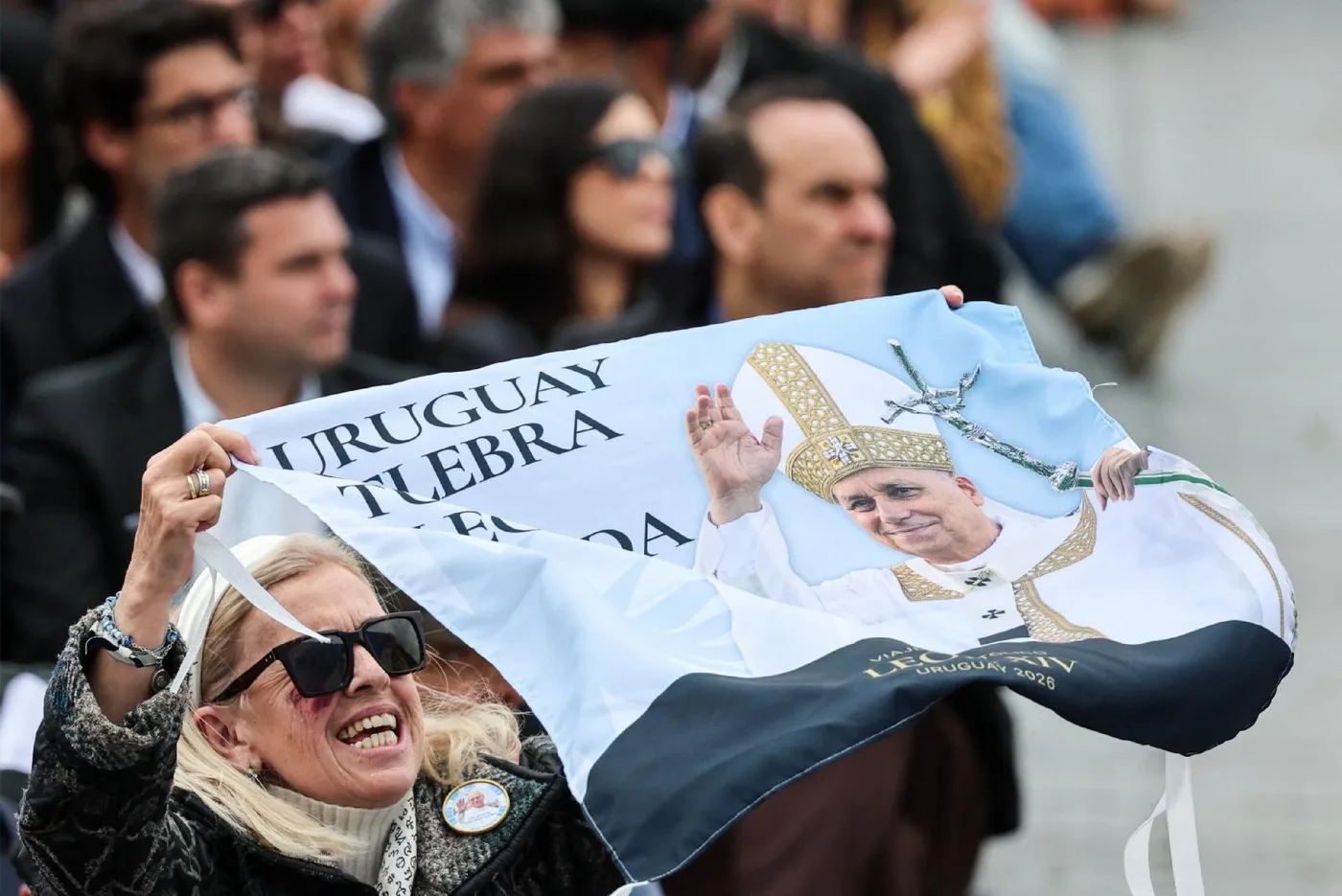
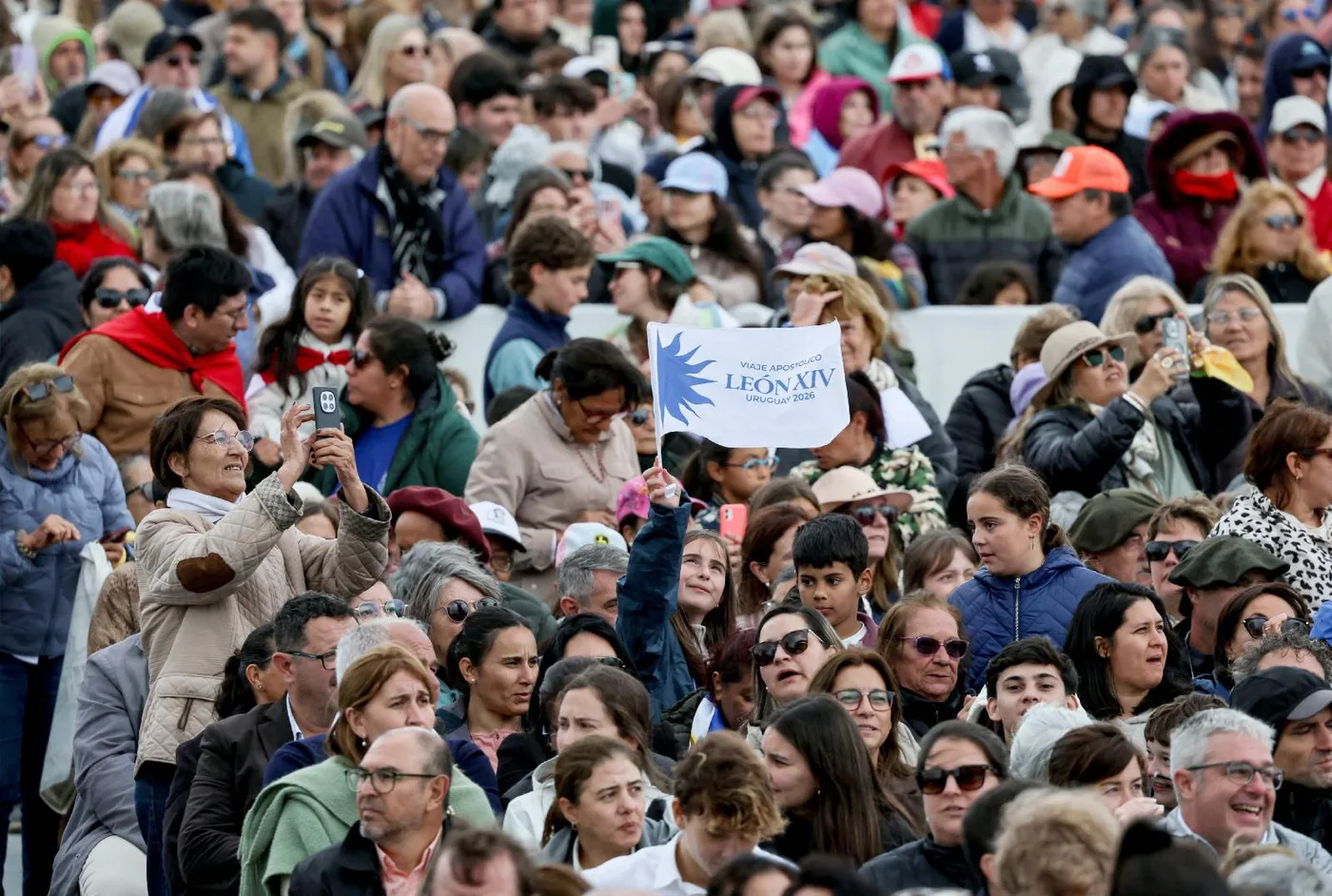
Before arriving in the Argentine capital, Pope Leo’s journey began across the Río de la Plata in Uruguay, a nation offering an entirely different set of pastoral and cultural challenges. In a country where institutional secularism is deeply entrenched and nearly half the population professes no religious affiliation whatsoever, the pontiff celebrated a historic Mass for 40,000 faithful in Paysandú. Drawing vivid local analogies—from the deep-rooted palm groves of the littoral to the ubiquitous tradition of sharing *mate* as an instrument of social encounter—Leo urged a minority Catholic population to abandon insular defensiveness and adopt a posture of 'creative courage.'
In his meetings with Uruguayan leadership, including President Yamandú Orsi, the pope did not shy away from contentious bioethical debates, standing firmly against the legislative currents that have decriminalized abortion and expanded euthanasia. Across both Uruguay and Argentina, the papal message remains remarkably consistent: whether confronting the hyper-secular indifference of Montevideo or the hyper-capitalist fervor of Buenos Aires, the Church must act as a bridge-builder, defending the sanctity of human life from conception to natural death while championing the dignity of the impoverished against the cold calculations of modern technocracy.
What to Watch as the Apostolic Tour Unfolds
As Pope Leo XIV continues his historic itinerary through Argentina and onward to Peru, global observers, financial analysts, and ecclesiastical strategists will be parsing every gesture, homily, and private meeting for signs of shifting political dynamics. In Argentina, the immediate test will be whether Milei’s administration adjusts its abrasive domestic rhetoric or if the ideological chasm between the Casa Rosada and the Episcopal Palace deepens. For the global Catholic Church, this journey serves as a definitive early blueprint of Leo’s pontificate: fearless in its defense of human dignity, sophisticated in its engagement with modern political economies, and uncompromising in its pastoral commitment to the periphery of human society.
Khi Giáo hoàng Leo XIV đặt chân xuống Buenos Aires, bắt đầu chặng dừng chân nhạy cảm nhất về mặt chính trị trong chuyến hành hương đầu tiên tới Nam Mỹ, ngài không chỉ bước vào một quốc gia đang vật lộn với sự chuyển đổi kinh tế sâu sắc; ngài đang bước vào một đấu trường ý thức hệ đầy rẫy rủi ro. Đón tiếp ngài trên đường băng là Tổng thống Javier Milei, một nhà tư bản vô chính phủ phi truyền thống, người với các cải cách tài chính theo lối 'vườn không nhà trống' đã tái định hình mạnh mẽ bức tranh kinh tế vĩ mô của Argentina đồng thời giáng đòn nặng nề vào tầng lớp lao động nước này. Cuộc gặp gỡ ngay lập tức làm nổi bật một sự căng thẳng toàn cầu định hình kỷ nguyên đương đại của chúng ta: sự cọ xát giữa chủ nghĩa tự do thị trường không giới hạn và sự kiên định lâu đời của Giáo hội Công giáo đối với công lý xã hội, tình đoàn kết con người, và ưu tiên cơ bản dành cho những người yếu thế.
Trong bài phát biểu ngoại giao trước đông đảo các quan chức Argentina, các nhà ngoại giao và lãnh đạo xã hội dân sự, Giáo hoàng Leo đã vạch ra một tầm nhìn quản trị hoàn toàn trái ngược với tư duy của chính quyền đương nhiệm. Mà không cần chỉ đích danh nhà lãnh đạo đầy tính phân cực này, Đức Giáo hoàng đã vạch ra một ranh giới đạo đức rõ ràng: nền kinh tế phải phục vụ con người, chứ không phải con người phục vụ nền kinh tế. Lập trường tinh tế nhưng không khoan nhượng này đánh dấu phát súng mở màn cho một cuộc marathon mục vụ và ngoại giao kéo dài 12 ngày, bao gồm cả Uruguay và Peru, một lần nữa đẩy Vatican vào tâm điểm của các dòng chảy chính trị hỗn loạn ở Mỹ Latinh và kiểm tra sự nhạy bén ngoại giao của Tòa Thánh.
Điều Hướng Cái Bóng Dài Từ Quá Khứ Của Vatican
Bối cảnh lịch sử của chuyến tông du này phức tạp và giàu cảm xúc không kém. Trong suốt mười hai năm dưới triều đại của Giáo hoàng Phanxicô — vị giáo hoàng đầu tiên đến từ Mỹ Latinh — các tín hữu Argentina đã khao khát một chuyến hồi hương chưa bao giờ thành hiện thực, tạo ra một sự thất vọng âm ỉ trong nước và sự phân cực chính trị xung quanh chính triều đại giáo hoàng. Giờ đây, khi Giáo hoàng Leo XIV thực hiện chuyến hải hành đầu tiên đến châu Mỹ, công chúng và giới tinh hoa chính trị Argentina buộc phải điều chỉnh lại góc nhìn. Thêm vào sự trớ trêu mang tính kịch nghệ của thời điểm này là lập trường công khai của Tổng thống Milei: một nhân vật từng phun ra những lời lăng mạ cay độc nhắm vào Đức Phanxicô giờ đây lại đứng trước Đức Leo để ca ngợi người tiền nhiệm của ngài là một 'nhân vật xuất chúng' và 'chắc chắn là người Argentina quan trọng nhất trong lịch sử.'
Tuy nhiên, đằng sau lớp vỏ bọc ngoại giao lịch thiệp, những rạn nứt sâu sắc vẫn chưa được hàn gắn. Chính quyền của ông Milei, phản ánh các yếu tố của luận điệu dân túy tại Hoa Kỳ và khắp châu Âu, đã vũ khí hóa mạng xã hội, gắn mác kẻ phản bội cho các đối thủ ý thức hệ, và bác bỏ chính khái niệm công lý xã hội như một sự sai lệch về mặt đạo đức. Ngược lại, những phát biểu mở đầu của Giáo hoàng Leo đóng vai trò như một lời quở trách nhẹ nhàng nhưng kiên quyết đối với phong cách chính trị hiếu chiến này, kêu gọi khôi phục diễn ngôn dân sự, thận trọng trong việc sử dụng ngôn từ, và sự thấu cảm mang tính thể chế nhằm nhìn nhận các đối thủ chính trị không phải là kẻ thù sinh tử, mà là những người đồng hương cùng chia sẻ chung một vận mệnh quốc gia.
Cái Giá Phải Trả Của Liệu Pháp Sốc Tự Do Kinh Tế
Trọng tâm của cuộc đối đầu giữa Vatican và Casa Rosada nằm ở một bản tổng kết kinh tế đầy khắc nghiệt. Kỷ luật tài khóa quyết liệt của Tổng thống Milei không thể phủ nhận đã đạt được những cột mốc kinh tế vĩ mô hiếm hoi: thặng dư ngân sách sơ cấp lịch sử và sự giảm tốc ấn tượng của lạm phát hàng năm từ mức chóng mặt 200% xuống còn khoảng 32%. Đối với các thị trường tài chính quốc tế và các nhà kinh tế chính thống, cuộc thử nghiệm này là một bài học mẫu mực về cải cách cơ cấu cần thiết. Tuy nhiên, trên thực tế, cái giá phải trả của con người là rất nặng nề, tác động không cân xứng đến những người nghỉ hưu, người thất nghiệp, và hàng trăm ngàn công nhân khu vực chính thức, những người có tiền lương thực tế đã xói mòn đều đặn.
Giáo hoàng Leo đã ghi nhận những mệnh lệnh của thị trường tự do về sáng kiến tư nhân và tạo ra của cải, nhưng ngay lập tức đặt ra điều kiện cho sự ủng hộ đó bằng các kết quả đạo đức. Sự tăng trưởng, Giáo hoàng nhấn mạnh, phải tích cực bao trùm những người bị bỏ lại phía sau bởi bước tiến không ngừng nghỉ của hiệu quả thị trường — những người về hưu đang chật vật mua thuốc men cơ bản với mức lương hưu ít ỏi, các gia đình không thể xoay sở cho đến cuối tháng, và các cộng đồng bị tước đoạt mạng lưới an sinh công nghiệp. Bằng cách tập trung luận điệu của mình vào những nhóm dân cư bị gạt ra bên lề này, Đức Leo đã thực sự thách thức tính hợp pháp đạo đức của chủ nghĩa tự do thuần túy, định hình chính sách kinh tế không đơn thuần là một phương trình toán học về việc cắt giảm thâm hụt tài khóa, mà là một bài kiểm tra đạo đức sâu sắc về lòng trắc ẩn của xã hội.
Chân Trời Thế Tục Và Công Cuộc Truyền Giáo Khu Vực
Trước khi cập bến thủ đô Argentina, hành trình của Giáo hoàng Leo bắt đầu bên kia sông Río de la Plata tại Uruguay, một quốc gia mang đến một tập hợp các thách thức về mục vụ và văn hóa hoàn toàn khác biệt. Tại một đất nước mà chủ nghĩa thế tục thể chế đã bám rễ sâu và gần một nửa dân số không nhận diện với bất kỳ tôn giáo nào, Đức Giáo hoàng đã cử hành một Thánh lễ lịch sử cho 40.000 tín hữu tại Paysandú. Rút ra những ẩn dụ sinh động tại địa phương — từ những lùm cọ bám rễ sâu ở vùng ven biển cho đến truyền thống quen thuộc chia sẻ trà *mate* như một công cụ của sự gặp gỡ xã hội — Đức Leo đã thúc giục một cộng đồng Công giáo thiểu số từ bỏ sự khép kín mang tính phòng thủ và áp dụng thái độ 'can đảm sáng tạo.'
Trong các cuộc gặp với giới lãnh đạo Uruguay, bao gồm cả Tổng thống Yamandú Orsi, Đức Giáo hoàng không hề né tránh các cuộc tranh luận về đạo đức sinh học đầy tranh cãi, đứng vững chãi chống lại các dòng chảy lập pháp đã phi hình sự hóa việc phá thai và mở rộng quyền được chết êm ái. Ở cả Uruguay và Argentina, thông điệp của Giáo hoàng vẫn cực kỳ nhất quán: dù đối mặt với sự thờ ơ siêu thế tục của Montevideo hay sự cuồng nhiệt siêu tư bản của Buenos Aires, Giáo hội phải đóng vai trò là người xây cầu nối, bảo vệ tính thiêng liêng của sự sống con người từ lúc thụ thai đến khi qua đời tự nhiên, đồng thời bảo vệ phẩm giá của những người nghèo khổ trước những toan tính lạnh lùng của kỹ trị hiện đại.
Những Điều Cần Lưu Ý Khi Chuyến Tông Du Tiếp Tục
Khi Giáo hoàng Leo XIV tiếp tục hành trình lịch sử của mình qua Argentina và hướng tới Peru, các nhà quan sát toàn cầu, các nhà phân tích tài chính và các nhà chiến lược giáo hội sẽ mổ xẻ từng cử chỉ, bài giảng và cuộc gặp riêng tư để tìm dấu hiệu thay đổi động lực chính trị. Tại Argentina, bài kiểm tra trước mắt sẽ là việc liệu chính quyền của ông Milei có điều chỉnh lại ngôn từ nội bộ gay gắt của mình hay không, hay khoảng cách ý thức hệ giữa Casa Rosada và Cung điện Giám mục sẽ càng khoét sâu thêm. Đối với Giáo hội Công giáo toàn cầu, chuyến hành trình này đóng vai trò là bản thiết kế đầu tiên mang tính định hình cho triều đại giáo hoàng của Đức Leo: không nao núng trong việc bảo vệ phẩm giá con người, tinh tế trong việc tương tác với các nền kinh tế chính trị hiện đại, và không khoan nhượng trong cam kết mục vụ đối với những vùng ngoại vi của xã hội loài người.
Lorsque le pape Léon XIV a atterri à Buenos Aires pour entamer l'étape la plus politiquement délicate de son pèlerinage inaugural en Amérique du Sud, il n'a pas seulement mis les pieds dans une nation aux prises avec une profonde transformation économique ; il est entré dans une arène idéologique à haut risque. Sur le tarmac, le président Javier Milei, anarcho-capitaliste atypique dont les réformes budgétaires brutales ont profondément bouleversé le paysage macroéconomique argentin tout en meurtrissant la classe ouvrière, l'attendait pour l'accueillir. Cette rencontre a immédiatement cristallisé une tension mondiale qui définit notre époque : la friction entre le libertarianisme de marché sans entrave et l'exigence constante de l'Église catholique en matière de justice sociale, de solidarité humaine et de primauté fondamentale des plus vulnérables.
Dans un discours diplomatique prononcé devant un parterre de fonctionnaires argentins, de diplomates et de figures de la société civile, le pape Léon a articulé une vision de la gouvernance en rupture totale avec l'éthos de l'administration en place. Sans nommer explicitement le dirigeant polémique, le pontife a posé un jalon moral sans équivoque : l'économie doit servir la personne, et non la personne l'économie. Cette posture, à la fois délicate et intransigeante, constitue le coup d'envoi d'un marathon pastoral et diplomatique de douze jours qui s'étendra également à l'Uruguay et au Pérou, replaçant une fois de plus le Vatican au cœur des courants politiques tumultueux de l'Amérique latine et mettant à l'épreuve l'agilité diplomatique du Saint-Siège.
Naviguer dans la longue ombre du passé du Vatican
L'arrière-plan historique de ce voyage papal est aussi complexe qu'il est chargé d'émotion. Pendant douze ans sous le pontificat du pape François — le premier pape latino-américain —, les fidèles argentins ont attendu un retour au pays qui ne s'est jamais concrétisé, créant une frustration domestique latente et une polarisation politique autour de la papauté elle-même. Aujourd'hui, alors que le pape Léon XIV effectue son premier voyage dans les Amériques, le public et l'establishment politique argentins sont contraints de se réajuster. L'ironie théâtrale du moment a été renforcée par la posture publique du président Milei : un dirigeant qui, autrefois, lançait des insultes virulentes à l'encontre de François se tenait désormais devant Léon pour louer son prédécesseur, le qualifiant de « figure exceptionnelle » et « sans doute le dirigeant argentin le plus important de l'histoire ».
Pourtant, sous le vernis de la cordialité diplomatique, de profondes fissures demeurent intactes. L'administration Milei, reprenant certains éléments de la rhétorique populiste en vigueur aux États-Unis et en Europe, a instrumentalisé les réseaux sociaux, qualifié ses opposants idéologiques de traîtres et rejeté le concept même de justice sociale, le réduisant à une aberration morale. À l'inverse, les propos liminaires du pape Léon ont agi comme un rappel à l'ordre discret mais ferme face à ce style politique combatif, appelant à la restauration d'un discours civil, au maniement mesuré des mots et à une empathie institutionnelle qui envisage les adversaires politiques non pas comme des ennemis existentiels, mais comme des concitoyens partageant un destin national commun.
Le coût humain de la thérapie de choc libertarienne
Au cœur du bras de fer entre le Vatican et la Casa Rosada se trouve un bilan comptable impitoyable. La discipline budgétaire agressive du président Milei a indéniablement atteint des jalons macroéconomiques rares : un excédent budgétaire primaire historique et une décélération spectaculaire de l'inflation annuelle, passée de 200 % à environ 32 %. Pour les marchés financiers internationaux et les économistes orthodoxes, l'expérience relève de la classe magistrale en matière de réformes structurelles indispensables. Pourtant, sur le terrain, le coût humain s'avère sévère, touchant de manière disproportionnée les retraités, les chômeurs et les centaines de milliers de travailleurs du secteur formel dont les salaires réels n'ont cessé de s'éroder.
Le pape Léon a reconnu les impératifs du libre marché en matière d'initiative privée et de création de richesse, tout en subordonnant immédiatement son approbation à des résultats moraux. La croissance, a insisté le pontife, doit impérativement inclure ceux que laisse sur le bord de la route la marche implacable de l'efficacité du marché : les retraités qui luttent pour s'offrir des médicaments de base avec de maigres pensions, les familles incapables de boucler les fins de mois, et les communautés dépouillées de leurs filets de sécurité industrielle. En plaçant sa rhétorique au cœur de ces populations marginalisées, Léon a remis en question la légitimité morale du libertarianisme pur, qualifiant la politique économique non pas d'une simple équation mathématique de réduction du déficit budgétaire, mais d'un test moral profond de la compassion sociétale.
Horizons sécularisés et évangélisation régionale
Avant de poser ses valises dans la capitale argentine, le périple du pape Léon a débuté de l'autre côté du Río de la Plata, en Uruguay, une nation offrant des défis pastoraux et culturels radicalement différents. Dans un pays où la laïcité institutionnelle est profondément ancrée et où près de la moitié de la population ne se revendique d'aucune appartenance religieuse, le pontife a célébré une messe historique devant 40 000 fidèles à Paysandú. S'appuyant sur des analogies locales saisissantes — des palmeraies enracinent le littoral à l'omniprésente tradition du partage du *mate* comme instrument de rencontre sociale —, Léon a exhorté une population catholique minoritaire à abandonner le réflexe d'un repli défensif pour adopter une posture de « courage créatif ».
Lors de ses entretiens avec les dirigeants uruguayens, et notamment le président Yamandú Orsi, le souverain pontife ne s'est pas dérobé face aux débats bioéthiques controversés, s'élevant avec fermeté contre les évolutions législatives qui ont dépénalisé l'avortement et élargi l'accès à l'euthanasie. Tant en Uruguay qu'en Argentine, le message papal demeure d'une remarquable constance : qu'il s'agisse de faire face à l'indifférence hyper-sécularisée de Montevideo ou à la ferveur hyper-capitaliste de Buenos Aires, l'Église doit agir en bâtisseuse de ponts, défendant la sacralité de la vie humaine de la conception à la mort naturelle tout en consacrant la dignité des plus démunis face aux froides projections de la technocratie moderne.
À quoi s'attendre au fil de la tournée apostolique
Alors que le pape Léon XIV poursuit son itinéraire historique à travers l'Argentine avant de s'envoler pour le Pérou, observateurs internationaux, analystes financiers et stratèges ecclésiastiques décortiqueront le moindre geste, la moindre homélie et chaque entretien privé pour y déceler les frémissements d'une redéfinition des équilibres politiques. En Argentine, le premier test consistera à observer si l'administration Milei infléchit sa rhétorique intérieure abrasive ou si le gouffre idéologique entre la Casa Rosada et le Palais épiscopal continue de se creuser. Pour l'Église catholique universelle, ce voyage constitue la première feuille de route incontestable de ce pontificat : audacieux dans sa défense de la dignité humaine, sophistiqué dans son dialogue avec les économies politiques contemporaines, et intransigeant dans son engagement pastoral auprès des périphéries de la société humaine.
Cuando el papa León XIV aterrizó en Buenos Aires para iniciar la etapa más políticamente delicada de su peregrinaje inaugural por Sudamérica, no se limitó a pisar una nación inmersa en una profunda transformación económica; entró en una arena ideológica de alto riesgo. En la pista de aterrizaje le aguardaba el presidente Javier Milei, un anarcocapitalista heterodoxo cuyas reformas fiscales de tierra quemada han rediseñado radicalmente el panorama macroeconómico de Argentina a la vez que castigan con dureza a su clase trabajadora. El encuentro cristalizó de inmediato una tensión global definitoria de nuestra era: la fricción entre el libertarianismo de mercado desregulado y la insistencia perenne de la Iglesia católica en la justicia social, la solidaridad humana y la primacía fundamental de los vulnerables.
En un discurso diplomático pronunciado ante una asamblea de funcionarios argentinos, diplomáticos y líderes de la sociedad civil, el papa León articuló una visión de la gobernanza diametralmente opuesta al espíritu de la administración gobernante. Sin mencionar explícitamente al polarizador líder, el pontífice trazó una clara línea moral: la economía debe estar al servicio de la persona, y no la persona al servicio de la economía. Esta postura, tan delicada como inflexible, marca el pistoletazo de salida de un maratón pastoral y diplomático de 12 días que también abarca Uruguay y Perú, situando de nuevo al Vaticano en el centro de las turbulentas corrientes políticas de América Latina y poniendo a prueba la agilidad diplomática de la Santa Sede.
Navegando bajo la larga sombra del pasado vaticano
El telón de fondo histórico de este viaje papal es tan complejo como cargado de emoción. Durante los doce años de pontificado del papa Francisco —el primer papa latinoamericano—, los fieles argentinos anhelaron un regreso a la patria que nunca llegó, lo que generó una latente frustración nacional y una profunda polarización política en torno al propio papado. Ahora, con el primer viaje de León XIV al continente americano, la opinión pública y el establishment político argentino se ven obligados a recalibrar. A la ironía teatral del momento contribuyó la postura pública del presidente Milei: un líder que en su día profirió virulentos insultos contra Francisco se plantó ante León para elogiar a su predecesor como una «figura excepcional» y, «sin duda, el argentino más importante de la historia».
Sin embargo, bajo el barniz de la cordialidad diplomática, persisten profundas fisuras. La administración de Milei, emulando ciertos aspectos de la retórica populista de Estados Unidos y de toda Europa, ha instrumentalizado las redes sociales, ha calificado de traidores a los opositores ideológicos y ha desestimado el propio concepto de justicia social por considerarlo una aberración moral. Por el contrario, las palabras inaugurales del papa León sirvieron de suave pero firme reprimenda a este estilo político combativo, al abogar por la restauración del discurso civil, el uso cuidadoso de las palabras y una empatía institucional que conciba a los adversarios políticos no como enemigos existenciales, sino como conciudadanos que comparten un destino nacional común.
El coste humano de la terapia de choque libertaria
En el núcleo del enfrentamiento entre el Vaticano y la Casa Rosada yace un balance económico implacable. La agresiva disciplina fiscal del presidente Milei ha alcanzado indudablemente hitos macroeconómicos insólitos: un superávit fiscal primario histórico y una acusada desaceleración de la inflación anual, que ha pasado de un vertiginoso 200% a rondar el 32%. Para los mercados financieros internacionales y los economistas ortodoxos, el experimento constituye una clase magistral de reforma estructural necesaria. Sin embargo, sobre el terreno, el coste humano ha resultado severo, afectando de manera desproporcionada a los jubilados, los desempleados y los cientos de miles de trabajadores del sector formal cuyos salarios reales se han erosionado de forma constante.
El papa León reconoció los imperativos de libre mercado propios de la iniciativa privada y la creación de riqueza, pero condicionó de inmediato su respaldo a los resultados morales. El crecimiento, insistió el pontífice, debe integrar activamente a quienes han quedado rezagados por la marcha implacable de la eficiencia del mercado: jubilados que luchan por adquirir medicamentos básicos con pensiones exiguas, familias incapaces de llegar a fin de mes y comunidades despojadas de sus redes de seguridad industrial. Al centrar su retórica en estas poblaciones marginadas, León cuestionó de facto la legitimidad moral del libertarianismo puro, enmarcando la política económica no meramente como una ecuación matemática de reducción del déficit fiscal, sino como una profunda prueba moral de la compasión social.
Horizontes seculares y evangelización regional
Antes de recalar en la capital argentina, el periplo del papa León comenzó al otro lado del Río de la Plata, en Uruguay, una nación que plantea un conjunto de desafíos pastorales y culturales completamente diferentes. En un país donde el laicismo institucional está profundamente arraigado y cerca de la mitad de la población no profesa afiliación religiosa alguna, el pontífice ofició una histórica misa ante 40.000 fieles en Paysandú. Mediante vívidas analogías locales —desde los palmares profundamente arraigados en el litoral hasta la ubicua tradición de compartir el mate como instrumento de encuentro social—, León instó a una minoría católica a abandonar el aislamiento defensivo y a adoptar una postura de «coraje creativo».
En sus reuniones con los dirigentes uruguayos, incluido el presidente Yamandú Orsi, el Papa no esquivó los controvertidos debates bioéticos y se opuso con firmeza a las corrientes legislativas que han despenalizado el aborto y ampliado la eutanasia. Tanto en Uruguay como en Argentina, el mensaje papal se mantiene notablemente coherente: ya sea frente a la indiferencia hipersecular de Montevideo o al fervor hipercapitalista de Buenos Aires, la Iglesia debe actuar como constructora de puentes, defendiendo la santidad de la vida humana desde la concepción hasta la muerte natural a la vez que aboga por la dignidad de los desfavorecidos frente a los fríos cálculos de la tecnocracia moderna.
Claves a seguir conforme avanza la gira apostólica
A medida que el papa León XIV prosigue con su histórico itinerario por Argentina y posteriormente hacia Perú, los observadores internacionales, los analistas financieros y los estrategas eclesiásticos analizarán cada gesto, homilía y reunión privada en busca de indicios de un cambio en la dinámica política. En Argentina, la prueba inmediata consistirá en comprobar si la administración de Milei modera su bronca retórica interna o si, por el contrario, se ahonda el abismo ideológico entre la Casa Rosada y el Palacio Episcopal. Para la Iglesia católica global, este viaje representa una primera y definitiva hoja de ruta del pontificado de León: audaz en su defensa de la dignidad humana, sofisticado en su aproximación a las economías políticas modernas y firme en su compromiso pastoral con las periferias de la sociedad.
当教宗良十四世(Pope Leo XIV)降落布宜诺斯艾利斯,开启他首次南美朝圣之旅中最具政治敏感性的一站时,他不仅踏入了一个正经历深刻经济转型的国家,更是步入了一个高风险的意识形态竞技场。在停机坪上迎接他的是总统哈维尔·米莱(Javier Milei),这位不按常理出牌的无政府资本主义者,其大刀阔斧的财政改革彻底重塑了阿根廷的宏观经济格局,却也重创了工薪阶层。这次会晤当即凸显了定义我们这个时代的全球性张力:不受约束的市场自由意志主义与天主教长期坚持的社会正义、人类团结以及弱势群体基本首要性之间的摩擦。
在向阿根廷官员、外交官和公民社会领袖发表的外交演讲中,教宗良阐述了一种与现政府精神截然不同的治理愿景。在没有指名道姓这位两极分化领导人的情况下,教宗划出了一条清晰的道德红线:经济必须为人的发展服务,而不是人去适应经济。这种微妙却毫不妥协的立场,标志着为期12天的牧灵与外交马拉松的开端——此次行程还跨越了乌拉圭和秘鲁,再次将梵蒂冈推向了拉丁美洲动荡政治浪潮的中心,并考验着圣座的外交灵活性。
穿越梵蒂冈过去的漫长阴影
这次教宗之行的历史背景既错综复杂又充满情感张力。在拉丁美洲第一位教宗——教宗方济各(Pope Francis)长达十二年的任期里,阿根廷信徒一直渴望一次始终未能实现的返乡之旅,这在教宗职位本身周围造成了一种悄然酝酿的国内挫败感和政治两极分化。如今,随着教宗良十四世开启其美洲首访,阿根廷公众和政治建制派被迫重新校准心态。更增添这一刻戏剧性讽刺意味的是米莱总统的公开姿态:这位曾对方济各恶语相加的领导人,如今站在良的面前,赞誉其前任是“一位卓越的人物”且“无疑是阿根廷历史上最重要的人物”。
然而,在外交亲善的表象之下,深刻的裂痕依然触目惊心。米莱政府呼应了美国和欧洲民粹主义言论的某些元素,将社交媒体武器化,将意识形态对手贬为叛徒,并对社会正义这一概念本身嗤之以鼻,将其视为道德变态。与此相反,教宗良的开场白对这种好斗的政治风格进行了温和而坚定的斥责,呼吁恢复公民对话、审慎管理言辞,并建立一种制度同理心——将政治对手不视为生死仇敌,而是视为共享共同国家命运的同胞。
自由意志主义休克疗法的人性代价
梵蒂冈与玫瑰宫(Casa Rosada)对峙的核心,是一本残酷的经济账本。米莱总统激进的财政纪律无可否认地取得了罕见的宏观经济里程碑:历史性的初级财政盈余,以及通货膨胀率从惊人的200%大幅降至约32%。对于国际金融市场和正统经济学家而言,这一实验堪称必要结构性改革的教科书级案例。然而在基层,付出的代价却是惨重的,退休人员、失业者以及数十万正规行业工人的实际工资持续侵蚀,受到的冲击尤为不成比例。
教宗良承认私人倡议和财富创造的自由市场绝对命令,但他随即为这种肯定附加了道德前提。教宗坚持认为,经济增长必须积极包容那些被无情市场效率所抛弃的人——那些靠微薄养老金艰难购买基本药品的退休人员、无法维持生计到月底的家庭,以及被剥夺了工业安全网的社区。通过将言辞聚焦于这些边缘化群体,良有效地挑战了纯粹自由意志主义的道德合法性,将经济政策不再仅仅视为削减财政赤字的数学方程,而是视为对社会同情心的一次深刻道德考验。
世俗化视野与区域福传
在抵达阿根廷首都之前,教宗良的旅程始于拉普拉塔河对岸的乌拉圭,这是一个带来截然不同牧灵与文化挑战的国家。在这个制度化世俗主义根深蒂固、近半数人口自称没有任何宗教归属的国家,教宗在派桑杜(Paysandú)为4万名信徒主持了一场历史性的弥撒。从滨海地区根深蒂固的棕榈树林,到将分享马黛茶(mate)作为社会交往工具的无处不在的传统,教宗借用了生动的本土类比,敦促少数派天主教群体放弃孤立的防卫姿态,采取“创造性的勇气”。
在与乌拉圭领导人(包括总统亚马杜·奥尔西)的会晤中,教宗并未回避颇具争议的生物伦理学辩论,坚定反对将堕胎非罪化和扩大安乐死合法化的立法潮流。在乌拉圭和阿根廷,教宗的信息保持了惊人的一致:无论是面对蒙得维的亚的超级世俗冷漠,还是布宜诺斯艾利斯的超级资本主义狂热,教会都必须充当桥梁建设者,捍卫从受孕到自然死亡的人类生命神圣性,同时在现代技术官僚冰冷的计算面前捍卫贫困人口的尊严。
宗座之行展开时的观察焦点
随着教宗良十四世继续他在阿根廷的历史性行程并前往秘鲁,全球观察家、金融分析师和教会战略家将仔细剖析他的每一个手势、讲道和私人会晤,以寻找政治动态变化的迹象。在阿根廷,眼前的考验将是米莱政府是否会调整其尖锐的国内言论,抑或是玫瑰宫与主教府之间的意识形态鸿沟是否会进一步加深。对于全球天主教教会而言,这次访问堪称良教宗任期的早期明确蓝图:在捍卫人类尊严方面无所畏惧,在与现代政治经济学互动时成熟老练,在对人类社会边缘群体的牧灵承诺上坚贞不屈。
Editorial Standards & Multi-Language Synthesis: This dispatch was synthesized and fact-checked by the ParisDaily Editorial Desk across 5 global editions (EN, FR, VI, ES, ZH), cross-referencing primary international wire reports and real-time search intelligence.