屏幕碎裂的周末:透视英格兰足球最新的VAR危机
A tumultuous weekend of Premier League officiating has upended the statistical narrative surrounding video assistant referees, exposing deep philosophical fractures in how technology polices the beautiful game.
A tumultuous weekend of Premier League officiating has upended the statistical narrative surrounding video assistant referees, exposing deep philosophical fractures in how technology polices the beautiful game.
Un week-end tumultueux en Premier League a réduit à néant les statistiques rassurantes autour de l’assistance vidéo, mettant au jour de profondes fractures philosophiques quant à la manière dont la technologie régule le beau jeu.
Un fin de semana tumultuoso en el arbitraje de la Premier League ha dado un vuelco a la narrativa estadística en torno al árbitro asistente de vídeo (VAR), dejando al descubierto profundas fracturas filosóficas sobre cómo la tecnología vigila el deporte rey.
英超联赛一个动荡的裁判周末,颠覆了关于视频助理裁判(VAR)的统计叙事,并暴露出科技在执法这项美丽运动时在深层哲学理念上的巨大分裂。
- The independent Key Match Incidents (KMI) Panel had recorded just two VAR errors across the first eight rounds of the season before a chaotic weekend disrupted the baseline.
- High-profile flashpoints involving Manchester United, Arsenal, and Everton laid bare the systemic ambiguities plaguing protocol application.
- Conflicting interpretations regarding offside sequencing, foul thresholds, and goalkeeper protection continue to provoke fierce debate among managers and pundits.
- The psychological toll of protracted VAR reviews threatens to erode the spontaneous emotional architecture that defines European football.
- Le comité indépendant des incidents clés de match (KMI) n'avait enregistré que deux erreurs de la VAR lors des huit premières journées avant qu'un week-end chaotique ne vienne bousculer ces statistiques.
- Des faits de jeu marquants impliquant Manchester United, Arsenal et Everton ont mis à nu les ambiguïtés systémiques qui pèsent sur l'application du protocole.
- Les interprétations divergentes concernant la chronologie des hors-jeu, le seuil de gravité des fautes et la protection des gardiens continuent de susciter de vifs débats entre entraîneurs et consultants.
- Le coût psychologique des longues révisions vidéo menace d'éroder l'architecture émotionnelle spontanée qui caractérise le football européen.
- El panel independiente de Incidentes Clave de Partido (KMI) apenas había registrado dos errores del VAR en las primeras ocho jornadas de la temporada antes de que un fin de semana caótico rompiera la tendencia.
- Los sonados incidentes protagonizados por el Manchester United, el Arsenal y el Everton dejaron al desnudo las ambigüedades sistémicas que lastran la aplicación del protocolo.
- Las interpretaciones contradictorias respecto a las secuencias de fuera de juego, el umbral de las faltas y la protección a los guardametas continúan provocando un intenso debate entre técnicos y analistas.
- El coste psicológico de unas revisiones del VAR prolongadas amenaza con erosionar la arquitectura emocional espontánea que define el fútbol europeo.
- 在经历一个混乱的周末打破基准数据之前,独立关键比赛事件(KMI)小组记录显示,本赛季前八轮比赛仅出现了两次VAR判罚失误。
- 涉及曼联、阿森纳和埃弗顿的高调冲突事件,彻底暴露了协议应用中存在的系统性模棱两可。
- 关于越位判定顺序、犯规判罚门槛以及门将保护等相互冲突的解释,继续在主教练和评论员之间引发激烈的辩论。
- 冗长VAR审查所带来的心理代价,正威胁着侵蚀构成欧洲足球特色的那种自发的、情绪化的建筑基底。
For the better part of the autumn campaign, proponents of the Video Assistant Referee system in English football quietly pointed to a quiet revolution of efficiency. Statistics compiled by the independent Key Match Incidents (KMI) Panel indicated that after eight grueling rounds of Premier League fixtures, only two definitive VAR errors had been logged across the entire competition. It was a vastly improved ledger compared to the same epoch twelve months prior, when six glaring mistakes had forced apologies from Professional Game Match Officials Limited (PGMOL) and sent shockwaves through boardrooms. The technology, it seemed, was finally receding into the background, allowing the athletic spectacle to claim centre stage.
Then came a weekend that tore the ledger to shreds. Across nearly every top-flight fixture, a cascade of contentious reviews, missed interventions, and forensic slow-motion replays turned stadiums across the country into cauldrons of bureaucratic anxiety. From late-game equalizers surviving microscopic checks for contact to penalties denied by chronological sequencing oddities, the system's frailties were laid bare in high definition. As supporters and pundits alike reeled from the sheer volume of interventions, the fundamental question resurfaced with renewed urgency: Is the pursuit of absolute precision surgically removing the soul of football, or are we simply witnessing growing pains in the evolution of modern officiating?
The Anatomy of Chaos Across the Top Flight
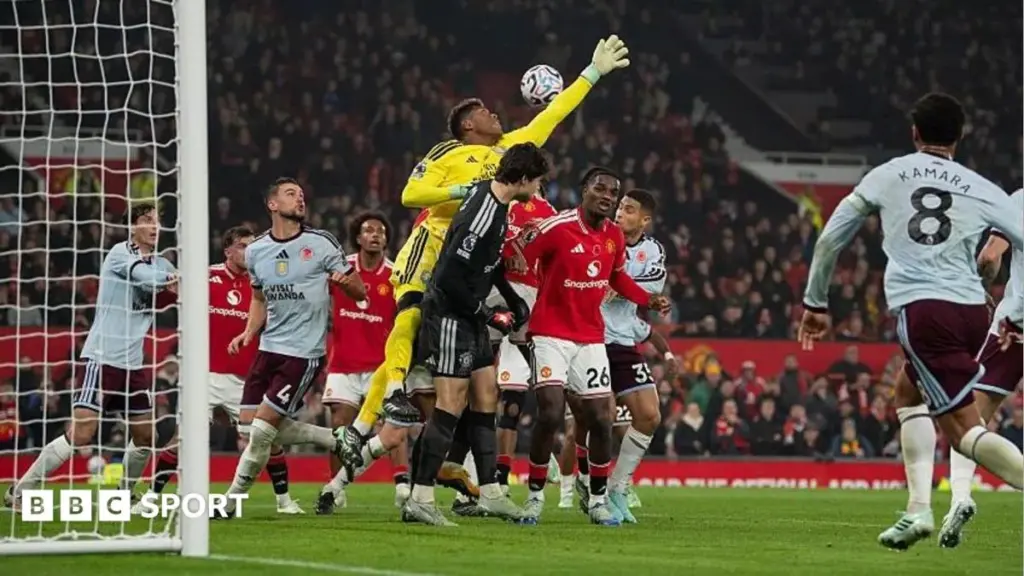
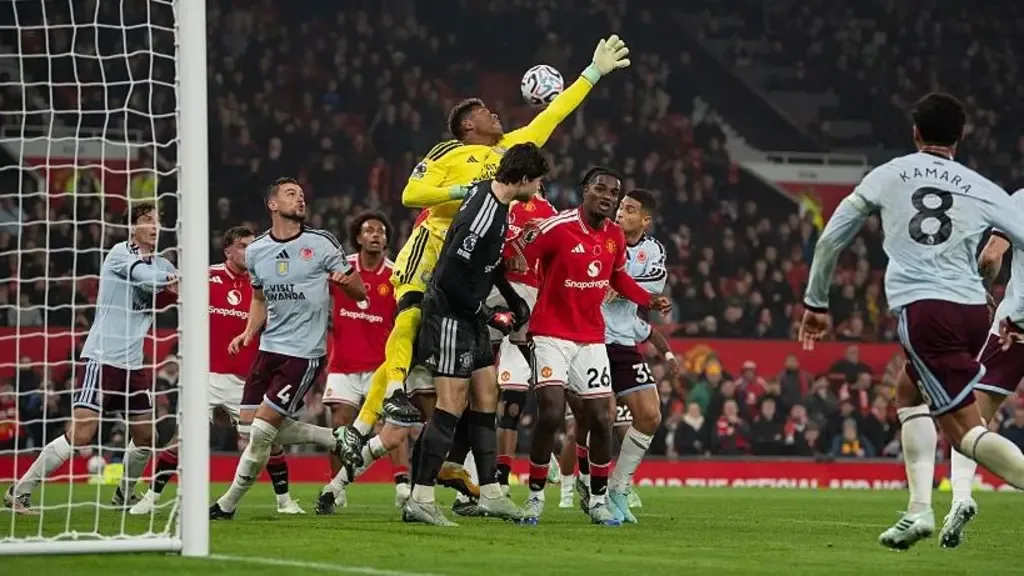
The weekend's turbulence was characterized not by a single catastrophic failure, but by a relentless accumulation of borderline judgments that exposed the elasticity of the rulebook. In Manchester United’s dramatic late draw against Aston Villa, a frantic final-minute equalizer survived a rigorous VAR examination for potential obstruction on the visiting goalkeeper. While historical precedents—such as Arsenal’s controversial goal at Old Trafford the previous season—loomed large in the collective memory, the threshold for intervention ultimately protected the goal. Yet, the juxtaposition between minimal physical contact and the subjective nature of blocking a goalkeeper's line of vision left Villa supporters nursing a profound sense of injustice.
Equally vexing was the officiating labyrinth witnessed when Arsenal confronted Hull, where Kai Havertz was unceremoniously hauled down inside the penalty area by defender Nobel Mendy. Although the VAR correctly identified the foul and dispatched the referee to the pitchside monitor, the ultimate sanction was inexplicably swallowed by a subsequent offside technicality. Under strict procedural applications, the foul—occurring prior to the offside sequence—should have yielded a spot-kick before any downstream infraction was penalized. Such intricate legalistic gymnastics do little to appease match-going fans who demand intuitive justice rather than a jurisprudence degree to understand why the ball is placed on the penalty spot.
The Chronology of Contention and Tactical Fallout
Further compounding the weekend's misery was a sprawling controversy during Everton’s encounter with Coventry, which featured a litany of disputed penalty claims and physical duels. Among them, a brazen hair-pull inside the penalty area on Coventry’s Caleb Yirenkyi by James Tarkowski went unpunished by both on-field officials and Stockley Park. Despite a pre-season directive relaxing certain interpretations of holding, the explicit yanking of an opponent's hair transcends standard jostling at set-pieces, highlighting a persistent disconnect between written guidelines and live execution.
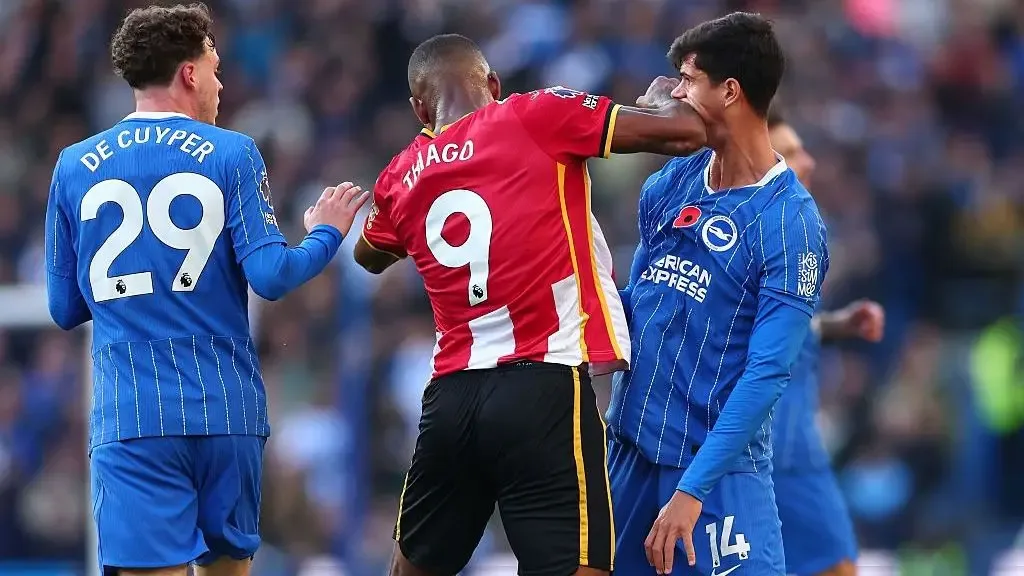
In parallel, physical challenges like Jayden Bogle’s crunching tackle on Mathys Tel during the Leeds-Tottenham fixture provoked intense ideological warfare between former professionals and modern analysts. The debate hinged on whether the point of contact stemmed from a challenging limb or an awkward supporting foot—a nuance that separates a yellow-card warning from a straight red dismissal. When officiating standards pivot on the subjective opinions of rotating former players sitting on the KMI panel, the promise of objective uniformity evaporates, leaving managers to gamble not on tactical acumen, but on which interpretation will prevail in Monday morning retro-reviews.
Institutional Pressures and the Search for Equilibrium
The psychological toll of this officiating volatility extends far beyond the ninety minutes on the pitch, casting long shadows over managerial job security and championship ambitions. When millions of pounds in broadcasting revenue, European qualification, and relegation battles hinge on fractional interpretations of offside lines and arm placements, the tolerance for human error virtually vanishes. Yet, by introducing clinical technology to eliminate mistakes, the game has inadvertently created a new taxonomy of error: the controversy of the over-intervention.
As PGMOL and its leadership brace for the imminent findings of the KMI panel, the pressure to recalibrate the system has reached a boiling point. The solution does not necessarily lie in abandoning video assistance—a regression that modern commerce and global broadcasting would never countenance—but in streamlining the threshold of engagement. Until referees are empowered to trust their live instincts on high-intensity challenges, and until the protocols governing sequencing are harmonized with common sense, weekends of systemic chaos will remain an uncomfortably frequent feature of the English football calendar.
For the better part of the autumn campaign, proponents of the Video Assistant Referee system in English football quietly pointed to a quiet revolution of efficiency. Statistics compiled by the independent Key Match Incidents (KMI) Panel indicated that after eight grueling rounds of Premier League fixtures, only two definitive VAR errors had been logged across the entire competition. It was a vastly improved ledger compared to the same epoch twelve months prior, when six glaring mistakes had forced apologies from Professional Game Match Officials Limited (PGMOL) and sent shockwaves through boardrooms. The technology, it seemed, was finally receding into the background, allowing the athletic spectacle to claim centre stage.
Then came a weekend that tore the ledger to shreds. Across nearly every top-flight fixture, a cascade of contentious reviews, missed interventions, and forensic slow-motion replays turned stadiums across the country into cauldrons of bureaucratic anxiety. From late-game equalizers surviving microscopic checks for contact to penalties denied by chronological sequencing oddities, the system's frailties were laid bare in high definition. As supporters and pundits alike reeled from the sheer volume of interventions, the fundamental question resurfaced with renewed urgency: Is the pursuit of absolute precision surgically removing the soul of football, or are we simply witnessing growing pains in the evolution of modern officiating?
The Anatomy of Chaos Across the Top Flight
The weekend's turbulence was characterized not by a single catastrophic failure, but by a relentless accumulation of borderline judgments that exposed the elasticity of the rulebook. In Manchester United’s dramatic late draw against Aston Villa, a frantic final-minute equalizer survived a rigorous VAR examination for potential obstruction on the visiting goalkeeper. While historical precedents—such as Arsenal’s controversial goal at Old Trafford the previous season—loomed large in the collective memory, the threshold for intervention ultimately protected the goal. Yet, the juxtaposition between minimal physical contact and the subjective nature of blocking a goalkeeper's line of vision left Villa supporters nursing a profound sense of injustice.
Equally vexing was the officiating labyrinth witnessed when Arsenal confronted Hull, where Kai Havertz was unceremoniously hauled down inside the penalty area by defender Nobel Mendy. Although the VAR correctly identified the foul and dispatched the referee to the pitchside monitor, the ultimate sanction was inexplicably swallowed by a subsequent offside technicality. Under strict procedural applications, the foul—occurring prior to the offside sequence—should have yielded a spot-kick before any downstream infraction was penalized. Such intricate legalistic gymnastics do little to appease match-going fans who demand intuitive justice rather than a jurisprudence degree to understand why the ball is placed on the penalty spot.
The Chronology of Contention and Tactical Fallout
Further compounding the weekend's misery was a sprawling controversy during Everton’s encounter with Coventry, which featured a litany of disputed penalty claims and physical duels. Among them, a brazen hair-pull inside the penalty area on Coventry’s Caleb Yirenkyi by James Tarkowski went unpunished by both on-field officials and Stockley Park. Despite a pre-season directive relaxing certain interpretations of holding, the explicit yanking of an opponent's hair transcends standard jostling at set-pieces, highlighting a persistent disconnect between written guidelines and live execution.
In parallel, physical challenges like Jayden Bogle’s crunching tackle on Mathys Tel during the Leeds-Tottenham fixture provoked intense ideological warfare between former professionals and modern analysts. The debate hinged on whether the point of contact stemmed from a challenging limb or an awkward supporting foot—a nuance that separates a yellow-card warning from a straight red dismissal. When officiating standards pivot on the subjective opinions of rotating former players sitting on the KMI panel, the promise of objective uniformity evaporates, leaving managers to gamble not on tactical acumen, but on which interpretation will prevail in Monday morning retro-reviews.
Institutional Pressures and the Search for Equilibrium
The psychological toll of this officiating volatility extends far beyond the ninety minutes on the pitch, casting long shadows over managerial job security and championship ambitions. When millions of pounds in broadcasting revenue, European qualification, and relegation battles hinge on fractional interpretations of offside lines and arm placements, the tolerance for human error virtually vanishes. Yet, by introducing clinical technology to eliminate mistakes, the game has inadvertently created a new taxonomy of error: the controversy of the over-intervention.
As PGMOL and its leadership brace for the imminent findings of the KMI panel, the pressure to recalibrate the system has reached a boiling point. The solution does not necessarily lie in abandoning video assistance—a regression that modern commerce and global broadcasting would never countenance—but in streamlining the threshold of engagement. Until referees are empowered to trust their live instincts on high-intensity challenges, and until the protocols governing sequencing are harmonized with common sense, weekends of systemic chaos will remain an uncomfortably frequent feature of the English football calendar.
Pendant la majeure partie de l'automne, les partisans de la VAR (Video Assistant Referee) dans le football anglais ont discrètement salué une révolution silencieuse placée sous le signe de l'efficacité. Les statistiques compilées par le comité indépendant des incidents clés de match (KMI) indiquaient qu'après huit journées éreintantes de Premier League, seules deux erreurs incontisutables de la VAR avaient été recensées dans l'ensemble de la compétition. C'était un bilan nettement amélioré par rapport à la même période douze mois plus tôt, lorsque six erreurs grossières avaient contraint la Professional Game Match Officials Limited (PGMOL) à présenter des excuses publiques, secouant les états-majors des clubs. La technologie semblait enfin s'effacer à l'arrière-plan, laissant le spectacle athlétique occuper le premier plan.
Puis est arrivé un week-end qui a réduit ce bilan en miettes. Sur presque tous les terrains de l'élite, une cascade de révisions litigieuses, d'interventions manquées et de ralentis médico-légaux a transformé les stades du pays en bouilloires d'anxiété bureaucratique. Qu'il s'agisse d'égalisations en fin de match validées après des contrôles microscopiques de contacts ou de penalties refusés en raison de subtilités chronologiques, les failles du système ont éclaté au grand jour, en haute définition. Alors que supporters et consultants accusaient le coup face au volume ahurissant des interventions, la question fondamentale a ressurgi avec une urgence renouvelée : la quête d'une précision absolue est-elle en train de supprimer chirurgicalement l'âme du football, ou assistons-nous simplement aux affres de l'évolution de l'arbitrage moderne ?
L'anatomie du chaos dans l'élite
La turbulence du week-end ne s'est pas caractérisée par un échec catastrophique unique, mais par une accumulation implacable de jugements à la frontière du règlement, mettant en lumière l'élasticité du livre des règles. Lors du match nul arraché par Manchester United contre Aston Villa dans les derniers instants, un but égalisateur inscrit in extremis a survécu à un examen minutieux de la VAR pour une potentielle obstruction sur le gardien adverse. Alors que des précédents historiques — comme le but controversé d'Arsenal à Old Trafford la saison précédente — planaient dans les mémoires collectives, le seuil d'intervention a finalement protégé la validité du but. Pourtant, la juxtaposition entre un contact physique minimal et la nature subjective de l'obstruction de la ligne de vision du portier a laissé les supporters de Villa avec un profond sentiment d'injustice.
Le labyrinthe arbitral observé lors du duel entre Arsenal et Hull s'est révélé tout aussi vexatoire, Kai Havertz y ayant été impitoyablement foudroyé dans la surface de réparation par le défenseur Nobel Mendy. Bien que la VAR ait correctement identifié la faute et invité l'arbitre à consulter l'écran en bord de terrain, la sanction suprême a été inexplicablement engloutie par une subtilité technique de hors-jeu survenue en amont. Selon l'application stricte du protocole, la faute — commise avant la séquence de hors-jeu — aurait dû donner lieu à un penalty avant que toute infraction ultérieure ne soit sanctionnée. De telles acrobaties juridiques et pointilleuses ne parviennent guère à apaiser les supporters se déplaçant au stade, qui réclament une justice intuitive plutôt qu'un diplôme en droit pour comprendre pourquoi le ballon est soudainement placé sur le point de penalty.
La chronologie de la discorde et les retombées tactiques
La polémique tentaculaire survenue lors de la rencontre entre Everton et Coventry, émaillée d'une kyriade de réclamations de penalty et de duels physiques, est venue alourdir le bilan de ce week-end noir. Parmi eux, une violente saisie de cheveux sur Caleb Yirenkyi (Coventry) par James Tarkowski dans la surface est passée totalement inaperçue, tant pour les arbitres de terrain que pour la cellule de Stockley Park. En dépit d'une directive d'avant-saison assouplissant certaines interprétations des charges et accrochages, le fait de tirer délibérément les cheveux d'un adversaire transcende la simple bousculade sur coup de pied arrêté, mettant en lumière un décalage persistant entre les consignes écrites et leur application en direct.
Parallèlement, des duels physiques tels que le tacle appuyé de Jayden Bogle sur Mathys Tel lors du match Leeds-Tottenham ont déclenché une guerre idéologique intense entre anciens professionnels et analystes modernes. Le débat tournait autour de la question de savoir si le point d'impact provenait d'un engagement du membre ou d'une malheureuse jambe d'appui — une nuance subtile qui sépare un simple avertissement d'un carton rouge direct. Lorsque les standards d'arbitrage reposent sur les opinions subjectives d'anciens joueurs siégeant à tour de rôle au sein du panel KMI, la promesse d'une uniformité objective s'évapore. Les entraîneurs ne parient plus sur leur clairvoyance tactique, mais sur l'interprétation qui finira par l'emporter lors des rétro-analyses du lundi matin.
Pressions institutionnelles et quête d'équilibre
Le coût psychologique de cette instabilité arbitrale s'étend bien au-delà des quatre-vingt-dix minutes sur le terrain, projetant de lourdes ombres sur la sécurité de l'emploi des entraîneurs et les ambitions de titre. Lorsque des millions de livres sterling de droits de télévision, de qualifications européennes et de luttes pour le maintien dépendent de l'interprétation au millimètre de lignes de hors-jeu ou de positionnements de bras, la tolérance à l'erreur humaine s'annule presque. Pourtant, en introduisant une technologie clinique pour éliminer les bévues, le football a par inadvertance engendré une nouvelle taxinomie de l'erreur : la controverse de la sur-intervention.
Alors que la PGMOL et ses instances dirigeantes se préparent aux conclusions imminentes du comité KMI, la pression pour recalibrer le système a atteint un point de non-retour. La solution ne réside pas nécessairement dans l'abandon de l'assistance vidéo — un retour en arrière que le commerce moderne et la diffusion mondiale ne toléreraient jamais —, mais dans la rationalisation du seuil d'intervention. Tant que les arbitres ne seront pas encouragés à faire confiance à leur instinct en direct face à des duels intenses, et tant que les protocoles régissant la chronologie des actions ne seront pas harmonisés avec le bon sens, les week-ends de chaos systémique resteront une composante désagréablement récurrente du calendrier du football anglais.
Durante la mayor parte de la campaña otoñal, los defensores del sistema de Árbitros Asistentes de Vídeo (VAR) en el fútbol inglés señalaron discretamente una silenciosa revolución de eficiencia. Las estadísticas recopiladas por el Panel independiente de Incidentes Clave de Partido (KMI) indicaban que, tras ocho extenuantes jornadas de la Premier League, solo se habían registrado dos errores definitivos del VAR en toda la competición. Era un balance sumamente mejorado en comparación con el mismo periodo de doce meses atrás, cuando seis errores flagrantes habían obligado a pedir disculpas a la organización Professional Game Match Officials Limited (PGMOL) y sacudido los despachos de los clubes. La tecnología, al parecer, estaba por fin pasando a un segundo plano para permitir que el espectáculo atlético acaparara todo el protagonismo.
Entonces llegó un fin de semana que hizo añicos ese balance. En casi todos los encuentros de la máxima categoría, una cascada de revisiones polémicas, intervenciones omitidas y repeticiones forenses a cámara lenta convirtió los estadios de todo el país en calderos de ansiedad burocrática. Desde goles del empate en los últimos minutos que sobrevivieron a microrevisiones por contacto hasta penaltis denegados por extrañas cuestiones de orden cronológico, las debilidades del sistema quedaron expuestas en alta definición. Mientras aficionados y analistas procesaban el tremendo volumen de intervenciones, la pregunta fundamental resurgió con renovada urgencia: ¿la búsqueda de la precisión absoluta está extirpando quirúrgicamente el alma del fútbol o estamos asistiendo simplemente a los dolores de crecimiento en la evolución del arbitraje moderno?
La anatomía del caos en la máxima categoría
La turbulencia del fin de semana no vino marcada por un único fallo catastrófico, sino por una acumulación implacable de criterios al límite que evidenciaron la elasticidad del reglamento. En el dramático empate postrero del Manchester United contra el Aston Villa, un frenético tanto salvador en el último minuto superó un riguroso examen del VAR por una posible obstrucción al guardameta visitante. Aunque los precedentes históricos —como el polémico gol del Arsenal en Old Trafford la temporada anterior— pesaban en la memoria colectiva, el umbral de intervención acabó por convalidar el tanto. Aun así, la yuxtaposición entre el contacto físico mínimo y la naturaleza subjetiva de obstaculizar la línea de visión del portero dejó a la afición del Villa con una profunda sensación de injusticia.
Igualmente desconcertante fue el laberinto arbitral vivido en el enfrentamiento entre el Arsenal y el Hull, donde Kai Havertz fue derribado sin miramientos dentro del área por el defensa Nobel Mendy. Aunque el VAR identificó correctamente la falta y envió al colegiado al monitor a pie de campo, la sanción definitiva quedó inexplicablemente diluida por una posterior jugada técnica de fuera de juego. Bajo una aplicación estrictamente reglamentaria, la falta —sucedida con anterioridad a la acción antirreglamentaria— debería haber supuesto un lanzamiento desde los once metros antes de castigar cualquier infracción posterior. Semejantes florituras legales hacen muy poco por apaciguar a los hinchas que acuden a los estadios y exigen una justicia intuitiva en lugar de un título en jurisprudencia para comprender por qué el balón se sitúa en el punto de penalti.
La cronología de la polémica y el impacto táctico
Para agravar la miseria del fin de semana, se sumó una abultada controversia en el duelo entre el Everton y el Coventry, que albergó un sinfín de reclamaciones de penalti disputadas y duelos físicos. Entre ellos, un descarado tirón de pelo dentro del área a Caleb Yirenkyi (del Coventry) por parte de James Tarkowski no fue sancionado ni por los colegiados sobre el césped ni por la sala VOR de Stockley Park. A pesar de una directiva de pretemporada que relajaba ciertas interpretaciones de los agarrones, el estirón flagrante del cabello de un rival va más allá de la habitual pugna en el área durante el balón parado, lo que pone de relieve una desconexión persistente entre las directrices escritas y su aplicación en directo.
En paralelo, lances físicos como la contundente entrada de Jayden Bogle sobre Mathys Tel en el partido entre el Leeds y el Tottenham provocaron una intensa guerra ideológica entre exfutbolistas y analistas modernos. El debate giraba en torno a si el punto de contacto procedía de una pierna en disputa o de un pie de apoyo desacertado, matiz que separa una amonestación con tarjeta amarilla de la expulsión directa con roja. Cuando los criterios arbitrales pivotan sobre las opiniones subjetivas de un panel rotatorio de exjugadores que integran el comité KMI, la promesa de una uniformidad objetiva se desvanece, dejando a los entrenadores apostando no por su perspicacia táctica, sino por qué interpretación prevalecerá en los análisis retrospectivos del lunes por la mañana.
Presiones institucionales y la búsqueda del equilibrio
El coste psicológico de esta volatilidad arbitral se extiende mucho más allá de los noventa minutos sobre el césped, proyectando largas sombras sobre la estabilidad laboral de los entrenadores y las aspiraciones a los títulos. Cuando millones de libras en ingresos por retransmisión, plazas europeas y batallas por la permanencia dependen de interpretaciones milimétricas de las líneas de fuera de juego y la posición de los brazos, la tolerancia al error humano prácticamente desaparece. Sin embargo, al introducir una tecnología clínica para erradicar los fallos, el juego ha creado involuntariamente una nueva taxonomía del error: la polémica de la sobreintervención.
Mientras la PGMOL y su cúpula directiva se preparan para las inminentes conclusiones del panel KMI, la presión para recalibrar el sistema ha llegado a un punto de ebullición. La solución no pasa necesariamente por abandonar la asistencia por vídeo —un paso atrás que el negocio moderno y la televisión global jamás tolerarían—, sino por racionalizar el umbral de intervención. Hasta que no se otorgue a los árbitros la confianza para fiarse de su instinto en directo ante jugadas de alta intensidad, y hasta que los protocolos que rigen las secuencias no se armonicen con el sentido común, los fines de semana de caos sistémico seguirán siendo una característica incómodamente frecuente en el calendario del fútbol inglés.
在秋季赛程的大部分时间里,英格兰足球中视频助理裁判(VAR)系统的支持者们曾悄悄指出一场效率的无声革命。由独立关键比赛事件(KMI)小组汇编的数据表明,在经历了八轮艰苦的英超联赛后,整个赛事中仅记录了两次确凿的VAR判罚失误。与十二个月前的同期相比,这是一个极大的改善。当时,六次显而易见的错误曾迫使职业比赛裁判有限公司(PGMOL)公开道歉,并在俱乐部董事会中引发了震动。科技似乎终于退居幕后,让运动本身的视觉奇观重新占据了舞台中心。
然而,随之而来的那个周末将这份成绩单撕成了碎片。几乎在每一场顶级联赛中,一连串充满争议的审查、被漏掉的介入以及慢动作的回放,将全国各地的球场变成了一口充满官僚主义焦虑的高压锅。从经受住对接触部位进行微米级检查而得以保留的终场扳平球,到因时间顺序的奇特规定而被剥夺的点球,该系统的高清脆弱性被赤裸裸地暴露出来。正当球迷和评论员们被如此密集的介入搞得晕头转向时,那个根本性的问题以迫切的姿态重新浮现:对绝对精准的追求,究竟是在像外科手术般切除足球的灵魂,还是我们仅仅在见证现代裁判执法演变过程中的阵痛?
顶级联赛混乱剖析
这个周末的动荡并不是由某一次灾难性的失败所定义的,而是由一系列边缘判罚的无情累积所致,这些判罚暴露出了规则手册的弹性。在曼联对阵阿斯顿维拉惊心动魄的晚期绝平比赛中,一记疯狂的终场前扳平球经受了对客队门将潜在干扰的严格VAR审查。尽管历史上的先例——例如上一赛季阿森纳在老特拉福德的那个争议进球——在集体记忆中挥之不去,但最终介入的门槛还是保护了这个进球。然而,微乎其微的身体接触与干扰门将视线这一主观性质之间的并置,却让维拉球迷怀揣着一种深深的不公感。
同样令人头疼的是阿森纳对阵赫尔城时所经历的裁判迷宫。在那里,哈弗茨被后卫诺贝尔·门迪粗暴地拉倒在禁区内。尽管VAR正确地识别出了这次犯规并派遣主裁判前往场边监视器查看,但最终的判罚却莫名其妙地被随后的越位技术细节给吞没了。在严格的程序应用下,发生在越位程序之前的犯规,本应在任何下游违规行为受到惩罚之前就获得一记点球。这种错综复杂的法律式体操,对于那些要求直观公正、而不是需要一个法学学位才能明白为什么球会被放在点球点上的现场球迷来说,毫无抚慰作用。
争议的时间线与战术余波
让这个周末的苦难雪上加霜的是埃弗顿对阵考文垂比赛中的一场漫长争议,其中包含了一连串有争议的点球诉求和身体对抗。在这之中,考文垂球员卡莱布·伊伦基在禁区内被詹姆斯·塔尔科夫斯基公然拉扯头发,却逃过了场上裁判和斯托克利公园(VAR总部)的处罚。尽管赛前曾有放宽对某些拉扯行为解释的指令,但这种对对手头发的明目张胆的拽扯,已经超出了定位球防守时的标准卡位,凸显了书面准则与现场执行之间持续存在的脱节。
与此同时,诸如杰登·博格在利兹联对阵托特纳姆热刺比赛中对马蒂斯·特尔的凶狠铲断,也在前职业球员和现代分析师之间引发了一场激烈的意识形态战争。这场辩论的关键在于,接触点究竟源于拼抢的肢体还是笨拙的支撑脚——正是这种细微差别,将一张黄牌警告与直接红牌罚下区分开来。当裁判标准的支点取决于坐在KMI小组中的轮换前球员们的主观意见时,客观统一性的承诺便烟消云散,留给主教练们的不再是战术谋略的博弈,而是去赌周一早晨的回溯审查会倾向于哪一种解释。
体制压力与寻求平衡
这种执法反复无常所带来的心理代价,远超球场上的九十分钟,并为主教练的饭碗以及争冠雄心投下了长长的阴影。当数百万英镑的转播收入、欧战资格和保级大战都系于越位线和手臂放置位置的微小解释上时,对人类犯错的容忍度几乎降到了零。然而,通过引入临床级别的科技来消除失误,这项运动却在无意间创造了一种新的失误分类学:过度介入的争议。
正当PGMOL及其领导层准备迎接KMI小组即将发布的调查结果之际,对系统进行重新校准的压力已达到沸点。解决方案未必在于放弃视频助理裁判——现代商业和全球转播绝不允许这种历史倒退——而在于精简介入的门槛。在裁判被赋予权力去信任他们在面对高强度拼抢时的现场直觉之前,在规范判定顺序的协议与常识相协调之前,系统性混乱的周末仍将是英格兰足球赛历中一个令人感到不安的常见特征。
Editorial Standards & Multi-Language Synthesis: This dispatch was synthesized and fact-checked by the ParisDaily Editorial Desk across 5 global editions (EN, FR, VI, ES, ZH), cross-referencing primary international wire reports and real-time search intelligence.