The Rocket’s Diminishing Returns: Ronnie O’Sullivan’s Struggle for Relevance
A crushing 4-0 defeat to Shaun Murphy at the Champion of Champions marks a new nadir for the seven-time world champion. As the snooker icon faces a crisis of form, the sport must confront the inevitable twilight of its greatest star.
A crushing 4-0 defeat to Shaun Murphy at the Champion of Champions marks a new nadir for the seven-time world champion. As the snooker icon faces a crisis of form, the sport must confront the inevitable twilight of its greatest star.
Une défaite cinglante 4-0 face à Shaun Murphy lors du Champion of Champions marque un nouveau point bas pour le septuple champion du monde. Alors que l'icône du snooker traverse une crise de forme, la discipline doit se préparer à l'inévitable crépuscule de sa plus grande star.
Una contundente derrota por 4-0 ante Shaun Murphy en el Champion of Champions marca un nuevo punto de inflexión para el siete veces campeón del mundo. Mientras el icono del snooker atraviesa una crisis de forma, el deporte debe enfrentarse al inevitable crepúsculo de su mayor estrella.
A crushing 4-0 defeat to Shaun Murphy at the Champion of Champions marks a new nadir for the seven-time world champion. As the snooker icon faces a crisis of form, the sport must confront the inevitable twilight of its greatest star.
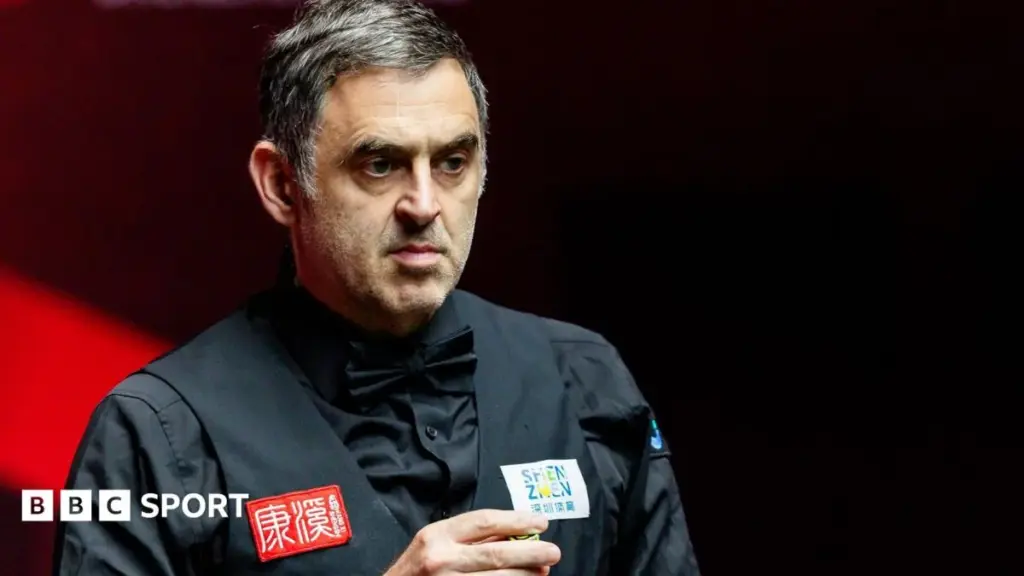
- Ronnie O'Sullivan suffered a rare 4-0 whitewash at the hands of Shaun Murphy in Leicester.
- The defeat follows a worrying trend of early exits, including a loss to Ka Wai Cheung in Northern Ireland.
- At 50, O'Sullivan's lack of match practice on the main tour is visibly impacting his competitive sharpness.
- The result forces a broader conversation about the future of professional snooker in the post-O'Sullivan era.
- Ronnie O'Sullivan a subi une rare défaite 4-0 face à Shaun Murphy à Leicester.
- Ce revers s'inscrit dans une tendance inquiétante d'éliminations précoces, notamment après sa défaite contre Ka Wai Cheung en Irlande du Nord.
- À 50 ans, le manque de temps de jeu d'O'Sullivan sur le circuit principal affecte visiblement sa précision compétitive.
- Ce résultat impose une réflexion plus large sur l'avenir du snooker professionnel à l'ère post-O'Sullivan.
- Ronnie O'Sullivan sufrió una inusual derrota por 4-0 a manos de Shaun Murphy en Leicester.
- Este resultado se suma a una preocupante tendencia de eliminaciones tempranas, incluida su derrota ante Ka Wai Cheung en Irlanda del Norte.
- A sus 50 años, la falta de rodaje competitivo de O'Sullivan en el circuito principal está afectando visiblemente su precisión.
- El resultado obliga a abrir un debate más amplio sobre el futuro del snooker profesional en la era post-O'Sullivan.
- Ronnie O'Sullivan suffered a rare 4-0 whitewash at the hands of Shaun Murphy in Leicester.
- The defeat follows a worrying trend of early exits, including a loss to Ka Wai Cheung in Northern Ireland.
- At 50, O'Sullivan's lack of match practice on the main tour is visibly impacting his competitive sharpness.
- The result forces a broader conversation about the future of professional snooker in the post-O'Sullivan era.
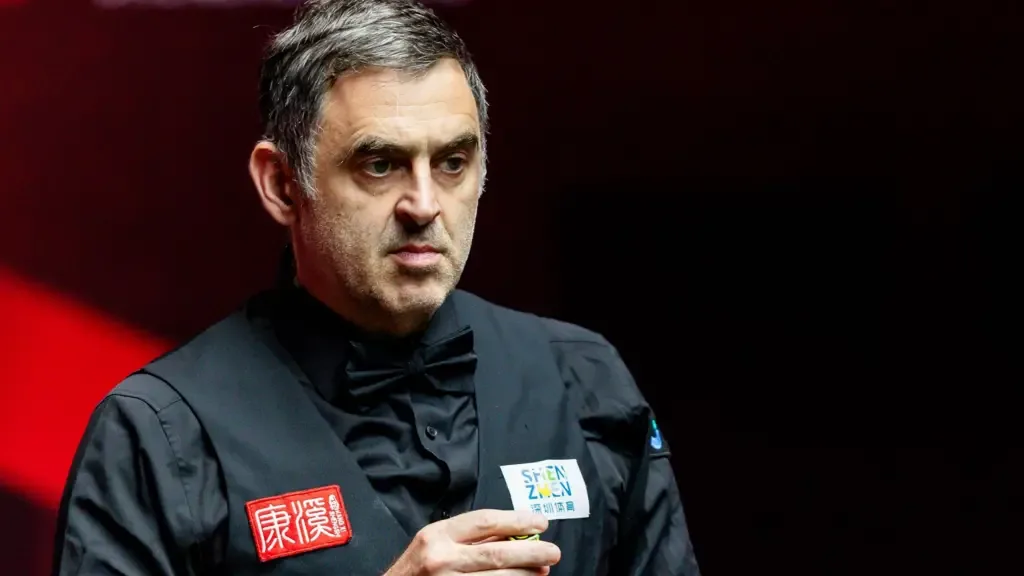
In the hushed, velvet-lined arenas where snooker legends are forged, the sound of a cue ball striking a red is usually a precursor to a symphony of precision. Yet, at the Mattioli Arena in Leicester this week, the silence that followed Ronnie O’Sullivan’s exit felt heavy with the weight of an era coming to an unceremonious close. The seven-time world champion, a man whose name is synonymous with the very evolution of the sport, was dismantled 4-0 by Shaun Murphy in a performance that lacked the trademark fluidity that once made him the undisputed ‘Rocket’ of the green baize.
This latest defeat is not merely a statistical anomaly; it is a profound signal of a shifting tide. For decades, O’Sullivan has operated as the gravitational center of professional snooker, a mercurial genius whose presence alone could fill auditoriums and command global viewership. However, as he navigates his 50th year, the gap between his legendary status and his current competitive output has widened into a chasm. The loss to Murphy, following a similarly jarring defeat to Ka Wai Cheung in Belfast last month, suggests that the man who redefined the game is now struggling to keep pace with a new generation of hungry, technically proficient challengers.
The Anatomy of a Whitewash
The match itself was a clinical demonstration of how far O’Sullivan has drifted from his peak. From the opening frame, where he was forced to clear colours in a losing cause, to the scrappy, tense conclusion of the fourth, O’Sullivan appeared visibly out of sorts. Murphy, himself a seasoned campaigner and World Championship runner-up, exploited the gaps in the legend’s game with ruthless efficiency. A 68-break in the second frame and a decisive 41-break in the third highlighted not just Murphy’s composure, but O’Sullivan’s inability to manufacture the momentum that was once his birthright.
The statistics tell a sobering story. O’Sullivan’s qualification for this tournament came via his victory at the 2026 World Seniors Championship—a triumph that, while impressive, underscored his distance from the grueling, high-intensity grind of the main professional tour. By his own admission, the lack of consistent match time has eroded the razor-sharp instincts required to navigate the tactical minefields of modern snooker. When the pressure mounted in the fourth frame, the man who once cleared tables with the ease of a master painter found himself missing routine pots and misjudging positional play, leaving him to puff out his cheeks in a gesture of resignation that has become all too familiar to his loyal fanbase.
A Legacy in the Shadow of Time
To understand the gravity of this moment, one must look back at the historical context of O’Sullivan’s career. He has spent over three decades as the sport’s primary protagonist, a figure whose brilliance often masked the underlying volatility of the professional circuit. His 2022 world title felt like a final, defiant statement of dominance, a reminder that even in his mid-forties, he remained the benchmark for excellence. Yet, the sport of snooker is notoriously unforgiving to those who do not maintain a relentless schedule of competition.
The rise of players like Wu Yize and the broader influx of talent from the Asian circuit have transformed the competitive landscape. The game is faster, the margins for error are thinner, and the psychological fortitude required to survive the early rounds of ranking events has reached a fever pitch. O’Sullivan’s recent struggles are, in many ways, a reflection of a sport that has outgrown its reliance on a single icon. While his legacy as the greatest natural talent to ever hold a cue is secure, his current form serves as a poignant reminder that even the most luminous stars eventually succumb to the relentless friction of time and the emergence of a new, faster-moving order.
The Ripple Effects on the Professional Tour
The implications of O’Sullivan’s decline extend far beyond his own trophy cabinet. Professional snooker is currently in a delicate state of transition, seeking to balance the reverence for its heritage with the need for a sustainable, vibrant future. For the governing bodies and broadcasters, the ‘O’Sullivan factor’ has been a reliable engine for growth. If the Rocket continues to exit tournaments in the opening rounds, the commercial and cultural impact on the sport’s visibility could be significant. The question is no longer whether O’Sullivan can win another world title, but how the sport will manage the inevitable vacuum that his eventual retirement will create.
Public reaction has been a mixture of nostalgia and concern. Social media forums and sports desks are abuzz with debates over whether this is a temporary slump or the beginning of a permanent decline. Some argue that O’Sullivan’s lack of interest in the grind of the tour is a choice—a man who has conquered everything and is now playing for the love of the game rather than the pursuit of points. Others see a tragic figure, unable to reconcile his desire to compete with the physical and mental toll of a game that demands absolute, unwavering focus.
What Lies Ahead for the Rocket
As the Champion of Champions tournament progresses toward its conclusion, the focus shifts to the next generation. Murphy moves on to face the winner of the clash between Wu Yize and Chang Bingyu, a matchup that represents the future of the sport. For O’Sullivan, the path forward is less clear. Will he commit to a more rigorous training regimen, or will he continue to treat the tour as a secondary pursuit? The upcoming months will be critical in determining whether he can recalibrate his game or if we are witnessing the final, flickering embers of a legendary career.
Ultimately, the sport of snooker owes a debt of gratitude to O’Sullivan that can never be fully repaid. He has been its greatest ambassador, its most controversial figure, and its most gifted performer. If this is indeed the twilight, it is a reminder to appreciate the remaining moments of magic he can produce. However, for the professional circuit, the message is clear: the game must prepare for a future where the Rocket is no longer the one setting the pace. The table is being cleared, the lights are dimming, and a new generation is waiting to take their turn at the break.
In the hushed, velvet-lined arenas where snooker legends are forged, the sound of a cue ball striking a red is usually a precursor to a symphony of precision. Yet, at the Mattioli Arena in Leicester this week, the silence that followed Ronnie O’Sullivan’s exit felt heavy with the weight of an era coming to an unceremonious close. The seven-time world champion, a man whose name is synonymous with the very evolution of the sport, was dismantled 4-0 by Shaun Murphy in a performance that lacked the trademark fluidity that once made him the undisputed ‘Rocket’ of the green baize.
This latest defeat is not merely a statistical anomaly; it is a profound signal of a shifting tide. For decades, O’Sullivan has operated as the gravitational center of professional snooker, a mercurial genius whose presence alone could fill auditoriums and command global viewership. However, as he navigates his 50th year, the gap between his legendary status and his current competitive output has widened into a chasm. The loss to Murphy, following a similarly jarring defeat to Ka Wai Cheung in Belfast last month, suggests that the man who redefined the game is now struggling to keep pace with a new generation of hungry, technically proficient challengers.
The Anatomy of a Whitewash
The match itself was a clinical demonstration of how far O’Sullivan has drifted from his peak. From the opening frame, where he was forced to clear colours in a losing cause, to the scrappy, tense conclusion of the fourth, O’Sullivan appeared visibly out of sorts. Murphy, himself a seasoned campaigner and World Championship runner-up, exploited the gaps in the legend’s game with ruthless efficiency. A 68-break in the second frame and a decisive 41-break in the third highlighted not just Murphy’s composure, but O’Sullivan’s inability to manufacture the momentum that was once his birthright.
The statistics tell a sobering story. O’Sullivan’s qualification for this tournament came via his victory at the 2026 World Seniors Championship—a triumph that, while impressive, underscored his distance from the grueling, high-intensity grind of the main professional tour. By his own admission, the lack of consistent match time has eroded the razor-sharp instincts required to navigate the tactical minefields of modern snooker. When the pressure mounted in the fourth frame, the man who once cleared tables with the ease of a master painter found himself missing routine pots and misjudging positional play, leaving him to puff out his cheeks in a gesture of resignation that has become all too familiar to his loyal fanbase.
A Legacy in the Shadow of Time
To understand the gravity of this moment, one must look back at the historical context of O’Sullivan’s career. He has spent over three decades as the sport’s primary protagonist, a figure whose brilliance often masked the underlying volatility of the professional circuit. His 2022 world title felt like a final, defiant statement of dominance, a reminder that even in his mid-forties, he remained the benchmark for excellence. Yet, the sport of snooker is notoriously unforgiving to those who do not maintain a relentless schedule of competition.
The rise of players like Wu Yize and the broader influx of talent from the Asian circuit have transformed the competitive landscape. The game is faster, the margins for error are thinner, and the psychological fortitude required to survive the early rounds of ranking events has reached a fever pitch. O’Sullivan’s recent struggles are, in many ways, a reflection of a sport that has outgrown its reliance on a single icon. While his legacy as the greatest natural talent to ever hold a cue is secure, his current form serves as a poignant reminder that even the most luminous stars eventually succumb to the relentless friction of time and the emergence of a new, faster-moving order.
The Ripple Effects on the Professional Tour
The implications of O’Sullivan’s decline extend far beyond his own trophy cabinet. Professional snooker is currently in a delicate state of transition, seeking to balance the reverence for its heritage with the need for a sustainable, vibrant future. For the governing bodies and broadcasters, the ‘O’Sullivan factor’ has been a reliable engine for growth. If the Rocket continues to exit tournaments in the opening rounds, the commercial and cultural impact on the sport’s visibility could be significant. The question is no longer whether O’Sullivan can win another world title, but how the sport will manage the inevitable vacuum that his eventual retirement will create.
Public reaction has been a mixture of nostalgia and concern. Social media forums and sports desks are abuzz with debates over whether this is a temporary slump or the beginning of a permanent decline. Some argue that O’Sullivan’s lack of interest in the grind of the tour is a choice—a man who has conquered everything and is now playing for the love of the game rather than the pursuit of points. Others see a tragic figure, unable to reconcile his desire to compete with the physical and mental toll of a game that demands absolute, unwavering focus.
What Lies Ahead for the Rocket
As the Champion of Champions tournament progresses toward its conclusion, the focus shifts to the next generation. Murphy moves on to face the winner of the clash between Wu Yize and Chang Bingyu, a matchup that represents the future of the sport. For O’Sullivan, the path forward is less clear. Will he commit to a more rigorous training regimen, or will he continue to treat the tour as a secondary pursuit? The upcoming months will be critical in determining whether he can recalibrate his game or if we are witnessing the final, flickering embers of a legendary career.
Ultimately, the sport of snooker owes a debt of gratitude to O’Sullivan that can never be fully repaid. He has been its greatest ambassador, its most controversial figure, and its most gifted performer. If this is indeed the twilight, it is a reminder to appreciate the remaining moments of magic he can produce. However, for the professional circuit, the message is clear: the game must prepare for a future where the Rocket is no longer the one setting the pace. The table is being cleared, the lights are dimming, and a new generation is waiting to take their turn at the break.
Dans les arènes feutrées où se forgent les légendes du snooker, le bruit de la bille blanche frappant une rouge est généralement le prélude à une symphonie de précision. Pourtant, cette semaine à la Mattioli Arena de Leicester, le silence qui a suivi l'élimination de Ronnie O’Sullivan était empreint de la lourdeur d'une époque qui s'achève sans cérémonie. Le septuple champion du monde, un homme dont le nom est synonyme de l'évolution même de ce sport, a été démantelé 4-0 par Shaun Murphy, dans une performance dépourvue de cette fluidité caractéristique qui faisait autrefois de lui le « Rocket » incontesté du tapis vert.
Cette défaite n'est pas seulement une anomalie statistique ; c'est le signal profond d'un changement de paradigme. Pendant des décennies, O’Sullivan a agi comme le centre de gravité du snooker professionnel, un génie mercuriel dont la seule présence suffisait à remplir les salles et à capter une audience mondiale. Cependant, alors qu'il entame sa cinquantième année, le fossé entre son statut légendaire et son rendement compétitif actuel s'est transformé en abîme. La défaite face à Murphy, qui fait suite à un revers tout aussi brutal contre Ka Wai Cheung à Belfast le mois dernier, suggère que l'homme qui a redéfini le jeu peine désormais à suivre le rythme d'une nouvelle génération de challengers affamés et techniquement irréprochables.
Anatomie d'une déroute
Le match lui-même fut une démonstration clinique de l'éloignement d'O’Sullivan par rapport à son apogée. Dès la première manche, où il fut contraint de nettoyer les billes de couleur pour une cause perdue, jusqu'à la conclusion tendue et brouillonne de la quatrième, O’Sullivan est apparu visiblement hors du coup. Murphy, lui-même un joueur chevronné et finaliste du Championnat du monde, a exploité les failles dans le jeu de la légende avec une efficacité impitoyable. Un break de 68 dans la deuxième manche et un break décisif de 41 dans la troisième ont souligné non seulement le calme de Murphy, mais aussi l'incapacité d'O’Sullivan à générer cet élan qui était autrefois son droit de naissance.
Les statistiques racontent une histoire qui donne à réfléchir. La qualification d'O’Sullivan pour ce tournoi a été obtenue grâce à sa victoire au Championnat du monde seniors 2026 — un triomphe qui, bien qu'impressionnant, a souligné son éloignement du rythme épuisant et de la haute intensité du circuit professionnel principal. De son propre aveu, le manque de temps de jeu régulier a érodé les instincts aiguisés nécessaires pour naviguer dans les champs de mines tactiques du snooker moderne. Lorsque la pression est montée dans la quatrième manche, l'homme qui nettoyait autrefois les tables avec l'aisance d'un maître peintre s'est retrouvé à manquer des empochages de routine et à mal juger ses placements, le laissant gonfler les joues dans un geste de résignation devenu bien trop familier pour ses fans fidèles.
Un héritage à l'ombre du temps
Pour comprendre la gravité de ce moment, il faut se pencher sur le contexte historique de la carrière d'O’Sullivan. Il a passé plus de trois décennies en tant que protagoniste principal du sport, une figure dont le génie masquait souvent la volatilité sous-jacente du circuit professionnel. Son titre mondial de 2022 a été perçu comme une ultime déclaration de domination, un rappel que, même au milieu de la quarantaine, il restait l'étalon-or de l'excellence. Pourtant, le snooker est notoirement impitoyable envers ceux qui ne maintiennent pas un calendrier de compétition acharné.
L'ascension de joueurs comme Wu Yize et l'afflux plus large de talents venus du circuit asiatique ont transformé le paysage compétitif. Le jeu est plus rapide, les marges d'erreur sont plus minces, et la force psychologique requise pour survivre aux premiers tours des tournois classés a atteint un paroxysme. Les difficultés récentes d'O’Sullivan sont, à bien des égards, le reflet d'un sport qui a dépassé sa dépendance à une seule icône. Si son héritage en tant que plus grand talent naturel ayant jamais tenu une queue est assuré, sa forme actuelle sert de rappel poignant que même les étoiles les plus lumineuses finissent par succomber à la friction incessante du temps et à l'émergence d'un ordre nouveau, plus rapide.
Les répercussions sur le circuit professionnel
Les implications du déclin d'O’Sullivan dépassent largement le cadre de son armoire à trophées. Le snooker professionnel traverse actuellement une phase de transition délicate, cherchant à équilibrer le respect de son héritage avec la nécessité d'un avenir durable et dynamique. Pour les instances dirigeantes et les diffuseurs, le « facteur O’Sullivan » a été un moteur de croissance fiable. Si le « Rocket » continue de quitter les tournois dès les premiers tours, l'impact commercial et culturel sur la visibilité du sport pourrait être significatif. La question n'est plus de savoir si O’Sullivan peut remporter un nouveau titre mondial, mais comment le sport gérera l'inévitable vide que créera son futur départ à la retraite.
La réaction du public oscille entre nostalgie et inquiétude. Les forums sur les réseaux sociaux et les rubriques sportives s'animent de débats pour savoir s'il s'agit d'une baisse de régime temporaire ou du début d'un déclin permanent. Certains soutiennent que le manque d'intérêt d'O’Sullivan pour le rythme effréné du circuit est un choix — celui d'un homme qui a tout conquis et qui joue désormais pour l'amour du jeu plutôt que pour la quête de points. D'autres voient une figure tragique, incapable de concilier son désir de compétition avec le tribut physique et mental d'un jeu qui exige une concentration absolue et inébranlable.
Quel avenir pour le « Rocket » ?
Alors que le tournoi Champion of Champions progresse vers sa conclusion, l'attention se tourne vers la nouvelle génération. Murphy s'apprête à affronter le vainqueur du duel entre Wu Yize et Chang Bingyu, une rencontre qui représente l'avenir du sport. Pour O’Sullivan, la voie à suivre est moins claire. S'engagera-t-il dans un programme d'entraînement plus rigoureux, ou continuera-t-il à traiter le circuit comme une activité secondaire ? Les mois à venir seront cruciaux pour déterminer s'il peut recalibrer son jeu ou si nous assistons aux dernières braises vacillantes d'une carrière légendaire.
En fin de compte, le monde du snooker a une dette de gratitude envers O’Sullivan qui ne pourra jamais être totalement remboursée. Il en a été le plus grand ambassadeur, la figure la plus controversée et l'interprète le plus doué. Si nous sommes effectivement dans le crépuscule, c'est un rappel d'apprécier les derniers moments de magie qu'il peut encore produire. Cependant, pour le circuit professionnel, le message est clair : le jeu doit se préparer à un avenir où le « Rocket » ne sera plus celui qui impose le rythme. La table est en train d'être nettoyée, les lumières faiblissent, et une nouvelle génération attend son tour pour engager la partie.
En las silenciosas arenas forradas de terciopelo donde se forjan las leyendas del snooker, el sonido de la bola blanca golpeando una roja suele ser el preludio de una sinfonía de precisión. Sin embargo, esta semana en el Mattioli Arena de Leicester, el silencio que siguió a la eliminación de Ronnie O’Sullivan se sintió cargado con el peso de una era que llega a su fin de manera poco ceremoniosa. El siete veces campeón del mundo, un hombre cuyo nombre es sinónimo de la propia evolución de este deporte, fue desmantelado por 4-0 por Shaun Murphy en una actuación carente de la fluidez característica que alguna vez lo convirtió en el indiscutible «Rocket» del tapete verde.
Esta última derrota no es simplemente una anomalía estadística; es una señal profunda de un cambio de ciclo. Durante décadas, O’Sullivan ha operado como el centro gravitacional del snooker profesional, un genio mercurial cuya sola presencia podía llenar auditorios y atraer audiencias globales. Sin embargo, al navegar su quincuagésimo año, la brecha entre su estatus legendario y su rendimiento competitivo actual se ha convertido en un abismo. La derrota ante Murphy, tras una caída igualmente desconcertante ante Ka Wai Cheung en Belfast el mes pasado, sugiere que el hombre que redefinió el juego ahora lucha por mantener el ritmo frente a una nueva generación de aspirantes hambrientos y técnicamente brillantes.
La anatomía de un blanqueo
El partido en sí fue una demostración clínica de lo lejos que se ha alejado O’Sullivan de su mejor nivel. Desde el primer frame, donde se vio obligado a limpiar las bolas de colores en una causa perdida, hasta la conclusión tensa y desordenada del cuarto, O’Sullivan pareció visiblemente fuera de lugar. Murphy, un jugador experimentado y subcampeón del mundo, explotó las grietas en el juego de la leyenda con una eficiencia implacable. Un break de 68 puntos en el segundo frame y uno decisivo de 41 en el tercero destacaron no solo la compostura de Murphy, sino la incapacidad de O’Sullivan para generar el impulso que antaño era su derecho de nacimiento.
Las estadísticas cuentan una historia aleccionadora. La clasificación de O’Sullivan para este torneo se produjo gracias a su victoria en el Campeonato Mundial Senior de 2026, un triunfo que, aunque impresionante, subrayó su distancia respecto al agotador y exigente ritmo del circuito profesional principal. Según su propia confesión, la falta de tiempo de juego constante ha erosionado los instintos afilados necesarios para navegar los campos de minas tácticos del snooker moderno. Cuando la presión aumentó en el cuarto frame, el hombre que solía limpiar las mesas con la facilidad de un maestro pintor se encontró fallando golpes rutinarios y calculando mal el juego posicional, dejándolo inflar las mejillas en un gesto de resignación que se ha vuelto demasiado familiar para su fiel base de seguidores.
Un legado a la sombra del tiempo
Para comprender la gravedad de este momento, hay que mirar hacia atrás al contexto histórico de la carrera de O’Sullivan. Ha pasado más de tres décadas como el protagonista principal del deporte, una figura cuya brillantez a menudo enmascaraba la volatilidad subyacente del circuito profesional. Su título mundial de 2022 se sintió como una declaración final y desafiante de dominio, un recordatorio de que, incluso a mediados de sus cuarenta, seguía siendo el referente de excelencia. Sin embargo, el snooker es un deporte notoriamente implacable con aquellos que no mantienen un calendario de competición incesante.
El ascenso de jugadores como Wu Yize y la mayor afluencia de talento del circuito asiático han transformado el panorama competitivo. El juego es más rápido, los márgenes de error son más estrechos y la fortaleza psicológica necesaria para sobrevivir a las primeras rondas de los eventos de ranking ha alcanzado un punto de ebullición. Las recientes dificultades de O’Sullivan son, en muchos sentidos, un reflejo de un deporte que ha superado su dependencia de un solo icono. Si bien su legado como el mayor talento natural que jamás haya sostenido un taco está asegurado, su forma actual sirve como un recordatorio conmovedor de que incluso las estrellas más luminosas sucumben finalmente a la fricción implacable del tiempo y al surgimiento de un nuevo orden más dinámico.
El efecto dominó en el circuito profesional
Las implicaciones del declive de O’Sullivan se extienden mucho más allá de su propio palmarés. El snooker profesional se encuentra actualmente en un delicado estado de transición, buscando equilibrar la reverencia por su patrimonio con la necesidad de un futuro sostenible y vibrante. Para los organismos rectores y las cadenas de televisión, el «factor O’Sullivan» ha sido un motor fiable de crecimiento. Si el «Rocket» continúa siendo eliminado en las rondas iniciales, el impacto comercial y cultural en la visibilidad del deporte podría ser significativo. La pregunta ya no es si O’Sullivan puede ganar otro título mundial, sino cómo gestionará el deporte el inevitable vacío que creará su eventual retirada.
La reacción del público ha sido una mezcla de nostalgia y preocupación. Los foros de redes sociales y las secciones deportivas están llenos de debates sobre si se trata de una crisis temporal o del comienzo de un declive permanente. Algunos argumentan que la falta de interés de O’Sullivan por el desgaste del circuito es una elección: un hombre que lo ha conquistado todo y que ahora juega por amor al juego en lugar de por la búsqueda de puntos. Otros ven a una figura trágica, incapaz de reconciliar su deseo de competir con el coste físico y mental de un juego que exige una concentración absoluta e inquebrantable.
¿Qué le espera al «Rocket»?
A medida que el torneo Champion of Champions avanza hacia su conclusión, el foco se desplaza hacia la próxima generación. Murphy avanza para enfrentarse al ganador del choque entre Wu Yize y Chang Bingyu, un enfrentamiento que representa el futuro del deporte. Para O’Sullivan, el camino a seguir es menos claro. ¿Se comprometerá con un régimen de entrenamiento más riguroso o seguirá tratando el circuito como una actividad secundaria? Los próximos meses serán críticos para determinar si puede recalibrar su juego o si estamos presenciando las últimas y vacilantes brasas de una carrera legendaria.
En última instancia, el deporte del snooker tiene una deuda de gratitud con O’Sullivan que nunca podrá ser pagada por completo. Ha sido su mayor embajador, su figura más controvertida y su intérprete más dotado. Si este es, efectivamente, el crepúsculo, es un recordatorio para apreciar los momentos de magia que aún pueda producir. Sin embargo, para el circuito profesional, el mensaje es claro: el juego debe prepararse para un futuro donde el «Rocket» ya no sea quien marque el ritmo. La mesa se está despejando, las luces se atenúan y una nueva generación espera su turno para romper.
In the hushed, velvet-lined arenas where snooker legends are forged, the sound of a cue ball striking a red is usually a precursor to a symphony of precision. Yet, at the Mattioli Arena in Leicester this week, the silence that followed Ronnie O’Sullivan’s exit felt heavy with the weight of an era coming to an unceremonious close. The seven-time world champion, a man whose name is synonymous with the very evolution of the sport, was dismantled 4-0 by Shaun Murphy in a performance that lacked the trademark fluidity that once made him the undisputed ‘Rocket’ of the green baize.
This latest defeat is not merely a statistical anomaly; it is a profound signal of a shifting tide. For decades, O’Sullivan has operated as the gravitational center of professional snooker, a mercurial genius whose presence alone could fill auditoriums and command global viewership. However, as he navigates his 50th year, the gap between his legendary status and his current competitive output has widened into a chasm. The loss to Murphy, following a similarly jarring defeat to Ka Wai Cheung in Belfast last month, suggests that the man who redefined the game is now struggling to keep pace with a new generation of hungry, technically proficient challengers.
The Anatomy of a Whitewash
The match itself was a clinical demonstration of how far O’Sullivan has drifted from his peak. From the opening frame, where he was forced to clear colours in a losing cause, to the scrappy, tense conclusion of the fourth, O’Sullivan appeared visibly out of sorts. Murphy, himself a seasoned campaigner and World Championship runner-up, exploited the gaps in the legend’s game with ruthless efficiency. A 68-break in the second frame and a decisive 41-break in the third highlighted not just Murphy’s composure, but O’Sullivan’s inability to manufacture the momentum that was once his birthright.
The statistics tell a sobering story. O’Sullivan’s qualification for this tournament came via his victory at the 2026 World Seniors Championship—a triumph that, while impressive, underscored his distance from the grueling, high-intensity grind of the main professional tour. By his own admission, the lack of consistent match time has eroded the razor-sharp instincts required to navigate the tactical minefields of modern snooker. When the pressure mounted in the fourth frame, the man who once cleared tables with the ease of a master painter found himself missing routine pots and misjudging positional play, leaving him to puff out his cheeks in a gesture of resignation that has become all too familiar to his loyal fanbase.
A Legacy in the Shadow of Time
To understand the gravity of this moment, one must look back at the historical context of O’Sullivan’s career. He has spent over three decades as the sport’s primary protagonist, a figure whose brilliance often masked the underlying volatility of the professional circuit. His 2022 world title felt like a final, defiant statement of dominance, a reminder that even in his mid-forties, he remained the benchmark for excellence. Yet, the sport of snooker is notoriously unforgiving to those who do not maintain a relentless schedule of competition.
The rise of players like Wu Yize and the broader influx of talent from the Asian circuit have transformed the competitive landscape. The game is faster, the margins for error are thinner, and the psychological fortitude required to survive the early rounds of ranking events has reached a fever pitch. O’Sullivan’s recent struggles are, in many ways, a reflection of a sport that has outgrown its reliance on a single icon. While his legacy as the greatest natural talent to ever hold a cue is secure, his current form serves as a poignant reminder that even the most luminous stars eventually succumb to the relentless friction of time and the emergence of a new, faster-moving order.
The Ripple Effects on the Professional Tour
The implications of O’Sullivan’s decline extend far beyond his own trophy cabinet. Professional snooker is currently in a delicate state of transition, seeking to balance the reverence for its heritage with the need for a sustainable, vibrant future. For the governing bodies and broadcasters, the ‘O’Sullivan factor’ has been a reliable engine for growth. If the Rocket continues to exit tournaments in the opening rounds, the commercial and cultural impact on the sport’s visibility could be significant. The question is no longer whether O’Sullivan can win another world title, but how the sport will manage the inevitable vacuum that his eventual retirement will create.
Public reaction has been a mixture of nostalgia and concern. Social media forums and sports desks are abuzz with debates over whether this is a temporary slump or the beginning of a permanent decline. Some argue that O’Sullivan’s lack of interest in the grind of the tour is a choice—a man who has conquered everything and is now playing for the love of the game rather than the pursuit of points. Others see a tragic figure, unable to reconcile his desire to compete with the physical and mental toll of a game that demands absolute, unwavering focus.
What Lies Ahead for the Rocket
As the Champion of Champions tournament progresses toward its conclusion, the focus shifts to the next generation. Murphy moves on to face the winner of the clash between Wu Yize and Chang Bingyu, a matchup that represents the future of the sport. For O’Sullivan, the path forward is less clear. Will he commit to a more rigorous training regimen, or will he continue to treat the tour as a secondary pursuit? The upcoming months will be critical in determining whether he can recalibrate his game or if we are witnessing the final, flickering embers of a legendary career.
Ultimately, the sport of snooker owes a debt of gratitude to O’Sullivan that can never be fully repaid. He has been its greatest ambassador, its most controversial figure, and its most gifted performer. If this is indeed the twilight, it is a reminder to appreciate the remaining moments of magic he can produce. However, for the professional circuit, the message is clear: the game must prepare for a future where the Rocket is no longer the one setting the pace. The table is being cleared, the lights are dimming, and a new generation is waiting to take their turn at the break.
Editorial Standards & Multi-Language Synthesis: This dispatch was synthesized and fact-checked by the ParisDaily Editorial Desk across 5 global editions (EN, FR, VI, ES, ZH), cross-referencing primary international wire reports and real-time search intelligence.