Miracle dans le Pacifique : Le survivant de neuf heures, musicien sur un navire de croisière
A Royal Caribbean crew member survived nine harrowing hours in the Pacific Ocean after falling overboard, saved by sharp-eyed fishermen and unusually warm El Niño currents.
Một thành viên thủy thủ đoàn của hãng Royal Caribbean đã sống sót sau chín giờ đồng hồ đầy kinh hoàng giữa Thái Bình Dương sau khi rơi xuống biển. Anh được cứu sống nhờ sự tinh mắt của các ngư dân và dòng hải lưu El Niño ấm áp bất thường.
Un membre d'équipage de Royal Caribbean a survécu à neuf heures d'angoisse dans l'océan Pacifique après être passé par-dessus bord, sauvé par des pêcheurs à l'œil perçant et des courants d'El Niño exceptionnellement chauds.
Un tripulante de Royal Caribbean sobrevivió a nueve horas de angustia en el Pacífico tras caer por la borda, salvado por unos pescadores de vista aguda y unas corrientes de El Niño inusualmente cálidas.
皇家加勒比邮轮公司的一名船员在落水后,在太平洋中经历了惊心动魄的九个小时,最终凭借敏锐的当地渔民和异常温暖的厄尔尼诺洋流侥幸获救。
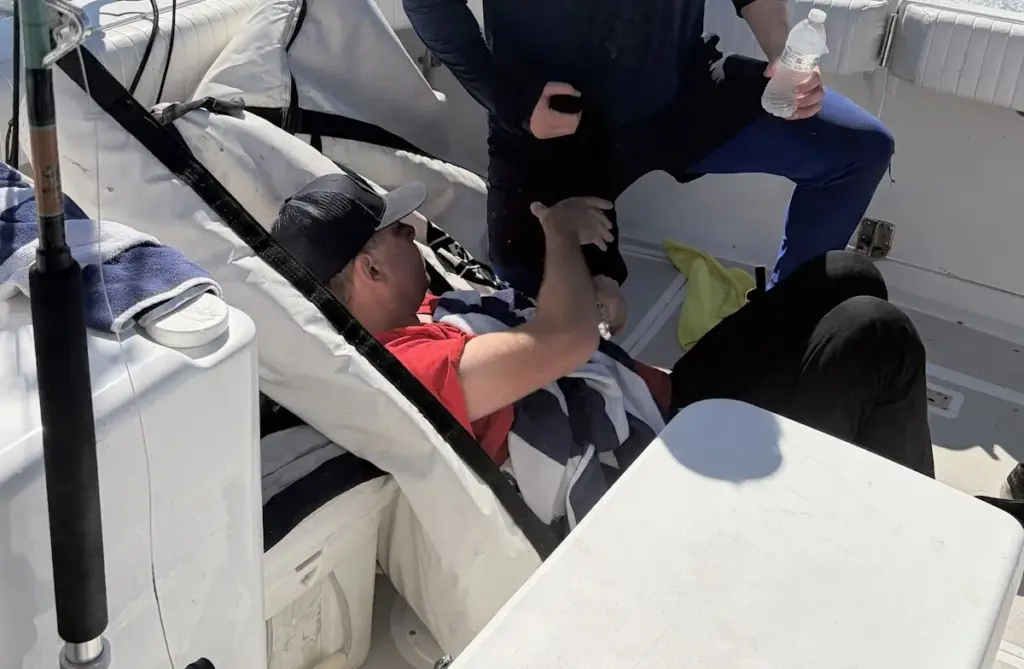
- The unnamed crew member, identified as a pianist aboard Royal Caribbean's Ovation of the Seas, went overboard roughly 15 to 20 miles off the Newport Beach coast.
- Local fishermen Sean Norton and Grant Garrett spotted the man treading water near Catalina Island and alerted the U.S. Coast Guard.
- Fire and rescue officials credit the survivor's miraculous recovery to unseasonably warm El Niño ocean temperatures ranging between 72 and 76 degrees Fahrenheit.
- Both the U.S. Coast Guard and Royal Caribbean are investigating the exact circumstances surrounding the late-night fall from the 14-deck vessel.
- Thành viên thủy thủ đoàn giấu tên, được xác định là một nghệ sĩ piano trên siêu tàu Ovation of the Seas của Royal Caribbean, đã rơi xuống biển cách bờ biển Newport Beach khoảng 15 đến 20 dặm.
- Hai ngư dân địa phương là Sean Norton và Grant Garrett đã phát hiện người đàn ông đang ngụp lặn gần Đảo Catalina và lập tức thông báo cho Lực lượng Bảo vệ Bờ biển Hoa Kỳ.
- Các quan chức cứu hỏa và cứu hộ nhận định sự hồi phục kỳ diệu của nạn nhân có sự đóng góp lớn từ nhiệt độ nước biển ôn hòa bất thường do hiện tượng El Niño, dao động từ 72 đến 76 độ Fahrenheit.
- Cả Lực lượng Bảo vệ Bờ biển Hoa Kỳ và Royal Caribbean hiện đang điều tra những tình tiết chính xác xoay quanh vụ rơi tàu xảy ra vào lúc nửa đêm từ con tàu cao 14 tầng này.
- Le membre d'équipage anonyme, identifié comme étant pianiste à bord de l'Ovation of the Seas de Royal Caribbean, est tombé à l'eau à environ 15 ou 20 milles de la côte de Newport Beach.
- Les pêcheurs locaux Sean Norton et Grant Garrett ont repéré l'homme en train de faire la planche près de l'île Catalina et ont alerté les garde-côtes américains.
- Les services de secours attribuent ce sauvetage miraculeux à des températures océaniques anormalement douces liées à El Niño, oscillant entre 22 et 24 degrés Celsius.
- Tant les garde-côtes américains que Royal Caribbean enquêtent sur les circonstances exactes de cette chute nocturne depuis le navire de 14 ponts.
- El tripulante sin identificar, pianista a bordo del Ovation of the Seas de Royal Caribbean, cayó por la borda a entre 15 y 20 millas de la costa de Newport Beach.
- Los pescadores locales Sean Norton y Grant Garrett avistaron al hombre flotando cerca de la isla Catalina y alertaron a la Guardia Costera de EE. UU.
- Los servicios de bomberos y rescate atribuyen la milagrosa recuperación del superviviente a las temperaturas oceánicas inusualmente templadas de El Niño, que oscilaban entre los 22 y 24 grados Celsius.
- Tanto la Guardia Costera de EE. UU. como Royal Caribbean investigan las circunstancias exactas de la caída nocturna desde el buque de 14 cubiertas.
- 这名未具名的船员是皇家加勒比“海洋赞礼号”上的一名钢琴师,他在距离纽波特比奇海岸约 15 至 20 英里的海域落水。
- 当地渔民肖恩·诺顿(Sean Norton)和格兰特·加勒特(Grant Garrett)在卡特琳娜岛附近发现了这名在水中踩水的男子,并立即向美国海岸警卫队报警。
- 消防与救援官员将这名幸存者的奇迹生还归功于异常温暖的厄尔尼诺海水温度,当时水温介于 72 至 76 华氏度之间。
- 美国海岸警卫队和皇家加勒比目前正在对这起深夜从这艘 14 层甲板巨轮上坠海的具体情况展开调查。
In the vast, unforgiving expanse of the Pacific Ocean, where a human being is scarcely more than a speck against an endless horizon, miraculous retributions of fate occasionally occur. Such was the astonishing reality off the coast of Southern California, where a cruise ship crew member was pulled from the water alive after enduring an estimated nine hours adrift in the open sea. The harrowing ordeal, which has captivated global observers and maritime experts alike, underscores both the fragile nature of life at sea and the extraordinary convergence of human alertness and environmental anomalies that made his survival possible.
The incident unfolded when two local fishermen, Sean Norton and Grant Garrett, were navigating their vessel near Catalina Island. Spotting what initially appeared to be debris bobbing on the swells roughly 15 to 20 miles off Newport Beach, the pair quickly realized they were looking at a human life in mortal peril. The victim, later confirmed to be a pianist aboard Royal Caribbean’s 14-deck mega-ship Ovation of the Seas, had reportedly fallen overboard during the early morning hours while the vessel was transiting from San Pedro toward Ensenada, Mexico. Dragged through a seemingly impossible ordeal of exhaustion, cold, and psychological terror, the survivor was on the absolute brink of expiration when his rescuers finally hauled him aboard.
Anatomy of a Maritime Miracle
The mechanics of the rescue read like a gripping cinematic script. According to his rescuers, the unnamed musician was barely conscious, shaking uncontrollably, and unable to form coherent sentences beyond a whispered expression of profound gratitude. Grant Garrett recounted spotting the man's head breaking the surface as he performed micro-movements to keep his airways clear of the chop. Realizing the immediate gravity of the situation, the fishermen abandoned their fishing lines, maneuvered their boat alongside the exhausted man, and initiated emergency protocols by contacting the U.S. Coast Guard.
Shortly thereafter, a specialized marine unit from the Newport Beach Fire and Lifeguard Department rendezvoused with the fishing vessel, rendering immediate medical assistance before rushing the patient to a regional hospital. Authorities later confirmed that the man was in stable condition, defying the grim statistical probability that governs persons lost at sea. While cruise lines implement rigorous safety management systems and high-tech man-overboard detection technologies, the sheer scale of modern vessels often means that departures go unnoticed for hours—making civilian intervention the ultimate differentiator between life and death.

The El Niño Factor and Environmental Providence
Maritime safety authorities and meteorological experts analyzing the event have pointed to a singular, vital variable that kept the pianist alive: climate anomalies. Newport Beach Lifeguard Battalion Chief Mike Ure and local weather researchers noted that the Pacific waters off the Southern California coastline were uncharacteristically balmy, registering between 72 and 76 degrees Fahrenheit due to a robust El Niño cycle.
"It was approximately 15 to 20 miles offshore, pretty much in the middle of the ocean," said Newport Beach Lifeguard Battalion Chief Adam Yacenda. "A different year, no way he makes it."
Under normal seasonal conditions, hypothermia would have incapacitated and ultimately claimed the life of an uninsulated swimmer within a fraction of the nine hours this crew member spent submerged. The elevated thermal baseline of the ocean drastically slowed the onset of terminal cold-water shock, preserving core muscular function and granting the survivor a precious window of endurance that lasted from the dark pre-dawn hours well into the afternoon.

Corporate Response and Ongoing Investigations
In the wake of the rescue, international scrutiny has turned toward the operational safety protocols aboard modern mega-liners. Royal Caribbean Group issued a formal statement expressing profound relief and confirming that the corporation is extending comprehensive medical and psychological support to the employee. Concurrently, the U.S. Coast Guard has launched a formal inquiry to piece together the exact sequence of events that led to the crew member going overboard, examining shipboard sensor logs, vessel trajectory data, and internal working conditions.
As the maritime industry digests this extraordinary episode, the story serves as a stark reminder of the hidden hazards faced by the hundreds of thousands of hospitality and entertainment professionals who power the global cruise economy. For now, however, the overarching narrative remains one of transcendent resilience—a testament to human endurance, the vigilance of everyday mariners, and the serendipitous mercy of a warming sea.
Giữa không gian bao la, khắc nghiệt của Thái Bình Dương — nơi con người chỉ như một hạt bụi nhỏ bé trước đường chân trời vô tận — đôi khi vẫn xảy ra những sự xoay vần định mệnh đầy kỳ diệu. Đó chính là thực tế đáng kinh ngạc ngoài khơi bờ biển Nam California, nơi một thành viên thủy thủ đoàn tàu du lịch được vớt lên khỏi mặt nước trong tình trạng còn sống sau khi trôi dạt ước tính suốt chín giờ trên biển khơi. Biến cố kinh hoàng này, vốn đang thu hút sự chú ý của dư luận toàn cầu và các chuyên gia hàng hải, vừa phơi bày bản chất mỏng manh của sự sống trên biển, vừa cho thấy sự hội tụ phi thường giữa sự cảnh giác của con người và những dị thường của tự nhiên đã làm nên sự sống còn của anh.
Sự việc bắt đầu khi hai ngư dân địa phương, Sean Norton và Grant Garrett, đang điều khiển thuyền của họ gần Đảo Catalina. Thoạt đầu, họ tưởng đó chỉ là những mảnh vỡ trấp trênh theo sóng cách Newport Beach khoảng 15 đến 20 dặm, nhưng cặp đôi nhanh chóng nhận ra họ đang đối mặt với một sinh mạng con người đang gặp hiểm nguy tột cùng. Nạn nhân, sau đó được xác định là một nghệ sĩ piano làm việc trên siêu tàu 14 tầng Ovation of the Seas của hãng Royal Caribbean, được cho là đã rơi xuống biển vào sáng sớm khi con tàu đang hải hành từ San Pedro hướng tới Ensenada, Mexico. Phải chịu đựng một thử thách dường như bất khả thi về sự kiệt sức, cái lạnh và nỗi kinh hoàng tâm lý, người sống sót đã ở ranh giới cận kề của cái chết khi những ân nhân cuối cùng kéo được anh lên thuyền.
Giải phẫu một phép màu hàng hải
Cơ chế của cuộc giải cứu đọc nghe giống như một kịch bản phim điện ảnh ly kỳ. Theo những người cứu hộ, nam nhạc công giấu tên lúc đó hầu như không còn tỉnh táo, run lẩy bẩy không kiểm soát và không thể thốt nên lời rõ ràng ngoài câu nói thì thầm bày tỏ lòng biết ơn sâu sắc. Grant Garrett kể lại rằng ông đã nhìn thấy đỉnh đầu của nạn nhân nhô lên mặt nước khi anh cố gắng thực hiện những chuyển động vi mô để giữ cho đường thở không bị ngập trong sóng dữ. Nhận thức được mức độ nghiêm trọng cận kề của tình hình, các ngư dân đã buông cần câu, điều khiển tàu áp sát người đàn ông kiệt sức và kích hoạt các quy trình khẩn cấp bằng cách liên lạc với Lực lượng Bảo vệ Bờ biển Hoa Kỳ.
Ngay sau đó, một đơn vị hàng hải chuyên trách thuộc Sở Cứu hỏa và Cứu hộ Newport Beach đã tiếp cận chiếc tàu cá, sơ cứu y tế ngay lập tức trước khi chuyển bệnh nhân đến một bệnh viện khu vực. Các nhà chức trách sau đó xác nhận người đàn ông đang trong tình trạng ổn định, đi ngược lại với xác suất thống kê nghiệt ngã thường thấy đối với những người bị mất tích trên biển. Mặc dù các hãng tàu du lịch đều áp dụng hệ thống quản lý an toàn nghiêm ngặt cùng công nghệ phát hiện người rơi xuống biển tối tân, nhưng quy mô khổng lồ của các tàu hiện đại thường đồng nghĩa với việc các vụ tai nạn có thể không bị phát hiện trong nhiều giờ — khiến sự can thiệp của dân thường trở thành yếu tố quyết định ranh giới giữa sự sống và cái chết.
Yếu tố El Niño và sự sắp đặt của thiên nhiên
Các cơ quan an toàn hàng hải và chuyên gia khí tượng khi phân tích vụ việc đã chỉ ra một biến số đơn lẻ nhưng vô cùng quan trọng giúp người nghệ sĩ piano giữ được sự sống: dị thường khí hậu. Trưởng tiểu đoàn Cứu hộ Newport Beach Mike Ure cùng các nhà nghiên cứu thời tiết địa phương lưu ý rằng vùng biển Thái Bình Dương ngoài khơi Nam California ấm áp một cách khác thường, ghi nhận nhiệt độ dao động từ 72 đến 76 độ Fahrenheit nhờ chu kỳ El Niño mạnh mẽ.
"Vụ việc xảy ra cách bờ khoảng 15 đến 20 dặm, gần như ở giữa đại dương," Trưởng tiểu đoàn Cứu hộ Newport Beach Adam Yacenda cho biết. "Nếu là một năm khác, chắc chắn anh ấy không thể sống sót."
Dưới điều kiện thời tiết theo mùa thông thường, tình trạng hạ thân nhiệt sẽ làm tê liệt và cướp đi sinh mạng của một người bơi lội không có đồ bảo hộ chỉ trong một phần nhỏ của thời gian chín giờ mà thành viên thủy thủ đoàn này phải ngâm mình dưới nước. Nền nhiệt độ cơ bản cao hơn của đại dương đã kìm hãm đáng kể tốc độ phát triển của cú sốc do nước lạnh cực độ, bảo toàn chức năng cơ bắp cốt lõi và ban cho người sống sót một khoảng thời gian sinh tồn quý giá kéo dài từ những giờ tối tăm trước bình minh cho đến tận buổi chiều.
Phản ứng của doanh nghiệp và quá trình điều tra đang diễn ra
Ngay sau cuộc giải cứu, sự quan tâm của quốc tế đã chuyển hướng sang các quy trình an toàn vận hành trên các siêu tàu hiện đại. Tập đoàn Royal Caribbean đã đưa ra một tuyên bố chính thức bày tỏ sự nhẹ nhõm sâu sắc và xác nhận rằng tập đoàn đang cung cấp toàn diện các hỗ trợ về mặt y tế cũng như tâm lý cho nhân viên của mình. Đồng thời, Lực lượng Bảo vệ Bờ biển Hoa Kỳ đã mở một cuộc điều tra chính thức nhằm ghép nối lại chuỗi sự kiện chính xác dẫn đến việc thành viên thủy thủ đoàn rơi xuống biển, kiểm tra nhật ký cảm biến của tàu, dữ liệu quỹ đạo tàu và các điều kiện làm việc nội bộ.
Khi ngành công nghiệp hàng hải tiếp thu sự kiện phi thường này, câu chuyện phục vụ như một lời nhắc nhở nghiêm khắc về những mối nguy hiểm tiềm ẩn mà hàng trăm nghìn chuyên gia ngành khách sạn và giải trí — những người đang vận hành nền kinh tế du thuyền toàn cầu — phải đối mặt. Tuy nhiên, ở thời điểm hiện tại, câu chuyện bao trùm vẫn là một minh chứng về khả năng phục hồi siêu việt — một lời khẳng định cho sức chịu đựng của con người, sự cảnh giác của những người đi biển bình dị, và lòng thương xót đầy may mắn của một đại dương đang ấm dần lên.
Dans l'immensité vaste et impitoyable de l'océan Pacifique, où un être humain n'est guère plus qu'une poussière sur un horizon infini, se produisent parfois d'extraordinaires retours de flamme du destin. Telle fut la réalité stupéfiante observée au large de la Californie du Sud, où un membre d'équipage d'un navire de croisière a été extrait vivant de l'eau après avoir enduré environ neuf heures de dérive en haute mer. Cette terrible épreuve, qui a captivé les observateurs du monde entier et les experts maritimes, souligne à la fois la nature fragile de la vie en mer et l'extraordinaire convergence entre la vigilance humaine et des anomalies environnementales qui ont rendu sa survie possible.
L'incident s'est noué lorsque deux pêcheurs locaux, Sean Norton et Grant Garrett, naviguaient avec leur embarcation près de l'île Catalina. Apercevant ce qui ressemblait initialement à des débris ballottés par la houle à environ 15 à 20 milles de Newport Beach, les deux hommes ont rapidement réalisé qu'ils avaient sous les yeux une vie humaine en péril de mort. La victime, dont il a ensuite été confirmé qu'elle était pianiste à bord du méga-navire de 14 ponts de Royal Caribbean, l'Ovation of the Seas, était tombée par-dessus bord aux premières heures du jour alors que le bâtiment voguait de San Pedro vers Ensenada, au Mexique. Épuisé, transi de froid et terrassé par une terreur psychologique qu'on imagine sans peine, le survivant était au bord absolu de l'asphyxie lorsque ses sauveteurs l'ont enfin hissé à bord.
Anatomie d'un miracle maritime
La mécanique de ce sauvetage relève d'un scénario de cinéma haletant. Selon ses sauveteurs, le musicien, dont l'identité n'a pas été dévoilée, était à peine conscient, tremblant de tous ses membres et incapable de prononcer des phrases cohérentes, hormis l'expression chuchotée d'une profonde gratitude. Grant Garrett a raconté avoir aperçu la tête de l'homme émergeant de l'eau tandis qu'il exécutait de micro-mouvements pour garder ses voies respiratoires dégagées au milieu des vagues. Prenant immédiatement la mesure de la gravité de la situation, les pêcheurs ont abandonné leurs lignes, manœuvré leur embarcation aux côtés de l'homme à bout de forces et enclenché les protocoles d'urgence en contactant les garde-côtes américains.
Peu de temps après, une unité maritime spécialisée du département des pompiers et sauveteurs de Newport Beach a rejoint le bateau de pêche, prodiguant les premiers soins médicaux avant d'évacuer d'urgence le patient vers un hôpital régional. Les autorités ont par la suite confirmé que l'homme se trouvait dans un état stable, défiant les sombres probabilités statistiques qui s'appliquent aux personnes perdues en mer. Si les compagnies de croisière déploient des systèmes de gestion de la sécurité rigoureux et des technologies de pointe pour détecter les chutes d'hommes à bord, la taille démesurée des navires modernes fait souvent en sorte que ces disparitions passent inaperçues pendant des heures — érigeant l'intervention civile en ultime rempart entre la vie et la mort.
Le facteur El Niño et la providence environnementale
Les autorités de sécurité maritime et les experts en météorologie qui ont analysé l'événement ont pointé une variable unique et capitale qui a maintenu le pianiste en vie : les anomalies climatiques. Mike Ure, chef de bataillon des sauveteurs de Newport Beach, ainsi que des chercheurs locaux en météorologie, ont noté que les eaux du Pacifique au large de la côte sud-californienne affichaient une douceur inhabituelle, oscillant entre 22 et 24 degrés Celsius en raison d'un cycle El Niño particulièrement vigoureux.
"C'était à environ 15 ou 20 milles au large, pratiquement au milieu de l'océan," a déclaré Adam Yacenda, chef de bataillon des sauveteurs de Newport Beach. "Une autre année, il n'aurait eu aucune chance.">
Dans des conditions saisonnières normales, l'hypothermie aurait neutralisé et finalement coûté la vie à un nageur dépourvu de combinaison en une fraction des neuf heures passées par ce membre d'équipage immergé. La température de base élevée de l'océan a considérablement ralenti l'apparition d'un choc thermique fatal, préservant la fonction musculaire centrale et offrant au survivant une précieuse fenêtre d'endurance qui s'est étirée des heures sombres de l'aube jusque tard dans l'après-midi.
Réponse de l'entreprise et enquêtes en cours
Dans le sillage de ce sauvetage, l'attention internationale s'est portée sur les protocoles de sécurité opérationnelle en vigueur à bord des méga-paquebots modernes. Le groupe Royal Caribbean a publié une déclaration officielle exprimant son immense soulagement et confirmant qu'il offrait un soutien médical et psychologique complet à son employé. Parallèlement, les garde-côtes américains ont ouvert une enquête formelle afin de reconstituer l'exacte chronologie des événements ayant conduit le membre d'équipage à passer par-dessus bord, en épluchant les registres des capteurs du navire, les données de trajectoire et les conditions de travail internes.
Alors que l'industrie maritime assimile cet épisode extraordinaire, l'histoire résonne comme un rappel saisissant des dangers cachés auxquels font face les centaines de milliers de professionnels de l'hospitalité et du divertissement qui font tourner l'économie mondiale de la croisière. Pour l'heure, toutefois, c'est avant tout le récit d'une résilience hors du commun qui s'impose — le témoignage éclatant de l'endurance humaine, de la vigilance de marins ordinaires et de la clémence providentielle d'une mer qui se réchauffe.
En la vasta e implacable inmensidad del océano Pacífico, donde un ser humano no es apenas más que una mota contra un horizonte infinito, a veces ocurren retribuciones milagrosas del destino. Tal fue la asombrosa realidad frente a la costa del sur de California, donde un tripulante de un crucero fue rescatado del agua con vida tras soportar unas estimadas nueve horas a la deriva en mar abierto. Esta angustiosa odisea, que ha cautivado tanto a observadores globales como a expertos marítimos, subraya tanto la frágil naturaleza de la vida en el mar como la extraordinaria confluencia de la alerta humana y las anomalías ambientales que hicieron posible su supervivencia.
El incidente se desencadenó cuando dos pescadores locales, Sean Norton y Grant Garrett, navegaban con su embarcación cerca de la isla Catalina. Al divisar lo que en un principio pareció ser basura flotando en el oleaje a unas 15 o 20 millas de Newport Beach, ambos se dieron cuenta rápidamente de que estaban contemplando a un ser humano en peligro mortal. La víctima, confirmada posteriormente como pianista a bordo del mega buque Ovation of the Seas de Royal Caribbean, de 14 cubiertas, había caído por la borda durante las primeras horas de la madrugada mientras la embarcación navegaba desde San Pedro hacia Ensenada, México. Arrastrado a través de un vía crucis de aparente agotamiento, frío y terror psicológico, el superviviente estaba al borde absoluto de la muerte cuando sus rescatadores consiguieron por fin subirlo a bordo.
Anatomía de un milagro marítimo
La mecánica del rescate parece sacada de un guion cinematográfico trepidante. Según sus rescatadores, el músico anónimo apenas estaba consciente, temblaba sin control y era incapaz de articular frases coherentes más allá de una expresión susurrada de profunda gratitud. Grant Garrett relató cómo avistó la cabeza del hombre emergiendo a la superficie mientras realizaba micromovimientos para mantener sus vías respiratorias libres del oleaje. Conscientes de la gravedad inmediata de la situación, los pescadores abandonaron sus líneas de pesca, maniobraron su embarcación junto al hombre exhausto e iniciaron los protocolos de emergencia poniéndose en contacto con la Guardia Costera de EE. UU.
Poco después, una unidad marítima especializada del Departamento de Bomberos y Salvavidas de Newport Beach se reunió con la embarcación de pesca, prestando asistencia médica inmediata antes de trasladar urgentemente al paciente a un hospital regional. Las autoridades confirmaron más tarde que el hombre se encontraba en condición estable, desafiando la sombría probabilidad estadística que rige a las personas perdidas en el mar. Aunque las líneas de cruceros implementan rigurosos sistemas de gestión de seguridad y tecnologías de alta tecnología para la detección de hombres al agua, la enorme escala de los buques modernos a menudo significa que las desapariciones pasan desapercibidas durante horas, convirtiendo la intervención civil en el factor definitivo entre la vida y la muerte.
El factor El Niño y la providencia ambiental
Las autoridades de seguridad marítima y los expertos meteorológicos que analizan el suceso han señalado una variable única y vital que mantuvo vivo al pianista: las anomalías climáticas. El jefe de batallón de salvavidas de Newport Beach, Mike Ure, y los investigadores meteorológicos locales señalaron que las aguas del Pacífico frente a la costa del sur de California eran inusualmente templadas, registrando entre 22 y 24 grados Celsius debido a un robusto ciclo de El Niño.
"Estaba aproximadamente a entre 15 y 20 milllas mar adentro, prácticamente en medio del océano", declaró Adam Yacenda, jefe de batallón de salvavidas de Newport Beach. "En un año diferente, no hay forma de que lo logre".
Bajo condiciones estacionales normales, la hipotermia habría incapacitado y finalmente segado la vida de un nadador sin protección térmica en una fracción de las nueve horas que este tripulante pasó sumergido. La elevada línea base térmica del océano ralentizó drásticamente la aparición del choque térmico terminal por agua fría, preservando la función muscular central y concediendo al superviviente una valiosa ventana de resistencia que se prolongó desde las oscuras horas anteriores al alba hasta bien entrada la tarde.
Respuesta corporativa e investigaciones en curso
A raíz del rescate, el escrutinio internacional se ha volcado hacia los protocolos de seguridad operacional a bordo de los modernos mega cruceros. El grupo Royal Caribbean emitió un comunicado oficial en el que expresó su profundo alivio y confirmó que la corporación está prestando un apoyo médico y psicológico integral al empleado. Paralelamente, la Guardia Costera de EE. UU. ha abierto una investigación formal para reconstruir la secuencia exacta de acontecimientos que llevaron a la caída del tripulante por la borda, examinando los registros de los sensores de la nave, los datos de la trayectoria del buque y las condiciones de trabajo internas.
Mientras la industria marítima digiere este extraordinario episodio, la historia sirve como un crudo recordatorio de los peligros ocultos que afrontan los cientos de miles de profesionales de la hostelería y el entretenimiento que impulsan la economía global de los cruceros. Por ahora, sin embargo, la narrativa principal sigue siendo una de resiliencia trascendente: un testimonio de la resistencia humana, la vigilancia de los marinos corrientes y la providencial misericordia de un mar cada vez más cálido.
在广袤无情、令人敬畏的太平洋上,人类在无垠的地平线前不过是沧海一粟,而命运的奇迹救援却偶有发生。在南加州海岸附近就上演了这样令人惊叹的一幕:一名邮轮船员在公海中漂流了大约九个小时后,被活着救出水面。这场惊心动魄的劫后余生吸引了全球观察家和海事专家的目光,它既凸显了海上生命的脆弱,也展现了人类的警觉性与环境异常的奇妙交汇,正是这些因素造就了这一生还的可能。
事件发生时,两名当地渔民肖恩·诺顿(Sean Norton)和格兰特·加勒特(Grant Garrett)正驾驶着他们的船只在卡特琳娜岛附近航行。在距离纽波特比奇约 15 至 20 英里的海面上,他们最初发现海浪中似乎漂浮着一些残骸,随后两人很快意识到他们看到的是一个处于生死边缘的人类生命。据事后确认,这名遇险者是皇家加勒比旗下拥有 14 层甲板的超级巨轮“海洋赞礼号”(Ovation of the Seas)上的一名钢琴师。据报道,事发时邮轮正从圣佩德罗驶往墨西哥恩塞纳达,这名船员在清晨时分不慎落水。在经历了精疲力竭、严寒以及心理恐惧的非人折磨后,当救援人员最终将他拉上船时,这名幸存者已然走到了生命的边缘。
海事奇迹的剖析
这场救援的细节读起来就像是一部扣人心弦的电影剧本。据救援人员回忆,这位未具名的音乐家当时已经近乎失去知觉,浑身不受控制地颤抖,除了低声表达深深的感激之情外,甚至无法说出连贯的句子。格兰特·加勒特回忆说,当他看到这个男人的头部露出水面,并做着微小的动作以保持气道远离汹涌的波浪时,便立刻意识到了局势的严峻性。渔民们当即放弃了垂钓,将船驶向筋疲力尽的落水者,并迅速联系美国海岸警卫队启动了紧急救援程序。
此后不久,纽波特比奇消防与救生局的一支专业海上小分队与这艘渔船汇合,在将患者紧急送往地区医院之前,为其提供了即时医疗救助。当局随后证实,该男子的病情已趋于稳定,这打破了落水者生还的严酷统计概率。尽管各大邮轮公司都实施了严格的安全管理系统和高科技落水检测技术,但现代巨型船舶的庞大体量往往意味着人员失踪数小时都难以被察觉——这使得平民的及时介入成为了生死之分的最关键因素。
厄尔尼诺因素与环境的护佑
分析这一事件的海事安全当局和气象专家指出,有一个至关重要的单一变量让这位钢琴师得以存活:气候异常。纽波特比奇救生大队大队长迈克·尤尔(Mike Ure)和当地的气象研究人员指出,由于强劲的厄尔尼诺周期,南加州海岸线外的太平洋水域异常温和,水温在 72 至 76 华氏度之间。
纽波特比奇救生大队大队长亚当·亚切达(Adam Yacenda)表示:“事发地点大约在离岸 15 到 20 英里处,几乎可以说是大洋的正中间。换作平常的年份,他根本绝无生还可能。”
在正常的季节性气候条件下,若没有保暖装备,一个落水者在经历了长达数小时的浸泡后,极寒症早就使其丧失行动能力并最终夺去生命,而这位船员在水中坚持的时间远超于此。海洋升高的基础热量极大地延缓了致命性冷水休克发作的时间,保持了他核心肌肉群的功能,为这位幸存者赢得了宝贵的耐力窗口——从昏暗的黎明前一直持续到了正午时分。
企业回应与持续调查
救援行动结束后,国际社会的目光转向了现代超级巨轮上的运营安全规程。皇家加勒比集团发表了一份正式声明,对船员获救表达了由衷的欣慰,并确认公司正在向这名员工提供全面的医疗和心理支持。与此同时,美国海岸警卫队已启动正式调查,以拼凑出导致该船员落水的具体事件序列,并对船载传感器日志、船舶航迹数据以及内部工作条件进行审查。
正当海事行业消化这一非凡事件之际,这个故事也严厉地提醒人们,支撑全球邮轮经济的数十万酒店和娱乐专业人员在工作中面临着隐藏的危险。然而就目前而言,这一事件的主基调仍然是超越极限的坚韧——它是人类耐力、日常海员的警觉性以及变暖的海洋所带给人们的幸运慈悲的最好证明。
Editorial Standards & Multi-Language Synthesis: This dispatch was synthesized and fact-checked by the ParisDaily Editorial Desk across 5 global editions (EN, FR, VI, ES, ZH), cross-referencing primary international wire reports and real-time search intelligence.