La apuesta del magnate: cómo la sátira de SNL sobre Elon Musk refleja un panorama político en mutación
Saturday Night Live’s latest skewering of Elon Musk highlights the growing friction between Silicon Valley’s political ambitions and the public’s skepticism of billionaire influence.
Saturday Night Live’s latest skewering of Elon Musk highlights the growing friction between Silicon Valley’s political ambitions and the public’s skepticism of billionaire influence.
La dernière charge satirique du « Saturday Night Live » contre Elon Musk met en lumière la friction croissante entre les ambitions politiques de la Silicon Valley et le scepticisme grandissant du public face à l'influence des milliardaires.
El último gag de Saturday Night Live sobre Elon Musk pone de relieve la creciente fricción entre las ambiciones políticas de Silicon Valley y el escepticismo ciudadano ante la influencia de los milmillonarios. La actuación de Jeremy Culhane en el espacio 'Weekend Update' actúa como un barómetro cultural frente a la multimillonaria inversión del empresario en las elecciones legislativas.
《周六夜现场》(Saturday Night Live)对埃隆·马斯克最新的一番辛辣嘲讽,凸显了硅谷的政治野心与公众对亿万富翁影响力日益增长的怀疑之间不断加剧的摩擦。
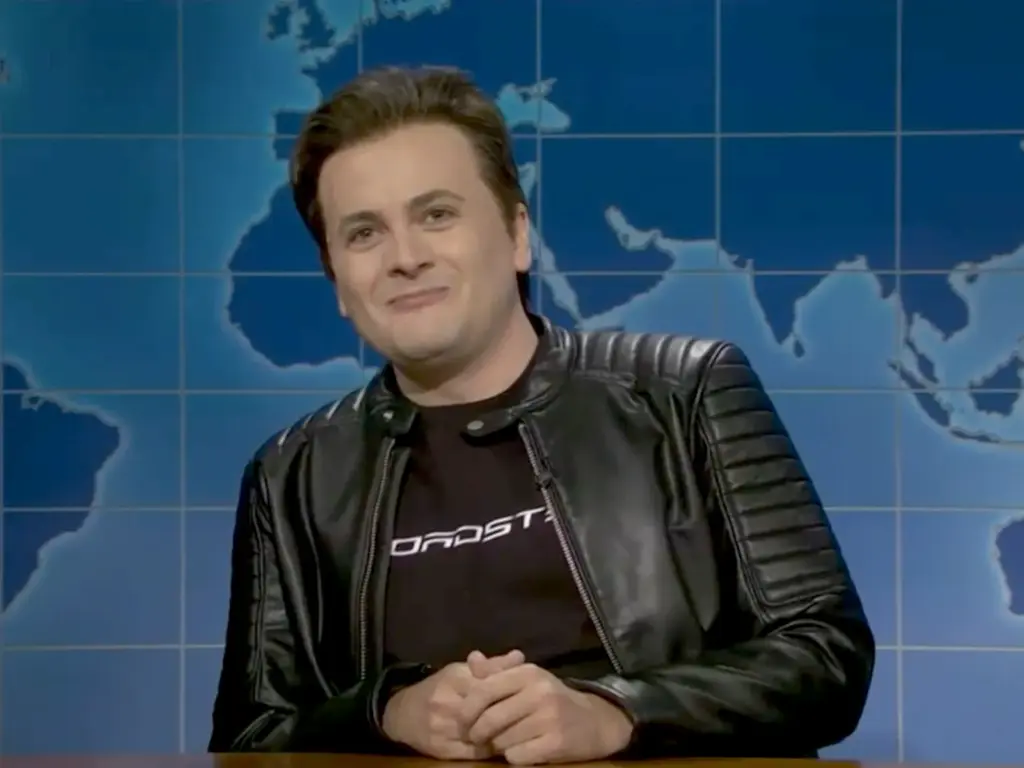
- Jeremy Culhane’s portrayal of Elon Musk on 'Weekend Update' serves as a cultural barometer for the public’s reaction to the billionaire's $500 million midterm investment.
- The sketch highlights the disconnect between Musk’s massive financial backing of Republican candidates and the perceived lack of electoral return on that investment.
- Satire continues to be a primary vehicle for the American public to process the increasingly blurred lines between private corporate power and public governance.
- The performance underscores the broader trend of late-night television acting as a critical check on the political activities of tech moguls.
- L'incarnation d'Elon Musk par Jeremy Culhane dans « Weekend Update » agit comme un baromètre culturel de la réaction publique face à l'investissement de 500 millions de dollars du milliardaire dans les élections de mi-mandat.
- Le sketch met en évidence le fossé entre le soutien financier massif de Musk aux candidats républicains et le retour sur investissement électoral perçu comme insuffisant.
- La satire demeure un véhicule privilégié pour le public américain afin d'appréhender les frontières de plus en plus floues entre pouvoir corporatif privé et gouvernance publique.
- Cette performance souligne la tendance générale de la télévision de fin de soirée à s'affirmer comme un contre-pouvoir critique face aux agitations politiques des magnats de la tech.
- La interpretación de Jeremy Culhane como Elon Musk en 'Weekend Update' funciona como un barómetro cultural ante la inyección de 500 millones de dólares del magnate en las elecciones de mitad de mandato.
- El sketch resalta el abismo entre el colosal respaldo financiero de Musk a los candidatos republicanos y la escasa rentabilidad electoral obtenida.
- La sátira continúa erigiéndose como el principal vehículo para que la sociedad estadounidense procese la difusa línea entre el poder corporativo privado y la gobernanza pública.
- La representación subraya la tendencia de la televisión nocturna a ejercer de contrapeso crítico frente a la actividad política de los magnates tecnológicos.
- 杰里米·卡尔汉(Jeremy Culhane)在“周末更新”栏目中对埃隆·马斯克的扮演,成为了公众对这位亿万富翁投入5亿美元参与中期选举产生反应的文化晴雨表。
- 该小品凸显了马斯克对共和党候选人的巨额资金支持与该投资在选举中实际回报微乎其微之间的脱节。
- 讽刺依然是美国公众消化私人企业权力与公共治理之间日益模糊界限的主要途径。
- 这一表演凸显了深夜电视节目作为对科技大亨政治活动进行批判性制衡的更广泛趋势。
When the lights dimmed at Studio 8H this past Saturday, the audience was treated to a performance that felt less like a standard sketch and more like a cultural autopsy. As Jeremy Culhane took the Weekend Update desk, channeling the frenetic, often disjointed energy of Elon Musk, the segment served as a biting commentary on the billionaire’s recent, highly publicized foray into the American midterm elections. With a reported $500 million poured into Republican coffers, the narrative of the sketch was clear: even the world’s wealthiest man cannot simply purchase a political mandate.
The segment did not merely mock the aesthetics of the Tesla and SpaceX CEO; it addressed the uncomfortable reality of a private citizen wielding unprecedented financial influence over the democratic process. By framing Musk’s electoral involvement as an 'epic defeat,' the writers at Saturday Night Live tapped into a growing national sentiment that questions the efficacy and morality of billionaire-funded political campaigns. This moment marks a significant shift in how the media—and by extension, the public—is beginning to view the intersection of Silicon Valley’s technocratic power and the traditional mechanisms of American governance.
The Anatomy of a Billion-Dollar Miscalculation
The core of the satire rests on the sheer scale of the investment. Musk’s financial commitment to the Republican cause was not merely a donation; it was a strategic pivot that signaled his desire to be a kingmaker in the American political arena. However, as the midterm results trickled in, the disconnect between the capital deployed and the electoral outcomes became impossible to ignore. The SNL sketch capitalized on this gap, portraying a version of Musk that was visibly bewildered by the failure of his financial leverage to translate into the expected 'red wave.'
Historically, the relationship between corporate titans and political parties has been characterized by quiet lobbying and strategic PAC contributions. Musk, however, has consistently eschewed these traditional boundaries, preferring a more public, often performative, style of engagement. By taking his political preferences to the digital town square of X (formerly Twitter) and backing them with half a billion dollars, he moved from a private donor to a public political actor. This transition has made him a lightning rod for criticism, transforming him from a celebrated innovator into a polarizing figure whose political failures are now fair game for prime-time comedy.
The 'Weekend Update' segment serves as a reminder that in the American cultural consciousness, money does not buy immunity from ridicule. When the results of the midterms failed to align with the massive expenditures, the narrative shifted from 'the power of the billionaire' to 'the folly of the billionaire.' This is a dangerous shift for any public figure, as it strips away the aura of inevitability that often surrounds those with immense wealth, replacing it with a more human, and often more comedic, vulnerability.
The Cultural Ripple Effect of Tech-Driven Politics
Beyond the laughter, the SNL sketch reflects a broader, more profound anxiety regarding the influence of tech moguls on the democratic fabric. We are living in an era where a handful of individuals possess the resources to shape public opinion, influence elections, and dictate the flow of information. When these individuals choose to exercise that power in the political arena, the public response is rarely neutral. The satire on SNL is a symptom of a society attempting to reconcile the immense power of these individuals with the democratic ideal of 'one person, one vote.'
The economic implications of this are significant. As Musk continues to navigate the complexities of his various enterprises, his political brand becomes inextricably linked to his corporate brand. For investors and stakeholders, this creates a new layer of risk. If the public perception of the CEO becomes dominated by political failure and satirical mockery, it can have downstream effects on consumer sentiment and brand loyalty. The 'Musk brand' has long been built on the promise of the future; when that brand becomes bogged down in the messy, often regressive, world of partisan politics, the promise begins to lose its shine.
Furthermore, the global audience is watching. In Europe and Asia, where regulatory scrutiny of tech giants is already at an all-time high, the spectacle of an American billionaire attempting to buy an election is viewed with a mix of alarm and fascination. The SNL segment, while localized to the American midterm context, resonates globally as a critique of the 'techno-oligarchy' that many fear is replacing traditional democratic institutions. The world is asking: if the richest man on earth cannot fix the political system, what does that say about the system itself?
Institutional Reactions and the Future of Satire
The reaction from political circles has been predictably divided. Supporters of the billionaire argue that his involvement is a necessary check on the status quo, while critics view it as an existential threat to democratic integrity. However, the institutional reaction—the silence from the boardroom and the noise from the comedy stage—speaks volumes. When the most powerful figures in the world are routinely roasted on national television, it signals that the cultural tide is turning against the unchecked influence of the ultra-wealthy.
Looking ahead, the role of satire in this environment will only become more critical. As political discourse becomes increasingly polarized and digital platforms continue to be weaponized for ideological gain, comedy remains one of the few spaces where the absurdity of the situation can be laid bare. We should expect to see more of this, not less. The 'Weekend Update' desk has become a modern-day court jester, the only entity permitted to tell the king that he is not only naked but also losing his grip on the kingdom.
Ultimately, the saga of Elon Musk’s midterm involvement is a cautionary tale for the new generation of tech moguls. It proves that while you can build rockets, electric cars, and global communication networks, you cannot build a political reality that ignores the will of the electorate. As the dust settles on the midterms, the lasting legacy of this episode may not be the candidates who won or lost, but the realization that the public is watching, laughing, and—most importantly—judging the billionaire class with a newfound, and deeply skeptical, eye.
Lorsque les lumières se sont tamisées dans le Studio 8H ce samedi-là, les spectateurs ont assisté à une prestation qui relevait moins du sketch traditionnel que de l'autopsie culturelle. Alors que Jeremy Culhane prenait place derrière le bureau de Weekend Update, canalisant l'énergie frénétique et souvent décousue d'Elon Musk, la séquence s'est muée en un commentaire acerbe sur la récente incursion, hautement médiatisée, du milliardaire dans les élections de mi-mandat américaines. Avec une estimation de 500 millions de dollars versés dans les caisses républicaines, le propos du sketch était on ne peut plus clair : même l'homme le plus riche du monde ne peut s'offrir un mandat politique d'un simple claquement de doigts.
La séquence ne s'est pas contentée de pasticher l'esthétique du PDG de Tesla et de SpaceX ; elle s'est attaquée à cette réalité pour le moins inconfortable d'un citoyen privé exerçant une influence financière sans précédent sur le processus démocratique. En qualifiant l'engagement électoral de Musk de « défaite épique », les auteurs du Saturday Night Live ont capté un sentiment national naissant, qui remet en question l'efficacité et la moralité des campagnes politiques financées par les ultra-riches. Ce moment marque un tournant significatif dans la manière dont les médias – et par extension, l'opinion publique – commencent à appréhender la convergence entre la puissance technocratique de la Silicon Valley et les mécanismes traditionnels de la gouvernance américaine.
L'anatomie d'une erreur de calcul à un milliard de dollars
Le cœur de la satire repose sur la démesure même de l'investissement. L'engagement financier de Musk en faveur de la cause républicaine n'était pas un simple don ; il s'agissait d'un pivot stratégique signalant son ambition de s'imposer en faiseur de rois dans l'arène politique américaine. Cependant, à mesure que les résultats des élections de mi-mandat tombaient, la dichotomie entre les capitaux déployés et les résultats électoraux est devenue impossible à ignorer. Le sketch du SNL a surfé sur cet écart, campant un Musk visiblement décontenancé par l'incapacité de son levier financier à enclencher la « vague rouge » escomptée.
Historiquement, les relations entre les titans de l'économie et les partis politiques se caractérisaient par un lobbying discret et des contributions stratégiques de comités d'action politique (PAC). Musk, en revanche, s'affranchit systématiquement de ces frontières traditionnelles, privilégiant un style d'engagement plus ostentatoire, voire performatif. En portant ses préférences politiques sur la place publique numérique de X (anciennement Twitter) et en les adossant à un demi-milliard de dollars, il a basculé du statut de donateur privé à celui d'acteur politique de premier plan. Cette transition a fait de lui un paratonnerre à critiques, le transformant d'innovateur célébré en une figure hautement polarisante, dont les déboires politiques font désormais le miel des comédies de grande écoute.
La séquence de Weekend Update rappelle qu'au sein de la conscience culturelle américaine, l'argent n'achète pas l'immunité face à la dérision. Lorsque les résultats du scrutin n'ont pas épousé la démesure des dépenses, le récit s'est inversé, passant de « la puissance du milliardaire » à « la folie du milliardaire ». C'est là un basculement périlleux pour toute personnalité publique, car il fissure cette aura d'infaillibilité qui escorte souvent les immenses fortunes, pour y substituer une vulnérabilité plus humaine, et résolument plus comique.
L'onde de choc culturelle d'une politique dictée par la tech
Au-delà du rire, le sketch du SNL reflète une anxiété plus large et plus profonde quant à l'emprise des magnats de la tech sur le tissu démocratique. Nous vivons une époque où une poignée d'individus dispose des ressources nécessaires pour façonner l'opinion publique, peser sur des scrutins et régenter la circulation de l'information. Lorsque ces acteurs décident d'exercer cette puissance dans l'arène politique, la réponse du corps social est rarement neutre. La satire du SNL constitue le symptôme d'une société cherchant à concilier la puissance colossale de ces oligarques avec l'idéal démocratique fondamental : « un homme, une voix ».
Les répercussions économiques de cette posture ne sont pas anodines. Tandis que Musk continue de naviguer dans les méandres de ses multiples entreprises, son image politique se trouve inextricablement liée à son image corporative. Pour les investisseurs et les parties prenantes, cela génère un degré de risque inédit. Si la perception publique du PDG vient à être dominée par ses échecs politiques et par la caricature satirique, les répercussions ne tarderont pas à se faire sentir sur le moral des consommateurs et la fidélité à la marque. La « marque Musk » s'est longtemps nourrie de la promesse du futur ; lorsque celle-ci s'enlase dans la boue souvent régressive de la politique partisane, ladite promesse commence immanquablement à ternir.
En outre, l'observateur international assiste au spectacle. En Europe et en Asie, où la surveillance réglementaire des géants de la technologie atteint déjà des sommets historiques, la pantomime d'un milliardaire américain s'efforçant d'acheter une élection est perçue avec un mélange d'alarme et de fascination. Le segment du SNL, bien qu'ancré dans le contexte strictement américain des élections de mi-mandat, résonne à l'échelle mondiale comme une critique de cette « techno-oligarchie » que beaucoup soupçonnent de vouloir supplanter les institutions démocratiques traditionnelles. Le monde s'interroge : si l'homme le plus riche de la planète est impuissant à réparer le système politique, que cela augure-t-il du système lui-même ?
Réactions institutionnelles et avenir de la satire
La réaction des cercles politiques s'est révélée, sans surprise, fracturée. Les partisans du milliardaire soutiennent que son engagement constitue un contre-poids nécessaire au statu quo, tandis que ses détracteurs y voient une menace existentielle pour l'intégrité démocratique. Néanmoins, la réponse institutionnelle – le silence feutré des conseils d'administration face au vacarme des planches humoristiques – en dit long. Lorsque les figures les plus puissantes du monde se retrouvent régulièrement brocardées à la télévision nationale, c'est le signe manifeste que le climat culturel commence à se retourner contre l'influence démesurée des ultra-riches.
À l'avenir, le rôle de la satire dans un tel écosystème ne pourra que s'intensifier. À l'heure où le discours politique se radicalise et où les plateformes numériques sont converties en armes idéologiques, la comédie demeure l'un des rares sanctuaires où l'absurdité de la situation peut être mise à nu. Il faut s'attendre à voir ce phénomène s'amplifier. Le bureau de Weekend Update s'est métamorphosé en fou du roi des temps modernes, seule entité autorisée à signifier au monarque non seulement qu'il est nu, mais qu'en outre, il perd le contrôle de son royaume.
En définitive, la saga de l'implication d'Elon Musk dans ces élections de mi-mandat constitue un avertissement sans frais pour la nouvelle génération de magnats de la tech. Elle démontre que si l'on peut bâtir des fusées, des véhicules électriques et des réseaux de communication mondiaux, il est impossible de façonner une réalité politique qui s'affranchit de la volonté des électeurs. À l'heure où la poussière retombe sur ces élections, l'héritage durable de cet épisode ne résidera peut-être pas dans le nom des candidats victorieux ou vaincus, mais dans la prise de conscience que le public observe, rit et – par-dessus tout – juge la classe des milliardaires avec un œil neuf et profondément sceptique.
Cuando las luces del estudio 8H se atenuron el pasado sábado, los espectadores asistieron a una interpretación que se antojaba menos como un número humorístico al uso y más como una autopsia cultural. Con la irrupción de Jeremy Culhane en la mesa de 'Weekend Update', canalizando esa energía frenética y a menudo inconexa tan propia de Elon Musk, el segmento funcionó como un mordaz comentario sobre la reciente y sonada incursión del magnate en las elecciones de mitad de mandato en Estados Unidos. Con una inversión estimada en 500 millones de dólares destinada a las arcas republicanas, el mensaje del sketch resultaba diáfano: ni siquiera el hombre más rico del planeta puede limitarse a comprar un mandato político.
El segmento no se limitó a parodiar la estética del consejero delegado de Tesla y SpaceX; abordó la incómoda realidad de ver a un ciudadano particular ostentar una influencia financiera sin precedentes sobre el proceso democrático. Al encuadrar la implicación electoral de Musk como una «derrota épica», los guionistas de Saturday Night Live sintonizaron con un sentimiento nacional al alza que cuestiona la eficacia y la moralidad de las campañas políticas financiadas por los ultrarricos. Este momento marca un giro significativo en la manera en que los medios —y, por extensión, la opinión pública— empiezan a contemplar la intersección entre el poder tecnocrático de Silicon Valley y los resortes tradicionales de la gobernanza estadounidense.
La anatomía de un cálculo milmillonario erróneo
El núcleo de la sátira descansa sobre la titánica escala de la inversión. El compromiso financiero de Musk con la causa republicana no supuso una simple donación; constituyó un viraje estratégico que evidenciaba su pretensión de actuar como un hacedor de reyes en la arena política norteamericana. Sin embargo, a medida que se conocían los resultados de los comicios, la disonancia entre el capital desplegado y los resultados electorales se tornó insostenible. El sketch de SNL capitalizó esta brecha al perfilar a un Musk visiblemente desconcertado ante la incapacidad de su músculo financiero para materializar la esperada «ola roja».
Históricamente, la relación entre los titanes corporativos y los partidos políticos se ha canalizado mediante el cabildeo discreto y las contribuciones de comités de acción política (PAC). Musk, no obstante, ha rehuido sistemáticamente estos límites convencionales para decantarse por un estilo de participación más público y performativo. Al trasladar sus preferencias políticas a la plaza pública digital de X (antes Twitter) y respaldarlas con medio billón de dólares, dio el salto de donante privado a actor político expuesto a la luz pública. Esta transición le ha convertido en un blanco de críticas, mutando su perfil de innovador célebre a una figura polarizadora cuyos tropiezos políticos son ya carne de cañón para el humor de máxima audiencia.
La sección de 'Weekend Update' sirve para recordar que, en el imaginario cultural estadounidense, la fortuna no otorga inmunidad frente al escarnio. Cuando los resultados de las elecciones de mitad de mandato no secundaron semejante despliegue de gasto, la narrativa pasó de «el poder del milmillonario» a «la insensatez del milmillonario». Se trata de un viraje peligroso para cualquier rostro público, puesto que despoja al inmenso patrimonio de esa aureola de inevitabilidad que suele rodearlo para sustituirla por una vulnerabilidad más humana y, por ende, más cómica.
La onda expansiva cultural de la política impulsada por la tecnología
Más allá de las carcajadas, el sketch de SNL refleja una inquietud generalizada y más profunda en torno al peso de los magnates tecnológicos en el tejido democrático. Vivimos una época en la que un puñado de individuos acapara los recursos necesarios para moldear la opinión pública, influir en los comicios y dictar el cauce de la información. Cuando tales figuras deciden ejercer esa influencia en la palestra política, la respuesta ciudadana rara vez es neutral. La sátira emitida por SNL es el síntoma de una sociedad que pugna por conciliar el inmenso poder de estos actores con el ideal democrático de «una persona, un voto».
Las derivadas económicas de este fenómeno son notables. A medida que Musk sortea las complejidades de sus múltiples empresas, su marca política se funde de manera inextricable con su impronta corporativa. Para los inversores y accionistas, esto introduce una nueva capa de riesgo. Si la percepción pública del máximo ejecutivo queda dominada por los reveses políticos y la burla satírica, ello puede repercutir en cascada sobre la confianza del consumidor y la lealtad a la marca. El sello de identidad de Musk se ha cimentado tradicionalmente sobre la promesa de futuro; cuando ese universo se ve arrastrado al fango y con frecuencia retrógrado de la política de trincheras, dicha promesa comienza a deslucirse.
Por lo demás, la audiencia global observa con atención. En Europa y Asia, donde el escrutinio regulador sobre los gigantes tecnológicas alcanza cotas históricas, el espectáculo de un milmillonario estadounidense intentando comprar unas elecciones se contempla entre la alarma y la fascinación. El segmento de SNL, aun circunscrito al contexto local de los comicios norteamericanos, resuena a escala internacional como una crítica a esa «tecno-oligarquía» que muchos temen que acabe por suplantar a las instituciones democráticas tradicionales. El mundo se pregunta: si el hombre más rico del planeta es incapaz de enderezar el sistema político, ¿qué dice eso del sistema en sí?
Las reacciones institucionales y el porvenir de la sátira
La respuesta procedente de los círculos políticos se ha mostrado previsiblemente fragmentada. Los partidarios del magnate sostienen que su participación constituye un contrapeso ineludible frente al statu quo, mientras que sus detractores la tachan de amenaza existencial para la integridad democrática. Con todo, la reacción institucional —el silencio en los consejos de administración y el bullicio en los platós de comedia— resulta de lo más elocuente. Cuando las figuras más poderosas del mundo son abucheadas de forma rutinaria en la televisión nacional, ello denota que la marea cultural está virando en contra de la influencia desmedida de las grandes fortunas.
De cara al futuro, el cometido de la sátira en semejante ecosistema no hará sino ganar trascendencia. A medida que el discurso político se polarice aún más y las plataformas digitales sigan instrumentalizándose con réditos ideológicos, el humor pervivirá como uno de los escasos reductos donde desnudar la pura absurdidad de la coyuntura. Debemos aguardar más muestras de este talante, no menos. La mesa de 'Weekend Update' se ha erigido en bufón de la corte contemporáneo, la única entidad autorizada para recordarle al rey que no solo marcha desnudo, sino que además pierde el control del reino.
En última instancia, la saga de la incursión electoral de Elon Musk funciona como una advertencia para la nueva estirpe de magnates tecnológicos. Demuestra que, si bien es factible levantar cohetes, vehículos eléctricos y redes de comunicación globales, resulta imposible esculpir una realidad política que ignore la voluntad de los electores. Al disiparse el polvo de los comicios, el legado perdurable de este episodio tal vez no resida en los candidatos vencedores o derrotados, sino en la constatación de que la ciudadanía observa, ríe y —lo que es más importante— juzga a la clase de los milmillonarios bajo una óptica inédita y profundamente escéptica.
上周六,当8H演播室的灯光暗下来时,观众们欣赏到了一场与其说是一场标准小品、不如说是一场文化解剖的表演。当杰里米·卡尔汉(Jeremy Culhane)走上“周末更新”(Weekend Update)的主播台,展现出埃隆·马斯克那种狂热且常常语无伦次的精气神时,这个环节成为了对这位亿万富翁近期高调涉足美国中期选举的辛辣评论。据报道,他向共和党金库注入了5亿美元,小品传递的信息非常明确:即使是世界上最富有的人,也无法简单地买下一个政治授权。
这个小品并不仅仅是嘲笑这位特斯拉和SpaceX首席执行官的外在形象;它直面了一个令人不安的现实,即一个私营公民对民主进程施加了前所未有的金融影响力。通过将马斯克的选举介入框定为一场“史诗般的失败”,《周六夜现场》(Saturday Night Live)的编剧们触及了日益高涨的国民情绪——这种情绪对亿万富翁资助的政治活动的有效性和道德性提出了质疑。这一时刻标志着媒体(进而延伸至公众)开始看待硅谷技术官僚权力与美国传统治理机制交汇点的方式发生了重大转变。
十亿美元误算剖析
这种讽刺的核心在于投资的庞大体量。马斯克对共和党事业的财务承诺不仅仅是一笔捐款;这是一个战略转向,标志着他渴望成为美国政治竞技场的造王者。然而,随着中期选举结果陆续出炉,投入的资金与选举结果之间的脱节变得无法忽视。SNL的小品正是利用了这一差距,塑造了一个版本的马斯克:他对自己的财政影响力未能转化为预期的“红色浪潮”感到明显困惑。
从历史上看,企业巨头与政党之间的关系一直以安静的游说和战略性的政治行动委员会(PAC)捐款为特征。然而,马斯克一直避开这些传统界限,更倾向于一种公开的、往往带有表演性质的参与风格。通过将他的政治偏好带到X(前身为Twitter)这个数字城市广场,并以五亿美元作为后盾,他从一个私人捐款人转变为一个公开的政治演员。这种转变使他成为了批评的众矢之的,将他从一个受人赞誉的创新者变成了一个两极分化的公众人物,其政治失败现在已成为黄金时段喜剧的绝佳素材。
“周末更新”环节提醒人们,在美国的文化意识中,金钱买不到对嘲讽的豁免权。当中期选举的结果与巨额支出不符时,叙事就从“亿万富翁的力量”转变为了“亿万富翁的愚蠢”。这对任何公众人物来说都是一个危险的转变,因为它剥夺了那些拥有巨额财富的人身上常有的不可避免的光环,取而代之的是一种更加人性化、往往也更具喜剧色彩的脆弱感。
科技驱动型政治的文化涟漪效应
除了笑声之外,SNL的小品还反映出了一种更广泛、更深层的焦虑,即关于科技大亨对民主结构影响的焦虑。我们生活在一个少数人拥有重塑公众舆论、影响选举和决定信息流向资源的时代。当这些人选择在政治竞技场上行使这种权力时,公众的反应绝非中立。SNL上的讽刺是一个社会的症状,这个社会正试图将这些个人的巨大权力与“一人一票”的民主理想调和起来。
这其中的经济影响是巨大的。随着马斯克继续应对其各项企业错综复杂的局面,他的政治品牌已经与他的企业品牌密不可分。对于投资者和利益相关者来说,这产生了一层新的风险。如果公众对这位首席执行官的看法由政治失败和讽刺嘲弄主导,它就会对消费者情绪和品牌忠诚度产生下游效应。“马斯克品牌”长期建立在对未来的承诺之上;当这个品牌陷入凌乱、往往带有倒退性质的党派政治世界时,这种承诺就开始失去光彩。
此外,全球观众也在密切关注。在对科技巨头的监管审查已经达到历史最高水平的欧洲和亚洲,美国亿万富翁企图收买选举的闹剧被视为既惊恐又着迷。SNL的小品虽然局限于美国中期选举的背景,但在全球范围内引起了共鸣,它是对许多人所担忧的正在取代传统民主机构的“技术寡头政治”的批判。世界在发问:如果地球上最富有的男人都无法修复政治体制,那这说明体制本身出了什么问题?
体制反应与讽刺的未来
政治圈的反应自然分化成了两派。这位亿万富翁的支持者认为,他的介入是对现状的必要制衡,而批评者则认为这是对民主完整性的生存威胁。然而,体制的反应——董事会的沉默与喜剧舞台的喧嚣——说明了一切。当世界上最有权势的人物在全国电视节目中遭到例行嘲讽时,这发出了一个信号:文化潮流正在背离超级富豪不受限制的影响力。
展望未来,讽刺在这一环境中的作用将变得更加关键。随着政治话语日益极化、数字平台继续被作为意识形态争夺的武器,喜剧依然是少数几个能够赤裸裸展现荒诞局面的空间之一。“周末更新”主播台已经成为了现代宫廷小丑,它是唯一被允许告诉国王他不仅赤身裸体、而且正在失去对王国控制的实体。
归根结底,埃隆·马斯克参与中期选举的传奇故事对新一代科技大亨来说是一个警世寓言。它证明了,虽然你可以制造火箭、电动汽车和全球通信网络,但你无法建立一个无视选民意志的政治现实。随着中期选举尘埃落定,这一插曲的持久遗产可能不是那些获胜或失败的候选人,而是这样一种认识:公众正在以一种崭新的、深深怀疑的眼光注视着、嘲笑着、并最终审判着亿万富翁阶层。
Editorial Standards & Multi-Language Synthesis: This dispatch was synthesized and fact-checked by the ParisDaily Editorial Desk across 5 global editions (EN, FR, VI, ES, ZH), cross-referencing primary international wire reports and real-time search intelligence.