西班牙与印度在果阿国际电影节及WAVES电影市场共筑视听产业新前沿
Spain and India are actively modernizing their bilateral cinematic ties, advancing a vital new co-production treaty as Madrid concludes its historic Country of Honor tenure at the 57th International Film Festival of India.
Tây Ban Nha và Ấn Độ đang tích cực hiện đại hóa mối quan hệ điện ảnh song phương, thúc đẩy một hiệp định đồng sản xuất mới đầy tiềm năng trong bối cảnh Madrid vừa khép lại vai trò "Quốc gia Danh dự" đầy dấu ấn tại Liên hoan phim Quốc tế Ấn Độ (IFFI) lần thứ 57.
L'Espagne et l'Inde modernisent activement leurs liens cinématographiques bilatéraux, faisant progresser un nouveau traité de coproduction essentiel alors que Madrid conclut son mandat historique de « Pays à l'honneur » lors du 57e Festival international du film d'Inde. Cette alliance stratégique marque un tournant décisif pour l'industrie cinématographique mondiale, favorisant une synergie créative entre deux des cultures les plus dynamiques du globe.
España e India modernizan activamente sus vínculos cinematográficos bilaterales, avanzando en un nuevo y vital tratado de coproducción mientras Madrid concluye su histórica etapa como País de Honor en la 57.ª edición del Festival Internacional de Cine de la India. Esta alianza estratégica busca consolidar un puente cultural y comercial entre ambas naciones en el dinámico mercado asiático.
随着马德里圆满结束其作为第57届印度国际电影节“主宾国”的历史性任期,西班牙与印度正积极推动双边电影关系的现代化,并就一项至关重要的全新联合制作条约达成实质性进展。
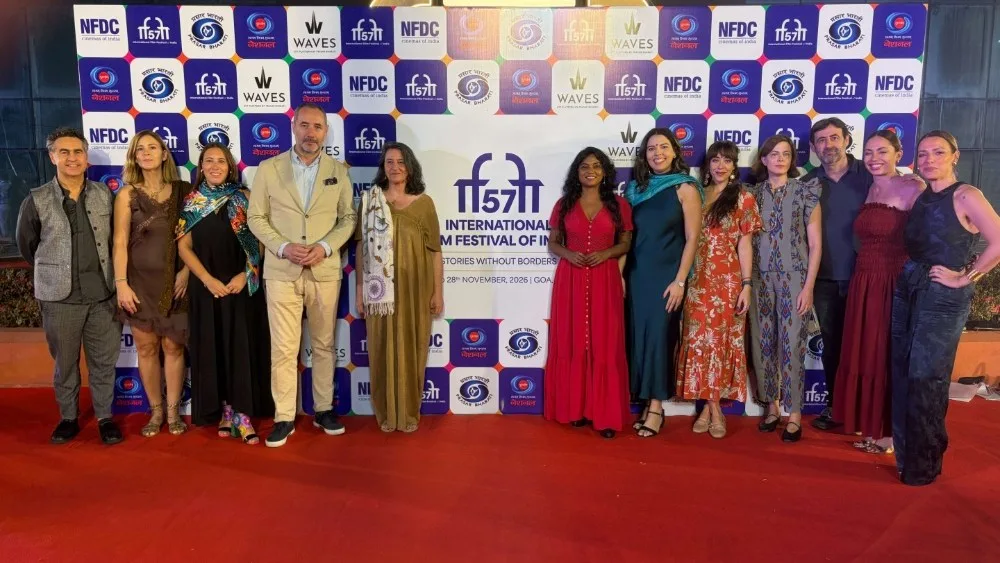
- ICAA Director General Marta Serrano led high-level bilateral talks in Goa with India's Ministry of Information and Broadcasting to replace the foundational 2012 co-production treaty.
- Five elite Spanish production outfits—including Federation Studios Spain and Pecado Films—pitched dynamic cross-border projects at the WAVES Film Bazaar.
- The institutional push is anchored by the Spain Audiovisual Hub Plan, leveraging robust tax incentives, state-of-the-art facilities, and strategic funding.
- Bilateral cinematic synergy was highlighted by screenings like 'Mudras,' the first official treaty co-production between the two nations.
- Tổng giám đốc ICAA Marta Serrano đã dẫn đầu các cuộc đàm phán song phương cấp cao tại Goa với Bộ Thông tin và Phát thanh truyền hình Ấn Độ nhằm thay thế hiệp định đồng sản xuất nền tảng từ năm 2012.
- Năm đơn vị sản xuất hàng đầu của Tây Ban Nha—bao gồm Federation Studios Spain và Pecado Films—đã giới thiệu các dự án xuyên biên giới đầy năng động tại WAVES Film Bazaar.
- Nỗ lực thể chế này được củng cố bởi Kế hoạch Trung tâm Nghe nhìn Tây Ban Nha (Spain Audiovisual Hub Plan), tận dụng các ưu đãi thuế mạnh mẽ, cơ sở vật chất hiện đại và nguồn tài trợ chiến lược.
- Sự cộng hưởng điện ảnh song phương được làm nổi bật qua các buổi chiếu như "Mudras", bộ phim đồng sản xuất chính thức đầu tiên giữa hai quốc gia theo hiệp định cũ.
- Marta Serrano, directrice générale de l'ICAA, a mené des pourparlers bilatéraux de haut niveau à Goa avec le ministère indien de l'Information et de la Radiodiffusion pour remplacer le traité de coproduction fondateur de 2012.
- Cinq maisons de production espagnoles d'élite, dont Federation Studios Spain et Pecado Films, ont présenté des projets transfrontaliers ambitieux lors du WAVES Film Bazaar.
- Cette impulsion institutionnelle s'appuie sur le plan « Spain Audiovisual Hub », tirant parti d'incitations fiscales robustes, d'infrastructures de pointe et de financements stratégiques.
- La synergie cinématographique bilatérale a été illustrée par des projections telles que « Mudras », la première coproduction officielle entre les deux nations sous le traité actuel.
- Marta Serrano, directora general del ICAA, lideró conversaciones bilaterales de alto nivel en Goa con el Ministerio de Información y Radiodifusión de la India para actualizar el tratado de coproducción de 2012.
- Cinco productoras españolas de élite, incluidas Federation Studios Spain y Pecado Films, presentaron proyectos transfronterizos en el WAVES Film Bazaar.
- El impulso institucional se articula a través del Plan España Hub Audiovisual, que aprovecha incentivos fiscales competitivos, instalaciones de vanguardia y financiación estratégica.
- La sinergia cinematográfica bilateral quedó patente con proyecciones como 'Mudras', la primera coproducción oficial bajo el tratado vigente entre ambas naciones.
- 西班牙电影与视听艺术研究所(ICAA)所长玛尔塔·塞拉诺(Marta Serrano)在果阿与印度信息与广播部举行了高级别双边会谈,旨在更新并取代2012年签署的基础性联合制作条约。
- 包括Federation Studios Spain和Pecado Films在内的五家西班牙顶尖制作公司在WAVES电影市场推介了多个极具活力的跨国合作项目。
- 这一制度性推动以“西班牙视听中心计划”(Spain Audiovisual Hub Plan)为核心,充分利用了强有力的税收激励、顶尖的制作设施及战略性资金支持。
- 两国间的电影协同效应通过《Mudras》等影片的放映得到了充分彰显,该片是两国根据现有条约达成的首部官方联合制作作品。
The geopolitical contours of the global entertainment economy are undergoing a subtle yet profound realignment, as traditional Western powerhouses look aggressively toward the vast, dynamic markets of South Asia. This strategic pivot was on full display in Goa, where cultural diplomats, ministry officials, and high-ranking studio executives gathered for the 57th International Film Festival of India (IFFI) and the concurrent WAVES Film Bazaar. At the heart of this convergence was Spain, wrapping up a triumphant tenure as Country of Honor with a series of high-stakes diplomatic and commercial maneuvers designed to permanently cement its cinematic bridge to the Indian subcontinent.
Beyond the festive atmosphere of red carpets and gala premieres, the core achievement of Madrid’s delegation lay behind closed doors. Marta Serrano, director general of Spain’s Institute of Cinematography and Audiovisual Arts (ICAA), spearheaded a pivotal bilateral meeting with India’s Ministry of Information and Broadcasting, fronted by joint secretary Prithul Kumar. Supported by representatives from the India Cine Hub, the talks advanced negotiations on a comprehensive, modern film and audiovisual co-production treaty destined to replace the aging agreement signed in 2012. As global streaming platforms and theatrical conglomerates demand larger, more culturally diverse canvases, this upcoming pact promises to dismantle bureaucratic friction, enabling seamless creative and financial partnerships between two of the world's most vibrant film cultures.
Institutional Synergy and the Spain Audiovisual Hub Plan
The success of Spain’s diplomatic mission in Goa was no accident of timing; rather, it was the culmination of a meticulously orchestrated multi-agency collaboration. The Spain Film Commission, acting as the non-profit umbrella for the nation's decentralized regional film offices, organized the expansive Spanish program alongside ICAA under the broader auspices of the Ministry of Culture. Critical institutional muscle was also provided by ICEX–Invest in Spain and Casa de la India, with substantial financial backing routed through the Ministry for Digital Transformation and Public Administration via SEDIA, the Secretary of State for Digitalization and Artificial Intelligence, under the umbrella of the ambitious Spain Audiovisual Hub Plan.
This whole-of-government approach reflects a sophisticated understanding of contemporary soft power and economic development. Juan Manuel Guimeráns, president of the Spain Film Commission, emphasized that the Country of Honor designation marked a crucial milestone in a collaborative strategy years in the making. As the Spain Film Commission celebrates its 25th anniversary since its founding in 2001, its leadership has successfully transitioned the organization from a domestic location scout network into an international powerhouse capable of driving transnational investment, fostering technical crew exchanges, and positioning Spain as the ultimate European gateway for non-Western productions.

Project Showcases and the WAVES Film Bazaar Incubator
While ministry officials negotiated legal frameworks, the commercial machinery of the WAVES Film Bazaar—running from November 20 to 24—provided a fertile testing ground for creative partnerships. ICAA handpicked five dynamic Spanish production houses: Federation Studios Spain, Pecado Films, Capitán Araña, Acortes Films, and ESCAC Studio. These outfits presented an eclectic slate of projects designed to resonate with international audiences while leveraging the unique production landscapes of both nations.
Among the standout presentations during the "Spain: Where Stories Find Their Stage" panel were projects explicitly tailored for cross-cultural resonance. These included *The Dragon Letter*, spearheaded by Ladakh-born director Stanzin Jigmet and adapted from his Student Academy Award-winning short, and *Serendipia*, an ambitious romance uniting creators from India, Mexico, and Spain. Furthermore, the delegation celebrated concrete precedent by screening *Mudras. Bailando hilos invisibles*, directed by María Salgado Gispert and produced by Anna Saura, Marino García, and Bobby Bedi. As the very first official co-production executed under the 2012 treaty, *Mudras* stood as tangible proof of concept for the hundreds of producers, financiers, and ministry officials gathered at the packed Spanish Networking Night.
Global Ripple Effects and the Horizon Ahead
The deepening axis between Madrid and New Delhi arrives at a critical juncture for the international film industry. As traditional festival circuits face internal reckonings over commercial pressures and artistic integrity, emerging bilateral ecosystems offer a refreshing alternative for risk-taking auteurs. Spain’s aggressive tax incentives, coupled with its breathtaking topographical diversity—ranging from the Andalusian plains to Basque coastal vistas—make it an increasingly attractive canvas for Indian filmmakers seeking European production subsidies and international distribution avenues.
Looking ahead, the successful ratification of the new co-production pact will likely trigger a wave of multi-million-euro joint ventures, leveraging digital technology and artificial intelligence initiatives that were heavily emphasized during the Spain–India Dual Year of Culture, Tourism and Artificial Intelligence. With high-profile Spanish cinematic selections—including Juana Macías’ *Looking for Michael*, Pedro Almodóvar’s *Amarga Navidad*, and Jaime Lorente’s *El mal hijo*—proving that Spanish storytelling holds immense appeal for Indian cinephiles, the stage is set for a golden era of Eurasian cinematic exchange. As these two creative giants harmonize their legal, financial, and artistic infrastructures, the global box office should prepare for a vibrant new wave of cross-cultural masterpieces.
Những đường nét địa chính trị của nền kinh tế giải trí toàn cầu đang trải qua một cuộc tái định hình tinh tế nhưng sâu sắc, khi các cường quốc phương Tây truyền thống đang hướng mạnh mẽ vào các thị trường năng động và rộng lớn tại Nam Á. Sự chuyển dịch chiến lược này đã được thể hiện rõ nét tại Goa, nơi các nhà ngoại giao văn hóa, quan chức bộ ngành và các giám đốc điều hành hãng phim cấp cao cùng tề tựu tại Liên hoan phim Quốc tế Ấn Độ (IFFI) lần thứ 57 và sự kiện WAVES Film Bazaar diễn ra song song. Tâm điểm của sự hội tụ này chính là Tây Ban Nha, quốc gia vừa khép lại nhiệm kỳ "Quốc gia Danh dự" đầy thành công với hàng loạt động thái ngoại giao và thương mại cấp cao, nhằm củng cố vĩnh viễn cây cầu điện ảnh nối liền với tiểu lục địa Ấn Độ.
Vượt ra ngoài bầu không khí lễ hội của những thảm đỏ và buổi công chiếu trang trọng, thành tựu cốt lõi của phái đoàn Madrid nằm ở những cuộc thảo luận kín. Marta Serrano, Tổng giám đốc Viện Điện ảnh và Nghệ thuật Nghe nhìn Tây Ban Nha (ICAA), đã dẫn đầu cuộc họp song phương quan trọng với Bộ Thông tin và Phát thanh truyền hình Ấn Độ, do Thứ trưởng Prithul Kumar đại diện. Với sự hỗ trợ từ các đại diện của India Cine Hub, các cuộc đàm phán đã thúc đẩy việc soạn thảo một hiệp định đồng sản xuất phim và nghe nhìn hiện đại, toàn diện, dự kiến sẽ thay thế thỏa thuận đã cũ từ năm 2012. Khi các nền tảng phát trực tuyến toàn cầu và các tập đoàn rạp chiếu đòi hỏi những không gian văn hóa đa dạng và quy mô hơn, hiệp định sắp tới hứa hẹn sẽ xóa bỏ những rào cản quan liêu, tạo điều kiện cho các quan hệ đối tác sáng tạo và tài chính liền mạch giữa hai nền văn hóa điện ảnh sôi động nhất thế giới.
Sự cộng hưởng thể chế và Kế hoạch Trung tâm Nghe nhìn Tây Ban Nha
Thành công trong sứ mệnh ngoại giao của Tây Ban Nha tại Goa không phải là sự ngẫu nhiên về thời điểm; đó là kết quả của một sự hợp tác đa cơ quan được dàn dựng tỉ mỉ. Ủy ban Điện ảnh Tây Ban Nha (Spain Film Commission), đóng vai trò là tổ chức phi lợi nhuận đại diện cho các văn phòng điện ảnh khu vực, đã phối hợp cùng ICAA tổ chức chương trình Tây Ban Nha quy mô lớn dưới sự bảo trợ rộng rãi của Bộ Văn hóa. Nguồn lực thể chế quan trọng cũng được cung cấp bởi ICEX–Invest in Spain và Casa de la India, với sự hỗ trợ tài chính đáng kể từ Bộ Chuyển đổi Kỹ thuật số và Hành chính Công thông qua SEDIA (Cục Nhà nước về Số hóa và Trí tuệ Nhân tạo), nằm trong khuôn khổ Kế hoạch Trung tâm Nghe nhìn Tây Ban Nha đầy tham vọng.
Cách tiếp cận toàn chính phủ này phản ánh sự hiểu biết sâu sắc về quyền lực mềm và phát triển kinh tế đương đại. Juan Manuel Guimeráns, Chủ tịch Ủy ban Điện ảnh Tây Ban Nha, nhấn mạnh rằng danh hiệu "Quốc gia Danh dự" đánh dấu một cột mốc quan trọng trong chiến lược hợp tác đã được chuẩn bị từ nhiều năm. Kể từ khi kỷ niệm 25 năm thành lập vào năm 2001, ban lãnh đạo của Ủy ban đã chuyển đổi thành công tổ chức từ một mạng lưới tìm kiếm bối cảnh trong nước thành một cường quốc quốc tế, có khả năng thúc đẩy đầu tư xuyên quốc gia, thúc đẩy trao đổi nhân sự kỹ thuật và định vị Tây Ban Nha như cửa ngõ châu Âu tối ưu cho các sản phẩm ngoài phương Tây.
Trưng bày dự án và Vườn ươm WAVES Film Bazaar
Trong khi các quan chức bộ ngành đàm phán về khung pháp lý, bộ máy thương mại của WAVES Film Bazaar—diễn ra từ ngày 20 đến 24 tháng 11—đã cung cấp một mảnh đất màu mỡ cho các quan hệ đối tác sáng tạo. ICAA đã tuyển chọn năm nhà sản xuất năng động của Tây Ban Nha: Federation Studios Spain, Pecado Films, Capitán Araña, Acortes Films và ESCAC Studio. Các đơn vị này đã giới thiệu một danh mục dự án đa dạng, được thiết kế để gây tiếng vang với khán giả quốc tế trong khi tận dụng bối cảnh sản xuất độc đáo của cả hai quốc gia.
Trong số các bài thuyết trình nổi bật tại phiên thảo luận "Tây Ban Nha: Nơi những câu chuyện tìm thấy sân khấu", có những dự án được thiết kế riêng cho sự cộng hưởng đa văn hóa. Điển hình như *The Dragon Letter*, do đạo diễn gốc Ladakh Stanzin Jigmet dẫn dắt và chuyển thể từ bộ phim ngắn từng đoạt giải Student Academy Award của ông, và *Serendipia*, một dự án lãng mạn đầy tham vọng kết nối các nhà sáng tạo từ Ấn Độ, Mexico và Tây Ban Nha. Hơn nữa, phái đoàn đã kỷ niệm một tiền lệ cụ thể bằng việc trình chiếu *Mudras. Bailando hilos invisibles*, do María Salgado Gispert đạo diễn và được sản xuất bởi Anna Saura, Marino García và Bobby Bedi. Là bộ phim đồng sản xuất chính thức đầu tiên được thực hiện theo hiệp định năm 2012, *Mudras* đã trở thành bằng chứng thực tế cho hàng trăm nhà sản xuất, nhà tài chính và quan chức có mặt tại đêm tiệc kết nối Tây Ban Nha.
Tác động lan tỏa toàn cầu và Tầm nhìn phía trước
Trục quan hệ ngày càng sâu sắc giữa Madrid và New Delhi xuất hiện tại một thời điểm quan trọng đối với ngành công nghiệp điện ảnh quốc tế. Khi các hệ thống liên hoan phim truyền thống đối mặt với những đánh giá nội bộ về áp lực thương mại và tính chính trực nghệ thuật, các hệ sinh thái song phương mới nổi mang đến một giải pháp thay thế đầy mới mẻ cho các tác giả dám chấp nhận rủi ro. Các ưu đãi thuế mạnh mẽ của Tây Ban Nha, cùng với sự đa dạng địa hình ngoạn mục—từ những đồng bằng Andalusia đến những khung cảnh ven biển xứ Basque—khiến nơi đây trở thành một bức tranh ngày càng hấp dẫn đối với các nhà làm phim Ấn Độ đang tìm kiếm các khoản trợ cấp sản xuất châu Âu và các kênh phân phối quốc tế.
Hướng tới tương lai, việc phê chuẩn thành công hiệp định đồng sản xuất mới có khả năng sẽ kích hoạt một làn sóng các liên doanh trị giá hàng triệu euro, tận dụng công nghệ kỹ thuật số và các sáng kiến trí tuệ nhân tạo vốn được nhấn mạnh trong Năm Văn hóa, Du lịch và Trí tuệ Nhân tạo Tây Ban Nha–Ấn Độ. Với những lựa chọn điện ảnh Tây Ban Nha nổi tiếng—bao gồm *Looking for Michael* của Juana Macías, *Amarga Navidad* của Pedro Almodóvar và *El mal hijo* của Jaime Lorente—đã chứng minh rằng nghệ thuật kể chuyện của Tây Ban Nha có sức hấp dẫn to lớn đối với giới mộ điệu Ấn Độ, sân khấu đã sẵn sàng cho một kỷ nguyên vàng của trao đổi điện ảnh Á-Âu. Khi hai gã khổng lồ sáng tạo này hài hòa hóa cơ sở hạ tầng pháp lý, tài chính và nghệ thuật của họ, phòng vé toàn cầu nên chuẩn bị cho một làn sóng kiệt tác đa văn hóa đầy sống động.
Les contours géopolitiques de l'économie mondiale du divertissement connaissent un réalignement subtil mais profond, alors que les puissances occidentales traditionnelles se tournent résolument vers les marchés vastes et dynamiques de l'Asie du Sud. Ce pivot stratégique était pleinement visible à Goa, où diplomates culturels, responsables ministériels et dirigeants de studios de premier plan se sont réunis pour le 57e Festival international du film d'Inde (IFFI) et le WAVES Film Bazaar qui se tenait en parallèle. Au cœur de cette convergence, l'Espagne, qui clôturait un mandat triomphal en tant que « Pays à l'honneur » avec une série de manœuvres diplomatiques et commerciales de haut vol, conçues pour cimenter durablement son pont cinématographique avec le sous-continent indien.
Au-delà de l'atmosphère festive des tapis rouges et des avant-premières de gala, la réussite majeure de la délégation madrilène s'est jouée à huis clos. Marta Serrano, directrice générale de l'Institut de la cinématographie et des arts audiovisuels (ICAA) d'Espagne, a dirigé une réunion bilatérale cruciale avec le ministère indien de l'Information et de la Radiodiffusion, représenté par le secrétaire adjoint Prithul Kumar. Soutenus par des représentants de l'India Cine Hub, les entretiens ont fait progresser les négociations sur un traité de coproduction cinématographique et audiovisuelle complet et moderne, destiné à remplacer l'accord vieillissant signé en 2012. Alors que les plateformes de streaming mondiales et les conglomérats de salles exigent des toiles plus vastes et culturellement diversifiées, ce futur pacte promet de lever les frictions bureaucratiques, permettant des partenariats créatifs et financiers fluides entre deux des cultures cinématographiques les plus vibrantes au monde.
Synergie institutionnelle et plan « Spain Audiovisual Hub »
Le succès de la mission diplomatique espagnole à Goa n'est pas le fruit du hasard, mais l'aboutissement d'une collaboration multi-agences méticuleusement orchestrée. La Spain Film Commission, agissant en tant qu'organisation faîtière à but non lucratif pour les bureaux de tournage régionaux décentralisés du pays, a organisé le vaste programme espagnol aux côtés de l'ICAA, sous l'égide plus large du ministère de la Culture. Une force institutionnelle critique a également été apportée par ICEX–Invest in Spain et la Casa de la India, avec un soutien financier substantiel acheminé par le ministère de la Transformation numérique et de la Fonction publique via SEDIA, le secrétariat d'État à la Digitalisation et à l'Intelligence artificielle, dans le cadre de l'ambitieux plan « Spain Audiovisual Hub ».
Cette approche globale du gouvernement reflète une compréhension sophistiquée du soft power contemporain et du développement économique. Juan Manuel Guimeráns, président de la Spain Film Commission, a souligné que la désignation de « Pays à l'honneur » marquait une étape cruciale dans une stratégie collaborative élaborée depuis des années. Alors que la Spain Film Commission célèbre son 25e anniversaire depuis sa fondation en 2001, sa direction a réussi à transformer l'organisation, passant d'un réseau national de repérage de lieux de tournage à une puissance internationale capable de stimuler les investissements transnationaux, de favoriser les échanges d'équipes techniques et de positionner l'Espagne comme la porte d'entrée européenne ultime pour les productions non occidentales.
Vitrine de projets et incubateur du WAVES Film Bazaar
Pendant que les responsables ministériels négociaient les cadres juridiques, la machinerie commerciale du WAVES Film Bazaar — qui s'est tenu du 20 au 24 novembre — offrait un terrain fertile pour les partenariats créatifs. L'ICAA a sélectionné cinq maisons de production espagnoles dynamiques : Federation Studios Spain, Pecado Films, Capitán Araña, Acortes Films et ESCAC Studio. Ces entités ont présenté une sélection éclectique de projets conçus pour résonner auprès des publics internationaux tout en tirant parti des paysages de production uniques des deux nations.
Parmi les présentations marquantes lors du panel « Spain: Where Stories Find Their Stage », figuraient des projets explicitement conçus pour une résonance interculturelle. Citons notamment *The Dragon Letter*, porté par le réalisateur originaire du Ladakh, Stanzin Jigmet, et adapté de son court-métrage primé aux Student Academy Awards, ainsi que *Serendipia*, une romance ambitieuse réunissant des créateurs d'Inde, du Mexique et d'Espagne. En outre, la délégation a célébré un précédent concret en projetant *Mudras. Bailando hilos invisibles*, réalisé par María Salgado Gispert et produit par Anna Saura, Marino García et Bobby Bedi. En tant que toute première coproduction officielle exécutée dans le cadre du traité de 2012, *Mudras* a servi de preuve de concept tangible pour les centaines de producteurs, financiers et responsables ministériels réunis lors de la très fréquentée « Spanish Networking Night ».
Répercussions mondiales et horizons futurs
Le renforcement de l'axe entre Madrid et New Delhi survient à un moment critique pour l'industrie cinématographique internationale. Alors que les circuits de festivals traditionnels font face à des remises en question internes concernant les pressions commerciales et l'intégrité artistique, les écosystèmes bilatéraux émergents offrent une alternative rafraîchissante pour les auteurs prêts à prendre des risques. Les incitations fiscales agressives de l'Espagne, couplées à sa diversité topographique époustouflante — des plaines andalouses aux panoramas côtiers basques — en font une toile de fond de plus en plus attrayante pour les cinéastes indiens en quête de subventions de production européennes et de voies de distribution internationales.
À l'avenir, la ratification réussie du nouveau pacte de coproduction déclenchera probablement une vague de coentreprises de plusieurs millions d'euros, tirant parti des technologies numériques et des initiatives d'intelligence artificielle qui ont été largement mises en avant lors de l'Année duale de la culture, du tourisme et de l'intelligence artificielle Espagne-Inde. Avec des sélections cinématographiques espagnoles de haut niveau — dont *Looking for Michael* de Juana Macías, *Amarga Navidad* de Pedro Almodóvar et *El mal hijo* de Jaime Lorente — prouvant que la narration espagnole exerce un attrait immense sur les cinéphiles indiens, le décor est planté pour un âge d'or des échanges cinématographiques eurasien. Alors que ces deux géants créatifs harmonisent leurs infrastructures juridiques, financières et artistiques, le box-office mondial doit se préparer à une nouvelle vague vibrante de chefs-d'œuvre interculturels.
Los contornos geopolíticos de la economía global del entretenimiento están experimentando un reajuste sutil pero profundo, a medida que las potencias occidentales tradicionales miran con determinación hacia los vastos y dinámicos mercados del sur de Asia. Este giro estratégico quedó patente en Goa, donde diplomáticos culturales, funcionarios ministeriales y ejecutivos de alto nivel se reunieron en el 57.º Festival Internacional de Cine de la India (IFFI) y el WAVES Film Bazaar. En el centro de esta convergencia se situó España, que cerró su triunfal etapa como País de Honor con una serie de maniobras diplomáticas y comerciales de alto nivel, diseñadas para consolidar permanentemente su puente cinematográfico con el subcontinente indio.
Más allá de la atmósfera festiva de las alfombras rojas y los estrenos de gala, el logro principal de la delegación de Madrid tuvo lugar a puerta cerrada. Marta Serrano, directora general del Instituto de la Cinematografía y de las Artes Audiovisuales (ICAA), encabezó una reunión bilateral fundamental con el Ministerio de Información y Radiodifusión de la India, representado por el secretario adjunto Prithul Kumar. Con el apoyo de representantes del India Cine Hub, las conversaciones avanzaron en la negociación de un tratado de coproducción cinematográfica y audiovisual integral y moderno, destinado a sustituir el acuerdo de 2012. En un momento en que las plataformas de streaming y los conglomerados teatrales demandan lienzos más amplios y culturalmente diversos, este futuro pacto promete eliminar las fricciones burocráticas, facilitando asociaciones creativas y financieras fluidas entre dos de las culturas cinematográficas más vibrantes del mundo.
Sinergia institucional y el Plan España Hub Audiovisual
El éxito de la misión diplomática de España en Goa no fue una casualidad, sino la culminación de una colaboración multiinstitucional meticulosamente orquestada. La Spain Film Commission, que actúa como paraguas sin ánimo de lucro para las oficinas regionales de cine del país, organizó el extenso programa español junto al ICAA bajo los auspicios del Ministerio de Cultura. El músculo institucional también fue reforzado por ICEX-Invest in Spain y Casa de la India, con un respaldo financiero sustancial canalizado a través del Ministerio para la Transformación Digital y de la Función Pública mediante la SEDIA (Secretaría de Estado de Digitalización e Inteligencia Artificial), bajo el marco del ambicioso Plan España Hub Audiovisual.
Este enfoque integral del Gobierno refleja una comprensión sofisticada del poder blando contemporáneo y el desarrollo económico. Juan Manuel Guimeráns, presidente de la Spain Film Commission, subrayó que la designación como País de Honor marcó un hito crucial en una estrategia colaborativa gestada durante años. Mientras la Spain Film Commission celebra el 25.º aniversario de su fundación en 2001, su liderazgo ha logrado transformar la organización de una red nacional de localizaciones en una potencia internacional capaz de impulsar la inversión transnacional, fomentar el intercambio de equipos técnicos y posicionar a España como la puerta de entrada europea definitiva para producciones no occidentales.
Escaparate de proyectos y la incubadora WAVES Film Bazaar
Mientras los funcionarios ministeriales negociaban los marcos legales, la maquinaria comercial del WAVES Film Bazaar —celebrado del 20 al 24 de noviembre— proporcionó un terreno fértil para las asociaciones creativas. El ICAA seleccionó a cinco productoras españolas dinámicas: Federation Studios Spain, Pecado Films, Capitán Araña, Acortes Films y ESCAC Studio. Estas firmas presentaron una ecléctica cartera de proyectos diseñados para conectar con audiencias internacionales, aprovechando al mismo tiempo los paisajes de producción únicos de ambas naciones.
Entre las presentaciones destacadas durante el panel "España: donde las historias encuentran su escenario", se incluyeron proyectos explícitamente adaptados para la resonancia intercultural. Entre ellos, *The Dragon Letter*, liderado por el director Stanzin Jigmet, nacido en Ladakh, y adaptado de su cortometraje ganador de un Student Academy Award, y *Serendipia*, un ambicioso romance que une a creadores de India, México y España. Además, la delegación celebró un precedente concreto con la proyección de *Mudras. Bailando hilos invisibles*, dirigida por María Salgado Gispert y producida por Anna Saura, Marino García y Bobby Bedi. Como la primera coproducción oficial ejecutada bajo el tratado de 2012, *Mudras* se erigió como una prueba tangible para los cientos de productores, financieros y funcionarios reunidos en la concurrida Noche de Networking Española.
Efectos globales y el horizonte por venir
El fortalecimiento del eje entre Madrid y Nueva Delhi llega en un momento crítico para la industria cinematográfica internacional. Mientras los circuitos de festivales tradicionales se enfrentan a un examen interno sobre las presiones comerciales y la integridad artística, los ecosistemas bilaterales emergentes ofrecen una alternativa refrescante para los autores que asumen riesgos. Los agresivos incentivos fiscales de España, junto con su impresionante diversidad topográfica —que abarca desde las llanuras andaluzas hasta las vistas costeras vascas—, la convierten en un lienzo cada vez más atractivo para los cineastas indios que buscan subvenciones europeas y vías de distribución internacional.
De cara al futuro, la ratificación exitosa del nuevo pacto de coproducción probablemente desencadenará una ola de empresas conjuntas multimillonarias, aprovechando la tecnología digital y las iniciativas de inteligencia artificial que fueron destacadas durante el Año Dual de Cultura, Turismo e Inteligencia Artificial entre España e India. Con selecciones cinematográficas españolas de alto perfil —incluyendo *Looking for Michael* de Juana Macías, *Amarga Navidad* de Pedro Almodóvar y *El mal hijo* de Jaime Lorente—, que demuestran que la narrativa española tiene un inmenso atractivo para los cinéfilos indios, el escenario está listo para una era dorada de intercambio cinematográfico euroasiático. A medida que estos dos gigantes creativos armonizan sus infraestructuras legales, financieras y artísticas, la taquilla mundial debe prepararse para una nueva y vibrante ola de obras maestras interculturales.
全球娱乐经济的地缘政治格局正在经历一场微妙而深远的重塑,传统的西方电影强国正积极将目光投向南亚广阔且充满活力的市场。这种战略转向在果阿得到了充分体现,文化外交官、政府官员及顶级制片公司高管齐聚于此,参加第57届印度国际电影节(IFFI)及同期举办的WAVES电影市场。作为此次盛会的焦点,西班牙在圆满结束其“主宾国”任期之际,通过一系列高规格的外交与商业运作,旨在永久性地巩固其通往印度次大陆的电影桥梁。
除了红毯与首映礼的节日氛围外,马德里代表团的核心成就发生于闭门会议之中。西班牙电影与视听艺术研究所(ICAA)所长玛尔塔·塞拉诺(Marta Serrano)与印度信息与广播部联合秘书普里图尔·库马尔(Prithul Kumar)进行了关键的双边会谈。在“印度电影中心”(India Cine Hub)代表的支持下,双方推进了关于一项全面、现代化的电影及视听联合制作条约的谈判,旨在取代2012年签署的旧协议。随着全球流媒体平台和院线巨头对更大规模、更具文化多样性叙事的需求日益增长,这项即将出台的协议有望消除官僚壁垒,促成全球两大最具活力的电影文化之间实现无缝的创意与金融合作。
制度协同与“西班牙视听中心计划”
西班牙在果阿外交使命的成功并非偶然,而是多机构精心协作的结晶。西班牙电影委员会(Spain Film Commission)作为该国分散式区域电影办公室的非营利性伞状组织,在文化部的宏观指导下,与ICAA共同组织了规模宏大的西班牙主题活动。此外,ICEX西班牙出口投资局(ICEX–Invest in Spain)和印度之家(Casa de la India)提供了关键的制度支持,并通过雄心勃勃的“西班牙视听中心计划”(Spain Audiovisual Hub Plan),由数字化转型与公共行政部下属的数字化与人工智能国务秘书处(SEDIA)提供了实质性的资金保障。
这种“全政府”模式反映了对当代软实力与经济发展的深刻理解。西班牙电影委员会主席胡安·曼努埃尔·吉梅兰斯(Juan Manuel Guimeráns)强调,主宾国身份标志着一项酝酿多年合作战略的重要里程碑。自2001年成立以来,西班牙电影委员会已走过25个年头,其领导层成功地将该组织从一个国内取景地搜寻网络,转型为能够推动跨国投资、促进技术人员交流,并将西班牙定位为非西方制作进入欧洲终极门户的国际强力机构。
项目推介与WAVES电影市场孵化器
在政府官员商讨法律框架的同时,11月20日至24日举行的WAVES电影市场则为商业运作提供了孕育创意合作的沃土。ICAA精心挑选了五家极具活力的西班牙制作公司:Federation Studios Spain、Pecado Films、Capitán Araña、Acortes Films以及ESCAC Studio。这些公司展示了一系列兼顾国际受众审美与两国独特制作环境的多元化项目。
在“西班牙:故事寻找舞台”(Spain: Where Stories Find Their Stage)专题讨论会上,一些专门为跨文化共鸣量身定制的项目脱颖而出。其中包括由拉达克裔导演斯坦津·吉格梅特(Stanzin Jigmet)执导、改编自其曾获学生奥斯卡奖短片的《龙之信》(The Dragon Letter),以及汇集了印度、墨西哥和西班牙创作者的雄心勃勃的爱情片《Serendipia》。此外,代表团还通过放映由玛丽亚·萨尔加多·吉斯佩特(María Salgado Gispert)执导,安娜·绍拉(Anna Saura)、马里诺·加西亚(Marino García)和鲍比·贝迪(Bobby Bedi)制片的《Mudras. Bailando hilos invisibles》来庆祝具体的合作先例。作为2012年条约下的首部官方联合制作作品,《Mudras》在座无虚席的“西班牙交流之夜”上,向数百名制片人、金融家和政府官员展示了切实可行的合作范本。
全球连锁反应与未来展望
马德里与新德里之间日益深化的轴心关系,正值国际电影产业的关键转折点。随着传统电影节体系因商业压力和艺术完整性问题面临内部重估,新兴的双边生态系统为勇于冒险的作者导演提供了令人耳目一新的选择。西班牙激进的税收激励政策,加上其从安达卢西亚平原到巴斯克海岸景观的惊人地形多样性,使其成为寻求欧洲制作补贴和国际发行渠道的印度电影人眼中越来越具吸引力的画布。
展望未来,新联合制作条约的成功批准极有可能引发一波数百万欧元的合资浪潮,并利用在“西班牙-印度文化、旅游与人工智能双年”期间重点强调的数字技术与人工智能倡议。随着胡安娜·马西亚斯(Juana Macías)的《寻找迈克尔》(Looking for Michael)、佩德罗·阿莫多瓦(Pedro Almodóvar)的《苦涩的圣诞节》(Amarga Navidad)以及海梅·洛伦特(Jaime Lorente)的《坏儿子》(El mal hijo)等高调西班牙影片的入选,证明了西班牙叙事对印度影迷具有巨大的吸引力,欧亚电影交流的黄金时代已然开启。随着这两大创意巨头不断协调其法律、金融和艺术基础设施,全球票房市场应为即将到来的跨文化杰作新浪潮做好准备。
Editorial Standards & Multi-Language Synthesis: This dispatch was synthesized and fact-checked by the ParisDaily Editorial Desk across 5 global editions (EN, FR, VI, ES, ZH), cross-referencing primary international wire reports and real-time search intelligence.