Pont entre deux superpuissances culturelles : l'Espagne et l'Inde forgent des alliances cinématographiques
At the WAVES Film Bazaar in Goa, Spanish and Indian industry leaders unveiled a bold framework of financial incentives, technical cooperation, and access to a massive 500 million-strong Spanish-speaking market.
Tại Chợ phim WAVES ở Goa, các nhà lãnh đạo ngành công nghiệp Tây Ban Nha và Ấn Độ đã công bố khung hợp tác táo bạo về ưu đãi tài chính, hợp tác kỹ thuật và quyền tiếp cận thị trường nói tiếng Tây Ban Nha khổng lồ với 500 triệu dân.
Lors du marché du film WAVES à Goa, les dirigeants des industries espagnole et indienne ont dévoilé un cadre audacieux d'incitations financières, de coopération technique et d'accès à un marché hispanophone colossal de 500 millions de personnes.
En el marco del mercado WAVES Film Bazaar en Goa, los líderes de la industria de España y la India presentaron un sólido marco de incentivos financieros, cooperación técnica y acceso a un mercado hispanohablante de más de 500 millones de personas. Esta iniciativa busca trascender la mera coproducción para consolidar una alianza creativa global.
在果阿举办的WAVES电影市场上,西班牙与印度的业界领袖公布了一项雄心勃勃的框架,涵盖财务激励、技术合作以及通往拥有5亿人口的庞大西班牙语市场的渠道。
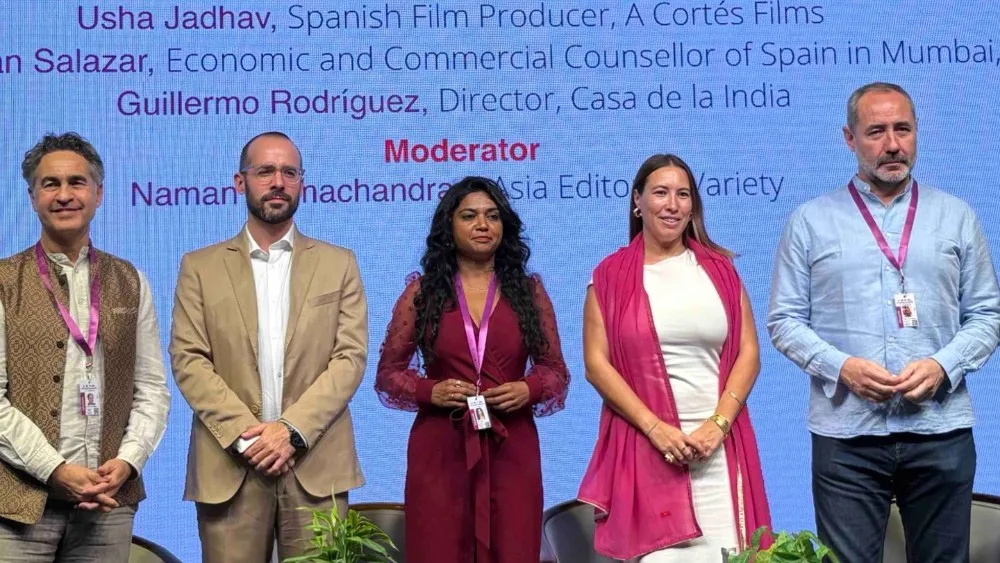
- Camilo Vázquez of Spain's ICAA emphasized that co-production serves as the vital financial and artistic bridge between the two nations.
- Actor-producer Usha Jadhav highlighted operational advantages in Spain, including disciplined eight-hour shifts and pristine acoustical environments.
- The 2012 bilateral audiovisual co-production agreement is undergoing crucial updates to streamline approvals through NFDC and ICAA.
- The partnership unlocks a combined creative ecosystem reaching over 500 million Spanish speakers globally alongside India's massive diaspora and VFX power.
- Camilo Vázquez thuộc ICAA Tây Ban Nha nhấn mạnh rằng đồng sản xuất đóng vai trò là cầu nối tài chính và nghệ thuật thiết yếu giữa hai quốc gia.
- Diễn viên kiêm nhà sản xuất Usha Jadhav đã làm nổi bật các lợi thế vận hành tại Tây Ban Nha, bao gồm chế độ làm việc kỷ luật tám giờ và môi trường âm học nguyên bản.
- Hiệp định đồng sản xuất phim song phương năm 2012 đang trải qua các bước cập nhật quan trọng nhằm hợp lý hóa quy trình phê duyệt thông qua NFDC và ICAA.
- Quan hệ đối tác mở ra một hệ sinh thái sáng tạo chung tiếp cận hơn 500 triệu người nói tiếng Tây Ban Nha trên toàn cầu bên cạnh lượng kiều bào khổng lồ và sức mạnh kỹ xảo VFX của Ấn Độ.
- Camilo Vázquez, de l'ICAA espagnol, a souligné que la coproduction sert de pont financier et artistique vital entre les deux nations.
- L'actrice et productrice Usha Jadhav a mis en avant les avantages opérationnels en Espagne, notamment des journées de travail disciplinées de huit heures et des environnements acoustiques impeccables.
- L'accord bilatéral de coproduction audiovisuelle de 2012 fait l'objet de mises à jour cruciales afin de simplifier les approbations par l'intermédiaire de la NFDC et de l'ICAA.
- Ce partenariat libère un écosystème créatif combiné qui touche plus de 500 millions d'hispanophones à travers le monde, aux côtés de la puissante diaspora indienne et de son expertise en matière d'effets visuels.
- Camilo Vázquez, del ICAA de España, subrayó que la coproducción actúa como el puente financiero y artístico vital entre ambas naciones.
- La actriz y productora Usha Jadhav destacó las ventajas operativas de rodar en España, que incluyen jornadas disciplinadas de ocho horas y entornos acústicos óptimos.
- El acuerdo bilateral de coproducción audiovisual de 2012 está experimentando actualizaciones cruciales para agilizar las aprobaciones a través del NFDC y el ICAA.
- La alianza abre las puertas a un ecosistema creativo combinado que conecta a más de 500 millones de hispanohablantes en todo el mundo con la inmensa diáspora de la India y su potencia en efectos visuales.
- 西班牙ICAA的卡米洛·巴斯ázquez(Camilo Vázquez)强调,合拍片是两国之间至关重要的经济与艺术桥梁。
- 演员兼制片人乌莎·贾德哈夫(Usha Jadhav)突出了西班牙的运营优势,包括规范的八小时工作制和纯净的声学环境。
- 2012年双边视听合拍协议正经历关键更新,旨在通过国家电影发展局(NFDC)和ICAA简化审批流程。
- 该合作解锁了一个覆盖全球5亿以上西班牙语人口的综合创意生态系统,并与印度的庞大侨民群体及特效实力形成交汇。
In an era where global entertainment markets are increasingly defined by cross-border consolidation and cultural hybridization, a momentous strategic alignment is taking shape between two of the world’s most vibrant cinematic powerhouses. At the milestone 20th edition of the Film Bazaar—held alongside the 57th International Film Festival of India (IFFI) in Goa—a high-level delegation from Spain laid out an irresistible blueprint for Indian producers. Pitching aggressive tax incentives, world-class technical crews, and a gateway to a 500 million-strong Spanish-speaking diaspora, Madrid's cultural and economic envoys framed the initiative not merely as a service-work arrangement, but as a profound creative alliance designed to capture global audiences.
Moderated by Variety Asia editor Naman Ramachandran, the flagship panel—”Spain: Where Stories Find Their Stage–Incentives, Locations & Co-production Opportunities”—served as the intellectual centerpiece of the market’s Knowledge Series. As global streaming platforms accelerate demand for hyper-localized content with universal resonance, the convergence of India’s unmatched production scale, world-leading visual effects capabilities, and Spain’s storied cinematic infrastructure signals a new epoch in international co-productions. Industry leaders at the Goa summit dissected the mechanics of this partnership, offering a masterclass in how institutional backing, financial maneuvering, and cultural diplomacy can successfully coalesce.
The Mechanics of Mutual Advantage: Incentives, Crews, and Infrastructure
For international producers navigating the complex economics of modern filmmaking, Spain has methodically positioned itself as Europe's premier production hub. Lara Molina of the Spain Film Commission and Miguel Fabián Salazar of ICEX Spain Trade and Investment detailed the robust financial architecture awaiting Indian filmmakers. Beyond the stunning geographic diversity—ranging from the sun-drenched Andalusian coastlines to medieval architectural marvels—Spain offers competitive tax rebates designed to de-risk high-end feature films and streaming series.
However, the value proposition extends far beyond ledger-sheet calculations. Usha Jadhav, a National Award-winning actor and producer with ACortes Films, offered an insider’s perspective on the practical realities of shooting on the Iberian Peninsula. Addressing the grueling schedules often encountered in major film hubs, Jadhav praised Spain’s disciplined eight-hour shift structures and quieter shooting environments. These structural conditions not only safeguard crew welfare but provide immense practical advantages for sync-sound productions, allowing creative teams to achieve sonic and visual purity without the logistical friction typical of overcrowded urban locations.
Salazar emphasized the complementary nature of the two nations' ecosystems. While India contributes unmatched volume, a passionate domestic consumer base, global diaspora reach, and elite proficiency in post-production, VFX, and animation, Spain provides seasoned technical crews, avant-garde artistic talent, and seamless institutional access to both European and Latin American distribution channels. This symbiosis ensures that productions can seamlessly transition from principal photography in Mumbai or Ladakh to post-production suites in Madrid or Barcelona.
Navigating Institutional Frameworks and Updating Bilateral Treaties
While the creative enthusiasm is palpable, institutional rigor remains the bedrock of any successful cross-border venture. India and Spain originally signed an audiovisual co-production agreement in 2012, a foundational accord that is currently undergoing vital modernization. Guillermo Rodríguez, director of Casa de la India in Valladolid, illuminated the updated compliance roadmap during the Goa sessions, stressing that transparency and adherence to administrative protocol are non-negotiable for producers seeking official co-production status.
Under the revised guidelines, filmmakers must coordinate closely with designated national bodies: Indian producers must channel their applications through the National Film Development Corporation (NFDC), while their Spanish counterparts interface directly with the Institute of Cinematography and Audiovisual Arts (ICAA), overseen by Spain’s Ministry of Culture. Camilo Vázquez, deputy director of the ICAA, reiterated that institutional backing is deployed precisely to facilitate financing, artistic exchanges, and regulatory harmonization, ensuring that projects qualify for national funding streams in both jurisdictions.
This bureaucratic alignment is mirrored by the active commercial interventions of agencies like ICEX, whose Mumbai office has spearheaded targeted business missions connecting Indian companies in animation, gaming, and post-production with Spanish counter-parties. By demystifying local regulatory frameworks and fostering early-stage trust, these institutions are actively dismantling the historical hesitancy that has often kept Indian and Southern European producers operating within their respective comfort zones.
Unlocking the Five Hundred Million-Strong Linguistic Frontier
Perhaps the most visionary argument presented at the WAVES Film Bazaar transcended balance sheets and tax rebates, focusing instead on the unprecedented cultural arithmetic of a combined market. As Rodríguez astutely observed, both nations have historically gravitated toward familiar orbits—Spain looking primarily toward Europe and Latin America, and India focusing on domestic and Anglophone territories. The deliberate intersection of the Indian film industry with the broader Spanish-speaking world shatters these traditional geographic silos.
By uniting India’s storytelling juggernaut with a global Hispanic demographic exceeding 500 million individuals, producers gain access to an unprecedented planetary audience. To demonstrate this potential, the session concluded with a curated showcase of five distinct cross-border projects seeking Indian collaborators. These included Rakesh Narwani’s Andalusian feature debut 'My Parents Grand Bazaar'; 'Serendipia,' an ambitious romance bridging India, Mexico, and Spain; the animated venture 'Mumu'; the documentary 'Aana and Aai – The War to Become an Artist'; and 'The Dragon Letter,' helmed by Ladakh-born director Stanzin Jigmet, whose preceding short clinched gold at the 2026 Student Academy Awards.
A New Paradigm for Global Cinema
As the curtains closed on the WAVES Film Bazaar, the consensus among delegates was clear: the India-Spain cinematic axis is no longer a speculative hypothesis, but an unfolding reality driven by economic necessity and artistic ambition. By pairing India’s narrative scale with Spain’s gateway to the Hispanic world, the two nations are authoring a new chapter in global entertainment history.
For industry watchers and investors, the mandate moving forward is clear. Success will belong to those who heed Guillermo Rodríguez’s advice to build deep, trust-based connections while rigorously navigating the updated bilateral guidelines. As projects like 'Serendipia' and 'The Dragon Letter' progress from development pitch to principal photography, they will undoubtedly serve as trailblazers for a generation of filmmakers proving that when human stories transcend linguistic boundaries, the entire world becomes a single stage.
Trong kỷ nguyên mà các thị trường giải trí toàn cầu ngày càng được định hình bởi sự hợp nhất xuyên biên giới và sự lai tạo văn hóa, một sự liên kết chiến lược mang tính bước ngoặt đang thành hình giữa hai trong số những cường quốc điện ảnh sôi động nhất thế giới. Tại phiên bản cột mốc lần thứ 20 của Chợ phim Film Bazaar—được tổ chức song song với Liên hoan Phim Quốc tế Ấn Độ (IFFI) lần thứ 57 tại Goa—một phái đoàn cấp cao từ Tây Ban Nha đã đưa ra một bản thiết kế đầy sức hút dành cho các nhà sản xuất Ấn Độ. Đưa ra các ưu đãi thuế mang tính cạnh tranh cao, các đoàn làm phim kỹ thuật đẳng cấp thế giới và cửa ngõ tiếp cận cộng đồng nói tiếng Tây Ban Nha với 500 triệu dân, các đặc phái viên kinh tế và văn hóa của Madrid đã định hình sáng kiến này không chỉ đơn thuần là một thỏa thuận dịch vụ, mà là một liên minh sáng tạo sâu sắc được thiết kế để chinh phục khán giả toàn cầu.
Được điều phối bởi Naman Ramachandran, biên tập viên mục Châu Á của tờ Variety, phiên thảo luận chủ đạo—”Tây Ban Nha: Nơi các câu chuyện tìm thấy sân khấu của mình – Ưu đãi, Địa điểm & Cơ hội đồng sản xuất”—đã đóng vai trò là tâm điểm trí tuệ trong Chuỗi Tác phẩm Tri thức của thị trường. Khi các nền tảng phát trực tuyến toàn cầu đẩy nhanh nhu cầu về nội dung mang tính bản địa hóa cao với sự cộng hưởng phổ quát, sự hội tụ giữa quy mô sản xuất chưa từng có của Ấn Độ, năng lực hiệu ứng hình ảnh hàng đầu thế giới với cơ sở hạ tầng điện ảnh lâu đời của Tây Ban Nha báo hiệu một kỷ nguyên mới trong lĩnh vực đồng sản xuất quốc tế. Các nhà lãnh đạo ngành tại hội nghị thượng đỉnh Goa đã phân tích cơ chế của mối quan hệ đối tác này, mang đến một bài học tổng quan về cách thức sự hỗ trợ từ thể chế, các thủ đoạn tài chính và ngoại giao văn hóa có thể hòa quyện thành công.
Cơ chế của lợi ích tương hỗ: Ưu đãi, Đoàn làm phim và Cơ sở hạ tầng
Đối với các nhà sản xuất quốc tế đang điều hướng nền kinh tế phức tạp của nghệ thuật làm phim hiện đại, Tây Ban Nha đã có chiến lược định vị mình là trung tâm sản xuất hàng đầu Châu Âu. Lara Molina thuộc Ủy ban Phim Tây Ban Nha và Miguel Fabián Salazar thuộc cơ quan Thương mại và Đầu tư Tây Ban Nha ICEX đã trình bày chi tiết về cấu trúc tài chính vững chắc đang chờ đón các nhà làm phim Ấn Độ. Vượt qua cả sự đa dạng địa lý tuyệt đẹp—từ bờ biển Andalucía ngập tràn ánh nắng cho đến những kỳ quan kiến trúc thời trung cổ—Tây Ban Nha cung cấp các khoản hoàn thuế cạnh tranh được thiết kế để giảm thiểu rủi ro cho các bộ phim truyện cao cấp và series phát trực tuyến.
Tuy nhiên, giá trị mang lại còn vượt xa các phép toán trên bảng cân đối kế toán. Usha Jadhav, một diễn viên kiêm nhà sản xuất đoạt giải thưởng Quốc gia làm việc tại ACortes Films, đã mang đến góc nhìn cận cảnh về những thực tế khi bấm máy tại Bán đảo Iberia. Đề cập đến lịch trình khắc nghiệt thường gặp tại các trung tâm điện ảnh lớn, Jadhav ca ngợi cấu trúc ca làm việc tám giờ đầy kỷ luật và môi trường quay phim yên tĩnh hơn của Tây Ban Nha. Những điều kiện cấu trúc này không chỉ bảo vệ phúc lợi của đoàn làm phim mà còn mang lại lợi thế thực tế to lớn cho các sản phẩm thu âm đồng bộ (sync-sound), cho phép các nhóm sáng tạo đạt được độ tinh khiết về âm thanh và hình ảnh mà không gặp phải những ma sát hậu cần điển hình tại các đô thị đông đúc.
Salazar nhấn mạnh tính bổ trợ lẫn nhau trong hệ sinh thái của hai quốc gia. Trong khi Ấn Độ đóng góp khối lượng tác phẩm chưa từng có, lượng khán giả tiêu dùng nội địa đầy nhiệt huyết, phạm vi tiếp cận kiều bào toàn cầu và trình độ xuất sắc ưu tú trong lĩnh vực hậu kỳ, kỹ xảo VFX và hoạt hình, thì Tây Ban Nha lại cung cấp các đoàn làm phim kỹ thuật dày dặn kinh nghiệm, tài năng nghệ thuật tiên phong và khả năng tiếp cận thể chế liền mạch đối với các kênh phân phối ở cả Châu Âu lẫn Mỹ Latinh. Sự cộng sinh này đảm bảo rằng các dự án có thể chuyển đổi mượt mà từ khâu quay phim chính tại Mumbai hoặc Ladakh sang các phòng thu hậu kỳ ở Madrid hoặc Barcelona.
Điều hướng khung thể chế và cập nhật các hiệp định song phương
Mặc dù sự nhiệt tình sáng tạo là vô cùng rõ rệt, tính nghiêm ngặt về mặt thể chế vẫn là nền tảng của bất kỳ liên doanh xuyên biên giới thành công nào. Ấn Độ và Tây Ban Nha ban đầu đã ký kết một hiệp định đồng sản xuất thính trực quan vào năm 2012, một thỏa thuận nền tảng hiện đang trải qua quá trình hiện đại hóa thiết yếu. Guillermo Rodríguez, giám đốc Casa de la India tại Valladolid, đã làm sáng tỏ lộ trình tuân thủ được cập nhật trong các phiên họp tại Goa, nhấn mạnh rằng tính minh bạch và việc tuân thủ các quy tắc hành chính là không thể thương lượng đối với các nhà sản xuất tìm kiếm tư cách đồng sản xuất chính thức.
Theo các hướng dẫn sửa đổi, các nhà làm phim phải phối hợp chặt chẽ với các cơ quan quốc gia được chỉ định: các nhà sản xuất Ấn Độ phải thông qua Tổng công ty Phát triển Phim Quốc gia (NFDC), trong khi các đối tác Tây Ban Nha làm việc trực tiếp với Viện Điện ảnh và Nghệ thuật Nghe nhìn (ICAA), dưới sự giám sát của Bộ Văn hóa Tây Ban Nha. Camilo Vázquez, phó giám đốc ICAA, nhắc lại rằng sự hậu thuẫn từ thể chế được triển khai chính xác nhằm tạo điều kiện thuận lợi cho việc tài trợ, trao đổi nghệ thuật và hài hòa hóa quy định, đảm bảo rằng các dự án đủ điều kiện nhận nguồn tài trợ quốc gia tại cả hai khu vực quyền hạn.
Sự đồng điệu về mặt quan liêu này được phản ánh qua các can thiệp thương mại chủ động từ các cơ quan như ICEX, với văn phòng tại Mumbai đã đi đầu trong các sứ mệnh kinh doanh có mục tiêu kết nối các công ty Ấn Độ trong lĩnh vực hoạt hình, trò chơi điện tử và hậu kỳ với các đối tác Tây Ban Nha. Bằng cách minh bạch hóa các khung quy định địa phương và thúc đẩy niềm tin ngay từ giai đoạn đầu, các tổ chức này đang tích cực phá bỏ sự dè dặt lâu nay vốn thường giữ các nhà sản xuất Ấn Độ và Nam Âu hoạt động trong vùng an toàn của riêng họ.
Mở khóa biên giới ngôn ngữ có quy mô năm trăm triệu dân
Có lẽ lập luận mang tầm nhìn xa trông rộng nhất được trình bày tại Chợ phim WAVES đã vượt ra ngoài các bảng cân đối kế toán và khoản hoàn thuế, tập trung thay vào đó vào phép tính văn hóa chưa từng có của một thị trường kết hợp. Như Rodríguez đã nhận xét một cách sắc sảo, cả hai quốc gia theo lịch sử đều hướng về các quỹ đạo quen thuộc—Tây Ban Nha nhìn chủ yếu về Châu Âu và Mỹ Latinh, trong khi Ấn Độ tập trung vào các lãnh thổ nội địa và nói tiếng Anh. Sự giao thoa có chủ đích giữa ngành công nghiệp điện ảnh Ấn Độ với thế giới nói tiếng Tây Ban Nha rộng lớn hơn đã phá vỡ những ranh giới địa lý truyền thống này.
Bằng cách hợp nhất cỗ máy kể chuyện của Ấn Độ với nhân khẩu học Hispanic toàn cầu vượt mốc 500 triệu cá nhân, các nhà sản xuất có được quyền tiếp cận lượng khán giả toàn cầu chưa từng có. Để chứng minh tiềm năng này, phiên họp đã khép lại bằng một buổi trưng bày tuyển chọn gồm năm dự án xuyên biên giới riêng biệt đang tìm kiếm cộng sự từ Ấn Độ. Bao gồm tác phẩm đầu tay mang đậm dấu ấn Andalucía của Rakesh Narwani 'My Parents Grand Bazaar'; 'Serendipia,' một bộ phim lãng mạn đầy tham vọng bắc cầu qua Ấn Độ, Mexico và Tây Ban Nha; dự án hoạt hình 'Mumu'; bộ phim tài liệu 'Aana and Aai – The War to Become an Artist'; và 'The Dragon Letter,' do đạo diễn sinh ra tại Ladakh Stanzin Jigmet cầm trịch, người từng giành huy chương vàng tại Giải thưởng Hàn lâm Sinh viên 2026 với bộ phim ngắn trước đó.
Một mô hình mới cho điện ảnh toàn cầu
Khi tấm màn khép lại tại Chợ phim WAVES, sự đồng thuận giữa các đại biểu đã rất rõ ràng: trục điện ảnh Ấn Độ - Tây Ban Nha không còn là một giả thuyết phỏng đoán, mà là một thực tế đang thành hình được thúc đẩy bởi nhu cầu kinh tế và tham vọng nghệ thuật. Bằng cách ghép nối quy mô tự sự của Ấn Độ với cửa ngõ dẫn đến thế giới Hispanic của Tây Ban Nha, hai quốc gia đang viết nên một chương mới trong lịch sử giải trí toàn cầu.
Đối với những người theo dõi ngành công nghiệp và các nhà đầu tư, sứ mệnh tiến về phía trước đã rõ ràng. Thành công sẽ thuộc về những ai lắng nghe lời khuyên của Guillermo Rodríguez để xây dựng các mối quan hệ sâu sắc dựa trên lòng tin, đồng thời điều hướng một cách nghiêm ngặt các hướng dẫn song phương đã được cập nhật. Khi các dự án như 'Serendipia' và 'The Dragon Letter' tiến triển từ bản thảo phát triển đến khâu quay phim chính, chúng chắc chắn sẽ đóng vai trò là những người tiên phong cho một thế hệ nhà làm phim chứng minh rằng khi những câu chuyện con người vượt qua ranh giới ngôn ngữ, toàn bộ thế giới sẽ trở thành một sân khấu duy nhất.
À une époque où les marchés mondiaux du divertissement sont de plus en plus définis par la consolidation transfrontalière et l'hybridation culturelle, un alignement stratégique majeur prend forme entre deux des bastions cinématographiques les plus dynamiques de la planète. À l'occasion de la 20e édition du Film Bazaar—qui s'est tenue parallèlement au 57e Festival international du film de l'Inde (IFFI) à Goa—une délégation espagnole de haut rang a présenté un modèle irrésistible pour les producteurs indiens. Mettant en avant des incitations fiscales agressives, des équipes techniques de classe mondiale et une porte d'entrée vers une diaspora hispanophone de 500 millions de personnes, les émissaires culturels et économiques de Madrid ont présenté cette initiative non seulement comme un accord de prestation de services, mais comme une alliance créative profonde conçue pour captiver les publics du monde entier.
Modéré par Naman Ramachandran, rédacteur en chef de Variety Asia, le panel phare intitulé « Spain: Where Stories Find Their Stage–Incentives, Locations & Co-production Opportunities » a constitué la pièce maîtresse intellectuelle de la série de conférences du marché. Alors que les plateformes mondiales de streaming accélèrent la demande de contenus hyper-localisés à résonance universelle, la convergence entre l'échelle de production inégalée de l'Inde, ses capacités de pointe en matière d'effets visuels et l'infrastructure cinématographique historique de l'Espagne annonce une nouvelle ère pour les coproductions internationales. Les figures de proue de l'industrie réunies au sommet de Goa ont disséqué les mécanismes de ce partenariat, offrant une véritable masterclass sur la manière de concrétiser avec succès le soutien institutionnel, les manœuvres financières et la diplomatie culturelle.
La mécanique de l'avantage mutuel : incitations, équipes et infrastructures
Pour les producteurs internationaux qui naviguent dans l'économie complexe du cinéma moderne, l'Espagne s'est méthodiquement imposée comme le premier pôle de production en Europe. Lara Molina, représentant la Spain Film Commission, et Miguel Fabián Salazar, pour ICEX Espagne Commerce et Investissement, ont détaillé la solide architecture financière qui attend les cinéastes indiens. Au-delà d'une stupéfaction géographique—allant des côtes andalouses baignées de soleil aux merveilles architecturales médiévales—l'Espagne propose des allègements fiscaux compétitifs conçus pour réduire les risques liés aux longs métrages haut de gamme et aux séries en streaming.
Cependant, la proposition de valeur va bien au-delà des calculs comptables. Usha Jadhav, actrice et productrice récompensée par un National Award et travaillant avec ACortes Films, a offert un point de vue de l'intérieur sur les réalités pratiques d'un tournage dans la péninsule ibérique. Évoquant les horaires éreintants souvent rencontrés dans les grands pôles cinématographiques, Jadhav a loué la structure disciplinée des journées de huit heures en Espagne et ses environnements de tournage plus calmes. Ces conditions structurelles préservent non seulement le bien-être des équipes, mais offrent des avantages pratiques immenses pour les productions en son synchrone, permettant aux équipes artistiques d'atteindre une pureté sonore et visuelle sans les frictions logistiques typiques des zones urbaines surpeuplées.
Salazar a insisté sur la nature complémentaire des écosystèmes des deux nations. Alors que l'Inde apporte un volume inégalé, une base de consommateurs domestiques passionnée, une large diaspora mondiale et une maîtrise d'élite en matière de post-production, d'effets visuels (VFX) et d'animation, l'Espagne fournit des équipes techniques aguerries, des talents artistiques avant-gardistes et un accès institutionnel fluide aux circuits de distribution européens et latino-américains. Cette symbiose garantit que les productions peuvent passer sans heurts de la prise de vue principale à Bombay ou au Ladakh aux studios de post-production de Madrid ou de Barcelone.
Naviguer dans les cadres institutionnels et actualiser les traités bilatéraux
Si l'enthousiasme créatif est palpable, la rigueur institutionnelle demeure le socle de toute aventure transfrontalière réussie. L'Inde et l'Espagne ont initialement signé un accord de coproduction audiovisuelle en 2012, un pacte fondateur qui fait actuellement l'objet d'une modernisation indispensable. Guillermo Rodríguez, directeur de la Casa de la India à Valladolid, a éclairé la feuille de route actualisée en matière de conformité lors des sessions de Goa, soulignant que la transparence et le respect des protocoles administratifs ne sont pas négociables pour les producteurs recherchant le statut officiel de coproduction.
Selon les directives révisées, les cinéastes doivent se coordonner étroitement avec les organismes nationaux désignés : les producteurs indiens doivent acheminer leurs demandes par l'intermédiaire de la National Film Development Corporation (NFDC), tandis que leurs homologues espagnols traitent directement avec l'Institut de la cinématographie et des arts audiovisuels (ICAA), placé sous la tutelle du ministère espagnol de la Culture. Camilo Vázquez, directeur adjoint de l'ICAA, a réaffirmé que le soutien institutionnel est précisément déployé pour faciliter le financement, les échanges artistiques et l'harmonisation réglementaire, garantissant ainsi que les projets soient éligibles aux flux de financement nationaux dans les deux juridictions.
Cet alignement bureaucratique trouve son écho dans les interventions commerciales actives d'agences telles que l'ICEX, dont le bureau de Bombay a piloté des missions commerciales ciblées reliant des entreprises indiennes spécialisées dans l'animation, le jeu vidéo et la post-production à leurs homologues espagnols. En démystifiant les cadres réglementaires locaux et en favorisant la confiance dès les premières étapes, ces institutions démantèlent activement la frilosité historique qui a souvent cantonné les producteurs indiens et sud-européens dans leurs zones de confort respectives.
À la conquête de la frontière linguistique de cinq cents millions d'âmes
L'argument le plus visionnaire présenté lors du marché du film WAVES a peut-être transcendé les bilans comptables et les crédits d'impôt pour se concentrer sur l'arithmétique culturelle sans précédent d'un marché combiné. Comme l'a fait observer avec acuité Guillermo Rodríguez, les deux nations ont historiquement gravité vers des orbites familières : l'Espagne se tournant principalement vers l'Europe et l'Amérique latine, et l'Inde se focalisant sur son marché intérieur et les territoires anglophones. L'intersection délibérée de l'industrie cinématographique indienne avec le monde hispanophone élargi réduit à néant ces silos géographiques traditionnels.
En unissant le mastodonte narratif indien à un public hispanique mondial dépassant les 500 millions d'individus, les producteurs s'ouvrent l'accès à un public planétaire inédit. Pour illustrer ce potentiel, la session s'est conclue par une vitrine sélective de cinq projets transfrontaliers distincts à la recherche de collaborateurs indiens. Parmi eux figuraient le premier long métrage andalou de Rakesh Narwani, My Parents Grand Bazaar ; Serendipia, une romance ambitieuse jetant un pont entre l'Inde, le Mexique et l'Espagne ; le projet d'animation Mumu ; le documentaire Aana and Aai – The War to Become an Artist ; ainsi que The Dragon Letter, piloté par le réalisateur originaire du Ladakh Stanzin Jigmet, dont le court métrage précédent a décroché l'or aux Student Academy Awards 2026.
Un nouveau paradigme pour le cinéma mondial
Au moment où se sont refermés les rideaux du Film Bazaar de WAVES, le consensus parmi les délégués était sans équivoque : l'axe cinématographique Inde-Espagne n'est plus une hypothèse spéculative, mais une réalité en marche, mue par la nécessité économique et l'ambition artistique. En mariant l'envergure narrative de l'Inde à la porte d'entrée de l'Espagne vers le monde hispanique, les deux nations écrivent un nouveau chapitre de l'histoire du divertissement mondial.
Pour les observateurs de l'industrie et les investisseurs, la consigne est limpide. Le succès appartiendra à ceux qui suivront les conseils de Guillermo Rodríguez : nouer des liens profonds et fondés sur la confiance tout en naviguant avec rigueur dans les directives bilatérales actualisées. À mesure que des projets tels que Serendipia et The Dragon Letter progresseront du stade des pitchs de développement aux tournages principaux, ils s'imposeront sans aucun doute comme les pionniers d'une génération de cinéastes prouvant que lorsque les histoires humaines transcendent les barrières linguistiques, le monde entier devient une seule et unique scène.
En una época en la que los mercados globales del entretenimiento se definen cada vez más por la consolidación transfronteriza y la hibridación cultural, se está gestando una trascendental alineación estratégica entre dos de las potencias cinematográficas más vibrantes del mundo. En la vigésima edición del Film Bazaar —celebrada de forma paralela al 57.º Festival Internacional de Cine de la India (IFFI) en Goa—, una delegación de alto nivel procedente de España presentó una irresistible hoja de ruta para los productores indios. Al promocionar agresivos incentivos fiscales, equipos técnicos de primer nivel mundial y una pasarela hacia una diáspora hispanohablante de 500 millones de personas, los enviados culturales y económicos de Madrid plantearon la iniciativa no como un simple acuerdo de servicios, sino como una profunda alianza creativa diseñada para cautivar a las audiencias globales.
Moderado por Naman Ramachandran, editor de Variety Asia, el panel principal titulado «España: donde las historias encuentran su escenario: incentivos, localizaciones y oportunidades de coproducción» se erigió como el eje intelectual del ciclo de conocimiento del mercado. A medida que las plataformas globales de streaming aceleran la demanda de contenidos hiperlocalizados dotados de una resonancia universal, la convergencia entre la inigualable escala de producción de la India, sus capacidades líderes en efectos visuales y la histórica infraestructura cinematográfica de España augura una nueva era en las coproducciones internacionales. Los líderes de la industria reunidos en la cumbre de Goa diseccionaron la mecánica de esta alianza, ofreciendo una clase magistral sobre cómo el respaldo institucional, la ingeniería financiera y la diplomacia cultural pueden confluir con éxito.
La mecánica del beneficio mutuo: incentivos, equipos e infraestructura
Para los productores internacionales que deben sortear la compleja economía del cine contemporáneo, España se ha consolidado metódicamente como el principal centro de producción de Europa. Lara Molina, representante de la Spain Film Commission, y Miguel Fabián Salazar, de ICEX España Exportación e Inversiones, detallaron la sólida arquitectura financiera que aguarda a los cineastas indios. Más allá de su abrumadora diversidad geográfica —que abarca desde las soleadas costas andaluzas hasta joyas arquitectónicas medievales—, España ofrece competitivos incentivos fiscales concebidos para reducir el riesgo financiero en largometrajes de gran presupuesto y series de streaming.
Sin embargo, la propuesta de valor va mucho más allá de los meros cálculos contables. Usha Jadhav, actriz y productora galardonada con un Premio Nacional y vinculada a ACortes Films, ofreció una perspectiva privilegiada sobre las realidades prácticas de rodar en la península ibérica. Al referirse a los extenuantes horarios que suelen imperar en los grandes centros cinematográficos, Jadhav alabó la rigurosa estructura española de jornadas laborales de ocho horas y los entornos de rodaje más silenciosos. Estas condiciones estructurales no solo velan por el bienestar del equipo técnico, sino que otorgan enormes ventajas prácticas para las producciones con sonido directo, lo que permite a los equipos creativos alcanzar una pureza acústica y visual libre de la fricción logística propia de las localizaciones urbanas masificadas.
Salazar hizo hincapié en la complementariedad de los ecosistemas de ambos países. Mientras que la India aporta un volumen sin igual, una apasionada base de consumidores nacionales, un gran alcance a través de su diáspora global y una competencia de élite en postproducción, efectos visuales y animación, España proporciona equipos técnicos curtidos, un talento artístico vanguardista y un acceso institucional fluido tanto a los canales de distribución europeos como latinoamericanos. Esta simbiosis garantiza que las producciones puedan transitar sin fisuras desde la fotografía principal en Bombay o Ladakh hasta los estudios de postproducción en Madrid o Barcelona.
Navegación por los marcos institucionales y actualización de los tratados bilaterales
Si bien el entusiasmo creativo es innegable, el rigor institucional sigue constituyendo el cimiento de cualquier empresa transfronteriza exitosa. La India y España firmaron originariamente un acuerdo de coproducción audiovisual en 2012, un pacto fundacional que en la actualidad atraviesa un proceso vital de modernización. Guillermo Rodríguez, director de la Casa de la India en Valladolid, expuso las claves de la hoja de ruta normativa actualizada durante las sesiones de Goa, incidiendo en que la transparencia y el estricto cumplimiento de los protocolos administrativos son innegociables para aquellos productores que aspiren a obtener el reconocimiento oficial de coproducción.
Conforme a las directrices revisadas, los cineastas deben coordinarse estrechamente con los organismos nacionales designados: los productores indios tienen que canalizar sus solicitudes a través de la National Film Development Corporation (NFDC), mientras que sus homólogos españoles interactúan directamente con el Instituto de la Cinematografía y de las Artes Audiovisuales (ICAA), adscrito al Ministerio de Cultura de España. Camilo Vázquez, subdirector del ICAA, reiteró que el respaldo institucional se despliega precisamente con el fin de facilitar la financiación, los intercambios artísticos y la armonización regulatoria, garantizando de este modo que los proyectos puedan acogerse a las líneas de ayudas públicas en ambas jurisdicciones.
Esta sintonía burocrática halla su reflejo en las intervenciones comerciales activas de agencias como el ICEX, cuya oficina en Bombay ha impulsado misiones empresariales específicas que conectan a empresas indias de animación, videojuegos y postproducción con socios españoles. Al desmitificar los marcos regulatorios locales y fomentar la confianza desde las fases iniciales, estas instituciones están desmantelando de manera activa las reticencias históricas que a menudo han confinado a los productores indios y del sur de Europa dentro de sus respectivas zonas de confort.
La conquista de la frontera lingüística de los quinientos millones
Quizá el argumento más visionario expuesto en el WAVES Film Bazaar trascendió los balances contables y las desgravaciones fiscales para centrarse en la aritmética cultural sin precedentes que supone un mercado conjunto. Tal y como observó con agudeza Rodríguez, ambas naciones han gravitado históricamente hacia órbitas conocidas: España ha mirado primordialmente hacia Europa e Iberoamérica, mientras que la India se ha volcado en su mercado nacional y en los territorios anglófonos. La intersección deliberada de la industria cinematográfica india con el universo hispanohablante en su conjunto rompe con estos tradicionales compartimentos estancos geográficos.
Al unir la apisonadora narrativa de la India con una demografía hispana global que supera los 500 millones de personas, los productores obtienen acceso a una audiencia planetaria sin precedentes. Para ilustrar dicho potencial, la sesión concluyó con una muestra seleccionada de cinco proyectos transfronterizos que buscan socios en la India. Entre ellos figuraban el debut en el largometraje andaluz de Rakesh Narwani, titulado My Parents Grand Bazaar; Serendipia, un ambicioso romance que entrelaza la India, México y España; la propuesta de animación Mumu; el documental Aana and Aai – The War to Become an Artist; y The Dragon Letter, dirigido por el cineasta nativo de Ladakh Stanzin Jigmet, cuyo cortometraje precedente se alzó con el galardón dorado en los Student Academy Awards de 2026.
Un nuevo paradigma para el cine global
Cuando se bajó el telón del WAVES Film Bazaar, el consenso entre los delegados resultó inequívoco: el eje cinematográfico India-España ya no constituye una hipótesis especulativa, sino una realidad en pleno despliegue impulsada por la necesidad económica y la ambición artística. Al fusionar la escala narrativa de la India con la condición de España como puerta de entrada al mundo hispano, ambos países están redactando un nuevo capítulo en la historia del entretenimiento global.
Para los analistas del sector y los inversores, el mandato de cara al futuro es diáfano. El éxito corresponderá a quienes atiendan el consejo de Guillermo Rodríguez de tejer vínculos profundos basados en la confianza, al tiempo que transitan con rigor por las directrices bilaterales actualizadas. A medida que iniciativas como Serendipia y The Dragon Letter avancen desde la fase de presentación de proyectos hasta el rodaje, se consolidarán sin duda como pioneras para una generación de cineastas dispuestos a demostrar que, cuando las historias humanas rebasan las fronteras lingüísticas, el mundo entero se convierte en un único escenario.
在一个全球娱乐市场日益由跨国整合与文化杂交定义的时代,世界两个最具活力的电影强国之间正在形成一项意义重大的战略对齐。在果阿举行的第57届印度国际电影节(IFFI)期间迎来具有里程碑意义的第二十届电影市场上,来自西班牙的高级别代表团为印度制片人抛出了一份极具吸引力的蓝图。马德里的文化与经济特使们推出了极具竞争力的税收优惠、世界一流的技术团队以及通往拥有5亿人口的西班牙语侨民市场的门户,他们将这项倡议不仅定位为一种劳务代工安排,更是旨在吸引全球观众的深远创意同盟。
在《综艺》亚洲版编辑纳曼·拉马钱德兰(Naman Ramachandran)的主持下,作为该市场知识系列核心的重磅座谈会——“西班牙:故事寻找舞台之地——优惠政策、取景地与合拍机遇”成为了整场活动的思想焦点。随着全球流媒体平台加速推进对兼具普遍共鸣的超本土化内容的需求,印度无与伦比的制作规模、世界领先的视觉特效能力,与西班牙悠久电影基础设施的交汇,标志着国际合拍片进入了一个新纪元。果阿峰会的业界领袖们剖析了这一合作机制,为机构支持、金融运作与文化外交如何成功融合提供了一堂大师课。
互利机制:优惠政策、剧组与基础设施
对于在现代电影复杂经济学中穿梭的国际制片人而言,西班牙已系统性地将自己定位为欧洲首屈一指的制作枢纽。西班牙电影委员会的拉拉·莫利纳(Lara Molina)与西班牙对外贸易局(ICEX Spain Trade and Investment)的米格尔·法比安·萨拉萨尔(Miguel Fabián Salazar)详细介绍了等待印度电影制片人的稳健财务架构。除了阳光明媚的安达卢西亚海岸线到中世纪建筑奇迹等令人惊叹的地理多样性外,西班牙还提供了旨在降低高端故事片和流媒体剧集风险的极具竞争力的税收返还。
然而,其价值主张远超资产负债表的计算。曾获国家奖项的演员兼制片人、ACortes Films的乌莎·贾德哈夫(Usha Jadhav)从内部人士的视角,剖析了在伊比利亚半岛拍摄的实际现实。针对大型电影枢纽中常见的严苛时间表,贾德哈夫赞扬了西班牙规范的八小时工作制和更为安静的拍摄环境。这些结构性条件不仅保障了剧组人员的福祉,还为同期录音制作提供了巨大的实际优势,使创意团队能够在没有过度拥挤的城市常见后勤摩擦的情况下,实现声音和视觉上的纯净度。
萨拉萨尔强调了两国生态系统的互补性。印度贡献了无与伦比的数量、热情的本土消费基础、全球侨民覆盖率,以及在后期制作、视觉特效和动画方面的顶尖专业技能;而西班牙则提供了经验丰富的技术团队、前卫的艺术人才,以及通往欧洲和拉丁美洲发行渠道的无缝制度对接。这种共生关系确保了制作团队能够从孟买或拉达克的早期拍摄,无缝过渡到马德里或巴塞罗那的后期制作室。
驾驭体制框架与更新双边条约
尽管创意热情显而易见,但机构的严谨性依然是任何跨境投资成功的基石。印度和西班牙最初于2012年签署了一项视听合拍协议,这项基础协议目前正经历至关重要的现代化升级。巴利亚多利德印度之家(Casa de la India)主任吉列尔莫·罗德里格斯(Guillermo Rodríguez)在果阿的会议上阐述了更新后的合规路线图,并强调对于寻求官方合拍地位的制片人来说,透明度和对行政协议的遵守是不可妥协的。
在修订后的指南下,电影人必须与指定的国家机构密切协调:印度制片人必须通过国家电影发展局(NFDC)提交申请,而西班牙同行则直接与西班牙文化部属下的电影与视听艺术研究所(ICAA)对接。ICAA副主任卡米洛·巴斯克斯(Camilo Vázquez)重申,部署机构支持正是为了促进融资、艺术交流和监管协调,从而确保项目有资格获得双方司法管辖区的国家资助渠道。
这种官僚体制的对齐与诸如ICEX等机构积极的商业干预相呼应,该机构的孟买办公室一直在带头开展有针对性的商业任务,将印度在动画、游戏和后期制作领域的公司与西班牙同行联系起来。通过揭开当地监管框架的神秘面纱并建立早期信任,这些机构正在积极打破历史上的迟疑——这种迟疑往往让印度和南欧的制片人局限于各自的舒适区内。
解锁五亿人口的语言前沿
WAVES电影市场上提出的最具远见的论点,或许超越了资产负债表和税收返免,转而聚焦于合并市场空前的文化计算。正如罗德里格斯敏锐地指出的那样,两国历史上都倾向于熟悉的轨道——西班牙主要面向欧洲和拉丁美洲,而印度则聚焦于国内和英语领土。印度电影业与更广泛的西班牙语世界的刻意交汇,打破了这些传统的地理壁垒。
通过将印度的叙事巨轮与超过5亿人口的全球西班牙裔民主群体结合在一起,制片人们得以接触到前所未有的全球受众。为了展示这种潜力,会议在结束时进行了五项寻求印度合作者的独特跨境项目的策展展示。这些项目包括拉凯什·纳尔瓦尼(Rakesh Narwani)的安达卢西亚故事片处女作《我父母的大巴扎》(My Parents Grand Bazaar);连接印度、墨西哥和西班牙的雄心勃勃的浪漫片《天缘》(Serendipia);动画风险投资项目《木木》(Mumu);纪录片《阿娜与艾伊:成为艺术家的战争》(Aana and Aai – The War to Become an Artist);以及由拉达克出生的导演斯坦津·吉格梅(Stanzin Jigmet)执导的《龙信》(The Dragon Letter),其先前的短片曾在2026年学生奥斯卡奖上斩获金奖。
全球电影的新范式
随着WAVES电影市场落下帷幕,代表们的共识是清晰的:印西电影轴线不再是一个投机性的假设,而是一个由经济需求和艺术雄心推动的正在展开的现实。通过将印度的叙事规模与西班牙通往西班牙语世界的门户相结合,这两个国家正在全球娱乐历史中书写新的篇章。
对于行业观察家和投资者而言,未来的使命是明确的。成功将属于那些听取吉列尔莫·罗德里格斯建议的人,即在严谨驾驭更新后的双边指南的同时,建立深厚的、基于信任的联系。随着《天缘》和《龙信》等项目从开发筹备推进到主体拍摄,它们无疑将成为一代电影人的开拓者,证明当人类的故事超越语言界限时,整个世界便成了一个单一的舞台。
Editorial Standards & Multi-Language Synthesis: This dispatch was synthesized and fact-checked by the ParisDaily Editorial Desk across 5 global editions (EN, FR, VI, ES, ZH), cross-referencing primary international wire reports and real-time search intelligence.