Le paradoxe Tarkowski : VAR, force excessive et érosion de l'instinct défensif
James Tarkowski’s first career red card has ignited a fierce debate over the evolution of 'serious foul play' and the role of technology in policing the game.
Chiếc thẻ đỏ đầu tiên trong sự nghiệp của James Tarkowski đã thổi bùng một cuộc tranh luận gay gắt về sự tiến hóa của khái niệm "lỗi nghiêm trọng" và vai trò của công nghệ trong việc kiểm soát trận đấu. Sự việc này đặt ra câu hỏi lớn về việc liệu bóng đá hiện đại đang trở nên an toàn hơn hay đang dần đánh mất bản sắc vật lý vốn có.
Le premier carton rouge de la carrière de James Tarkowski a déclenché un débat passionné sur l'évolution de la notion de « jeu dangereux » et le rôle de la technologie dans l'arbitrage. Cette controverse souligne les tensions croissantes entre l'intensité physique historique du football et les exigences cliniques de la VAR.
La primera tarjeta roja en la carrera de James Tarkowski ha desatado un intenso debate sobre la evolución del "juego brusco grave" y el papel de la tecnología en la vigilancia del fútbol. El incidente pone de relieve la tensión entre la intensidad física tradicional y los nuevos estándares de seguridad impuestos por el arbitraje moderno.
詹姆斯·塔科夫斯基职业生涯首次染红,引发了关于“严重犯规”定义演变以及技术介入足球执法角色的激烈辩论。这一判罚不仅终结了一项历史纪录,更折射出英超在追求极致安全与保留竞技本质之间的深层矛盾。
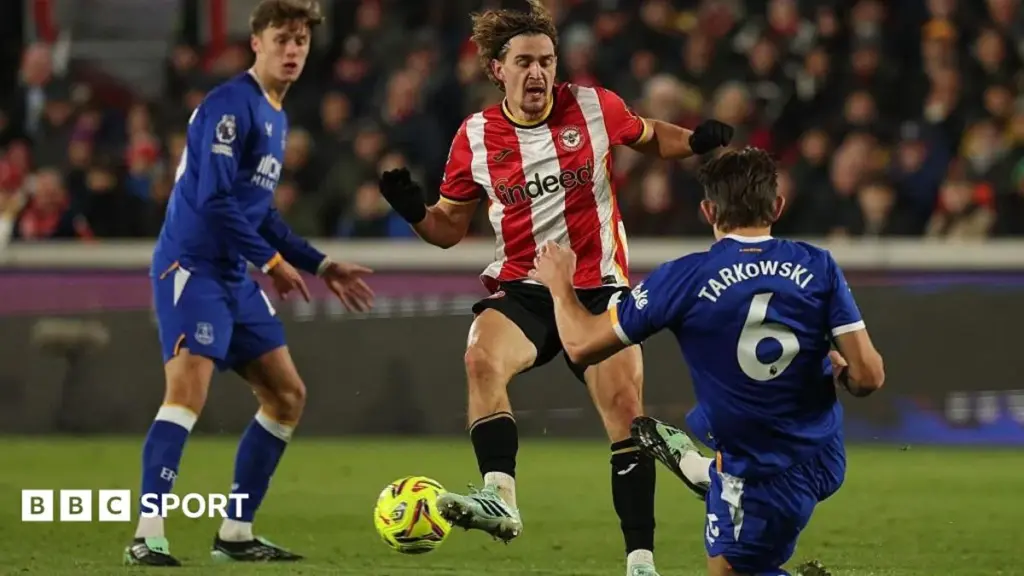
- James Tarkowski received his first Premier League red card in 351 appearances, ending a historic disciplinary record.
- The dismissal occurred during a 4-0 loss to Brentford, marking David Moyes' record-breaking 593rd game in charge of Everton.
- The incident has polarized the footballing world, with pundits split between 'natural momentum' and 'excessive force' arguments.
- The controversy underscores the ongoing struggle to define 'serious foul play' in an era of high-speed, high-stakes VAR intervention.
- James Tarkowski đã phải nhận chiếc thẻ đỏ đầu tiên tại Premier League sau 351 lần ra sân, chấm dứt một kỷ lục kỷ luật lịch sử.
- Sự việc xảy ra trong trận thua 0-4 trước Brentford, đánh dấu cột mốc 593 trận cầm quân kỷ lục của David Moyes tại Everton.
- Vụ việc gây chia rẽ sâu sắc trong giới chuyên môn, với những luồng ý kiến trái chiều giữa "đà di chuyển tự nhiên" và "lực tác động quá mức".
- Tranh cãi này làm nổi bật cuộc đấu tranh không hồi kết trong việc định nghĩa "lỗi nghiêm trọng" ở kỷ nguyên VAR can thiệp với tốc độ cao và áp lực lớn.
- James Tarkowski a reçu le premier carton rouge de sa carrière en Premier League après 351 apparitions, mettant fin à un historique disciplinaire exemplaire.
- L'expulsion est survenue lors d'une défaite 4-0 contre Brentford, marquant le 593e match record de David Moyes à la tête d'Everton.
- L'incident a polarisé le monde du football, divisant les experts entre les partisans du « mouvement naturel » et ceux dénonçant une « force excessive ».
- La controverse met en lumière la difficulté persistante de définir le « jeu dangereux » à une époque où l'intervention de la VAR est omniprésente et scrutée.
- James Tarkowski recibió su primera tarjeta roja en la Premier League tras 351 partidos, poniendo fin a un histórico expediente disciplinario.
- La expulsión ocurrió durante una derrota por 4-0 ante el Brentford, marcando el partido número 593 de David Moyes al frente del Everton, un récord para el técnico.
- El incidente ha polarizado al mundo del fútbol, dividiendo a los expertos entre los argumentos de la "inercia natural" y la "fuerza excesiva".
- La controversia subraya la lucha constante por definir el "juego brusco grave" en una era de intervenciones del VAR a alta velocidad y con grandes riesgos.
- 詹姆斯·塔科夫斯基在出战351场英超联赛后首次被红牌罚下,终结了其职业生涯的纪律纪录。
- 此次罚下发生在埃弗顿0-4负于布伦特福德的比赛中,这也是大卫·莫耶斯执教埃弗顿的第593场里程碑之战。
- 足球界对此判罚产生严重分歧,评论员们在“自然惯性”与“过度暴力”的论点间各执一词。
- 该争议凸显了在高速、高风险的VAR介入时代,界定“严重犯规”所面临的持续困境。
In the high-octane theater of the Premier League, few statistics carry as much weight as a clean disciplinary record. For James Tarkowski, the Everton captain and defensive stalwart, that record was a badge of honor—a testament to a brand of rugged, uncompromising defending that had survived 350 top-flight matches without a single red card. Yet, in the 4-0 dismantling at the hands of Brentford, that streak evaporated in a cloud of VAR controversy. The decision to upgrade a yellow card to a red for a challenge on Yehor Yarmoliuk has become more than just a footnote in a lopsided scoreline; it has become a lightning rod for the existential crisis currently gripping English football’s officiating standards.
The incident itself was a study in modern football’s gray areas. Tarkowski, known for his physical approach, lunged into a tackle that saw him win the ball before his momentum carried his studs into the shin of his opponent. Initially, referee Craig Pawson saw the challenge as a yellow-card offense—a standard caution for a hard, but arguably fair, contest. It was only after the intervention of the Video Assistant Referee that the narrative shifted. The official match center cited “speed, intensity, and studs-up contact” as the justification for the upgrade, effectively categorizing the play as “serious foul play.” For Everton manager David Moyes, the night was a double tragedy: his historic 593rd game at the helm of the club was marred by his heaviest defeat since returning to Goodison Park, compounded by the loss of his captain for the looming, high-stakes Merseyside derby.
The Anatomy of a Modern Dismissal
To understand why this specific red card has caused such a schism in the punditry, one must look at the shifting definition of “endangering the safety of an opponent.” Historically, the game rewarded the “honest tackle”—a challenge where the defender wins the ball, even if the follow-through is heavy. However, the current interpretation of the laws of the game prioritizes the protection of the player over the intent of the tackler. The VAR protocol is designed to strip away the emotion of the moment, focusing instead on the biomechanics of the collision: the point of contact, the force applied, and the potential for injury.
Critics of the decision, including former striker Chris Sutton, argue that the game has lost its soul, suggesting that the “natural momentum” of a professional athlete is being penalized as if it were premeditated malice. This perspective posits that if a defender wins the ball cleanly, the subsequent follow-through is an unavoidable consequence of physics, not a disciplinary infraction. Conversely, proponents of the red card—such as Jamie Carragher—argue that the modern game demands a higher level of control. In this view, a defender of Tarkowski’s experience should be acutely aware of the risks inherent in a high-speed lunge. By leaving the ground and leading with studs, the defender is essentially gambling with the safety of his opponent, and in the eyes of the law, the outcome—a heavy impact on the shin—is the only metric that matters.

The VAR Dilemma and the Reputation Factor
Perhaps the most intriguing aspect of the debate is the role of reputation. Tarkowski is a defender of the “old school,” a player whose style is rooted in the physicality of the 1990s. Some observers have suggested that his history of “near misses”—including a controversial non-dismissal against Liverpool earlier in the season—may have subconsciously influenced the officials. When a player is known for playing on the edge, the threshold for what constitutes a “reckless” challenge often lowers. This creates a dangerous precedent where a player’s past actions, rather than the specific incident at hand, dictate the severity of the punishment.
Furthermore, the intervention of VAR in this instance highlights the ongoing friction between on-field intuition and technological oversight. When a referee is forced to watch a challenge in slow motion, the “speed and intensity” that the match center cited often appear exaggerated. A tackle that looks like a standard, hard-fought contest at full speed can look like an act of aggression when slowed down to frame-by-frame analysis. This discrepancy is at the heart of the “game’s gone” sentiment expressed by many fans and former players, who feel that the technology is stripping the game of its physical identity, turning every 50-50 challenge into a potential game-defining penalty.

Strategic Fallout and the Merseyside Shadow
The immediate impact of Tarkowski’s dismissal extends far beyond the four-goal deficit at Brentford. For David Moyes, the tactical headache is severe. Losing his captain for the Merseyside derby—the most emotionally charged fixture on the Everton calendar—is a blow that could define the club’s trajectory for the coming month. Without the organizational presence of Tarkowski, Everton’s backline becomes significantly more vulnerable, forcing a defensive reshuffle at the worst possible time. The psychological toll of the defeat, coupled with the frustration of the red card, creates a volatile atmosphere that Moyes must now manage with surgical precision.
Looking ahead, the incident serves as a stark reminder of the new reality for Premier League defenders. The era of the “hard man” is being systematically dismantled by a regulatory framework that prioritizes risk mitigation above all else. Players are being forced to recalibrate their defensive instincts, learning to pull out of challenges that they would have made with impunity just a decade ago. Whether this shift will ultimately lead to a safer game or simply a more sanitized, less competitive one remains the central question. As the Premier League continues to refine its use of technology, the Tarkowski case will likely be cited for years to come—not as a clear-cut example of justice, but as the perfect illustration of the sport’s ongoing struggle to reconcile its brutal, physical history with its modern, clinical future.
Trong "nhà hát" đầy kịch tính của Premier League, hiếm có chỉ số nào mang sức nặng như một hồ sơ kỷ luật sạch sẽ. Đối với James Tarkowski, đội trưởng và trụ cột phòng ngự của Everton, kỷ lục đó từng là tấm huy chương danh dự—minh chứng cho lối chơi phòng ngự gai góc, không khoan nhượng đã giúp anh trụ vững qua 350 trận đấu đỉnh cao mà không phải nhận bất kỳ thẻ đỏ nào. Thế nhưng, trong trận thua tan nát 0-4 trước Brentford, chuỗi thành tích đó đã tan biến trong làn khói tranh cãi của VAR. Quyết định nâng mức phạt từ thẻ vàng lên thẻ đỏ sau pha tranh chấp với Yehor Yarmoliuk không chỉ là một chú thích bên lề của một tỷ số chênh lệch; nó đã trở thành tâm điểm cho cuộc khủng hoảng hiện sinh đang bao trùm các tiêu chuẩn trọng tài của bóng đá Anh.
Bản thân sự việc là một nghiên cứu điển hình về những vùng xám của bóng đá hiện đại. Tarkowski, vốn nổi tiếng với lối chơi thể lực, đã lao vào một pha tắc bóng mà ở đó anh chạm bóng trước khi đà di chuyển khiến gầm giày của anh va vào ống đồng đối phương. Ban đầu, trọng tài Craig Pawson coi đó là một lỗi thẻ vàng—một hình phạt tiêu chuẩn cho một pha tranh chấp quyết liệt nhưng có thể coi là hợp lệ. Chỉ sau khi VAR can thiệp, câu chuyện mới đảo chiều. Trung tâm điều hành trận đấu viện dẫn "tốc độ, cường độ và việc tiếp xúc bằng gầm giày" làm lý do cho việc nâng mức phạt, chính thức xếp pha bóng này vào nhóm "lỗi nghiêm trọng". Đối với huấn luyện viên David Moyes của Everton, đêm đó là một bi kịch kép: trận đấu thứ 593 mang tính lịch sử của ông tại câu lạc bộ đã bị hoen ố bởi thất bại nặng nề nhất kể từ khi trở lại Goodison Park, cộng thêm việc mất đi người đội trưởng cho trận derby Merseyside đầy căng thẳng sắp tới.
Giải phẫu một quyết định truất quyền thi đấu hiện đại
Để hiểu tại sao chiếc thẻ đỏ này lại gây ra sự chia rẽ trong giới bình luận, người ta phải nhìn vào định nghĩa đang thay đổi về việc "gây nguy hiểm cho sự an toàn của đối phương". Trong lịch sử, bóng đá từng tôn vinh những "pha tắc bóng trung thực"—nơi hậu vệ giành được bóng, ngay cả khi đà theo sau là rất mạnh. Tuy nhiên, cách diễn giải luật chơi hiện nay ưu tiên việc bảo vệ cầu thủ hơn là ý định của người thực hiện pha tắc bóng. Giao thức VAR được thiết kế để loại bỏ cảm xúc của khoảnh khắc, thay vào đó tập trung vào cơ sinh học của va chạm: điểm tiếp xúc, lực tác động và khả năng gây chấn thương.
Những người chỉ trích quyết định này, bao gồm cả cựu tiền đạo Chris Sutton, lập luận rằng bóng đá đã mất đi linh hồn khi cho rằng "đà di chuyển tự nhiên" của một vận động viên chuyên nghiệp đang bị trừng phạt như thể đó là ác ý có tính toán. Quan điểm này cho rằng nếu một hậu vệ giành bóng một cách hợp lệ, pha theo đà sau đó là hệ quả tất yếu của vật lý, chứ không phải là một vi phạm kỷ luật. Ngược lại, những người ủng hộ thẻ đỏ—như Jamie Carragher—lập luận rằng bóng đá hiện đại đòi hỏi sự kiểm soát cao hơn. Theo quan điểm này, một hậu vệ dày dạn kinh nghiệm như Tarkowski phải nhận thức rõ những rủi ro vốn có trong một pha lao người tốc độ cao. Bằng cách rời khỏi mặt đất và hướng gầm giày về phía trước, hậu vệ về cơ bản đang đánh cược với sự an toàn của đối phương, và dưới góc độ luật pháp, kết quả—một cú va chạm mạnh vào ống đồng—là thước đo duy nhất có ý nghĩa.
Nghịch lý VAR và yếu tố danh tiếng
Có lẽ khía cạnh thú vị nhất của cuộc tranh luận chính là vai trò của danh tiếng. Tarkowski là một hậu vệ theo trường phái "cổ điển", một cầu thủ có phong cách bắt nguồn từ lối chơi thể lực của thập niên 1990. Một số quan sát viên cho rằng lịch sử những "pha bóng suýt soát" của anh—bao gồm cả tình huống không bị truất quyền thi đấu gây tranh cãi trước Liverpool hồi đầu mùa—có thể đã ảnh hưởng trong tiềm thức của các trọng tài. Khi một cầu thủ nổi tiếng với lối chơi sát vạch giới hạn, ngưỡng để xác định một pha tranh chấp là "liều lĩnh" thường bị hạ thấp. Điều này tạo ra một tiền lệ nguy hiểm, nơi hành động trong quá khứ của cầu thủ, thay vì sự việc cụ thể đang diễn ra, lại quyết định mức độ trừng phạt.
Hơn nữa, sự can thiệp của VAR trong trường hợp này làm nổi bật sự ma sát liên tục giữa trực giác trên sân và sự giám sát của công nghệ. Khi một trọng tài buộc phải xem lại pha tranh chấp ở chế độ quay chậm, "tốc độ và cường độ" mà trung tâm điều hành viện dẫn thường bị thổi phồng. Một pha tắc bóng trông có vẻ là một cuộc tranh chấp quyết liệt bình thường ở tốc độ thực lại có thể trông như một hành động hung hăng khi được phân tích từng khung hình. Sự khác biệt này chính là cốt lõi của tâm lý "bóng đá đã mất chất" mà nhiều người hâm mộ và cựu cầu thủ bày tỏ, những người cảm thấy công nghệ đang tước đi bản sắc thể chất của môn thể thao này, biến mọi pha tranh chấp 50-50 thành một quả phạt có thể định đoạt trận đấu.
Hệ lụy chiến lược và bóng ma Merseyside
Tác động tức thời từ việc Tarkowski bị truất quyền thi đấu vượt xa khoảng cách bốn bàn thua tại Brentford. Đối với David Moyes, cơn đau đầu về chiến thuật là vô cùng nghiêm trọng. Việc mất đi người đội trưởng cho trận derby Merseyside—trận đấu giàu cảm xúc nhất trong lịch trình của Everton—là một đòn giáng có thể định hình quỹ đạo của câu lạc bộ trong tháng tới. Không có sự hiện diện tổ chức của Tarkowski, hàng thủ của Everton trở nên dễ bị tổn thương hơn đáng kể, buộc phải xáo trộn đội hình vào thời điểm tồi tệ nhất. Gánh nặng tâm lý từ thất bại, cộng với sự thất vọng về chiếc thẻ đỏ, tạo ra một bầu không khí bất ổn mà Moyes giờ đây phải xử lý với độ chính xác như một cuộc phẫu thuật.
Nhìn về phía trước, sự việc này là một lời nhắc nhở khắc nghiệt về thực tế mới đối với các hậu vệ tại Premier League. Kỷ nguyên của những "gã đồ tể" đang bị tháo dỡ một cách có hệ thống bởi một khung pháp lý ưu tiên việc giảm thiểu rủi ro lên trên hết. Các cầu thủ đang bị buộc phải hiệu chỉnh lại bản năng phòng ngự của mình, học cách rút chân khỏi những pha tranh chấp mà họ từng thực hiện một cách thoải mái chỉ một thập kỷ trước. Liệu sự thay đổi này cuối cùng sẽ dẫn đến một trận đấu an toàn hơn hay chỉ đơn giản là một trận đấu được "vô trùng" và kém cạnh tranh hơn vẫn là câu hỏi trung tâm. Khi Premier League tiếp tục tinh chỉnh việc sử dụng công nghệ, vụ việc của Tarkowski có khả năng sẽ còn được nhắc đến trong nhiều năm tới—không phải như một ví dụ rõ ràng về công lý, mà là minh chứng hoàn hảo cho cuộc đấu tranh không ngừng của môn thể thao này trong việc hòa giải lịch sử vật lý, tàn bạo với tương lai hiện đại, lâm sàng của nó.
Dans le théâtre à haute intensité de la Premier League, peu de statistiques possèdent autant de poids qu'un casier disciplinaire vierge. Pour James Tarkowski, capitaine d'Everton et pilier défensif, ce record était une marque de fabrique, le témoignage d'un style de défense rugueux et sans compromis qui avait survécu à 350 matchs de haut niveau sans le moindre carton rouge. Pourtant, lors de la déroute 4-0 face à Brentford, cette série s'est évaporée dans un nuage de controverse lié à la VAR. La décision de transformer un carton jaune en rouge pour un tacle sur Yehor Yarmoliuk est devenue bien plus qu'une simple note de bas de page dans un score fleuve ; elle est devenue le paratonnerre de la crise existentielle qui frappe actuellement les standards de l'arbitrage dans le football anglais.
L'incident en lui-même est une étude de cas sur les zones grises du football moderne. Tarkowski, connu pour son engagement physique, s'est lancé dans un tacle où il touche le ballon avant que son élan n'entraîne ses crampons dans le tibia de son adversaire. Initialement, l'arbitre Craig Pawson a jugé l'intervention comme une faute méritant un carton jaune, une sanction standard pour un duel engagé, mais jugé régulier. Ce n'est qu'après l'intervention de l'arbitre assistant vidéo que le récit a basculé. Le centre de match officiel a cité la « vitesse, l'intensité et le contact crampons en avant » comme justification pour alourdir la sanction, classant l'action comme un « jeu dangereux ». Pour l'entraîneur d'Everton, David Moyes, la soirée fut une double tragédie : son 593e match historique à la tête du club a été terni par sa plus lourde défaite depuis son retour à Goodison Park, aggravée par la perte de son capitaine pour le derby de la Mersey, une rencontre à haut risque.
L'anatomie d'une expulsion moderne
Pour comprendre pourquoi ce carton rouge spécifique a provoqué une telle scission parmi les consultants, il faut se pencher sur l'évolution de la définition de « mettre en danger la sécurité d'un adversaire ». Historiquement, le jeu récompensait le « tacle honnête », une intervention où le défenseur gagne le ballon, même si la suite du mouvement est appuyée. Cependant, l'interprétation actuelle des lois du jeu privilégie la protection du joueur sur l'intention du tacleur. Le protocole VAR est conçu pour évacuer l'émotion du moment, se concentrant plutôt sur la biomécanique de la collision : le point d'impact, la force appliquée et le potentiel de blessure.
Les critiques de la décision, dont l'ancien attaquant Chris Sutton, soutiennent que le jeu a perdu son âme, suggérant que le « mouvement naturel » d'un athlète professionnel est désormais pénalisé comme s'il s'agissait d'une malveillance préméditée. Cette perspective avance que si un défenseur gagne le ballon proprement, la suite du mouvement est une conséquence inévitable de la physique, et non une infraction disciplinaire. À l'inverse, les partisans du carton rouge, comme Jamie Carragher, soutiennent que le jeu moderne exige un niveau de contrôle supérieur. Selon ce point de vue, un défenseur de l'expérience de Tarkowski devrait être parfaitement conscient des risques inhérents à un tacle à haute vitesse. En quittant le sol et en arrivant crampons en avant, le défenseur joue avec la sécurité de son adversaire et, aux yeux de la loi, le résultat — un impact violent sur le tibia — est la seule mesure qui compte.
Le dilemme de la VAR et le facteur réputation
L'aspect le plus intrigant du débat est sans doute le rôle de la réputation. Tarkowski est un défenseur de la « vieille école », un joueur dont le style est ancré dans la physicalité des années 1990. Certains observateurs ont suggéré que son historique de « frôlements » — y compris une non-expulsion controversée contre Liverpool plus tôt dans la saison — aurait pu influencer inconsciemment les officiels. Lorsqu'un joueur est connu pour jouer à la limite, le seuil de ce qui constitue un tacle « imprudent » s'abaisse souvent. Cela crée un précédent dangereux où les actions passées d'un joueur, plutôt que l'incident spécifique en cours, dictent la sévérité de la punition.
De plus, l'intervention de la VAR dans ce cas souligne la friction constante entre l'intuition sur le terrain et la supervision technologique. Lorsqu'un arbitre est contraint de visionner un tacle au ralenti, la « vitesse et l'intensité » citées par le centre de match semblent souvent exagérées. Un tacle qui ressemble à un duel âpre mais classique à pleine vitesse peut apparaître comme un acte d'agression lorsqu'il est analysé image par image. Ce décalage est au cœur du sentiment que « le football a changé » exprimé par de nombreux fans et anciens joueurs, qui estiment que la technologie dépouille le jeu de son identité physique, transformant chaque duel 50-50 en une potentielle décision fatidique.
Retombées stratégiques et l'ombre de la Mersey
L'impact immédiat de l'expulsion de Tarkowski s'étend bien au-delà du déficit de quatre buts à Brentford. Pour David Moyes, le casse-tête tactique est sévère. Perdre son capitaine pour le derby de la Mersey — l'affiche la plus chargée émotionnellement du calendrier d'Everton — est un coup dur qui pourrait définir la trajectoire du club pour le mois à venir. Sans la présence organisatrice de Tarkowski, la ligne arrière d'Everton devient nettement plus vulnérable, forçant un remaniement défensif au pire moment possible. Le poids psychologique de la défaite, couplé à la frustration du carton rouge, crée une atmosphère volatile que Moyes doit désormais gérer avec une précision chirurgicale.
En regardant vers l'avenir, cet incident sert de rappel brutal de la nouvelle réalité pour les défenseurs de Premier League. L'ère du « dur au mal » est systématiquement démantelée par un cadre réglementaire qui privilégie l'atténuation des risques avant tout. Les joueurs sont contraints de recalibrer leurs instincts défensifs, apprenant à se retirer de duels qu'ils auraient remportés en toute impunité il y a à peine dix ans. Reste à savoir si ce changement mènera finalement à un jeu plus sûr ou simplement plus aseptisé et moins compétitif. Alors que la Premier League continue d'affiner son utilisation de la technologie, le cas Tarkowski sera probablement cité pendant des années — non pas comme un exemple limpide de justice, mais comme l'illustration parfaite de la lutte constante du sport pour réconcilier son histoire brutale et physique avec son futur moderne et clinique.
En el vibrante teatro de la Premier League, pocas estadísticas poseen tanto peso como un historial disciplinario impoluto. Para James Tarkowski, capitán del Everton y baluarte defensivo, ese registro era una insignia de honor: un testimonio de un estilo de defensa aguerrido e intransigente que había sobrevivido a 350 partidos en la máxima categoría sin una sola tarjeta roja. Sin embargo, en la goleada por 4-0 sufrida a manos del Brentford, esa racha se evaporó en una nube de controversia por el VAR. La decisión de elevar una tarjeta amarilla a roja tras una entrada sobre Yehor Yarmoliuk se ha convertido en algo más que una nota al pie en un marcador desigual; se ha transformado en un pararrayos para la crisis existencial que atraviesan actualmente los estándares de arbitraje en el fútbol inglés.
El incidente en sí fue un estudio sobre las zonas grises del fútbol moderno. Tarkowski, conocido por su enfoque físico, se lanzó a una entrada en la que tocó el balón antes de que su inercia llevara los tacos a la espinilla de su oponente. Inicialmente, el árbitro Craig Pawson consideró la acción como una falta de tarjeta amarilla: una amonestación estándar por una disputa dura, pero discutiblemente justa. Fue solo tras la intervención del árbitro asistente de vídeo cuando la narrativa cambió. El centro de mando del partido citó la "velocidad, intensidad y contacto con los tacos por delante" como justificación para la rectificación, categorizando efectivamente la jugada como "juego brusco grave". Para el técnico del Everton, David Moyes, la noche fue una doble tragedia: su histórico partido número 593 al mando del club se vio empañado por su derrota más abultada desde su regreso a Goodison Park, agravada por la pérdida de su capitán para el inminente y crucial derbi de Merseyside.
La anatomía de una expulsión moderna
Para comprender por qué esta tarjeta roja en particular ha causado tal cisma entre los analistas, hay que observar la definición cambiante de "poner en peligro la integridad física de un adversario". Históricamente, el juego premiaba la "entrada honesta": aquella en la que el defensa gana el balón, incluso si la continuación del movimiento es contundente. Sin embargo, la interpretación actual del reglamento prioriza la protección del jugador por encima de la intención del defensa. El protocolo del VAR está diseñado para eliminar la emoción del momento, centrándose en cambio en la biomecánica de la colisión: el punto de contacto, la fuerza aplicada y el potencial de lesión.
Los críticos de la decisión, incluido el exdelantero Chris Sutton, argumentan que el juego ha perdido su alma, sugiriendo que la "inercia natural" de un atleta profesional está siendo penalizada como si fuera una malicia premeditada. Esta perspectiva sostiene que, si un defensa gana el balón limpiamente, el movimiento posterior es una consecuencia inevitable de la física y no una infracción disciplinaria. Por el contrario, los defensores de la tarjeta roja, como Jamie Carragher, argumentan que el fútbol moderno exige un mayor nivel de control. Bajo este prisma, un defensa de la experiencia de Tarkowski debería ser plenamente consciente de los riesgos inherentes a una entrada a alta velocidad. Al despegar los pies del suelo y entrar con los tacos, el defensa está, esencialmente, jugando con la seguridad de su oponente y, a ojos de la ley, el resultado —un fuerte impacto en la espinilla— es la única métrica que importa.
El dilema del VAR y el factor reputacional
Quizás el aspecto más intrigante del debate sea el papel de la reputación. Tarkowski es un defensa de la "vieja escuela", un jugador cuyo estilo está arraigado en la fisicidad de los años 90. Algunos observadores han sugerido que su historial de "casi expulsiones" —incluida una controvertida acción no sancionada contra el Liverpool a principios de temporada— pudo haber influido subconscientemente en los árbitros. Cuando un jugador es conocido por jugar al límite, el umbral de lo que constituye una entrada "temeraria" suele reducirse. Esto crea un precedente peligroso donde las acciones pasadas de un jugador, en lugar del incidente específico en cuestión, dictan la severidad del castigo.
Además, la intervención del VAR en este caso pone de relieve la fricción constante entre la intuición sobre el terreno de juego y la supervisión tecnológica. Cuando un árbitro se ve obligado a observar una entrada en cámara lenta, la "velocidad e intensidad" que citó el centro de mando a menudo parecen exageradas. Una entrada que parece una disputa estándar y reñida a velocidad real puede parecer un acto de agresión cuando se analiza fotograma a fotograma. Esta discrepancia está en el corazón del sentimiento de que "el fútbol ha cambiado" expresado por muchos aficionados y exjugadores, quienes sienten que la tecnología está despojando al juego de su identidad física, convirtiendo cada disputa dividida en una posible acción que define el partido.
Consecuencias estratégicas y la sombra de Merseyside
El impacto inmediato de la expulsión de Tarkowski se extiende mucho más allá del déficit de cuatro goles en Brentford. Para David Moyes, el quebradero de cabeza táctico es severo. Perder a su capitán para el derbi de Merseyside —el partido con mayor carga emocional en el calendario del Everton— es un golpe que podría definir la trayectoria del club durante el próximo mes. Sin la presencia organizativa de Tarkowski, la línea defensiva del Everton se vuelve significativamente más vulnerable, lo que obliga a una reestructuración defensiva en el peor momento posible. El coste psicológico de la derrota, sumado a la frustración de la tarjeta roja, crea una atmósfera volátil que Moyes debe gestionar ahora con precisión quirúrgica.
Mirando hacia el futuro, el incidente sirve como un crudo recordatorio de la nueva realidad para los defensas de la Premier League. La era del "jugador duro" está siendo sistemáticamente desmantelada por un marco regulatorio que prioriza la mitigación de riesgos por encima de todo. Los jugadores se ven obligados a recalibrar sus instintos defensivos, aprendiendo a frenar entradas que habrían realizado con impunidad hace apenas una década. Si este cambio conducirá finalmente a un juego más seguro o simplemente a uno más higienizado y menos competitivo sigue siendo la pregunta central. A medida que la Premier League continúa refinando el uso de la tecnología, el caso Tarkowski probablemente será citado durante años: no como un ejemplo claro de justicia, sino como la ilustración perfecta de la lucha constante del deporte por reconciliar su historia brutal y física con su futuro moderno y clínico.
在英超联赛这个高强度的竞技舞台上,很少有统计数据能像清白的纪律记录那样具有分量。对于埃弗顿队长、防守中坚詹姆斯·塔科夫斯基而言,那项纪录曾是他的一枚荣誉勋章——证明了他在350场顶级联赛中,凭借硬朗且不妥协的防守风格,从未吃到过一张红牌。然而,在0-4惨败于布伦特福德的比赛中,这一纪录在VAR争议的阴云中烟消云散。将针对叶霍尔·亚尔莫柳克的黄牌升级为红牌的决定,已不仅仅是这场一边倒比赛中的一个注脚,它更成为了当前困扰英格兰足球执法标准的“存在主义危机”的导火索。
这起事件本身就是现代足球灰色地带的一个缩影。以身体对抗见长的塔科夫斯基在一次铲球中先触到了球,但随后的惯性导致他的鞋钉踢到了对手的小腿。起初,主裁判克雷格·鲍森将此动作判定为黄牌犯规——对于一次强硬但尚属合理的拼抢,这本是标准的警告。然而,在视频助理裁判(VAR)介入后,叙事发生了转变。官方比赛中心以“速度、强度和鞋钉接触”作为升级判罚的理由,将其定性为“严重犯规”。对于埃弗顿主帅大卫·莫耶斯而言,当晚是一场双重悲剧:他执教俱乐部的第593场里程碑之战,不仅遭遇了重返古迪逊公园以来的最惨痛失利,还因队长的停赛而蒙上了阴影,令即将到来的默西塞德郡德比前景堪忧。
现代红牌的解剖学
要理解为何这张红牌在评论界引发了如此巨大的分歧,必须审视“危及对手安全”这一定义的演变。从历史上看,足球运动奖励“诚实的拼抢”——即防守者先触球,即便后续动作幅度较大。然而,现行的比赛规则解释将保护球员置于防守者的意图之上。VAR协议旨在剥离比赛瞬间的情绪,转而关注碰撞的生物力学:接触点、施加的力度以及受伤的可能性。
包括前锋克里斯·萨顿在内的批评者认为,足球运动已经失去了灵魂,暗示职业运动员的“自然惯性”正被当作预谋的恶意来惩罚。这一观点认为,如果防守者干净利落地赢得了球权,随后的惯性动作是物理规律导致的必然结果,而非纪律违规。相反,像杰米·卡拉格这样的红牌支持者则认为,现代足球要求更高水平的控制力。在这一视角下,像塔科夫斯基这样经验丰富的后卫,理应敏锐地意识到高速飞铲所固有的风险。通过离地飞铲并亮出鞋钉,防守者本质上是在拿对手的安全进行赌博,而在法律眼中,结果——即对小腿的重击——是唯一重要的衡量标准。
VAR困境与声誉因素
这场辩论中最引人入胜的方面或许是“声誉”所扮演的角色。塔科夫斯基是一位“老派”后卫,其风格植根于90年代的身体对抗。一些观察家指出,他过去的一些“险些犯规”经历——包括本赛季早些时候对阵利物浦时一次充满争议的未被罚下——可能在潜意识里影响了裁判。当一名球员以在边缘游走著称时,界定“鲁莽”犯规的门槛往往会降低。这创造了一个危险的先例:球员的过往行为,而非当前发生的具体事件,决定了惩罚的严厉程度。
此外,VAR在此次事件中的介入,凸显了现场直觉与技术监管之间持续存在的摩擦。当裁判被迫通过慢动作回放观看拼抢时,比赛中心所引用的“速度和强度”往往会被夸大。在全速状态下看起来是一次标准的、激烈的拼抢,在逐帧分析下却可能被解读为攻击行为。这种差异正是许多球迷和前球员表达“足球已死”情绪的核心所在,他们认为技术正在剥夺足球的身体对抗属性,将每一次五五开的拼抢都变成可能决定比赛结果的判罚。
战略影响与默西塞德的阴影
塔科夫斯基被罚下所带来的直接影响,远不止布伦特福德那四球的差距。对于大卫·莫耶斯而言,战术上的头痛是严重的。失去队长参加默西塞德郡德比——这是埃弗顿赛历中最具情感色彩的比赛——这一打击可能会决定俱乐部未来一个月的走势。失去了塔科夫斯基的组织能力,埃弗顿的后防线变得更加脆弱,迫使莫耶斯在最糟糕的时机进行防守重组。失利的心理打击,加上红牌带来的挫败感,营造出一种不稳定的氛围,莫耶斯现在必须以手术刀般的精准度来应对。
展望未来,这一事件严峻地提醒了英超后卫们所处的新现实。在以风险规避为首要任务的监管框架下,“硬汉”时代正在被系统性地瓦解。球员们被迫重新校准他们的防守本能,学会收回那些在十年前可以肆无忌惮做出的铲球。这种转变最终会带来更安全的比赛,还是仅仅带来一场更“消毒”、更缺乏竞争性的比赛,仍是核心问题。随着英超继续完善其技术应用,塔科夫斯基的案例很可能会在未来多年被反复提及——它不是一个清晰的公正判例,而是这项运动在调和其残酷、身体对抗的历史与现代、临床化的未来之间,所面临困境的完美写照。
Editorial Standards & Multi-Language Synthesis: This dispatch was synthesized and fact-checked by the ParisDaily Editorial Desk across 5 global editions (EN, FR, VI, ES, ZH), cross-referencing primary international wire reports and real-time search intelligence.