Les ambitions présidentielles de Teddy Riner et la crise de la République française
As Olympic judo champion Teddy Riner contemplates a historic presidential run, France's political establishment faces an unprecedented test from a national icon.
Khi nhà vô địch judo Olympic Teddy Riner cân nhắc việc tranh cử tổng thống mang tính lịch sử, bộ máy chính trị Pháp phải đối mặt với một bài kiểm tra chưa từng có tiền lệ từ một biểu tượng quốc gia.
Alors que le champion olympique de judo Teddy Riner envisage une course historique à l'présidence, l'establishment politique français fait face à un test sans précédent de la part d'une icône nationale.
Mientras el campeón olímpico de yudo Teddy Riner sopesa una histórica candidatura presidencial, la clase política francesa se enfrenta a una prueba sin precedentes por parte de un icono nacional.
随着奥运柔道冠军特迪·里内尔正考虑进行一场具有历史意义的总统竞选,法国的政治建制派正面临来自一位国家偶像的前所未有的大考。
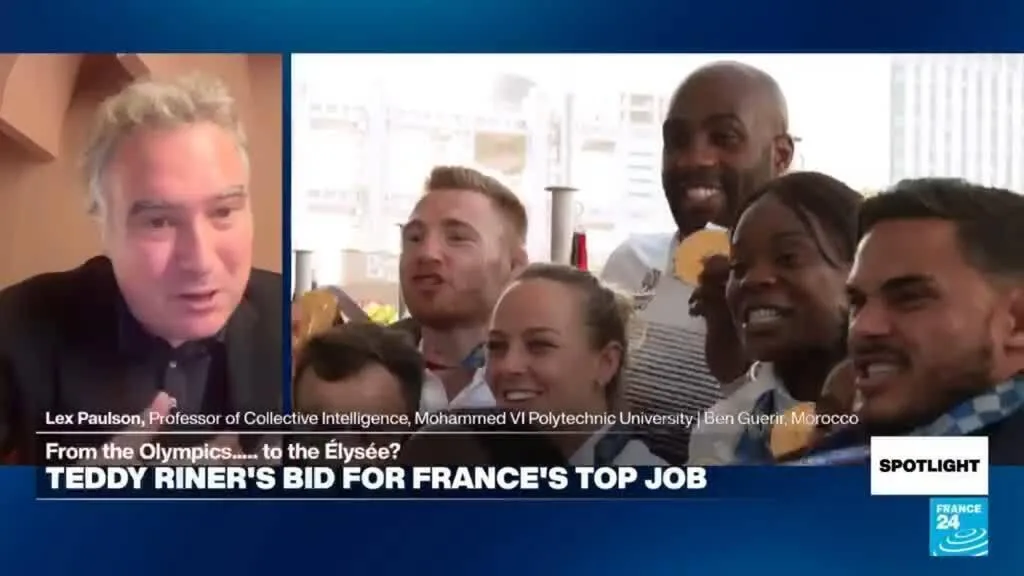
- Teddy Riner's potential presidential entry highlights profound voter exhaustion with France's traditional political parties.
- Lex Paulson of UM6P notes that Riner's candidacy capitalizes on a widespread hunger for an alternative to Marine Le Pen and Jean-Luc Mélenchon.
- The centrist political landscape in France remains deeply fragmented amid overlapping sociopolitical and economic pressures.
- Riner's transition from tatami mat to the Elysée Palace echoes a global trend of sports and cultural figures leveraging universal popularity for executive power.
- Sự tham gia tiềm năng của Teddy Riner vào cuộc đua tổng thống làm nổi bật tình trạng mệt mỏi cùng cực của cử tri đối với các đảng phái chính trị truyền thống của Pháp.
- Lex Paulson thuộc UM6P lưu ý rằng việc Riner ra tranh cử đã tận dụng triệt để cơn khát lan rộng về một giải pháp thay thế cho Marine Le Pen và Jean-Luc Mélenchon.
- Bối cảnh chính trị trung dung tại Pháp vẫn tiếp tục bị phân mảnh sâu sắc giữa những áp lực kinh tế và xã hội chính trị chồng chéo.
- Bước chuyển mình của Riner từ thảm đấu judo lên Điện Elysée phản ánh một xu hướng toàn cầu, nơi các nhân vật thể thao và văn hóa tận dụng mức độ nổiδ tiếng phổ quát để thâu tóm quyền lực hành pháp.
- L'entrée potentielle de Teddy Riner en politique met en lumière une profonde lassitude des électeurs face aux partis traditionnels français.
- Lex Paulson (UM6P) note que la candidature de Riner répond à une soif généralisée d'alternative à Marine Le Pen et Jean-Luc Mélenchon.
- Le paysage politique centriste en France demeure profondément fragmenté sur fond de pressions sociopolitiques et économiques conjuguées.
- Le passage de Teddy Riner des tatamis à l'Élysée fait écho à une tendance mondiale où des figures du sport et de la culture mobilisent leur popularité universelle pour accéder au pouvoir exécutif.
- La posible entrada de Teddy Riner en la carrera presidencial pone de manifiesto el profundo agotamiento del electorado con los partidos políticos tradicionales de Francia.
- Lex Paulson, de la UM6P, señala que la candidatura de Riner capitaliza un deseo generalizado de encontrar una alternativa a Marine Le Pen y Jean-Luc Mélenchon.
- El panorama político centrista en Francia sigue profundamente fragmentado en medio de presiones sociopolíticas y económicas superpuestas.
- El paso de Riner del tatami al Palacio del Elíseo se hace eco de una tendencia global en la que figuras del deporte y de la cultura aprovechan su popularidad universal para alcanzar el poder ejecutivo.
- 特迪·里内尔潜在的总统参选凸显了选民对法国传统政党的深度疲劳。
- 穆罕默德六世多学科大学(UM6P)的莱克斯·保尔森指出,里内尔的候选人身份迎合了民众对玛丽娜·勒庞和让-吕克·梅朗雄之外替代方案的广泛渴望。
- 在重叠的社会政治与经济压力下,法国的中派政治版图依然高度碎片化。
- 里内尔从柔道榻榻米向爱丽舍宫的跨越,呼应了全球体育和文化名人利用全民知名度谋求行政权力的普遍趋势。
When a nation's most decorated athletic hero steps into the national political arena, the reverberations are felt far beyond the traditional corridors of power. For months, whispers in Parisian salons and political headquarters have transformed into open speculation regarding Teddy Riner, the towering titan of global judo and a beloved fixture of French national pride, potentially throwing his hat into the race for the French presidency. As France navigates a turbulent landscape marked by persistent sociopolitical friction, economic uncertainty, and a deeply fractured legislative assembly, Riner’s prospective candidacy has become a focal point for intense analysis among political scientists and institutional strategists alike.
The prospect of a Riner presidential bid arrives at a critical juncture for the Fifth Republic. Traditional governing parties on both the center-right and center-left have struggled mightily to recapture the public imagination, leaving a vacuum that has increasingly been occupied by polarized extremes. In this volatile climate, analysts suggest that Riner embodies a potent antidote to partisan fatigue—a figure of national consensus whose achievements transcend the ideological battlegrounds of contemporary France. Yet, translating athletic supremacy and immense personal popularity into executive governance remains an extraordinarily complex and high-stakes endeavor.
Breaking the Duopoly of Extremes
To understand the seismic potential of a Teddy Riner candidacy, one must examine the current architectural crisis of French politics. For years, the political dynamic has been relentlessly compressed into a polarized struggle between the nationalist right, spearheaded by Marine Le Pen’s National Rally, and the radical left, championed by Jean-Luc Mélenchon’s La France Insoumise. This polarized axis has left millions of moderate, centrist, and unaligned voters feeling profoundly disenfranchised, searching desperately for a credible alternative that promises stability without ideological dogmatism.
During a recent analytical broadcast examining these shifting political tectonic plates, political strategist Lex Paulson of the UM6P School of Collective Intelligence noted that Riner’s emergence is deeply illustrative of a pervasive hunger for systemic renewal. Unlike career politicians burdened by institutional baggage, Riner commands an extraordinary moral authority forged through decades of relentless discipline, Olympic gold medals, and exemplary sportsmanship. His potential entrance into the presidential contest threatens to scramble conventional polling models, offering a unifying banner for citizens who view the existing political class as out of touch with the everyday realities of French society.
The Global Precedent of Athletic Diplomacy
The intersection of sports stardom and high-stakes politics is not entirely unprecedented, though it remains a fascinating modern phenomenon. Across the globe, celebrated athletes, cultural icons, and entertainers have increasingly transitioned from public adoration to political leadership, capitalizing on name recognition, high public trust, and an inherent immunity to traditional political cynicism. From George Weah’s historic ascension to the presidency of Liberia to the political careers of legendary cricketers and Olympians worldwide, the playbook for athletic statesmanship relies heavily on perceived authenticity and national unity.
However, France maintains a particularly rigorous intellectual and institutional tradition regarding its political leaders. The Elysée Palace has historically been occupied by elite technocrats, graduates of Sciences Po and the École Nationale d'Administration (ENA), who pride themselves on mastery over intricate bureaucratic machinery and grand diplomatic doctrine. For Riner, the challenge will lie not merely in inspiring voters with charismatic optimism, but in convincing a skeptical electorate and a merciless press corps that a champion judoka possesses the sophisticated policy acumen required to navigate complex geopolitical alliances, fiscal crises, and domestic reform.
Navigating the Labyrinth of French Governance
Beyond the romanticism of a national hero answering a civic call lies the grueling reality of modern French electoral mechanics. Winning the presidency requires building a vast, cohesive political coalition, securing institutional financing, and presenting a fully articulated legislative platform capable of addressing inflation, public security, immigration, and European integration. As the political center remains deeply fragmented—with various factions of Macronism searching for a viable successor to the incumbent president—a wildcard candidate like Riner could either crystallize a new centrist coalition or accelerate the ongoing dissolution of traditional party structures.
Furthermore, the transition from sports icon to polarizing political figure carries inherent risks. On the tatami, matches are decided by clear rules, undisputed scores, and physical dominance. In the political arena, even the most revered figures are subjected to intense scrutiny, controversy, and partisan attack. Riner’s team will need to carefully calibrate whether his overarching brand as a unifying national symbol can survive the abrasive friction of a bruising presidential campaign.
What Lies Ahead for the Fifth Republic
As the political horizon clears toward the next electoral cycle, all eyes will remain fixed on whether Teddy Riner formalizes his exploratory ambitions into an official campaign. His decision will serve as an ultimate stress test for the resilience and adaptability of French democracy. If he runs, he will force both the established extremes and the floundering center to radically rethink their strategies.
Ultimately, Riner’s candidacy—whether it materializes as a fleeting political tremor or a transformative electoral earthquake—underscores a profound truth about modern France: the electorate is actively searching for a new vocabulary of leadership. Whether that vocabulary can be written by a champion of the sports world remains one of the most compelling narratives in contemporary European politics.
Khi người hùng thể thao vĩ đại nhất của một quốc gia bước vào đấu trường chính trị quốc gia, những chấn động tạo ra sẽ lan tỏa vượt xa các hành lang quyền lực truyền thống. Trong nhiều tháng qua, những lời thì thầm tại các phòng khách thượng lưu ở Paris và các trụ sở đảng phái đã chuyển hóa thành những đồn đoán công khai về việc Teddy Riner — tượng đài lừng lững của nền judo thế giới và là hiện thân được yêu mến của niềm tự hào dân tộc Pháp — có khả năng sẽ dấn thân vào cuộc đua vào ghế tổng thống Pháp. Khi nước Pháp đang điều hướng qua một bức tranh đầy sóng gió, nổi bật bởi những ma sát xã hội - chính trị âm ỉ, sự bất định về kinh tế và một cơ quan lập pháp bị phân rẽ sâu sắc, chiến dịch tranh cử tiềm năng của Riner đã trở thành tâm điểm phân tích gay gắt của giới khoa học chính trị cũng như các chiến lược gia thể chế.
Việc Riner có triển vọng ra tranh cử tổng thống diễn ra vào một thời điểm mang tính bước ngoặt đối với nền Đệ Ngũ Cộng hòa. Các đảng cầm quyền truyền thống ở cả trung hữu lẫn trung tả đã chật vật để khơi gợi lại trí tưởng tượng của công chúng, để lại một khoảng trống ngày càng bị chiếm lĩnh bởi các cực đoan phân hóa. Trong bầu không khí biến động này, các nhà phân tích cho rằng Riner chính là liều thuốc giải mạnh mẽ cho sự mệt mỏi đối với đảng phái — một gương mặt của sự đồng thuận quốc gia, người mà những thành tựu vượt lên trên các bãi chiến trường ý thức hệ của nước Pháp đương đại. Tuy nhiên, việc chuyển hóa sự thống trị trong thể thao và mức độ nổi tiếng cá nhân to lớn thành năng lực quản trị hành pháp vẫn là một nỗ lực cực kỳ phức tạp và có rủi ro cao độ.
Phá vỡ thế lưỡng cực của các cực đoan
Để thấu hiểu tiềm năng mang tính chấn động từ một chiến dịch tranh cử của Teddy Riner, người ta phải xem xét cuộc khủng hoảng cấu trúc hiện tại của nền chính trị Pháp. Trong nhiều năm qua, động lực chính trị đã liên tục bị dồn nén vào một cuộc đấu tranh phân cực giữa phe cực hữu theo chủ nghĩa dân tộc, do đảng Tập hợp Quốc gia (National Rally) của Marine Le Pen dẫn đầu, và phe cực tả, do phong trào Nước Pháp Bất khuất (La France Insoumise) của Jean-Luc Mélenchon đại diện. Trục phân cực này đã khiến hàng triệu cử tri ôn hòa, trung dung và không liên kết cảm thấy bị tước đoạt quyền lợi một cách sâu sắc, khiến họ phải tuyệt vọng tìm kiếm một giải pháp thay thế đáng tin cậy hứa hẹn sự ổn định mà không mang chủ nghĩa giáo điều ý thức hệ.
Trong một chương trình phát sóng phân tích gần đây nhằm mổ xẻ những mảng kiến tạo chính trị đang dịch chuyển này, chiến lược gia chính trị Lex Paulson thuộc Trường Trí tuệ Tập thể UM6P đã lưu ý rằng sự xuất hiện của Riner minh họa sâu sắc cho một cơn khát đổi mới hệ thống đang lan rộng khắp nơi. Khác với những chính trị gia chuyên nghiệp gánh nặng trên vai những tai tiếng thể chế, Riner nắm giữ một uy quyền đạo đức phi thường được tôi luyện qua nhiều thập kỷ kỷ luật không khoan nhượng, những tấm huy chương vàng Olympic và tinh thần thể thao mẫu mực. Khả năng anh bước chân vào cuộc đua tổng thống đang đe dọa làm đảo lộn các mô hình thăm dò dư luận truyền thống, mang lại một ngọn cờ đoàn kết cho những công dân coi tầng lớp chính trị hiện tại là những kẻ xa rời thực tế đời sống hàng ngày của xã hội Pháp.
Tiền lệ toàn cầu của ngoại giao thể thao
Sự giao thoa giữa ngôi sao thể thao và chính trị đỉnh cao không phải là điều hoàn toàn chưa từng có tiền lệ, mặc dù nó vẫn là một hiện tượng hiện đại đầy hấp dẫn. Trên toàn cầu, các vận động viên lừng danh, biểu tượng văn hóa và nghệ sĩ ngày càng chuyển dịch từ sự ngưỡng mộ của công chúng sang vai trò lãnh đạo chính trị, tận dụng sự nhận diện tên tuổi, niềm tin công chúng cao và khả năng miễn dịch bẩm sinh trước sự hoài nghi chính trị truyền thống. Từ việc George Weah lịch sử thăng cử lên chức Tổng thống Liberia cho đến sự nghiệp chính trị của các huyền thoại cricket và vận động viên Olympic trên toàn thế giới, cẩm nang hành động cho sự uy quyền của một vận động viên phụ thuộc rất nhiều vào tính xác thực được nhìn nhận và sự đoàn kết quốc gia.
Tuy nhiên, nước Pháp vẫn duy trì một truyền thống trí thức và thể chế đặc biệt khắt khe đối với các nhà lãnh đạo chính trị của mình. Điện Elysée trong lịch sử từng được ngự trị bởi các kỹ trị viên ưu tú, những cựu sinh viên tốt nghiệp từ Sciences Po và Trường Hành chính Quốc gia (ENA), những người luôn tự hào về sự thông thạo đối với bộ máy quan liêu tinh vi và học thuyết ngoại giao lớn lao. Đối với Riner, thách thức sẽ không chỉ nằm ở việc truyền cảm hứng cho cử tri bằng sự lạc quan đầy lôi cuốn, mà còn là việc thuyết phục một khối cử tri đầy hoài nghi và một giới truyền thông không khoan nhượng rằng một võ sĩ judo vô địch sở hữu sự nhạy bén về chính sách tinh vi cần thiết để điều hướng các liên minh địa chính trị phức tạp, các cuộc khủng hoảng tài chính và cải cách trong nước.
Điều hướng mê cung quản trị của nước Pháp
Vượt lên trên sự lãng mạn của một người hùng quốc gia đáp lại tiếng gọi công dân là thực tế khắc nghiệt của cơ chế bầu cử nước Pháp hiện đại. Giành chiến thắng trong cuộc đua tổng thống đòi hỏi phải xây dựng một liên minh chính trị rộng lớn, gắn kết, đảm bảo nguồn tài chính thể chế và đưa ra một cương lĩnh lập pháp được trình bày hoàn chỉnh có khả năng giải quyết lạm phát, an ninh công cộng, nhập cư và hội nhập châu Âu. Khi khối trung tâm chính trị vẫn bị chia rẽ sâu sắc — với các phe phái khác nhau của chủ nghĩa Macron đang tìm kiếm một người kế nhiệm khả dĩ cho vị tổng thống đương nhiệm — một ứng cử viên "ngựa ô" như Riner có thể hoặc sẽ kết tinh một liên minh trung dung mới, hoặc sẽ đẩy nhanh quá trình giải thể đang diễn ra của các cấu trúc đảng phái truyền thống.
Hơn nữa, quá trình chuyển đổi từ một biểu tượng thể thao thành một nhân vật chính trị gây chia rẽ mang theo những rủi ro vốn có. Trên thảm đấu tatami, các trận đấu được định đoạt bằng các quy tắc rõ ràng, điểm số không thể chối cãi và sự thống trị về thể chất. Trong đấu trường chính trị, ngay cả những nhân vật được tôn kính nhất cũng phải chịu sự soi mói gay gắt, tranh cãi và các cuộc tấn công đảng phái. Đội ngũ của Riner sẽ cần phải tính toán cẩn trọng xem thương hiệu bao trùm của anh với tư cách là một biểu tượng đoàn kết quốc gia có thể tồn tại được qua sự cọ xát khắc nghiệt của một chiến dịch tranh cử tổng thống đầy sứt mẻ hay không.
Điều gì đang chờ đợi nền Đệ Ngũ Cộng hòa
Khi chân trời chính trị dần quang mây hướng tới chu kỳ bầu cử tiếp theo, mọi ánh mắt sẽ vẫn đổ dồn vào việc liệu Teddy Riner có chính thức hóa tham vọng thăm dò của mình thành một chiến dịch tranh cử chính thức hay không. Quyết định của ông sẽ đóng vai trò là bài kiểm tra sức ép tối thượng đối với sự kiên cường và khả năng thích ứng của nền dân chủ Pháp. Nếu ông ra tranh cử, ông sẽ buộc cả các lực lượng cực đoan đã thành hình lẫn phe trung dung đang loay hoay phải suy nghĩ lại một cách triệt để các chiến lược của họ.
Cuối cùng, chiến dịch tranh cử của Riner — cho dù nó hiện hình thành một chấn động chính trị thoáng qua hay một trận động đất bầu cử mang tính chuyển đổi — cũng làm nổi bật một chân lý sâu sắc về nước Pháp hiện đại: khối cử tri đang tích cực tìm kiếm một từ vựng lãnh đạo mới. Liệu từ vựng đó có thể được viết nên bởi một nhà vô địch trong thế giới thể thao hay không vẫn là một trong những câu chuyện hấp dẫn nhất của nền chính trị châu Âu đương đại.
Lorsqu'un héros sportif parmi les plus décorés d'une nation fait son entrée dans l'arène politique nationale, les résonances se font sentir bien au-delà des traditionnels couloirs du pouvoir. Depuis des mois, les murmures des salons parisiens et des états-majors politiques ont cédé la place à des spéculations ouvertes concernant Teddy Riner — le colosse du judo mondial et figure chérie de la fierté française —, qui pourrait bien jeter dans l'arène son nom pour la course à l'élection présidentielle. Alors que la France navigue dans un paysage agité, marqué par des frictions sociopolitiques persistantes, une incertitude économique et une Assemblée nationale profondément fragmentée, la possible candidature de Riner est devenue le point focal d'une analyse minutieuse tant de la part des politologues que des stratèges institutionnels.
La perspective d'une candidature présidentielle de Riner survient à un moment charnière pour la Cinquième République. Les partis de gouvernement traditionnels, tant du centre-droit que du centre-gauche, peinent cruellement à capturer l'imaginaire collectif, laissant un vide de plus en plus occupé par des extrêmes polarisés. Dans ce climat volatil, les analystes suggèrent que Riner incarne un puissant antidote à la fatigue partisane : une figure de consensus national dont les accomplissements transcendent les champs de bataille idéologiques de la France contemporaine. Pourtant, transformer la suprématie sportive et une immense popularité personnelle en art de gouverner reste une entreprise d'une complexité extrême et aux enjeux considérables.
Briser le duopole des extrêmes
Pour comprendre le potentiel sismique d'une candidature de Teddy Riner, il convient d'examiner l'actuelle crise structurelle de la politique française. Depuis des années, la dynamique politique se trouve implacablement comprimée dans un duel polarisé entre la droite nationaliste, menée par le Rassemblement national de Marine Le Pen, et la gauche radicale, portée par La France insoumise de Jean-Luc Mélenchon. Cet axe de polarisation a laissé des millions d'électeurs modérés, centristes et non-alignés dans un profond sentiment de marginalisation, en quête désespérée d'une alternative crédible qui promette la stabilité sans dogmatisme idéologique.
Au cours d'une récente émission analytique décryptant ces plaques tectoniques politiques en mouvement, le stratège politique Lex Paulson, de l'École de l'intelligence collective de l'UM6P, a souligné que l'émergence de Riner illustre parfaitement une faim viscérale de renouveau systémique. Contrairement aux politiciens de carrière alourdis par des casseroles institutionnelles, Riner impose une autorité morale extraordinaire, forgée au fil de décennies de discipline de fer, de médailles d'or olympiques et d'un esprit sportif irréprochable. Son entrée potentielle dans la course présidentielle menace de bousculer les modèles de sondages conventionnels, offrant une bannière unificatrice aux citoyens qui considèrent la classe politique actuelle comme déconnectée des réalités quotidiennes de la société française.
Le précédent mondial de la diplomatie sportive
L'intersection entre la gloire sportive et la politique de haut vol n'est pas tout à fait inédite, bien qu'elle demeure un fascinant phénomène moderne. Partout dans le monde, des athlètes célèbres, des icônes culturelles et des artistes passent de plus en plus de l'adoration populaire au leadership politique, capitalisant sur la notoriété de leur nom, une grande confiance publique et une immunité inhérente au cynisme politique traditionnel. De l'accession historique de George Weah à la présidence du Libéria aux carrières politiques de légendaires joueurs de cricket ou d'olympiens à travers le globe, le manuel de l'homme d'État issu du sport repose largement sur une authenticité perçue et l'unité nationale.
Cependant, la France entretient une tradition intellectuelle et institutionnelle particulièrement rigoureuse en ce qui concerne ses dirigeants politiques. Le Palais de l'Élysée a historiquement été occupé par des technocrates d'élite, diplômés de Sciences Po et de l'École nationale d'administration (ENA), qui tirent leur fierté de leur maîtrise des rouages bureaucratiques complexes et de la grande doctrine diplomatique. Pour Riner, le défi consistera non seulement à inspirer les électeurs par un optimisme charismatique, mais aussi à convaincre un électorat sceptique et un corps de presse impitoyable qu'un champion de judo possède la finesse politique requise pour naviguer entre alliances géopolitiques complexes, crises budgétaires et réformes intérieures.
Naviguer dans le labyrinthe de la gouvernance française
Au-delà du romantisme d'un héros national répondant à un appel civique se cache la dure réalité des mécanismes électoraux français modernes. Gagner la présidence exige de bâtir une vaste coalition politique cohérente, d'obtenir des financements institutionnels et de présenter un programme législatif pleinement articulé capable de répondre à l'inflation, à la sécurité publique, à l'immigration et à l'intégration européenne. Alors que le centre politique demeure profondément fragmenté — les diverses factions du macronisme cherchant un successeur viable au président sortant —, un candidat hors norme tel que Riner pourrait soit cristalliser une nouvelle coalition centriste, soit accélérer la dissolution en cours des structures partisanes traditionnelles.
En outre, la transition d'icône sportive à figure politique polarisante comporte des risques intrinsèques. Sur le tatami, les combats se décident selon des règles claires, des scores incontestés et une domination physique. Dans l'arène politique, les personnalités les plus révérées elles-mêmes sont soumises à un examen minutieux, à la controverse et aux attaques partisanes. L'équipe de Riner devra calibrer avec précision si sa marque globale de symbole national unificateur peut survivre aux frottements abrasifs d'une campagne présidentielle brutale.
Ce qui attend la Cinquième République
À mesure que l'horizon politique se dégage en vue du prochain cycle électoral, tous les regards restent fixés sur la question de savoir si Teddy Riner transformera ses ambitions exploratoires en campagne officielle. Sa décision servira de test ultime de résistance et d'adaptabilité pour la démocratie française. S'il se présente, il obligera tant les extrêmes établis que le centre en déroute à repenser radicalement leurs stratégies.
En fin de compte, la candidature de Riner — qu'elle se matérialise sous la forme d'un fugace tremor politique ou d'un tremblement de terre électoral transformateur — souligne une vérité profonde sur la France moderne : l'électorat cherche activement un nouveau vocabulaire du leadership. Reste à savoir si ce vocabulaire pourra être écrit par un champion du monde du sport, ce qui constitue l'un des récits les plus captivants de la politique européenne contemporaine.
Cuando el héroe deportivo más laureado de una nación salta a la arena política nacional, las repercusiones se sienten mucho más allá de los pasillos tradicionales del poder. Durante meses, los susurros en los salones parisinos y en las sedes de los partidos han dado paso a especulaciones abiertas sobre la posibilidad de que Teddy Riner —el imponente titán del yudo mundial y figura entrañable del orgullo nacional francés— presente su candidatura a la presidencia de la República. En un momento en que Francia atraviesa un panorama turbulento marcado por una persistente fricción sociopolítica, incertidumbre económica y una Asamblea Nacional profundamente fracturada, la posible candidatura de Riner se ha convertido en el epicentro de un intenso análisis tanto entre politólogos como entre estrategas institucionales.
La perspectiva de una candidatura presidencial de Riner llega en una coyuntura crítica para la Quinta República. A los partidos de gobierno tradicionales, tanto del centro-derecha como del centro-izquierda, les ha costado enormemente capturar de nuevo la imaginación pública, dejando un vacío que han ido ocupando los extremos polarizados. En este clima volátil, los analistas sugieren que Riner encarna un potente antídoto contra la fatiga partidista: una figura de consenso nacional cuyos logros trascienden los campos de batalla ideológicos de la Francia contemporánea. Sin embargo, traducir la supremacía deportiva y una inmensa popularidad personal en una gestión ejecutiva sigue siendo una empresa extraordinariamente compleja y de alto riesgo.
Romper el duopolio de los extremos
Para comprender el potencial sísmico de una candidatura de Teddy Riner, es necesario examinar la actual crisis estructural de la política francesa. Durante años, la dinámica política se ha visto inexorablemente comprimida en una pugna polarizada entre la derecha nacionalista, abanderada por la Agrupación Nacional de Marine Le Pen, y la izquierda radical, defendida por La Francia Insumisa de Jean-Luc Mélenchon. Este eje polarizado ha provocado que millones de votantes moderados, centristas y no alineados se sientan profundamente descontentos y busquen desesperadamente una alternativa creíble que prometa estabilidad sin dogmatismos ideológicos.
Durante una reciente retransmisión analítica centrada en estas placas tectónicas políticas en movimiento, el estratega político Lex Paulson, de la Escuela de Inteligencia Colectiva de la UM6P, señaló que la irrupción de Riner ilustra a la perfección una profunda hambre de renovación sistémica. A diferencia de los políticos profesionales cargados de equipaje institucional, Riner ostenta una autoridad moral extraordinaria forjada a lo largo de décadas de disciplina implacable, medallas de oro olímpicas y una deportividad ejemplar. Su posible entrada en la contienda presidencial amenaza con trastocar los modelos demoscópicos tradicionales, ofreciendo un estandarte unificador para aquellos ciudadanos que perciben a la clase política actual como ajena a las realidades cotidianas de la sociedad francesa.
El precedente global de la diplomacia atlética
La intersección entre el estrellato deportivo y la alta política no carece totalmente de precedentes, aunque continúa siendo un fascinante fenómeno moderno. En todo el mundo, atletas célebres, iconos culturales y artistas han transitado cada vez más de la adoración pública al liderazgo político, capitalizando el reconocimiento de su nombre, la alta confianza ciudadana y una inmunidad inherente al cinismo político tradicional. Desde el histórico ascenso de George Weah a la presidencia de Liberia hasta las carreras políticas de legendarios jugadores de críquet y atletas olímpicos en todo el planeta, el manual del estadista surgido del deporte se apoya firmemente en la autenticidad percibida y en la unidad nacional.
No obstante, Francia mantiene una tradición intelectual e institucional especialmente rigurosa en lo que respecta a sus líderes políticos. Históricamente, el Palacio del Elíseo ha estado ocupado por tecnócratas de élite, graduados en Sciences Po y en la École Nationale d'Administration (ENA), que hacen gala de su dominio sobre la compleja maquinaria burocrática y la gran doctrina diplomática. Para Riner, el reto no consistirá únicamente en inspirar a los votantes con un optimismo carismático, sino en convencer a un electorado escéptico y a una prensa implacable de que un yudoca laureado posee la sofisticada perspicacia política necesaria para navegar por alianzas geopolíticas complejas, crisis fiscales y reformas internas.
Navegando por el laberinto de la gobernanza francesa
Más allá del romanticismo de un héroe nacional que responde a una llamada cívica, existe la dura realidad de la mecánica electoral francesa contemporánea. Ganar la presidencia exige construir una coalición política amplia y cohesionada, asegurar financiación institucional y presentar un programa legislativo plenamente articulado capaz de hacer frente a la inflación, la seguridad pública, la inmigración y la integración europea. Dado que el centro político sigue profundamente fragmentado —con varias facciones del macronismo buscando un sucesor viable para el presidente en ejercicio—, un candidato imprevisible como Riner podría tanto cristalizar una nueva coalición de centro como acelerar la disolución en curso de las estructuras partidistas tradicionales.
Asimismo, el paso de icono deportivo a figura política polarizadora conlleva riesgos inherentes. Sobre el tatami, los combates se deciden mediante reglas claras, puntuaciones indiscutibles y dominio físico. En la arena política, hasta las figuras más veneradas se ven sometidas a un escrutinio intenso, a la controversia y a los ataques partidistas. El equipo de Riner tendrá que calibrar con sumo cuidado si su marca personal como símbolo nacional unificador podrá sobrevivir a la abrasiva fricción de una dura campaña presidencial.
Qué le deparará el futuro a la Quinta República
A medida que el horizonte político se despeja de cara al próximo ciclo electoral, todas las miradas seguirán fijas en si Teddy Riner formaliza sus ambiciones exploratorias para convertir su iniciativa en una campaña oficial. Su decisión servirá como prueba de resistencia definitiva para comprobar la resiliencia y la adaptabilidad de la democracia francesa. Si decide presentarse, obligará tanto a los extremos consolidados como al vacilante centro a replantearse radicalmente sus estrategias.
En última instancia, la candidatura de Riner —ya se materialice como un fugaz temblor político o como un terremoto electoral transformador— pone de relieve una profunda verdad sobre la Francia moderna: el electorado busca activamente un nuevo vocabulario de liderazgo. Averiguar si ese vocabulario puede ser escrito por un campeón del mundo del deporte sigue siendo uno de los relatos más cautivadores de la política europea contemporánea.
当一个国家功勋卓著的体育英雄踏入国家政治竞技场时,其引发的震动将远远超越传统的权力走廊。几个月来,巴黎沙龙和政治总部内的窃窃私语已演变为公开的揣测——全球柔道界的巍峨泰坦、法国民族自豪感的挚爱象征特迪·里内尔(Teddy Riner),正潜在地考虑投入法国总统宝座的角逐。正当法国在充斥着持续的社会政治摩擦、经济不确定性以及深度分裂的国民议会等动荡局势中艰难前行时,里内尔的潜在参选已成为政治学者和体制战略家们激烈分析的焦点。
里内尔竞选总统的前景正值第五共和国的关键十字路口。中右翼和中左翼的传统执政党一直在艰难地重新唤起公众的想象力,从而留下了权力真空,而这一真空正越来越多地被两极化的极端派别所占据。在这种动荡的气候下,分析人士认为,里内尔体现了对抗党派疲劳的强效解毒剂——一个超越当代法国意识形态战场的全民共识化身。然而,将运动霸主地位和巨大的个人声望转化为行政治理,仍然是一项极其复杂且风险极高的工作。
打破极端派别的双头垄断
要理解特迪·里内尔参选所带来的震撼性潜力,就必须审视当前法国政治的架构危机。多年来,政治动力被无情地压缩在由玛丽娜·勒庞的“国民联盟”所领衔的民族主义右翼,与让-吕克·梅朗雄的“不屈法国”所捍卫激进左翼之间的一场两极化斗争中。这种两极化的轴心让数百万温和派、中间派和无党派选民感到深深的被剥夺感,他们正绝望地寻找一个既能承诺稳定又不带意识形态教条的可信替代方案。
在近期审视这些不断变化的政治构造板块的一场分析直播中,穆罕默德六世多学科大学集体智能学院的政治战略家莱克斯·保尔森(Lex Paulson)指出,里内尔的崛起深刻说明了社会对系统性更新的普遍渴望。与背负体制包袱的职业政客不同,里内尔凭借数十年的不懈纪律、奥运金牌和堪称典范的体育精神,掌握着非凡的道德权威。他潜在的总统竞选入局有可能彻底打乱传统的民调模式,为那些认为现有政客阶层脱离法国社会日常生活现实的公民提供一面具有凝聚力的旗帜。
体育外交的全球先例
体育明星身份与高风险政治的交汇并非完全前所未有,尽管它仍然是一个引人入胜的现代现象。在全球范围内,著名的运动员、文化偶像和艺人越来越多地从公众的爱戴过渡到政治领导层,利用他们的姓名知名度、高度的公众信任以及对传统政治讽刺的天然免疫力。从乔治·维阿历史性地登上利比里亚总统宝座,到全球传奇板球运动员和奥运会选手的从政生涯,体育治国的发展蓝图在很大程度上依赖于人们所感知到的真实性和国家统一。
然而,法国对其政治领导人始终保持着严苛的知识分子和体制传统。爱丽舍宫历史上一直由精英技术官僚占据,他们毕业于巴黎政治学院(Sciences Po)和国家行政学院(ENA),并以精通复杂的官僚机器和大国外交教条而自豪。对于里内尔而言,挑战不仅在于用充满魅力的乐观主义激励选民,更在于让持怀疑态度的选民和无情的媒体记者相信,一位柔道冠军拥有应对复杂的的地缘政治联盟、财政危机和国内改革所需的成熟政策洞察力。
驾驭法国治理的迷宫
超越国家英雄响应公民召唤的浪漫主义色彩的,是现代法国选举机制的残酷现实。赢得总统职位需要建立一个庞大、有凝聚力的政治联盟,获得机构资金的支持,并提出一个能够解决通货膨胀、公共安全、移民和欧洲一体化问题且阐述完整的立法纲领。由于政治中间派仍然深度碎片化——马克龙主义的不同派系正在寻找现任总统的可行继任者——像里内尔这样的“外卡”候选人既可以使一个新的中间派联盟成型,也可以加速传统政党结构的持续解体。
此外,从体育偶像向两极化政治人物的转变也带有固有的风险。在榻榻米上,比赛是由清晰的规则、无可争议的分数和身体主导地位来决定的。而在政治竞技场上,即使是最受尊敬的人物也要接受严厉的审视、争议和党派攻击。里内尔的团队需要仔细评估:他作为国家统一象征的整体品牌,能否经受住残酷总统竞选那充满摩擦力的消耗战。
第五共和国的前路何方
随着政治地平线逐渐清晰并迈向下一个选举周期,所有人的目光都将锁定在特迪·里内尔是否将其探索性的雄心转化为正式竞选上。他的决定将成为对法国民主弹性和适应能力的一次终极压力测试。如果他参选,他将迫使既有的极端派和苦苦挣扎的中间派彻底重新思考其战略。
归根结底,里内尔的参选——无论它是演变成一次转瞬即逝的政治微震还是一场变革性的选举地震——都突显了关于现代法国的一个深刻真理:选民正在积极寻找一种新的领导力词汇。这种词汇能否由一位体育界的冠军来书写,仍然是当代欧洲政治中最引人入胜的叙事之一。
Editorial Standards & Multi-Language Synthesis: This dispatch was synthesized and fact-checked by the ParisDaily Editorial Desk across 5 global editions (EN, FR, VI, ES, ZH), cross-referencing primary international wire reports and real-time search intelligence.