Tesla’s Great Pivot: Legal Wars in China and the End of the Cybertruck Era
As Tesla faces a defiant legal challenge in China over unauthorized FSD testing, Elon Musk prepares to shutter the Cybertruck line to prioritize the elusive Cybercab.
As Tesla faces a defiant legal challenge in China over unauthorized FSD testing, Elon Musk prepares to shutter the Cybertruck line to prioritize the elusive Cybercab.
As Tesla faces a defiant legal challenge in China over unauthorized FSD testing, Elon Musk prepares to shutter the Cybertruck line to prioritize the elusive Cybercab.
As Tesla faces a defiant legal challenge in China over unauthorized FSD testing, Elon Musk prepares to shutter the Cybertruck line to prioritize the elusive Cybercab.
As Tesla faces a defiant legal challenge in China over unauthorized FSD testing, Elon Musk prepares to shutter the Cybertruck line to prioritize the elusive Cybercab.
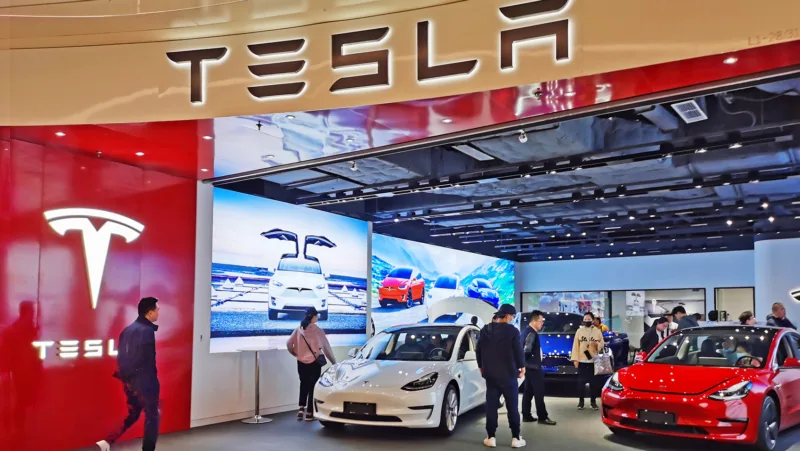
- Tesla has issued a formal legal threat against Chinese media outlet D1EV for unauthorized FSD software testing.
- The Cybertruck production line in Austin will be dismantled by mid-2027 to reallocate resources toward the Cybercab.
- Elon Musk has publicly admitted to a critical shortage of top-tier engineering talent, exacerbated by a wave of high-level executive departures.
- Tesla is narrowing its product portfolio to focus on high-margin autonomous platforms, abandoning the saturated electric pickup market.
The aura of invincibility surrounding Tesla is undergoing a profound, perhaps painful, recalibration. In a week that highlights the widening chasm between the company’s ambitious autonomous future and the messy realities of its current operations, Tesla finds itself embroiled in a high-stakes legal confrontation in China while simultaneously signaling the quiet sunset of its most polarizing vehicle: the Cybertruck.
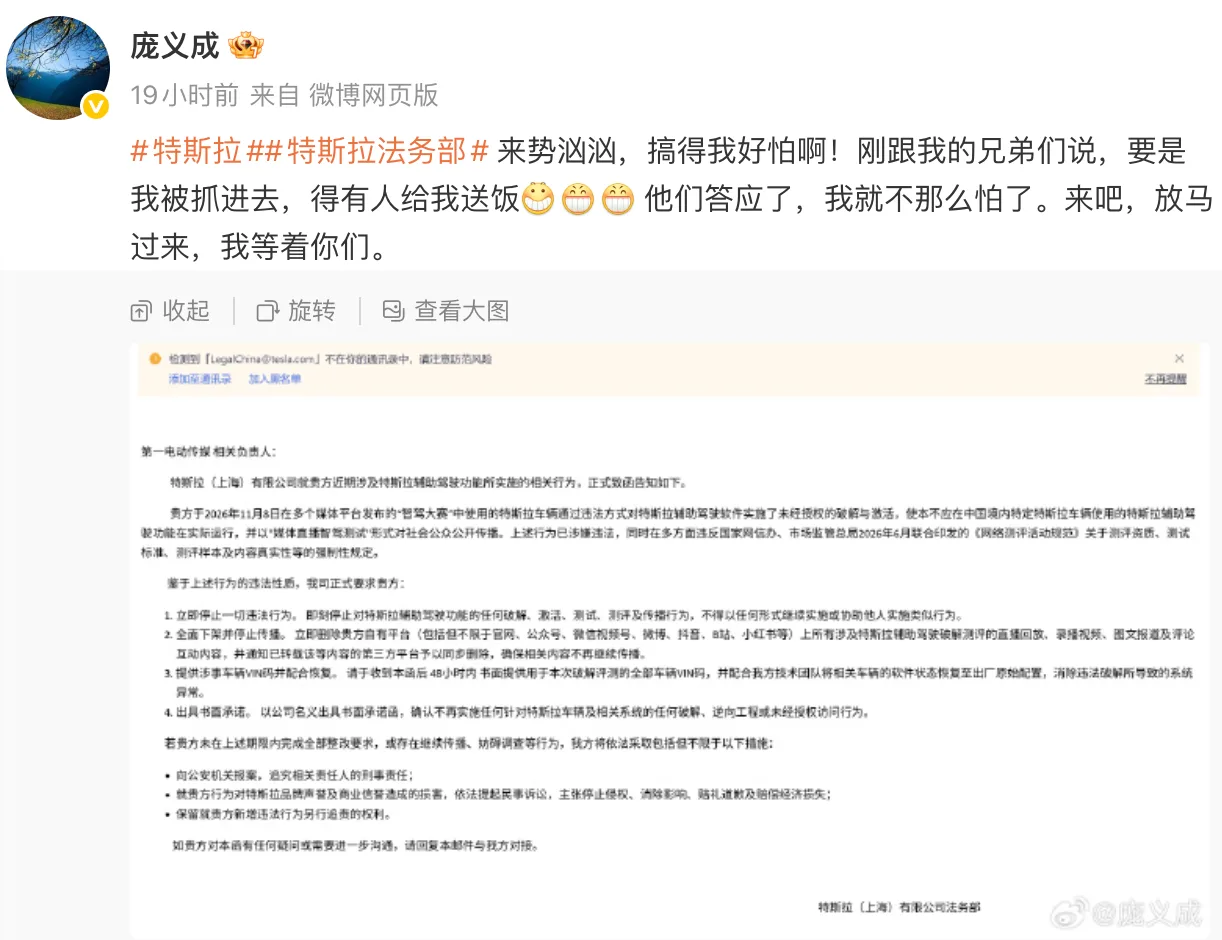
The tension reached a boiling point when Tesla’s legal team issued a formal notice to D1EV, a prominent Chinese new energy vehicle media platform, demanding an immediate halt to unauthorized testing of the company’s Full Self-Driving (FSD) software. The dispute centers on a recent competition in Changsha, where D1EV utilized a Tesla Model Y modified with an unofficial version of FSD V14.2.2. As Tesla pivots toward a future defined by software-as-a-service, this clash in the world’s largest EV market serves as a stark reminder that the company’s proprietary technology is increasingly becoming a target for the very "grey market" it has struggled to contain.
The Battle for Control in the Chinese Grey Market
The conflict in China is not merely a legal spat; it is a fundamental struggle over the integrity of Tesla’s software ecosystem. Tesla’s legal notice alleges that the vehicle used by D1EV was subjected to illegal hacking to bypass regional restrictions, enabling features that have not yet received regulatory approval from the Cyberspace Administration of China. For Tesla, the stakes are existential: allowing unauthorized, potentially unsafe versions of FSD to circulate in the public domain threatens the company’s hard-won regulatory standing in a country where it faces intense scrutiny.
Pang Yicheng, the CEO of D1EV, has emerged as an unlikely antagonist, publicly defying Tesla’s demands and inviting a court battle. His refusal to remove the content highlights a growing frustration among Chinese consumers and media who have paid for the FSD option—often upwards of 64,000 yuan—only to find the features locked behind regional software walls. This gap has birthed a thriving underground market where third-party tools, costing as little as 140 USD, unlock restricted capabilities. As seen in similar crackdowns in South Korea, where owners faced potential prison time for similar modifications, the safety risks are significant. Yet, for Tesla, the challenge is clear: it must either accelerate its official rollout of FSD in China or risk losing control of its software narrative to a tech-savvy, defiant local ecosystem.
The Cybertruck’s Abrupt Exit and the Pivot to Cybercab
While the legal fires burn in China, a different kind of fire is being extinguished in Austin. Elon Musk has confirmed that Tesla will begin a phased reduction of Cybertruck production, with the assembly line slated for decommissioning by mid-2027. This decision marks a dramatic reversal for a vehicle that was once touted as the crown jewel of Tesla’s engineering prowess. With sales plummeting 28% through September—totaling a mere 11,600 units—the Cybertruck has failed to meet even a fraction of the 250,000-unit annual target once envisioned by Musk.
The failure of the Cybertruck is symptomatic of a broader struggle within the electric pickup segment. As analysts like Karl Brauer of iSeeCars.com have noted, the "Detroit formula" of massive power and towing capacity has proven difficult to replicate in an electric format without ballooning costs and compromising functionality. With the Chevrolet Silverado EV and the Ford F-150 Lightning also struggling to find a sustainable market, the industry is collectively pivoting toward smaller, more affordable models. Tesla’s decision to clear the Austin floor for the Cybercab is a strategic bet that the future of the company lies not in selling hardware to individuals, but in dominating the autonomous ride-hailing market.
The Human Capital Crisis Behind the Strategy
Perhaps the most revealing aspect of Tesla’s current transition is Musk’s candid admission regarding the company’s internal limitations. After initially attributing the Cybertruck’s production decline to space constraints, Musk later conceded that the real bottleneck is a lack of "brilliant and highly invested" engineers capable of managing multiple complex programs simultaneously. This admission is a jarring departure from the narrative of a company that has long prided itself on its vertical integration and engineering dominance.
The reality is that Tesla is currently navigating a significant brain drain. Since the 2024 shareholder meeting, the company has seen a mass exodus of key leadership, including the heads of finance, motorization, battery energy, and software. The loss of these institutional pillars, combined with the departure of specific program managers for the Cybertruck and Model Y, has left the company thin on the ground just as it attempts its most ambitious transition yet. As Tesla narrows its focus to the Cybercab and a slimmed-down lineup of the Model 3 and Model Y, it is betting everything on the hope that its remaining talent can deliver a fully autonomous future before the competition—which is currently diversifying its offerings at a rapid pace—closes the gap.
Institutional Fallout and the Road Ahead
The global ripple effects of these developments are profound. For investors, the shift away from the Cybertruck and toward the Cybercab represents a high-risk, high-reward gamble on the viability of unsupervised autonomous driving. If the Cybercab technology fails to scale or faces regulatory hurdles similar to those currently plaguing FSD in China, Tesla risks being left with a hollowed-out product portfolio and a diminished market share in the traditional automotive sector.
As we look toward the latter half of 2027, the landscape for Tesla appears increasingly binary. The company is betting that the robotaxi market will yield margins far superior to the sale of individual vehicles. However, with Waymo and Baidu already expanding their services and traditional automakers pivoting to hybrid solutions to bridge the gap in the pickup market, Tesla’s window of opportunity is narrowing. The company is no longer just competing against other car manufacturers; it is competing against its own history of over-promising and the logistical reality of managing a global, multi-faceted technology empire with a depleted engineering bench. Whether this strategic contraction leads to a new era of dominance or a slow erosion of influence remains the defining question for the next chapter of the Tesla story.
The aura of invincibility surrounding Tesla is undergoing a profound, perhaps painful, recalibration. In a week that highlights the widening chasm between the company’s ambitious autonomous future and the messy realities of its current operations, Tesla finds itself embroiled in a high-stakes legal confrontation in China while simultaneously signaling the quiet sunset of its most polarizing vehicle: the Cybertruck.
The tension reached a boiling point when Tesla’s legal team issued a formal notice to D1EV, a prominent Chinese new energy vehicle media platform, demanding an immediate halt to unauthorized testing of the company’s Full Self-Driving (FSD) software. The dispute centers on a recent competition in Changsha, where D1EV utilized a Tesla Model Y modified with an unofficial version of FSD V14.2.2. As Tesla pivots toward a future defined by software-as-a-service, this clash in the world’s largest EV market serves as a stark reminder that the company’s proprietary technology is increasingly becoming a target for the very "grey market" it has struggled to contain.
The Battle for Control in the Chinese Grey Market
The conflict in China is not merely a legal spat; it is a fundamental struggle over the integrity of Tesla’s software ecosystem. Tesla’s legal notice alleges that the vehicle used by D1EV was subjected to illegal hacking to bypass regional restrictions, enabling features that have not yet received regulatory approval from the Cyberspace Administration of China. For Tesla, the stakes are existential: allowing unauthorized, potentially unsafe versions of FSD to circulate in the public domain threatens the company’s hard-won regulatory standing in a country where it faces intense scrutiny.
Pang Yicheng, the CEO of D1EV, has emerged as an unlikely antagonist, publicly defying Tesla’s demands and inviting a court battle. His refusal to remove the content highlights a growing frustration among Chinese consumers and media who have paid for the FSD option—often upwards of 64,000 yuan—only to find the features locked behind regional software walls. This gap has birthed a thriving underground market where third-party tools, costing as little as 140 USD, unlock restricted capabilities. As seen in similar crackdowns in South Korea, where owners faced potential prison time for similar modifications, the safety risks are significant. Yet, for Tesla, the challenge is clear: it must either accelerate its official rollout of FSD in China or risk losing control of its software narrative to a tech-savvy, defiant local ecosystem.
The Cybertruck’s Abrupt Exit and the Pivot to Cybercab
While the legal fires burn in China, a different kind of fire is being extinguished in Austin. Elon Musk has confirmed that Tesla will begin a phased reduction of Cybertruck production, with the assembly line slated for decommissioning by mid-2027. This decision marks a dramatic reversal for a vehicle that was once touted as the crown jewel of Tesla’s engineering prowess. With sales plummeting 28% through September—totaling a mere 11,600 units—the Cybertruck has failed to meet even a fraction of the 250,000-unit annual target once envisioned by Musk.
The failure of the Cybertruck is symptomatic of a broader struggle within the electric pickup segment. As analysts like Karl Brauer of iSeeCars.com have noted, the "Detroit formula" of massive power and towing capacity has proven difficult to replicate in an electric format without ballooning costs and compromising functionality. With the Chevrolet Silverado EV and the Ford F-150 Lightning also struggling to find a sustainable market, the industry is collectively pivoting toward smaller, more affordable models. Tesla’s decision to clear the Austin floor for the Cybercab is a strategic bet that the future of the company lies not in selling hardware to individuals, but in dominating the autonomous ride-hailing market.
The Human Capital Crisis Behind the Strategy
Perhaps the most revealing aspect of Tesla’s current transition is Musk’s candid admission regarding the company’s internal limitations. After initially attributing the Cybertruck’s production decline to space constraints, Musk later conceded that the real bottleneck is a lack of "brilliant and highly invested" engineers capable of managing multiple complex programs simultaneously. This admission is a jarring departure from the narrative of a company that has long prided itself on its vertical integration and engineering dominance.
The reality is that Tesla is currently navigating a significant brain drain. Since the 2024 shareholder meeting, the company has seen a mass exodus of key leadership, including the heads of finance, motorization, battery energy, and software. The loss of these institutional pillars, combined with the departure of specific program managers for the Cybertruck and Model Y, has left the company thin on the ground just as it attempts its most ambitious transition yet. As Tesla narrows its focus to the Cybercab and a slimmed-down lineup of the Model 3 and Model Y, it is betting everything on the hope that its remaining talent can deliver a fully autonomous future before the competition—which is currently diversifying its offerings at a rapid pace—closes the gap.
Institutional Fallout and the Road Ahead
The global ripple effects of these developments are profound. For investors, the shift away from the Cybertruck and toward the Cybercab represents a high-risk, high-reward gamble on the viability of unsupervised autonomous driving. If the Cybercab technology fails to scale or faces regulatory hurdles similar to those currently plaguing FSD in China, Tesla risks being left with a hollowed-out product portfolio and a diminished market share in the traditional automotive sector.
As we look toward the latter half of 2027, the landscape for Tesla appears increasingly binary. The company is betting that the robotaxi market will yield margins far superior to the sale of individual vehicles. However, with Waymo and Baidu already expanding their services and traditional automakers pivoting to hybrid solutions to bridge the gap in the pickup market, Tesla’s window of opportunity is narrowing. The company is no longer just competing against other car manufacturers; it is competing against its own history of over-promising and the logistical reality of managing a global, multi-faceted technology empire with a depleted engineering bench. Whether this strategic contraction leads to a new era of dominance or a slow erosion of influence remains the defining question for the next chapter of the Tesla story.
Editorial Standards & Multi-Language Synthesis: This dispatch was synthesized and fact-checked by the ParisDaily Editorial Desk across 5 global editions (EN, FR, VI, ES, ZH), cross-referencing primary international wire reports and real-time search intelligence.