深圳汇流:特朗普、习近平与普京在动荡的全球秩序中举行会晤
President Trump arrives in Shenzhen for a high-stakes trilateral summit with Xi Jinping and Vladimir Putin, signaling a potential pivot in global strategic alignment.
Tổng thống Trump đặt chân đến Thâm Quyến để tham dự hội nghị thượng đỉnh ba bên đầy kịch tính với Tập Cận Bình và Vladimir Putin, đánh dấu một bước ngoặt tiềm tàng trong cục diện chiến lược toàn cầu. Sự kiện này diễn ra trong bối cảnh các cường quốc đang tìm cách định hình lại trật tự quốc tế giữa những xung đột địa chính trị phức tạp.
Le président Trump arrive à Shenzhen pour un sommet trilatéral à haut risque avec Xi Jinping et Vladimir Poutine, marquant un pivot potentiel dans l'échiquier stratégique mondial. Cette rencontre inédite souligne une volonté de redéfinir les équilibres de puissance dans un contexte de crises internationales majeures.
El presidente Trump llega a Shenzhen para una cumbre trilateral de alto nivel con Xi Jinping y Vladímir Putin, lo que marca un posible punto de inflexión en la alineación estratégica mundial. Este encuentro subraya la urgencia de redefinir las relaciones de poder en un escenario internacional marcado por la inestabilidad.
唐纳德·特朗普总统抵达深圳,与习近平主席和弗拉基米尔·普京举行高风险的三方峰会,这标志着全球战略格局可能出现重大转折。此次会晤正值全球秩序面临多重挑战之际,引发了国际社会对未来地缘政治走向的广泛关注。
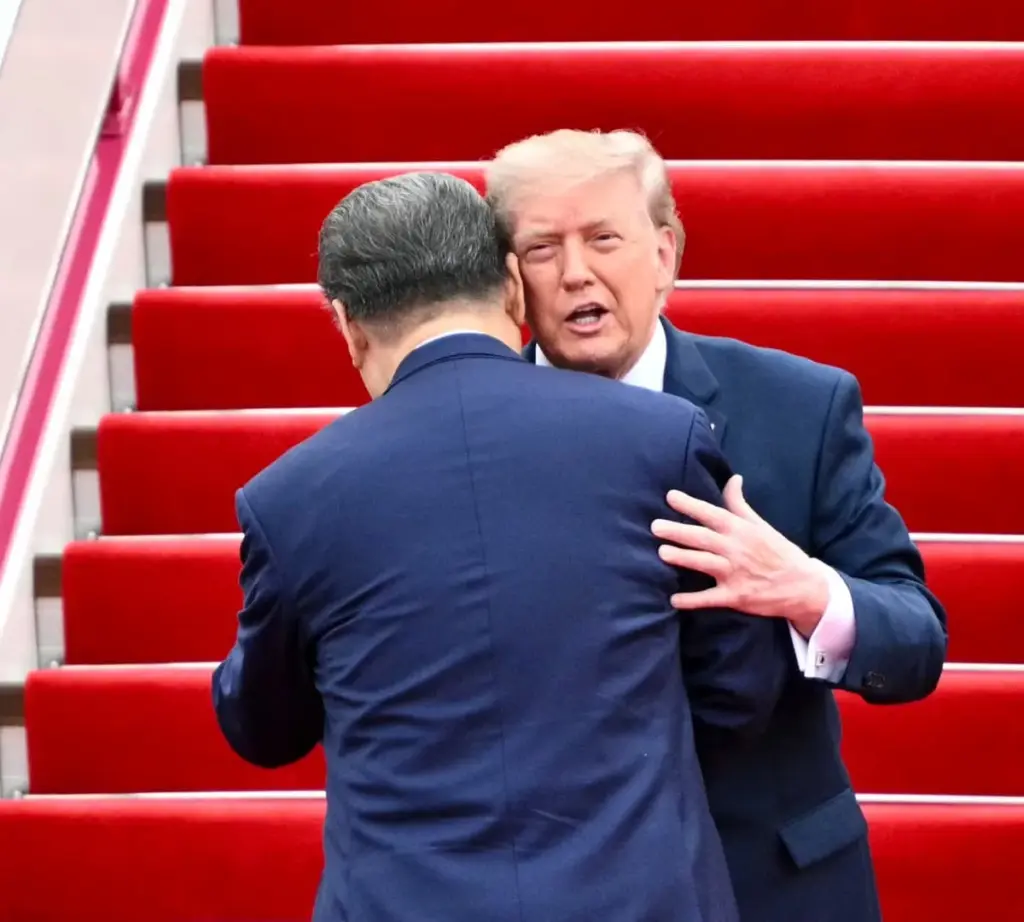
- President Trump, Xi Jinping, and Vladimir Putin are convening in Shenzhen for high-level talks on the Iran conflict and the war in Ukraine.
- The summit occurs against the backdrop of the APEC gathering, where China is positioning itself as the primary defender of multilateral trade.
- Shenzhen’s selection as the host city underscores the summit's focus on the future of artificial intelligence and digital economic cooperation.
- While concrete policy outcomes remain uncertain, the meeting represents a rare, direct diplomatic engagement between the world's three most influential nuclear powers.
- Tổng thống Trump, Tập Cận Bình và Vladimir Putin hội đàm cấp cao về cuộc xung đột tại Iran và chiến sự ở Ukraine.
- Hội nghị diễn ra bên lề diễn đàn APEC, nơi Trung Quốc đang nỗ lực khẳng định vai trò là người bảo vệ chính của thương mại đa phương.
- Việc chọn Thâm Quyến làm nơi tổ chức nhấn mạnh trọng tâm của hội nghị vào tương lai của trí tuệ nhân tạo và hợp tác kinh tế số.
- Dù kết quả chính sách cụ thể vẫn còn bỏ ngỏ, cuộc gặp đại diện cho một nỗ lực ngoại giao trực tiếp hiếm hoi giữa ba cường quốc hạt nhân có tầm ảnh hưởng lớn nhất thế giới.
- Le président Trump, Xi Jinping et Vladimir Poutine se réunissent à Shenzhen pour des pourparlers de haut niveau sur le conflit iranien et la guerre en Ukraine.
- Le sommet se déroule en marge de l'APEC, où la Chine s'affirme comme le principal défenseur du commerce multilatéral.
- Le choix de Shenzhen souligne l'importance accordée à l'avenir de l'intelligence artificielle et à la coopération économique numérique.
- Bien que les résultats politiques concrets restent incertains, cette rencontre représente un engagement diplomatique direct et rare entre les trois puissances nucléaires les plus influentes au monde.
- El presidente Trump, Xi Jinping y Vladímir Putin se reúnen en Shenzhen para mantener conversaciones de alto nivel sobre el conflicto en Irán y la guerra en Ucrania.
- La cumbre se desarrolla en el marco del foro APEC, donde China se posiciona como el principal defensor del comercio multilateral.
- La elección de Shenzhen como sede subraya el enfoque de la cumbre en el futuro de la inteligencia artificial y la cooperación económica digital.
- Aunque los resultados políticos concretos son inciertos, el encuentro representa una inusual y directa interacción diplomática entre las tres potencias nucleares más influyentes del mundo.
- 特朗普、习近平与普京齐聚深圳,就伊朗冲突及乌克兰战争等核心议题展开高层对话。
- 此次峰会背景为亚太经合组织(APEC)会议,中国正借此机会将自身塑造为多边贸易的主要捍卫者。
- 选择深圳作为举办地,凸显了峰会对人工智能未来发展及数字经济合作的高度重视。
- 尽管具体的政策成果尚不明朗,但此次会晤代表了全球三大核大国之间罕见的直接外交接触。
The arrival of President Donald Trump in Shenzhen marks a watershed moment in 21st-century diplomacy, as the American leader touches down for a historic trilateral summit with Chinese President Xi Jinping and Russian President Vladimir Putin. Set against the backdrop of the Asia-Pacific Economic Cooperation (APEC) summit, the meeting represents a rare, high-stakes convergence of the world’s most powerful figures at a time when the international order is being tested by concurrent conflicts in the Middle East and Eastern Europe.
While the official agenda remains fluid, the optics of the meeting—held in the heart of China’s technological powerhouse—suggest a deliberate attempt to recalibrate the global power dynamic. As the three leaders prepare to discuss the war in Ukraine and the escalating tensions in the Middle East, the world watches to see whether this summit will serve as a mere diplomatic exercise or the catalyst for a fundamental shift in how the great powers manage strategic stability in an era of deepening fragmentation.
The Geopolitical Calculus of the Shenzhen Summit
The choice of Shenzhen as the venue for this summit is far from incidental. Known as China’s "Silicon Valley," the city serves as the epicenter of Beijing’s ambitions in artificial intelligence, telecommunications, and the digital economy. By hosting the summit here, President Xi Jinping is signaling that China intends to lead the conversation on the future of global technology, positioning itself as the primary steward of multilateralism in direct contrast to the protectionist policies that have characterized much of the recent Western discourse.
For President Trump, the visit follows a whirlwind tour of the Philippines, Japan, India, and Australia, where he sought to reinforce regional alliances. However, the pivot to a trilateral meeting with his primary geopolitical rivals suggests a pragmatic, if unconventional, approach to statecraft. The inclusion of Vladimir Putin, who has remained defiant regarding Western sanctions, adds a layer of complexity to the proceedings. Putin’s assertion that sanctions have only strengthened the Russian economy provides a stark counter-narrative to the prevailing Western view, setting the stage for a tense exchange regarding the ongoing conflict in Ukraine.
The central tension of the summit lies in the competing visions for global order. Xi has consistently called for "deepened cooperation" in the digital economy and a green transition, framing these as essential pillars for global stability. Yet, beneath the rhetoric of scientific partnership, the underlying reality is one of intense competition. The leaders are expected to grapple with the Iran war, a conflict that has drawn in the interests of all three nations, albeit from vastly different strategic perspectives. Whether they can find common ground on de-escalation remains the most pressing question for global markets and security analysts alike.
Historical Precedents and the Shadow of Multilateralism
To understand the gravity of this meeting, one must look back at the historical precedents of great-power diplomacy. The current landscape bears a superficial resemblance to the Cold War era, yet the integration of the global economy makes the stakes significantly higher. Unlike the binary struggle of the 20th century, the current geopolitical environment is defined by a complex web of economic interdependence. China’s role as the "world’s factory" and a leader in AI innovation means that any shift in its diplomatic posture has immediate, tangible effects on global supply chains and financial markets.
Historically, summits of this magnitude have often been used to signal a "thaw" or to establish "red lines" in international relations. The presence of North Korean leader Kim Jong-Un, whose potential attendance looms over the summit, adds a volatile variable to the mix. The APEC forum, traditionally a venue for economic cooperation, is being repurposed as a stage for high-stakes security theater. This evolution reflects a broader trend: the blurring of lines between economic policy and national security, a phenomenon that has become the hallmark of the current decade.
Furthermore, the diplomatic maneuvering occurring on the sidelines—including Xi’s bilateral meetings with the leaders of South Korea, Canada, and Vietnam—demonstrates China’s aggressive pursuit of a broader coalition. By positioning itself as a bridge-builder between disparate nations, Beijing is attempting to dilute the influence of traditional Western-led alliances. This strategy, while ambitious, faces significant hurdles, particularly as the global community remains deeply divided over the legitimacy of Russia’s actions in Ukraine and the long-term implications of China’s technological dominance.
The Economic Ripple Effects and Institutional Reactions
The global financial community is watching the Shenzhen summit with a mixture of apprehension and opportunistic curiosity. Markets have long priced in the volatility associated with the U.S.-China trade relationship, but the introduction of a trilateral framework involving Russia creates a new layer of uncertainty. Investors are particularly focused on the potential for new agreements regarding AI regulation and digital trade, which could dictate the trajectory of the tech sector for years to come. If the three leaders can reach even a modest consensus on technological standards, it could provide a much-needed boost to global market stability.
However, the institutional reaction from the West has been one of cautious skepticism. Many analysts argue that the summit is a strategic win for Xi, who is effectively using the platform to project an image of global leadership while the U.S. and its allies struggle to maintain a unified front. The risk for the U.S. is that by engaging in these talks, it may inadvertently legitimize the narratives of its rivals. Conversely, proponents of the summit argue that in an era of nuclear proliferation and regional instability, direct communication between the leaders of the world's most powerful nations is not just desirable, but essential for preventing catastrophic miscalculations.
As the summit concludes, the focus will shift to the implementation of any "understandings" reached in Shenzhen. Will there be a tangible move toward a ceasefire in Ukraine? Can the leaders establish a framework for the responsible development of artificial intelligence that prevents a global arms race? These questions will likely remain unanswered in the short term. What is certain, however, is that the Shenzhen summit has set a new precedent for how the world’s superpowers interact. The era of "business as usual" in international diplomacy has effectively ended, replaced by a more fluid, transactional, and intensely competitive reality that will define the remainder of the decade.
Looking Ahead: The New Architecture of Global Power
The aftermath of the Shenzhen talks will likely trigger a period of intense diplomatic activity across all major capitals. For the U.S., the challenge will be to reconcile the need for strategic competition with the necessity of engagement. For China, the challenge will be to maintain its image as a neutral arbiter while its own economic interests remain deeply intertwined with the outcomes of the conflicts in Europe and the Middle East. And for Russia, the summit represents a vital opportunity to break out of its diplomatic isolation and reassert its influence on the global stage.
Observers should watch for shifts in trade policy and technological cooperation agreements in the coming months. If the Shenzhen summit results in even a minor easing of tensions, it could provide the breathing room necessary for a broader diplomatic reset. If, however, the meeting serves only to harden existing positions, the world may be entering a period of prolonged instability. The "Shenzhen Convergence" is more than just a meeting of three men; it is a reflection of a world in transition, searching for a new equilibrium in an age of unprecedented complexity.
Sự xuất hiện của Tổng thống Donald Trump tại Thâm Quyến đánh dấu một cột mốc quan trọng trong nền ngoại giao thế kỷ 21, khi nhà lãnh đạo Mỹ đặt chân đến đây để tham dự hội nghị thượng đỉnh ba bên lịch sử với Chủ tịch Trung Quốc Tập Cận Bình và Tổng thống Nga Vladimir Putin. Diễn ra bên lề hội nghị Hợp tác Kinh tế Châu Á - Thái Bình Dương (APEC), cuộc gặp này là sự hội tụ hiếm hoi và đầy kịch tính của những nhân vật quyền lực nhất thế giới, trong thời điểm trật tự quốc tế đang bị thử thách bởi các cuộc xung đột đồng thời tại Trung Đông và Đông Âu.
Mặc dù chương trình nghị sự chính thức vẫn còn linh hoạt, nhưng hình ảnh của cuộc gặp—được tổ chức tại trung tâm công nghệ của Trung Quốc—cho thấy một nỗ lực có chủ đích nhằm tái cân bằng động lực quyền lực toàn cầu. Khi ba nhà lãnh đạo chuẩn bị thảo luận về cuộc chiến ở Ukraine và căng thẳng leo thang tại Trung Đông, thế giới đang dõi theo để xem liệu hội nghị này sẽ chỉ là một bài tập ngoại giao đơn thuần hay là chất xúc tác cho một sự thay đổi căn bản trong cách các cường quốc quản lý sự ổn định chiến lược trong kỷ nguyên phân mảnh sâu sắc.
Tính toán địa chính trị của Hội nghị Thượng đỉnh Thâm Quyến
Việc chọn Thâm Quyến làm địa điểm tổ chức hội nghị không hề ngẫu nhiên. Được mệnh danh là "Thung lũng Silicon" của Trung Quốc, thành phố này là tâm điểm cho những tham vọng của Bắc Kinh trong lĩnh vực trí tuệ nhân tạo, viễn thông và nền kinh tế số. Bằng cách tổ chức hội nghị tại đây, Chủ tịch Tập Cận Bình đang phát đi tín hiệu rằng Trung Quốc có ý định dẫn dắt cuộc đối thoại về tương lai công nghệ toàn cầu, tự định vị mình là người quản trị chính của chủ nghĩa đa phương, hoàn toàn trái ngược với các chính sách bảo hộ vốn đã định hình phần lớn diễn ngôn của phương Tây gần đây.
Đối với Tổng thống Trump, chuyến thăm này tiếp nối hành trình dày đặc qua Philippines, Nhật Bản, Ấn Độ và Úc, nơi ông tìm cách củng cố các liên minh khu vực. Tuy nhiên, việc chuyển hướng sang cuộc gặp ba bên với các đối thủ địa chính trị chính của mình cho thấy một cách tiếp cận thực dụng, dù không theo lối mòn, trong nghệ thuật quản trị quốc gia. Sự tham gia của Vladimir Putin, người vẫn giữ thái độ thách thức trước các lệnh trừng phạt của phương Tây, đã thêm một lớp phức tạp vào tiến trình này. Khẳng định của ông Putin rằng các lệnh trừng phạt chỉ làm cho nền kinh tế Nga mạnh mẽ hơn đã tạo ra một phản biện sắc bén đối với quan điểm phổ biến của phương Tây, đặt nền móng cho một cuộc trao đổi căng thẳng về cuộc xung đột đang diễn ra tại Ukraine.
Căng thẳng cốt lõi của hội nghị nằm ở những tầm nhìn cạnh tranh về trật tự toàn cầu. Ông Tập liên tục kêu gọi "tăng cường hợp tác" trong nền kinh tế số và chuyển đổi xanh, coi đây là những trụ cột thiết yếu cho sự ổn định toàn cầu. Tuy nhiên, đằng sau những lời lẽ về quan hệ đối tác khoa học, thực tế bên dưới lại là sự cạnh tranh khốc liệt. Các nhà lãnh đạo dự kiến sẽ phải giải quyết vấn đề chiến tranh tại Iran, một cuộc xung đột đã thu hút lợi ích của cả ba quốc gia, mặc dù từ những góc độ chiến lược hoàn toàn khác nhau. Liệu họ có thể tìm thấy tiếng nói chung về việc giảm leo thang hay không vẫn là câu hỏi cấp bách nhất đối với cả thị trường toàn cầu và các nhà phân tích an ninh.
Tiền lệ lịch sử và bóng ma của chủ nghĩa đa phương
Để hiểu được tầm quan trọng của cuộc gặp này, cần phải nhìn lại các tiền lệ lịch sử của nền ngoại giao cường quốc. Bối cảnh hiện tại có vẻ ngoài tương đồng với thời kỳ Chiến tranh Lạnh, nhưng sự hội nhập của nền kinh tế toàn cầu khiến cho các rủi ro trở nên cao hơn đáng kể. Không giống như cuộc đấu tranh nhị nguyên của thế kỷ 20, môi trường địa chính trị hiện nay được định nghĩa bởi một mạng lưới phụ thuộc kinh tế phức tạp. Vai trò của Trung Quốc với tư cách là "công xưởng thế giới" và người dẫn đầu trong đổi mới AI đồng nghĩa với việc bất kỳ sự thay đổi nào trong tư thế ngoại giao của nước này đều có tác động tức thì và hữu hình đến chuỗi cung ứng toàn cầu và thị trường tài chính.
Trong lịch sử, các hội nghị thượng đỉnh tầm cỡ này thường được sử dụng để báo hiệu một sự "tan băng" hoặc thiết lập các "lằn ranh đỏ" trong quan hệ quốc tế. Sự hiện diện của nhà lãnh đạo Triều Tiên Kim Jong-Un, người có khả năng tham dự, đã thêm một biến số bất ổn vào cuộc chơi. Diễn đàn APEC, vốn là nơi dành cho hợp tác kinh tế, đang được tái sử dụng như một sân khấu cho các màn kịch an ninh đầy rủi ro. Sự tiến hóa này phản ánh một xu hướng rộng lớn hơn: sự xóa nhòa ranh giới giữa chính sách kinh tế và an ninh quốc gia, một hiện tượng đã trở thành dấu ấn của thập kỷ hiện tại.
Hơn nữa, các động thái ngoại giao diễn ra bên lề—bao gồm các cuộc gặp song phương của ông Tập với các nhà lãnh đạo Hàn Quốc, Canada và Việt Nam—cho thấy sự theo đuổi quyết liệt của Trung Quốc đối với một liên minh rộng lớn hơn. Bằng cách tự định vị mình là người xây dựng cầu nối giữa các quốc gia khác biệt, Bắc Kinh đang cố gắng làm loãng ảnh hưởng của các liên minh truyền thống do phương Tây dẫn đầu. Chiến lược này, dù đầy tham vọng, vẫn phải đối mặt với những rào cản đáng kể, đặc biệt là khi cộng đồng quốc tế vẫn còn chia rẽ sâu sắc về tính chính danh trong các hành động của Nga tại Ukraine và những tác động dài hạn từ sự thống trị công nghệ của Trung Quốc.
Tác động kinh tế lan tỏa và phản ứng của các thể chế
Cộng đồng tài chính toàn cầu đang theo dõi hội nghị Thâm Quyến với tâm trạng vừa lo ngại vừa tò mò đầy cơ hội. Các thị trường từ lâu đã tính đến sự biến động liên quan đến mối quan hệ thương mại Mỹ-Trung, nhưng việc đưa vào một khuôn khổ ba bên có sự tham gia của Nga đã tạo ra một lớp bất ổn mới. Các nhà đầu tư đặc biệt tập trung vào khả năng đạt được các thỏa thuận mới liên quan đến quy định về AI và thương mại kỹ thuật số, những điều có thể định hình quỹ đạo của lĩnh vực công nghệ trong nhiều năm tới. Nếu ba nhà lãnh đạo có thể đạt được dù chỉ là một sự đồng thuận khiêm tốn về các tiêu chuẩn công nghệ, điều đó có thể tạo ra cú hích rất cần thiết cho sự ổn định của thị trường toàn cầu.
Tuy nhiên, phản ứng thể chế từ phương Tây lại mang tính hoài nghi thận trọng. Nhiều nhà phân tích lập luận rằng hội nghị thượng đỉnh là một chiến thắng chiến lược cho ông Tập, người đang sử dụng nền tảng này một cách hiệu quả để xây dựng hình ảnh lãnh đạo toàn cầu trong khi Mỹ và các đồng minh đang chật vật duy trì một mặt trận thống nhất. Rủi ro đối với Mỹ là bằng cách tham gia vào các cuộc đàm phán này, họ có thể vô tình hợp thức hóa các luận điểm của đối thủ. Ngược lại, những người ủng hộ hội nghị cho rằng trong kỷ nguyên phổ biến vũ khí hạt nhân và bất ổn khu vực, việc giao tiếp trực tiếp giữa các nhà lãnh đạo của những quốc gia quyền lực nhất thế giới không chỉ là điều đáng mong đợi mà còn là điều cần thiết để ngăn chặn những tính toán sai lầm thảm khốc.
Khi hội nghị kết thúc, trọng tâm sẽ chuyển sang việc thực hiện bất kỳ "thỏa thuận" nào đạt được tại Thâm Quyến. Liệu sẽ có một bước tiến hữu hình hướng tới lệnh ngừng bắn ở Ukraine? Các nhà lãnh đạo có thể thiết lập một khuôn khổ cho sự phát triển có trách nhiệm của trí tuệ nhân tạo nhằm ngăn chặn một cuộc chạy đua vũ trang toàn cầu? Những câu hỏi này có thể sẽ vẫn chưa có lời giải trong ngắn hạn. Tuy nhiên, điều chắc chắn là hội nghị thượng đỉnh Thâm Quyến đã thiết lập một tiền lệ mới cho cách các siêu cường thế giới tương tác. Kỷ nguyên "kinh doanh như thường lệ" trong ngoại giao quốc tế đã thực sự kết thúc, thay thế bằng một thực tế linh hoạt, mang tính giao dịch và cạnh tranh gay gắt hơn, điều sẽ định hình phần còn lại của thập kỷ này.
Nhìn về phía trước: Kiến trúc mới của quyền lực toàn cầu
Hậu quả của các cuộc đàm phán tại Thâm Quyến có khả năng sẽ kích hoạt một giai đoạn hoạt động ngoại giao cường độ cao tại tất cả các thủ đô lớn. Đối với Mỹ, thách thức sẽ là hòa giải nhu cầu cạnh tranh chiến lược với sự cần thiết của việc tham gia đối thoại. Đối với Trung Quốc, thách thức sẽ là duy trì hình ảnh một trọng tài trung lập trong khi lợi ích kinh tế của chính họ vẫn gắn bó sâu sắc với kết quả của các cuộc xung đột ở châu Âu và Trung Đông. Và đối với Nga, hội nghị đại diện cho một cơ hội quan trọng để thoát khỏi sự cô lập ngoại giao và khẳng định lại ảnh hưởng của mình trên trường quốc tế.
Các nhà quan sát nên theo dõi những thay đổi trong chính sách thương mại và các thỏa thuận hợp tác công nghệ trong những tháng tới. Nếu hội nghị thượng đỉnh Thâm Quyến dẫn đến dù chỉ là một sự giảm bớt căng thẳng nhỏ, nó có thể tạo ra khoảng trống cần thiết cho một sự tái thiết ngoại giao rộng lớn hơn. Tuy nhiên, nếu cuộc gặp chỉ phục vụ mục đích củng cố các vị thế hiện có, thế giới có thể đang bước vào một thời kỳ bất ổn kéo dài. "Sự hội tụ tại Thâm Quyến" không chỉ là một cuộc gặp gỡ của ba người đàn ông; đó là sự phản chiếu của một thế giới đang chuyển mình, tìm kiếm một trạng thái cân bằng mới trong thời đại của sự phức tạp chưa từng có.
L'arrivée du président Donald Trump à Shenzhen marque un tournant décisif dans la diplomatie du XXIe siècle, alors que le dirigeant américain atterrit pour un sommet trilatéral historique avec le président chinois Xi Jinping et le président russe Vladimir Poutine. Se déroulant en toile de fond du sommet de la Coopération économique pour l'Asie-Pacifique (APEC), cette réunion représente une convergence rare et à haut risque des figures les plus puissantes de la planète, à une époque où l'ordre international est mis à l'épreuve par des conflits simultanés au Moyen-Orient et en Europe de l'Est.
Si l'agenda officiel demeure fluide, la symbolique de la rencontre — organisée au cœur du poumon technologique chinois — suggère une tentative délibérée de recalibrer la dynamique mondiale des puissances. Alors que les trois dirigeants se préparent à aborder la guerre en Ukraine et les tensions croissantes au Moyen-Orient, le monde observe si ce sommet ne sera qu'un simple exercice diplomatique ou le catalyseur d'un changement fondamental dans la gestion de la stabilité stratégique par les grandes puissances, dans une ère de fragmentation accrue.
Le calcul géopolitique du sommet de Shenzhen
Le choix de Shenzhen comme lieu de ce sommet est loin d'être fortuit. Surnommée la « Silicon Valley » chinoise, la ville est l'épicentre des ambitions de Pékin en matière d'intelligence artificielle, de télécommunications et d'économie numérique. En accueillant le sommet ici, le président Xi Jinping signifie que la Chine entend mener la réflexion sur l'avenir de la technologie mondiale, se positionnant comme le principal garant du multilatéralisme, en opposition directe avec les politiques protectionnistes qui ont caractérisé une grande partie du discours occidental récent.
Pour le président Trump, cette visite fait suite à une tournée éclair aux Philippines, au Japon, en Inde et en Australie, où il a cherché à renforcer les alliances régionales. Cependant, le pivot vers une réunion trilatérale avec ses principaux rivaux géopolitiques suggère une approche pragmatique, bien qu'atypique, de l'art de gouverner. L'inclusion de Vladimir Poutine, qui est resté inflexible face aux sanctions occidentales, ajoute une couche de complexité aux débats. L'affirmation de Poutine selon laquelle les sanctions n'ont fait que renforcer l'économie russe offre un contre-récit frappant à la vision occidentale dominante, préparant le terrain pour un échange tendu concernant le conflit en cours en Ukraine.
La tension centrale du sommet réside dans les visions concurrentes de l'ordre mondial. Xi a constamment appelé à une « coopération approfondie » dans l'économie numérique et la transition écologique, les présentant comme des piliers essentiels de la stabilité mondiale. Pourtant, sous la rhétorique du partenariat scientifique, la réalité sous-jacente est celle d'une compétition intense. Les dirigeants devraient se pencher sur la guerre en Iran, un conflit qui implique les intérêts des trois nations, bien que sous des angles stratégiques radicalement différents. La question de savoir s'ils peuvent trouver un terrain d'entente sur une désescalade reste la plus pressante pour les marchés mondiaux comme pour les analystes de sécurité.
Précédents historiques et l'ombre du multilatéralisme
Pour comprendre la gravité de cette rencontre, il faut se pencher sur les précédents historiques de la diplomatie des grandes puissances. Le paysage actuel ressemble superficiellement à l'ère de la Guerre froide, mais l'intégration de l'économie mondiale rend les enjeux nettement plus élevés. Contrairement à la lutte binaire du XXe siècle, l'environnement géopolitique actuel est défini par un réseau complexe d'interdépendance économique. Le rôle de la Chine en tant qu'« usine du monde » et leader de l'innovation en IA signifie que tout changement dans sa posture diplomatique a des effets immédiats et tangibles sur les chaînes d'approvisionnement mondiales et les marchés financiers.
Historiquement, les sommets de cette ampleur ont souvent été utilisés pour signaler un « dégel » ou pour établir des « lignes rouges » dans les relations internationales. La présence du dirigeant nord-coréen Kim Jong-Un, dont la participation potentielle plane sur le sommet, ajoute une variable volatile à l'équation. Le forum de l'APEC, traditionnellement un lieu de coopération économique, est réutilisé comme une scène pour un théâtre de sécurité à haut risque. Cette évolution reflète une tendance plus large : l'effacement des frontières entre politique économique et sécurité nationale, un phénomène devenu la marque de la décennie actuelle.
Par ailleurs, les manœuvres diplomatiques en marge — notamment les rencontres bilatérales de Xi avec les dirigeants de la Corée du Sud, du Canada et du Vietnam — démontrent la poursuite agressive par la Chine d'une coalition plus large. En se positionnant comme un bâtisseur de ponts entre des nations disparates, Pékin tente de diluer l'influence des alliances traditionnelles dirigées par l'Occident. Cette stratégie, bien qu'ambitieuse, se heurte à des obstacles importants, notamment parce que la communauté mondiale reste profondément divisée sur la légitimité des actions de la Russie en Ukraine et sur les implications à long terme de la domination technologique chinoise.
Répercussions économiques et réactions institutionnelles
La communauté financière mondiale observe le sommet de Shenzhen avec un mélange d'appréhension et de curiosité opportuniste. Les marchés ont depuis longtemps intégré la volatilité associée à la relation commerciale sino-américaine, mais l'introduction d'un cadre trilatéral impliquant la Russie crée une nouvelle strate d'incertitude. Les investisseurs se concentrent particulièrement sur le potentiel de nouveaux accords concernant la régulation de l'IA et le commerce numérique, qui pourraient dicter la trajectoire du secteur technologique pour les années à venir. Si les trois dirigeants parviennent à un consensus, même modeste, sur les normes technologiques, cela pourrait donner un élan indispensable à la stabilité des marchés mondiaux.
Cependant, la réaction institutionnelle de l'Occident est empreinte d'un scepticisme prudent. De nombreux analystes soutiennent que le sommet est une victoire stratégique pour Xi, qui utilise efficacement la tribune pour projeter une image de leadership mondial pendant que les États-Unis et leurs alliés peinent à maintenir un front uni. Le risque pour les États-Unis est qu'en s'engageant dans ces pourparlers, ils légitiment par inadvertance les récits de leurs rivaux. À l'inverse, les partisans du sommet soutiennent qu'à une ère de prolifération nucléaire et d'instabilité régionale, une communication directe entre les dirigeants des nations les plus puissantes du monde n'est pas seulement souhaitable, mais essentielle pour éviter des erreurs de calcul catastrophiques.
À l'issue du sommet, l'attention se portera sur la mise en œuvre des « ententes » conclues à Shenzhen. Y aura-t-il une avancée tangible vers un cessez-le-feu en Ukraine ? Les dirigeants peuvent-ils établir un cadre pour le développement responsable de l'intelligence artificielle afin d'éviter une course aux armements mondiale ? Ces questions resteront probablement sans réponse à court terme. Ce qui est certain, en revanche, c'est que le sommet de Shenzhen a établi un nouveau précédent dans la manière dont les superpuissances mondiales interagissent. L'ère du « business as usual » en diplomatie internationale a pris fin, remplacée par une réalité plus fluide, transactionnelle et intensément compétitive qui définira le reste de la décennie.
Perspectives : La nouvelle architecture de la puissance mondiale
Les suites des pourparlers de Shenzhen déclencheront probablement une période d'activité diplomatique intense dans toutes les capitales majeures. Pour les États-Unis, le défi sera de concilier le besoin de compétition stratégique avec la nécessité de l'engagement. Pour la Chine, le défi sera de maintenir son image d'arbitre neutre alors que ses propres intérêts économiques restent profondément liés aux résultats des conflits en Europe et au Moyen-Orient. Et pour la Russie, le sommet représente une opportunité vitale de sortir de son isolement diplomatique et de réaffirmer son influence sur la scène mondiale.
Les observateurs devront surveiller les changements dans la politique commerciale et les accords de coopération technologique dans les mois à venir. Si le sommet de Shenzhen aboutit à un apaisement, même mineur, des tensions, cela pourrait offrir le répit nécessaire à une remise à zéro diplomatique plus large. Si, en revanche, la réunion ne sert qu'à durcir les positions existantes, le monde pourrait entrer dans une période d'instabilité prolongée. La « Convergence de Shenzhen » est bien plus qu'une simple rencontre entre trois hommes ; elle est le reflet d'un monde en transition, en quête d'un nouvel équilibre dans une ère d'une complexité sans précédent.
La llegada del presidente Donald Trump a Shenzhen marca un momento decisivo en la diplomacia del siglo XXI, al aterrizar el líder estadounidense para una histórica cumbre trilateral con el presidente chino, Xi Jinping, y el presidente ruso, Vladímir Putin. En el contexto de la cumbre de Cooperación Económica Asia-Pacífico (APEC), el encuentro representa una convergencia inusual y de alto riesgo de las figuras más poderosas del mundo en un momento en que el orden internacional se ve puesto a prueba por conflictos simultáneos en Oriente Medio y Europa del Este.
Aunque la agenda oficial sigue siendo fluida, la puesta en escena de la reunión —celebrada en el corazón del motor tecnológico de China— sugiere un intento deliberado de recalibrar la dinámica de poder global. Mientras los tres líderes se preparan para discutir la guerra en Ucrania y las crecientes tensiones en Oriente Medio, el mundo observa para ver si esta cumbre servirá como un mero ejercicio diplomático o como el catalizador de un cambio fundamental en la forma en que las grandes potencias gestionan la estabilidad estratégica en una era de creciente fragmentación.
El cálculo geopolítico de la cumbre de Shenzhen
La elección de Shenzhen como sede de esta cumbre no es casual. Conocida como el "Silicon Valley" de China, la ciudad sirve como epicentro de las ambiciones de Pekín en inteligencia artificial, telecomunicaciones y economía digital. Al albergar la cumbre aquí, el presidente Xi Jinping señala que China pretende liderar la conversación sobre el futuro de la tecnología global, posicionándose como el principal valedor del multilateralismo en contraste directo con las políticas proteccionistas que han caracterizado gran parte del discurso occidental reciente.
Para el presidente Trump, la visita sigue a una intensa gira por Filipinas, Japón, India y Australia, donde buscó reforzar las alianzas regionales. Sin embargo, el giro hacia una reunión trilateral con sus principales rivales geopolíticos sugiere un enfoque pragmático, aunque poco convencional, de la política de Estado. La inclusión de Vladímir Putin, quien se ha mantenido desafiante frente a las sanciones occidentales, añade una capa de complejidad al procedimiento. La afirmación de Putin de que las sanciones solo han fortalecido la economía rusa ofrece un contrapunto marcado a la visión occidental predominante, preparando el escenario para un tenso intercambio sobre el conflicto en Ucrania.
La tensión central de la cumbre reside en las visiones contrapuestas sobre el orden mundial. Xi ha pedido constantemente una "cooperación profunda" en la economía digital y la transición ecológica, presentándolas como pilares esenciales para la estabilidad global. Sin embargo, bajo la retórica de la asociación científica, la realidad subyacente es la de una intensa competencia. Se espera que los líderes aborden la guerra en Irán, un conflicto que ha involucrado los intereses de las tres naciones, aunque desde perspectivas estratégicas muy diferentes. Si pueden encontrar puntos en común para la desescalada sigue siendo la pregunta más apremiante tanto para los mercados globales como para los analistas de seguridad.
Precedentes históricos y la sombra del multilateralismo
Para comprender la gravedad de este encuentro, es necesario observar los precedentes históricos de la diplomacia de las grandes potencias. El panorama actual guarda un parecido superficial con la era de la Guerra Fría, pero la integración de la economía global hace que lo que está en juego sea significativamente mayor. A diferencia de la lucha binaria del siglo XX, el entorno geopolítico actual se define por una compleja red de interdependencia económica. El papel de China como "fábrica del mundo" y líder en innovación de IA significa que cualquier cambio en su postura diplomática tiene efectos inmediatos y tangibles en las cadenas de suministro globales y los mercados financieros.
Históricamente, las cumbres de esta magnitud se han utilizado a menudo para señalar un "deshielo" o para establecer "líneas rojas" en las relaciones internacionales. La presencia del líder norcoreano Kim Jong-Un, cuya posible asistencia planea sobre la cumbre, añade una variable volátil a la mezcla. El foro APEC, tradicionalmente un lugar para la cooperación económica, está siendo reutilizado como escenario para un teatro de seguridad de alto riesgo. Esta evolución refleja una tendencia más amplia: la difuminación de las líneas entre la política económica y la seguridad nacional, un fenómeno que se ha convertido en el sello distintivo de la década actual.
Además, las maniobras diplomáticas que se están produciendo al margen —incluidas las reuniones bilaterales de Xi con los líderes de Corea del Sur, Canadá y Vietnam— demuestran la agresiva búsqueda de China por una coalición más amplia. Al posicionarse como un puente entre naciones dispares, Pekín intenta diluir la influencia de las alianzas tradicionales lideradas por Occidente. Esta estrategia, aunque ambiciosa, enfrenta obstáculos importantes, particularmente porque la comunidad global sigue profundamente dividida sobre la legitimidad de las acciones de Rusia en Ucrania y las implicaciones a largo plazo del dominio tecnológico de China.
Los efectos económicos y las reacciones institucionales
La comunidad financiera mundial observa la cumbre de Shenzhen con una mezcla de aprensión y curiosidad oportunista. Los mercados han descontado durante mucho tiempo la volatilidad asociada a la relación comercial entre Estados Unidos y China, pero la introducción de un marco trilateral que involucra a Rusia crea una nueva capa de incertidumbre. Los inversores están especialmente centrados en la posibilidad de nuevos acuerdos sobre la regulación de la IA y el comercio digital, que podrían dictar la trayectoria del sector tecnológico en los próximos años. Si los tres líderes logran alcanzar un consenso, aunque sea modesto, sobre los estándares tecnológicos, podría proporcionar un impulso muy necesario a la estabilidad del mercado global.
Sin embargo, la reacción institucional de Occidente ha sido de cauteloso escepticismo. Muchos analistas sostienen que la cumbre es una victoria estratégica para Xi, quien utiliza eficazmente la plataforma para proyectar una imagen de liderazgo global mientras Estados Unidos y sus aliados luchan por mantener un frente unido. El riesgo para Estados Unidos es que, al participar en estas conversaciones, pueda legitimar inadvertidamente las narrativas de sus rivales. Por el contrario, los defensores de la cumbre argumentan que, en una era de proliferación nuclear e inestabilidad regional, la comunicación directa entre los líderes de las naciones más poderosas del mundo no solo es deseable, sino esencial para evitar errores de cálculo catastróficos.
A medida que concluye la cumbre, el enfoque se desplazará hacia la implementación de cualquier "entendimiento" alcanzado en Shenzhen. ¿Habrá un movimiento tangible hacia un alto el fuego en Ucrania? ¿Podrán los líderes establecer un marco para el desarrollo responsable de la inteligencia artificial que evite una carrera armamentística global? Estas preguntas probablemente permanecerán sin respuesta a corto plazo. Lo que es seguro, sin embargo, es que la cumbre de Shenzhen ha sentado un nuevo precedente sobre cómo interactúan las superpotencias mundiales. La era de los "negocios como siempre" en la diplomacia internacional ha terminado efectivamente, reemplazada por una realidad más fluida, transaccional e intensamente competitiva que definirá el resto de la década.
Mirando hacia el futuro: La nueva arquitectura del poder global
Es probable que las secuelas de las conversaciones de Shenzhen desencadenen un período de intensa actividad diplomática en todas las capitales importantes. Para Estados Unidos, el desafío será reconciliar la necesidad de competencia estratégica con la necesidad de compromiso. Para China, el desafío será mantener su imagen como árbitro neutral mientras sus propios intereses económicos siguen profundamente entrelazados con los resultados de los conflictos en Europa y Oriente Medio. Y para Rusia, la cumbre representa una oportunidad vital para romper su aislamiento diplomático y reafirmar su influencia en el escenario global.
Los observadores deben estar atentos a los cambios en la política comercial y los acuerdos de cooperación tecnológica en los próximos meses. Si la cumbre de Shenzhen resulta en una mínima relajación de las tensiones, podría proporcionar el respiro necesario para un reinicio diplomático más amplio. Si, por el contrario, la reunión solo sirve para endurecer las posiciones existentes, el mundo podría estar entrando en un período de inestabilidad prolongada. La "Convergencia de Shenzhen" es más que una simple reunión de tres hombres; es el reflejo de un mundo en transición, que busca un nuevo equilibrio en una era de complejidad sin precedentes.
唐纳德·特朗普总统抵达深圳,标志着21世纪外交史上的一个分水岭。这位美国领导人在此开启了与中国国家主席习近平及俄罗斯总统弗拉基米尔·普京的历史性三方峰会。在亚太经合组织(APEC)峰会的背景下,这场会晤代表了全球最具影响力的三位领导人在国际秩序正遭受中东和东欧冲突严峻考验之际,进行的一次罕见且高风险的汇流。
尽管官方议程尚处于变动之中,但这场在“中国科技心脏”举行的会晤,其象征意义本身就暗示了对全球权力动态进行重新校准的深思熟虑。随着三位领导人准备就乌克兰战争及中东局势升级展开讨论,全世界都在注视着这场峰会究竟是一场单纯的外交演练,还是大国在深度碎片化时代管理战略稳定性的根本性转折点。
深圳峰会的地缘政治考量
选择深圳作为峰会举办地绝非偶然。作为中国的“硅谷”,深圳是北京在人工智能、电信及数字经济领域雄心的核心地带。习近平主席通过在此地举办峰会,向外界释放出中国意图引领全球科技对话的信号,并将自身定位为多边主义的主要守护者,这与近期西方话语中盛行的保护主义政策形成了鲜明对比。
对于特朗普总统而言,此次访问是在结束了对菲律宾、日本、印度和澳大利亚的旋风式访问后进行的,他在这些国家旨在加强区域联盟。然而,转向与主要地缘政治竞争对手进行三方会晤,暗示了一种务实甚至非传统的治国方略。弗拉基米尔·普京的加入——他此前对西方制裁始终保持强硬态度——为会谈增添了复杂性。普京声称制裁反而增强了俄罗斯经济,这与西方主流观点形成了尖锐的反差,也为双方就乌克兰冲突进行紧张的交锋埋下了伏笔。
峰会的核心张力在于对全球秩序的不同愿景。习近平一贯呼吁在数字经济和绿色转型方面“深化合作”,并将其视为全球稳定的基石。然而,在科学伙伴关系的修辞之下,现实却是激烈的竞争。预计领导人们将不得不应对伊朗战争,这场冲突牵动着三国的利益,尽管各方的战略视角迥异。他们能否在缓和局势上找到共同点,仍是全球市场和安全分析人士最迫切关注的问题。
历史先例与多边主义的阴影
要理解此次会晤的严重性,必须回顾大国外交的历史先例。当前的格局与冷战时期有表面上的相似之处,但全球经济的深度融合使得风险显著提高。与20世纪的二元对立不同,当前的地缘政治环境由复杂的经济相互依赖网络所定义。中国作为“世界工厂”和人工智能创新的领导者,意味着其外交姿态的任何转变,都会对全球供应链和金融市场产生直接且实质性的影响。
从历史上看,这种量级的峰会常被用来释放“解冻”信号或划定国际关系的“红线”。朝鲜领导人金正恩潜在的出席,为局势增添了一个不稳定的变量。APEC论坛传统上是经济合作的场所,如今正被重新定位为高风险的安全舞台。这种演变反映了一个更广泛的趋势:经济政策与国家安全之间的界限日益模糊,这已成为本十年的显著特征。
此外,在峰会间隙进行的外交博弈——包括习近平与韩国、加拿大和越南领导人的双边会晤——展示了中国对构建更广泛联盟的积极追求。通过将自己定位为不同国家之间的桥梁,北京正试图削弱传统西方主导联盟的影响力。这一战略虽然雄心勃勃,但面临巨大阻碍,特别是在全球社会对俄罗斯在乌克兰行动的合法性以及中国技术主导地位的长期影响仍存在严重分歧的情况下。
经济涟漪效应与机构反应
全球金融界正以一种既担忧又充满投机好奇的心态注视着深圳峰会。市场早已消化了美中贸易关系带来的波动,但引入涉及俄罗斯的三方框架创造了新的不确定性。投资者特别关注人工智能监管和数字贸易方面可能达成的协议,这些协议可能会决定未来数年科技行业的轨迹。如果三位领导人能在技术标准上达成哪怕是微小的共识,都可能为全球市场的稳定注入急需的动力。
然而,西方机构的反应则充满了谨慎的怀疑。许多分析人士认为,这次峰会是习近平的战略胜利,他有效地利用这一平台投射出全球领导者的形象,而美国及其盟友却在努力维持统一战线。美国面临的风险在于,通过参与这些对话,可能会无意中使对手的叙事合法化。相反,峰会的支持者认为,在核扩散和区域不稳定的时代,全球最强大国家领导人之间的直接沟通不仅是可取的,更是防止灾难性误判的必要手段。
随着峰会结束,焦点将转向在深圳达成的任何“谅解”的落实情况。乌克兰是否会出现实质性的停火举措?领导人们能否建立一个负责任的人工智能发展框架以防止全球军备竞赛?这些问题在短期内可能仍无答案。然而可以确定的是,深圳峰会已经为世界超级大国之间的互动设定了新的先例。国际外交中“一切照旧”的时代已经实质性终结,取而代之的是一种更具流动性、交易性且竞争激烈的现实,这将定义本十年的余下时光。
展望未来:全球权力的新架构
深圳会谈后的余波很可能引发各大首都之间密集的外交活动。对于美国而言,挑战在于如何在战略竞争的必要性与接触的必要性之间取得平衡。对于中国而言,挑战在于如何在自身经济利益与欧洲和中东冲突结果深度交织的情况下,维持其中立仲裁者的形象。而对于俄罗斯来说,此次峰会是其打破外交孤立、重申全球舞台影响力的关键机遇。
观察人士应密切关注未来几个月贸易政策和技术合作协议的转变。如果深圳峰会能带来哪怕是轻微的紧张局势缓解,都可能为更广泛的外交重置提供喘息空间。然而,如果会晤只是加剧了现有的立场对立,世界可能正进入一个长期不稳定的时期。“深圳汇流”不仅仅是三位领导人的会面,它是一个处于转型中的世界的缩影,在复杂性空前的时代,寻找着新的平衡点。
Editorial Standards & Multi-Language Synthesis: This dispatch was synthesized and fact-checked by the ParisDaily Editorial Desk across 5 global editions (EN, FR, VI, ES, ZH), cross-referencing primary international wire reports and real-time search intelligence.