The New Pulse of Public Service: Inside the Reinvention of Le Mag de la Santé
As 'Le Mag de la santé' transitions to France 2, Flavie Flament and Dr. Gilbert Bou Jaoudé navigate the pressures of legacy media and the demand for immediate ratings.
As 'Le Mag de la santé' transitions to France 2, Flavie Flament and Dr. Gilbert Bou Jaoudé navigate the pressures of legacy media and the demand for immediate ratings.
As 'Le Mag de la santé' transitions to France 2, Flavie Flament and Dr. Gilbert Bou Jaoudé navigate the pressures of legacy media and the demand for immediate ratings.
As 'Le Mag de la santé' transitions to France 2, Flavie Flament and Dr. Gilbert Bou Jaoudé navigate the pressures of legacy media and the demand for immediate ratings.
As 'Le Mag de la santé' transitions to France 2, Flavie Flament and Dr. Gilbert Bou Jaoudé navigate the pressures of legacy media and the demand for immediate ratings.
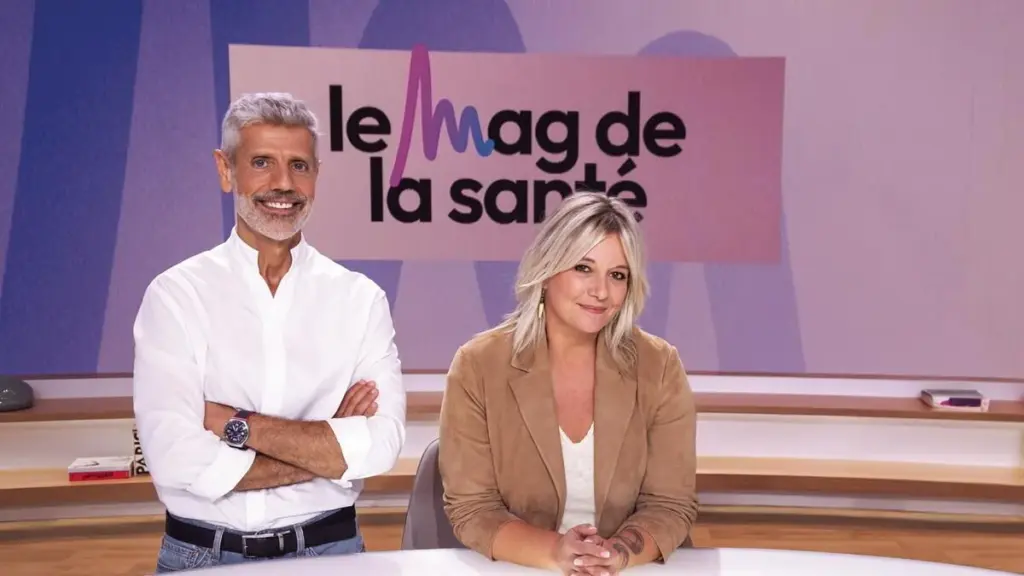
- Flavie Flament and Dr. Gilbert Bou Jaoudé have formed a strategic partnership to anchor the revamped 'Le Mag de la santé' on France 2.
- The program faces the dual challenge of maintaining medical integrity while adapting to a new, broader broadcast schedule.
- Both hosts have publicly dismissed concerns over early ratings, emphasizing the 'artisan' nature of building a long-term television audience.
- Dr. Bou Jaoudé brings a unique blend of emergency medicine expertise and digital communication experience to the public broadcaster.
In the high-stakes ecosystem of French public broadcasting, few programs carry the institutional weight of Le Mag de la santé. For nearly three decades, the show served as the definitive medical authority on France 5, a reliable anchor for viewers seeking clarity in an increasingly complex landscape of health information. However, the recent migration of the program to France 2—the flagship channel of the public group—has signaled a profound shift in both tone and ambition, placing the spotlight squarely on its new co-hosts: the seasoned broadcaster Flavie Flament and the multifaceted physician Dr. Gilbert Bou Jaoudé.
This transition is not merely a change in scheduling or studio aesthetics; it represents a strategic recalibration of how public service media addresses the health concerns of a modern, digital-native audience. As the program navigates the turbulence of a new time slot and a competitive afternoon landscape, the chemistry between Flament and Bou Jaoudé has become the central pillar of its survival strategy. In an era where the “sacro-saint” law of immediate ratings often threatens the longevity of quality programming, the duo is betting on a philosophy of patience, intellectual rigor, and human connection to secure the show’s future.
The Anatomy of a New Partnership
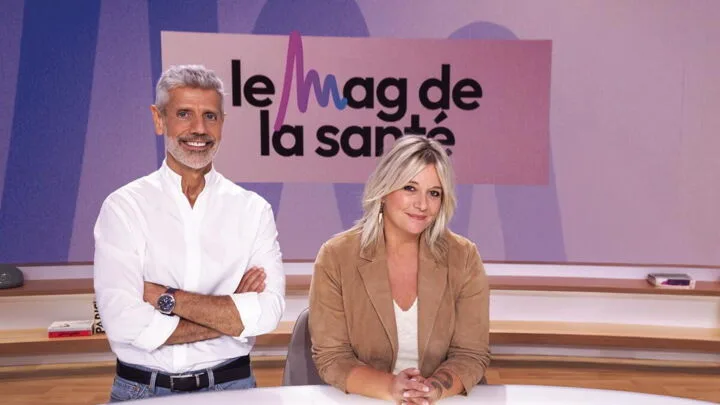
The pairing of Flavie Flament and Dr. Gilbert Bou Jaoudé is, by all accounts, a calculated evolution. Flament, a titan of French broadcasting with a career spanning decades, brings a level of gravitas and audience trust that is essential for a program of this nature. Her transition from radio to television has been seamless, and she has spoken candidly about finding a sense of professional fulfillment in this daily appointment with the public that mirrors the intimacy she cultivated during her fifteen-year radio tenure.
Dr. Bou Jaoudé, conversely, represents the modern face of medical communication. Known to many for his previous work as an expert on M6’s Mariés au premier regard and his influential digital presence, he brings a unique pedigree to the table. As a general practitioner and emergency physician who also coordinates a team of forty medical specialists, he is uniquely positioned to bridge the gap between complex clinical data and accessible public information. Their professional relationship, which predates this collaboration by over a decade, has blossomed into a seamless “complementarity” off-camera, a factor they both cite as the bedrock of their on-screen rapport.
Navigating the Ratings Pressure Cooker
The move to France 2 has not been without its friction. Following the departure of long-time fixture Jimmy Mohamed, the show has faced the inevitable scrutiny of a new audience and a new broadcast environment. Recent reports of fluctuating ratings have sparked industry chatter, but both Flament and Bou Jaoudé have adopted a posture of calm defiance. They argue that the industry’s obsession with immediate results ignores the “artisan” nature of television production—the time required for a new formula to settle and for a new audience to develop a habit.
“We are in a society where we forget the craftsmanship that our profession requires,” Flament remarked in a recent interview. Her defense of the show’s trajectory is rooted in a belief that the “graft” of the new format must be allowed to take hold naturally. For his part, Dr. Bou Jaoudé remains focused on the granular details of the show’s evolution, such as his newly introduced segment on emergency life-saving gestures. By prioritizing utility and public service over the pursuit of viral “buzz,” the team is attempting to cultivate a loyal, long-term viewership rather than chasing the fleeting spikes of sensationalist content.
The Broader Impact on Public Health Media
The significance of this transition extends far beyond the confines of a single television studio. In an age dominated by social media algorithms that often prioritize engagement over accuracy, Le Mag de la santé serves as a vital bulwark against medical misinformation. Dr. Bou Jaoudé’s explicit goal—to explain complex medical issues simply without sacrificing scientific precision—is a direct response to the “bad information” prevalent on digital platforms. By leveraging his experience in digital health, he is helping the program adapt to a landscape where viewers are increasingly skeptical of traditional media yet desperate for reliable guidance.
Furthermore, the program’s evolution reflects a broader trend within France Télévisions to modernize its daytime offerings. By integrating experts who are as comfortable in a digital, multi-platform environment as they are on a traditional set, the network is attempting to future-proof its content. The success of this experiment will likely serve as a blueprint for how public broadcasters can maintain their relevance in a fragmented media landscape, proving that even legacy institutions can evolve if they are willing to embrace new voices and a more nuanced approach to audience engagement.
Looking Toward the Future
As the season progresses, the focus for the production team remains on stability and refinement. The “adjustments” mentioned by Dr. Bou Jaoudé are ongoing, ranging from the selection of the most pertinent medical topics to the careful crafting of metaphors that resonate with the general public. There is a palpable sense of confidence within the team, a belief that as the audience grows accustomed to the new faces and the new rhythm, the program will solidify its place as an indispensable resource.
What remains to be seen is how the show will continue to balance the demands of a daily, high-pressure broadcast with the need for deep, thoughtful medical analysis. For Flavie Flament and Dr. Gilbert Bou Jaoudé, the mission is clear: to remain a trusted, human-centric voice in the lives of their viewers. While the industry may clamor for immediate results, the duo’s commitment to “gentleness and intelligence” suggests that they are playing a much longer, more sustainable game. In the final analysis, the success of the new Le Mag de la santé will not be measured by a single week’s ratings, but by its ability to remain a reliable, steady pulse in the daily lives of the French public.
In the high-stakes ecosystem of French public broadcasting, few programs carry the institutional weight of Le Mag de la santé. For nearly three decades, the show served as the definitive medical authority on France 5, a reliable anchor for viewers seeking clarity in an increasingly complex landscape of health information. However, the recent migration of the program to France 2—the flagship channel of the public group—has signaled a profound shift in both tone and ambition, placing the spotlight squarely on its new co-hosts: the seasoned broadcaster Flavie Flament and the multifaceted physician Dr. Gilbert Bou Jaoudé.
This transition is not merely a change in scheduling or studio aesthetics; it represents a strategic recalibration of how public service media addresses the health concerns of a modern, digital-native audience. As the program navigates the turbulence of a new time slot and a competitive afternoon landscape, the chemistry between Flament and Bou Jaoudé has become the central pillar of its survival strategy. In an era where the “sacro-saint” law of immediate ratings often threatens the longevity of quality programming, the duo is betting on a philosophy of patience, intellectual rigor, and human connection to secure the show’s future.
The Anatomy of a New Partnership
The pairing of Flavie Flament and Dr. Gilbert Bou Jaoudé is, by all accounts, a calculated evolution. Flament, a titan of French broadcasting with a career spanning decades, brings a level of gravitas and audience trust that is essential for a program of this nature. Her transition from radio to television has been seamless, and she has spoken candidly about finding a sense of professional fulfillment in this daily appointment with the public that mirrors the intimacy she cultivated during her fifteen-year radio tenure.
Dr. Bou Jaoudé, conversely, represents the modern face of medical communication. Known to many for his previous work as an expert on M6’s Mariés au premier regard and his influential digital presence, he brings a unique pedigree to the table. As a general practitioner and emergency physician who also coordinates a team of forty medical specialists, he is uniquely positioned to bridge the gap between complex clinical data and accessible public information. Their professional relationship, which predates this collaboration by over a decade, has blossomed into a seamless “complementarity” off-camera, a factor they both cite as the bedrock of their on-screen rapport.
Navigating the Ratings Pressure Cooker
The move to France 2 has not been without its friction. Following the departure of long-time fixture Jimmy Mohamed, the show has faced the inevitable scrutiny of a new audience and a new broadcast environment. Recent reports of fluctuating ratings have sparked industry chatter, but both Flament and Bou Jaoudé have adopted a posture of calm defiance. They argue that the industry’s obsession with immediate results ignores the “artisan” nature of television production—the time required for a new formula to settle and for a new audience to develop a habit.
“We are in a society where we forget the craftsmanship that our profession requires,” Flament remarked in a recent interview. Her defense of the show’s trajectory is rooted in a belief that the “graft” of the new format must be allowed to take hold naturally. For his part, Dr. Bou Jaoudé remains focused on the granular details of the show’s evolution, such as his newly introduced segment on emergency life-saving gestures. By prioritizing utility and public service over the pursuit of viral “buzz,” the team is attempting to cultivate a loyal, long-term viewership rather than chasing the fleeting spikes of sensationalist content.
The Broader Impact on Public Health Media
The significance of this transition extends far beyond the confines of a single television studio. In an age dominated by social media algorithms that often prioritize engagement over accuracy, Le Mag de la santé serves as a vital bulwark against medical misinformation. Dr. Bou Jaoudé’s explicit goal—to explain complex medical issues simply without sacrificing scientific precision—is a direct response to the “bad information” prevalent on digital platforms. By leveraging his experience in digital health, he is helping the program adapt to a landscape where viewers are increasingly skeptical of traditional media yet desperate for reliable guidance.
Furthermore, the program’s evolution reflects a broader trend within France Télévisions to modernize its daytime offerings. By integrating experts who are as comfortable in a digital, multi-platform environment as they are on a traditional set, the network is attempting to future-proof its content. The success of this experiment will likely serve as a blueprint for how public broadcasters can maintain their relevance in a fragmented media landscape, proving that even legacy institutions can evolve if they are willing to embrace new voices and a more nuanced approach to audience engagement.
Looking Toward the Future
As the season progresses, the focus for the production team remains on stability and refinement. The “adjustments” mentioned by Dr. Bou Jaoudé are ongoing, ranging from the selection of the most pertinent medical topics to the careful crafting of metaphors that resonate with the general public. There is a palpable sense of confidence within the team, a belief that as the audience grows accustomed to the new faces and the new rhythm, the program will solidify its place as an indispensable resource.
What remains to be seen is how the show will continue to balance the demands of a daily, high-pressure broadcast with the need for deep, thoughtful medical analysis. For Flavie Flament and Dr. Gilbert Bou Jaoudé, the mission is clear: to remain a trusted, human-centric voice in the lives of their viewers. While the industry may clamor for immediate results, the duo’s commitment to “gentleness and intelligence” suggests that they are playing a much longer, more sustainable game. In the final analysis, the success of the new Le Mag de la santé will not be measured by a single week’s ratings, but by its ability to remain a reliable, steady pulse in the daily lives of the French public.
Editorial Standards & Multi-Language Synthesis: This dispatch was synthesized and fact-checked by the ParisDaily Editorial Desk across 5 global editions (EN, FR, VI, ES, ZH), cross-referencing primary international wire reports and real-time search intelligence.