The Purcell Pavilion Paradox: Notre Dame’s Strategic Path in Modern College Hoops
As Notre Dame hosts South Carolina State, the matchup serves as a microcosm for the shifting priorities of elite collegiate programs navigating the post-NIL era.
As Notre Dame hosts South Carolina State, the matchup serves as a microcosm for the shifting priorities of elite collegiate programs navigating the post-NIL era.
As Notre Dame hosts South Carolina State, the matchup serves as a microcosm for the shifting priorities of elite collegiate programs navigating the post-NIL era.
As Notre Dame hosts South Carolina State, the matchup serves as a microcosm for the shifting priorities of elite collegiate programs navigating the post-NIL era.
As Notre Dame hosts South Carolina State, the matchup serves as a microcosm for the shifting priorities of elite collegiate programs navigating the post-NIL era.
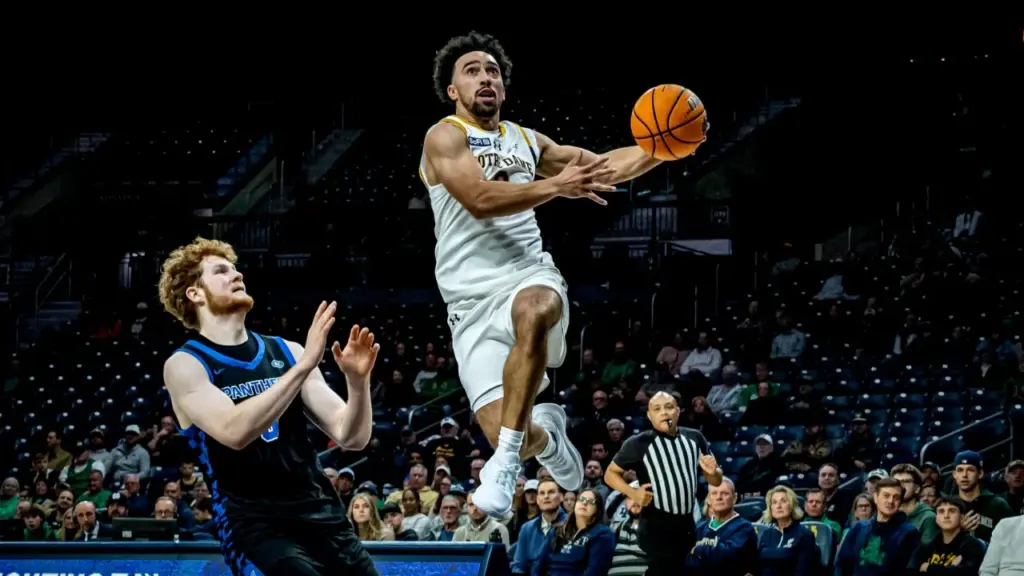
- Notre Dame continues to leverage its historic Purcell Pavilion venue to maintain brand prestige against diverse non-conference opponents.
- South Carolina State represents the vital role of mid-major and HBCU programs in the broader ecosystem of NCAA basketball scheduling.
- The game highlights the tactical necessity for high-major programs to balance 'tune-up' games with the need for competitive metrics.
- The evolving landscape of college basketball requires programs like Notre Dame to maintain cultural relevance while chasing tournament-ready consistency.
The hardwood at Purcell Pavilion has long served as a cathedral for Notre Dame basketball, a space where the weight of history often hangs as heavily as the championship banners in the rafters. As the Fighting Irish welcome South Carolina State to South Bend, the encounter is far more than a mere entry on a season schedule; it is a tactical exercise in program management, brand maintenance, and the delicate art of balancing competitive rigor with the logistical demands of a modern, high-stakes collegiate season.
For the casual observer, this matchup might appear as a standard non-conference fixture, yet for the architects of the Notre Dame program, it represents a critical juncture in the team’s developmental arc. In an era where the transfer portal and Name, Image, and Likeness (NIL) regulations have fundamentally rewritten the playbook for success, the ability to integrate new talent while maintaining a cohesive identity against diverse opponents is the ultimate test for any coaching staff. The presence of South Carolina State on the docket underscores the necessity for elite programs to refine their rotations and tactical execution before the unforgiving gauntlet of conference play begins.
The Architecture of the Modern Non-Conference Slate
The scheduling philosophy of a program like Notre Dame is a complex calculus of RPI (Ratings Percentage Index) management, television obligations, and the imperative to provide a home-court advantage that resonates with a global fanbase. Historically, the Irish have utilized these early-season contests to establish a baseline of performance, allowing coaching staffs to evaluate depth and chemistry in a controlled environment. However, the modern landscape has shifted; the margin for error in the NCAA tournament selection process is razor-thin, meaning every possession against a mid-major opponent is scrutinized by the selection committee.
South Carolina State, representing the storied tradition of Historically Black Colleges and Universities (HBCUs), brings its own narrative to the Purcell Pavilion. For programs like the Bulldogs, these games are not merely about the final score; they are opportunities to showcase talent on a national stage, secure essential athletic department revenue, and test their mettle against the blue-blood programs of the sport. This symbiotic relationship—where the high-major program gains a controlled competitive environment and the mid-major gains exposure and resources—remains a cornerstone of the collegiate basketball ecosystem.
The tactical preparation for such a game requires a nuanced approach. While the talent disparity may favor the home team, the risk of complacency is the primary adversary. Coaches must ensure that their players remain disciplined in their defensive schemes and offensive sets, regardless of the opponent's ranking. This game serves as a crucible for the Irish, forcing them to maintain a high standard of play that will be required when they eventually face the perennial powerhouses of the ACC.
Cultural Resonance and the Brand of the Fighting Irish
Beyond the box score, the game is a testament to the enduring power of the Notre Dame brand. Purcell Pavilion remains one of the most iconic venues in college sports, and every game held within its walls is a reinforcement of the university’s commitment to excellence in all athletic endeavors. In the digital age, where highlights are consumed in seconds and social media narratives can define a program’s season, the visual presentation of a Notre Dame home game is a vital component of the university’s global marketing strategy.
The cultural impact of these matchups extends to the student-athletes themselves. For many players on the South Carolina State roster, the opportunity to play in a venue steeped in such profound athletic history is a career highlight. It bridges the gap between different tiers of collegiate athletics, fostering a sense of community that transcends the competitive divide. This is the essence of the college game: a tapestry of programs, each with its own history and aspirations, converging on a single court to compete for the love of the game.
Furthermore, the media coverage surrounding these games—often amplified by niche outlets like Irish Sports Daily—highlights the insatiable appetite for content in the college basketball sphere. Fans are no longer satisfied with just the final score; they demand granular analysis, player development updates, and insights into the strategic shifts occurring behind the scenes. This demand has transformed the way programs communicate with their supporters, turning every game thread into a digital town hall for the program’s most dedicated followers.
Navigating the Future of Collegiate Competition
As we look toward the remainder of the season, the lessons learned in games like this will prove invaluable. The ability to adapt to different styles of play, to manage the psychological pressure of being a heavy favorite, and to execute under the watchful eyes of a demanding fanbase are all skills that will be tested in the crucible of the NCAA tournament. Notre Dame’s leadership understands that the path to success is not linear; it is paved with these early-season challenges that build the resilience necessary for March.
The institutional reaction to these games is often one of quiet confidence, yet there is an underlying awareness that the landscape is shifting. With the rise of super-conferences and the increasing professionalization of the college game, programs must be more strategic than ever. The focus is shifting toward data-driven recruitment, advanced analytics in game planning, and a more holistic approach to athlete welfare. Notre Dame, with its unique blend of academic prestige and athletic tradition, is well-positioned to navigate these changes, but it must remain vigilant.
Ultimately, the game between Notre Dame and South Carolina State is a reminder that college basketball is a living, breathing entity. It is a sport defined by its cycles, its traditions, and its capacity for constant evolution. Whether it is a high-profile rivalry game or a non-conference matchup, the spirit of competition remains the same. As the final buzzer sounds at Purcell Pavilion, the focus will immediately shift to the next challenge, the next opponent, and the next step in the long, arduous journey toward the postseason. For the Irish, the mission remains clear: to honor the history of the program while aggressively pursuing the future of the game.
Editorial Standards & Multi-Language Synthesis: This dispatch was synthesized and fact-checked by the ParisDaily Editorial Desk across 5 global editions (EN, FR, VI, ES, ZH), cross-referencing primary international wire reports and real-time search intelligence.