巴黎使命:全球大国为何终于将“下一代权利”置于核心地位
As the Paris Peace Forum convenes, a coalition of 50 nations and global stakeholders has pledged to anchor children's rights at the core of international policy. This landmark pact signals a shift toward long-term human security.
Trong khuôn khổ Diễn đàn Hòa bình Paris, một liên minh gồm 50 quốc gia và các bên liên quan toàn cầu đã cam kết đặt quyền trẻ em làm trọng tâm của chính sách quốc tế. Hiệp ước mang tính bước ngoặt này đánh dấu sự chuyển dịch hướng tới an ninh nhân loại dài hạn.
As the Paris Peace Forum convenes, a coalition of 50 nations and global stakeholders has pledged to anchor children's rights at the core of international policy. This landmark pact signals a shift toward long-term human security.
As the Paris Peace Forum convenes, a coalition of 50 nations and global stakeholders has pledged to anchor children's rights at the core of international policy. This landmark pact signals a shift toward long-term human security.
随着巴黎和平论坛的召开,由50个国家及全球利益相关方组成的联盟承诺将儿童权利置于国际政策的核心。这一里程碑式的协议标志着全球治理正向长期人类安全观转型。
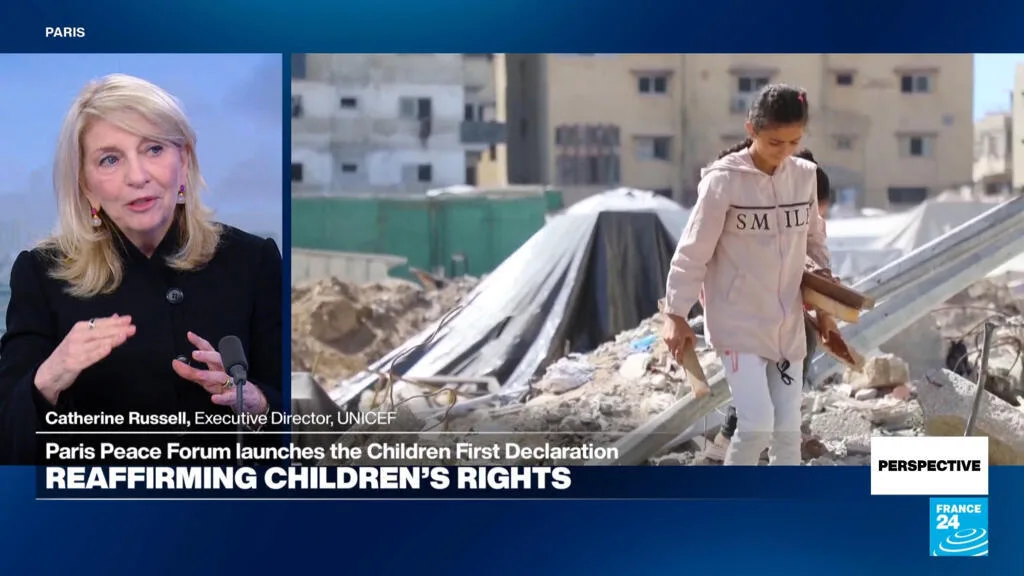
- Over 50 countries and 20 NGOs have signed a formal pact to integrate children's rights into national and corporate policy frameworks.
- UNICEF Executive Director Catherine Russell emphasizes that children are the primary stakeholders in future global stability.
- The initiative addresses the intersection of digital safety, climate change, and conflict-zone protection for minors.
- The Paris Peace Forum serves as the diplomatic engine for translating these moral commitments into enforceable international standards.
- Hơn 50 quốc gia và 20 tổ chức phi chính phủ đã ký kết hiệp ước chính thức nhằm tích hợp quyền trẻ em vào các khuôn khổ chính sách quốc gia và doanh nghiệp.
- Giám đốc điều hành UNICEF, bà Catherine Russell, nhấn mạnh rằng trẻ em là những bên liên quan chính trong sự ổn định toàn cầu tương lai.
- Sáng kiến này giải quyết sự giao thoa giữa an toàn kỹ thuật số, biến đổi khí hậu và bảo vệ trẻ vị thành niên tại các vùng xung đột.
- Diễn đàn Hòa bình Paris đóng vai trò là động lực ngoại giao để chuyển hóa các cam kết đạo đức này thành các tiêu chuẩn quốc tế có tính thực thi.
- Over 50 countries and 20 NGOs have signed a formal pact to integrate children's rights into national and corporate policy frameworks.
- UNICEF Executive Director Catherine Russell emphasizes that children are the primary stakeholders in future global stability.
- The initiative addresses the intersection of digital safety, climate change, and conflict-zone protection for minors.
- The Paris Peace Forum serves as the diplomatic engine for translating these moral commitments into enforceable international standards.
- 超过50个国家和20个非政府组织签署了一项正式协议,旨在将儿童权利纳入国家和企业政策框架。
- 联合国儿童基金会执行主任凯瑟琳·拉塞尔强调,儿童是未来全球稳定的主要利益相关者。
- 该倡议涵盖了数字安全、气候变化以及冲突地区未成年人保护等多个交叉领域。
- 巴黎和平论坛正成为将这些道德承诺转化为可执行国际标准的关键外交引擎。
In the ornate halls of the Palais Brongniart, amidst the hushed intensity of the Paris Peace Forum, a quiet but profound shift in the architecture of global diplomacy is taking place. While the headlines of the world are often dominated by the immediate friction of territorial disputes and economic volatility, a coalition of more than 50 nations, alongside a formidable assembly of philanthropic giants and multinational corporations, has converged on a singular, unifying priority: the fundamental rights of children. This is not merely a symbolic gesture of goodwill; it is a calculated recalibration of how the international community defines security, development, and the very definition of a stable future.
At the center of this movement is UNICEF Executive Director Catherine Russell, whose recent advocacy has framed the protection of children not as a peripheral humanitarian concern, but as the essential bedrock of global governance. As the world grapples with the cascading effects of climate change, digital transformation, and the erosion of post-war norms, the consensus emerging in Paris is that any policy—be it economic, environmental, or geopolitical—that fails to account for the next generation is fundamentally flawed. The pact agreed upon this week seeks to weave the rights of children into the DNA of statecraft, moving beyond the rhetoric of 'protection' toward a more robust framework of 'empowerment' and 'participation.'
The Architecture of a New Global Consensus
The historical context for this initiative is rooted in the sobering realization that the existing international order has struggled to keep pace with the vulnerabilities of the 21st-century child. For decades, the rights of children were relegated to the silos of humanitarian aid and non-governmental advocacy, often treated as a subset of broader human rights agendas rather than a standalone pillar of national security. The Paris Peace Forum, by elevating this issue to the level of state-to-state negotiation, marks a departure from that tradition. It acknowledges that the challenges facing youth today—ranging from the psychological toll of digital surveillance to the physical displacement caused by climate-driven migration—are systemic and require a multi-sectoral response.
The involvement of multinational corporations is perhaps the most striking feature of this new coalition. By bringing private sector actors to the table, the organizers are acknowledging that the digital and economic environments in which children operate are largely shaped by corporate policy. Whether through the regulation of algorithms that target minors or the ethical sourcing of materials in supply chains, the private sector is now being asked to treat children’s rights as a fiduciary responsibility. This is a significant evolution from the traditional model of corporate social responsibility, which often prioritized optics over structural change.
Furthermore, the inclusion of 20 philanthropic organizations ensures that the initiative has the financial agility to pilot programs that governments might be too slow to implement. This hybrid model—combining the legislative power of states, the operational reach of NGOs, and the capital of the private sector—is designed to create a resilient ecosystem capable of withstanding the political winds that often derail international agreements. It is a pragmatic approach to a moral imperative, recognizing that without a coalition of the willing, the rights of the most vulnerable are easily sacrificed on the altar of short-term political expediency.
Navigating the Geopolitical Minefield
The strategic impact of this pact cannot be overstated. By centering children in policy discussions, the participating nations are essentially creating a new metric by which to measure the success of their own domestic and foreign policies. If a nation’s economic policy leads to the degradation of the environment, it is now being framed as a violation of the rights of the children who will inherit that environment. If a conflict strategy ignores the protection of schools and hospitals, it is being categorized as a failure of international duty. This shift in framing is designed to make it increasingly difficult for leaders to ignore the long-term consequences of their immediate actions.
However, the path forward is fraught with challenges. The global geopolitical landscape is currently defined by fragmentation and the weakening of multilateral institutions. Convincing major powers to subordinate their immediate strategic interests to the long-term rights of children will require more than just a signed document. It will require a sustained commitment to transparency and accountability. The risk, as always, is that such high-level forums produce excellent manifestos that are subsequently ignored in the heat of national elections or regional conflicts. The test of this pact will be its ability to survive the transition from the conference room to the reality of the front lines.
Economically, the investment in children is increasingly being viewed as the ultimate 'long-term play.' Economists have long argued that the return on investment for early childhood education, health, and protection is among the highest of any public expenditure. By framing this as a global economic priority, the Paris Peace Forum is attempting to move the conversation from one of charity to one of investment. This is a crucial distinction; charity is discretionary, but investment is essential. By treating the next generation as a critical asset, the coalition is attempting to build a consensus that transcends the usual ideological divides that paralyze international cooperation.
The Road Ahead and the Watchlist
As the delegates depart Paris, the focus shifts to the implementation phase. The institutional reaction has been largely positive, yet the public remains rightfully skeptical of international promises. To maintain momentum, the coalition must establish clear, measurable benchmarks that allow for independent verification. The role of UNICEF will be pivotal here, acting as the watchdog and the facilitator that keeps the signatory nations honest. The eyes of the global community will be on the next series of G20 and G7 summits to see if these commitments are echoed in the final communiqués of the world’s most powerful economies.
What should observers watch for in the coming months? First, look for the integration of these principles into national legislative agendas. If the Paris pact is to have teeth, it must be translated into domestic laws that protect children from digital harms and ensure their access to education in conflict zones. Second, monitor the corporate sector's response. Will the multinational companies involved in this pact adopt binding internal policies, or will they treat this as a one-time public relations event? The difference between the two will determine the long-term credibility of the initiative.
Finally, the success of this endeavor will depend on the participation of the children themselves. The most effective movements in history have been those that empowered the very people they sought to protect. If the Paris Peace Forum can successfully transition from talking *about* children to talking *with* them, it will have achieved something truly transformative. The world is watching, and for once, the focus is not on the immediate crises of the day, but on the enduring, fragile, and essential promise of the future. The Paris Mandate, as it may come to be known, is a bold attempt to ensure that when the history of this era is written, it is not defined by what we destroyed, but by what we chose to protect.
Tại những sảnh đường tráng lệ của Palais Brongniart, giữa bầu không khí trầm mặc nhưng đầy quyết liệt của Diễn đàn Hòa bình Paris, một sự chuyển dịch thầm lặng nhưng sâu sắc trong cấu trúc ngoại giao toàn cầu đang diễn ra. Trong khi các tiêu đề báo chí thế giới thường bị chi phối bởi những va chạm tức thời từ các tranh chấp lãnh thổ và sự bất ổn kinh tế, một liên minh gồm hơn 50 quốc gia, cùng với sự góp mặt của các tổ chức từ thiện lớn và các tập đoàn đa quốc gia, đã hội tụ về một ưu tiên duy nhất và thống nhất: quyền cơ bản của trẻ em. Đây không đơn thuần là một cử chỉ thiện chí mang tính biểu tượng; mà là một sự hiệu chỉnh có tính toán về cách cộng đồng quốc tế định nghĩa an ninh, sự phát triển và chính định nghĩa về một tương lai ổn định.
Trung tâm của phong trào này là Giám đốc điều hành UNICEF, bà Catherine Russell, người mà các hoạt động vận động gần đây đã định hình việc bảo vệ trẻ em không phải là một mối quan tâm nhân đạo ngoại vi, mà là nền tảng thiết yếu của quản trị toàn cầu. Khi thế giới đang phải vật lộn với những tác động dây chuyền của biến đổi khí hậu, chuyển đổi số và sự xói mòn các chuẩn mực thời hậu chiến, sự đồng thuận đang nảy sinh tại Paris là: bất kỳ chính sách nào—dù là kinh tế, môi trường hay địa chính trị—nếu không tính đến thế hệ kế cận thì đều là khiếm khuyết về căn bản. Hiệp ước được thông qua trong tuần này tìm cách đan cài quyền trẻ em vào DNA của nghệ thuật quản trị quốc gia, vượt ra khỏi những lời lẽ về 'bảo vệ' để hướng tới một khuôn khổ mạnh mẽ hơn về 'trao quyền' và 'tham gia'.
Kiến trúc của một sự đồng thuận toàn cầu mới
Bối cảnh lịch sử cho sáng kiến này bắt nguồn từ nhận thức tỉnh táo rằng trật tự quốc tế hiện tại đã chật vật trong việc theo kịp những tổn thương của trẻ em trong thế kỷ 21. Trong nhiều thập kỷ, quyền trẻ em thường bị đẩy vào các ngăn riêng biệt của viện trợ nhân đạo và vận động phi chính phủ, thường được coi là một tập hợp con của các chương trình nghị sự nhân quyền rộng lớn hơn thay vì là một trụ cột độc lập của an ninh quốc gia. Diễn đàn Hòa bình Paris, bằng cách nâng vấn đề này lên tầm đàm phán giữa các quốc gia, đã đánh dấu một sự rời bỏ khỏi truyền thống đó. Nó thừa nhận rằng những thách thức mà giới trẻ đang đối mặt ngày nay—từ gánh nặng tâm lý của việc giám sát kỹ thuật số đến sự di cư do biến đổi khí hậu—đều mang tính hệ thống và đòi hỏi một phản ứng đa ngành.
Sự tham gia của các tập đoàn đa quốc gia có lẽ là đặc điểm nổi bật nhất của liên minh mới này. Bằng cách đưa các tác nhân khu vực tư nhân vào bàn đàm phán, các nhà tổ chức đang thừa nhận rằng môi trường kỹ thuật số và kinh tế mà trẻ em đang tiếp xúc phần lớn được định hình bởi chính sách doanh nghiệp. Dù là thông qua việc điều tiết các thuật toán nhắm vào trẻ vị thành niên hay việc tìm nguồn cung ứng đạo đức trong chuỗi cung ứng, khu vực tư nhân giờ đây đang được yêu cầu coi quyền trẻ em là một trách nhiệm ủy thác. Đây là một bước tiến đáng kể so với mô hình trách nhiệm xã hội doanh nghiệp truyền thống, vốn thường ưu tiên hình ảnh hơn là thay đổi cấu trúc.
Hơn nữa, sự góp mặt của 20 tổ chức từ thiện đảm bảo rằng sáng kiến này có sự linh hoạt về tài chính để thí điểm các chương trình mà chính phủ có thể triển khai quá chậm chạp. Mô hình lai này—kết hợp quyền lập pháp của các quốc gia, phạm vi hoạt động của các tổ chức phi chính phủ và nguồn vốn của khu vực tư nhân—được thiết kế để tạo ra một hệ sinh thái kiên cường, có khả năng chống chọi với những cơn gió chính trị thường làm chệch hướng các thỏa thuận quốc tế. Đây là một cách tiếp cận thực dụng đối với một mệnh lệnh đạo đức, thừa nhận rằng nếu không có một liên minh của những người sẵn lòng, quyền của những người dễ bị tổn thương nhất sẽ dễ dàng bị hy sinh trên bàn thờ của sự tiện lợi chính trị ngắn hạn.
Điều hướng bãi mìn địa chính trị
Tác động chiến lược của hiệp ước này không thể bị xem nhẹ. Bằng cách đặt trẻ em vào trung tâm của các cuộc thảo luận chính sách, các quốc gia tham gia về cơ bản đang tạo ra một thước đo mới để đánh giá sự thành công trong chính sách đối nội và đối ngoại của chính họ. Nếu chính sách kinh tế của một quốc gia dẫn đến sự suy thoái môi trường, thì giờ đây nó được định khung là sự vi phạm quyền của những đứa trẻ sẽ thừa hưởng môi trường đó. Nếu một chiến lược xung đột phớt lờ việc bảo vệ trường học và bệnh viện, nó sẽ bị phân loại là sự thất bại trong nghĩa vụ quốc tế. Sự thay đổi trong cách định khung này được thiết kế để khiến các nhà lãnh đạo ngày càng khó phớt lờ những hậu quả dài hạn từ các hành động tức thời của họ.
Tuy nhiên, con đường phía trước đầy rẫy những thách thức. Bối cảnh địa chính trị toàn cầu hiện nay được định nghĩa bởi sự phân mảnh và sự suy yếu của các thể chế đa phương. Việc thuyết phục các cường quốc đặt lợi ích chiến lược trước mắt xuống dưới quyền lợi dài hạn của trẻ em sẽ đòi hỏi nhiều hơn là chỉ một văn bản được ký kết. Nó đòi hỏi một cam kết bền bỉ về tính minh bạch và trách nhiệm giải trình. Rủi ro, như thường lệ, là các diễn đàn cấp cao như vậy tạo ra những bản tuyên ngôn xuất sắc nhưng sau đó lại bị phớt lờ trong sức nóng của các cuộc bầu cử quốc gia hoặc các cuộc xung đột khu vực. Phép thử của hiệp ước này sẽ là khả năng tồn tại khi chuyển từ phòng hội nghị sang thực tế tại các chiến tuyến.
Về mặt kinh tế, đầu tư vào trẻ em ngày càng được xem là 'canh bạc dài hạn' tối ưu. Các nhà kinh tế từ lâu đã lập luận rằng lợi tức đầu tư cho giáo dục, sức khỏe và bảo vệ trẻ em trong giai đoạn đầu đời là một trong những khoản chi công hiệu quả nhất. Bằng cách định khung đây là một ưu tiên kinh tế toàn cầu, Diễn đàn Hòa bình Paris đang cố gắng chuyển cuộc đối thoại từ từ thiện sang đầu tư. Đây là một sự khác biệt quan trọng; từ thiện là tùy ý, nhưng đầu tư là thiết yếu. Bằng cách coi thế hệ tương lai là một tài sản quan trọng, liên minh đang cố gắng xây dựng một sự đồng thuận vượt lên trên những chia rẽ ý thức hệ thông thường vốn làm tê liệt sự hợp tác quốc tế.
Con đường phía trước và danh sách theo dõi
Khi các đại biểu rời Paris, trọng tâm chuyển sang giai đoạn thực thi. Phản ứng từ các thể chế phần lớn là tích cực, tuy nhiên công chúng vẫn giữ thái độ hoài nghi chính đáng đối với các lời hứa quốc tế. Để duy trì động lực, liên minh phải thiết lập các tiêu chuẩn đo lường rõ ràng, cho phép xác minh độc lập. Vai trò của UNICEF sẽ là then chốt tại đây, đóng vai trò là cơ quan giám sát và điều phối để giữ cho các quốc gia ký kết thực hiện đúng cam kết. Ánh mắt của cộng đồng toàn cầu sẽ đổ dồn vào các hội nghị thượng đỉnh G20 và G7 tiếp theo để xem liệu những cam kết này có được lặp lại trong các thông cáo cuối cùng của các nền kinh tế quyền lực nhất thế giới hay không.
Các nhà quan sát nên chú ý điều gì trong những tháng tới? Thứ nhất, hãy theo dõi việc tích hợp các nguyên tắc này vào các chương trình nghị sự lập pháp quốc gia. Nếu hiệp ước Paris muốn có sức nặng, nó phải được chuyển hóa thành luật trong nước để bảo vệ trẻ em khỏi các tác hại kỹ thuật số và đảm bảo quyền tiếp cận giáo dục tại các vùng xung đột. Thứ hai, hãy theo dõi phản ứng của khu vực doanh nghiệp. Liệu các tập đoàn đa quốc gia tham gia hiệp ước này có áp dụng các chính sách nội bộ mang tính ràng buộc, hay họ sẽ coi đây là một sự kiện quan hệ công chúng một lần? Sự khác biệt giữa hai điều này sẽ quyết định uy tín dài hạn của sáng kiến.
Cuối cùng, sự thành công của nỗ lực này sẽ phụ thuộc vào sự tham gia của chính những đứa trẻ. Những phong trào hiệu quả nhất trong lịch sử là những phong trào trao quyền cho chính những người mà họ tìm cách bảo vệ. Nếu Diễn đàn Hòa bình Paris có thể chuyển đổi thành công từ việc nói *về* trẻ em sang việc nói *cùng* với trẻ em, họ sẽ đạt được một điều gì đó thực sự mang tính chuyển đổi. Thế giới đang dõi theo, và lần này, trọng tâm không nằm ở những cuộc khủng hoảng tức thời trong ngày, mà nằm ở lời hứa bền bỉ, mong manh nhưng thiết yếu của tương lai. Sứ mệnh Paris, như cách gọi sau này, là một nỗ lực táo bạo nhằm đảm bảo rằng khi lịch sử của kỷ nguyên này được viết lại, nó không được định nghĩa bởi những gì chúng ta đã phá hủy, mà bởi những gì chúng ta đã chọn để bảo vệ.
In the ornate halls of the Palais Brongniart, amidst the hushed intensity of the Paris Peace Forum, a quiet but profound shift in the architecture of global diplomacy is taking place. While the headlines of the world are often dominated by the immediate friction of territorial disputes and economic volatility, a coalition of more than 50 nations, alongside a formidable assembly of philanthropic giants and multinational corporations, has converged on a singular, unifying priority: the fundamental rights of children. This is not merely a symbolic gesture of goodwill; it is a calculated recalibration of how the international community defines security, development, and the very definition of a stable future.
At the center of this movement is UNICEF Executive Director Catherine Russell, whose recent advocacy has framed the protection of children not as a peripheral humanitarian concern, but as the essential bedrock of global governance. As the world grapples with the cascading effects of climate change, digital transformation, and the erosion of post-war norms, the consensus emerging in Paris is that any policy—be it economic, environmental, or geopolitical—that fails to account for the next generation is fundamentally flawed. The pact agreed upon this week seeks to weave the rights of children into the DNA of statecraft, moving beyond the rhetoric of 'protection' toward a more robust framework of 'empowerment' and 'participation.'
The Architecture of a New Global Consensus
The historical context for this initiative is rooted in the sobering realization that the existing international order has struggled to keep pace with the vulnerabilities of the 21st-century child. For decades, the rights of children were relegated to the silos of humanitarian aid and non-governmental advocacy, often treated as a subset of broader human rights agendas rather than a standalone pillar of national security. The Paris Peace Forum, by elevating this issue to the level of state-to-state negotiation, marks a departure from that tradition. It acknowledges that the challenges facing youth today—ranging from the psychological toll of digital surveillance to the physical displacement caused by climate-driven migration—are systemic and require a multi-sectoral response.
The involvement of multinational corporations is perhaps the most striking feature of this new coalition. By bringing private sector actors to the table, the organizers are acknowledging that the digital and economic environments in which children operate are largely shaped by corporate policy. Whether through the regulation of algorithms that target minors or the ethical sourcing of materials in supply chains, the private sector is now being asked to treat children’s rights as a fiduciary responsibility. This is a significant evolution from the traditional model of corporate social responsibility, which often prioritized optics over structural change.
Furthermore, the inclusion of 20 philanthropic organizations ensures that the initiative has the financial agility to pilot programs that governments might be too slow to implement. This hybrid model—combining the legislative power of states, the operational reach of NGOs, and the capital of the private sector—is designed to create a resilient ecosystem capable of withstanding the political winds that often derail international agreements. It is a pragmatic approach to a moral imperative, recognizing that without a coalition of the willing, the rights of the most vulnerable are easily sacrificed on the altar of short-term political expediency.
Navigating the Geopolitical Minefield
The strategic impact of this pact cannot be overstated. By centering children in policy discussions, the participating nations are essentially creating a new metric by which to measure the success of their own domestic and foreign policies. If a nation’s economic policy leads to the degradation of the environment, it is now being framed as a violation of the rights of the children who will inherit that environment. If a conflict strategy ignores the protection of schools and hospitals, it is being categorized as a failure of international duty. This shift in framing is designed to make it increasingly difficult for leaders to ignore the long-term consequences of their immediate actions.
However, the path forward is fraught with challenges. The global geopolitical landscape is currently defined by fragmentation and the weakening of multilateral institutions. Convincing major powers to subordinate their immediate strategic interests to the long-term rights of children will require more than just a signed document. It will require a sustained commitment to transparency and accountability. The risk, as always, is that such high-level forums produce excellent manifestos that are subsequently ignored in the heat of national elections or regional conflicts. The test of this pact will be its ability to survive the transition from the conference room to the reality of the front lines.
Economically, the investment in children is increasingly being viewed as the ultimate 'long-term play.' Economists have long argued that the return on investment for early childhood education, health, and protection is among the highest of any public expenditure. By framing this as a global economic priority, the Paris Peace Forum is attempting to move the conversation from one of charity to one of investment. This is a crucial distinction; charity is discretionary, but investment is essential. By treating the next generation as a critical asset, the coalition is attempting to build a consensus that transcends the usual ideological divides that paralyze international cooperation.
The Road Ahead and the Watchlist
As the delegates depart Paris, the focus shifts to the implementation phase. The institutional reaction has been largely positive, yet the public remains rightfully skeptical of international promises. To maintain momentum, the coalition must establish clear, measurable benchmarks that allow for independent verification. The role of UNICEF will be pivotal here, acting as the watchdog and the facilitator that keeps the signatory nations honest. The eyes of the global community will be on the next series of G20 and G7 summits to see if these commitments are echoed in the final communiqués of the world’s most powerful economies.
What should observers watch for in the coming months? First, look for the integration of these principles into national legislative agendas. If the Paris pact is to have teeth, it must be translated into domestic laws that protect children from digital harms and ensure their access to education in conflict zones. Second, monitor the corporate sector's response. Will the multinational companies involved in this pact adopt binding internal policies, or will they treat this as a one-time public relations event? The difference between the two will determine the long-term credibility of the initiative.
Finally, the success of this endeavor will depend on the participation of the children themselves. The most effective movements in history have been those that empowered the very people they sought to protect. If the Paris Peace Forum can successfully transition from talking *about* children to talking *with* them, it will have achieved something truly transformative. The world is watching, and for once, the focus is not on the immediate crises of the day, but on the enduring, fragile, and essential promise of the future. The Paris Mandate, as it may come to be known, is a bold attempt to ensure that when the history of this era is written, it is not defined by what we destroyed, but by what we chose to protect.
在布隆尼亚尔宫(Palais Brongniart)华丽的厅堂内,伴随着巴黎和平论坛那静谧而紧张的氛围,全球外交架构正在经历一场悄然而深远的变革。尽管世界头条新闻往往被领土争端和经济波动的即时摩擦所占据,但由50多个国家组成的联盟,携手众多慈善巨头和跨国企业,已就一个单一且统一的优先事项达成共识:儿童的基本权利。这绝非仅仅是一种象征性的善意姿态,而是国际社会对安全、发展以及“稳定未来”定义的深层重构。
这场运动的核心人物是联合国儿童基金会(UNICEF)执行主任凯瑟琳·拉塞尔(Catherine Russell)。她近期的倡导将儿童保护从边缘的人道主义议题,提升为全球治理的基石。随着世界正艰难应对气候变化、数字化转型以及战后准则崩塌带来的连锁反应,巴黎达成的共识是:任何未能将下一代纳入考量的政策——无论是经济、环境还是地缘政治政策——在本质上都是有缺陷的。本周签署的协议旨在将儿童权利编织进国家治理的基因中,超越“保护”的修辞,迈向更具韧性的“赋权”与“参与”框架。
全球新共识的架构
这一倡议的历史背景植根于一个清醒的认知:现有的国际秩序已难以跟上21世纪儿童所面临的脆弱性。几十年来,儿童权利一直被边缘化在人道主义援助和非政府组织倡导的“孤岛”中,往往被视为更广泛人权议程的子集,而非国家安全的一个独立支柱。巴黎和平论坛通过将这一议题提升至国与国谈判的层面,标志着对传统模式的背离。它承认,当今青年面临的挑战——从数字监控带来的心理创伤到气候移民引发的流离失所——是系统性的,需要多部门协同应对。
跨国企业的参与或许是这一新联盟最引人注目的特征。通过将私营部门纳入谈判桌,组织者承认了儿童所处的数字和经济环境在很大程度上是由企业政策塑造的。无论是通过对针对未成年人的算法进行监管,还是在供应链中确保材料的道德采购,私营部门现在被要求将儿童权利视为一种受托责任。这与传统的企业社会责任模式相比是一次重大演进,后者往往将公关形象置于结构性变革之上。
此外,20家慈善组织的加入确保了该倡议拥有足够的财务灵活性,能够试点政府可能实施缓慢的项目。这种结合了国家立法权、非政府组织运营能力和私营部门资本的混合模式,旨在创建一个能够抵御政治风浪的韧性生态系统,避免国际协议因政治变动而夭折。这是一种针对道德使命的务实方法,它认识到,如果没有一个“意愿联盟”,最脆弱群体的权利很容易在短期政治权宜之计的祭坛上被牺牲。
在地缘政治雷区中前行
该协议的战略影响不容小觑。通过将儿童置于政策讨论的中心,参与国实际上创造了一种衡量其国内和外交政策成功与否的新指标。如果一个国家的经济政策导致环境退化,这现在被视为对未来继承该环境的儿童权利的侵犯;如果冲突战略忽视了对学校和医院的保护,这被归类为国际义务的失职。这种框架的转变旨在让领导人越来越难以忽视其即时行动带来的长期后果。
然而,前路充满挑战。全球地缘政治格局目前正处于碎片化和多边机构弱化的阴影下。要说服大国将其即时的战略利益置于儿童的长期权利之后,需要的不仅仅是一纸协议,更需要对透明度和问责制的持续承诺。风险一如既往:此类高级别论坛往往能产出优秀的宣言,却在国家选举或地区冲突的压力下被束之高阁。该协议的真正考验在于,它能否从会议室成功过渡到现实的前线。
从经济角度看,对儿童的投资正日益被视为终极的“长期博弈”。经济学家长期以来一直认为,在幼儿教育、健康和保护方面的投资回报率是所有公共支出中最高的。通过将其定位为全球经济优先事项,巴黎和平论坛试图将讨论从“慈善”转向“投资”。这是一个至关重要的区别:慈善是酌情而定的,而投资则是必不可少的。通过将下一代视为关键资产,该联盟正试图建立一种超越阻碍国际合作的传统意识形态分歧的共识。
前路与观察清单
随着代表们离开巴黎,焦点转向了实施阶段。尽管机构反应普遍积极,但公众对国际承诺仍保持着合理的怀疑。为了保持势头,联盟必须建立清晰、可衡量的基准,以便进行独立核查。联合国儿童基金会在此将发挥关键作用,作为监督者和促进者,确保签署国信守承诺。全球社区的目光将聚焦于接下来的G20和G7峰会,观察这些承诺是否会出现在世界最强大经济体的最终公报中。
观察者在未来几个月应关注什么?首先,关注这些原则是否被整合进国家立法议程。如果巴黎协议要具备约束力,就必须转化为国内法律,保护儿童免受数字伤害,并确保他们在冲突地区获得教育的机会。其次,监测私营部门的反应。参与协议的跨国公司是会采取具有约束力的内部政策,还是仅仅将其视为一次性的公关活动?这两者之间的差异将决定该倡议的长期信誉。
最后,这项事业的成功将取决于儿童自身的参与。历史上最有效的运动,往往是那些赋予了其试图保护的对象以权力的运动。如果巴黎和平论坛能够成功地从“谈论”儿童转向与儿童“对话”,它将实现真正的变革。世界正在注视,这一次,焦点不再是当下的即时危机,而是未来那持久、脆弱却至关重要的承诺。“巴黎使命”(The Paris Mandate)作为一个可能被载入史册的名称,是一次大胆的尝试,旨在确保当这个时代的史书被撰写时,它不是由我们摧毁了什么来定义,而是由我们选择了保护什么来定义。
Editorial Standards & Multi-Language Synthesis: This dispatch was synthesized and fact-checked by the ParisDaily Editorial Desk across 5 global editions (EN, FR, VI, ES, ZH), cross-referencing primary international wire reports and real-time search intelligence.