The Economics of the Afternoon Tip: Inside San Diego State’s Unusual Schedule
As San Diego State University navigates a rare mid-day basketball schedule, the logistics reveal a complex ecosystem of television rights, holiday timing, and the brutal financial realities of mid-major college basketball.
As San Diego State University navigates a rare mid-day basketball schedule, the logistics reveal a complex ecosystem of television rights, holiday timing, and the brutal financial realities of mid-major college basketball.
As San Diego State University navigates a rare mid-day basketball schedule, the logistics reveal a complex ecosystem of television rights, holiday timing, and the brutal financial realities of mid-major college basketball.
As San Diego State University navigates a rare mid-day basketball schedule, the logistics reveal a complex ecosystem of television rights, holiday timing, and the brutal financial realities of mid-major college basketball.
As San Diego State University navigates a rare mid-day basketball schedule, the logistics reveal a complex ecosystem of television rights, holiday timing, and the brutal financial realities of mid-major college basketball.
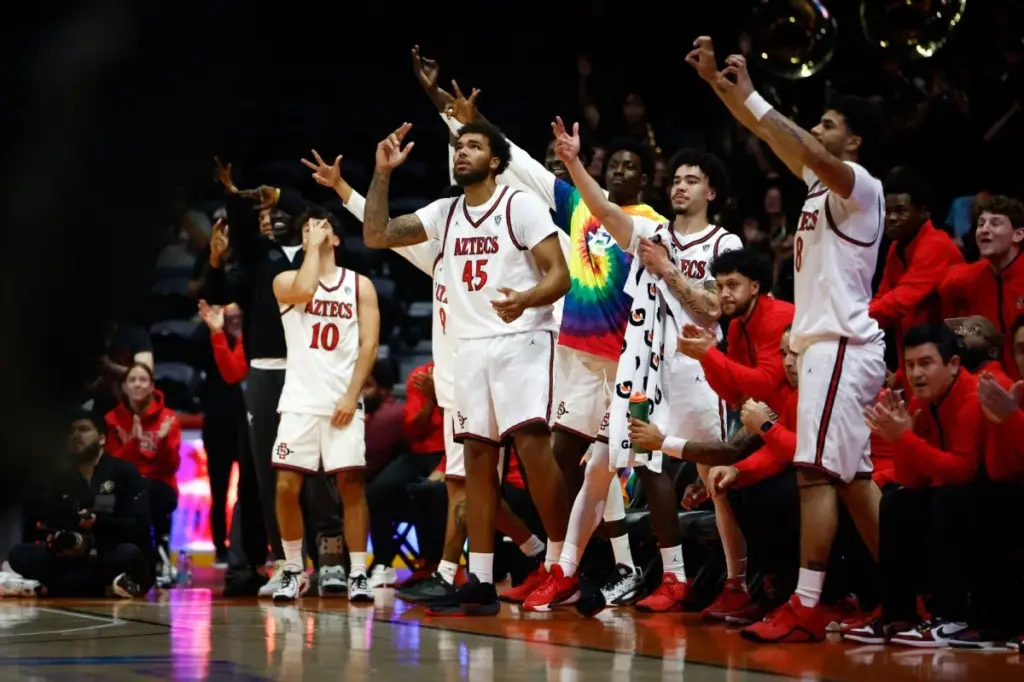
- San Diego State is utilizing a series of afternoon tip-offs to accommodate television broadcast windows and holiday scheduling, including a Veterans Day matchup.
- The game against Bethune-Cookman highlights the 'guarantee game' model, where smaller programs travel extensively to secure essential athletic department revenue.
- Coach Brian Dutcher and his staff are balancing team rhythm and player development while managing a roster that must integrate new talent under unique time constraints.
- The narrative features a deep historical connection between SDSU assistant JayDee Luster and Bethune-Cookman coach Reggie Theus, tracing back to their time at New Mexico State.
In the high-stakes theater of Division I college basketball, the traditional 7:00 p.m. tip-off is often treated as a sacred standard, a time-honored ritual designed to maximize prime-time viewership and arena atmosphere. Yet, for San Diego State University (SDSU) this season, the clock has been turned back. With a flurry of afternoon games defining their early-season schedule—including a notable Veterans Day clash against Bethune-Cookman—the Aztecs are finding themselves at the center of a logistical experiment that highlights the shifting priorities of modern collegiate athletics.
This scheduling anomaly is not merely a matter of convenience; it is a calculated response to the demands of television networks, the constraints of holiday calendars, and the strategic needs of a program looking to maintain a specific competitive rhythm. As SDSU head coach Brian Dutcher navigates this unconventional slate, the games serve as a microcosm of the broader pressures facing university athletic departments, where the pursuit of revenue and the necessity of exposure often dictate the rhythm of the game itself.
The Business of the 'Guarantee Game'
While San Diego State manages its schedule to optimize for local fan engagement and television slots, their opponent, Bethune-Cookman, represents the stark reality of the financial divide in college sports. As a member of the SWAC, the historically Black university faces a grueling nonconference gauntlet. For programs like the Wildcats, the season is often defined by "buy games"—contests where they travel to larger arenas, often across the country, to provide a high-quality opponent for a host school in exchange for a guaranteed payout, typically ranging between $80,000 and $100,000.
This model is the lifeblood of many mid-major and lower-tier athletic departments. For Bethune-Cookman, the math is unforgiving: 13 of their 14 nonconference games are played on the road. It is a brutal, exhausting stretch that tests the physical and mental limits of the student-athletes. Yet, as Coach Reggie Theus—a former NBA star and veteran coach—acknowledges, these games are the primary engine for their athletic budget. The goal is not necessarily to emerge with a pristine record, but to secure the funding necessary to sustain the program while gaining the high-level exposure that only playing against top-tier competition can provide.
The contrast between the two programs is palpable. While SDSU minimizes travel, keeping the majority of their nonconference games within Southern California, Bethune-Cookman is essentially living out of suitcases. This disparity underscores the "one-bid league" reality of the SWAC, where the path to the NCAA Tournament is almost exclusively through winning the conference tournament in March. Consequently, the nonconference schedule becomes a laboratory for growth, a place where the focus remains on development rather than the immediate win-loss tally.
A Legacy of Mentorship and Unexpected Turns
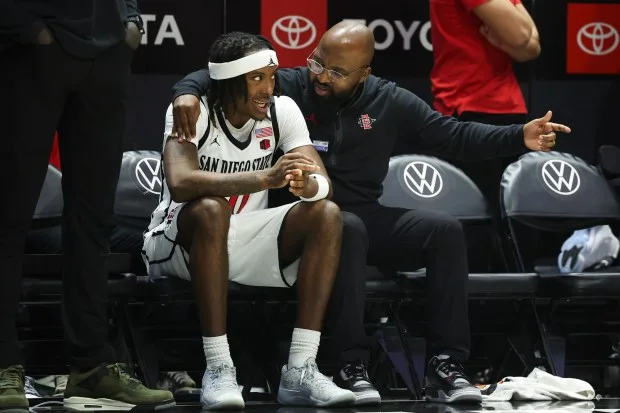
Beyond the spreadsheets and broadcast contracts, the matchup between San Diego State and Bethune-Cookman is anchored by a profound personal history. The connection between SDSU assistant coach JayDee Luster and Bethune-Cookman’s Reggie Theus is a testament to the small, interconnected world of high-level basketball. Luster, who grew up in the San Diego basketball scene, was once a ballboy for a club team coached by Theus, eventually being recruited by him to play at New Mexico State.
The narrative took a dramatic turn in 2007, when Theus left New Mexico State to take the head coaching job with the Sacramento Kings, leaving Luster in a precarious position just as he was set to begin his collegiate career. It is a story of professional ambition colliding with personal loyalty—a moment that shaped Luster’s own trajectory into coaching. Today, as they stand on opposite benches, the respect remains, even as the competitive stakes have shifted. The presence of former USD players like Vuk Boskovic and Kevin Patton Jr. on the Bethune-Cookman roster adds another layer of local familiarity to the contest, turning a standard nonconference game into a reunion of sorts for those embedded in the Southern California basketball ecosystem.
Navigating the Rhythm of the Season
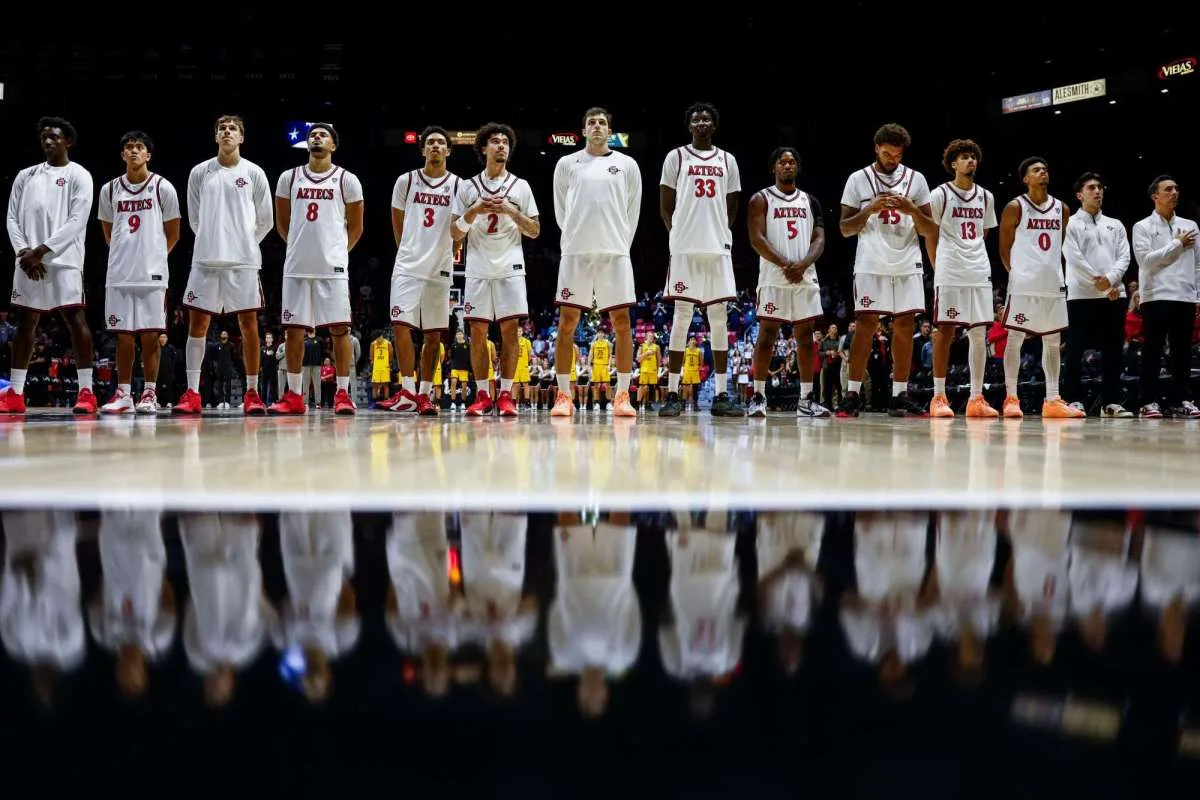
For Brian Dutcher, the challenge of the afternoon tip-off is as much about sports science as it is about logistics. Maintaining a consistent routine—meal times, shootarounds, and recovery—is critical for a team that relies on high-intensity play. With a roster featuring several players scoring in double figures, including standout Latrell Davis, the Aztecs are looking to refine their execution, specifically regarding turnover management, which has been a point of emphasis in early practices.
The decision to host the game on Veterans Day was strategic, capitalizing on a national holiday when families are off work and students are out of school, theoretically boosting attendance at Viejas Arena. It is a delicate balancing act: ensuring the women’s basketball program also gets its prime-time opportunities while managing the men’s team’s need for consistency. As the season progresses, the lessons learned during these afternoon sessions will likely prove invaluable. Whether it is the tactical adjustments required to face a talented, hungry Bethune-Cookman squad or the broader organizational effort to manage a complex, multi-venue schedule, San Diego State is demonstrating the adaptability required to thrive in the modern era of college basketball.
Ultimately, the "scheduling quirk" of the 2026 season is a reminder that the game is never just about the 40 minutes on the court. It is about the economic engines that keep the lights on, the mentorship networks that span decades, and the constant, evolving effort to keep the sport relevant in an increasingly crowded media landscape. As the Aztecs move toward their next challenges in Las Vegas and beyond, they do so with a clear understanding that every tip-off—no matter the time of day—is a vital piece of a much larger, more complex puzzle.
In the high-stakes theater of Division I college basketball, the traditional 7:00 p.m. tip-off is often treated as a sacred standard, a time-honored ritual designed to maximize prime-time viewership and arena atmosphere. Yet, for San Diego State University (SDSU) this season, the clock has been turned back. With a flurry of afternoon games defining their early-season schedule—including a notable Veterans Day clash against Bethune-Cookman—the Aztecs are finding themselves at the center of a logistical experiment that highlights the shifting priorities of modern collegiate athletics.
This scheduling anomaly is not merely a matter of convenience; it is a calculated response to the demands of television networks, the constraints of holiday calendars, and the strategic needs of a program looking to maintain a specific competitive rhythm. As SDSU head coach Brian Dutcher navigates this unconventional slate, the games serve as a microcosm of the broader pressures facing university athletic departments, where the pursuit of revenue and the necessity of exposure often dictate the rhythm of the game itself.
The Business of the 'Guarantee Game'
While San Diego State manages its schedule to optimize for local fan engagement and television slots, their opponent, Bethune-Cookman, represents the stark reality of the financial divide in college sports. As a member of the SWAC, the historically Black university faces a grueling nonconference gauntlet. For programs like the Wildcats, the season is often defined by "buy games"—contests where they travel to larger arenas, often across the country, to provide a high-quality opponent for a host school in exchange for a guaranteed payout, typically ranging between $80,000 and $100,000.
This model is the lifeblood of many mid-major and lower-tier athletic departments. For Bethune-Cookman, the math is unforgiving: 13 of their 14 nonconference games are played on the road. It is a brutal, exhausting stretch that tests the physical and mental limits of the student-athletes. Yet, as Coach Reggie Theus—a former NBA star and veteran coach—acknowledges, these games are the primary engine for their athletic budget. The goal is not necessarily to emerge with a pristine record, but to secure the funding necessary to sustain the program while gaining the high-level exposure that only playing against top-tier competition can provide.
The contrast between the two programs is palpable. While SDSU minimizes travel, keeping the majority of their nonconference games within Southern California, Bethune-Cookman is essentially living out of suitcases. This disparity underscores the "one-bid league" reality of the SWAC, where the path to the NCAA Tournament is almost exclusively through winning the conference tournament in March. Consequently, the nonconference schedule becomes a laboratory for growth, a place where the focus remains on development rather than the immediate win-loss tally.
A Legacy of Mentorship and Unexpected Turns
Beyond the spreadsheets and broadcast contracts, the matchup between San Diego State and Bethune-Cookman is anchored by a profound personal history. The connection between SDSU assistant coach JayDee Luster and Bethune-Cookman’s Reggie Theus is a testament to the small, interconnected world of high-level basketball. Luster, who grew up in the San Diego basketball scene, was once a ballboy for a club team coached by Theus, eventually being recruited by him to play at New Mexico State.
The narrative took a dramatic turn in 2007, when Theus left New Mexico State to take the head coaching job with the Sacramento Kings, leaving Luster in a precarious position just as he was set to begin his collegiate career. It is a story of professional ambition colliding with personal loyalty—a moment that shaped Luster’s own trajectory into coaching. Today, as they stand on opposite benches, the respect remains, even as the competitive stakes have shifted. The presence of former USD players like Vuk Boskovic and Kevin Patton Jr. on the Bethune-Cookman roster adds another layer of local familiarity to the contest, turning a standard nonconference game into a reunion of sorts for those embedded in the Southern California basketball ecosystem.
Navigating the Rhythm of the Season
For Brian Dutcher, the challenge of the afternoon tip-off is as much about sports science as it is about logistics. Maintaining a consistent routine—meal times, shootarounds, and recovery—is critical for a team that relies on high-intensity play. With a roster featuring several players scoring in double figures, including standout Latrell Davis, the Aztecs are looking to refine their execution, specifically regarding turnover management, which has been a point of emphasis in early practices.
The decision to host the game on Veterans Day was strategic, capitalizing on a national holiday when families are off work and students are out of school, theoretically boosting attendance at Viejas Arena. It is a delicate balancing act: ensuring the women’s basketball program also gets its prime-time opportunities while managing the men’s team’s need for consistency. As the season progresses, the lessons learned during these afternoon sessions will likely prove invaluable. Whether it is the tactical adjustments required to face a talented, hungry Bethune-Cookman squad or the broader organizational effort to manage a complex, multi-venue schedule, San Diego State is demonstrating the adaptability required to thrive in the modern era of college basketball.
Ultimately, the "scheduling quirk" of the 2026 season is a reminder that the game is never just about the 40 minutes on the court. It is about the economic engines that keep the lights on, the mentorship networks that span decades, and the constant, evolving effort to keep the sport relevant in an increasingly crowded media landscape. As the Aztecs move toward their next challenges in Las Vegas and beyond, they do so with a clear understanding that every tip-off—no matter the time of day—is a vital piece of a much larger, more complex puzzle.
Editorial Standards & Multi-Language Synthesis: This dispatch was synthesized and fact-checked by the ParisDaily Editorial Desk across 5 global editions (EN, FR, VI, ES, ZH), cross-referencing primary international wire reports and real-time search intelligence.